Bloomberg

Temasek-Backed ShopBack Raises $80 Million Led by Asia Partners

(Bloomberg) — ShopBack, an online shopping rewards app backed by Temasek Holdings Pte, has raised $80 million in a funding round led by regional investment firm Asia Partners. 

The Singapore-based startup’s Series F round was joined by existing investor January Capital, another tech-focused private equity firm, according to a statement seen by Bloomberg News. The latest round bringing the total capital raised by ShopBack to more than $230 million.  

ShopBack is among a plethora of consumer startups raising funds to expand in Southeast Asia. It expanded in financial services last year by acquiring Hoolah, a “buy now, pay later” player.

“This is the perfect time to back winners, to consolidate their position, and gain share,” Nick Nash, managing partner at Asia Partners, said in the statement. 

Founded in 2014 by Henry Chan and Joel Leong, the company is currently serving more than 35 million shoppers. It operates across 10 markets including Singapore, Malaysia, Thailand, Australia and South Korea. ShopBack’s investors include Rakuten Capital, EV Growth, Cornerstone Ventures and 33 Capital. 

More stories like this are available on bloomberg.com

©2022 Bloomberg L.P.

Netflix Fires Another 300 Employees in Latest Round of Cuts

(Bloomberg) — Netflix Inc. laid off another 300 employees as the streaming giant seeks to bring costs under control amid uneven subscriber growth. 

The job losses are across the company, with most affected workers based in the US. The cut is twice as large as the one the streaming giant made last month. The news was first reported in Variety.

“While we continue to invest significantly in the business, we made these adjustments so that our costs are growing in line with our slower revenue growth,” a Netflix spokesperson said in an email. “We are so grateful for everything they have done for Netflix and are working hard to support them through this difficult transition.”

Netflix is retooling its operations after the departure of 200,000 subscribers during the first quarter of 2022 upended the company’s subscription-based revenue model. The difficulties have bludgeoned the company’s stock price and hurt worker morale. 

In addition to the layoffs in May, Netflix also let go some contract workers and editorial staff from its Tudum site in April — part of a scaling back of its marketing budget. 

Netflix’s subscriber woes were in part due to a price hike in January. Further, it’s facing heightened competition with streaming content from Amazon.com Inc., Walt Disney Co., and Hulu, all of which have posted subscription growth recently.  

More stories like this are available on bloomberg.com

©2022 Bloomberg L.P.

Ukraine Latest: US Reportedly Providing $450 Million More in Aid

(Bloomberg) — The US is prepared to provide an additional $450 million in military aid to Ukraine, the Associated Press reported. In the meantime, precision artillery systems from the US have arrived in Ukraine, potentially boosting Kyiv’s ability to repel Russian forces. 

The Kremlin said a peace deal with Ukraine isn’t possible until Kyiv accepts all its demands — leaving conditions at a stalemate as Russia’s invasion nears the four-month mark. The timeline for Ukraine to achieve EU membership will hinge on the country’s ability to enact reforms, as well as the course of the war, a top aide to President Volodymyr Zelenskiy said. 

German Economy Minister Robert Habeck triggered the second stage of the country’s three-phase gas-emergency plan on Thursday and warned of the potential for Lehman-like contagion. 

(See RSAN on the Bloomberg Terminal for the Russian Sanctions Dashboard.)

Key Developments

  • Spain’s Big Defense Push Hinges on Creating a National Champion
  • Germany Warns of Lehman-Like Contagion From Russian Gas Cuts 
  • Russia Faces Fresh Bond Deadline With Possible Default Days Away
  • Megayachts Running Low on Safe Harbors as Russia Sanctions Bite
  • Europe Industries Cut Gas Use as Continent Saves Fuel for Winter
  • Cold Winter Could Push Europe Toward Gas Supply Shortages

On the Ground

Ukrainian air defense downed two cruise missiles targeting Odesa on Thursday, the city council said on Telegram. Three cruise missiles launched from occupied Kherson targeted the city of Mykolayiv, hitting industrial and social infrastructure and injuring one person.“Heavy explosions” were heard in the southern seaport, its mayor said. A day earlier Mykolayiv faced a large-scale rocket attack. “A threat of artillery shelling has been announced in the city,” the mayor wrote on his Telegram account, urging residents to go to shelters “immediately.” Russian troops seized two more villages south of Lysychansk, in Luhansk, a stronghold Kyiv relies on in its defense in that area. 

(All times CET)

US to Provide $450 Million More in Military Aid, AP Says (6:43 p.m.)

The US will send an additional $450 million in military aid to Ukraine, including some additional medium-range rocket systems, according to unidentified American officials cited by the AP.

The new package is expected to include a number of High Mobility Artillery Rocket Systems, or HIMARS, adding to the four that have already arrived.

Germany Warns of Lehman-Like Contagion From Russian Gas Cuts (5:37 a.m.)

Germany warned that Russia’s moves to slash Europe’s natural gas supplies risked sparking a collapse in energy markets, drawing a parallel to the role of Lehman Brothers in triggering the global financial crisis.

With energy suppliers piling up losses by being forced to cover volumes at high prices, there’s a danger of a spillover effect for local utilities and their customers, including consumers and businesses, Economy Minister Robert Habeck said after raising the country’s gas risk level to the second-highest “alarm” phase.

Europe’s largest economy faces the unprecedented prospect of businesses and consumers running out of power. 

Lithuania Accuses Moscow of Propaganda Battle (3:55 p.m.)

Lithuania accused Moscow of waging a propaganda battle and taking a threatening stance in a standoff over Vilnius restricting the transit of sanctioned goods to the Russia’s exclave of Kaliningrad.

Food Crisis Could Last Two Years, Western Officials Say (4:08 p.m.)

Even if Russia’s war on Ukraine ended tomorrow, the current food crisis could last another two years or more, Western officials said in a briefing. It’s possible an agreement on shipping grain from Ukraine’s ports could be reached within the next month, though if that happens, it will still take time to de-mine ports and get them back up and running. 

Officials are working with the UN Food and Agriculture Organization and the International Grains Council to look at having an investigation into allegations that Russia is stealing grain from occupied areas of Ukraine, though they said it’s hard to track because reports are coming from the country’s east, where there’s no international presence.

Italy Won’t Trigger Emergency Gas Alert Yet (3:29 p.m.)

Italy is “much better off than other countries” on gas reserves and sees no need to copy Germany’s move to increase the alert on supplies, Energy Minister Roberto Cingolani told reporters in remarks quoted by Radiocor. 

His comments follow Germany’s decision to raise the country’s gas risk level to the second-highest “alarm” phase. Still, Italy’s approach could shift, Cingolani said, adding, “The impact of the war is unpredictable, what Russia is doing is unpredictable.”

Italy’s gas storage is 55% full, he said. Italy has mandates from energy companies including Snam Spa to stock up as soon as possible to reach a 85% to 90% level by the end of the year. Most EU members have more gas in storage now than is normal at this time of year, Josep Borrell, the EU’s foreign policy chief, said in Brussels.  

US Long-Range Rocket Launchers Arrive in Ukraine (2:47 p.m.) 

US high mobility artillery rocket systems, or HIMARS, have arrived in Ukraine, Defense Minister Oleksii Reznikov said in a tweet. 

The delivery is part of an effort to provide heavy weapons to Ukraine to counter Russia’s firepower. President Joe Biden promised the HIMARS as part of an announcement of new military aid this month. 

HIMARS have a “recognized and proven range up to 300 kilometers” (186 miles) according to their manufacturer, Lockheed Martin. 

Zelenskiy Calls on Israel to Do More (13:30 p.m.)

The Ukrainian president said he regretted Israel’s reluctance to join sanctions against Russia in a video address to The Hebrew University of Jerusalem community. While thanking Israel for medical aid, Zelenskiy said there was a lack of support to help Ukraine defend itself. Israel has significant ties with both Russia and Ukraine, and its government has been adopting a neutral stance since Putin’s invasion.

Kremlin Says Peace Possible if Kyiv Accepts Demands (12:40 p.m.)

Russia is ready to agree to a peace deal with Ukraine if it accepts all of Moscow’s demands, President Vladimir Putin’s spokesman said. “As far as the peace plan is concerned, it’s only possible after Ukraine fulfills all the conditions of the Russian side,” Dmitry Peskov told reporters on a conference call on Thursday, Interfax reported.

Negotiations between Russia and Ukraine on a cease-fire and peace deal have been effectively frozen since April. In addition to demanding that Kyiv give up its ambitions to join NATO and declare its neutrality, Russia wants to keep territory it’s captured since its February invasion of the neighboring state.

EU Council President Expects Ukraine Candidacy Status (9:50 a.m.)

Charles Michel is “confident” that European leaders will grant Ukraine and Moldova EU candidacy status today. “This is a decisive moment for the European Union,” the president of the European Council told reporters in Brussels before the start of a two-day summit. “Today’s decisions will impact our future, our stability, security and prosperity.”

Europe’s Offshore Wind Industry in Major Ramp-Up (9:44 a.m.) 

Dutch power grid operator TenneT Holding BV has launched a tender to build the infrastructure that will speed the construction of North Sea wind farms as Europe looks to cut its dependence on Russian energy imports.

The company plans to enter agreements worth as much as 30 billion euros ($31.7 billion), a sign that Europe is following through on plans to rapidly ramp up renewable power. 

Europe’s Top Economies Slow Significantly (9:40 a.m.)

Growth in Germany and France slowed sharply as manufacturers suffered from a dearth of demand, increasingly strained supply chains and surging prices.

Reports on Thursday signaled that, for now, economic activity is still being supported to some extent by workloads built up earlier in the year. But the range of challenges confronting the world economy has led to worries that a recession is on the horizon.

European stocks fell on Thursday, with miners and energy firms leading the decliners in the Stoxx Europe 600 Index. 

Germany’s a Step Closer to Gas Rationing (9:35 a.m.) 

German Economy Minister Robert Habeck will trigger the second stage of the country’s three-phase gas-emergency plan later on Thursday, moving Europe’s biggest economy to the “alarm” level following steep cuts in supplies from Russia, according to a person familiar with the plan.

The heightened alert gives the government the option of enacting legislation to allow energy companies to pass on cost increases to homes and businesses, while some coal-fired power plants could also be reactivated to help minimize gas consumption. The third and highest “emergency” level would involve state control over distribution. 

Ukraine’s EU Membership Timeline Depends on War, Reform (9:00 a.m.)

Kyiv sees “positive trends” for Ukraine to get EU candidate status, Zelenskiy’s deputy chief of staff, Ihor Zhovkva, said in an interview on Bloomberg Television as the bloc’s summit kicks off. 

“Ukraine should become a candidate country for EU membership and then move further on the path to the integration with the European Union,” Zhovkva said. He warned that negotiations might be tough and difficult. While much depends on the course of the war, the pace of reforms will also be critical, he said. 

Zhovkva said Moscow would need to withdraw its troops to the lines of Feb. 23 to resume diplomatic talks. There are no talks planned between Ukraine’s Zelenskiy and Russian President Vladimir Putin.

Russia Faces Fresh Bond Deadline (6:00 a.m.)

Another pressing Russian bond deadline looms Sunday night on previously missed payments from late May. Those funds — about $100 million of bond coupons — are stuck due to international sanctions and the grace period to find a solution expires at the end of June 26. At that point, Russia will effectively be in default, unless it somehow gets payments through to sufficient holders of the debt.

Billions of dollars of energy revenue pour into Kremlin coffers each week but the country has failed to meet the deadlines because mounting sanctions are cutting off avenues to transfer the cash.

Read more: Russia Faces Fresh Bond Deadline With Possible Default Days Away

Megayachts Running Low on Safe Harbors (1:00 a.m.)

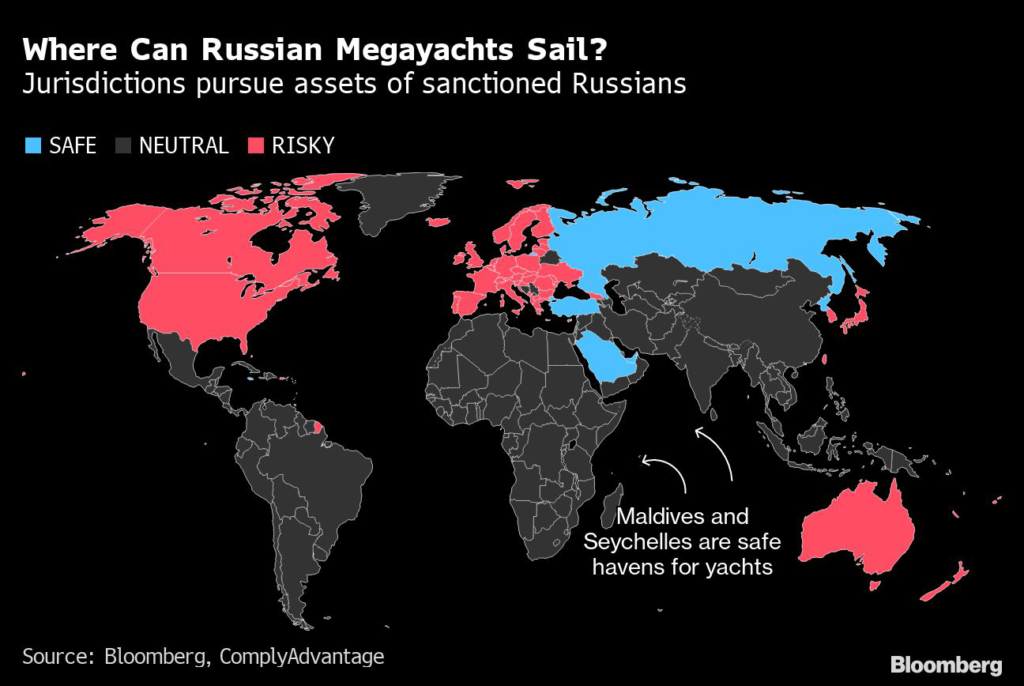
Russian tycoons are running out of places to park their floating palaces, four months after their country’s invasion of Ukraine. The US and Europe are going after their superyachts, villas and other assets because of their ties to Russian President Vladimir Putin. Already, more than a dozen boats worth more than $2.25 billion have been seized by the US, EU nations and willing allies — such as Fiji.

Fearful of having their yachts seized, owners have sent them to a small number of locales still considered friendly — allowing the vessels to dock or hang around unbothered — including Dubai in the United Arab Emirates, Turkey and the Maldives, according to Spire Global Inc., a data and analytics firm that uses satellite technology to track maritime activity. 

Read more: Megayachts Running Low on Safe Harbors as Russia Sanctions Bite


More stories like this are available on bloomberg.com

©2022 Bloomberg L.P.

Meta Pulls Support for Tool Used to Keep Misinformation in Check

(Bloomberg) — On May 17, as several states held their primary elections, Jesse Littlewood searched the internet using a tool called CrowdTangle to spot the false narratives he knew could change perceptions of the results: damaging stories about ballots being collected and dropped off in bulk by unauthorized people, who the misinformation peddlers called “ballot mules.”

Littlewood, the vice president for campaigns with the voter advocacy group Common Cause, easily came across dozens of posts showing a “Wanted” poster falsely accusing a woman of being a ballot mule in Gwinnett County, Georgia. He raised alarm bells with Facebook and Twitter. “This was going to lead to threats and intimidation of this individual who may be an elections worker, and there was no evidence that this person was doing anything illegal,” Littlewood said. “It needed to be removed.” 

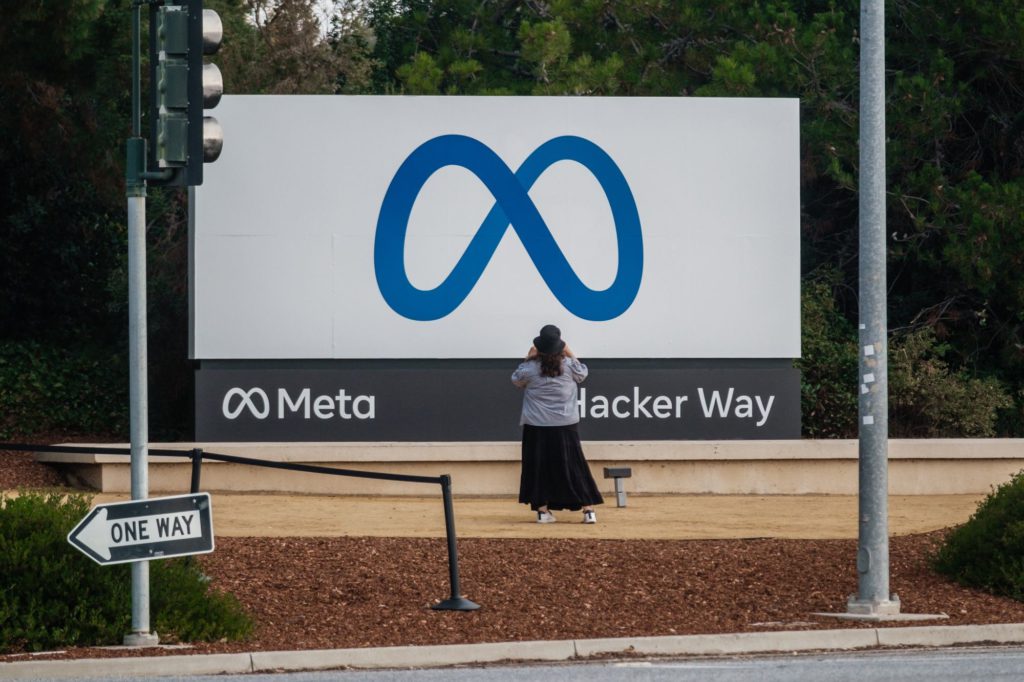
Meta Platforms Inc.’s Facebook owns the search tool Littlewood used, and the company has for months kept its plans for CrowdTangle a mystery.  Meta has been reducing its support for the product. The company is expected to eventually scrap it, and has declined to say when it plans to do so. Not knowing the future of CrowdTangle or what Meta chooses to replace it with, Littlewood said, endangers planning for future elections. The group has thousands of volunteers working in shifts to identify false information online, and CrowdTangle is indispensible to the process. 

Erin McPike, a Meta spokesperson, said the company will continue to support researchers, with plans to make “even more valuable” tools for them. In a response to researchers’ concerns, she said the company would keep CrowdTangle alive for at least this year’s US midterms. 

Elections officials and voting rights advocates are bracing for a repeat of the flood of misinformation that engulfed the 2020 presidential race online, resulting in real-world violence during the Jan. 6 insurrection. Kate Starbird, an associate professor at the University of Washington and co-founder of the Center for an Informed Public, said that if Facebook must power down CrowdTangle, she hopes the company would “create a viable alternative,” which she said does not exist so far, and “give researchers and journalists time to redesign their workflows around the new tool.” Not providing one would “significantly limit” the ability of researchers to help others counter real-time misinformation and could lead to voters being manipulated.

Common Cause’s work “would be impossible to do without a tool that looks across Facebook,” Littlewood said. CrowdTangle gives insight into posts on Instagram, Twitter and Reddit too. “And we all know that the midterms are testing grounds for 2024, when the level of disinformation will be even higher.” 

Researchers don’t just rely on the tool, but on the companies reacting to the harmful content reports they make. Twitter removed the misinformation Littlewood flagged in May; on Facebook, which didn’t respond to his warning, at least 16 of the posts remained in mid-June. Facebook took them down after media outlets, including ProPublica and Bloomberg News, reached out.

McPike, the spokesperson, said “the CrowdTangle product experience for the 2022 midterm elections remains the same as it was for the 2020 election.” But researchers are already seeing a difference, pointing to a buggy experience as the company has siphoned off support for the tool over the past few months.

In February, Meta started an official internal process to shut down CrowdTangle, but paused the plan as the Digital Services Act, a landmark law in Europe that aims to provide transparency into how Facebook, YouTube and other internet services amplify divisive content, gained traction, according to a person familiar with the matter. CrowdTangle is still on track to be shut down eventually, the person said, with some Facebook engineers tasked to killing it.

Meta purchased CrowdTangle in 2016, saying at the time that it wanted to support news publishers in discovering how their content was performing on Facebook and Instagram, so they could improve their strategies. A few months later, the company disclosed Russia’s campaign to influence the 2016 election by posting on social networks. As the public debated the spread of false information online, CrowdTangle became a tool not just for insight into social media strategy, but manipulation. It was uncomfortable for Meta; often, the company would try to publicly dispute the conclusions journalists and others drew from research on CrowdTangle. Executives could no longer stomach supporting a feature that resulted in so many public relations crises for Meta.

The CrowdTangle team within Meta was disbanded in the summer of 2021, with its dozens of employees either quitting or getting new assignments in other parts of the company. Meta also rescinded a $40,000 grant that aimed to help two research partners use the CrowdTangle data to understand public discussion around the Covid-19 pandemic. Brandon Silverman, the former chief executive officer of CrowdTangle, departed from Facebook in October. And in January of this year, Meta “paused” new users from getting access to CrowdTangle as it worked through what it said were staffing constraints. It has not restarted the process of onboarding new partners to the service.

As of recently, fewer than five engineers on Facebook’s London integrity team were working on keeping CrowdTangle afloat, a person with knowledge of the matter said. That leaves scant support for the tens of thousands of organizations that use the tool in their work, including leading fact-checking organizations around the world such as Agence France-Presse in France and VERA Files in the Philippines, along with hundreds of other academics and researchers, news outlets, human rights activists in places like Myanmar and Sri Lanka. 

No new features have been added to CrowdTangle in over 16 months. Before CrowdTangle’s disbanding, its team rolled out new updates several times a month, and major new products every half-year. Researchers worry that the product’s instability could become worse during major events, as the computing load increases, said Cody Buntain, an assistant professor and social media researcher at the University of Maryland. “I would expect this load to change during the midterms,” Buntain said. “There’s legitimate concern about whether it will remain stable in the important time frame.” 

Cameron Hickey, director of the Algorithmic Transparency Institute at the National Conference on Citizenship, said his group is currently in the process of putting together a comprehensive monitoring list of every candidate on the ballot in 2022 — and that this list, which thousands of voter advocate volunteers nationwide have access to, lives on CrowdTangle. Meanwhile, Facebook has kept CrowdTangle closed off to groups dedicated to fighting misinformation on new charged topics in the news, such as advocacy groups that want to combat abortion misinformation on the verge of a major Supreme Court ruling that may overturn Roe v. Wade, he said. 

“For a transparency and research tool, Facebook is not adding needed enhancements that would benefit the research and transparency community,” Hickey said. He cited long-standing bugs on the platform and missing features, such as the ability to filter for posts that have already been fact-checked by Facebook.

Meta said that when it is made aware of a potential issue on CrowdTangle, it addresses it as quickly as possible. It added that the company provides another dedicated tool for its third-party fact checkers to comb through its social media apps and label content that may be misleading.

Brandon Silverman, the former CEO of CrowdTangle, said that the research community the team worked with had long seen how impactful data sharing was, but that CrowdTangle had “struggled” with how to tell that story broadly, including inside Meta. “Over the last few months, I think that has started to shift,” he said in an interview. “There’s an increased recognition that getting to some baseline transparency has to be one of the first steps forward.”

The company has attempted to promote its other transparency reports, such as the Widely Viewed Content report it distributes every quarter, which was originally rolled out as a rebuttal to CrowdTangle data suggesting far-right personalities consistently dominate the platform. But researchers say a polished report from Meta isn’t as revealing as a tool they can use to ask their own questions. The company shelved the first content report it compiled when Facebook executives, including Alex Schultz, the company’s chief marketing officer, debated whether it would cause a public relations problem, according to the New York Times.

Most likely, insiders say, Facebook will roll out a tool that mimics some of the features of CrowdTangle without giving users full access to its original capabilities. The company has assigned its data transparency team to work on a replacement tool in a privacy-safe way, it said. So far, its efforts fall short, researchers say. Those who have access to a separate post-searching tool for academic research say it’s much less user-friendly. Buntain, the researcher at University of Maryland, said that researchers who want to use it must know how to code to extract analysis from the data set, and that academics don’t have insight into how Meta compiles the data it provides. 

In fact, researchers previously caught a mistake by Facebook when they found a discrepancy between the data it provided to its research community and the data it released publicly through its Widely Viewed Content report. The data provided to the researchers had left out about half of Facebook’s US users — the ones who engaged with political pages enough to make their political leanings clear. That incident showed “the value of multiple points of view into data,” Buntain said. 

CrowdTangle is unmatched in “its usability, the speed with which you can get insights, and the ease with which you can get insights,” Buntain added. “That can’t be overstated.”

(Updates comment in final paragraph. An earlier version corrected the university affiliation of Cody Buntain in 13th, 19th paragraphs.)

More stories like this are available on bloomberg.com

©2022 Bloomberg L.P.

BT CEO Faces Furious Staff in Town Hall, Says He Can’t Boost Pay

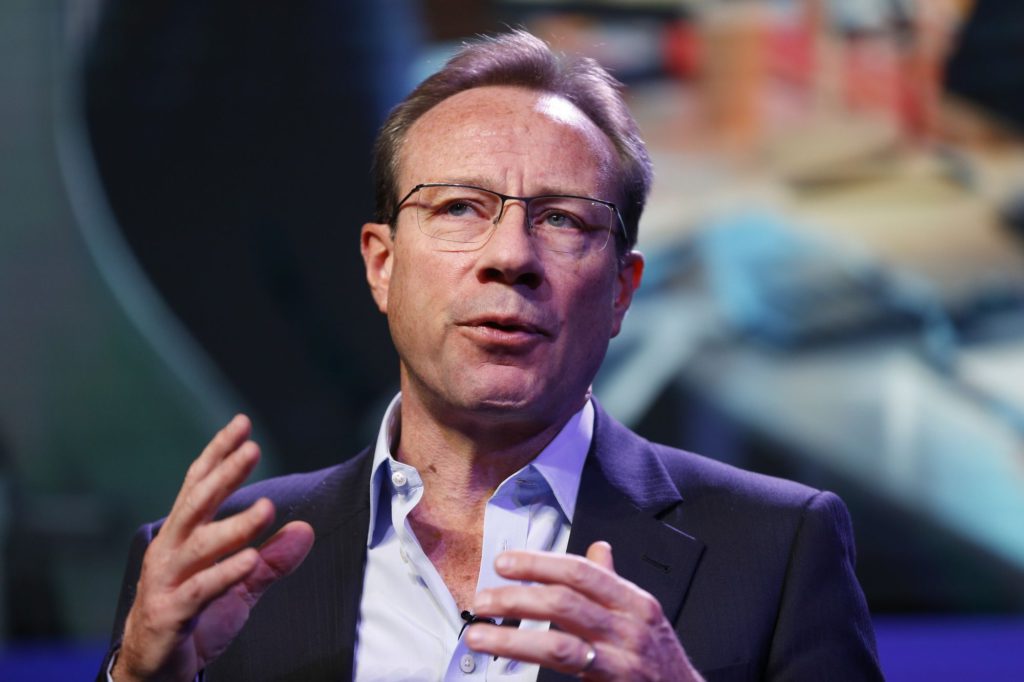
(Bloomberg) — BT Group Plc Chief Executive Officer Philip Jansen told incensed staff that the telecom giant can’t afford to pay them more because of soaring costs and low growth while employees threatened to strike. 

In the company’s “PJ Live” virtual town hall meeting Wednesday, staff protested, asking for Jansen’s thoughts on workers who are struggling to pay bills, according to footage of the virtual meeting seen by Bloomberg. Several others pointed to Jansen’s own pay, which rose 32% this year to £3.5 million ($4.3 million), due to share awards. 

A spokesman for BT didn’t dispute the characterization of the call, and said the raise they’ve awarded workers is the highest in 20 years. Jansen “felt strongly that going ahead with the meeting and openly answering questions colleagues had in a live setting was the right thing to do,” the spokesman said. 

The Communication Workers Union is in its final days of balloting BT employees on whether to strike, joining an acrimonious national debate on pay. A rail strike has hobbled travel in London this week after tens of thousands of workers walked out. Post Office workers went on strike last month, and British Airways unions voted in favor of action earlier on Thursday.

London Commute Quiet Between Rail Strikes as Talks Fail

Jansen said he wouldn’t want a strike to “damage the business in a way that isn’t helpful for the future” by harming customer relationships. “Would I like to do more? Yes. Can we afford to do more? No.”

He said BT’s revenue hasn’t increased for several years while its energy bill, already sitting at about £350 million, would jump by at least 50%. He cited other expenditures like investment in fiber optic lines, taxes, dividends, interest payments on almost £20 billion in debt and the company’s pension deficit.

“When you add all that stuff up, we’re actually slightly in the negative – so we’ve actually taken on more debt to make all that work,” he said at the meeting.

The CWU expects a result of its strike ballot on June 30. Talks with management fell apart in April, and BT unilaterally awarded 58,000 so-called front-line workers of its roughly 100,000 total a flat £1,500 annual increase, effective April 1. That’s about 8% for the lowest paid workers and about 3% for the higher paid in the group, the company has said. That’s less than inflation, which hit 9% in the U.K. that month.

Jansen said on the town hall that he was willing to talk to “anybody, anytime” and described his relationships with the unions as “really good.” 

UK Inflation Rises to New 40-Year High With More Gains Expected

BT should make an offer that keeps pace with inflation, a CWU spokesman said, describing the call as “a complete embarrassment” for Jansen. “It is no surprise that a CEO with a £3.5 million pay package isn’t in touch with working people,” he said. 

BT analysts are also asking whether political attention on the cost of living crisis could squeeze BT’s pricing power in a retail market which Jefferies analyst Jerry Dellis described as “oligopolistic” this week. The company rolled out a broadband price increase of January’s annual inflation rate plus 3.9%.

Jansen has been summoned to a meeting with Culture Secretary Nadine Dorries to discuss how to mitigate higher costs to consumers, according to Sky News. BT already offers social tariffs to people on state benefits.

More stories like this are available on bloomberg.com

©2022 Bloomberg L.P.

TikTok Turns On the Money Machine

(Bloomberg Businessweek) — Alyssa McKay used to work part-time at a frozen yogurt store in Portland, Oregon, making minimum wage to cover her college tuition. Now the 22-year-old earns more than $100,000 a year on the short-video platform TikTok. Brands like Coach, Netflix and Amazon Prime Video pay up to reach her 9 million followers, mostly teenage and pre-teen girls who wouldn’t dream of visiting Facebook.

“TikTok definitely 100% changed my life,” says McKay, who recently moved into her first apartment with her dog.

The most downloaded app of 2021, TikTok has surged to a billion-plus global users, who consume an infinite feed of short clips delivered instantly by algorithm. While the platform has long helped creators like McKay step to the center of the attention economy, the company is only now starting to cash in on all that popularity.

TikTok raked in nearly $4 billion in revenue in 2021, mostly from advertising, and is projected to hit $12 billion this year, according to the research firm eMarketer. That would make it bigger than Twitter Inc. and Snap Inc. combined — three years after it started accepting ads on the platform.

“It’s definitely a threat to Google and Facebook,” said Pieter-Jan de Kroon, chief executive officer of the online ad firm Entravision MediaDonuts. “TikTok is starting to command a percentage of the media budget that’s more in line with its audience size.”

Alphabet Inc.’s Google and Facebook, now Meta Platforms Inc., are the giants of online advertising, a duopoly so powerful they have been hit with antitrust complaints in the US, the UK and the European Union. TikTok and parent ByteDance Ltd. is shaping up to be the most serious threat to that chokehold since the pair rose to power over the past two decades.

With a billion monthly active users, TikTok is still smaller than Facebook (2.9 billion) and Instagram (2 billion), also part of Meta. Yet TikTok’s programming is proving unusually compelling: Its average user in the US now spends about 29 hours a month with the service, more than Facebook (16 hours) and Instagram (8 hours) put together, according to mobile researcher Data.ai. Scott Galloway, a professor at New York University Stern School of Business, has likened the service’s addictiveness to opium.

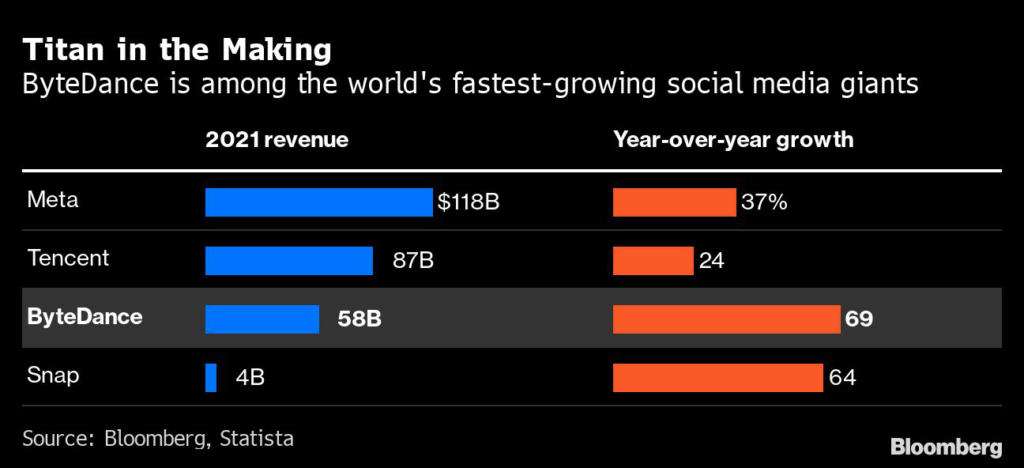
This isn’t beginner’s luck. ByteDance, TikTok’s parent, has been developing apps with algorithms for recommending just the right video clip or news story ever since Zhang Yiming founded the company ten years ago. The Beijing-based firm built a Chinese version of the TikTok platform, Douyin, that already has more than 600 million users and a battle-tested business model. ByteDance’s revenue hit an estimated $58 billion last year and its growth is faster than any other major social network.

TikTok is starting to show the profit potential in countries like the US. The company is now charging as much as $2.6 million for a one-day run of a TopView ad — the first thing that pops up on users’ feed when they open the app — roughly four times what it charged a year ago, according to a document reviewed by Bloomberg News. A 30-second Super Bowl ad runs about $6.5 million — but TikTok can charge that rate every day.

The ByteDance model goes beyond advertising. TikTok is diversifying into music distribution, game publishing and Twitch-style subscriptions. It’s also edging into e-commerce, blurring the line between social media and online shopping in ways that could challenge Amazon.com Inc. The video-sharing platform now lets merchants set up digital stores in countries like Britain, Indonesia and Thailand, where millions of users purchase products directly inside the app without any involvement from traditional e-commerce.

“TikTok is TV for Gen Z,” said Jo Cronk, president of marketing firm Whalar. “If you want your brand, your product, your service to get attention with Gen Z, that’s just a non-negotiable today.”

Read ByteDance founder Zhang Yiming’s first interview with foreign media

Mark Zuckerberg is starting to sound a little worried. The Meta co-founder blasted his Chinese rival for censorship in 2019 and later told Congress that hindering American innovation would only help Chinese companies like TikTok, perhaps to blunt antitrust scrutiny.

Then in February, Meta reported disastrous earnings that triggered a $230 billion stock wipeout. Zuckerberg name-checked TikTok no fewer than five times in a post-earnings call. The primary thing he flagged for recovery was to spend more resources on Reels, essentially a TikTok copycat.

“This is really telling that it was the first time that Mark Zuckerberg called out a competitor like that several times on a call,” says Avi Ben-Zvi, a vice president at ad agency Tinuiti. “The competition from TikTok stands out as the No. 1 challenge.”

In a sign of the rivalry, Meta allegedly hired political consultants to run campaigns against TikTok in the US, including op-eds and letters to regional news outlets targeting the app. In one example, the firm paid by Meta spread rumors of a “Slap a Teacher TikTok challenge” to local media, even though no such effort existed, the Washington Post reported in March.

Executives at Meta are now trying to quickly learn and apply lessons from TikTok’s success, with the hopes of reviving their growth, especially with a younger audience. Both Facebook and Instagram have been aggressively pushing users to Reels, promoting videos heavily in feeds even if people haven’t chosen to connect with such content.

Meta declined to comment for this story, as did Google.

Zuckerberg Is So Worried About TikTok He’s Blowing Up Instagram

TikTok’s road to monetization really began under Donald Trump. The 45th president of the United States targeted the app as part of his anti-China political strategy, threatening to ban the service because of alleged security risks. In the heat of the conflict in 2020, ByteDance agreed to sell a majority stake in TikTok to Oracle Corp. and Walmart Inc. — and pledged to create 25,000 American jobs.

TikTok ended up outlasting Trump and the fire sale was called off. Yet with ByteDance retaining 100% ownership, the company began to make real progress with its business model. The point person for this effort is Blake Chandlee, TikTok’s Texas-based president for global business solutions.

Chandlee, who joined the company in 2019 after a decade at Facebook, makes the case that traditional advertising is dying, and businesses will die if they keep putting money into the same old TV shows or social networks.

“When people think branding, they still think TV. And I just think that’s wrong,” Chandlee says in an interview from Cannes Lions, a five-day festival for the advertising community in the French resort town. “We should be purposely disrupting television.”

Chandlee and his team — a fleet of engineers, data analysts and sales reps in the thousands in cities from Shanghai to Austin and Warsaw — work with brands to partner with influencers like McKay and create viral challenges, goofy camera effects and immersive full-screen videos. “Don’t make ads. Make TikToks,” their motto goes.

Advertisers are now making TikTok an integral part of their media strategy and budget. “Two years ago, they were really in the testing experimental mode before the political winds shifted,” says Ryan Detert, CEO of the Influential marketing firm. “Now it’s beyond testing, and it’s like how much money we should be pumping into this platform.”

Richard Henne, co-founder of clothing store Ivory Ella, says his firm uses TikTok to attract middle-school and Gen-Z girls, key target customers it’s not getting from older social networks. While the firm has been spending a quarter of its social marketing budget on Facebook and Instagram, he’s now trying to “lower that number as much as possible, as soon as possible because they’re obviously losing their grip on the marketplace.”

TikTok has an edge against Meta that Apple Inc. helped solidify. Last year, the Cupertino, Calif.-based company updated its iPhone operating system so that users have to opt in to let apps like Facebook track their activities as they used other software on their phones. Most users decided not to let Meta track them, a change Zuckerberg has blamed for financial troubles like those in February.

TikTok, it turns out, isn’t relying so much on that kind of tracking data. Its artificial intelligence discerns a user’s likes or dislikes largely from activities on the platform, picking up on how long you watch, say, a cat video, a skateboarding clip or lip-synced dancing. TikTok’s algorithms can then match up users with not just content, but advertising too.

Take Oanh Nguyen, a 31-year-old in Los Angeles who’s built a 13-million-person fanbase on TikTok since Covid put her hair salon out of business. Nguyen makes comedy skits on her account “Moontellthat” and in one of her sponsored videos, the creator rushed to wash her hair and dress up for a big family gathering, only to find out her boyfriend was playing a prank on her. Proctor & Gamble paid the couple $20,000 to feature its Pantene shampoo in the 30-second production, she says, which has 5 million views.

It’s the Gen Z version of the product placement that’s been around for decades — think Nike in Back to the Future or FedEx in Cast Away. TikTok set up a $200 million fund in 2020 to pay creators to get views, and pledged to grow the pool to $1 billion in the US over the next three years.

YouTube, Instagram and Snapchat later followed suit. Every major social network is now trying out short videos on their main platforms, raising the competition to surreal intensity. At Meta, engineers are rewriting the algorithms for Facebook and Instagram to surprise and delight people with videos they didn’t know they wanted to see — the very core of TikTok’s appeal.

Such moves by Meta are risky, but deemed necessary; Facebook, the top moneymaker, is suffering from an aging audience. Lower-than-expected demand from advertisers, which Meta attributed to stress factors like inflation, the supply crunch and the war in Ukraine, doesn’t seem to be affecting TikTok as much because it just turned on the money machine. And Meta needs its strong revenue growth to continue, in order to fund Zuckerberg’s futuristic immersive internet, called the metaverse. It’s an effort that will lose “significant” money in the near term, Zuckerberg has said.

The cutthroat battle has been a bonanza for creators like Maria Luisa Van Zwieten. The 29-year-old Dutch cosplayer earns up to ten grand from brands enlisting her to make TikTok videos in a good month — and now she can make an equivalent amount by posting the same clips on Reels.

“There’s less work for me, but double the earnings, so I was like all good,” Van Zwieten says.

Chandlee and his team keep experimenting. In May, TikTok started to allow top creators to get revenue share from the ads placed in between their video content, a move that mimics YouTube’s long-running program with vloggers. TikTok also started to sell its TopView ads by clicks and impressions instead of just one-day bundles, allowing more targeting and budgeting options for clients accustomed to similar options with Facebook.

Marketers and ad agencies say Meta still offers better products in media buying, the good old ad placements that translate directly into purchases or app installs. Fabian Ouwehand, Munich-based founder of the Many Creators agency, says many companies simply haven’t bought the idea of making TikToks instead of ads.

“Still I’m in these calls with big companies and they say, ‘yeah, but we want to create something like a TV commercial.’ And then the TikTok team is always so frustrated,” says Ouwehand, who now heads the social e-commerce unit for German home shopping network HSE after the firm acquired his agency. “Because many still don’t get it, still, how to create a TikTok video.”

ByteDance’s Zhang has called the blending of entertainment and buying his “next major breakthrough.” In 2020, Douyin, the Chinese TikTok, hosted $26 billion of e-commerce transactions in its first year of offering shopping in the app and that business tripled in size over the past 12 months. The idea is to take care of as many steps of a purchase as possible, with in-app stores, customer support and built-in payment functions.

TikTok has teamed up with Shopify Inc. to let merchants embed their web shops into videos on the platform. The transactions have been processed by those third-party sites, similar to on Facebook Shops. But more recently TikTok took an approach that mimics Douyin more closely: since mid-2021, it rolled out in-app stores with a more frictionless experience in countries including Britain, Indonesia, Singapore and Thailand.

“The journey to purchase something is very, very easy. It’s like one click away,” says Fauza Istighfareva, a Jakarta-based manager with digital agency Leverate Media.

TikTok plans to grow its e-commerce gross merchandise volume to $2 billion this year and $23 billion in 2023, according to a person close to ByteDance who asked to remain anonymous while discussing private information. Indonesia, one of its most populous markets, will make up a big portion of that target, the person says.

“When it comes to monetization, Douyin is typically two or three years ahead of TikTok, including in e-commerce,” says Zheng Yi, a partner with Zoo Capital, a Chinese venture firm investing in tech. TikTok’s move into e-commerce, he adds, “could be a big game changer.”

All of this had ByteDance on track for a blockbuster initial public offering — up until about a year ago. The company’s valuation rose to more than $350 billion in private transactions last year, Bloomberg News reported, making it the most valuable startup in the world, ahead of SpaceX and Stripe Inc.

But its prospects have taken a hit from the plunge in technology stocks worldwide and from China’s crackdown on its private sector. President Xi Jinping’s administration has rolled out sweeping reforms against the country’s internet giants, including Alibaba Group Holding Ltd., Tencent Holdings Ltd. and ByteDance.

Over the course of the past year, Beijing’s hardline policies led ByteDance to shut down most of its online education operations, offload a stock trading app and disband its venture investment arm. Communist Party officials even unveiled a 30-point guide for regulating the algorithms of services like Douyin. Zhang, the first Chinese founder to create a truly global internet player, stepped down as CEO and chairman last year amid the political pressure.

China Plans Control of Tech Algorithms U.S. Can Only Dream Of

Politics remains an enormous risk in the US too. While the Biden administration scrapped efforts to ban TikTok, China hawks continue to view it as a potential security threat. On June 17, Buzzfeed News reported that China-based ByteDance employees had repeatedly accessed nonpublic data about US TikTok users as recently as this January. The same day the story ran, TikTok announced that “100% of US user traffic” is being routed to Oracle servers in Texas.

ByteDance has been shifting more attention to TikTok as uncertainty mounts at home. The Chinese company hired Chew Shouzi from handset maker Xiaomi Corp. last year and then promoted him to TikTok CEO. Other key execs who made the switch from ByteDance to TikTok include Zhu Wenjia, the coding wizard behind its algorithms, and Bobby Kang, who led Douyin’s live-streaming commerce business. There’s been speculation ByteDance may look to spin off TikTok and set it up as a non-Chinese business, though the political risks of such a move are enormous.

The intrigue is largely lost on TikTok’s stars. Creators like McKay worry less about who’s calling the shots in Beijing or Washington than creating just the right skit for a viral hit. After graduating this summer, she is trying her hand at acting and landed the lead in a film called Cake (town), “a modern day rust belt Romeo and Juliet.”

“I’m still going to continue doing short-form content even if my acting career takes off.” says McKay. “I just love sharing my life, so I would always do it regardless.”


More stories like this are available on bloomberg.com

©2022 Bloomberg L.P.

Spyware Vendors Hawking Zero-Day Flaws Uncovered by Google

(Bloomberg) — A new report from Google finds that most of the zero-day vulnerabilities its researchers discovered last year were being exploited by commercial surveillance vendors and that sell the tools to governments to surreptitiously monitor their citizens.

Alphabet Inc.’s Google said on Thursday that it has been tracking more than 30 firms with “varying levels of sophistication and public exposure” that sold software exploits or surveillance capabilities.

Seven out of nine zero-day vulnerabilities that Google found in 2021 were being developed by commercial providers and “sold to and used by government-backed actors,” the company said. Zero-days flaws are issues in software that hackers and spyware vendors can exploit until a patch is provided by the developer.

Google also said software made by RCS Lab S.p.A. was able to infect mobile phones — running Apple’s iOS or Google’s Android operating system — and snoop on users in Italy and Kazakhstan. Google’s findings follow those last week from the cyber firm Lookout Inc., which said “Hermit” spyware was likely developed by RCS.

“Our findings underscore the extent to which commercial surveillance vendors have proliferated capabilities historically only used by governments with the technical expertise to develop and operationalize exploits,” the Google researchers warned in a blog post that also shared snippets of the code. “This makes the internet less safe and threatens the trust on which users depend.”

In a statement, RCS said it abides by government regulations and has long served law enforcement customers.

“Our products are delivered and installed within the premises of approved customers,” the company said. “RCS Lab strongly condemns any abuse or improper use of its products which are designed and produced with the intent of supporting the legal system in preventing and combating crime.”

More stories like this are available on bloomberg.com

©2022 Bloomberg L.P.

BlackBerry Investors Reject Executive-Pay Plan After Stock Slide

(Bloomberg) — Shareholders of BlackBerry Ltd. rebuked the board and major shareholder Prem Watsa, rejecting the company’s executive compensation plan and voting in large numbers against Watsa’s re-election as a director. 

Watsa received just 50.7% support at the Canadian software company’s annual meeting on Wednesday. That means, excluding the 46.7 million shares controlled by Watsa’s Fairfax Financial Holdings Ltd., shareholders representing a majority of the votes at the meeting opposed him. 

BlackBerry investors also voted 56% against the company’s compensation plan in a so-called “say on pay” resolution. That was up from 41% opposition in a similar vote last year. 

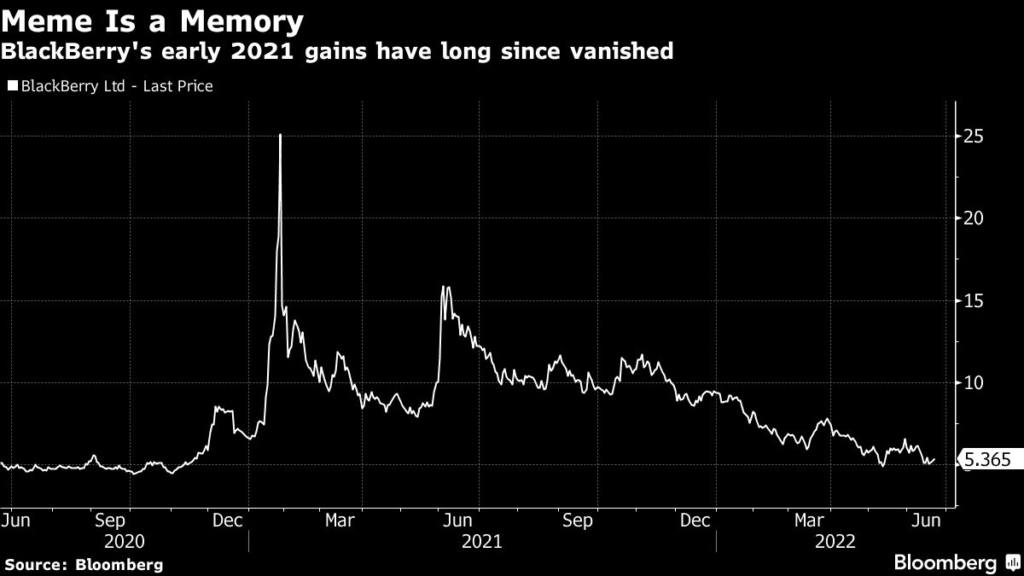
BlackBerry was briefly caught up in last year’s meme-stock craze — the shares more than doubled in January 2021 — before giving up those gains. The shares remain lower than they were when John Chen took over as chief executive officer in 2013 with a plan to focus on software instead of smartphones. 

On a personal level, the vote is a blow for Watsa, a legend in Canada’s financial community for his success in following Warren Buffett’s approach to value investing. From a corporate perspective, it’s the latest in a series of milestones marking BlackBerry’s long descent.

Once the dominant player in smartphones, die-hard fans of BlackBerry devices, including Barack Obama, weren’t enough to save the company from a series of missteps and relentless competition from Apple Inc. At its peak the company had a stock market value of about C$85 billion ($66 billion); today it’s C$4 billion. 

Shareholders’ discontent stems in part from the tens of millions of dollars in stock awards Chen has received over the years, even as the company struggled to grow. The temporary rise in the share price during the meme-stock rally meant that Chen received performance share units, or PSUs, despite its subsequent tumble. 

Shareholder advisory firms Glass Lewis & Co. and Institutional Shareholder Services Inc. both recommended that investors vote against the say-on-pay plan. The compensation vote is advisory, meaning it isn’t binding on the board. 

In February, Chen filed a plan with regulators to sell as many as 2.9 million shares of BlackBerry, or nearly a third of his holdings, for “personal financial planning purposes.”

A BlackBerry spokesperson said that Chen has never executed a discretionary sale of his own shares during the time he’s been with the company, and all of his sales were done automatically to cover withholding taxes.

(Updates with comment from BlackBerry representative in last paragraph)

More stories like this are available on bloomberg.com

©2022 Bloomberg L.P.

Vapers Are Rushing to Hoard Juul E-Cigarettes Now Banned by the FDA

(Bloomberg) — Brand-loyal vapers are flocking to their favorite shops to stock up on Juul Labs Inc.’s e-cigarettes, amid news that the products will be taken off the market. 

“My husband is out on a Juul run right now. Gonna clear the shelves and hoard ’em like our incandescent bulbs!” one user wrote on Twitter following the news, first reported on Wednesday by the Wall Street Journal, that the US Food and Drug Administration could order the company to stop selling its e-cigarettes. On Thursday, the FDA denied authorization to Juul for all of its products currently marketed in the US, requiring the company to stop selling and distributing them and to remove those that are on the market. 

It’s the latest hit for Juul after the FDA banned sales of customer-favorite fruity and sweet flavors on concerns the products were being marketed to minors. But the company isn’t being singled out — the FDA has generally tightened its oversight of e-cigarette companies and is reviewing thousands of applications from companies aiming to sell similar products.

Juul “just so happened to rise to the top of the stack,” said Lynn Kozlowski, a public health professor at the University of Buffalo who has led studies on nicotine addiction, vaping and cigarettes. 

Back in 2019, reports began to emerge of cases of severe lung damage in young people that were later linked to vaping or e-cigarette use. As of February 2020, the US Centers for Disease Control and Prevention recorded more than 2,800 such cases that resulted in hospitalizations and deaths. Studies revealed an association with vitamin E acetate, an additive in some THC-containing vaping products, and cases declined amid increased public awareness and efforts to better regulate the products’ safety.

People vape for a different reasons: some to kick cigarettes, other use the products socially. When flavors like mango, fruit and creme were taken off shelves in 2019, some customers turned to other products that had more of a “reward” component — better flavors, perhaps even a higher nicotine content, Kozlowski said.

Will Teasley, 20, a college senior at North Carolina A&T State University is happy the FDA is pulling Juul off the shelves, but thinks it will do little to discourage young people from vaping because there are so many other products available. Teasley first got hooked on vaping in high school — with Juul — and for the last five years he said its been nearly impossible to quit.

“Juul is the device that opens the door to cause lifelong addiction,” Teasley said. But for him, the FDA’s move comes too late: “It already got me.”

Brands like Puff Bar, VaporLax and Hyde sell more flavors and offer disposable options that consumers say makes them easier to use than a Juul, which needs to be refilled and charged. Plus, Juuls tend to be more expensive than competitors. The liquid inside Juul pods is eight times more expensive per milliliter than comparable e-liquid sold in a bottle, according to e-cigarette website vaping.com.

“You might have some people who buy up Juul and hoard it, but others will just switch to products that are still legal,” Kozlowski said. “It’s a very diverse market.”

Read More: Juul Finds Hell Hath No Fury Like an Army of Really Rich Parents

Still, some shops are readying for a potential influx of customers hoping to stock up. By mid-morning Wednesday, the Smoke Shop in Manhattan’s Kips Bay neighborhood said they were putting all their Juul supply out on shelves in preparation. 

More problems could arise for vapers if the FDA continues cracking down on vaping products, Kozlowski said. The Biden administration is showing more interest in the subject, preparing to require tobacco companies to cut nicotine levels in cigarettes to reduce smoking-related deaths. When that comes to pass, it may be safer to have an abundance of consumer-acceptable, less-harmful options available, Kozlowski said. 

“I’m worried about what this suggests for the impact of a low-nicotine cigarette policy,” he said. “We don’t know what types of patterns might develop; it’s a risk to consumers.”

(Adds FDA action in first and second paragraphs.)

More stories like this are available on bloomberg.com

©2022 Bloomberg L.P.
Supreme Court Blog Hit With Heavy Traffic as Opinions Come

(Bloomberg) — As the US Supreme Court issued several decisions on Thursday morning, a popular blog that tracks them appeared to be suffering from heavy traffic, leading to lags or failures in loading for some users.

SCOTUSblog acknowledged the issues in a tweet, directing readers to follow updates on the cases on Twitter instead of its website.

Thursday morning’s Supreme Court decisions included a consequential ruling on a New York gun law, one of four opinions issued for the day, leaving nine cases left to be decided in the term. The heavy traffic to SCOTUSblog may reflect intense public interest in the cases left to be decided, which includes a ruling that could overturn Roe v. Wade.

More stories like this are available on bloomberg.com

©2022 Bloomberg L.P.
Close Bitnami banner
Bitnami