Bloomberg

Rolex and Patek Returns Beat Vintage Cars and Bitcoin

(Bloomberg) — An unprecedented price surge for the most sought-after second-hand luxury watches is showing signs of settling down after some owners put their Rolex and Patek Philippe timepieces back on the block to cash out, a new index by trading platform Subdial shows. 

The Subdial50 index, which tracks global market prices for the 50 most traded luxury watches by value, has declined about 6% in the past 30 days. A black-dial Rolex Daytona reference 116500LN has lost 10% of its value in a month, though it’s still up about 19% in the past 12 months. The blue-dialed Patek Philippe Nautilus 5711 steel sports watch — which retails for about £119,000 ($145,230) on the site — is down about 12% in 30 days after surging 44% in 12 months, the data show.

“In certain models, there has been this big run-up, and they have come back down to a probably a more sensible price where the true underlying demand was,” Ross Crane, a Subdial co-founder and data scientist who helped create the index, said in an interview. 

Still, the index, which includes Rolex Daytonas, Datejusts, and Submariners, as well as several Patek Philippe Nautilus references and one Audemars Piguet Royal Oak, is up about 32% in the past 12 months. 

That puts pre-owned luxury watches ahead of a slew of other alternative asset investments, including vintage cars, gold, and certainly crypto currencies, which have suffered a steep decline in recent months. The S&P 500 is now poised for its worst first half since 1970, six years before Patek introduced its first Nautilus (which retailed for $3,100 at the time).

Interest in collectible vintage watches spiked during the pandemic as consumers, flush with cash but stuck at home, parked funds in timepieces they lusted over online. Some investors who earned big returns in tech stocks and crypto currencies looked to pre-owned watches as the next hot asset class. 

Prices for some Rolex, Patek Philippe and Audemars Piguet references more than doubled as new buyers piled into a market previously populated by staid collector and hobbyist. After Patek ended production of the 5711 reference Nautilus, prices for its most popular model soared ever higher. 

Now, with tech stocks and crypto values getting pummeled and interest rates on the rise, some speculators are selling their timepieces again.

The online watch seller and trading platform has also created watch price indexes tracking specific brands, such as Omega, Cartier, as well as Tudor, the more budget-minded sister brand to Rolex. The data show pre-owned Omega watches have lost about 3% in 30 days, while the index of selected Cartier watches is up marginally, and Tudor prices are down about 1%.

More stories like this are available on bloomberg.com

©2022 Bloomberg L.P.

Silver Lake Nears 1 Billion-Euro Deal for EQT’s Facile.it

(Bloomberg) — Technology-focused buyout firm Silver Lake agreed to acquire Facile.it, Italy’s largest price-comparison website. 

Silver Lake will buy Facile.it from private equity firms EQT AB and Oakley Capital, according to a statement Wednesday, which confirmed an earlier Bloomberg News report. Financial details weren’t disclosed.

The transaction values Facile.it at around 1 billion euros ($1.05 billion), people familiar with the matter said, asking not to be identified because the information is private.

The deal marks a successful exit for EQT at a time when weak market sentiment has hurt demand for technology companies and other growth assets. It’s also another example of private equity firms flush with cash looking for investment targets in the portfolios of other buyout funds.  

Facile.it, founded in 2008, allows customers to review prices from services ranging from auto insurance to personal finance. The company generated 140 million euros in revenue last year, according to Wednesday’s statement. 

“Investing in high-growth and pioneering business models with differentiated technology capabilities is at the core of our mission,” Christian Lucas, co-head of Silver Lake in Europe, the Middle East and Africa, said in the statement.

EQT bought Facile.it in 2018. The sale to Silver Lake adds to the roughly $26.9 billion of private equity acquisitions targeting the European technology industry this year, data compiled by Bloomberg show. 

The transaction is expected to close in the third quarter, EQT said in the statement. Goldman Sachs Group Inc. advised EQT on the sale. 

More stories like this are available on bloomberg.com

©2022 Bloomberg L.P.

Sumitomo Mitsui to Buy 10% of Japan’s Top Online Broker

(Bloomberg) — Sumitomo Mitsui Financial Group Inc. has agreed to take a 10% stake in SBI Holdings Inc., cementing an alliance between two of Japan’s most prominent financial firms that will center on digital services. 

SBI, which runs Japan’s largest online brokerage, said it will raise 79.2 billion yen ($583 million) from a share sale through a third-party allotment to Sumitomo Mitsui, a regulatory filing showed Thursday. 

The investment will help SBI shore up capital after buying stakes in several domestic lenders under Chief Executive Officer Yoshitaka Kitao. For Sumitomo Mitsui, Japan’s second-largest bank, the deal will allow it to tap SBI’s younger clients and digital expertise.  

The alliance will focus on providing online financial services for individuals including younger and mass-affluent customers, SBI said in a statement. The brokerage will use the funds to repay loans and enhance its fundraising base, which in turn will boost its capacity to do more mergers and acquisitions.  

SBI said the companies may pursue opportunities to expand and deepen their collaboration in a wide range of business areas in the future. 

SBI is issuing the shares at 2,950 yen apiece, a 14% premium over the closing price on Wednesday. The stock rose 0.7% to 2,605 yen on Thursday, paring this year’s decline to 17%. 

The Tokyo-based companies agreed on a capital and business tie-up in 2020, involving cooperation by units in digital and other fields. The firms have also invested in the Osaka Digital Exchange, a new proprietary trading platform that’s set to open this month. 

SBI has been expanding its banking operations by purchasing stakes in Japanese regional lenders. It took control of mid-sized commercial lender Shinsei Bank Ltd. last year.

Sumitomo Mitsui has also made a string of acquisitions, particularly in Asia. Speaking in an interview late last year, Chief Executive Officer Jun Ohta said he would weigh more transactions in the future after spending more than $3.3 billion in the region in 2021.

(Updates with details from statement in fourth paragraph)

More stories like this are available on bloomberg.com

©2022 Bloomberg L.P.

Trainline CFO to Leave; Second Rail Strike Hits: The London Rush

(Bloomberg) — Here’s the key business news from London-listed companies this morning.

Boohoo Group Plc: The fast fashion retailer has named a new CFO, nabbing Shaun McCabe from Trainline Plc.

  • It is, however, McCabe’s experience as International Director at rival website Asos Plc and as CFO for Amazon Europe that makes him appear a good fit for the role.

888 Holdings Plc: Growth in the gambling company’s European markets has been offset by tougher restrictions to improve the safety of gambling, as well as a temporary exit from the Dutch market. 

  • The company also started a notes offering, which will help fund its purchase of William Hill’s international operations, expected to close at the beginning of next month.

Naked Wines Plc: The online bottle shop expects to break even this year, although it warned that sales could decline. 

  • The e-commerce start-up said it has moderated its investment as it tackled the inflationary environment.

Outside The City

Voters are heading to the polls for two special by-elections today, Boris Johnson’s first electoral test since facing a confidence vote earlier this month.

Meanwhile, the nationwide rail strike is continuing today after the RMT union said yesterday that talks had failed.

In Case You Missed It 

The UK must make moves over the next couple of months or it will lose its chance to take the lead on crypto, former Chancellor Philip Hammond warned.

That’s as Brexit is still depressing UK assets and making it harder to recover from this year’s global market meltdown. The pound has dived nearly 10% in 2022 to be one of the worst-performing major currencies, sterling company bonds are on the longest losing run ever and years of stock malaise has made UK Plc cheap for takeovers.

Looking Ahead

Closely-watched retail sales data tomorrow may hint at the extent to which Britons are willing to use their savings amid the biggest squeeze on incomes in a generation. 

More stories like this are available on bloomberg.com

©2022 Bloomberg L.P.

Swedish Gaming Firm Upended by War Opens New Hubs in Europe

(Bloomberg) — With a 1,000-strong workforce split evenly across Russia and Ukraine, the outbreak of war on Feb. 24 hurt one European gaming company perhaps more than any other.

Stockholm-based G5 Entertainment AB is now conducting a major overhaul of its organizational footprint by opening offices in Poland, Turkey, Georgia and Montenegro. According to Chief Executive Officer Vlad Suglobov the aim of the changes is two-fold: to diversify its staff base and to offer safe relocation for those forced to flee their home countries. 

“We will still probably be Eastern European-focused in terms of developer talent,” Suglobov said during an interview in the Swedish capital. “That’s where the company grew out of and this is where people running the company are from.”

The Russia-born CEO, who himself is based in California, has spent the past 20 years building a company into a free-to-play gaming specialist that has about 6 million monthly users from titles such as ‘Sherlock’ and ‘Jewels of Rome.’ Its shares have been traded on Nasdaq Stockholm’s main market since 2014.

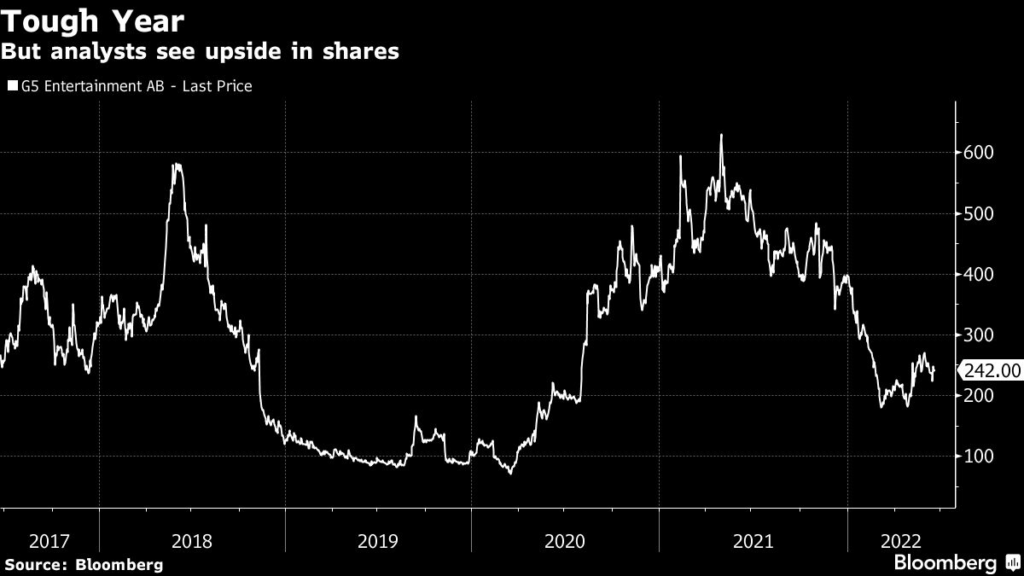
It’s a business model that has been well received by the small number of analysts who all recommend buying the stock. Last week, Kepler Cheuvreux’s Mathias Lundberg initiated coverage of G5 with a buy rating and labeled the firm “the comeback king” after a tumultuous period that has seen its shares slump 40% so far this year.

The company also benefits from an unusual gender balance when it comes to customers with significantly more women players than men, according to the CEO. 

“I have to engage my inner 55-year-old woman,” Suglobov said citing a corner of the market that is often overlooked by more established gaming companies such as Activision Blizzard Inc., whose ‘Call of Duty’ series regularly tops sales charts.

But in an increasingly crowded market place, the cost of finding new gamers may weigh on G5’s profits in the short term, according to Redeye analyst Tomas Otterbeck. In May, the Swedish company said it would boost the level of investments in this area to as much as 35% of sales from the previous guidance of 22%.

Suglobov however remains bullish on attracting customers to the company’s free games even amid the uncertainty caused by accelerating inflation. “We see that spending is pretty much proportional to the time that customers spend playing our games,” he said. “So a situation where they have difficulty affording something else is quite good for us.”

(Adds Poland to list of new offices and monthly user stats. A previous version was corrected to show Malta is not a new location for G5.)

More stories like this are available on bloomberg.com

©2022 Bloomberg L.P.

Ukraine Latest: Russia Faces Deadlines on Bond Payments

(Bloomberg) — Russia faces yet another bond payment test this week, with just days remaining before it potentially slides into its first foreign default in a century. Interest transfers totaling almost $400 million are due Thursday and Friday.

European Union leaders plan to grant candidate status to Ukraine after intense lobbying by President Volodymyr Zelenskiy. The formal move will come at the bloc’s summit in Brussels starting Thursday.

German Economy Minister Robert Habeck will make a statement Thursday on “energy and supply security” amid expectations the government is poised to trigger the second stage of the country’s gas-emergency plan.

(See RSAN on the Bloomberg Terminal for the Russian Sanctions Dashboard.)

Key Developments

  • Spain’s Big Defense Push Hinges on Creating a National Champion
  • Russia Faces Fresh Bond Deadline With Possible Default Days Away
  • Megayachts Running Low on Safe Harbors as Russia Sanctions Bite
  • Biden to Urge Gasoline Tax Pause as Prices Drag on Democrats (1)
  • Europe Industries Cut Gas Use as Continent Saves Fuel for Winter
  • Cold Winter Could Push Europe Toward Gas Supply Shortages

On the Ground

Fighting continued in the eastern city of Sievierodonetsk, and the vicinity of the Azot chemical plant, where more than 550 civilians are sheltering, was hit by shelling, according to Serhiy Haiday, the governor of the Luhansk region. Zelenskiy said the situation in Luhansk was “the toughest” in the country. In neighboring Donetsk, fighting raged along the entire front line. Residential buildings, a school, railway tracks and other facilities were damaged, with one person killed and 15 injured, according to Ukraine’s military, which also reported heavy fighting in the southern region of Kherson.

(All times CET)

Germany to Make Statement on Energy (7:08 a.m.)

Habeck warned Wednesday that Europe’s biggest economy should brace for a further cut in Russian gas flows after Moscow last week slashed deliveries on its main pipeline to Europe. An official familiar with the government’s plans, who asked not to be identified, said the second phase of the three-stage crisis plan could come as early as this week.

Enacting stage two — the “alarm” phase — could mean a change in the law to allow energy companies to pass on cost increases to homes and businesses. It may also involve firing up more coal-fired power plants to minimize gas consumption.

Read more: Germany to Make Statement on Energy Amid Russian Gas Standoff

Russia Faces Fresh Bond Deadline (6:00 a.m.)

Another pressing deadline looms Sunday night on previously missed payments from late May. Those funds — about $100 million of bond coupons — are stuck due to international sanctions and the grace period to find a solution expires at the end of June 26. At that point, Russia will effectively be in default, unless it somehow gets payments through to sufficient holders of the debt.

Billions of dollars of energy revenue pour into Kremlin coffers each week but the country has failed to meet the deadlines because mounting sanctions are cutting off avenues to transfer the cash.

Read more: Russia Faces Fresh Bond Deadline With Possible Default Days Away

Megayachts Running Low on Safe Harbors (1:00 a.m.)

Russian tycoons are running out of places to park their floating palaces, four months after their country’s invasion of Ukraine. The US and Europe are going after their superyachts, villas and other assets because of their ties to Russian President Vladimir Putin. Already, more than a dozen boats worth more than $2.25 billion have been seized by the US, EU nations and willing allies — such as Fiji.

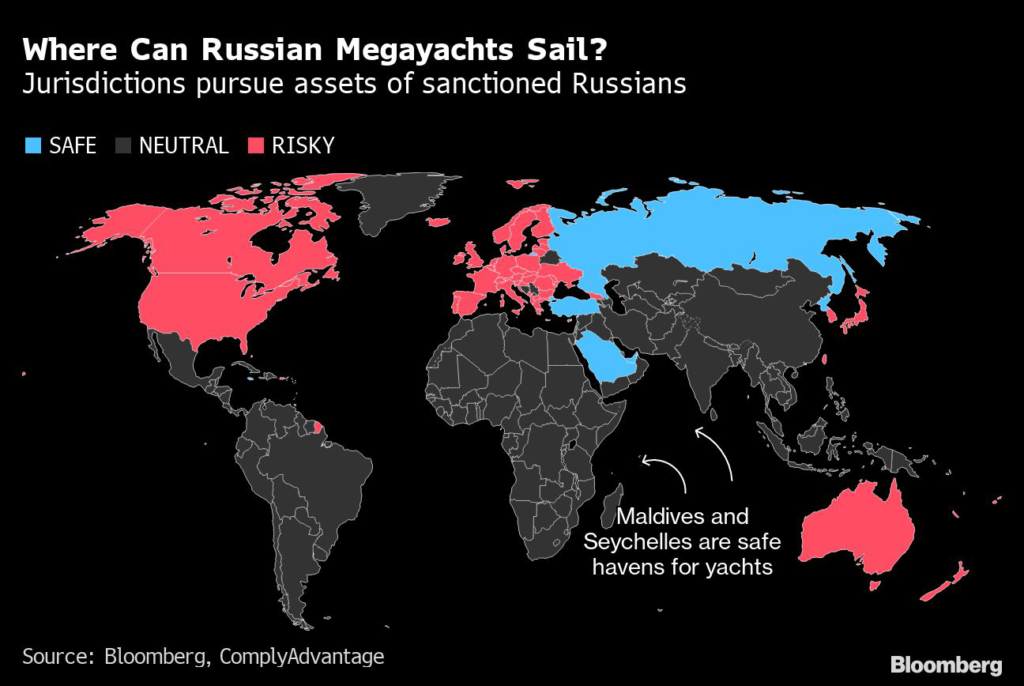
Fearful of having their yachts seized, owners have sent them to a small number of locales still considered friendly — allowing the vessels to dock or hang around unbothered — including Dubai in the United Arab Emirates, Turkey and the Maldives, according to Spire Global Inc., a data and analytics firm that uses satellite technology to track maritime activity. 

Read more: Megayachts Running Low on Safe Harbors as Russia Sanctions Bite


Zelenskiy to Speak at G-7, NATO (11:43 p.m.)

A senior US administration official said the Ukrainian president would deliver remarks to leaders at the summits, which would help firm the resolve of the groups to stand by Kyiv as it battles the Kremlin’s forces. 

Germany Should Brace for Further Gas Cuts, Official Says (6:06 P.M.)

German Economy Minister Robert Habeck said his country should brace for Putin to further squeeze gas imports, a decision that may trigger the next stage of the country’s gas-emergency plan. 

“Given the current situation, we must assume that Putin is ready to reduce the gas flow further,” Habeck said on the sidelines of an air show outside Berlin.

Von der Leyen Praises Ukraine Before Council Decision (5:15 p.m.)

Ukraine implemented about 70% of EU rules, norms and standards, European Commission Ursula von der Leyen said in a speech in the European Parliament. She praised the “immense progress that Ukraine’s democracy has achieved,” but emphasized that more work is needed to fight corruption and loosen the grip of oligarchs on the Ukrainian economy. 

Expressing her support for Kyiv’s EU candidacy status, von der Leyen said that “it is now up to the European Council to decide, and live up to the historic responsibility we are confronted with.”

EU Leaders Plan to Grant Ukraine Candidate Status (4:45 p.m.)

The bloc’s leaders have drafted a joint statement, seen by Bloomberg, that says the EU is granting candidacy status to Ukraine and Moldova, which will then be expected to meet a set of conditions related to the rule of law, justice and anti-corruption. The leaders will also tell Georgia it can achieve the same status after meeting certain conditions. 

“The future of these countries and their citizens lies within the European Union,” the leaders plan to say. The draft statement needs to be formally approved by leaders and could still change. The membership process is expected to take years. 

Germany Plans Donors Conference to Set Up Marshall Plan for Ukraine (4:20 p.m.)

Chancellor Olaf Scholz said Germany and the EU will jointly host an international conference with donors and experts later this year to discuss a multibillion-euro reconstruction plan for Ukraine.

“We have to agree on this — also with the advice of experts and scientists — how such a Marshall Plan for Ukraine can look like, how we coordinate it internationally, how we will decide together on which investments help Ukraine to move forward the most quickly on its European path,” Scholz told lawmakers in Berlin.

Ukraine in Talks for Turkey Meeting on Grain Exports (4:05 p.m.)

Ukraine is taking part in organizing a meeting in Turkey to release its grain exports through ports that have been blocked by Russia’s forces since the invasion, according to Serhiy Nykyforov, a spokesman for Zelenskiy. He declined to provide any details.

Turkey’s Defense Ministry on Wednesday said talks with Russian military officials held in Moscow on Tuesday were constructive toward starting export of grains stuck in Ukrainian ports and that an understanding for the solution of the problem through talks with Ukraine and the UN was reached.

“A four-way meeting is expected in Turkey in the coming weeks following talks with Ukraine and the UN,” Turkey’s Defense Ministry said in a statement without elaborating.

Ukraine Posts Video of Drone Attack on Russian Refinery (3:30 p.m.)

Video footage of a drone crashing into the Novoshakhtinsk oil refinery in Russia’s Rostov region appeared on the YouTube channel of Ukraine’s land forces, which labeled it “holy fire,” as well as on social media. While the authorities in Kyiv haven’t commented, Russia’s state-run Tass news service cited local officials in Rostov as saying the drone was Ukrainian.

The refinery blast is the latest in a series of explosions and fires at sites in Russia that potentially are linked to military supply since Putin ordered the invasion. That has prompted speculation about a sabotage campaign behind enemy lines by people linked to Ukraine, which hasn’t claimed or denied responsibility for the incidents.

Read more: Russia Blames Oil Refinery Blaze on Ukrainian Drone Strike

Russian Strike Damages Grain Terminal in Ukraine (3:15 p.m.)

Rocket attacks on the Ukrainian port city of Mykolayiv have damaged a terminal owned by agricultural trader Viterra. The terminal can export as much as 1.5 million tons of vegetable oil a year.

Ukraine Refugees in Switzerland Get Chance to Swap Banknotes (1:35 p.m.)

Refugees from Ukraine in Switzerland will soon be able to swap some of their banknotes into francs, echoing a similar policy in the EU.

Qualifying individuals will be allowed to make a one-off exchange of up to 10,000 hryvnia ($338) at selected UBS and Credit Suisse branches as of June 27, the Swiss government said.

German Howitzers Delivered to Ukraine (1:30 p.m.)

Germany has delivered the seven PzH 2000 self-propelled howitzers it promised to Ukraine and more equipment, including 30 Gepard anti-aircraft guns, the IRIS-T air-defense system and three MARS II rocket launchers, will follow, according to Defense Minister Christine Lambrecht.

Lambrecht told lawmakers in the lower house of parliament in Berlin that Germany was near the limit on what it can supply to Ukraine from stocks held by its own armed forces. It’s therefore partnering with countries including Slovakia, Poland, the Czech Republic and Greece on swap programs under which it will replace Soviet-model equipment they send to Ukraine with modern kit, she added.

Read more: Germany’s Ukraine Support Ranges From Howitzers to Sleeping Bags

Russia Preparing Response to Kaliningrad Measures (12:30 p.m.)

Russia is preparing retaliatory measures in response to Lithuania’s application of an EU ban on the transit of sanctioned goods to the Baltic enclave of Kaliningrad, Kremlin spokesman Dmitry Peskov told reporters.

Different measures are under consideration over the EU’s “unfriendly” behavior, Peskov said. The restrictions that came into force last week affect as much as half of all transit goods transported to Kaliningrad via rail through Lithuania, according to local authorities in the Russian province.

First Foreign Ship Allowed to Leave Mariupol (12:15 p.m.)

A Turkish cargo ship became the first foreign vessel allowed to leave Ukraine’s Mariupol since the port fell under Russian control.

Dry bulk carrier Azov Concord departed Wednesday a few hours after a Turkish military delegation visit to Moscow, Turkey’s Defense Ministry said in a statement.

Switzerland Resumes Imports of Russian Gold (12:00 p.m.)

Switzerland imported gold from Russia for the first time since the invasion, showing the industry’s stance toward the nation’s precious metals may be softening.

More than 3 tons of gold was shipped to Switzerland from Russia in May, according to data from the Swiss Federal Customs Administration. Most refiners swore off accepting new gold from Russia after the London Bullion Market Association removed the country’s own fabricators from its accredited list. 

Draghi Faces Coalition Turmoil (11:30 a.m.)

Mario Draghi is facing the biggest coalition turmoil since he became Italy’s prime minister in 2021, just as he sets out for three international summits that will focus on the war in Ukraine.

Foreign Minister Luigi Di Maio acrimoniously quit the Five Star Movement he once led following a clash with current party leader Giuseppe Conte over Italy’s military aid for the government in Kyiv. The move does not threaten Draghi’s support in parliament, but it does change the balance of power in his coalition.

Accor May Reconsider Decision to Stay in Russia (10:15 a.m.)

Accor SA is staying in Russia, where it has about 60 hotels and 4,000 employees, for now, but it may reconsider that decision, according to Chief Executive Officer Sebastien Bazin.

“There is a vast difference between the Kremlin and the Russian population,” he said at the Qatar Economic Forum. 

Jokowi to Visit Ukraine, Russia (8:30 a.m.)

Indonesian President Joko Widodo will head to Kyiv and Moscow to push for peace and discuss the global food crisis caused by the war.

Jokowi, as the president is popularly known, will be the first Asian leader to visit the two countries since the war began, according to Foreign Minister Retno Marsudi. The visits will take place after he attends the June 26-28 Group of Seven meeting in Germany. Indonesia, as this year’s Group of 20 president, could host a potential meeting between Putin and Zelenskiy after Jokowi invited both of them to attend a November summit.

Zelenskiy Lobbies European Leaders (8:30 a.m.)

Zelenskiy said he is conducting a “marathon” round of telephone calls with European leaders to try to garner as much support as possible for the country’s EU candidacy. He also urged the EU to compile a seventh package of sanctions against Russia.

“Another Russian threat to Lithuania, another wave of pressure in the energy sector, another batch of lies from Russian officials about the food crisis — these are the arguments for the seventh package of sanctions,” Zelenskiy said late Tuesday in his daily address to the nation.

More stories like this are available on bloomberg.com

©2022 Bloomberg L.P.

UK Payments Firm SumUp Reaches €8 Billion Valuation

(Bloomberg) — SumUp has achieved an 8 billion euro ($8.4 billion) valuation in its latest funding round, raising 590 million euros in a deal split between debt and equity in a bid to develop new products and gain clients. 

Bloomberg News first reported in January that SumUp was considering raising a fresh round of funding. People with knowledge of the matter said at the time that SumUp could seek a valuation of about 20 billion euros based on early estimates.

Since then, Sequoia Capital and Lux Capital have both warned founders to focus on scaling back rather than targeting growth. However, significant fund raising has continued despite fears of a downturn. On Wednesday, Personio, one of Germany’s largest startups, raised $200 million at a $8.5 billion valuation. 

Bain Capital led SumUp’s fundraising, according to a statement seen by Bloomberg News, with other firms such as BlackRock and Crestline also investing. 

Gorillas Startup Dream of Food Delivery and Office Raves Falters

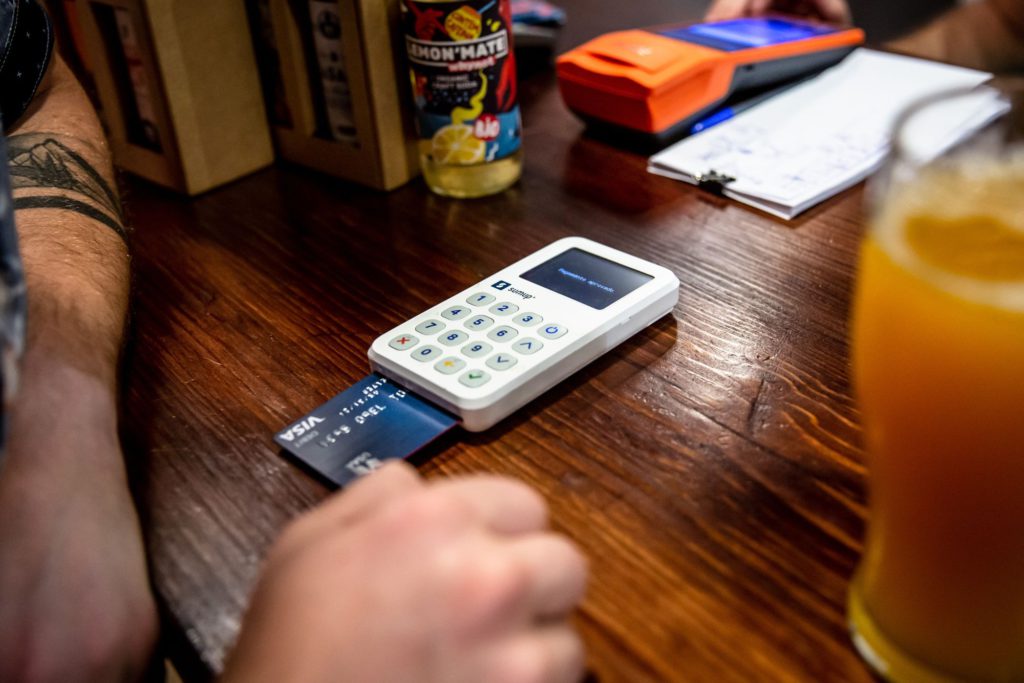
London-based SumUp provides card readers to 4 million small merchants such as taxi drivers and coffee shop owners in 35 countries across the world, who pay a small fee for the machine and then 1% to 1.5% of each transaction. It has also built out other services for merchants, such as business accounts and tools for invoicing.

Lending to companies with a negative cash flow is a growing phenomena in European private credit, with firms such as Sixth Street and Golub Capital providing so-called ARR facilities to a handful of smaller software firms with high-growth potential. 

Providing debt to companies with solid recurring revenue but poor profitability means credit funds can finance companies with strong growth trajectories that still have negative cash-flows. Suitable firms are typically subscription businesses that provide in-house, well-integrated technology to companies, which can use the additional cash to ramp up marketing efforts and grow their businesses. 

SumUp is unlike typical companies ARR lenders are interested in, in that it is not a subscription service. It spends money on marketing to grow its merchant-base, and aims to recover that marketing budget within 12 months from new clients, according to SumUp Chief Financial Officer Marc-Alexander Christ.

“We are still cash-burning, which is counter-intuitive for some lenders,” Christ said in an interview. “But the smartest in the market understand the concept of profitability before marketing spend, which gives them security to invest.”

More stories like this are available on bloomberg.com

©2022 Bloomberg L.P.

Uber Is Said to Have Explored a Sale of Indian Ride-Hailing Arm

(Bloomberg) — Uber Technologies Inc. explored options for its Indian ride-hailing business, including a sale, but suspended discussions after tech startup valuations cratered, people familiar with the matter said.

The US company began weighing alternatives and reached out to several interested parties after recognizing it had limited potential for profitable expansion in the country, the people said, asking not to be named as the information is not public. It pondered a stock swap with local companies or even a pullout, before a global equity market rout upended plans, the people added. A stock deal was favored in exploratory talks as that would allow Uber to retain a foothold in India, the people said.

Uber and its local-rival Ola had been struggling to eke out a profit in a rapidly growing but price-sensitive market, where constant driver attrition was pressuring margins. A sale to a local operator could have mirrored similar deals it struck with Didi Global Inc. in China and Grab Holdings Ltd. in Southeast Asia, where Uber ceded the markets but kept an equity stake in the dominant local player to tap future growth. The maneuvers ended costly turf wars waged with driver incentives and cash subsidies.

Uber disputed the idea it had considered retreating from India. 

“Bloomberg’s reporting is categorically false. We have never explored exiting India — not even for a minute,” company spokesperson Ruchica Tomar said in an emailed statement. Uber remains committed to India and continues to hire people “aggressively.”  

Read more: Ride-Hailing Firm Ola Said to Pick Banks for $1 Billion IPO

Uber, whose shares have gyrated wildly since its 2019 IPO, has hived off money-losing businesses to achieve its goal of being consistently profitable. In May, it delivered a positive outlook for earnings, signaling the company plans to capitalize on robust ride demand without compromising profits by focusing on product changes, rather than incentives, to address a driver shortage.

India and Japan are the sole major remaining Asian markets for Uber, which has scaled back sharply since the tumultuous days of former chief Travis Kalanick. The San Franciso-based company started services in India in 2013 and now offers ride-hailing in almost 100 cities across the country, its website showed.

Conversations around an India deal had been preliminary and the company could decide not to revisit those options, the people said.

Uber also sold its food-delivery business in India to local rival Zomato Ltd. in 2020 in return for a stake in the local startup. The US giant now competes mainly with Ola, which had selected bankers to prepare for an initial public offering in Mumbai, Bloomberg News reported last year. Uber announced in May that it would add 500 tech workers this year to its Bangalore and Hyderabad engineering centers.

The Gig Economy’s Political Reckoning Has Arrived: QuickTake

More stories like this are available on bloomberg.com

©2022 Bloomberg L.P.

Terra Co-Founder Lost Nearly All His Wealth in Wipeout, WSJ Says

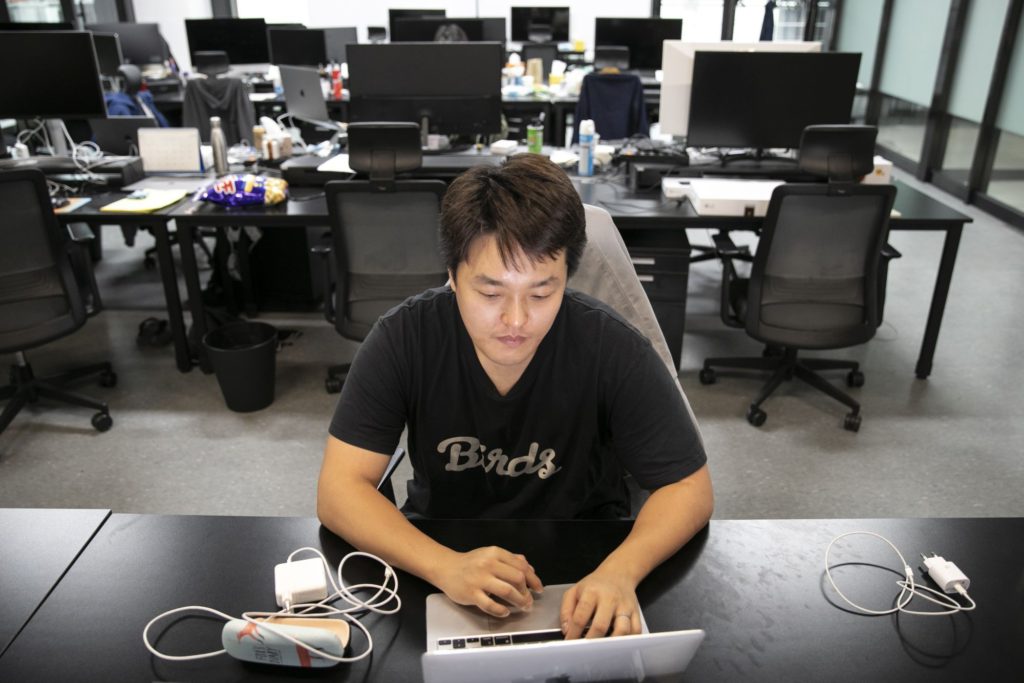
(Bloomberg) — Terraform Labs co-founder Do Kwon, whose crypto ecosystem collapsed in a $40 billion wipeout in May, told the Wall Street Journal that he lost almost all his net worth in the crash.  

“This doesn’t bother me,” he said in the interview with the Journal published Thursday. “I live a fairly frugal life.” Kwon told the newspaper he was probably a billionaire when the Luna token Terraform Labs backed was trading near $100. That coin is now trading at close to zero. 

Investigators in South Korea and the US are now looking into the circumstances around the unraveling of TerraUSD, the stablecoin Kwon championed that crumbled from its dollar peg in May. The event wiped out the savings of thousands of investors globally and set off a wider implosion in cryptocurrencies. 

South Korea this week barred some current and former Terraform Labs employees from leaving the country, as prosecutors step up their investigation into TerraUSD. Prosecutors are also looking to invalidate Kwon’s South Korean passport, local broadcaster YTN reported on Tuesday.  

The US Securities and Exchange Commission is investigating whether the marketing of TerraUSD before it crashed violated federal investor-protenction regulations, Bloomberg reported on June 9. Terraform Labs told the Journal it wouldn’t comment on any active investigations.

In an attempted comeback, Kwon launched a new Luna coin last month that was distributed for free to holders of the original token. The new one, dubbed Luna 2.0, has slumped to $1.97 from a high of $18.87, according to CoinGecko.  

More stories like this are available on bloomberg.com

©2022 Bloomberg L.P.
Megayachts Run Low on Safe Harbors as Russia Sanctions Bite

(Bloomberg) — When the $325 million Amadea superyacht that’s been linked to Russian billionaire Suleiman Kerimov sailed into Fiji in April, the captain may have figured he had found a safe haven.  

The laid-back South Pacific island nation hadn’t joined in a global push to impose sanctions on Russia and many of President Vladimir Putin’s wealthy supporters, and had just a few weeks before abstained from a United Nations resolution supporting Ukraine’s territorial integrity. 

Yet a week after the Amadea arrived, Fiji authorities detained the luxurious yacht at the request of the US government, which argued that Kerimov — who has been sanctioned for his ties to Putin — was the true owner of the ship. The US eventually won a series of legal challenges and seized the vessel, sailing it to Honolulu last week.

The costly episode shows how Russian tycoons are running out of places to park their floating palaces, four months after their country’s invasion of Ukraine. The US and Europe are going after their superyachts, villas and other assets because of their ties to Putin. Already, more than a dozen boats worth more than $2.25 billion have been seized by the US, EU nations and willing allies — such as Fiji.

The US has formed a taskforce dubbed KleptoCapture to pursue the assets of Russian oligarchs. The unit, along with the Federal Bureau of Investigation, the US Marshals Service, and Coast Guard, sent agents to Fiji to pursue the Amadea. In Europe, Germany, Italy, Spain and other governments have seized ultra-luxurious vessels, with the biggest prize so far Russian billionaire Alisher Usmanov’s Dilbar, which is valued at as much as $750 million.

After the Amadea was first seized, US Deputy Attorney General Lisa O. Monaco issued a warning to Russian tycoons, saying the Justice Department “had its eyes on every yacht purchased with dirty money.” 

“This seizure should tell every corrupt Russian oligarch that they cannot hide — not even in the remotest part of the world,” she said.

Fearful of having their yachts seized, owners have sent them to a small number of locales still considered friendly — allowing the vessels to dock or hang around unbothered — including Dubai in the United Arab Emirates, Turkey and the Maldives, according to Spire Global Inc., a data and analytics firm that uses satellite technology to track maritime activity. 

Still, it can be challenging to predict how countries might react to a Russian megayacht in their waters, such as in the case of the Amadea, or how governments might change their approach to sanctions with political pressure or a change in administration.

“As supply chains continue to shift and both economic and food security concerns rise to the level of national crises, the willingness to either take action against Russian vessels or allow them safe haven may both shift,” said Ian Ralby, chief executive of I.R. Consilium, a maritime law and security consultancy. 

  • Want to track yachts tied to sanctioned Russians? You can here.

With the war in Ukraine dragging on, more so-called neutral countries that haven’t imposed sanctions may be drafted to help with seizures. Geopolitical considerations often carry more weight than maritime law when it comes to seizures, said Elizabeth Mendenhall, an assistant professor of marine affairs and political science at the University of Rhode Island

“It’s more about the relationship between the US or the UK and the country they want to get help from,” she said. “They can use carrots and sticks related to other issues to get states to cooperate.”

(Updates with analyst comments in 10th paragraph.)

More stories like this are available on bloomberg.com

©2022 Bloomberg L.P.

Close Bitnami banner
Bitnami