
Bloomberg

Fired Barclays CEO Turns £1 Million Into £600 Million Startup

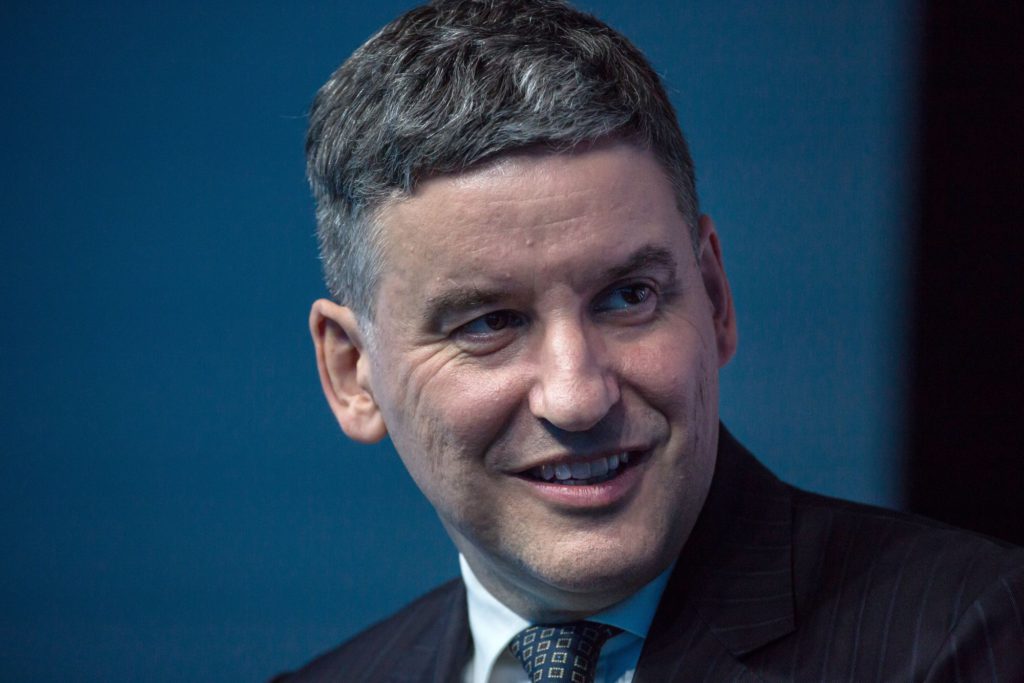
(Bloomberg) — In an office not far from the Houses of Parliament, Antony Jenkins is plotting the future of global banking. His ambition is to serve one tenth of the world’s population — or one billion people — by providing the technology behind everything from checking savings to loans. 

Jenkins’ business, 10x Banking Technology, is a player in London’s burgeoning fintech scene. It was valued at about £600 million ($756 million) at its most recent funding about a year ago, with Jenkins’ own stake worth £200 million. Among its backers are JPMorgan Chase & Co., Blackrock Inc. and Ping An Insurance Group Co.

Last year the firm raised £133 million from investors. The fresh funds helped cushion it against losses that roughly doubled to £43.7 million in 2021 and gave Jenkins the cash to expand when market turmoil is making fund-raisings for other fintechs tough. 

In contrast to the 20 or 30-somethings seeking to make their mark in fintech, Jenkins is the 60-year-old former chief executive officer of Barclays Plc. After a turbulent three years when Jenkins received the nickname “Saint Antony” for his attempt to reform its culture, he was ignominiously ousted in 2015.

Jenkins, who grew up in Stoke-on Trent in the West Midlands, became the first in his family to go to college attending the University of Oxford before embarking on a banking career. The forced departure from Barclays was a “shock” that took some time to get over, but also a “liberation,” according to Jenkins. In the months after his sacking, Jenkins ruminated on the germ of an idea that had consumed him through the decades he spent first at Citigroup Inc. and then Barclays: why is the technology inside big banks so bad?

Man in Black

Jenkins, dressed in a black shirt, black jeans and black shoes –- a different look from that the one he sported as a member of Barclays’ top brass — explains how he went from banking reject to fintech evangelist.

He was approached about other mainstream roles after Barclays, but instead began sketching a business plan on a flipchart in his dining room. “I’ve always had an entrepreneurial leaning,” he says. 

Working with a small group of close associates, in 2016 Jenkins launched 10x with £1 million of his own money, initially to see if anyone would support his ideas about how banks could be made better. The company’s name stands for the belief that for financial firms to adopt a new technology it has to be 10 times better than what they already have.

Chinese insurance group Ping An — now in the news for its campaign to break up HSBC — was one of his first investors, the result of a 2017 meeting between Jenkins and Jonathan Larsen, another former Citigroup executive.

Months after their meeting, Larsen joined Ping An and was charged with creating a strategic corporate venture fund to look for opportunities in fintech and other areas. An investment in 10x became the Ping An fund’s first deal.

“I felt it was trying to tackle the problem head on,” Larsen, who is today a director of 10x, told Bloomberg News. “The company is poised for scaling. There are probably 3,000 banks out there that need to transform their technology.”

Grand Ambitions 

In the latest accounts, filed in May, Jenkins gave an idea of his ambitions: 10x can ultimately provide the technology that “reliably underpins the service of a billion banking customers.”

That is “a long-term aspirational goal,” says Jenkins, part of 10x’s ambition to be “the global bank operating system of choice.”

He has plenty of rivals. Thought Machine Group Ltd., another London-based banking technology start-up, has attracted big name clients and investors and recently raised more than $100 million at a valuation of $2.7 billion. 10x also faces competition from incumbent technology providers ranging from Switzerland’s Temenos AG to Oracle Corp.

10x’s own progress hasn’t been plain sailing. The company’s first customer, Virgin Money UK Plc walked away from a project to replace its core systems when the work was almost complete after agreeing a takeover by another lender. Although the merger denied 10x the calling card of a major completed project, it provided much of the money to fund the continued development of the firm’s technology.

Lego Blocks

Dealing with creaking IT is one of finance’s most pressing tasks. Yet the work is expensive and can be very risky – in the UK a project to replace the core banking system of TSB Bank went so wrong it led to the departure of the CEO and an inquiry by British regulators.

Jenkins claims he can do the work for relatively little money, and at a lower risk than many in-house projects. In client meetings, his party piece is to bring out a laptop and, in front of the potential customer, replicate their product range in a matter of minutes by using the pre-built services that make up what 10x calls its SuperCore.

A bit like a set of Lego blocks, each piece of 10x’s code is a distinct part of a product. Slot them together and the firm’s client can quickly build products ranging from a variable rate mortgage to a savings account.

Another feature is a different transition technique. Rather than attempting to switch from one platform to another over a weekend – the traditional approach – 10x allows a client to run a parallel platform so business can be moved over gradually.

IT upgrades that have traditionally cost hundreds of millions, or billions, of dollars can now be done for low single-digit millions, and in a fraction of the time before, according to Jenkins. 

Clients converted to 10x’s way so far include JPMorgan, which uses it for its start-up British online bank, Chase UK. The firm has also agreed a partnership with Australia’s Westpac Banking Corp.

Ping An is considering using 10x’s technology to boost the roll out of its own banking arm, Ping An Bank.  “I think there’s every chance that we’ll end up working with 10x, and to have the option to do so is one of the reasons we invested,” says Larsen.

Kodak, Blockbuster

Jenkins likes to compare the position of the big players today to incumbents in other industries that were overtaken and then destroyed by start-ups. From Eastman Kodak to Blockbuster Entertainment, he cites examples of corporate juggernauts that disappeared almost overnight.

In banking, 10x’s ability to set up a new bank in less than six months, perhaps even for free, could create similar carnage, Jenkins says. 10x’s drop in revenues in 2021 reflected a change in model – from being paid to develop systems for clients to one based on recurring revenues from subscribers to its platform, according to the business.

Valuation Vanity

A copy of the Banksy painting of a Rhino with the words ‘I AM A UNICORN’ printed above it hangs in the 10x offices. While sky-high fintech valuations have minted several UK-based unicorns as investors hunt for the next big thing in finance, Jenkins says he is dubious about the methods some have used to hit those heights — even before the recent market turmoil hit valuations and fundraising.

“I’m a little skeptical about all this valuation vanity,” he says. “You can get almost any valuation you like if you give the investors preferential terms on a round.”

Bringing long-term change to banks may be a more meaningful foundation for a further boost to 10x’s value – and could give the last word to Jenkins after his Barclays ousting.

More stories like this are available on bloomberg.com

©2022 Bloomberg L.P.
Ousted Barclays CEO Turns £1 Million Into £600 Million Startup

(Bloomberg) — In an office not far from the Houses of Parliament, Antony Jenkins is plotting the future of global banking. His ambition is to serve one tenth of the world’s population — or one billion people — by providing the technology behind everything from checking savings to loans. 

Jenkins’ business, 10x Banking Technology, is a player in London’s burgeoning fintech scene. It was valued at about £600 million ($756 million) at its most recent funding about a year ago, with Jenkins’ own stake worth £200 million. Among its backers are JPMorgan Chase & Co., Blackrock Inc. and Ping An Insurance Group Co.

Last year the firm raised £133 million from investors. The fresh funds helped cushion it against losses that roughly doubled to £43.7 million in 2021 and gave Jenkins the cash to expand when market turmoil is making fund-raisings for other fintechs tough. 

In contrast to the 20 or 30-somethings seeking to make their mark in fintech, Jenkins is the 60-year-old former chief executive officer of Barclays Plc. After a turbulent three years when Jenkins received the nickname “Saint Antony” for his attempt to reform its culture, he was ignominiously ousted in 2015.

Jenkins, who grew up in Stoke-on Trent in the West Midlands, became the first in his family to go to college attending the University of Oxford before embarking on a banking career. The forced departure from Barclays was a “shock” that took some time to get over, but also a “liberation,” according to Jenkins. In the months after his sacking, Jenkins ruminated on the germ of an idea that had consumed him through the decades he spent first at Citigroup Inc. and then Barclays: why is the technology inside big banks so bad?

Man in Black

Jenkins, dressed in a black shirt, black jeans and black shoes –- a different look from that the one he sported as a member of Barclays’ top brass — explains how he went from banking reject to fintech evangelist.

He was approached about other mainstream roles after Barclays, but instead began sketching a business plan on a flipchart in his dining room. “I’ve always had an entrepreneurial leaning,” he says. 

Working with a small group of close associates, in 2016 Jenkins launched 10x with £1 million of his own money, initially to see if anyone would support his ideas about how banks could be made better. The company’s name stands for the belief that for financial firms to adopt a new technology it has to be 10 times better than what they already have.

Chinese insurance group Ping An — now in the news for its campaign to break up HSBC — was one of his first investors, the result of a 2017 meeting between Jenkins and Jonathan Larsen, another former Citigroup executive.

Months after their meeting, Larsen joined Ping An and was charged with creating a strategic corporate venture fund to look for opportunities in fintech and other areas. An investment in 10x became the Ping An fund’s first deal.

“I felt it was trying to tackle the problem head on,” Larsen, who is today a director of 10x, told Bloomberg News. “The company is poised for scaling. There are probably 3,000 banks out there that need to transform their technology.”

Grand Ambitions 

In the latest accounts, filed in May, Jenkins gave an idea of his ambitions: 10x can ultimately provide the technology that “reliably underpins the service of a billion banking customers.”

That is “a long-term aspirational goal,” says Jenkins, part of 10x’s ambition to be “the global bank operating system of choice.”

He has plenty of rivals. Thought Machine Group Ltd., another London-based banking technology start-up, has attracted big name clients and investors and recently raised more than $100 million at a valuation of $2.7 billion. 10x also faces competition from incumbent technology providers ranging from Switzerland’s Temenos AG to Oracle Corp.

10x’s own progress hasn’t been plain sailing. The company’s first customer, Virgin Money UK Plc walked away from a project to replace its core systems when the work was almost complete after agreeing a takeover by another lender. Although the merger denied 10x the calling card of a major completed project, it provided much of the money to fund the continued development of the firm’s technology.

Lego Blocks

Dealing with creaking IT is one of finance’s most pressing tasks. Yet the work is expensive and can be very risky – in the UK a project to replace the core banking system of TSB Bank went so wrong it led to the departure of the CEO and an inquiry by British regulators.

Jenkins claims he can do the work for relatively little money, and at a lower risk than many in-house projects. In client meetings, his party piece is to bring out a laptop and, in front of the potential customer, replicate their product range in a matter of minutes by using the pre-built services that make up what 10x calls its SuperCore.

A bit like a set of Lego blocks, each piece of 10x’s code is a distinct part of a product. Slot them together and the firm’s client can quickly build products ranging from a variable rate mortgage to a savings account.

Another feature is a different transition technique. Rather than attempting to switch from one platform to another over a weekend – the traditional approach – 10x allows a client to run a parallel platform so business can be moved over gradually.

IT upgrades that have traditionally cost hundreds of millions, or billions, of dollars can now be done for low single-digit millions, and in a fraction of the time before, according to Jenkins. 

Clients converted to 10x’s way so far include JPMorgan, which uses it for its start-up British online bank, Chase UK. The firm has also agreed a partnership with Australia’s Westpac Banking Corp.

Ping An is considering using 10x’s technology to boost the roll out of its own banking arm, Ping An Bank.  “I think there’s every chance that we’ll end up working with 10x, and to have the option to do so is one of the reasons we invested,” says Larsen.

Kodak, Blockbuster

Jenkins likes to compare the position of the big players today to incumbents in other industries that were overtaken and then destroyed by start-ups. From Eastman Kodak to Blockbuster Entertainment, he cites examples of corporate juggernauts that disappeared almost overnight.

In banking, 10x’s ability to set up a new bank in less than six months, perhaps even for free, could create similar carnage, Jenkins says. 10x’s drop in revenues in 2021 reflected a change in model – from being paid to develop systems for clients to one based on recurring revenues from subscribers to its platform, according to the business.

Valuation Vanity

A copy of the Banksy painting of a Rhino with the words ‘I AM A UNICORN’ printed above it hangs in the 10x offices. While sky-high fintech valuations have minted several UK-based unicorns as investors hunt for the next big thing in finance, Jenkins says he is dubious about the methods some have used to hit those heights — even before the recent market turmoil hit valuations and fundraising.

“I’m a little skeptical about all this valuation vanity,” he says. “You can get almost any valuation you like if you give the investors preferential terms on a round.”

Bringing long-term change to banks may be a more meaningful foundation for a further boost to 10x’s value – and could give the last word to Jenkins after his Barclays ousting.

More stories like this are available on bloomberg.com

©2022 Bloomberg L.P.
UK Has ‘Missed A Trick’ on Crypto, Minister-Turned-Adviser Says

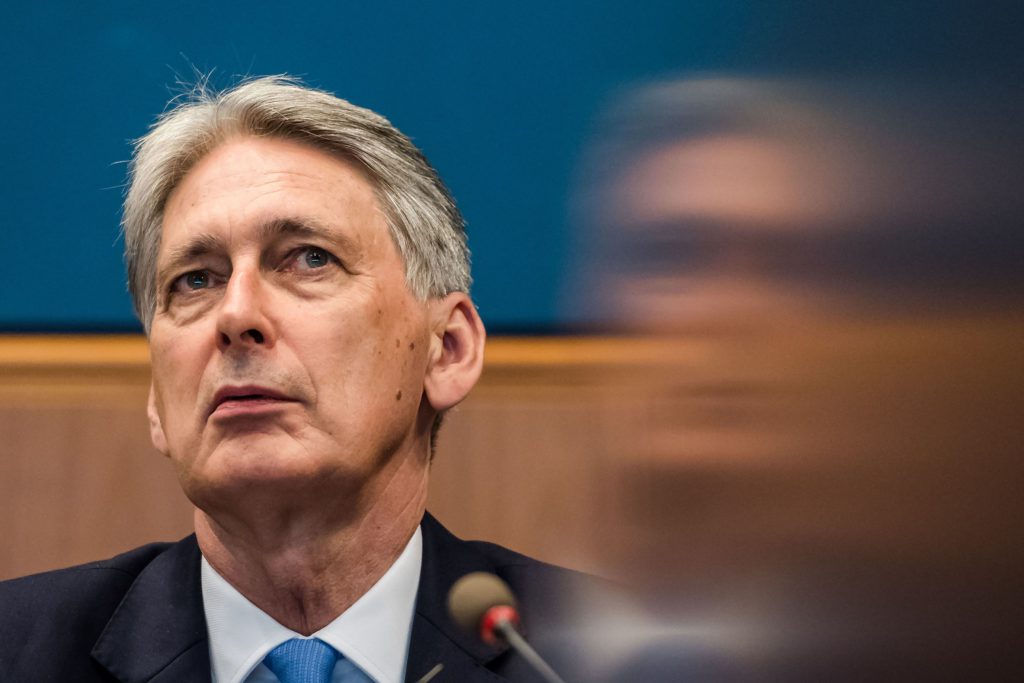
(Bloomberg) — The UK must make moves over the next couple of months or it will lose its chance to take the lead on crypto, the country’s former Chancellor of the Exchequer Philip Hammond warned. “It isn’t too late for us to catch up and recover, but we are getting very close to the point where it will be too late.” Speaking to David Merritt and Francine Lacqua, Hammond said progress has been slow in setting clear regulation on the crypto industry. The former politician, who stepped down in 2019, is now a senior adviser to Copper.co, a London-based crypto custodian and trading services provider.

As cryptocurrencies recover from last week’s rout, this week’s episode of “In The City” tackles the UK’s attempt at becoming a global crypto hub  and whether it is too far behind to catch up in such a fast-moving industry. In addition to their conversation with Philip Hammond, David Merritt and Francine Lacqua speak with Bloomberg crypto reporter Emily Nicolle, who discusses the history of crypto regulation in the UK. Bloomberg personal finance reporter Charlie Wells tells the story of addiction specialists offering treatments for compulsive crypto traders.


More stories like this are available on bloomberg.com

©2022 Bloomberg L.P.
UK Has ‘Missed A Trick’ on Crypto, Minister-Turned-Adviser Says

(Bloomberg) — The UK must make moves over the next couple of months or it will lose its chance to take the lead on crypto, the country’s former Chancellor of the Exchequer Philip Hammond warned. “It isn’t too late for us to catch up and recover, but we are getting very close to the point where it will be too late.” Speaking to David Merritt and Francine Lacqua, Hammond said progress has been slow in setting clear regulation on the crypto industry. The former politician, who stepped down in 2019, is now a senior adviser to Copper.co, a London-based crypto custodian and trading services provider.

As cryptocurrencies recover from last week’s rout, this week’s episode of “In The City” tackles the UK’s attempt at becoming a global crypto hub  and whether it is too far behind to catch up in such a fast-moving industry. In addition to their conversation with Philip Hammond, David Merritt and Francine Lacqua speak with Bloomberg crypto reporter Emily Nicolle, who discusses the history of crypto regulation in the UK. Bloomberg personal finance reporter Charlie Wells tells the story of addiction specialists offering treatments for compulsive crypto traders.


More stories like this are available on bloomberg.com

©2022 Bloomberg L.P.

Big Tech Gets Caught Up in Europe’s Energy Politics

(Bloomberg) — When Google wanted to build a new $1.1 billion data center in the Luxembourg countryside, the government championed the investment and helped the company to acquire the land. Authorities in the Netherlands granted Meta Platforms Inc. permission for what promised to be an even bigger one, part of the country’s ambition to become Europe’s “digital hub.”

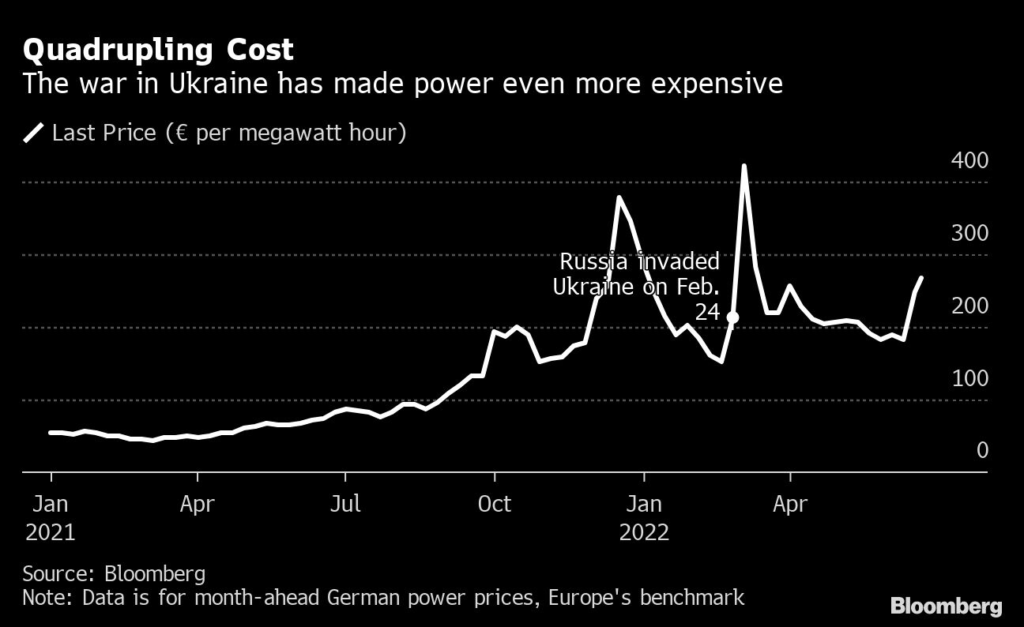
With a squeeze on energy supplies because of Russia’s war on Ukraine, the political metrics are now changing for the giant facilities. The two projects were paused after grassroots resistance from locals and environmental activists. But when the focus is on ensuring the lights stay on this winter, data computing and storage that can guzzle a small town’s worth of power are no longer as in vogue for some European governments.  

Luxembourg, the Netherlands, Belgium, Germany and Denmark have teamed up to propose stricter efficiency measures at a meeting of European Union energy ministers on June 27. The aim is to get all 27 member states to sign up to the same rules on big tech to protect the EU’s green energy targets. That means putting a tighter rein on the facilities that handle everything from social media posts to apps for businesses.

“If we don’t act on data centers, we are losing some of the potential to exit gas and help the energy transition,” said Claude Turmes, Luxembourg’s energy and spatial planning minister and a member of the Green Party.

Record prices are spurring EU countries to figure out how to consume less electricity. The dilemma is how to reconcile the bloc’s green agenda with European Commission President Ursula von der Leyen’s priority of ensuring the EU leads the transition to a new digital world.

Data centers in the EU accounted for 2.7% of the bloc’s electricity demand already in 2018 and the continual digital transformation means more and more people spend their time browsing the internet, shopping online or streaming movies. Left unchecked, that could rise to 3.2% by 2030, the European Commission said — or consumption of almost 100 terrawatt hours. That’s roughly twice the power that Greece used in 2019. 

The energy regulator in Ireland, home to one of the largest clusters of data centers, recently warned consumers could eventually face outages without a new policy on access to the power grid. It predicted data centers could account for 23% of Ireland’s electricity demand by 2030.

Tech giants running data centers in Europe say they already abide by their own high green standards. Meta said its hubs have achieved net-zero carbon emissions and are supported by 100% renewable energy. Microsoft Inc. is aiming to reduce the consumption of water, used for server cooling systems, in its operations by 95% by 2024.

Politicians and the public question whether that’s the right way to deploy green resources in the current climate, said Julia Krauwer, a technology analyst at Dutch bank ABN Amro. “For a lot of individuals and politicians, the fact that we use energy from newly constructed wind parks for the benefit of hyper-scale data centers feels out of balance,” she said.

Read More: Europe’s Data Centers Will Gobble Up a Lot More Electricity

The push by policy makers to green up the tech industry comes as the EU debates its massive package unveiled last year to implement an ambitious objective to slash greenhouse gases by at least 55% this decade from 1990 levels.

The plan will affect every corner of the economy, introducing new goals to boost renewables and step up energy savings, requiring companies to lower their carbon footprint and forcing a shift to cleaner transport.

Then came President Vladimir Putin’s invasion of Ukraine in February. In response, the EU announced it would phase out fossil fuels imported from Russia and proposed increasing the renewables and energy efficiency targets for 2030 even further.

Luxembourg’s Turmes and his allies aim to introduce more stringent reporting requirements for data centers, including on carbon emissions, the use of renewable energy and the effectiveness of power, cooling and water usage. The five countries also want to empower the commission to set minimum performance criteria.

There are currently no binding comprehensive EU-wide standards on energy efficiency at data centers, which are set to proliferate across the continent. The Netherlands, for example, already houses hyper-scale facilities for Alphabet Inc.’s Google and Microsoft and is facing applications for 20 to 25 new or expanded data centers.

Meta, the owner of Facebook, WhatsApp and Instagram, was planning its new investment in the Dutch town of Zeewolde, 55 kilometers (34 miles) east of Amsterdam. The company initially received a warm welcome from politicians in 2019.

Three years later, local party Leefbaar  Zeewolde — or “Livable Zeewolde” in English — won a regional vote leading its campaign on opposition to the facility. Covering 166 hectares, the equivalent of roughly 230 football pitches, it would be the largest in Europe.

Just before the election, the Dutch government in February announced a nine-month block on permits for new data centers larger than 10 hectares and that require more than 70 megawatts of energy. Ministers, however, exempted the region of Zeewolde and the provinces where Google and Microsoft already host their hyperscale centers.

Meta’s center was to be “one of the most efficient in the world,” with nearly every watt entering the data center to be used to run the computing equipment, according to local authorities. Still, it was expected to use 1,380 gigawatt hours of energy, an amount comparable to twice the total consumption of Zeewolde, a town of about 23,000 people, the development plans showed.  

That highlighted the scale of the challenge for Europe when energy is more scarce, said Guus Dix, assistant professor at the University of Twente and a climate activist for Extinction Rebellion who participated in the campaign against the Zeewolde data center. “We only have limited energy available, and we have other needs as well, like greening our houses and becoming less dependent on Russian oil and gas,” he said.

Meta announced in March it would halt plans for the data center as it prides itself on being “good neighbors” and stressed the importance of the project of being a “good fit” for the community.

In Luxembourg, Google agreed to acquire farmland in the commune of Bissen in 2017 before progress on its data center was delayed by opponents. Mouvement Ecologique lost its main legal challenge attempting to stop the land being reclassified as for industrial rather than agricultural use, according to Blanche Weber, president of the campaign group. But as of this year, no work has started.

A Google spokesperson said the site is ready, but the company has no further plans at the moment. The government wants the company to make a decision and says if Google chooses to go ahead, it will have to deploy the most energy-efficient technology.

But even if the biggest companies already use the latest innovations to reduce their environmental footprint, the shift towards greening the sector may not be happening fast enough across the board given the new focus on energy security, according to Merima Dzanic, chief operating officer of the Danish Data Center Industry, an association that promotes the industry in Denmark.

“Suddenly there’s a huge urgency because of the prices and because of the war that we’ve never really seen before,” she said. “At the end of the day, with the data center industry it is very much in the DNA to constantly focus on sustainability because it is in the businesses interest.”

More stories like this are available on bloomberg.com

©2022 Bloomberg L.P.
Spain’s Big Defense Push Hinges on Creating a National Champion

(Bloomberg) — Spain is undertaking Europe’s most ambitious increase in military spending, and sustaining that effort hinges on transforming an undersized defense firm into a national champion.

Prime Minister Pedro Sanchez’s government is quietly seeking to position Indra Sistemas SA to better compete with the likes of France’s Thales SA and Italy’s Leonardo SpA — European rivals that are more than 10 times larger than Spain’s biggest defense contractor. 

After boardroom tensions made for a tumultuous start to the project — which started months before Russia’s invasion of Ukraine — the pieces are starting to fall into place. A shareholders meeting on Thursday could be the moment that the government more firmly exerts control.

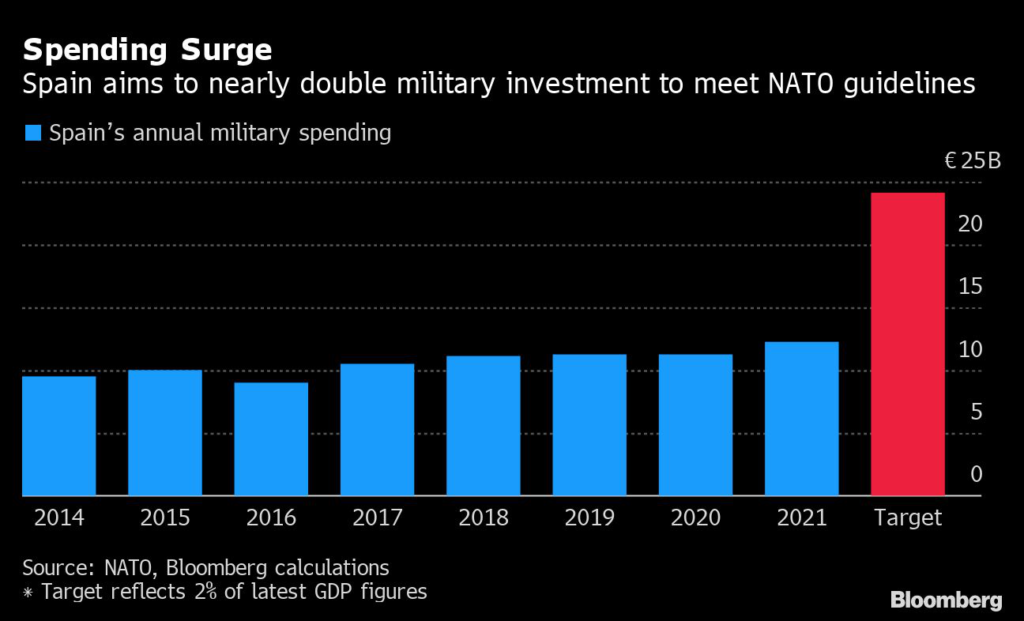
The effort has taken on added urgency after Sanchez announced that Spain would abandon past policy and meet a NATO goal of spending 2% of national output on defense. The move implies military investment would need to nearly double to 24.1 billion euros ($25.3 billion) — exceeding the percentage increase in Germany. 

“Investing in defense means investing in peace, security and freedom, as well as in the creation of new jobs,” Defense Minister Margarita Robles said this month during a visit to a frigate in the southern city of Rota.

As the company’s largest shareholder, the government in Madrid is pushing for Indra to play a key role in consolidating Spain’s defense sector — generally fragmented among small family-owned firms in the industrial north — according to people familiar with the plans. 

The goal is to have Indra, which supplies NATO forces with defense electronics such as communications and radar systems, develop the scope and scale to vie for bigger chunks of Europe-wide projects and support Spain’s efforts to increase its influence, said the people, who requested not to be identified because the discussions are private. Indra and the Spanish government declined to comment. 

“It’s obvious in the way in which the Spanish government is trying to position itself that there’s an appetite in Madrid for taking on more responsibility and having a bigger voice,” said Jonathan Eyal, associate director at the Royal United Services Institute, a defense and security think tank.  

Showing that a sizable share of Spain’s defense budget is supporting local jobs is important to retaining public backing for the policy shift. Scarred by decades of military dictatorship, Spanish voters have shown little interest in defense spending, but that’s now changing, according to Narciso Michavila, founder of polling firm GAD3 and a former military officer. 

The champion-building got off to a rough start. Sanchez’s administration ruffled feathers at Indra last year by nominating Marc Murtra, a former government official, as chairman. The move prompted the board to strip the role of powers over day-to-day decisions and instigate a management shakeup, including appointing two co-chief executive officers.

Murtra, a private equity investor who served in a previous administration led by Sanchez’s Socialists, has the chance to cement his power at the shareholder meeting. The government is expected to secure its third board seat, while an investor linked to the government’s efforts is also planning to name a representative.  

Since his nomination last May, one of the co-CEOs and the chief financial officer left Indra, and the government announced plans to increase its stake from 18% to 28% — just shy of the level that would require a full takeover offer. 

The share plan was announced two days before Russia invaded Ukraine on Feb. 24 and the holding has since climbed to 25.2%, according to data compiled by Bloomberg. The company has “special significance” for Spain and its allies, the government said in the February filing announcing its stake plans. 

Much of the activity has happened behind closed doors, but Sanchez — who visited Indra’s headquarters in October — may soon start outlining his plans more publicly. 

Next week, Madrid hosts a summit of leaders from the North Atlantic Treaty Organization, which would provide an opportunity to update allies. In early July, the Spanish leader is expected to give his state-of-the-nation speech and will likely address defense strategy.

Friendly Investors

Despite the past uproar at Indra, there are signs that momentum is building. Sapa Placencia SL, a small family-owned defense firm located in the Basque industrial cluster, will request a board seat at the shareholders meeting after buying a 5% stake in December. The company has extensive experience in the U.S. defense industry and has been supportive of Madrid’s initiatives.

After the government refused to approve the sale of Rolls-Royce Holdings Plc’s ITP Aero unit without Spanish investors, Sapa joined the Bain Capital-led consortium and the $2 billion deal got the green light. The government considers ITP as a company ripe for consolidation, the people said.

The effort gained another ally earlier this month when London-based hedge fund Amber Capital acquired a 4.2% stake in Indra. Murtra and Amber CEO Joseph Oughourlian — already close to the government as a shareholder in the country’s largest media group — met earlier this year. 

From a business point of view, Indra has always posed a challenge because of its two-pronged strategy. While its IT unit accounts for more than two-thirds of revenue, defense churns out about two-thirds of profit. 

Murtra’s focus is on expanding existing defense activities, such as radars, sensors and optical systems as well as software and technology for nuclear submarines, rather than entering new fields, a person with direct knowledge of the strategy said. The goal is to have the size and expertise to play an important role in cross-border projects, like the Future Combat Air System. 

“This transformation now allows us to launch a new era based on solid foundations and should encourage us to capitalize on the new opportunities,” Murtra said after his appointment at last year’s shareholders meeting.

More stories like this are available on bloomberg.com

©2022 Bloomberg L.P.
Lofty Lithium Bid Suggests Scorching Rally May Not Be Over

(Bloomberg) — The highest bid for lithium at an auction run by an Australian miner suggests a blistering rally in the battery metal may not be over. 

Pilbara Minerals Ltd. said a buyer will pay a price equating to $7,017 a ton for spodumene concentrate — a partly-processed form of lithium — delivered to China. The sale of the 5,000-ton cargo compares with a top bid of $6,586 at the last auction on the miner’s Battery Metal Exchange about a month ago.

An index of Chinese lithium carbonate prices has been relatively stable this quarter after soaring more than fivefold in the year through March. It’s ticked up a bit since late May, however, as Beijing started to lift stringent virus curbs that crimped battery and electric-car manufacturing. 

“Contrary to recent suggestions that the market has peaked, the evidence we are seeing at the coal-face with our customers, including this pricing outcome, suggests that the demand remains incredibly strong,” Dale Henderson, Pilbara’s chief executive officer, said in a statement. The outlook remains healthy and the next auction will be in the second week of July, he said. 

Pilbara’s share price jumped as much as 6.3% earlier on Thursday in Sydney, before reversing those gains to trade moderately lower. 

See also: Red-Hot Lithium Boom Pits Wall Street Against the Wonks 

If lithium prices do start pushing higher again, that could make electric vehicles too expensive for some consumers, threatening the speed of the transition to cleaner fuels. EV battery prices are poised to tick up this year for the first time in more than a decade, according to BloombergNEF. 

More stories like this are available on bloomberg.com

©2022 Bloomberg L.P.

Ukraine Latest: EU Plans Kyiv Candidacy; Zelenskiy Speaks at G-7

(Bloomberg) — European Union leaders plan to grant candidate status to Ukraine after intense lobbying by Ukrainian President Volodymyr Zelenskiy. The formal move will come at the bloc’s summit in Brussels starting Thursday.

Zelenskiy is due to speak via video link to leaders of the Group of Seven nations and NATO when they meet at separate summits next week, seeking support and weapons to fight Russian forces pounding their way through eastern sections of the country.

Joe Biden called on Congress to suspend the federal gasoline tax, seeking to ease pressure at home as the embattled US president is running out of options to tackle pump prices weighing on his party’s political prospects.

(See RSAN on the Bloomberg Terminal for the Russian Sanctions Dashboard.)

Key Developments

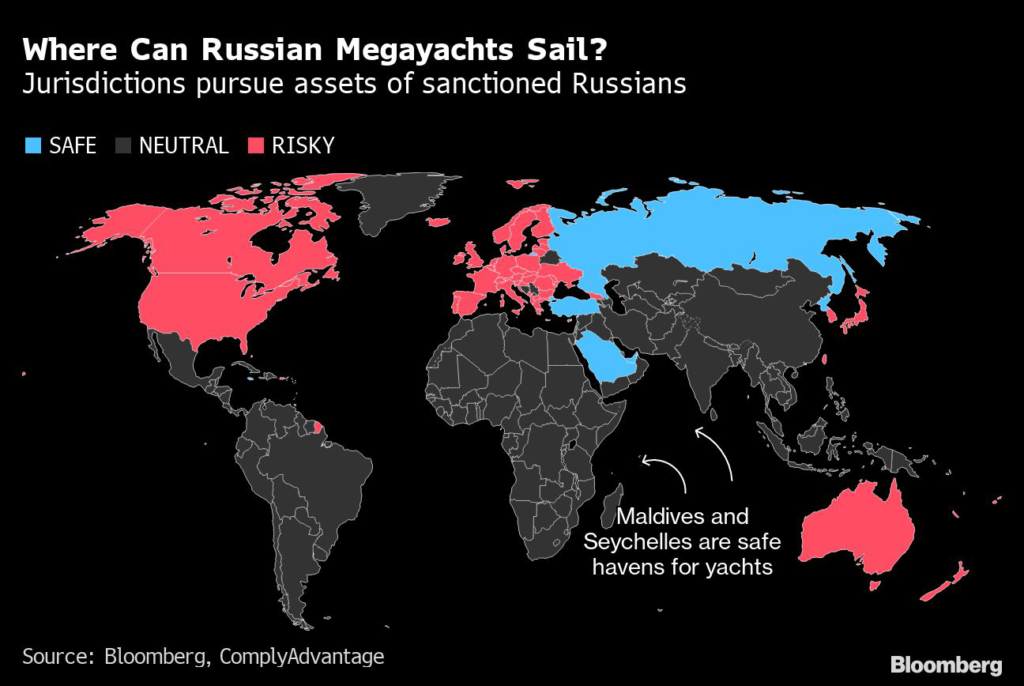
  • Megayachts Running Low on Safe Harbors as Russia Sanctions Bite
  • Biden to Urge Gasoline Tax Pause as Prices Drag on Democrats (1)
  • Europe Industries Cut Gas Use as Continent Saves Fuel for Winter
  • Cold Winter Could Push Europe Toward Gas Supply Shortages
  • Crop Facilities Hit at Ukraine Port, Adding to War’s Food Damage
  • Xi Slams Sanctions for ‘Weaponizing’ World Economy at BRICS Open

On the Ground

Fighting continued in the eastern city of Sievierodonetsk, and the vicinity of the Azot chemical plant, where more than 550 civilians are sheltering, was hit by shelling, according to Serhiy Haiday, the governor of the Luhansk region. Zelenskiy said the situation in Luhansk was “the toughest” in the country. In neighboring Donetsk, fighting raged along the entire front line. Residential buildings, a school, railway tracks and other facilities were damaged, with one person killed and 15 injured, according to Ukraine’s military, which also reported heavy fighting in the southern region of Kherson.

(All times CET)

Megayachts Running Low on Safe Harbors (1:00 a.m.)

Russian tycoons are running out of places to park their floating palaces, four months after their country’s invasion of Ukraine. The US and Europe are going after their superyachts, villas and other assets because of their ties to Russian President Vladimir Putin. Already, more than a dozen boats worth more than $2.25 billion have been seized by the US, EU nations and willing allies — such as Fiji.

Fearful of having their yachts seized, owners have sent them to a small number of locales still considered friendly — allowing the vessels to dock or hang around unbothered — including Dubai in the United Arab Emirates, Turkey and the Maldives, according to Spire Global Inc., a data and analytics firm that uses satellite technology to track maritime activity. 

Read more: Megayachts Running Low on Safe Harbors as Russia Sanctions Bite


Zelenskiy to Speak at G-7, NATO (11:43 p.m.)

A senior US administration official said the Ukrainian president would deliver remarks to leaders at the summits, which would help firm the resolve of the groups to stand by Kyiv as it battles the Kremlin’s forces. 

Germany Should Brace for Further Gas Cuts, Official Says (6:06 P.M.)

German Economy Minister Robert Habeck said his country should brace for Putin to further squeeze gas imports, a decision that may trigger the next stage of the country’s gas-emergency plan. 

“Given the current situation, we must assume that Putin is ready to reduce the gas flow further,” Habeck said on the sidelines of an air show outside Berlin. He added a further cut in flows could prompt the government to move to the second stage of its crisis plan. 

Von der Leyen Praises Ukraine Before Council Decision (5:15 p.m.)

Ukraine implemented about 70% of EU rules, norms and standards, European Commission Ursula von der Leyen said in a speech in the European Parliament. She praised the “immense progress that Ukraine’s democracy has achieved,” but emphasized that more work is needed to fight corruption and loosen the grip of oligarchs on the Ukrainian economy. 

Expressing her support for Kyiv’s EU candidacy status, von der Leyen said that “it is now up to the European Council to decide, and live up to the historic responsibility we are confronted with.”

EU Leaders Plan to Grant Ukraine Candidate Status (4:45 p.m.)

The bloc’s leaders have drafted a joint statement, seen by Bloomberg, that says the EU is granting candidacy status to Ukraine and Moldova, which will then be expected to meet a set of conditions related to the rule of law, justice and anti-corruption. The leaders will also tell Georgia it can achieve the same status after meeting certain conditions. 

“The future of these countries and their citizens lies within the European Union,” the leaders plan to say. The draft statement needs to be formally approved by leaders and could still change. The membership process is expected to take years. 

Germany Plans Donors Conference to Set Up Marshall Plan for Ukraine (4:20 p.m.)

Chancellor Olaf Scholz said Germany and the EU will jointly host an international conference with donors and experts later this year to discuss a multibillion-euro reconstruction plan for Ukraine.

“We have to agree on this — also with the advice of experts and scientists — how such a Marshall Plan for Ukraine can look like, how we coordinate it internationally, how we will decide together on which investments help Ukraine to move forward the most quickly on its European path,” Scholz told lawmakers in Berlin.

Ukraine in Talks for Turkey Meeting on Grain Exports (4:05 p.m.)

Ukraine is taking part in organizing a meeting in Turkey to release its grain exports through ports that have been blocked by Russia’s forces since the invasion, according to Serhiy Nykyforov, a spokesman for Zelenskiy. He declined to provide any details.

Turkey’s Defense Ministry on Wednesday said talks with Russian military officials held in Moscow on Tuesday were constructive toward starting export of grains stuck in Ukrainian ports and that an understanding for the solution of the problem through talks with Ukraine and the UN was reached.

“A four-way meeting is expected in Turkey in the coming weeks following talks with Ukraine and the UN,” Turkey’s Defense Ministry said in a statement without elaborating.

Ukraine Posts Video of Drone Attack on Russian Refinery (3:30 p.m.)

Video footage of a drone crashing into the Novoshakhtinsk oil refinery in Russia’s Rostov region appeared on the YouTube channel of Ukraine’s land forces, which labeled it “holy fire,” as well as on social media. While the authorities in Kyiv haven’t commented, Russia’s state-run Tass news service cited local officials in Rostov as saying the drone was Ukrainian.

The refinery blast is the latest in a series of explosions and fires at sites in Russia that potentially are linked to military supply since Putin ordered the Feb. 24 invasion of Ukraine. That has prompted speculation about a sabotage campaign behind enemy lines by people linked to Ukraine, which hasn’t claimed or denied responsibility for the incidents.

Read more: Russia Blames Oil Refinery Blaze on Ukrainian Drone Strike

Russian Strike Damages Grain Terminal in Ukraine (3:15 p.m.)

Rocket attacks on the Ukrainian port city of Mykolayiv have damaged a terminal owned by agricultural trader Viterra. The terminal can export as much as 1.5 million tons of vegetable oil a year.

Ukraine Refugees in Switzerland Get Chance to Swap Banknotes (1:35 p.m.)

Refugees from Ukraine in Switzerland will soon be able to swap some of their banknotes into francs, echoing a similar policy in the EU.

Qualifying individuals will be allowed to make a one-off exchange of up to 10,000 hryvnia ($338) at selected UBS and Credit Suisse branches as of June 27, the Swiss government said.

German Howitzers Delivered to Ukraine (1:30 p.m.)

Germany has delivered the seven PzH 2000 self-propelled howitzers it promised to Ukraine and more equipment, including 30 Gepard anti-aircraft guns, the IRIS-T air-defense system and three MARS II rocket launchers, will follow, according to Defense Minister Christine Lambrecht.

Lambrecht told lawmakers in the lower house of parliament in Berlin that Germany was near the limit on what it can supply to Ukraine from stocks held by its own armed forces. It’s therefore partnering with countries including Slovakia, Poland, the Czech Republic and Greece on swap programs under which it will replace Soviet-model equipment they send to Ukraine with modern kit, she added.

Read more: Germany’s Ukraine Support Ranges From Howitzers to Sleeping Bags

Russia Preparing Response to Kaliningrad Measures (12:30 p.m.)

Russia is preparing retaliatory measures in response to Lithuania’s application of an EU ban on the transit of sanctioned goods to the Baltic enclave of Kaliningrad, Kremlin spokesman Dmitry Peskov told reporters.

Different measures are under consideration over the EU’s “unfriendly” behavior, Peskov said. The restrictions that came into force last week affect as much as half of all transit goods transported to Kaliningrad via rail through Lithuania, according to local authorities in the Russian province.

First Foreign Ship Allowed to Leave Mariupol (12:15 p.m.)

A Turkish cargo ship became the first foreign vessel allowed to leave Ukraine’s Mariupol since the port fell under Russian control.

Dry bulk carrier Azov Concord departed Wednesday a few hours after a Turkish military delegation visit to Moscow, Turkey’s Defense Ministry said in a statement.

Switzerland Resumes Imports of Russian Gold (12:00 p.m.)

Switzerland imported gold from Russia for the first time since the invasion, showing the industry’s stance toward the nation’s precious metals may be softening.

More than 3 tons of gold was shipped to Switzerland from Russia in May, according to data from the Swiss Federal Customs Administration. Most refiners swore off accepting new gold from Russia after the London Bullion Market Association removed the country’s own fabricators from its accredited list. 

Draghi Faces Coalition Turmoil (11:30 a.m.)

Mario Draghi is facing the biggest coalition turmoil since he became Italy’s prime minister in 2021, just as he sets out for three international summits that will focus on the war in Ukraine.

Foreign Minister Luigi Di Maio on Tuesday acrimoniously quit the Five Star Movement he once led following a clash with current party leader Giuseppe Conte over Italy’s military aid for the government in Kyiv. The move does not threaten Draghi’s support in parliament, but it does change the balance of power in his coalition and potentially make it harder for him to push through ambitious reforms.

Accor May Reconsider Decision to Stay in Russia (10:15 a.m.)

Accor SA is staying in Russia, where it has about 60 hotels and 4,000 employees, for now, but it may reconsider that decision, according to Chief Executive Officer Sebastien Bazin.

“There is a vast difference between the Kremlin and the Russian population,” he said at the Qatar Economic Forum. “I’m trying to be a caretaker for those 4,000 people. Every day we rethink what we should be doing. Humanly, there’s no great solution.”

Jokowi to Visit Ukraine, Russia (8:30 a.m.)

Indonesian President Joko Widodo will head to Kyiv and Moscow to push for peace and discuss the global food crisis caused by the war.

Jokowi, as the president is popularly known, will be the first Asian leader to visit the two countries since the war began, according to Foreign Minister Retno Marsudi. The visits will take place after he attends the June 26-28 Group of Seven meeting in Germany. Indonesia, as this year’s Group of 20 president, could host a potential meeting between Russian President Vladimir Putin and Zelenskiy after Jokowi invited both of them to attend a November summit.

Zelenskiy Lobbies European Leaders (8:30 a.m.)

Zelenskiy said he is conducting a “marathon” round of telephone calls with European leaders to try to garner as much support as possible for the country’s EU candidacy. He also urged the EU to compile a seventh package of sanctions against Russia.

“Another Russian threat to Lithuania, another wave of pressure in the energy sector, another batch of lies from Russian officials about the food crisis — these are the arguments for the seventh package of sanctions,” Zelenskiy said late Tuesday in his daily address to the nation.

More stories like this are available on bloomberg.com

©2022 Bloomberg L.P.

SoftBank’s Son Faces Shareholders Shaken by $34 Billion Loss

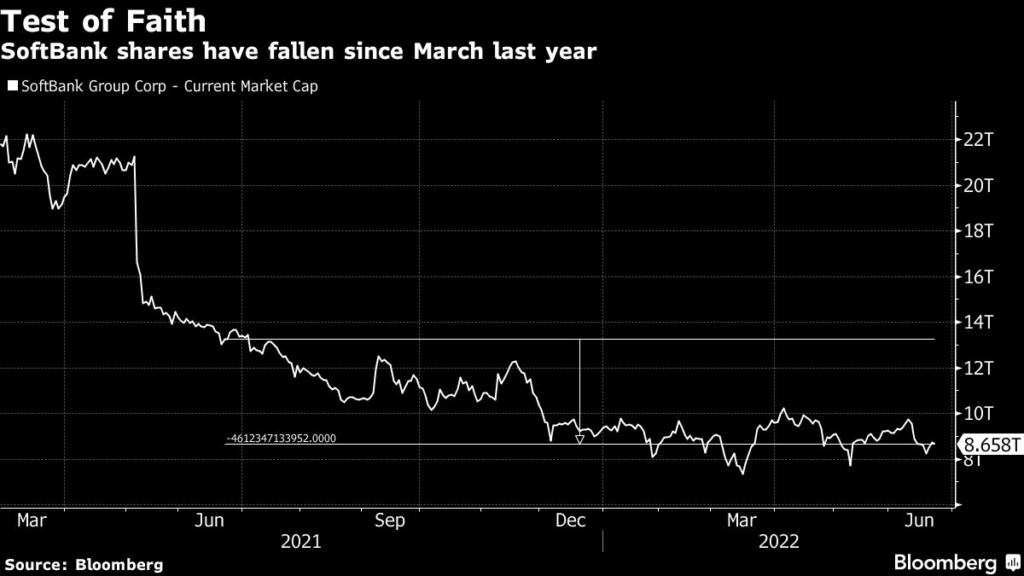
(Bloomberg) — SoftBank Group Corp. founder Masayoshi Son is used to praise and encouragement from shareholders. But the company’s loss of $34 billion in market value over the last year is a test for even his most faithful admirers when they gather for the annual shareholders’ meeting on Friday.

Investors stuck by Son when SoftBank announced a holding company strategy in 2015 to hive out its staid but profitable domestic telecom business to become the world’s largest investor in volatile tech startups. When the Vision Fund booked an $18 billion loss on investments like WeWork and Uber Technologies Inc. in 2020, they pointed to Son’s ability to win thousands-fold returns on Alibaba Group Holding Ltd. When Son preached patience as the stock began a downward trajectory from a March peak last year, they listened and hung on.

But five years of deploying $142 billion has now resulted in a record 2.1 trillion yen ($15.4 billion) loss for the company in the quarter ended in March. Much of that can be pinned on the recent global selloff in tech and a crackdown on China’s biggest technology companies, but much can also be attributed to SoftBank’s pressure on companies to make big, aggressive bets. 

With SoftBank’s own financial health on the line, shareholder confidence is near a breaking point, said Mio Kato of LightStream Research. Son needs to show how SoftBank adds value as an investor and chart steps — such as further share buybacks financed by sales of Alibaba stocks — for the stock price to recover, he said.

“Investors remain loyal as long as they believe in your dream, but once they realize things aren’t working, trust crumbles in an instant,” Kato said. 

Shareholders looking for signs of recovery see a portfolio awash with red instead. SoftBank bet more than $12 billion on Chinese ride-hailing firm Didi Global Inc., but Didi delisted from the New York Stock Exchange less than a year after its IPO and that stake is now worth less than $3 billion. South Korean ecommerce company Coupang Inc.’s shares are down close to 70% from a year earlier, and other publicly listed companies — which represent only a fraction of its portfolio companies — have similarly tumbled in value.

Anxiety remains high that big write-offs might yet be ahead. A number of portfolio companies have been forced to restructure or raise funds at lower valuations. SoftBank-backed firms that have recently announced headcount reductions include Swedish payments firm Klarna Bank AB and privacy management company OneTrust, while Bloomberg News has reported staff cuts at chip unit Arm Ltd.

Questions also linger on whether anyone on SoftBank’s board is able to provide proper oversight. SoftBank’s board has lost its most independent voices in recent years, including outgoing outside director Lip-Bu Tan who cautioned that Son “needs people to provide safeguards, give him advice and make him even more successful” in an open departure letter. “Poor choices made too quickly can have negative consequences for the company.” 

A key item on Friday’s agenda is SoftBank’s appointment of David Chao to replace Tan as an external director. Chao — a co-founder and general partner at venture capital firm DCM — had previously invested in companies such as vertical farming startup Plenty Inc. and personal finance startup SoFi Technologies Inc., in which the Vision Fund also invested. SoFi in 2017 was embroiled in a sexual harassment investigation that led to the ouster of its CEO.

“This feels like a continuation of the degradation of the strength of board oversight,” Kato said about Chao. “Given some of the scandals at SoFi which he had invested in, it is not a ringing endorsement of his ability to contribute to better governance at SoftBank.” 

SoftBank this year will conduct fewer and smaller deals, Son has said. So far this year, the average size of SoftBank’s Vision Fund 2 investments stood at about $100 million to $200 million in more than 50 funding rounds, compared with around $900 million for Vision Fund 1. In January-March, the Vision Fund doled out $2.5 billion, or less than one-fourth of the $10.4 billion it spent the previous quarter.

SoftBank’s emphasis on breakneck speed remains the same, however. It reached a decision to invest in Japan’s AI Medical Service Inc. within two months of a 30-minute Zoom meeting in February between founder Tomohiro Tada and Son. After Tada’s presentation of the company — which uses artificial intelligence to help clinicians identify potential cancers of the stomach and intestines — Son spent 15 to 20 minutes asking for numbers to back up the accuracy of AIM’s technology, Tada said.

Several minutes into the call, Son suggested Tada should seek as much as $74 million, double the sum Tada proposed. The two also brainstormed possible business models for when AIM would scale up, Tada said. Following an intense two weeks of some 150 email exchanges, SoftBank in April led an $59 million funding round into AIM.

Due to Covid-related precautions, only 150 shareholders will attend Friday’s meeting at SoftBank’s headquarters in Tokyo, which will be broadcast via a web portal. Son will take questions selected from those submitted in writing online, SoftBank said.

More stories like this are available on bloomberg.com

©2022 Bloomberg L.P.

Consumers Are Racking Up Rewards in Japan by Buying Green

(Bloomberg) — Japan is rewarding people who reduce their climate impact through everyday decisions like participating in ride shares, buying energy-saving home appliances or declining single-use plastics.

The initiative is part of a wide-ranging government program to support dozens of retailers like e-commerce giant Rakuten Group Inc. and shopping mall operator Aeon Mall Co. that are expanding loyalty point schemes to incentivize customers to make greener buying decisions. People can use those earned credits toward things like online purchases, airline mileage points or even, in some cases, investments.“We hope to encourage people to make positive and proactive behavioral changes,” Environment Minister Tsuyoshi Yamaguchi said on Tuesday, during the announcement of the effort. 

The wide-ranging initiative is the latest effort by Japan to signal to consumers that their lifestyles need to be adapted in the fight against climate change. Officials in Tokyo last month urged residents to watch an hour less of TV a day and to refrain from using heater functions on toilet seats until winter in an effort to reduce electricity demand. The program will also extend to reward schemes managed by local municipalities and non-profits. Sakai City, in western Japan, will use an app to help consumers track when they decline plastic cutlery, use ride-sharing schemes or opt to have dry cleaned clothes folded to avoid the use of single-use hangers. Rakuten will award points to customers that purchase energy-efficient appliances and opt to use ecologically friendly packaging for goods purchased on its platform. Among the variety of uses for the points, Rakuten allows its users to convert those credits into airline miles or use them to invest through the company’s online brokerage unit.Loyalty programs, where consumers can gain credit for future purchases, are extremely popular in Japan. In a survey taken by the Environment Ministry, 85% of the respondents said that they most wanted a point-reward system in supermarkets and more than 60% said they would be inclined to try more environmentally-friendly action they do not usually take if there were incentives.Japan, which is targeting carbon neutrality by 2050, is looking for ways to cut greenhouse gas emissions from households that account for 60% of the country’s life-cycle greenhouse gas emissions.

More stories like this are available on bloomberg.com

©2022 Bloomberg L.P.

Close Bitnami banner
Bitnami