
Bloomberg

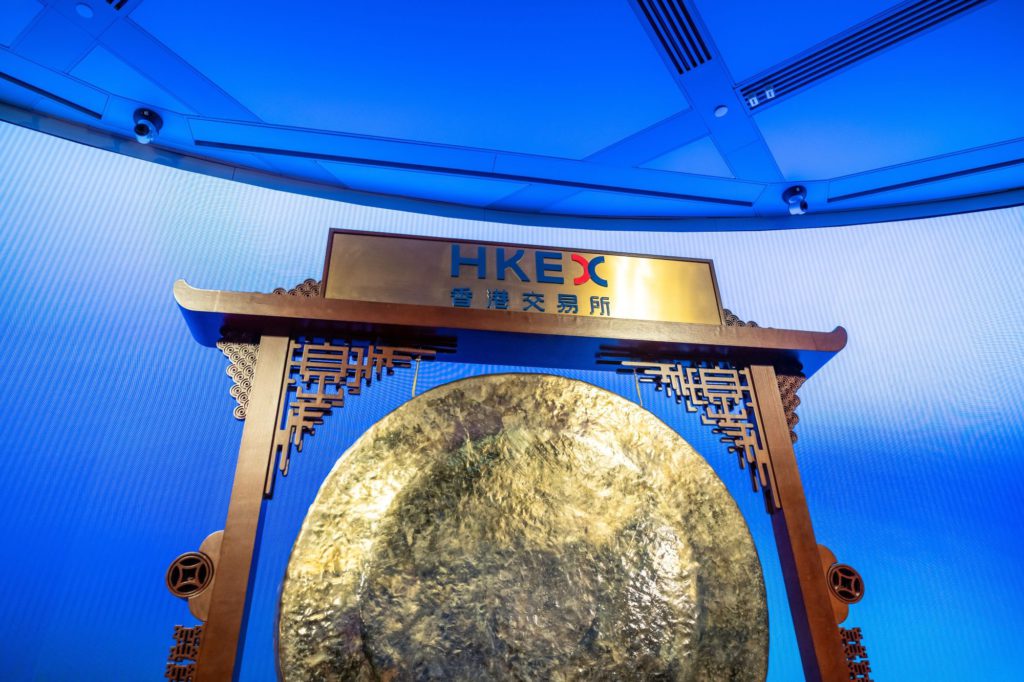
Hong Kong IPO Gong Is Back for First Ceremony Since 2020

(Bloomberg) — Hong Kong is dusting off the gong for the city’s first in-person listing ceremony in two years.

Logistics startup GogoX Holdings Ltd. is hosting a ceremony at the exchange’s newly refurbished HKEX Connect Hall on Friday, according to a media invitation. Attendees are required to pre-register and to declare they’ve taken a rapid antigen test the same day showing a negative result. Everyone must wear a face mask.

The listing ceremony is another sign of normalcy that Hong Kong has been looking for after two years of stringent social distancing measures. The pandemic has reshaped dealmaking globally as meetings and due diligence go virtual because of travel restrictions. InnoCare Pharma Ltd., a Chinese biotech firm, was among the first in Hong Kong to opt for a virtual investor meeting in early 2020.

Striking a gong is a key feature of a listing ceremony in Hong Kong just like the iconic bell ringing ceremony in New York. In the Asian city, executives usually hit the gong with mallets in red cloth, a color symbolizing good fortune and joy in Chinese culture. Since the pandemic, the gong ceremony has gone virtual.

Hong Kong’s IPO market is also waiting for a big bang as inflation concerns and the war in Ukraine have slowed down activity significantly. Companies have raised about $2.4 billion through IPOs so far this year, only a fraction of the $26.2 billion raised during the same period in 2021, according to data compiled by Bloomberg.

GogoX last week held Hong Kong’s first in-person IPO press briefing in months. The startup is also among a few companies that are set to defy the slump and test the waters. Although it only raised about HK$567 million ($72 million), the startup has enlisted four banks as its IPO sponsors: UBS Group AG, China International Capital Corp., Bocom International Holdings Co. and ABC International Holdings Ltd.

(Updates GogoX’s fundraising details in last paragraph.)

More stories like this are available on bloomberg.com

©2022 Bloomberg L.P.
Toshiba Surges on Report of Bids at $22 Billion Valuation

(Bloomberg) — Toshiba Corp. shares jumped as much as 6.5% on Thursday after Reuters reported bidders are considering offering up to 7,000 yen per share to take the company private, which would value the deal at about $22 billion.

Toshiba has been soliciting acquisition offers — and other restructuring proposals — as it seeks to end years of mismanagement and mollify activist investors. Ten offers are on the table, including eight to take the company private. The range of pricing and conditions for privatization was widespread, the report said, citing people familiar with the situation.

“That suggests that some assets would need to be carved out, or spun out – like Kioxia – and if spun out, that would mean a lower price for the rest of the basket,” analyst Travis Lundy wrote in a note on Smartkarma. There is still a long way to go and the price could well be lowered in the second round of bidding, he added.

The tech conglomerate’s Tokyo-listed stock closed at 5,501 yen the day prior.

Bain Capital, Blackstone Inc. and CVC Capital Partners are among the funds considering bids, Bloomberg News has reported. A successful deal, which may be private equity’s largest ever in the country, would signal that the once-criticized class of investors is becoming more accepted in Japan.

Private Equity Giants Called Vultures Eye Breakthrough in Japan

More stories like this are available on bloomberg.com

©2022 Bloomberg L.P.

‘Left Behind’ Tech Workers Ready to Embrace Labor, Union Says

(Bloomberg) — Tech workers around the country are ready to embrace the labor movement after years of being “left behind,” said a top executive at the union that just won a first-of-its-kind election at an Apple Inc. store.

“It is going to be a great change,” David Sullivan, the general vice president of eastern territory for the International Association of Machinists and Aerospace Workers, said in an interview Wednesday on Bloomberg Television. “This is the workforce that needs a union.”

The machinists union helped orchestrate a successful unionization campaign at an Apple store in Towson, Maryland, culminating in employees voting roughly 2-to-1 to join the labor group last weekend. Unions have struggled to make inroads at other Apple stores, and have had a mixed record at tech giants such as Amazon.com Inc. An Amazon warehouse in New York’s Staten Island recently voted to join a union, but the same group failed to win over a nearby facility.

Sullivan expects the Apple vote to be certified by the end of the week, at which point the union will send a letter to Chief Executive Officer Tim Cook as a bargaining agent. Typically, a three-year contract is then hammered out, he said.

Apple hasn’t discussed the vote, but said in a previous statement that it’s “fortunate to have incredible retail team members and we deeply value everything they bring to Apple. We are pleased to offer very strong compensation and benefits for full time and part time employees, including health care, tuition reimbursement, new parental leave, paid family leave, annual stock grants and many other benefits.”

More broadly, tech workers are eager to gain the clout provided by a union, Sullivan said. 

“They want to negotiate over hours of work, working conditions, all the things a union does,” he said. “When workers around the country see what we are doing, I think they are going to want to be part of this. I am excited. I don’t think it is going to slow down.”

More stories like this are available on bloomberg.com

©2022 Bloomberg L.P.
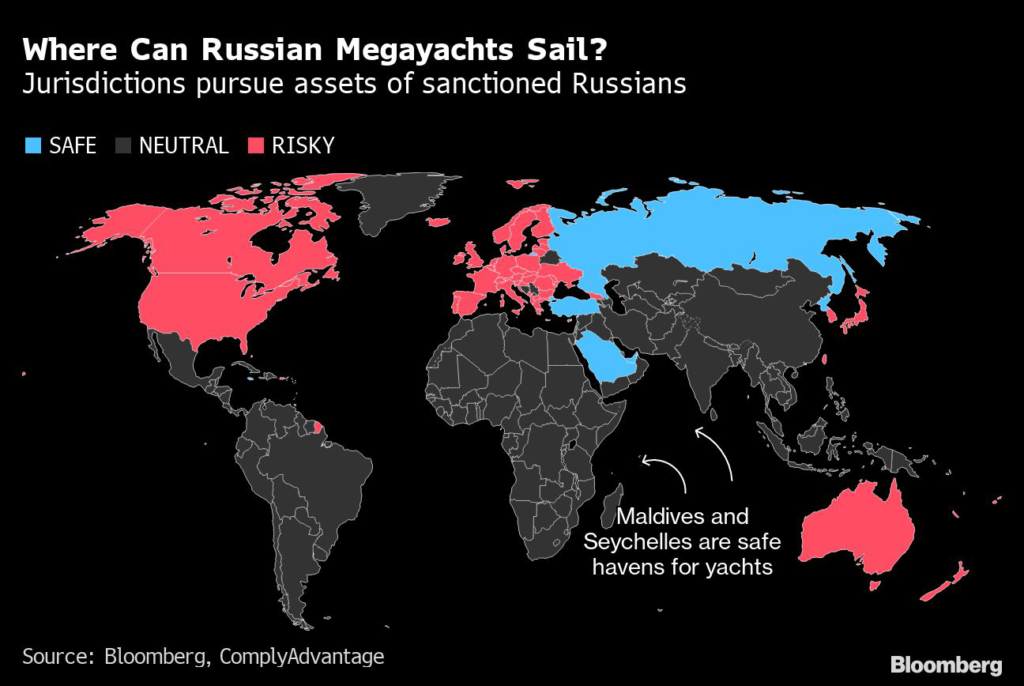
Megayachts Running Low on Safe Harbors as Russia Sanctions Bite

(Bloomberg) — When the $325 million Amadea superyacht that’s been linked to Russian billionaire Suleiman Kerimov sailed into Fiji in April, the captain may have figured he had found a safe haven.  

The laid-back South Pacific island nation hadn’t joined in a global push to impose sanctions on Russia and many of President Vladimir Putin’s wealthy supporters, and had just a few weeks before abstained from a United Nations resolution supporting Ukraine’s territorial integrity. 

Yet a week after the Amadea arrived, Fiji authorities detained the luxurious yacht at the request of the US government, which argued that Kerimov — who has been sanctioned for his ties to Putin — was the true owner of the ship. The US eventually won a series of legal challenges and seized the vessel, sailing it to Honolulu last week.

The costly episode shows how Russian tycoons are running out of places to park their floating palaces, four months after their country’s invasion of Ukraine. The US and Europe are going after their superyachts, villas and other assets because of their ties to Putin. Already, more than a dozen boats worth more than $2.25 billion have been seized by the US, EU nations and willing allies — such as Fiji.

The US has formed a taskforce dubbed KleptoCapture to pursue the assets of Russian oligarchs. The unit, along with the Federal Bureau of Investigation, the US Marshals Service, and Coast Guard, sent agents to Fiji to pursue the Amadea. In Europe, Germany, Italy, Spain and other governments have seized ultra-luxurious vessels, with the biggest prize so far Russian billionaire Alisher Usmanov’s Dilbar, which is valued at as much as $750 million.

After the Amadea was first seized, US Deputy Attorney General Lisa O. Monaco issued a warning to Russian tycoons, saying the Justice Department “had its eyes on every yacht purchased with dirty money.” 

“This seizure should tell every corrupt Russian oligarch that they cannot hide — not even in the remotest part of the world,” she said.

Fearful of having their yachts seized, owners have sent them to a small number of locales still considered friendly — allowing the vessels to dock or hang around unbothered — including Dubai in the United Arab Emirates, Turkey and the Maldives, according to Spire Global Inc., a data and analytics firm that uses satellite technology to track maritime activity. 

Still, it can be challenging to predict how countries might react to a Russian megayacht in their waters, such as the case of the Amadea, or how governments might change their approach to sanctions with political pressure or a change in administration.

  • Want to track yachts tied to sanctioned Russians? You can here.

As the war in Ukraine drags on, more so-called neutral countries that haven’t imposed sanctions may be drafted in to help with seizures, said Elizabeth Mendenhall, an assistant professor of marine affairs and political science at the University of Rhode Island. 

“Maritime law is not a key factor in the seizures,” she said. “It’s more about the relationship between the US or the UK and the country they want to get help from. They can use carrots and sticks related to other issues to get states to cooperate.”

More stories like this are available on bloomberg.com

©2022 Bloomberg L.P.

Meta Antitrust Judge Backs TikTok, WeChat, Telegram Data Request

(Bloomberg) — Meta Platforms Inc. won a judge’s backing to obtain information from ByteDance Ltd’s TikTok, Tencent Holdings Ltd’s WeChat and Telegram Group Inc. to bolster its defense against an antitrust lawsuit by the US Federal Trade Commission.

US District Judge James Boasberg on Wednesday wrote letters to China’s Ministry of Justice seeking help with getting documentary evidence from Tencent and ByteDance, and sent a separate letter to officials in the British Virgin Islands concerning Telegram. 

Boasberg explained in the letters that he wants user data and communications or presentations to executives and board members examining competition between the companies’ apps and Meta’s Facebook, Instagram and WhatsApp platforms.

Read More: Meta Seeks TikTok, Telegram, WeChat Data for Antitrust Defense

Meta had told Boasberg that it needs data on each company’s user base and market share to defend itself against the FTC’s suit, which alleges Meta monopolized the personal social networking market and seeks to force it to spin off its Instagram and WhatsApp units. Efforts to obtain the information from the US units of the companies were unsuccessful, Meta said. 

The Menlo Park, California-based social media giant had asked the judge to issue orders that would allow it to officially seek evidence from outside the US.

The FTC’s suit was initially thrown out by Boasberg, who said the agency didn’t clearly explain how it determined Facebook’s market share. The FTC then filed a revised version of the complaint last summer that the judge ruled in January could proceed.

The case is Federal Trade Commission v. Meta Platforms Inc., 20-cv-03590, US District Court, District of Columbia.    

More stories like this are available on bloomberg.com

©2022 Bloomberg L.P.
SEC to Propose New Rules for Online Brokers’ Game-Like Features

(Bloomberg) — The US Securities and Exchange Commission plans to propose new rules this year to crack down on the behavioral prompts and data analytics used by some online stock brokerages and investment advisers.

The agency’s bid to impose restrictions on trading and investing apps popular with retail traders follows a review by the SEC of “digital engagement practices,” which critics refer to as the gamification of investing. Wall Street’s main regulator said last August that it was concerned that game-like features are putting investors at risk by encouraging excessive trading. 

The rule plan, which was announced this week in a calendar of upcoming regulatory actions, could pose significant challenges for online brokerages and advisers. Under SEC rules, if a firm is offering investment advice or recommending securities it can face conduct standards that require putting clients’ interests first.  

Since taking over in April 2021, SEC Chair Gary Gensler has raised concerns with how features closely associated with the mobile phone apps offered by brokers such as Robinhood Markets Inc. and Webull Financial can impact trading. He’s also questioned whether big data in finance may create conflicts of interests for brokers and advisers, and whether digital nudges on a trading app can amount to offering a recommendation. 

In a statement, Robinhood said it looked forward to engaging with the regulator and that “it’s important not to conflate gamification with simple, intuitive design” which has made investing more accessible. Webull didn’t immediately respond to a request for comment. 

In a separate announcement, the SEC said it’s considering proposing new rules on credit ratings agencies’ potential conflicts of interests.

More stories like this are available on bloomberg.com

©2022 Bloomberg L.P.

Meta Bet Scrapped at Brazil Money Manager on TikTok Threat

(Bloomberg) — One of Brazil’s oldest independent asset managers said it closed a years-old wager on Meta Platforms Inc. about four months ago, citing the impact of competition from video-sharing app TikTok.

“The competition for time became fiercer given TikTok’s incredible ability to retain user attention,” IP Capital Partners wrote in a note to clients this month announcing the move. “While the short-form video format has had more success among young people, we believe it has a universal appeal and will continue to penetrate older audiences around the world.”

IP Capital Partners, which was founded in 1988, had more than 4 billion reais ($772 million) in assets as of April, according to data from Brazil’s capital-markets association Anbima. The firm, which didn’t disclose the size of the Meta position, said in emailed comments that it closed the trade in early February. 

The money manager, which started building a long position in Meta in 2018, estimates that the US audience spent more time watching TikTok than Reels, the short video platform of Meta unit Instagram, by a magnitude of 20 in the first three months of the year. 

While Meta has focused on boosting the adoption of Reels, the effort diverts attention from highly monetized features on its Facebook platform, such as the feed and stories, which helps explain a sharp slowdown in revenue growth last year, the fund wrote. 

Wall Street has soured on Meta this year, with the stock losing more than half its value, erasing about $500 billion in market valuation. Much of the collapse occurred in February, when the company gave a forecast that disappointed investors and warned about competition from TikTok. Last year, it announced a pivot toward the metaverse, a change in strategy that investors remain mixed on.

The Rio de Janeiro-based asset manager’s oldest fund, IP Participacoes Master FIA BDR Nivel I, had exposure to Meta through both U.S.-listed shares and the company’s Brazilian depositary receipts, data compiled by Bloomberg show. Other U.S. bets include Netflix Inc., Charter Communications Inc., Charles Schwab Corp. and Amazon.com Inc., according to the note to clients. 

(Adds IP Capital comments in third paragraph.)

More stories like this are available on bloomberg.com

©2022 Bloomberg L.P.

Elon Musk Says New Tesla Plants Are ‘Money Furnaces’ Losing Billions

(Bloomberg) — Elon Musk said Tesla Inc.’s new plants in Germany and Texas are losing “billions of dollars” as the electric-vehicle maker tries to ramp up production.

“Both Berlin and Austin factories are gigantic money furnaces right now,” the chief executive officer said in a video interview with Tesla Owners of Silicon Valley posted online Wednesday.

The comments, part of a broader discussion filmed May 31, offer new insight into Tesla’s operations in the days leading up to Musk’s decision to cut costs by laying off employees. The reductions will affect about 10% of Tesla’s salaried workers over the next three months, or about 3.5% of its global workforce, Musk told Bloomberg News Editor-in-Chief John Micklethwait at the Qatar Economic Forum on Tuesday.

Musk also said in the May 31 interview that Tesla has struggled to quickly increase production in Austin of Model Y SUVs that use the company’s new 4680 cells and structurally integrated battery pack. To keep up with high demand for its cars, the company said in an April letter to shareholders that it would also make Model Y SUVs with the older 2170 cells in Austin — but the tooling required for that got stuck in China, Musk said.

“This is all going to get fixed real fast, but it requires a lot of attention, and it will take more effort to get this factory to high volume production than it took to build it in the first place,” Musk said of the Austin factory. Berlin is in a “slightly better position” because Tesla outfitted it to build cars with the 2170 cells, he said.

Tesla has spent the last few years prioritizing building new factories in different locations around the world to make it cheaper to distribute cars in its biggest markets. More factories also give Tesla a higher ceiling for how many cars it can build per year.

Tesla’s struggles in getting the Austin and Berlin factories up and running occurred as the automaker was also dealing with Covid-related lockdowns at its Shanghai plant, Musk said. At the time of last month’s interview, Tesla was still trying to recover from a dramatic drop in production brought on by the Chinese government’s restrictions, as well as persistent supply-chain headaches. 

“The past two years have been an absolute nightmare of supply-chain interruptions, one thing after another, and we’re not out of it yet. Overwhelmingly our concern is how do we keep the factories operating so we can pay people and not go bankrupt,” Musk said. “The Covid shutdowns in China were very, very difficult, to say the least.” 

Since the interview, Tesla has more than tripled production at its plant in China. 

Morgan Stanley analyst Adam Jonas on Wednesday cited the China disruptions in part as he lowered his price target on the automaker to $1,200 a share from $1,300. He maintained his overweight rating on Tesla.

Tesla’s shares closed down less than 1%, to $708.26, Wednesday in New York.

(Updates with context on factories starting in sixth paragraph.)

More stories like this are available on bloomberg.com

©2022 Bloomberg L.P.
Stablecoin Rules Are a Hot Topic for People in Money Markets

(Bloomberg) — Money-market funds — facing a third round of industry clampdowns since the financial crisis — are wondering whether Washington should pay more attention to less transparent investment vehicles to avert turmoil in short-term lending markets. 

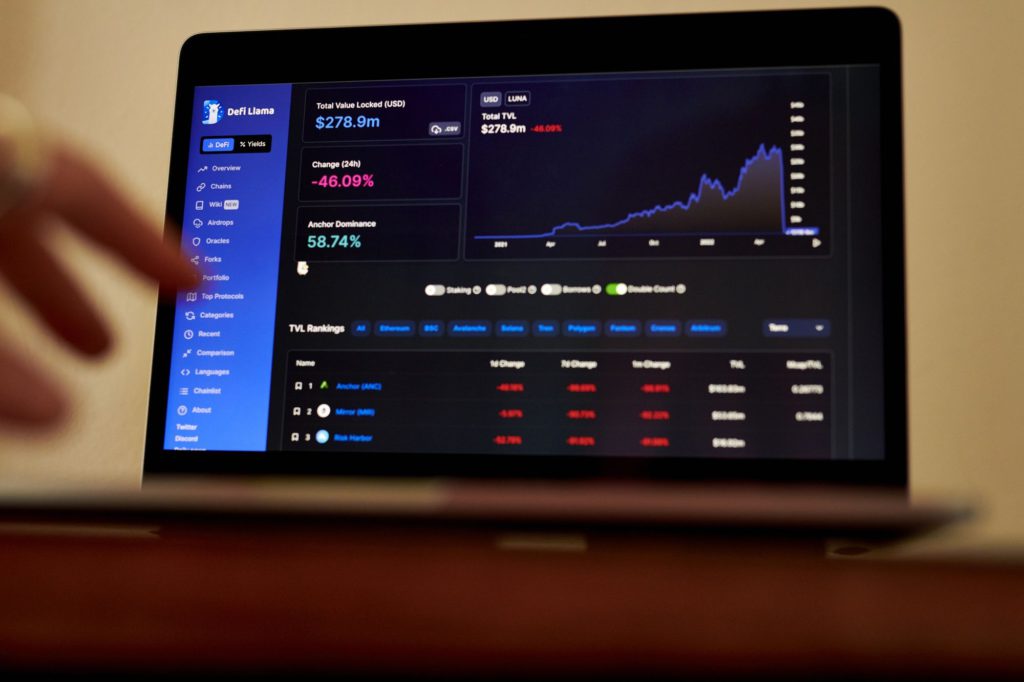
Cryptocurrency stablecoins, for example, are often backed by assets including Treasury bills and short-term corporate IOUs. They have been referred to as money-fund-like instruments, but aren’t held to the same disclosures and requirements as the $4.5 trillion industry, according to some money managers speaking at the Crane’s Money Fund Symposium in Minneapolis on Tuesday. That mismatch could pose a risk to financial market stability with digital-asset prices tumbling, they say.

“It’s ironic, we’re talking about money-market reform and here you have this ultra-short bond space and there’s no set standard,” said Robert Sabatino, head of global liquidity at UBS Asset Management, referring to the relative lack of regulation presently in place around stablecoins.

A sweeping bill from a bipartisan Senate duo earlier this month would buttress rules pertaining to some of the hottest issues facing the crypto industry, including sanctions compliance, stablecoin oversight and energy usage. In addition, the US Securities and Exchange Commission was reported to be investigating whether marketing of the TerraUSD algorithmic stablecoin before it crashed last month violated federal investor-protection regulations.  

Stablecoins have been adopted by traders and investors as a store of wealth to safeguard portfolios against market volatility. The largest and most popular of these, Tether, has faced significant scrutiny from federal and state regulators. The number of dollar-pegged Tethers, or USDT, in circulation has dropped significantly in recent months as price instability pushed traders to sell these tokens and move into another stablecoin. Total USDT circulation has dropped to $67 billion, according to data from CoinGecko, compared with a peak of more than $83 billion in early May. The total market value of stablecoins is about $155 billion, according to data from CoinMarketCap.

What concerns front-end market participants is that Tether invests in the same types of instruments as money-market funds, but is subject to less rigorous disclosure. 

“We look at Tether’s disclosures and take it at face value,” said Teresa Ho, a strategist at JPMorgan Chase & Co. “No one knows what’s behind Tether’s reserve portfolio.” 

At the same time, a so-called crypto winter is chilling the digital asset industry. Companies like Coinbase Global Inc., Gemini Trust Co. and Crypto.com have laid off staff. The price of Bitcoin has sunk about 30% over the past month.

New Rules

Meanwhile, the SEC is expected to announce proposed changes to the money-fund industry by the end of the year, which includes requiring stable net asset value funds to float in a negative-rate environment — with the aim of averting the kind of turmoil seen in March 2020. Panicked investors yanked billions from money funds in a matter of weeks then, contributing to the seizing up of the commercial-paper market, where many companies obtain short-term financing. 

This is one of the biggest points of contention. The other is what’s known as swing pricing, which would force redeeming investors to pay a fee. In comment letters to the SEC, fund managers have said it would likely bring the end of the so-called prime funds, pools of money that can invest in corporate as well as government paper. And indeed some managers have already shuttered that part of their business in anticipation of changes taking hold.

“They want financial stability and then they want to remove the greatest product that has the most transparency,” said Dennis Gepp, chief investment officer and managing director at Federated Hermes UK. “That’s where financial stability starts and they have to be very careful what they’re wishing for.”

More stories like this are available on bloomberg.com

©2022 Bloomberg L.P.

Juul Might Be Pulled From Shelves and Vapers Are Stocking Up

(Bloomberg) — Brand-loyal vapers are flocking to their favorite shops to stock up on Juul Labs Inc.’s e-cigarettes, amid news that the products could soon be taken off the market. 

“My husband is out on a Juul run right now. Gonna clear the shelves and hoard ’em like our incandescent bulbs!” one user wrote on Twitter following the news, first reported by the Wall Street Journal, that the US Food and Drug Administration could order the company to stop selling its e-cigarettes as soon as Wednesday.

It’s the latest hit for Juul after the FDA banned sales of customer-favorite fruity and sweet flavors on concerns the products were being marketed to minors. But the company isn’t being singled out — the FDA has generally tightened its oversight of e-cigarette companies and is reviewing thousands of applications from companies aiming to sell similar products.

Juul “just so happened to rise to the top of the stack,” said Lynn Kozlowski, a public health professor at the University of Buffalo who has led studies on nicotine addiction, vaping and cigarettes. 

Back in 2019, reports began to emerge of cases of severe lung damage in young people that were later linked to vaping or e-cigarette use. As of February 2020, the US Centers for Disease Control and Prevention recorded more than 2,800 such cases that resulted in hospitalizations and deaths. Studies revealed an association with vitamin E acetate, an additive in some THC-containing vaping products, and cases declined amid increased public awareness and efforts to better regulate the products’ safety.

People vape for a different reasons: some to kick cigarettes, other use the products socially. When flavors like mango, fruit and creme were taken off shelves in 2019, some customers turned to other products that had more of a “reward” component — better flavors, perhaps even a higher nicotine content, Kozlowski said.

Will Teasley, 20, a college senior at North Carolina A&T State University is happy the FDA is pulling Juul off the shelves, but thinks it will do little to discourage young people from vaping because there are so many other products available. Teasley first got hooked on vaping in high school — with Juul — and for the last five years he said its been nearly impossible to quit.

“Juul is the device that opens the door to cause lifelong addiction,” Teasley said. But for him, the FDA’s move comes too late: “It already got me.”

Brands like Puff Bar, VaporLax and Hyde sell more flavors and offer disposable options that consumers say makes them easier to use than a Juul, which needs to be refilled and charged. Plus, Juuls tend to be more expensive than competitors. The liquid inside Juul pods is eight times more expensive per milliliter than comparable e-liquid sold in a bottle, according to e-cigarette website vaping.com.

“You might have some people who buy up Juul and hoard it, but others will just switch to products that are still legal,” Kozlowski said. “It’s a very diverse market.”

Read More: Juul Finds Hell Hath No Fury Like an Army of Really Rich Parents

Still, some shops are readying for a potential influx of customers hoping to stock up. By mid-morning Wednesday, the Smoke Shop in Manhattan’s Kips Bay neighborhood said they were putting all their Juul supply out on shelves in preparation. 

More problems could arise for vapers if the FDA continues cracking down on vaping products, Kozlowski said. The Biden administration is showing more interest in the subject, preparing to require tobacco companies to cut nicotine levels in cigarettes to reduce smoking-related deaths. When that comes to pass, it may be safer to have an abundance of consumer-acceptable, less-harmful options available, Kozlowski said. 

“I’m worried about what this suggests for the impact of a low-nicotine cigarette policy,” he said. “We don’t know what types of patterns might develop; it’s a risk to consumers.”

More stories like this are available on bloomberg.com

©2022 Bloomberg L.P.

Close Bitnami banner
Bitnami
