Bloomberg

India Panel to Consider Sales Tax on Cryptocurrency Next Week

(Bloomberg) — An Indian ministerial panel will meet next week to discuss a goods and services tax on cryptocurrency transactions, people with knowledge on the matter said.

The panel, comprising federal and states’ finance ministers, is seeking to broaden the tax net to track dealings in virtual digital assets in a more effective manner, the people said, declining to be identified citing rules on speaking with media. The panel is meeting for two days starting June 28 in the northern Indian state of Chandigarh.

The panel is unlikely to finalize a rate in the upcoming meeting but discussions may be held on placing it in the highest tax slab of 28%, the people said.

A finance ministry spokesperson did not immediately respond to calls seeking comments.

Earlier this year, Finance Minister Nirmala Sitharaman imposed a levy of 30% on income from transfer of virtual assets and a 1% tax at source on all crypto transactions in a bid to assess the size of crypto market in the country and track users. The move was seen as removing uncertainty about the legal status of crypto transactions.

However, there is still no clarity on imposition of a sales tax on digital currencies due to ambiguity in its treatment as goods or services and a lack of a regulatory framework.

Read more on crypto landscape and GST:

How India Plans to Develop Crypto on Its Own Terms: QuickTake

India Says It Can Track Crypto Deals to Catch Tax Evaders

Crypto Market Starting to See Even Old-Timers ‘Panic Selling’

Tax Ruling Emboldens Indian States Against Modi’s Government

The federal government is already working on a legislation to either regulate or tighten provisions though it is expected only after a global consensus emerges on regulating such assets, Bloomberg had earlier reported.

Digital currencies have been under pressure all year along with other risky assets as global central banks have started to hike interest rates to quell soaring inflation. Bitcoin is down roughly 50% this year, and Ether has slumped 70%.

More stories like this are available on bloomberg.com

©2022 Bloomberg L.P.

Shopify Taps Twitter to Boost Merchants’ Social Media Reach

(Bloomberg) — Shopify Inc. is adding Twitter Inc. to its growing list of social media partners as it aims to help businesses reach buyers across a range of online platforms.

As of today, Shopify’s U.S. merchants will be able to open a virtual storefront on Twitter’s online shopping platform. The news follows other Shopify collaborations, including with Alphabet Inc.’s Google and Meta Platforms Inc.’s Facebook.

“Retail does not happen across one channel, it happens across every channel,” Shopify President Harley Finkelstein said in an interview. Now that the pandemic is easing, merchants “want to sell across every single surface area.”

The Ottawa-based company’s shares have fallen 76% this year amid a broader rout in tech stocks and as e-commerce companies face headwinds from the post-pandemic return to in-person shopping. 

Shopify retailers will be able to sell their goods on Twitter two ways: by displaying as many as five products on their Twitter profile or by using Twitter Shops, a pilot feature that lets vendors advertise as many as 50 products in a tab linked to their profile. 

Elon Musk Sounds Off on Recession Risk, Twitter Deal and Trump

Shopify declined to provide an estimate of how much the Twitter deal will increase sales for its customers, but said orders placed with Shopify merchants through other online partnerships quadrupled in the first quarter of 2022, compared to the same period a year earlier. It also said that shopping-related tweets hit roughly 40 billion views last year. 

The Twitter launch is slightly different from some other partnerships in that it doesn’t include Shop Pay, Shopify’s online payment tool.

Elon Musk, who is leading a proposed $44 billion takeover of Twitter, has indicated his ambitions to turn Twitter into a “super app” that combines social media, online shopping, and payments. Twitter shares have fallen 10% this year. 

More stories like this are available on bloomberg.com

©2022 Bloomberg L.P.

Vine Raises $140 Million for Latin America-Focused Venture Fund

(Bloomberg) — Vine Ventures, which has backed a handful of Latin American startups, raised a new $140 million fund, which it says makes it one of the largest US-based seed investors focused on the region. 

The New York-based company will use the Vine II fund for early-stage startups from Latin America, with an eye on financial services, logistics and supply chain companies, Managing Partner Eric Reiner said in an interview. Combined with its first fund, Vine now has $243 million under management, which it also invests in Israel and the US. 

“This is a testament to the work we’ve done. We were spot on being early in Latin America,” said Reiner, who founded Vine with Dan Povitsky just before the global Covid-19 pandemic began in 2020. “This certainly makes us one of the largest US seed funds focused on the region.” 

The company is dedicated to making investments of $1 million to $10 million for startups in their seed stage. It plans to deploy the new fund over the next three years as it absorbs the macro-economic changes and political developments, Reiner said. 

It has made bets on Colombia-based property tech firm Habi, which later raised $200 million from SoftBank’s Latin America Fund, TUL, a Latin America super-app for the construction industry valued at $800 million, and Israeli platform Komodor, among others. The first fund posted a net internal rate of return of 251% through last year, the company said. 

Vine was able to raise money from large tech funds, family offices and pension funds even as venture capital spending has slowed as investors shied away from riskier sectors. Latin America, one of the fastest-growing markets for tech investments last year still managed to raise about $3 billion in the first quarter, down from $4 billion in the fourth quarter last year, according to data compiled by CB Insights, an analytics firm. 

Reiner said some firms that poured capital into the region have pulled out. “It’s been very clear that there were tourists in Latin America, but we’re here to stay,” he said. “We’re still bullish on Latin America.” 

More stories like this are available on bloomberg.com

©2022 Bloomberg L.P.

Gorillas Turns Focus to Profitability After Market Stutters

(Bloomberg) — Grocery delivery company Gorillas expects to be profitable on a group level within 12 months, its chief executive officer said, despite the broader market downturn. 

“The market changed, especially in the last three months, CEO Kagan Sumer said at the Consumer Goods Forum’s Global Summit in Dublin on Wednesday. “We realized we have to adapt, course correct and we had to do it fast.”

READ: Gorillas Startup Dream of Food Delivery and Office Raves Falters

The German startup, which promises to deliver groceries to customers within 20 minutes, had been focused on growth, but has been hindered by a lack of access to venture capital funding.

“Now the whole focus is going toward profitability,” Sumer said. Gorillas expects to be operationally profitable in three months, he added. 

One of the key components of Gorillas’ profitability is partnerships — such as its pilot with UK supermarket chain Tesco Plc — as a way to increase margins and buying power, as well as tap into real estate used by larger corporations. In return, the startup brings its technology and delivery expertise. 

“When you do that the business becomes more financially sustainable,” Sumer said.

Gorillas is also using corporate partnerships to explore a private label strategy, in an effort to boost profits and create cheaper products to meet the needs of inflation-hit consumers, he added.

“We are not that experienced in product creation, so that’s why it’s also important to have a partner so that we can do what we do best, which is technology and distribution,” he said.

Gorillas Explores Options, Weighed Deals With Delivery Rivals

While world events and inflation have roiled markets in recent months, in hindsight Sumer said he could have perhaps changed strategy earlier. “Maybe six months ago I could have said we should stop focusing on growth, maybe six months earlier, but it’s impossible to know.”

More stories like this are available on bloomberg.com

©2022 Bloomberg L.P.

Bitcoin Lingers Around $20,000 Again as Risk-Off Mood Returns

(Bloomberg) — Bitcoin traded once again around the $20,000 level, moving in tandem with weakening stocks amid mounting concerns about a global recession. 

The largest cryptocurrency declined as much as 4.3% to $19,947, before settling in around as of 9:23 a.m. in London. Ether fell by a maximum 5% to $1,066.02. Shiba Inu, the 14th-biggest cryptocurrency by market value, rallied 14% in the past 24 hours though its momentum was tailing off, according to pricing from CoinGecko.

“Bitcoin has made ‘a bottom’ but probably not ‘the bottom’,” said Mark Newton, head of technical strategy at Fundstrat Global Advisors. “Upside targets should materialize near $23,300 with a max near $24,800 before prices pull back to likely challenge lows into the final week of June.”

Cryptocurrencies have been moving for months in the same direction as stocks, and Wednesday’s moves were no exception as investor appetite for risk assets ebbed on growing fears about an economic downturn. Bitcoin appears to be consolidating around the $20,000 level, similar to its action around $30,000 for much of May and into June.

The move off of sub-$20,000 lows occurred as broader risk sentiment stabilized and speculative investors await their next trading prompts, Informa Global Markets wrote in a note Tuesday. 

The firm added that data from on-chain analytics firm Glassnode shows that as of June 20, 56.2% of addresses were still worth more in dollar terms than when their coins entered them, which Informa said raises questions about the severity of the current bear market. That’s compared with recent Glassnode data showing the average purchase price of all Bitcoins in circulation was around $23,430 — so, above current levels.

Still, it’s the bigger picture that’s really driving Bitcoin’s price, Informa said.

“Macroeconomic conditions need to improve and the Fed’s aggressive approach to monetary policy has to subside before crypto markets see a bottom,” the firm wrote.

More stories like this are available on bloomberg.com

©2022 Bloomberg L.P.

China Approves Plan for ‘Healthy’ Development of Fintech Sector

(Bloomberg) — Chinese President Xi Jinping chaired a meeting Wednesday that approved promoting the “healthy” development of the payment and fintech sectors, a sign that a broad crackdown on tech companies like Ant Group Co. may be easing.

The meeting of the central commission for deepening overall reform also backed enhancing regulation of major payment platforms, state broadcaster China Central Television reported, adding that companies would be encouraged to return to their roots while the authorities will improve regulation.

As part of the plans, China would ensure the security of payment and financial infrastructure, and work to prevent and defuse systemic financial risks, CCTV said. The government will also enhance oversight of financial holding companies and financial institutions invested by platform firms, the report said, without adding details.

Beijing has promised to unwind crackdowns that torpedoed Ant’s record initial public offering in 2020 and ensnared every sector from online education to gaming. Once Ant is able to set up the financial holding company, it can fold key operations into the entity, following a framework laid down by the central bank last year.

A meaningful relaxation of curbs on Ant — one of the most high-profile casualties of Xi’s sweeping clampdown — would send a powerful signal that policy makers are following through on recent pledges to support the industry. The Communist Party’s evolving stance toward the private sector has become one of the most closely watched developments in global markets in recent years, with some observers even calling China’s sprawling internet sector uninvestable.

While Ant has said it has no plans to initiate an IPO, the company’s Chairman Eric Jing said last year that it would eventually go public.

More stories like this are available on bloomberg.com

©2022 Bloomberg L.P.

Jack Ma’s Ant to Apply for Key License as Soon as This Month

(Bloomberg) — Jack Ma’s Ant Group Co. is poised to apply for a key financial license as soon as this month, according to people familiar with the matter, a sign that its lengthy overhaul following a squashed 2020 listing is getting closer to satisfying China’s financial regulators.

The People’s Bank of China intends to accept Ant’s application to become a financial holding company once it’s submitted and will then start a review process, which could take months, said the people, asking not to be identified discussing a private matter. Officials will examine Ant’s capital strength and business plans, as well as the compliance of its shareholders and senior management before a final signoff.

The moves would mark a crucial development in Ant’s revamp, affirming that the company can maintain its financial operations under the supervision of the central bank. While that clears a path for it to eventually revive a public offering, Ma’s fintech juggernaut will be a much diminished enterprise, with policy makers dramatically curbing its growth in consumer finance and its ability to leverage its ubiquitous payments app. 

Shares of Alibaba Group Holding Ltd., which owns a third of Ant, have swung wildly in recent days as investors try to gauge how close policy makers are to concluding their examination of Ant’s operations. The stock climbed Friday after Reuters reported that Ant’s application for a financial holding company had been accepted, before giving up most of the gains when state-backed media refuted the report, citing people close to the central bank.

Dialing down scrutiny of Ant — one of most high-profile casualties of President Xi Jinping’s sweeping clampdown on the country’s tech giants — would offer powerful evidence that policy makers are following through on pledges to support the industry.

“Ant has been steadily moving forward with its rectification work according to regulatory requirements, including preparing materials to apply to set up a financial holding company,” a spokesperson for the company said in an emailed response to questions. “We do not have a timetable to submit this application.”

The PBOC didn’t immediately respond to a request seeking comment.

Alibaba shares pared losses of as much as 3.1% to trade about 1% lower in US pre-market following Bloomberg’s report.

In a meeting presided by Xi, the government announced that it approved work plans for oversight of payment and fintech companies, according to China’s state broadcaster on Wednesday. China plans to enhance regulation of financial holding companies, and promote healthy development of payment and fintech sectors. 

Under the official framework laid down last year, Ant needs to fold all its financial units into a holding company and be regulated like a bank with more scrutiny on its shareholder structure and tougher capital requirements. The PBOC has so far accepted five applications for financial holding firms and approved two of them after at least six months of review.

The crushing of Ant’s $35 billion IPO in November 2020 sent shock waves across the financial world, burning investment firms from Carlyle Group Inc. to Temasek Holdings Pte that had expected a windfall. It also marked the beginning of a broader crackdown that ensnared some of China’s fastest-growing companies, erased more than $1 trillion of market value and caused a reckoning within the country’s billionaire class.

What Bloomberg Intelligence Says:

“Its growth potential has weakened after regulatory steps including firewalls in Alipay’s ecosystem. Its valuation may have fallen to 20% of its $320 billion target at its last IPO attempt.”

–Francis Chan, banking & fintech analyst

Click here for the research

While investors are likely to welcome any signs that the tech crackdown is easing, a return to the heady days of old appears unlikely. Myriad regulations imposed on Ant over the past two years mean the company is worth a fraction of its former self, according to some early backers. Fidelity Investments, for instance, slashed its valuation estimate for the firm to about $78 billion last June from $235 billion just before the IPO was abruptly suspended.

Regulators now have routine inspections to examine dealings between Ant and financial institutions, and continue to curb how much they can jointly lend. Before the crackdown, Ant had a thriving business doling out small unsecured loans in partnership with banks via its Huabei and Jiebei brands. Overall, its CreditTech business was its single biggest revenue maker, contributing 39% of the total in the first half of 2020.

(Updates with announcements by government on fintech oversight in ninth graph)

More stories like this are available on bloomberg.com

©2022 Bloomberg L.P.

Bitcoin Is Leading Indicator of Stock-Market Bottom, Mobius Says

(Bloomberg) — If you’re a stock trader, you should probably be turning your attention to cryptocurrencies right about now.

That’s according to Mark Mobius, who co-founded Mobius Capital Partners after spending more than three decades at Franklin Templeton Investments. 

“Cryptocurrencies are a measure of investor sentiment,” he said in an interview Wednesday. “Bitcoin goes down, the next day the Dow Jones goes down. That’s the pattern you get. That shows that Bitcoin is a leading indicator.”

Only when institutional and retail investors truly “throw in the towel” and stop putting more money into the market because of losses is when sentiment has hit rock bottom, he said. “That’s the time to start buying stocks.”  

Worries about global recessionary risks have wiped out billions in Bitcoin’s market value, with the token crashing about 70% from its peak to trade near $20,000. That tumble has coincided with a plunge into a bear market by a closely watched MSCI world equity index, with investors fretting over the impact of rising interest rates in most countries as well as supply-chain disruptions in China and Europe.

As long as Bitcoin investors “are still talking about buying on dips that means there is a feeling of hope,” he said. “That also means that we have not reached the bottom of a bear market.” 

The veteran emerging-markets investor said he prefers to hold “some cash” at the moment, and may deploy it into Indian stocks in the building-materials, software and medical-testing sectors.

More stories like this are available on bloomberg.com

©2022 Bloomberg L.P.
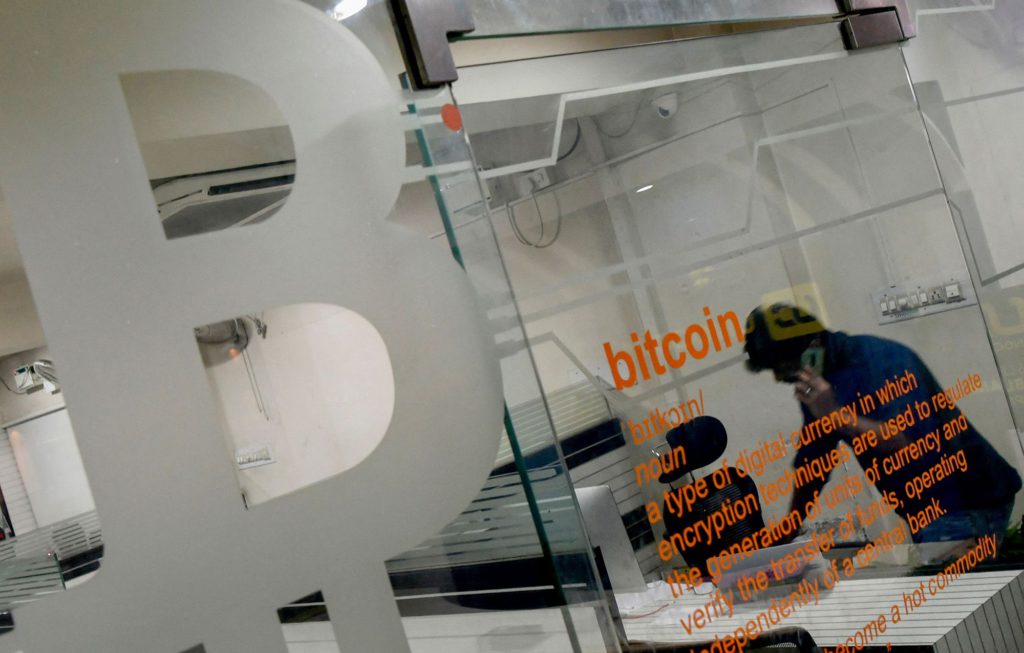
Binance.US Starts Zero-Fee Trading for Bitcoin in Pricing War

(Bloomberg) — Binance.US, the American affiliate of the largest global crypto exchange, is starting to offer zero-fee trading for Bitcoin, with plans to eliminate the charges for more tokens in the future. 

“Since inception, we have been known for our really low fees,” Binance.US Chief Executive Officer Brian Shroder said in an interview. Zero-fee trading is “something that we want to do because we can. This will generate positive user sentiment that will bring us new users.” 

The move will increase pressure to lower fees for other crypto exchanges, such as Coinbase Global Inc. Wall Street analysts including Dan Dolev of Mizuho Securities have said that Coinbase will have to trim fees as competition heats up. 

Binance.US is also not earning a spread on no-fee transactions, said Shroder. That differs from Robinhood Markets Inc., which offers free-commission crypto trades and earns money by receiving rebates from venues to which it routes retail users’ orders. 

“We take no spread, because we are not involved in the transaction,” Shroder said. The move is an investment to attract more users and generate revenue from other sources, such as a newly launched staking service, he said.

Users can see a live order book on the platform for matching trades, Shroder said. Over time, Binance.US expects to add more tokens to its free trading category. 

In April, Binance.US raised about $200 million in a seed round that valued the company at $4.5 billion. Its 24-hour trading volume was $239 million as of Tuesday, according to data from Coingecko.com. Coinbase, which includes users beyond the US, traded $1.8 billion in the same period. 

Read more: Binance.US Hires Intel’s Majalya as First Chief Risk Officer

More stories like this are available on bloomberg.com

©2022 Bloomberg L.P.
Electric Trucks Get Boost From Multi-Megawatt Charging Stations

(Bloomberg) — Broad adoption of heavy-duty electric trucks is looking closer than ever with manufacturers releasing new big rigs and the announcement that multi-megawatt charging is coming in 2024.

Attendees at the EVS 35 electric-vehicle conference in Oslo last week were able to check out a Scania truck charging at more than 1 Megawatt. That’s roughly four times greater than what Tesla’s Model 3 can charge. Swiss industrials firm ABB showed off its new multi-megawatt charger it says will be ready for pilots next year and commercial deployment in 2024. That product boasts an impressive capacity of up to 3MW.

While multi-megawatt charging  won’t be necessary for all electric-truck journeys, more than 40% of freight activity in Europe happens on trips above 500 kilometers (311 miles). That’s outside the range of most planned electric truck models, thus requiring at least one charging stop. Currently announced heavy-duty truck models such as Volvo’s FM range and Daimler Truck’s Freightliner eCascadia have battery capacities of around 450-550 kilowatt-hours and ranges that max out at around 400km. Pumping the power above the maximum 350kW available today will help drivers get on their way in minutes rather than hours.

  • Do you own an electric car? US residents, Bloomberg Green wants to learn more about your experience with EVs. Take our brief survey.

The truck industry, relying heavily on diesel engines, faces tightening emission regulations as part of Europe’s so-called Green Deal, which aims to reach climate neutrality by 2050. While the availability of charging stations for electric passenger cars is increasing in many regions, a public infrastructure for heavy-duty, long-haul vehicles is essentially non-existent. Electrifying big rigs will be key for tackling climate change as trucks account for around 19% of all road transport emissions in Europe. No wonder the European Commission is eager to get larger-scale charging networks up and running.

The latest regulation on alternative fuels infrastructure — first proposed in mid-2021 — requires countries to install truck charging stations on both sides of some 170,000km of European roads every 60km to 100km. Ambitions have increased in the amendment stages to require more chargers with a minimum capacity of 700kW, up from 350kW previously.

The region’s biggest truckmakers are also investing in charging infrastructure. Last Thursday, the European Commission approved a joint venture between Volvo, Daimler Truck and Traton that plans to invest 500 million euros ($525 million) to set up 1,700 charging points across Europe by around 2027. Daimler Truck is involved in a similar initiative in the US, investing $650 million with Florida electric utility NextEra Energy and BlackRock to create a nationwide network of commercial-vehicle chargers.

Electric trucks are sitting higher on the agenda of manufacturers right now and have pushed hydrogen technology somewhat to the side — at least in the near future. It’s still important to put the positive momentum in the electric truck space into context.

Battery-powered rigs accounted for just 0.2% of global truck sales last year. Let’s zoom in on Volvo, one of the leaders in the space. The company says it had a 42% share of the European market for electric trucks in 2021, which consisted of only 346 registered vehicles. Volvo will start serial production of its heavy-duty electric rigs in the fall, the company said last month, adding that it took orders — including letters of intent to buy — for more than 1,100 electric trucks last year.

While the good news is that more models are coming to market, questions remain around the speed and cost of rolling out adequate charging infrastructure for big rigs. At the Eurelectric energy conference in Brussels last week, there was one issue mentioned again and again as a major hurdle for the transition toward cleaner energy and transport: The time it takes to get grid updates permitted and built.

When it comes to energy infrastructure, the European Commission has sprung into action following Russia’s invasion of Ukraine, suggesting measures to encourage energy efficiency, increase renewable-generation targets and tackle slow and complex permitting for clean-energy projects to pull them forward and reduce dependence on Russian fossil fuels. 

A similar focus on speeding up grid connections for EV charging would accelerate the transition to cleaner trucking — and bolster efforts to protect the global climate.

More stories like this are available on bloomberg.com

©2022 Bloomberg L.P.

Close Bitnami banner
Bitnami