Bloomberg

Mike Ashley’s Frasers Group Raises Stake in Hugo Boss

(Bloomberg) — British sporting goods billionaire Mike Ashley’s Frasers Group Plc raised its stake in fashion retailer Hugo Boss AG, ramping up its exposure to the German retailer as it works on a rejuvenation effort. 

Frasers valued the new holding at about 900 million euros ($944 million) in a statement Wednesday, two years after first investing about 108 million euros in the maker of Hugo athleisure leggings. 

Ashley has garnered a reputation for taking over failing retailers and building up stakes in rivals. Earlier this month, Frasers snapped up online brand Missguided after it entered UK insolvency proceedings.  

Hugo Boss is in the process of shifting its offerings toward more casual fashion. The investment “reflects Frasers Group’s belief in the Hugo Boss brand, strategy and management team,” the company said. 

Other Ashley investments have included video game retailer Game Digital and Jack Wills, an apparel supplier. 

Frasers said it has 3.4 million shares of common stock that make up 4.9% of Hugo Boss’s total share capital and another 18.3 million shares via the sale of put options that represent 26% of the capital. The sale of put options means Fraser doesn’t yet own the stock, just that it committed to buying it at a specific price. 

Hugo Boss shares fell as much as 1.7% in early Frankfurt trading, while Frasers declined as much as 2.1% in London.

(Updates with date of first investment in second paragraph)

More stories like this are available on bloomberg.com

©2022 Bloomberg L.P.

Swedish Gaming Firm Upended by War Opens New Hubs Across Europe

(Bloomberg) — With a 1,000-strong workforce split evenly across Russia and Ukraine, the outbreak of war on Feb. 24 hurt one European gaming company perhaps more than any other.

Stockholm-based G5 Entertainment AB is now conducting a major overhaul of its organizational footprint by opening offices in Georgia, Malta, Montenegro and Turkey. According to Chief Executive Officer Vlad Suglobov the aim of the changes is two-fold: to diversify its staff base and to offer safe relocation for those forced to flee their home countries. 

“We will still probably be Eastern European-focused in terms of developer talent,” Suglobov said during an interview in the Swedish capital. “That’s where the company grew out of and this is where people running the company are from.”

The Russia-born CEO, who himself is based in California, has spent the past 20 years building a company into a free-to-play gaming specialist with titles such as ‘Sherlock’ and ‘Jewels of Rome’ that also offer in-game purchases. Its shares have been traded on Nasdaq Stockholm’s main market since 2014.

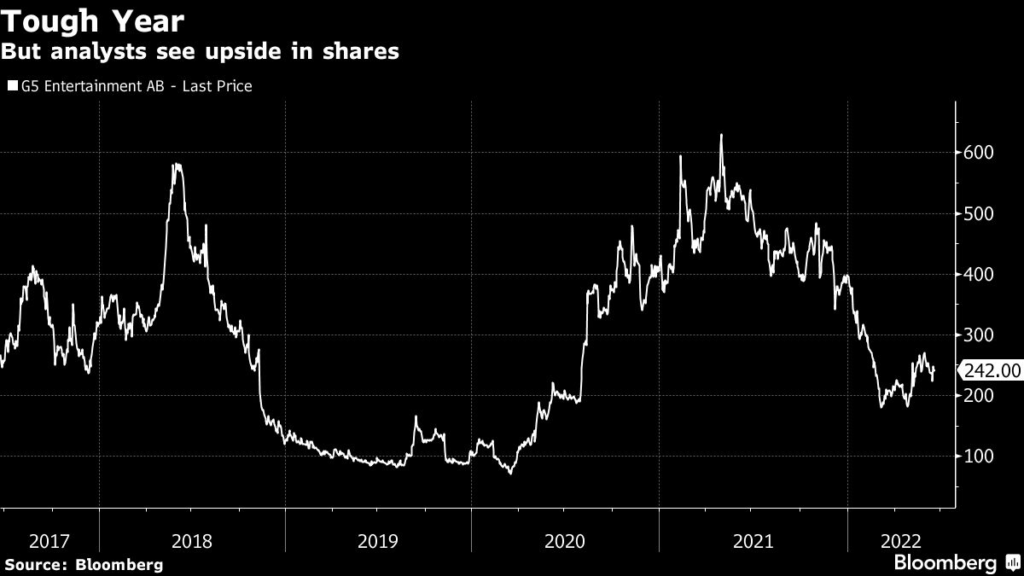
It’s a business model that has been well received by the small number of analysts who all recommend buying the stock. Last week, Kepler Cheuvreux’s Mathias Lundberg initiated coverage of G5 with a buy rating and labeled the firm “the comeback king” after a tumultuous period that has seen its shares slump 40% so far this year.

The company also benefits from an unusual gender balance when it comes to customers with significantly more women players than men, according to the CEO. 

“I have to engage my inner 55-year-old woman,” Suglobov said citing a corner of the market that is often overlooked by more established gaming companies such as Activision Blizzard Inc., whose ‘Call of Duty’ series regularly tops sales charts.

But in an increasingly crowded market place, the cost of finding new gamers may weigh on G5’s profits in the short term, according to Redeye analyst Tomas Otterbeck. In May, the Swedish company said it would boost the level of investments in this area to as much as 35% of sales from the previous guidance of 22%.

Suglobov however remains bullish on attracting customers to the company’s free games even amid the uncertainty caused by accelerating inflation. “We see that spending is pretty much proportional to the time that customers spend playing our games,” he said. “So a situation where they have difficulty affording something else is quite good for us.”

More stories like this are available on bloomberg.com

©2022 Bloomberg L.P.

Meet Melanie Dawes, the Woman About to Regulate Britain’s Internet

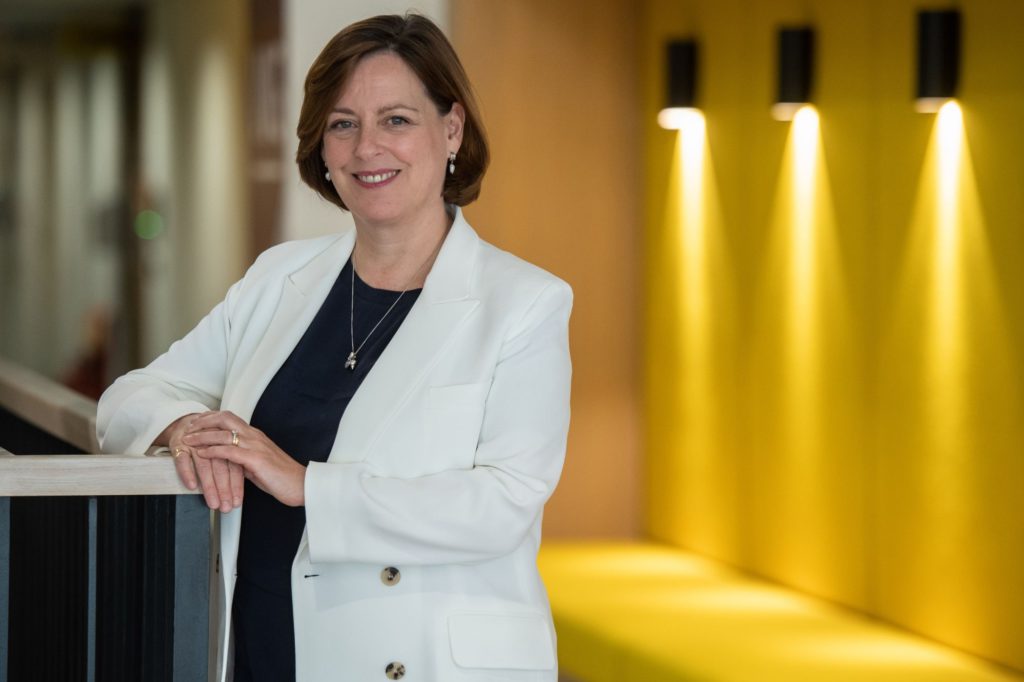
(Bloomberg) — Melanie Dawes will soon be in charge of regulating social media in Britain. But as a result of trolling she’s suffered online, the Chief Executive Officer of watchdog Ofcom almost never uses one of the most prominent platforms coming under her watch, Twitter Inc.

Her experiences, including being targeted by a prominent conspiracy theorist, echo Ofcom research that showed a majority of British people have had “potentially harmful” encounters online, such as bullying, attempts at fraud, or exposure to posts promoting suicide.

“I decided that it wasn’t something that was going to be worth it, to be honest,” Dawes said of Twitter and other social media platforms in an interview. “There are a lot of people in public life, including a lot of women in public life, who’ve had a worse time of it than I have.” 

The UK is preparing to introduce controversial and sweeping new legislation designed to protect the public. The Online Safety Bill has spent five years and six Conservative party culture secretaries being drafted, and gives Dawes and Ofcom significant new powers.

Development of the bill began years before 56-year-old career civil servant Dawes arrived at Ofcom. When it was first tabled, she was the most senior bureaucrat at the Ministry of Housing, Communities and Local Government, which she became after a 15-year stint at the UK Treasury.

As such, her personal experiences didn’t influence the legislation’s creation or development. But her firsthand knowledge of the toxic content that proliferates on social media will make her a more informed auditor once it’s passed by the UK Parliament and receives royal assent. 

Pending Parliamentary approval, the Online Safety Bill gives Ofcom power to demand information from social media and search engine companies about how they’re tackling illegal and other so-called harmful content. Huge fines and criminal charges for senior managers await those that don’t comply. The latter threat has sparked speculation that Silicon Valley bosses like Mark Zuckerberg could face jail time.

Dawes said Ofcom would be more likely to take aim at designated senior managers, as is the case in the UK’s banking sector. That said, under those rules the former CEO of British bank Barclays Plc Jes Staley was fined £642,430 in 2018 for failings. 

The law will be the primary topic of conversation when Dawes tours the US later this year to visit technology company executives. Although intended to make CEOs and other chiefs more accountable for removing illegal and harmful material from their platforms, the Online Safety Bill also includes:

  • A requirement for age verification on all websites that host pornography
  • Measures to combat anonymous abuse and unwanted contact on social media
  • The criminalization of so-called cyber-flashing
  • A requirement to report child sexual abuse material to the UK’s National Crime Agency

Read more: UK Sets Out Law to Prosecute Bosses in Big Tech Crackdown

West Coast founders shouldn’t expect a stereotypical culture clash between themselves and a buttoned-down British bureaucrat when Dawes visits — the CEO often walks around Ofcom’s riverside London office barefoot, while Nick Clegg, the former UK deputy Prime Minister and now Meta Platforms Inc.’s global affairs chief, still favors suits. 

But they should anticipate hearing a simple message, she says: “Too many of the platforms have prioritized growth and revenues over safety.” 

In the coming weeks Ofcom plans to publish how and when the complex Online Safety Bill will come into force. Ministers have given the regulator £89 million ($107 million) of extra budget to establish its new duties over the next two years. It will hire about 340 additional people; Ofcom already has about 1,000 staff monitoring Britain’s television, broadband and postal services.

That growing influence has dragged the watchdog into political controversy. In 2021, Prime Minister Boris Johnson asked the right wing former editor of the Daily Mail newspaper Paul Dacre to chair it and, in Dacre’s words, “appoint your own chief executive.” That apparent plan ultimately fell apart.

“We’re always acting independently,” Dawes said, refusing to comment on any political specifics. “But of course it’s the case a lot of what we do is politically very interesting.”

Because technology is so fast-moving, the Online Safety Bill is outcomes-focused rather than specific and prescriptive, Dawes said. A recent example is the live-streamed mass shooting in Buffalo, New York, the broadcast of which was possible even after a crackdown in the wake of the live-streamed 2019 massacre in Christchurch, New Zealand.

“We’re thinking about whether to take that forward with individual companies,” Dawes said. “International conversations about raising standards here might be another route through, to actually try to prevent this sort of material being so easily available.”

In another example of how regulators are trying to avoid a global fragmentation of rules, Ofcom is working with the World Economic Forum to develop global principles for online safety by design, Dawes said.

Ultimately, the ever-moving target means defining success will be difficult. 

“It’s hard to say that we will see clear trends in the data, or anything like that,” Dawes said. “For me, success is really about being confident that safety is being taken seriously in the boardroom, and that the product designers, the engineers, actually have this as part of what they’re incentivized to do when they’re designing new services, rather than later when we’re trying to fix problems that have emerged down the line.”

“That might sound rather general,” she added, “but for me that cultural change is the thing that is the most important of all.”

More stories like this are available on bloomberg.com

©2022 Bloomberg L.P.

Ofcom CEO Says Twitter Trolls Make Site a Miserable Experience

(Bloomberg) — Melanie Dawes will soon be in charge of regulating social media in Britain. But as a result of trolling she’s suffered online, the Chief Executive Officer of watchdog Ofcom almost never uses one of the most prominent platforms coming under her watch, Twitter Inc.

Her experiences, including being targeted by a prominent conspiracy theorist, echo Ofcom research that showed a majority of British people have had “potentially harmful” encounters online, such as bullying, attempts at fraud, or exposure to posts promoting suicide.

“I decided that it wasn’t something that was going to be worth it, to be honest,” Dawes said of Twitter and other social media platforms in an interview. “There are a lot of people in public life, including a lot of women in public life, who’ve had a worse time of it than I have.” 

The UK is preparing to introduce controversial and sweeping new legislation designed to protect the public. The Online Safety Bill has spent five years and six Conservative party culture secretaries being drafted, and gives Dawes and Ofcom significant new powers.

Development of the bill began years before 56-year-old career civil servant Dawes arrived at Ofcom. When it was first tabled, she was the most senior bureaucrat at the Ministry of Housing, Communities and Local Government, which she became after a 15-year stint at the UK Treasury.

As such, her personal experiences didn’t influence the legislation’s creation or development. But her firsthand knowledge of the toxic content that proliferates on social media will make her a more informed auditor once it’s passed by the UK Parliament and receives royal assent. 

Pending Parliamentary approval, the Online Safety Bill gives Ofcom power to demand information from social media and search engine companies about how they’re tackling illegal and other so-called harmful content. Huge fines and criminal charges for senior managers await those that don’t comply. The latter threat has sparked speculation that Silicon Valley bosses like Mark Zuckerberg could face jail time.

Dawes said Ofcom would be more likely to take aim at designated senior managers, as is the case in the UK’s banking sector. That said, under those rules the former CEO of British bank Barclays Plc Jes Staley was fined £642,430 in 2018 for failings. 

The law will be the primary topic of conversation when Dawes tours the US later this year to visit technology company executives. Although intended to make CEOs and other chiefs more accountable for removing illegal and harmful material from their platforms, the Online Safety Bill also includes:

  • A requirement for age verification on all websites that host pornography
  • Measures to combat anonymous abuse and unwanted contact on social media
  • The criminalization of so-called cyber-flashing
  • A requirement to report child sexual abuse material to the UK’s National Crime Agency

Read more: UK Sets Out Law to Prosecute Bosses in Big Tech Crackdown

West Coast founders shouldn’t expect a stereotypical culture clash between themselves and a buttoned-down British bureaucrat when Dawes visits — the CEO often walks around Ofcom’s riverside London office barefoot, while Nick Clegg, the former UK deputy Prime Minister and now Meta Platforms Inc.’s global affairs chief, still favors suits. 

But they should anticipate hearing a simple message, she says: “Too many of the platforms have prioritized growth and revenues over safety.” 

In the coming weeks Ofcom plans to publish how and when the complex Online Safety Bill will come into force. Ministers have given the regulator £89 million ($107 million) of extra budget to establish its new duties over the next two years. It will hire about 340 additional people; Ofcom already has about 1,000 staff monitoring Britain’s television, broadband and postal services.

That growing influence has dragged the watchdog into political controversy. In 2021, Prime Minister Boris Johnson asked the right wing former editor of the Daily Mail newspaper Paul Dacre to chair it and, in Dacre’s words, “appoint your own chief executive.” That apparent plan ultimately fell apart.

“We’re always acting independently,” Dawes said, refusing to comment on any political specifics. “But of course it’s the case a lot of what we do is politically very interesting.”

Because technology is so fast-moving, the Online Safety Bill is outcomes-focused rather than specific and prescriptive, Dawes said. A recent example is the live-streamed mass shooting in Buffalo, New York, the broadcast of which was possible even after a crackdown in the wake of the live-streamed 2019 massacre in Christchurch, New Zealand.

“We’re thinking about whether to take that forward with individual companies,” Dawes said. “International conversations about raising standards here might be another route through, to actually try to prevent this sort of material being so easily available.”

In another example of how regulators are trying to avoid a global fragmentation of rules, Ofcom is working with the World Economic Forum to develop global principles for online safety by design, Dawes said.

Ultimately, the ever-moving target means defining success will be difficult. 

“It’s hard to say that we will see clear trends in the data, or anything like that,” Dawes said. “For me, success is really about being confident that safety is being taken seriously in the boardroom, and that the product designers, the engineers, actually have this as part of what they’re incentivized to do when they’re designing new services, rather than later when we’re trying to fix problems that have emerged down the line.”

“That might sound rather general,” she added, “but for me that cultural change is the thing that is the most important of all.”

More stories like this are available on bloomberg.com

©2022 Bloomberg L.P.

Bitcoin Tumble Sends Thai Tech Stock From First to Last in World

(Bloomberg) — Just two months ago Jasmine Technology Solution Pcl’s shares were riding high atop the global communications equipment sector after a huge boom catalyzed by the Thai firm’s plan to embrace Bitcoin mining.

Now the picture is starkly different. A cryptocurrency rout has sparked a near-80% collapse in the stock since an April peak, lopping about $10 billion off its market value and leaving the firm pinned to the bottom of the group. 

The reversal for a company that earlier was one of the most valuable in Thailand is an extreme example of how the crypto shakeout is bleeding across into more conventional markets. It’s also a warning about the risks that come with trying to ride the volatile and speculative digital-asset wave.

Jasmine Technology Solution delivered a total return of more than 3,000% over the 12 months to April 2022, when its shares hit a record. That led the communications equipment sector for companies worth at least $1 billion. The stock’s 77% drop since then has sent it to the bottom of the sector, which also includes the likes of global giants Apple Inc. and Samsung Electronics Co.

Jasmine Technology Solution said in a statement it continues to mine Bitcoin and generate revenues from operations like data centers and cloud computing. Its mining revenues amounted to 25.2 million baht ($711,425) in January through March, a fraction of total sales of 511 million baht, filings show. 

The firm has said it plans about 3.3 billion baht of investment to become among the world’s top Bitcoin miners. Thai regulators previously imposed trading curbs on the stock and told investors to scrutinize its mining strategy.

“We simply do not like anything which has no fundamentals to support” it, Vikas Kawatra and Jason York, analysts at Yuanta Securities (Thailand) Pcl, wrote in a note June 15, adding they had been skeptical of the share-price surge triggered by the avowed shift to crypto mining. 

More stories like this are available on bloomberg.com

©2022 Bloomberg L.P.
Cobalt Gets Cheaper as China’s Buyers Hit by Battery Slump

(Bloomberg) — Cobalt prices are crashing back to earth as sellers offer increasingly steep concessions to Chinese buyers who have turned cold on the battery metal as demand slumps in electric vehicles and smartphones.

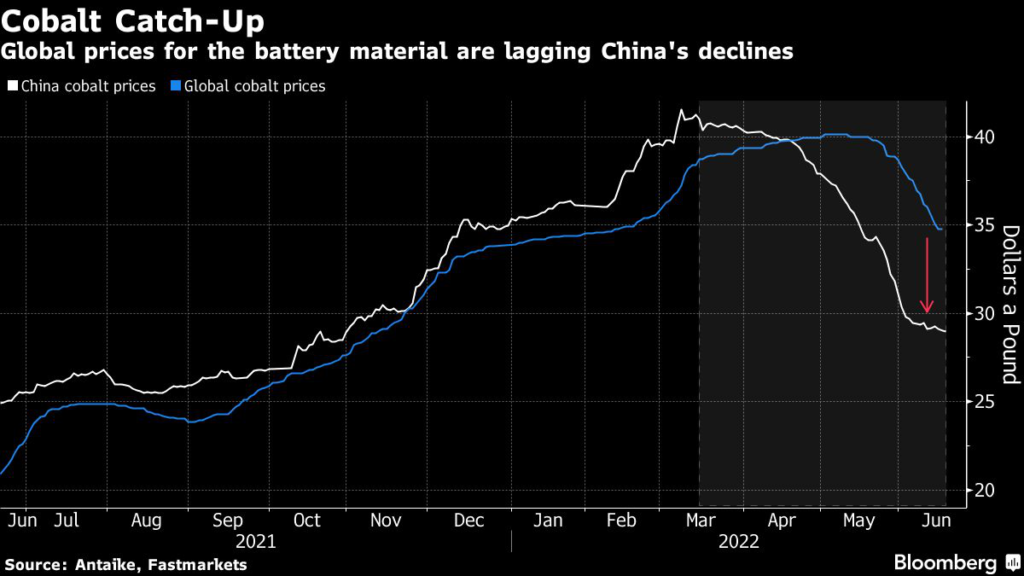
The benchmark price for cobalt in Europe has slid more than 13% since a peak in May, and an even sharper decline in Chinese prices signals the sell-off could have further to run. Buyers in the country are racing to renegotiate supply deals in order to stem heavy losses arising from an unusual disconnect between domestic and international prices, according to cobalt traders and buyers.

It’s a rapid reversal from conditions just a few months ago, when booming demand in China’s electric-vehicle sector sent cobalt rocketing along with other battery metals — notably lithium. China’s wave of strict pandemic curbs have since stifled cobalt’s main markets, with President Xi Jinping’s steadfast pursuit of zero-Covid ravaging manufacturing and consumer activity. The country accounts for about 70% of global cobalt demand. 

“What we’re seeing is buyers and sellers working together to make revisions to the pricing terms,” Ying Lu, analyst at Wood Mackenzie Ltd., said by phone from London. “There is still pressure on refiners, but it has eased compared to a few weeks ago.”

Lockdown-hit Shanghai registered zero car sales in April, reflecting the kind of ructions throughout the EV supply chain that have left China’s cobalt refiners exposed to losses on expensive imported raw materials. Buyers have walked away from similarly onerous supply deals in the past, and this time miners are granting significant concessions on prices to keep cobalt flowing into the all-important Chinese market, according to traders and buyers who asked not to be identified discussing a private matter.

“Suppliers have probably learnt from past experience that playing hardball can eventually backfire,” Andries Gerbens, a cobalt trader at Darton Commodities Ltd., said by phone. “Everyone is looking for long-term relationships and therefore in circumstances like this it’s better to talk things through and come to a compromise.” 

No Deal

There are already tentative signs of a demand recovery. China’s EV sales rose more than expected in May, and top carmaker BYD Co. showed almost no impact from the lockdowns and supply snarls. But electric vehicles still account for less than a third of global cobalt demand, according to trader Darton Commodities. 

“Demand from EV batteries and traditional usage such as in the airplane industry is expected to pick up in the next six months alongside subsidies support for EV while travel restrictions ease,” Susan Zou, senior analyst at Rystad Energy, said by phone from Shanghai. “But demand from consumer electronics remains uncertain.”

The global benchmark cobalt price, published by researcher Fastmarkets, dropped Tuesday to a mid-point of $34.4 a pound, its lowest since January. The price peaked in May, when cobalt chemicals destined for batteries were already plummeting in value in China. Cobalt sulphate has shed 37% since March.

Price Debate

Beyond strained negotiations between miners and refiners, dismay over the yawning gap between domestic and international markets could have lasting impacts on the way that cobalt is priced.

Chinese buyers are increasingly wary of a global price that’s based on refined cobalt metal, which represents an increasingly small sliver of global production. The major growing market is battery chemicals, with very different consumers and distinct dynamics. 

The recent stand-off is effectively an effort by China’s buyers to re-align the European price with conditions in their battery market. That “correction” will continue in the short term, especially since markets are typically quieter over summer months, Wood Mackenzie’s Ying Lu said.

(Updates with latest cobalt price in ninth paragraph)

More stories like this are available on bloomberg.com

©2022 Bloomberg L.P.
SoftBank Group International CEO to Leave After 5 Months on Job

(Bloomberg) — SoftBank Group Corp.’s Michel Combes is leaving his post as head of overseas arm SoftBank Group International (SBGI) five months after taking on the role vacated by former SoftBank Chief Operating Officer Marcelo Claure.

SBGI Managing Partner Alex Clavel will replace Combes as chief executive officer on June 30, SoftBank said in a news release. The division coordinates with SoftBank’s Vision Fund to vet new investments while also providing operational assistance to group and portfolio companies outside Japan.

Combes, who will close a five-year career at SoftBank, adds to a string of key departures in recent months. Claure left the firm following clashes with billionaire founder Masayoshi Son over compensation and responsibilities. Two of the three managing partners at the company’s Latin America Fund departed to start their own venture business in April. In that same month, Ronald Fisher, Son’s long-time lieutenant also stepped down from his role leading the Vision Fund’s US arm.

The exiting SBGI chief “has played a critical role in some of our most important investments and assets, and I wish him all the best with his future plans,” Son said in the release. “I’m glad he will remain part of the SoftBank family by continuing to represent us on various portfolio company boards.”

SoftBank COO Leaves After Clashing With Masayoshi Son Over Pay

The high-profile exits come during a trying time for the investment company. Five years of deploying billions of dollars into some of the world’s most celebrated startups saddled SoftBank with a record loss in the year ended in March after a global rout in tech valuations. With focus now on its own financial health, SoftBank this year will conduct fewer and smaller deals, and deal flow from the world’s biggest tech fund may dwindle to a quarter of last year’s, Son has said. 

Clavel — a longtime Morgan Stanley investment banker — helped SoftBank manage its investments in companies ranging from T-Mobile US Inc., Deutsche Telekom AG, WeWork and OneWeb, and he is on the boards of Arm China, Boston Dynamics, InMobi, SB Energy and Goggo, SoftBank said.

More stories like this are available on bloomberg.com

©2022 Bloomberg L.P.

SoftBank Group International CEO to Leave After Five Months

(Bloomberg) — SoftBank Group Corp.’s Michel Combes is leaving his post as head of overseas arm SoftBank Group International (SBGI) five months after taking on the role vacated by former SoftBank Chief Operating Officer Marcelo Claure.

SBGI Managing Partner Alex Clavel will replace Combes as chief executive officer on June 30, SoftBank said in a news release. The division coordinates with SoftBank’s Vision Fund to vet new investments while also providing operational assistance to group and portfolio companies outside Japan.

Combes, who will close a five-year career at SoftBank, adds to a string of key departures in recent months. Claure left the firm following clashes with billionaire founder Masayoshi Son over compensation and responsibilities. Two of the three managing partners at the company’s Latin America Fund departed to start their own venture business in April. In that same month, Ronald Fisher, Son’s long-time lieutenant also stepped down from his role leading the Vision Fund’s US arm.

The exiting SBGI chief “has played a critical role in some of our most important investments and assets, and I wish him all the best with his future plans,” Son said in the release. “I’m glad he will remain part of the SoftBank family by continuing to represent us on various portfolio company boards.”

SoftBank COO Leaves After Clashing With Masayoshi Son Over Pay

The high-profile exits come during a trying time for the investment company. Five years of deploying billions of dollars into some of the world’s most celebrated startups saddled SoftBank with a record loss in the year ended in March after a global rout in tech valuations. With focus now on its own financial health, SoftBank this year will conduct fewer and smaller deals, and deal flow from the world’s biggest tech fund may dwindle to a quarter of last year’s, Son has said. 

Clavel — a longtime Morgan Stanley investment banker — helped SoftBank manage its investments in companies ranging from T-Mobile US Inc., Deutsche Telekom AG, WeWork and OneWeb, and he is on the boards of Arm China, Boston Dynamics, InMobi, SB Energy and Goggo, SoftBank said.

More stories like this are available on bloomberg.com

©2022 Bloomberg L.P.
Malaysia’s Carsome Said to Delay Singapore, US Dual Listing

(Bloomberg) — Carsome Group, which operates a Southeast Asian used-car online marketplace, is delaying its dual listing plans in Singapore and the US on concerns that deteriorating macroeconomic conditions could dent its valuation, according to people with knowledge of the matter.

Malaysia’s most valuable technology startup has halted work on the planned offerings that were set for this year, the people said. Carsome may revive the first-time share sales next year if markets improve, said the people, who asked not to be identified as the process is private.

A representative for Carsome declined to comment.

Higher interest rates combined with slowing economic growth and geopolitical tensions have hurt market sentiment and weighed on first-time share sales. Since the start of the year, companies have raised about $101 billion through IPOs globally this year, down from $338 billion in the same period in 2021, according to data compiled by Bloomberg.  

Chinese podcasting startup Ximalaya Inc. is pushing back the launch of its planned initial public offering in Hong Kong after it met with lukewarm demand during early talks with prospective investors, Bloomberg News reported this week.

Carsome raised $290 million in January at a valuation of $1.7 billion in a series E round led by the Qatar Investment Authority as well as 65 Equity Partners and Seatown Private Capital Master Fund, both of which are backed by Temasek Holdings Pte.

Founded in 2015, Carsome has expanded into Indonesia, Thailand and Singapore. The company works with more than 8,000 dealers and handles more than 100,000 transactions on an annualized basis, according to its website. It completed the acquisition of Australia-listed iCar Asia Ltd. for about A$191 million ($133 million) this year.

(Adds Ximalaya delays IPO launch in fifth paragraph.)

More stories like this are available on bloomberg.com

©2022 Bloomberg L.P.

Kim Jong Un Holds Rare Military Meeting as Nuclear Test Looms

(Bloomberg) — Kim Jong Un for the first time in a year convened a top-level meeting of North Korea’s military that could set the stage for his first nuclear test since 2017, as international attention is diverted to the war in Ukraine.

The North Korean leader presided over a Central Military Commission that will look at policies for the “the crucial and urgent tasks to build up national defense,” the official Korean Central News Agency reported Wednesday. It’s the first time the commission of military leaders has met at this level since June 2021 and the gathering is expected to take several days, NK News reported.

A top task will be looking at the road map for weapons development that Kim laid out just before US President Joe Biden took office in January 2021 that called for building up forces to launch tactical nuclear strikes on US allies Japan and South Korea, while enhancing Pyongyang’s capability to hit the American mainland with nuclear weapons.

One of the key elements of that strategy is testing miniaturized nuclear warheads to fit on a new generation of solid-fuel missiles Kim has rolled out over the past few years, as well as larger warheads that would be mounted on intercontinental ballistic missiles.

“It’s expected that North Korea’s seventh nuclear test would be carried out soon after this meeting,” said Cheong Seong-chang, director of the Center for North Korean Studies at the Sejong Institute thank tank in South Korea. 

Kim carried out a nuclear test shortly after a similar meeting in 2013, Cheong said, adding state media photos showing a smiling Kim sitting with his top generals indicates the North Korean leader is pleased with progress in the development of nuclear-capable missiles.

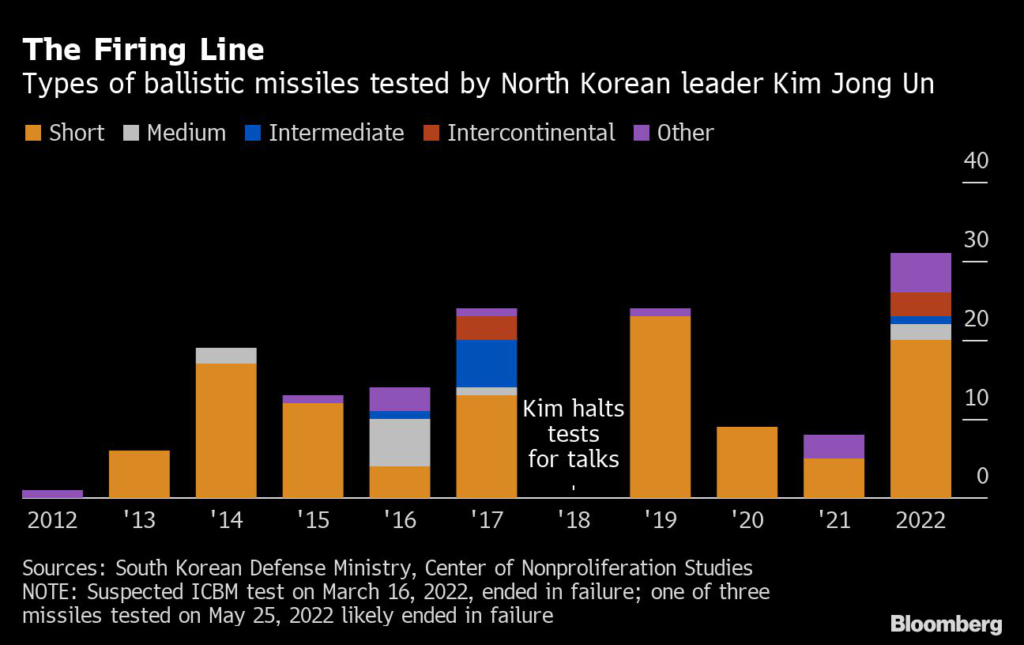
So far in 2022, Kim has fired off more ballistic missiles than in any other year of his decade in power. He has tested rockets designed to evade US-operated interceptors, which increase the threat of a credible nuclear strike against the US and its allies in Asia.

Satellite imagery of the Punggye-ri Nuclear Test Facility, where North Korea has conducted all six of its nuclear tests, indicated that refurbishment work and preparations at Tunnel No. 3 are complete and ready for another blast, the Beyond Parallel website said last week.

“North Korea has now finished the preparation for another nuclear test, and I think only political decision has to be made,” South Korean Foreign Park Jin said a week ago after meeting Secretary of State Antony Blinken in Washington.

Any display of the weapons in Kim’s nuclear arsenal would serve as a reminder of the pressing security problems posed by Pyongyang that have simmered as Biden’s administration has been focused on Russia’s invasion of Ukraine. 

The US push to isolate Russia over Vladimir Putin’s war in Ukraine, coupled with increasing animosity toward China, has allowed Kim to strengthen his nuclear deterrent without fear of facing more sanctions at the UN Security Council. 

The US has pledged a “swift and forceful response” to a North Korean test. But there’s almost no chance Russia or China, which have veto power at the council, would support any measures against North Korea, as they did in 2017 following a series of weapons tests that prompted Trump to warn of “fire and fury.” 

The two countries in late May vetoed a UN Security Council resolution drafted by the US to ratchet up sanctions on North Korea for its ballistic missile tests this year.


More stories like this are available on bloomberg.com

©2022 Bloomberg L.P.

Close Bitnami banner
Bitnami