Bloomberg

Microsoft Scraps Some AI Facial-Analysis Tools, Citing Risk of Bias

(Bloomberg) — Microsoft Corp. will stop selling artificial intelligence-based facial-analysis software tools that infer a subject’s emotional state, gender, age, mood and other personal attributes after the algorithms were shown to exhibit problematic bias and inaccuracies.

Existing customers of the tools can keep using them for a year before they expire. The company is also limiting the use of other facial-recognition programs to ensure the technologies meet Microsoft’s ethical AI guidelines. New customers will need to apply for access to facial-recognition features in Microsoft’s Azure Face API, Computer Vision and Video Indexer, while current customers have a year to apply for continued access. The changes were outlined with the release of the second update to Microsoft’s Responsible AI Standard, in blogs written by Chief Responsible AI Officer Natasha Crampton and Azure AI Product Manager Sarah Bird.

The changes come two years after Microsoft and Amazon.com Inc., whose cloud unit competes with Azure, paused sales of facial-recognition technology to U.S. police agencies in the wake of research showing it performed poorly on subjects with darker skin. Some states have passed laws governing the use of such products, including Washington, where both tech companies are headquartered. Even as some of the biggest technology companies back away from the controversial technology, smaller companies such as NEC Corp. and Clearview AI maintain robust businesses selling facial-recognition tools for use in ways that raise privacy and security questions, including by law enforcement.

Microsoft isn’t doing away completely with the use of AI to help read human reactions. The company continues to add other features that make guesses about people’s feelings or emotional state. A new program designed for sales representatives, announced last week, will use AI to run sentiment analysis on customer engagements on Microsoft’s Teams teleconferences to analyze how potential clients may be reacting. 

More stories like this are available on bloomberg.com

©2022 Bloomberg L.P.

Amazon Senior Black Executives Are Leaving E-Commerce Giant

(Bloomberg) — Two of Amazon.com Inc.’s top Black executives are leaving amid a management shakeup as Chief Executive Officer Andy Jassy puts his stamp on the company about a year into his tenure.

Alicia Boler Davis, a senior vice president who oversaw Amazon’s logistics warehouses, and Dave Bozeman, vice president of transportation services, “have decided to explore new opportunities outside Amazon,” newly named operations division chief John Felton said in an email to staff. 

The departures coincide with the announcement that Doug Herrington will run the company’s sprawling retail and logistics operation with the new title chief executive officer of Worldwide Stores. He replaces Dave Clark, a 23-year veteran who helped create a warehouse network and in-house delivery service that speeds packages to customers in two days or less. Felton, who has been with the company for 18 years, will oversee the operations division and report to Herrington.

Herrington, who lives near Jassy in Amazon’s hometown Seattle, is ascending at a challenging moment. Online sales growth has slowed now that consumers are returning to their pre-pandemic spending habits, leaving Amazon with too much warehouse space. One of his first tasks will be to shrink the operation to current demand without impairing the company’s ability to ramp up when online sales growth resumes.

He will also have to navigate continuing labor unrest at Amazon warehouses. An upstart union earlier this year won the right to represent workers at a fulfillment center in New York, a result Amazon is challenging. The company is also under pressure from politicians for its fast pace of work and injury rates that are higher than some rivals in warehousing.

Before Amazon, Herrington worked for Webvan, a grocery delivery service that went bust during the dot-com era. He became leader of Amazon’s North American consumer business in 2015, which encompasses both online and physical stores. In recent years, Amazon has started a cashierless chain of convenience stores, acquired Whole Foods Market and launched Amazon Fresh supermarkets.

Boler Davis was a big hire when she joined Amazon in 2019, fresh from a well-regarded stint at General Motors Co., where she ran global manufacturing and labor relations. Her hiring to oversee more than 175 of Amazon’s biggest warehouses around the world came as the logistics unit worked to cultivate a deeper bench of executives, at times by reaching outside the company.

She quickly became one of the Amazon’s most high-profile executives, defending Amazon’s safety record and working conditions at an annual shareholders meeting and interviewing Jassy in a question-and-answer session broadcast to employees shortly after he became CEO.

Bozeman joined Amazon in 2017. He previously worked at Caterpillar and Harley Davidson.

(Updated with context and background.)

More stories like this are available on bloomberg.com

©2022 Bloomberg L.P.

The Metaverse Is Coming for Your Office

(Bloomberg) — Tech giants and startups are racing into the Metaverse. Be it virtual reality, augmented reality or old-fashioned desktops, we’ll all be meeting in virtual offices soon.

In this episode of “Future of Work,” Bloomberg Digital Originals dove deep to see what life after Zoom might really look like.

More stories like this are available on bloomberg.com

©2022 Bloomberg L.P.

Short Sellers Are Having a Field Day Betting Against Crypto Stocks

(Bloomberg) — Traders betting against stocks have generally done well this year, with bearish wagers against crypto shares proving to be a major standout.

Short sellers in digital-asset stocks have gained an average of 130% in 2022, according to Ihor Dusaniwsky, head of predictive analytics at S3, a technology and data-analytics firm. By comparison, wagers against the automobile and software sectors have returned about 50%, while retailing, media and entertainment have seen gains of about 46% each. 

“None of these industries can hold a candle to short sellers in the crypto sector,” wrote Dusaniwsky in a note last week.

Digital assets have been rocked by a more restrictive Federal Reserve policy and stock volatility, while being beset by a number of hacks and scandals. Bitcoin, the largest digital token by market value, has plunged 50% since the end of December, while Ether has shed about 70%. 

In this environment, crypto-linked shares like Coinbase Global Inc. and MicroStrategy Inc. have not fared well either. The crypto exchange is down nearly 80% this year, while shares of the software firm have slumped 66%. 

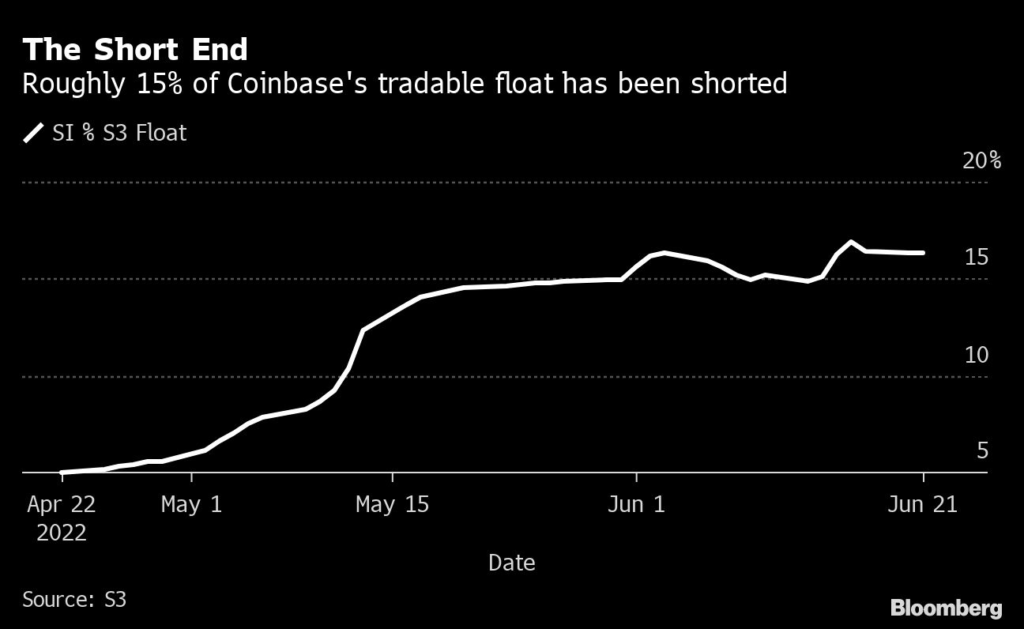
Among the publicly traded crypto firms that S3 tracks, Coinbase tops the list in terms of the dollar amount shorted — about $1.38 billion — with more than 15% of its tradable float shorted, according to the data from the firm. Short interest as a percentage of shares outstanding for MicroStrategy stands above 27%, with $537 million shorted.

Many Bitcoin investors have been selling in this environment as prices continued to drop over the past few months. The coin over the weekend fell to around $17,700, the lowest level since the end of 2020. Overall, digital-asset investment products saw outflows of around $39 million last week, with total assets under management now at their lowest since February 2021, according to data compiled by CoinShares.

Last week’s plunge in Bitcoin took the token below its 2017 peak, and the coin traded below its 200-week moving average for only the second time in its history, according to Vetle Lunde at Arcane Research. “$20,000 remains the most critical support level to pay attention to onwards,” the analyst wrote in a note. 

Yet for short sellers looking to still benefit from the drawdown in crypto, it might be too late. 

“With the pool of stock borrows in these names limited, due to lack of sizable ownership in the funds of the largest and most-active stock lenders on the street, prospective short sellers may be late to the party,” Dusaniwsky said. “While the crypto stocks’ negative price momentum may not over, the ability to short stock in size may be over.”

More stories like this are available on bloomberg.com

©2022 Bloomberg L.P.

Meta Settles Claims That Ads Violated US Fair Housing Laws

(Bloomberg) — Meta Platforms Inc. will change its ad delivery system to address concerns that it violates the Fair Housing Act by discriminating against users, as part of a settlement with a federal regulator.

The accord resolves a lawsuit by the US Department of Housing and Urban Development alleging that the algorithms used in Meta’s advertising systems allowed marketers to violate fair housing laws by limiting or blocking certain groups of people from seeing housing ads on the service. 

“Because of this ground-breaking lawsuit, Meta will — for the first time — change its ad delivery system to address algorithmic discrimination,” Manhattan US Attorney Damian Williams said in a statement.

Meta said Tuesday that it built machine learning technology to ensure that ads reach people that reflect the overall potential audience for a particular ad, and not just a subset of that group.

In a blog post, Meta wrote that it will “work to ensure the age, gender and estimated race or ethnicity of a housing ad’s overall audience matches the age, gender, and estimated race or ethnicity mix of the population eligible to see that ad.” The company will also pay a fine of just over $100,000.

Meta said it will use the new technology for employment and credit ads as well as for housing.

Read more: Facebook Discriminatory Ad Accord Seen as Far From Final Fix

Meta’s ad targeting capabilities have come under fire in recent years. In some cases, the company’s very specific targeting options may have enabled marketers to exclude certain groups from ads, for things like housing. In other cases, Meta’s targeting options were linked to a person’s protective characteristics, like race or religion.

In the HUD complaint, the US alleged Meta’s algorithm allowed advertisers to find users who share similarities with groups of other individuals.

Meta hopes to get the new system up and running by the end of the year, said Roy Austin, the company’s vice president of civil rights. Austin added that Meta will also seek feedback on these changes from civil rights groups in the coming months. Many civil rights groups have been critical of the company’s use of personal data for targeting and how it can lead to discrimination.

The case is US v Meta Platforms Inc., 22-cv-5187, US District Court, Southern District of New York.

(Updates with comment by Manhattan US Attorney.)

More stories like this are available on bloomberg.com

©2022 Bloomberg L.P.

Oracle’s Database Dominance Eroded by Cloud Rivals

(Bloomberg) — When Shutterfly decided recently to move the database where it clusters reams of customer photos to the cloud, one name was noticeably absent from its list of potential providers: Oracle Corp.

The company had for years relied on Oracle products to manage the photo libraries of its more than 20 million active customers. But as Shutterfly progressed on the effort to switch its systems to internet-based services from Amazon.com Inc.’s cloud division, Chief Technology Officer Moudy Elbayadi recognized it also needed to shift its database to something that was easier to use.

“The amount of time and energy that was consumed purely running just the plumbing was immense,” Elbayadi said in an interview. And reviewing other options in the marketplace, Shutterfly found that Oracle’s systems didn’t “fit our desires to have that level of openness and flexibility,” he added.

Shutterfly isn’t the only company taking advantage of the boom in database vendors to diversify beyond Oracle. Businesses are opting to align with newer providers such as MongoDB Inc., Databricks Inc. and Snowflake Inc. instead of Oracle, the sector stalwart, as a result of changes across the enterprise technology landscape. 

The move to the cloud is challenging the systems of the past. Newer providers are also making it much easier to adopt their technology directly, alleviating the need for corporate purchasers to negotiate large contracts with salespeople and allowing end users to more easily pick their own tools. Offerings from the newer software makers can also be deployed without large teams of database administrators that are typically needed to support Oracle’s products, a cost-saver for organizations that would otherwise have to fight against other businesses for these in-demand engineers.

The evidence of the shift is widespread. JPMorgan Chase & Co. chose Cockroach Labs Inc. as the database vendor to support its new retail banking application in Europe. Nasdaq Inc. is working with closely held Databricks and Amazon.com Inc.’s Amazon Web Services, among others, in its quest to upgrade from on-premises Oracle data repositories. Alongside AWS, database products from rival cloud vendors Microsoft Corp. and Alphabet Inc.’s Google Cloud are also growing quickly. And many businesses, like JetBlue Airways Corp. and Automatic Data Processing Inc., are tapping Snowflake to help store and analyze corporate data to power sales dashboards, among other uses.

“We have actually quite rapidly been reducing our Oracle footprint,” said Nikolai Larbalestier, Nasdaq’s senior vice president of cloud strategy and enterprise architecture. “There are plenty of good alternatives today.”

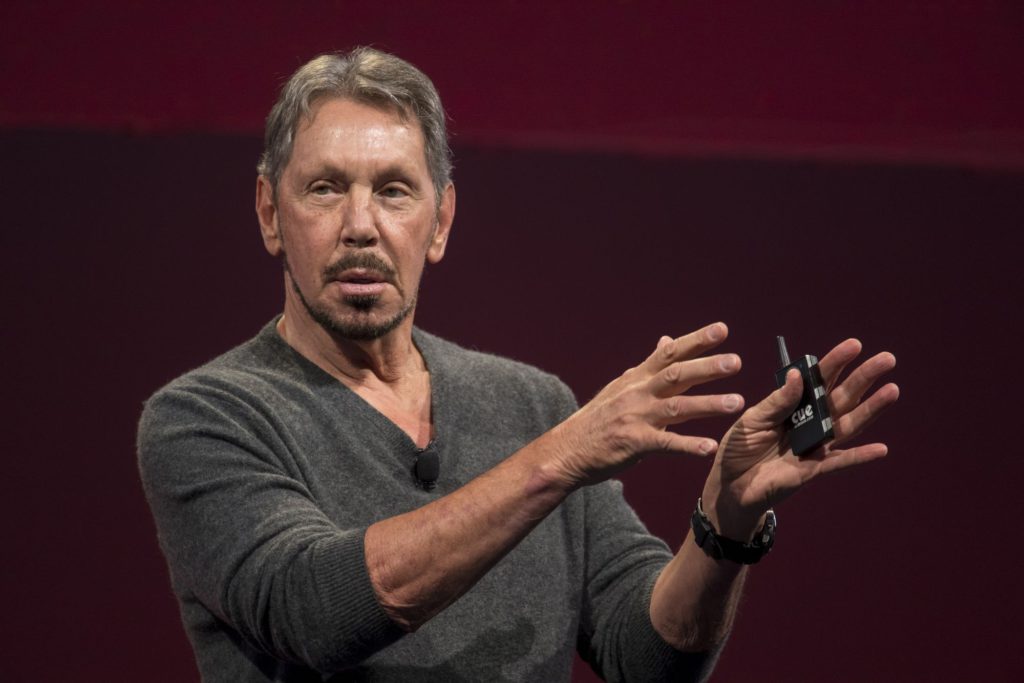
Collectively, the initiatives are just a small fragment of the estimated $155 billion database market. But it’s evidence of a tectonic shift happening within the industry, one that is threatening the leadership status Oracle cultivated over the past 43 years, ever since co-founder Larry Ellison and his team brought to market the first relational database, or one in which information was organized in tables that could be more easily accessed, manipulated and analyzed.

Still, Oracle remains an industry leader for its ability to provide consistent quarterly earnings growth. With the Austin, Texas-based company scheduled to release fiscal fourth-quarter results Monday, analysts project revenue will increase 4% to $11.7 billion — far more than its newer, smaller competitors. And the company just completed its $28.3 billion acquisition of electronic medical records provider Cerner Corp., opening a significant new area of potential expansion.

“Oracle presents an interesting opportunity for better-than-expected EPS growth in a choppy marketplace,” Keith Weiss, an analyst at Morgan Stanley, wrote in a report June 6.

Databases are critical to modern life. There isn’t an online service, retail transaction or medical procedure available today that doesn’t have a database supporting it on the back end, keeping track of people’s choices and results. And the corporate dashboards that executives rely on to manage day-to-day operations are propped up by curated data repositories long-sold by Oracle and others. 

It’s hard to overstate Oracle’s influence in the evolution of the technology. Despite all the hype of cloud computing, many large businesses still run their databases via on-site centers. Companies that were in existence before 2000 are almost certainly still using mainframes. Moving from either is difficult and companies don’t take make such changes lightly. Instead, many are opting for a step-by-step approach: keep the old Oracle systems running, but use another vendor for new projects.

“Someone is not going to wake up one day and say they need to replatform their Oracle database,” MongoDB Chief Executive Officer Dev Ittycheria said in an interview. “It’s not the bulk of our business because we are seeing so much explosion of new apps. But we are seeing a very healthy take-rate of customers migrating off of legacy relational databases like Oracle.”

That’s why, at least for the foreseeable future, Oracle will continue to be a force in the industry. The company’s database business pulled in an estimated $15.6 billion in 2020, according to research firm Gartner. Oracle doesn’t disclose financial results specifically for its database business. Much of that revenue comes from providing support and maintenance for existing customers versus new sales.

But Oracle’s influence is slowly fading. While it owned an estimated 27% of the database market in 2019, that fell to 24% in 2020, per Gartner. In the same time frame, Amazon went from 17% market share to almost 21%.

Oracle declined to comment for this story. 

Rivals are growing quickly. At MongoDB, for example, sales rose 57% to $285 million in the most recent quarter. Those results, analysts and company executives say, indicate businesses are using MongoDB for increasingly larger projects.

Part of what is driving that change is the emergence of the cloud, which is giving businesses an option to move away from legacy vendors and use more specialized systems that can be tailored to support certain applications or workloads.

“Every time there’s a transition of infrastructure, there’s a recasting of the core markets,” said Dave McJannet, CEO of HashiCorp Inc., a company that helps users manage applications across different cloud environments. “People are not deploying net-new Oracle.”

Databases from vendors like Timescale, for example, excel at pulling information within a specified time frame, such as how many sessions one user logged on a gaming platform in the previous five days. In-memory databases from Redis can run queries in milliseconds by scanning data without the need to save it in a separate storage center, letting a client, for example, analyze the feed from internet-enabled sensor to determine if a machine needs maintenance.

The move to the cloud and changes to the way databases work have escalated demand for developers, a role that is gaining more influence within organizations. In the past, building an application required a team of administrators with high salaries who could work with the standard database to make it fit a company’s needs. That’s not feasible for many businesses. 

For example, Andreessen Horowitz-backed video-game creator Mythical Games is sitting at a $1.2 billion valuation, but CEO John Linden acknowledged it would be impossible for them to hire the staff needed to support Oracle.

“Oracle hits us up every week,” he said. But “we’d have to have a massive team in place to run it appropriately.”

With Cockroach, Mythical Games developers are able to immediately build applications and run them. For startups and large enterprises alike, that can be a major cost savings.

“I can’t even hire people if I told them that we majorly use Oracle,” said Yao Morin, chief data officer at JLL Technologies. “People are yearning for better tools.” 

Despite the migration from some businesses away from Oracle, there are big reasons why customers stay.   

Oracle has very powerful and reliable technology. When Moderna Inc. was running clinical trials for its Covid-19 vaccine, partner Medidata Solutions used an Oracle database to manage and analyze billions of records, a spokesperson confirmed. Oracle also has a deep history of working with the world’s largest businesses. While the mandate to invest in technology is clear, many companies are risk averse and are fine sticking with Oracle instead of undergoing a massive, complicated IT overhaul.

There’s a good business reason the company emphasizes its database: Oracle makes a significant portion of its revenue on existing customers. Every few years, when companies have to renew their contracts, Oracle can raise prices for maintenance and support — a business with margins hovering around 95%, according to Craig Guarente, a 16-year veteran of Oracle who is now CEO and co-founder of consulting firm Palisade Compliance. 

“The entire profit of the company comes from Oracle database maintenance,” he said. With each contract negotiation, “you go from paying $20 million a year, to $30 million a year, to paying $50 million a year.”

Oracle’s dominance has led to questions from analysts over just how much success smaller rivals will have persuading businesses to move away from the company, particularly when it comes to the most critical operations. 

Still, the competition is gaining. When American Tire Distributors Inc. was seeking to upgrade its on-premises databases to the cloud, it chose MongoDB. While the company declined to disclose which vendors it used previously, Chief Information and Digital Officer Murali Bandaru said the relational databases that dominated the landscape are no longer equipped to handle the digital-first nature of most businesses.

“We had systems that were built for the last decade of growth,” Bandaru said. “We had to liberate that data into more modern systems.”

(Corrects Redis company name in the 20th paragraph of article published on June 12.)

More stories like this are available on bloomberg.com

©2022 Bloomberg L.P.

Recession Calls Grow, Mnuchin on Inflation Threat: Qatar Update

(Bloomberg) — Delegates at the second annual Qatar Economic Forum, from Tesla Chief Executive Officer Elon Musk and Nouriel Roubini to Atlas Merchant Capital’s Bob Diamond and StanChart’s Bill Winters, warned the US was heading toward a recession. 

In a wide-ranging interview, Musk also left doubts about his commitment to a $44 billion takeover of Twitter. Qatar’s $450 billion wealth fund has backed that bid, and its CEO said Tuesday he believes in Musk’s leadership.  

Later, former Treasury Secretary Steven Mnuchin said inflation in the US can be brought under control if energy prices settle down and the Federal Reserve follows through on its pledge to continue raising interest rates. 

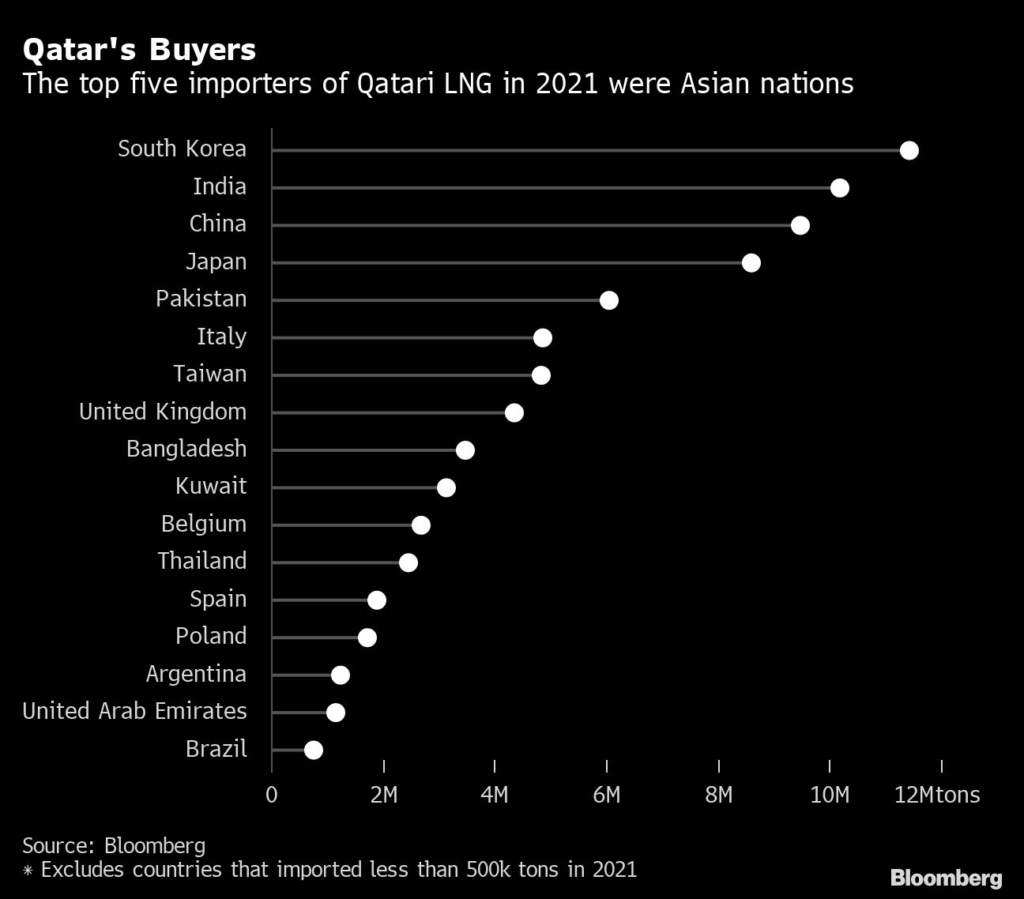
Also Tuesday, Exxon Mobil Corp. said it is investing in Qatar’s $29 billion North Field East project to boost Doha’s gas exports, joining other western energy firms. The Gulf state, among the world’s biggest LNG exporters, is one of few nations that can substantially replace Russian gas supplies to Europe — but the project will start operating only in early 2026.

NOTE: Qatar’s Ministry of Commerce and Industry, Qatar Investment Authority and Investment Promotion Agency Qatar are the underwriters of the Qatar Economic Forum, Powered by Bloomberg. Media City Qatar is the host organization. 

Key Highlights:

  • Mnuchin Says Energy Markets, Fed Key to Taming Inflation in US
  • Five Takeaways From What Elon Musk Said at Qatar Economic Forum
  • Musk Says Bots Are a Problem for Twitter Deal, Not China
  • Elon Musk Says Tesla Job Cuts Will Reduce Workforce by 3.5% 
  • Thiam Says He Turned Down Offers After Credit Suisse for SPAC
  • Exxon CEO Warns Oil Markets May Be ‘Tight’ for Up to Five Years
  • Kuwait State Oil Firm Says There’s $30 War Premium on Oil Prices

Mnuchin Says Energy Markets, Fed Key to Taming Inflation in US (9:20 p.m. Doha)

“If we can stabilize the energy market, I believe, and the Fed does their job, we’ll have inflation under control,” Mnuchin said at the forum. “If we don’t, we have a big problem.” 

He said global leaders, including from the US and China, should concentrate on trying to secure a cease-fire in Ukraine, which could begin to calm energy prices. On the Fed, he said he had “a lot of confidence” in Chair Jerome Powell and backed the central bank’s move last week to raise interest rates by 75 basis points and signal a similar move for its next meeting.

Qatar Central Bank Won’t Ditch Peg (4:30 p.m. Doha)

Qatar’s central bank has diversified its portfolio to include assets outside the US and remains confident it has the tools to contain inflation while maintaining its peg to the dollar.

Governor Sheikh Bandar bin Mohammed Al-Thani said the central bank’s reserves of over $57 billion have been used to invest in “different major currencies,” with capital allocated into Europe and the Far East region, alongside the US.

“This is our strategy: always to diversify not to depend on one currency in our portfolio,” he said at a panel. “We will continue to do so.”

Roubini’s Base Line Scenario Is Hard Landing (4 p.m. Doha)

“Unfortunately, this time around, we have both demand factors and supply factors that are causing stagflation and high inflation,” Roubini said on a panel. History suggests that whenever inflation in the US is above 5% and unemployment is below 5%, “any attempt by the Fed to essentially raise rates to fight inflation causes a hard landing rather than a soft landing,” he said.

Europe, the Euro-zone and the UK are even more fragile than the US, he said, adding that the European Central Bank is “in as much of a pickle as the Fed given the exposure to Russia, given the exposure to China.” A series of negative factors including de-globalization, aging of populations, migration restrictions, weaponizing of the US dollar and climate change could lead to a depression, he said.

Earlier on Tuesday, Roubini forecast a US recession by the end of the year. “We’re getting very close,” as measures of consumer confidence, retail sales, manufacturing activity and housing are all slowing down sharply while inflation is high, he said on Bloomberg TV.

Roubini’s comments were echoed by delegates at the forum. Musk said “a recession is inevitable at some point,” while Atlas Merchant Capital founding partner Bob Diamond warned a US recession was “almost unavoidable.” A cooling of the economy is part of the economic cycle and central banks should continue to act to stem inflation, he said. 

The Fed’s rate hike was the “correct move” and another 75 basis point increase in July is “probably appropriate,” Diamond said. “The more the Fed acts now, the more likely it is to be quick or short, not deep and longer.”

The comments come after Goldman Sachs economists cut their US growth forecasts and warned that the risk of recession is rising. The outlooks will stoke fears of a hard landing for the world’s biggest economy as the Fed jacks up interest rates to counter the fastest pace of inflation in decades.

StanChart’s Bill Winters joined the growing chorus later on Tuesday. “I think this inflation is quite bad, it’s intransigent, it’s not transitory, and the consequences will be recession.” Any recession is likely to last “a couple of quarters,” he added.

“There’s a silver lining, which is that the financial system is strong, and when you have a downturn in an economic cycle with a strong financial system it tends not to be amplified,” Winters said. “I think it’s very unlikely we’ll have a financial crisis.”

QIA Has No Interest in Cryptocurrencies (3:20 p.m. Doha)

Qatar’s wealth fund isn’t interested in investing in cryptocurrencies, though it believes in the underlying blockchain technology, according to CEO Mansoor Al Mahmoud. 

After a turbulent week that saw Bitcoin plunge below the $20,000 level for the first time since 2020, some market watchers are pointing to possible signs that prices have bottomed — at least for now.

The Qatari fund won’t invest more in Russia, though it still has some holdings in the country, Al Mahmoud said. It’s also seeking partners to invest in African infrastructure, and continues to be optimistic about Europe in the long-term, he added.

Kazakh Leader Seeks to Diversify Energy Exports (3 p.m. Doha)

Kazakhstan, one of the Kremlin’s few remaining international allies, values its ties with Vladimir Putin yet seeks to diversify energy and trade export routes to reduce reliance on transits via Russia, President Kassym-Jomart Tokayev said. 

Putin “is a staunch ally of Kazakhstan, and as President of Kazakhstan, of my country, I’m very much pleased having close relationships with Putin,” Tokayev said. While Kazakhstan’s oil, which is mostly exported via Russia, “is still in demand on the international markets” amid energy sanctions against the Kremlin, “we need to think how we could diversify our routes,” he said.

Egypt Sees Green-Financing Challenges for Developing Nations (2 p.m. Doha)

Egyptian Finance Minister Mohamed Maait said international financial institutions need to take into account the challenges developing countries face in enacting environmentally-friendly policies. 

Egypt’s push to issue the first green bond in the Middle East ended up costing the country more than if it had opted for traditional financing, Maait told a panel at the Qatar Economic Forum. The North African nation, which raised $750 million from the bond in 2020, hosts the COP27 climate summit in November.

Maait also said there’s a “limit” to what Egyptians can bear, after inflation hit its highest level in three years in May. With higher costs of living particularly affecting the more than 30 million Egyptians on lower incomes, the government “had to give a package to ease the pressure” that includes increases in salaries, pensions and cash-transfer assistance.

Exxon Invests in Qatar (12:50 p.m. Doha)

Exxon Mobil joined others, including ConocoPhillips, TotalEnergies SE of France and Italy’s Eni SpA, to invest in a project to boost Qatar’s gas exports. 

The U.S. firm will take a 6.25% stake in the North Field East project, which is expected to start operating in early 2026. The expansion will increase Qatar’s LNG capacity to 110 million tons annually from 77 million, just as demand surges across the world. 

Vitol Sees High Energy Prices Persisting (12:40 p.m. Doha)

Vitol Group CEO Russell Hardy said that global consumption of gasoline and jet fuel were still below 2019 levels and that the market could expect to see high prices for energy remain until demand for energy drops.

“There’s still two to three million barrels a day of demand to come back next year,” Hardy, whose company is the world’s biggest independent trader of oil and oil products, said. Prices for oil and oil products were likely to remain elevated so long as there was more consumption to come from the market, although fuel remaining so expensive risks demand destruction.

“The one thing that everybody’s concerned about is that runaway prices risk recessions,” he said.

Thiam Says Central Banks Need to Shock Markets (11:30 a.m. Doha)

Tidjane Thiam, the former CEO of Credit Suisse Group AG, said central banks will need to continue to shock markets to fight inflation. Asset prices have not yet reached a bottom given existing levels of inflation, the continuing impact from Covid-19, and geopolitical worries about China, he said.

While the market slump is negative for special purpose acquisition vehicles like his Freedom Acquisition I, the dislocation creates opportunities to invest, he said. Thiam said his vehicle looked at 75 companies before announcing Monday that it signed a letter of intent for a combination with Human Longevity, a company focusing on life sciences.

Read More: Thiam Says He Turned Down Offers After Credit Suisse for SPAC

Musk Says He can Balance China, Tesla, Twitter (10:10 a.m. Doha) 

Musk said he doesn’t think there’ll be any issue balancing his Tesla interests in China with the future acquisition of Twitter Inc. The platform doesn’t operate in China and “China does not attempt to interfere with the free speech of the press in the US, as far as I’m aware,” he said in an interview.

Musk said there are still a few “unresolved matters” about Twitter, and is still waiting for a resolution on the matter of how many bots are on the social media platform. “There is the question of, will the debt portion of the round come together and then will the shareholders vote in favor,” he said.

The billionaire also said supply constraints are the biggest brake on Tesla’s growth, rather than competition from rival automakers. Jobs cuts at the electric-car maker will lead to a 3.5% reduction in headcount, he said. 

EU Was ‘Unfair’ to Georgia, Premier Says (9:40 a.m. Doha)

Georgia considers it “unfair” for the European Union not to grant candidacy status to the country after recommending it to Ukraine and Moldova, Prime Minister Irakli Garibashvili said in an interview at the Qatar Economic Forum with Bloomberg Editor-in-Chief John Micklethwait. 

The Caucasus nation “would be the first country to be granted the status” on the merits of complying with the EU’s requirements, and the bloc gave it to Ukraine and Moldova because of the situation created by Russia’s war, he said.

While Georgia supports Ukraine politically, it’s in a “very vulnerable” position and can’t impose national sanctions on Russia over the invasion, though it won’t let Russian companies use Georgian territory to bypass sanctions, Garibashvili said.

Georgia remains determined to join the North Atlantic Treaty Organization, but understands it must first resolve its territorial problems with 20% of Georgian territory under Russian occupation since a 2008 war, the premier said.

Namibia GDP May Double by 2040 on Oil Finds (8 a.m. Doha)

Namibia and its partners are “all aligned” on bringing country’s first two oil discoveries to production as soon as possible, Jennifer Comalie, chairperson of National Petroleum Corp. of Namibia, said in a Bloomberg TV interview Tuesday on the sidelines of the QEF.

TotalEnergies SE said in February it had made a “significant” oil discovery, weeks after Shell announced a find in the southwest African nation. “At peak, these two discoveries could bring $5.6 billion to a very small economy, doubling the GDP by 2040,” Comalie said, without giving details on when fields could start production or how much oil will be pumped.

More stories like this are available on bloomberg.com

©2022 Bloomberg L.P.

Recession Calls Grow; Mnuchin on Inflation Threat: Qatar Update

(Bloomberg) — Delegates at the second annual Qatar Economic Forum, from Tesla Chief Executive Officer Elon Musk and Nouriel Roubini to Atlas Merchant Capital’s Bob Diamond and StanChart’s Bill Winters, warned the US was heading toward a recession. 

In a wide-ranging interview, Musk also left doubts about his commitment to a $44 billion takeover of Twitter. Qatar’s $450 billion wealth fund has backed that bid, and its CEO said Tuesday he believes in Musk’s leadership.  

Later, former Treasury Secretary Steven Mnuchin said inflation in the US can be brought under control if energy prices settle down and the Federal Reserve follows through on its pledge to continue raising interest rates. 

Also Tuesday, Exxon Mobil Corp. said it is investing in Qatar’s $29 billion North Field East project to boost Doha’s gas exports, joining other western energy firms. The Gulf state, among the world’s biggest LNG exporters, is one of few nations that can substantially replace Russian gas supplies to Europe — but the project will start operating only in early 2026.

NOTE: Qatar’s Ministry of Commerce and Industry, Qatar Investment Authority and Investment Promotion Agency Qatar are the underwriters of the Qatar Economic Forum, Powered by Bloomberg. Media City Qatar is the host organization. 

Key Highlights:

  • Mnuchin Says Energy Markets, Fed Key to Taming Inflation in US
  • Five Takeaways From What Elon Musk Said at Qatar Economic Forum
  • Musk Says Bots Are a Problem for Twitter Deal, Not China
  • Elon Musk Says Tesla Job Cuts Will Reduce Workforce by 3.5% 
  • Thiam Says He Turned Down Offers After Credit Suisse for SPAC
  • Exxon CEO Warns Oil Markets May Be ‘Tight’ for Up to Five Years
  • Kuwait State Oil Firm Says There’s $30 War Premium on Oil Prices

Mnuchin Says Energy Markets, Fed Key to Taming Inflation in US (9:20 p.m. Doha)

“If we can stabilize the energy market, I believe, and the Fed does their job, we’ll have inflation under control,” Mnuchin said at the forum. “If we don’t, we have a big problem.” 

He said global leaders, including from the US and China, should concentrate on trying to secure a cease-fire in Ukraine, which could begin to calm energy prices. On the Fed, he said he had “a lot of confidence” in Chair Jerome Powell and backed the central bank’s move last week to raise interest rates by 75 basis points and signal a similar move for its next meeting.

Qatar Central Bank Won’t Ditch Peg (4:30 p.m. Doha)

Qatar’s central bank has diversified its portfolio to include assets outside the US and remains confident it has the tools to contain inflation while maintaining its peg to the dollar.

Governor Sheikh Bandar bin Mohammed Al-Thani said the central bank’s reserves of over $57 billion have been used to invest in “different major currencies,” with capital allocated into Europe and the Far East region, alongside the US.

“This is our strategy: always to diversify not to depend on one currency in our portfolio,” he said at a panel. “We will continue to do so.”

Roubini’s Base Line Scenario Is Hard Landing (4 p.m. Doha)

“Unfortunately, this time around, we have both demand factors and supply factors that are causing stagflation and high inflation,” Roubini said on a panel. History suggests that whenever inflation in the US is above 5% and unemployment is below 5%, “any attempt by the Fed to essentially raise rates to fight inflation causes a hard landing rather than a soft landing,” he said.

Europe, the Euro-zone and the UK are even more fragile than the US, he said, adding that the European Central Bank is “in as much of a pickle as the Fed given the exposure to Russia, given the exposure to China.” A series of negative factors including de-globalization, aging of populations, migration restrictions, weaponizing of the US dollar and climate change could lead to a depression, he said.

Earlier on Tuesday, Roubini forecast a US recession by the end of the year. “We’re getting very close,” as measures of consumer confidence, retail sales, manufacturing activity and housing are all slowing down sharply while inflation is high, he said on Bloomberg TV.

Roubini’s comments were echoed by delegates at the forum. Musk said “a recession is inevitable at some point,” while Atlas Merchant Capital founding partner Bob Diamond warned a US recession was “almost unavoidable.” A cooling of the economy is part of the economic cycle and central banks should continue to act to stem inflation, he said. 

The Fed’s rate hike was the “correct move” and another 75 basis point increase in July is “probably appropriate,” Diamond said. “The more the Fed acts now, the more likely it is to be quick or short, not deep and longer.”

The comments come after Goldman Sachs economists cut their US growth forecasts and warned that the risk of recession is rising. The outlooks will stoke fears of a hard landing for the world’s biggest economy as the Fed jacks up interest rates to counter the fastest pace of inflation in decades.

StanChart’s Bill Winters joined the growing chorus later on Tuesday. “I think this inflation is quite bad, it’s intransigent, it’s not transitory, and the consequences will be recession.” Any recession is likely to last “a couple of quarters,” he added.

“There’s a silver lining, which is that the financial system is strong, and when you have a downturn in an economic cycle with a strong financial system it tends not to be amplified,” Winters said. “I think it’s very unlikely we’ll have a financial crisis.”

QIA Has No Interest in Cryptocurrencies (3:20 p.m. Doha)

Qatar’s wealth fund isn’t interested in investing in cryptocurrencies, though it believes in the underlying blockchain technology, according to CEO Mansoor Al Mahmoud. 

After a turbulent week that saw Bitcoin plunge below the $20,000 level for the first time since 2020, some market watchers are pointing to possible signs that prices have bottomed — at least for now.

The Qatari fund won’t invest more in Russia, though it still has some holdings in the country, Al Mahmoud said. It’s also seeking partners to invest in African infrastructure, and continues to be optimistic about Europe in the long-term, he added.

Kazakh Leader Seeks to Diversify Energy Exports (3 p.m. Doha)

Kazakhstan, one of the Kremlin’s few remaining international allies, values its ties with Vladimir Putin yet seeks to diversify energy and trade export routes to reduce reliance on transits via Russia, President Kassym-Jomart Tokayev said. 

Putin “is a staunch ally of Kazakhstan, and as President of Kazakhstan, of my country, I’m very much pleased having close relationships with Putin,” Tokayev said. While Kazakhstan’s oil, which is mostly exported via Russia, “is still in demand on the international markets” amid energy sanctions against the Kremlin, “we need to think how we could diversify our routes,” he said.

Egypt Sees Green-Financing Challenges for Developing Nations (2 p.m. Doha)

Egyptian Finance Minister Mohamed Maait said international financial institutions need to take into account the challenges developing countries face in enacting environmentally-friendly policies. 

Egypt’s push to issue the first green bond in the Middle East ended up costing the country more than if it had opted for traditional financing, Maait told a panel at the Qatar Economic Forum. The North African nation, which raised $750 million from the bond in 2020, hosts the COP27 climate summit in November.

Maait also said there’s a “limit” to what Egyptians can bear, after inflation hit its highest level in three years in May. With higher costs of living particularly affecting the more than 30 million Egyptians on lower incomes, the government “had to give a package to ease the pressure” that includes increases in salaries, pensions and cash-transfer assistance.

Exxon Invests in Qatar (12:50 p.m. Doha)

Exxon Mobil joined others, including ConocoPhillips, TotalEnergies SE of France and Italy’s Eni SpA, to invest in a project to boost Qatar’s gas exports. 

The U.S. firm will take a 6.25% stake in the North Field East project, which is expected to start operating in early 2026. The expansion will increase Qatar’s LNG capacity to 110 million tons annually from 77 million, just as demand surges across the world. 

Vitol Sees High Energy Prices Persisting (12:40 p.m. Doha)

Vitol Group CEO Russell Hardy said that global consumption of gasoline and jet fuel were still below 2019 levels and that the market could expect to see high prices for energy remain until demand for energy drops.

“There’s still two to three million barrels a day of demand to come back next year,” Hardy, whose company is the world’s biggest independent trader of oil and oil products, said. Prices for oil and oil products were likely to remain elevated so long as there was more consumption to come from the market, although fuel remaining so expensive risks demand destruction.

“The one thing that everybody’s concerned about is that runaway prices risk recessions,” he said.

Thiam Says Central Banks Need to Shock Markets (11:30 a.m. Doha)

Tidjane Thiam, the former CEO of Credit Suisse Group AG, said central banks will need to continue to shock markets to fight inflation. Asset prices have not yet reached a bottom given existing levels of inflation, the continuing impact from Covid-19, and geopolitical worries about China, he said.

While the market slump is negative for special purpose acquisition vehicles like his Freedom Acquisition I, the dislocation creates opportunities to invest, he said. Thiam said his vehicle looked at 75 companies before announcing Monday that it signed a letter of intent for a combination with Human Longevity, a company focusing on life sciences.

Read More: Thiam Says He Turned Down Offers After Credit Suisse for SPAC

Musk Says He can Balance China, Tesla, Twitter (10:10 a.m. Doha) 

Musk said he doesn’t think there’ll be any issue balancing his Tesla interests in China with the future acquisition of Twitter Inc. The platform doesn’t operate in China and “China does not attempt to interfere with the free speech of the press in the US, as far as I’m aware,” he said in an interview.

Musk said there are still a few “unresolved matters” about Twitter, and is still waiting for a resolution on the matter of how many bots are on the social media platform. “There is the question of, will the debt portion of the round come together and then will the shareholders vote in favor,” he said.

The billionaire also said supply constraints are the biggest brake on Tesla’s growth, rather than competition from rival automakers. Jobs cuts at the electric-car maker will lead to a 3.5% reduction in headcount, he said. 

EU Was ‘Unfair’ to Georgia, Premier Says (9:40 a.m. Doha)

Georgia considers it “unfair” for the European Union not to grant candidacy status to the country after recommending it to Ukraine and Moldova, Prime Minister Irakli Garibashvili said in an interview at the Qatar Economic Forum with Bloomberg Editor-in-Chief John Micklethwait. 

The Caucasus nation “would be the first country to be granted the status” on the merits of complying with the EU’s requirements, and the bloc gave it to Ukraine and Moldova because of the situation created by Russia’s war, he said.

While Georgia supports Ukraine politically, it’s in a “very vulnerable” position and can’t impose national sanctions on Russia over the invasion, though it won’t let Russian companies use Georgian territory to bypass sanctions, Garibashvili said.

Georgia remains determined to join the North Atlantic Treaty Organization, but understands it must first resolve its territorial problems with 20% of Georgian territory under Russian occupation since a 2008 war, the premier said.

Namibia GDP May Double by 2040 on Oil Finds (8 a.m. Doha)

Namibia and its partners are “all aligned” on bringing country’s first two oil discoveries to production as soon as possible, Jennifer Comalie, chairperson of National Petroleum Corp. of Namibia, said in a Bloomberg TV interview Tuesday on the sidelines of the QEF.

TotalEnergies SE said in February it had made a “significant” oil discovery, weeks after Shell announced a find in the southwest African nation. “At peak, these two discoveries could bring $5.6 billion to a very small economy, doubling the GDP by 2040,” Comalie said, without giving details on when fields could start production or how much oil will be pumped.

More stories like this are available on bloomberg.com

©2022 Bloomberg L.P.

Obamas Move Audio Deal to Amazon After Spotify Friction

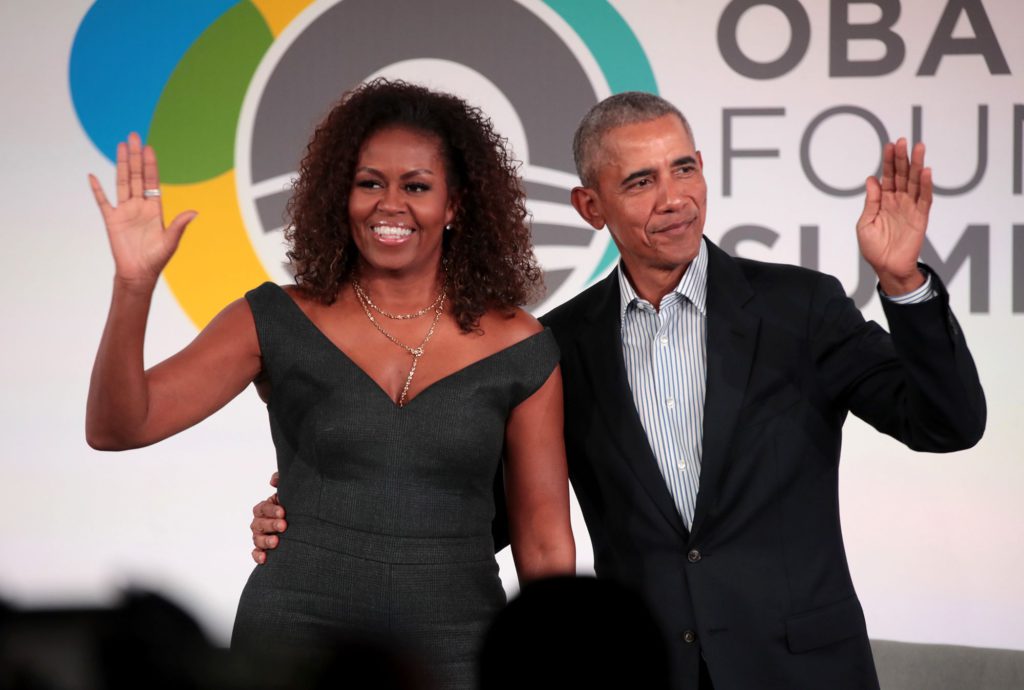
(Bloomberg) — The Obamas and their production company Higher Ground have signed a deal with Amazon.com Inc.’s Audible to make a slate of original audio programming, the companies announced Tuesday, bringing an end to the Obamas’ three-year relationship with Spotify.

The terms of the deal weren’t disclosed, including whether the deal gives Higher Ground the flexibility to release shows on many audio services at the same time. Spotify paid for exclusive rights to shows, though it later distributed them on rival services.

“At Higher Ground, we have always sought to lift up voices that deserve to be heard — and Audible is invested in realizing that vision alongside us,” former president Barack Obama said in a press release. “I’m looking forward to partnering with them to tell stories that not only entertain but also inspire.”

The famous family signed its first podcast deal with Spotify Technology SA in 2019 and released a variety of shows, including “The Michelle Obama Podcast” and “Renegades: Born in the USA,” a multi-hour conversation between Barack and musician Bruce Springsteen. The partnership turned south over the years, however, after both companies disagreed on strategy. Higher Ground staff wanted their slate to highlight voices outside the Obamas’, and though the production company pitched dozens of shows, Spotify only produced a handful. Spotify eventually declined to renew their deal, narrowing potential partners for Higher Ground down to Audible and iHeartMedia Inc., as Bloomberg reported in April.

More stories like this are available on bloomberg.com

©2022 Bloomberg L.P.

Ukraine Warns of New Malware Campaign Tied to Russian Hackers

(Bloomberg) — Ukrainian cybersecurity officials said Tuesday that a prominent Russian-backed hacking group is behind a new wave of malware attacks being spread via innocuous-looking emails.

The Ukrainian Computer Emergency Response Team said emails warning of unpaid taxes or nuclear terrorism are, in fact, ruses for delivering malicious software. Opening the files, they warned, leads users to downloading Cobalt Strike or CredoMap malware. The Cobalt Strike hacking tool enables attackers to record victims’ keystrokes and move through breached machines, according to cybersecurity researchers. 

Attackers are targeting critical infrastructure sectors in Ukraine, the government alert warns. 

Ukrainian officials associated the new campaign with APT28, known as Fancy Bear, a Kremlin-backed cyber-espionage group that US intelligence officials have said was active in the 2016 US presidential election. The cybersecurity firm CrowdStrike Holdings Inc. has called Fancy Bear a constant threat to global organizations.

A representative for the Russian embassy in Washington didn’t immediately return an email seeking comment.

More stories like this are available on bloomberg.com

©2022 Bloomberg L.P.

Close Bitnami banner
Bitnami