

Bloomberg

Crypto Billionaire Sam Bankman-Fried Doles Out Credit Lines to Stem Contagion

(Bloomberg) — Sam Bankman-Fried, the crypto billionaire who co-founded digital-asset exchange FTX Trading Ltd., is providing credit lines to try to stem contagions for his beleaguered industry.  

Crypto lending platform BlockFi Inc., which had been raising funds at a reduced valuation, said on Tuesday that it secured a $250 million revolving line of credit from FTX. Last week, crypto exchange Voyager Digital Ltd., whose shares are down 90% this year on Toronto Stock Exchange, got a $200 million credit line — a mix of cash and USDC stablecoins — as well as a separate, 15,000-Bitcoin revolving facility from Alameda Research, Bankman-Fried’s trading firm.

A wave of liquidation has triggered fear of contagion risks in the crypto industry, after a broad-based selloff in digital assets and the spectacular collapse of the TerraUSD and Luna tokens. Major lenders Celsius Network Ltd. and Babel Finance have frozen withdrawals, while crypto hedge fund Three Arrows Capital Ltd. is facing liquidity troubles. 

“Sam Bankman-Fried is the new John Pierpont Morgan — he is bailing out cryptocurrency markets the way the original J.P. Morgan did after the crisis of 1907,” Anthony Scaramucci, founder of SkyBridge Capital, said in an interview, referring to that year’s banking panic, which led to the creation of the Federal Reserve System. Scaramucci said he’d invested alongside Bankman-Fried in several crypto ventures.

An FTX spokesperson, asked for comment about the credit lines, referred to a Twitter thread Tuesday from Bankman-Fried.

“We take our duty seriously to protect the digital asset ecosystem and its customers,” he wrote on Twitter.

In a recent interview with NPR, Bankman-Fried, 30, said he has a responsibility to consider stepping in, “even if it is at a loss to ourselves,” to stem contagions and help the industry thrive. 

“This past weekend was critical in terms of finding white knights who could help develop a bid to stabilize this market,” Jeff Dorman, chief investment officer at asset-management firm Arca, wrote in a note Tuesday. “It doesn’t take a lot of capital right now to support prices and failing lenders, and there are a lot of players incentivized to ensure this industry doesn’t fail.”

Major crypto players have a history of bailing out key troubled firms. Last year, FTX provided $120 million debt financing for Liquid Group Inc. after hackers stole from the Japanese crypto exchange. FTX later acquired Liquid. In April, Binance led a $150 million round for the creator of popular game Axie Infinity to help restore user funds affected by a hack.

The latest financing provided by Bankman-Fried is “not unlike private equity shops that will invest more capital into portfolio companies amid distress — sometimes it’s enough, sometimes not,” said Noel Hebert, director of credit research at Bloomberg Intelligence. “Intra-crypto industry players are among the only ones with an incentive to lend here.”

Tom Dunleavy, senior research analyst at crypto-data firm Messari, said some would compare the move to Warren Buffett providing support to Goldman Sachs Group Inc. in 2008. 

It’s “a respected industry player supporting a systemically important firm with capital at a time where they think the bottom could be in, or close,” Dunleavy said. While recent liquidations have stemmed from the collapse of TerraUSD, he added, “the further we get from the Terra incident, the more things start to calm down, the less potentially broader liquidity issues we will see.”

More stories like this are available on bloomberg.com

©2022 Bloomberg L.P.

Amazon Taps In-House Grocery Chief to Run Retail Business

(Bloomberg) — Amazon.com Inc. tapped Doug Herrington to run the company’s sprawling retail and logistics operation, giving him the new title chief executive officer of Worldwide Stores and signaling the importance of a continued push into groceries under company CEO Andy Jassy.

Herrington, 55, joined Amazon in 2005 and launched the Amazon Fresh grocery delivery service in 2007. He replaces Dave Clark, a 23-year veteran who helped create a warehouse network and in-house delivery service that speeds packages to customers in two days or less. Herrington’s new role encompasses everything from Amazon’s last-mile delivery operation to its retail websites and physical stores. Amazon also said John Felton, who has been with the company for 18 years, will oversee the operations division and report to Herrington.

“This is a very strong and experienced leadership team,” Jassy said in a statement Tuesday. “I remain very optimistic about our Stores business, and believe we’re still in the early days of what’s possible.”

Herrington, who lives near Jassy in Amazon’s hometown Seattle, is ascending at a challenging moment. Online sales growth has slowed now that consumers are returning to their pre-pandemic spending habits, leaving Amazon with too much warehouse space. One of his first tasks will be to shrink the operation to current demand without impairing the company’s ability to ramp up when online sales growth resumes.

He will also have to navigate continuing labor unrest at Amazon warehouses. An upstart union earlier this year won the right to represent workers at a fulfillment center in New York, a result Amazon is challenging. The company is also under pressure from politicians for its fast pace of work and injury rates that are higher than some rivals in warehousing.

Before Amazon, Herrington worked for Webvan, a grocery delivery service that went bust during the dot-com era. He became leader of Amazon’s North American consumer business in 2015, which encompasses both online and physical stores. In recent years, Amazon has started a cashierless chain of convenience stores, acquired Whole Foods Market and launched Amazon Fresh supermarkets.

Felton, 45, led Amazon’s delivery services group, overseeing a massive expansion of warehouses. He rose through the ranks of Amazon’s finance teams, serving for several years as chief financial officer of Clark’s worldwide operations unit. Felton also briefly ran the company’s investor relations team.

(Updated with bio background, starting in sixth paragraph.)

More stories like this are available on bloomberg.com

©2022 Bloomberg L.P.

Ukrainian Telecom Workers Damage Own Equipment to Thwart Russia

(Bloomberg) — Employees at one of Ukraine’s leading internet and phone providers decided to sabotage equipment rather than hand control to Russia in occupied territories, according to the company’s chief executive officer.

Yuriy Kurmaz, CEO of Ukrtelecom, said Russian forces attempted to seize parts of his telecom’s network by using a combination of hacking and physical intimidation. In an interview with Bloomberg News, Kurmaz said his employees had faced threats and in some cases been imprisoned by Russian personnel in occupied parts of southern and eastern Ukraine, as Moscow has sought to establish control over data and communications in the region.

Rather than hand over control of Ukrtelecom facilities to Russia in occupied territories, Kurmaz said his company’s employees decided to delete crucial files from computers.

“We have seen some brutal influence of the military and representatives of Russia on the occupied territory,” Kurmaz said. “They put pressure on our employees to obtain the technical details of our network infrastructure. But they failed.”

“The Russians tried to connect their control boards and some equipment to our networks, but they were not able to reconfigure it because we completely destroyed the software,” he said.

Ukrtelecom is owned by Rinat Akhmetov, Ukraine’s richest man. The company is the largest fixed line operator in Ukraine and counts the Ukrainian military and several government agencies among its customers, according to Kurmaz. Its annual revenue in 2020 totaled ₴6.2 billion ($210 million), according to company financial records. 

Russia’s invasion has exacted a severe toll on the telecommunications provider.

More than 30 of the company’s buildings have been completely destroyed during the war and about 100 other facilities badly damaged, Kurmaz said. Despite that, it has managed to maintain connectivity for people in more than 80% of the localities it serves, Kurmaz said, who credited engineers who have worked to restore damaged fiber optic lines and other infrastructure.

Aside from physical damage to its networks, Ukrtelecom has also endured multiple cyberattacks, according to a company official.

In late March, suspected Russian-backed hackers gained access to an employee account in occupied territory and tried to use that access to steal customer data and compromise internal network information, according to Kirill Goncharuk, Ukrtelecom’s chief information officer. The intrusion attempt was deemed so severe that Ukrtelecom had to take the drastic decision to shut down large parts of its network for about 15 hours – causing a communication blackout in parts of the country – until it could be sure it had contained the hackers, Goncharuk said in an interview.

The company is facing an average of about 10 cyberattacks every week, according to Goncharuk.

The incidents have included “denial of service” attacks that attempt to force the company’s public websites offline, in addition to persistent efforts to hack Ukrtelecom employees’ computers and penetrate the company’s digital infrastructure. In order to detect such activity, the company has systems in place that detect unusual patterns of behavior on employee computers, Goncharuk said.

Ukrtelecom’s security experts believe the hackers may be trying to find and steal what they call its “golden configuration,” a reference to information that’s required to get Ukrtelecom’s networks back up and running again in occupied regions after they were self-sabotaged.

“They are trying to follow through with their plans to occupy, to steal, to seize our equipment,”Kurmaz said. “To reload our software they need to know the configuration of our network.”

Last month, internet monitoring experts noticed that parts of Ukraine’s internet were being brought under Russian control. Some internet operators in the occupied city of Kherson, for example, were rerouting their customers’ internet traffic through Miranda Media, a Crimea-based affiliate of the Russian-state owned telecommunications firm Rostelecom, according to digital watchdog group NetBlocks.

Victor Zhora, deputy chief of Ukraine’s information protection service, says Russia is pursuing the same strategy as it did following its annexation of Crimea in 2014.

“All local providers were forced to integrate with the Russian one,” Zhora said. “People would come to each provider and blackmail or threaten them.”

Controlling internet networks gives Russia the ability to block Ukrainians’ access to independent sources of information, according to Zhora. It also allows the Kremlin to use surveillance systems to monitor Ukrainians’ communications and web use.

“Their goal is to control people,” Zhora said.

Some small internet providers in the occupied territories have chosen to reconfigure their networks so that they operate under Russian control, saying that they had no alternative. Ukrtelecom, however, has chosen to disconnect its networks in those territories rather than cooperate with Russia.

“They block Ukrainian websites, news channels, and they provide just the Russian propaganda – it’s unacceptable,” Kurmaz said. “Our strong position is we will never collaborate.”


More stories like this are available on bloomberg.com

©2022 Bloomberg L.P.
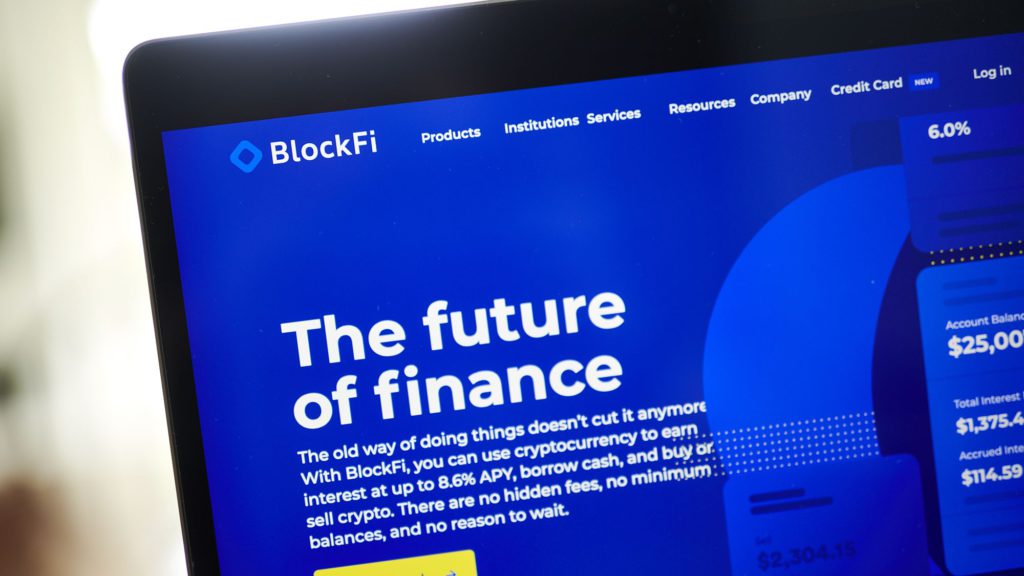
Crypto Lender BlockFi Gets $250 Million Credit Line From FTX

(Bloomberg) — One of the biggest crypto lenders, BlockFi Inc., said digital-asset trading powerhouse FTX agreed to provide a $250 million revolving credit facility as concern increases across the sector about liquidity in the wake of the recent collapse in token prices.

Rival lenders Celsius and Babel Finance froze withdrawals on their platforms in the past two weeks as the months-long meltdown in the prices of cryptocurrencies accelerated, triggering speculation that other crypto companies would be forced to take similar measures. 

Sam Bankman-Fried, the billionaire co-founder and chief executive officer of FTX, said in a tweet that the exchange provided the support to help Jersey City, New Jersey-based BlockFi “navigate the market from a position of strength.”

“Sometimes leadership means acting decisively and that’s what BlockFi did: removing troublesome counterparties _before_ they become a problem, and adding cash _before_ it was necessary,” he added in the thread. Alameda Research, the crypto trading shop also co-founded by Bankman-Fried, issued a $485 million loan to crypto broker Voyager Digital Ltd. on June 18.   

Zac Prince, co-founder and CEO of BlockFi, said on Twitter that his firm has signed a term sheet with FTX to provide BlockFi with access to capital “that further bolsters” the crypto lender’s balance sheet.

“Today’s landmark announcement reinforces BlockFi’s commitment to serving its clients and ensuring their funds are safeguarded,” Prince said.

BlockFi recently acknowledged that it had to liquidate “a large client” that failed to meet its obligations on an overcollateralized margin loan without naming the customer. At the time, Prince said that BlockFi continues to actively “lend and operate normally.” 

BlockFi cited “market conditions that have had a negative impact on our growth rate” for its decision on June 13 to cut about 20% of its workforce, or about 200 positions. 

The company agreed in February to pay $100 million in penalties following the US Securities and Exchange Commission’s allegations that it was selling its crypto lending product as an unregistered security.  

More stories like this are available on bloomberg.com

©2022 Bloomberg L.P.
RBC Looks Beyond Toronto for Tech Hires in Tight Labor Market

(Bloomberg) — Royal Bank of Canada is building up technology centers across Canada, beyond its Toronto headquarters, to help attract skilled workers in a tight labor market. 

The bank’s current focus is on its Calgary innovation hub, where it’s looking to reach 300 employees by the end of next year. The center, with about 65 staffers, opened in September as a hub for tech strategy and research, innovation, data and artificial intelligence, site-reliability engineering and automation, with some full-stack software workers based at the location as well.

Royal Bank also has other tech centers around Canada, including a 200-person Montreal hub for cybersecurity, tech infrastructure and artificial intelligence, and a center in Halifax, Nova Scotia, with more than 600 workers focused on tech support, machine learning and full-stack engineering. The hubs are part of Royal Bank’s efforts to attract the country’s best tech talent at a time of heightened competition, said Emily Mercier, chief operating officer for Royal Bank’s technology and operations division.

“The hub strategy really extends our reach,” Mercier said in an interview. “Having people in more regions in Canada allows us to diversify the location of our services, increasing the breadth and depth of our talent.”

Royal Bank Chief Executive Officer Dave McKay said earlier this year that the availability of workers — especially skilled technologists — was among his top concerns for this year. The lender, which has about 10,000 workers in technology and operations worldwide, is on track to hire 2,000 tech workers overall this year and a similar number next year, Mercier said. That’s also about as many as it hired in 2021.

Royal Bank’s recruiting and retention pitch for those workers includes an engineering culture that provides constant learning opportunities, the chance to work on cutting-edge technologies and work-life balance, Mercier said. The bank also gives tech workers a variety of career paths because it reaches 17 million clients and has multiple global businesses, she said.

Even amid a darkening economic outlook and job cuts at startups and crypto companies such as Coinbase Global Inc. and BlockFi Inc., Mercier said the market for tech talent is still hot and she doesn’t see it cooling soon. While the broader market may eventually soften, demand for tech workers is a long-term trend, and Royal Bank will always be interested in those skills, she said. 

“Building the digital bank of the future requires us to have a very strong bench strength of tech talent,” Mercier said. “So even if there are some changes in market conditions in the short term, it’s not going to affect our long-term approach.”

More stories like this are available on bloomberg.com

©2022 Bloomberg L.P.

Silicon Valley Leaves Black Women Behind as It Closes Wage Gaps

(Bloomberg) — As American corporations announce a record number of diversity and inclusion initiatives, Silicon Valley has seen the wage gap narrow for all minority groups but one: Black women. 

The wage gap for African American women widened to $0.92 for every $1 a White man earns in 2021 from $0.94 a year earlier, according to a new report by Hired, an online marketplace for tech jobs. 

Although the situation has improved for some groups, female tech workers of all races still make less than their male counterparts, with Black and Hispanic women receiving the lowest wages.

As of last year, 26.2% of people working in computer and mathematical occupations in 2021 were women, and 8.5% were Black, according to the US Bureau of Labor Statistics. At the same time, only about one in five tech candidates who used the Hired platform in 2021 identified as female, the study released Tuesday showed. 

With more than one-third of the tech positions only interviewing male candidates, women were about 13% less likely to receive an interview request on average compared to male candidates. For positions based in places including Seattle, Boston and Denver, they were more than 20% less likely to be interviewed.

The report comes as tech companies face scrutiny from employees urging more diversity, equity and inclusion initiatives and as a strong job market gives workers additional bargaining power. Although firms including Alphabet Inc.’s Google, Twitter Inc. and Snap Inc. have recently joined forces to strengthen the pipeline of underrepresented workers in Silicon Valley, it’s still hard to keep track of the tech industry’s advancements.

“As employers navigate post-Great Resignation in 2022, it’s imperative to prioritize equitable hiring while strengthening diversity,” Hired Chief Executive Officer Josh Brenner wrote in the report. The use of diversity, equity and inclusion tools “creates more robust pipelines of candidates with new ideas to drive businesses forward.”

Overall Improvement

Some groups were able to narrow or even close the wage gap. Hispanic men and Asian women decreased discrepancies by 3 cents in 2021, now being closer to parity. However, Asian men, who already made more than their White counterparts on average as of last year, have widened the gap and now make $1.05 for every dollar a White man makes. 

When it comes to locations, Denver saw the gender gap narrow by 5 cents to $0.98 cents over the past year, and is now the most equal tech market in the US, followed by Seattle. In the San Francisco Bay Area and in New York, the gap remained unchanged at $0.95 and $0.93 respectively. Up-and-coming Austin, Texas, was the only major city to see the gap widen — by 1 cent to $0.94.

The report analyzed almost 820,000 interview requests and job offers facilitated through Hired’s marketplace from January 2018 through December 2021, including more than 3,900 participating companies and 120,000 job seekers in the US, UK and Canada.

More stories like this are available on bloomberg.com

©2022 Bloomberg L.P.

UK Rail Walkout Sees Millions Revert to Lockdown Working Life

(Bloomberg) — The biggest UK rail strike in more than three decades saw millions revert to lockdown-era home working, leaving stations empty and shopping streets deserted, and with the prospect of further disruptions later this week.

Some 40,000 staff from train firms and track operator Network Rail began a walkout midnight Tuesday, with further stoppages planned for Thursday and Saturday. A separate action by 10,000 London Underground staff has hobbled transport within the capital, cutting off typical commuter routes. 

But far from the chaotic scenes that have come with shutdowns prior to the coronavirus pandemic, train operators reported quiet stations during the usual morning peak, suggesting most people had found other ways to get to their jobs or were working from home. More than a million commuters in London alone opted not to travel, Transport for London said, with Tube journeys down 95% during the morning.

Labor groups led by the National Union of Rail, Maritime and Transport Workers remain at odds with the government over issues such as pay, job losses and perceived budget cuts, raising the prospect of further disruption. The two sides exchanged robust views via separate Sky News interviews on Tuesday, with Transport Minister Grant Shapps saying the walkout is “taking us back to the bad old days of union strikes” and “hurting precisely the people they claim to be protecting.”  

RMT General Secretary Mick Lynch retorted that the situation is “a mess” of the minister’s making and pledged to “go on strike again if we don’t get a settlement to the issues.” He warned against a Shapps proposal to bring in temporary workers, saying they wouldn’t be adequately trained. 

The failure of negotiations means only about 20% of national rail services are running, with Scotland and Wales among the worst affected areas. Ticket prices are expected to spiral on the days between strikes due to the limited service, suggesting many will continue to abandon attempts to travel through to next week. Events that may be disrupted include the sold out Glastonbury music festival in rural southwest England — attended by about 200,000 people — leading to clogged roads and long journeys. 


Train operators including Arriva Plc-owned CrossCountry and FirstGroup Plc’s Avanti West Coast and Great Western Rail all reported subdued conditions as train users heeded government warnings and stayed at home. A spokesman for Avanti West Coast said a London-Birmingham train that was in operation Tuesday filled only 100 of 600 seats.

At Kings Cross in London, even the RMT was impacted. Only about half a dozen members and a few students gathered to protest, with the union’s George Welch saying attendance was severely constrained by a lack of transport options for those living outside London. 

Charles Chikezie, an Uber driver, said he had been struggling for work in the morning with the usual flood of commuters to the City of London not materializing. It was a similar story on high streets, with footfall in central London 27% lower than the previous Tuesday — in line with lockdown levels — and 8.5% down across the whole of the UK, according to retail data group Springboard.  

Budget Cuts

The RMT’s Lynch blames the government for the crisis, saying the root of the problem is £4 billion ($4.9 billion) of budget cuts — £2 billion each for Transport for London and the national railways. Shapps calls that analysis a “fundamental misunderstanding,” and said the money missing from the railways budget is down to lower takings from fares after passenger numbers failed to recover to pre-pandemic levels.

Pandemic Hit

Figures released by the Office of Road and Rail on Thursday showed total journeys at only 62% of the pre-pandemic tally in the quarter through March. That’s partly due to changing commuter habits in the wake of coronavirus lockdowns, with more people continuing to work from home.

“We need to get ready to stay the course,” Prime Minister Boris Johnson said in a cabinet meeting Tuesday, having earlier warned against higher pay rises due to the need to tackle rising costs of living.

His ministers have suggested restraint on pay rises is needed to rein in inflation, which is already at a four-decade high. 


More stories like this are available on bloomberg.com

©2022 Bloomberg L.P.

Crypto Donors Poured Money Into Politics in May Despite Downturn

(Bloomberg) — Political donations from cryptocurrency brokers, venture capitalists and investors doubled to at least $52 million through the end of May from the first 15 months of the current, two-year midterm election cycle. 

Political donations from crypto enthusiasts jumped even as the collapse of the TerraUSD stablecoin led to plunging prices and increased scrutiny of the industry in May. 

Ryan Salame, co-Chief Executive Officer of crypto exchange FTX gave American Dream Federal Action $8 million in May, bringing his total contribution to $12 million. American Dream Federal Action has spent $7.6 million backing Republicans. Salame is the super PAC’s sole donor, the latest filings with the Federal Election Commission show. 

His colleague, Sam Bankman-Fried, donated $500,000 to the Senate Majority PAC, which supports Democrats. Through May, he’s given $32.5 million to super PACs, making him one of the top donors to political groups other than the parties, though his May total dropped significantly from the $16 million he gave in April.

GMI PAC, the crypto industry’s unofficial super PAC, got $1 million contributions from the co-founders of Andreessen Horowitz, Marc Andreessen and Benjamin Horowitz. Multicoin Capital managing partners Tushar Jain and Pyahm Samani each gave $125,000. The super PAC funnels its money to another committee, Web3 Forward, which has spent $2.6 million backing Democratic candidates.

Even before the meltdown in value, Congress and President Joe Biden’s administration had been looking at ways to regulate the highly volatile sector. 

Protect Our Future, the super PAC that’s gotten $23 million from Bankman-Fried, comprising 96% of the money it’s raised, didn’t receive any money in May. But it spent $4.1 million backing Democratic candidates and ended the month with $3 million cash on hand.

Among the biggest beneficiaries of Salame’s donations is Representative Rodney Davis, who is facing off against fellow Illinois Republican Representative Mary Miller in a newly drawn district. American Dream has spent $1.3 backing Davis. Miller is endorsed by former President Donald Trump.  

Salame’s super PAC has backed some candidates who Trump has endorsed. American Dream spent $1.2 million promoting Senator John Boozman, an Arkansas Republican, heavily favored to win re-election. It spent $517,000 promoting Representative Ted Budd, a Republican who won the primary for North Carolina’s open Senate seat. American Dream also spent $705,000 on Idaho’s Representative Mike Simpson, also a Republican. 

American Dream has also spent $1.3 million supporting Katie Britt, a Republican former aide to retiring Alabama Senator Richard Shelby who’s facing off against Representative Mo Brooks in a primary runoff Tuesday. Trump is backing Britt after withdrawing his support for Brooks in March. 

More stories like this are available on bloomberg.com

©2022 Bloomberg L.P.
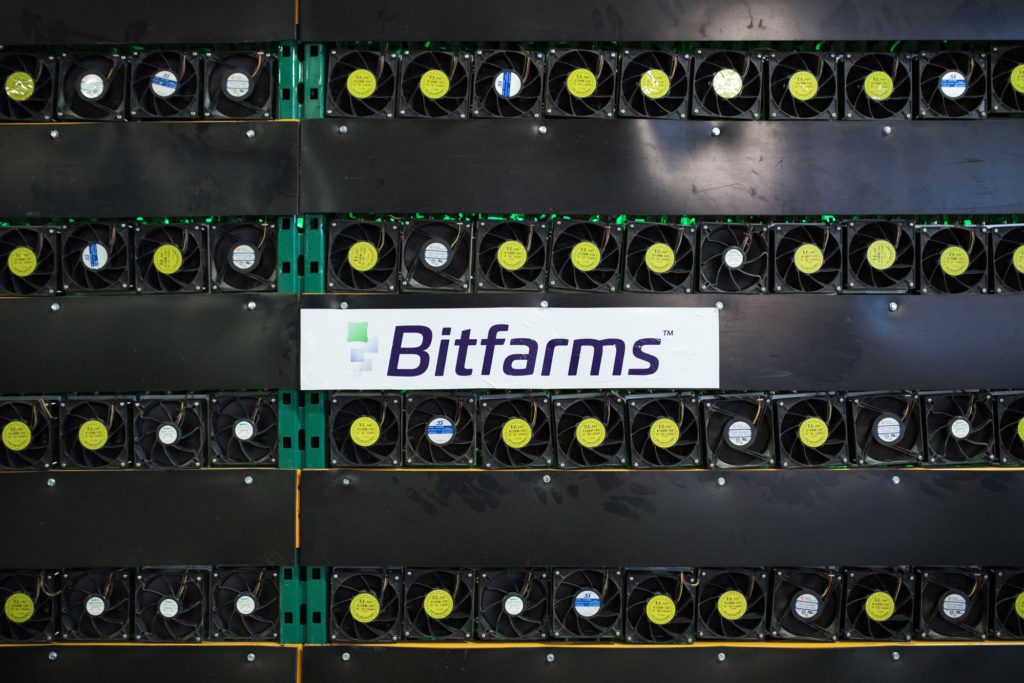
Bitcoin Miner Bitfarms Sells Coins After Ending Holding Strategy

(Bloomberg) — Crypto mining company Bitfarms Ltd. has made an about-face on its holding strategy and sold 3,000 Bitcoin for $62 million over the past week to boost its liquidity amid the record-breaking bear market. It’s one of the first self-proclaimed Bitcoin hoarding miners to turn away from accumulating mined coins. 

The Toronto-based company is the latest of the public mining companies that have had to sell their crypto assets to stay afloat. With the recent market rout, other miners may see their strategy of holding onto mined coins coming under pressure as it gets more difficult for the sector to raise capital from the stock market and repay debts. 

In April, Riot Blockchain Inc., one of the largest public miners by market cap and a long-time holder, started selling Bitcoin. Large-scale miners like Riot and Marathon Digital Holdings Inc. hold on to their mined coins and can serve as a proxy for coin prices, attracting investors who do not want to directly hold onto Bitcoin.

Bitfarms is “no longer HODLing all our daily BTC production,” said Jeff Lucas, CFO of Bitfarms. The company bought 1,000 coins five months ago at the average price of $43,200. The miner’s Bitcoin holdings are down by 47% with 3,349 coins still on its balance sheet. Bitcoin climbed above $21,600 on Tuesday as cryptocurrencies get a reprieve from the recent sell-off. 

The company is one of the largest miners by computing power in North America. “In consideration of extreme volatility in the markets, we have continued to take action to enhance liquidity and to de-leverage and strengthen our balance sheet,” Lucas said in a statement.

The company sold 1,500 coins last week and used a portion of the proceeds to rebalance its debt by reducing its Bitcoin-backed credit facility with crypto merchant bank Galaxy Digital Holdings Ltd. 

Other major public Bitcoin miners are selling large amounts of their holdings as well. Core Scientific Inc., Riot and Argo Blockchain Plc have sold 2,598 coins, 250 and 427, respectively. Mining stocks have been in a sharp decline as Bitcoin prices dropped further in the recent weeks.

More stories like this are available on bloomberg.com

©2022 Bloomberg L.P.

Meta Rolls Out Monetizing Features for Instagram, Facebook Creators

(Bloomberg) — Meta Platforms Inc. is rolling out new ways for creators to make money on Facebook and Instagram and launching updates that will help them build content in the metaverse.

Displaying nonfungible tokens, profiting from the short video platform Reels and earning direct revenue are all on the horizon for content creators, Chief Executive Officer Mark Zuckerberg said on Tuesday.

Meta needs interesting original content on Facebook and Instagram as it shifts to a different kind of algorithm — one that focuses on showing people content they didn’t know they wanted to see, in order to help them develop new interests. That’s crucial as the company competes with fast-growing TikTok. Meta is also testing a place on Instagram where creators can get discovered and paid and where brands can share partnership opportunities.

The company is also planning to make money in the metaverse eventually by taking a cut of what creators make, Zuckerberg has said. But that won’t happen until 2024, according to the blog post. 

The announcement Tuesday extends by one year a previous commitment to keep fan subscriptions and online events, among other money-making features, free for creators. Through interoperable subscriptions, creators can receive payments from fans on other platforms and give them access to features on Facebook. Zuckerberg also introduced specific metrics creators must meet in order to access certain privileges.


More stories like this are available on bloomberg.com

©2022 Bloomberg L.P.

Close Bitnami banner
Bitnami
