Bloomberg

Uber Brings Back Carpool Service After Pandemic Pause

(Bloomberg) — Uber Technologies Inc. is bringing back its shared ride service after a hiatus during the height of the Covid-19 pandemic.

The carpool service, called UberX share, is now available in a few cities including New York City, Los Angeles, Chicago and Portland, Uber announced on Tuesday. It will be expanded to more cities over the summer.  

After suspending the ride-share feature in March 2020, the company said the decision to bring it back will help passengers “make a sustainable choice.” Uber also acknowledged that shared rides are more affordable, “especially in the current economic climate.” Riders will get a discount if they choose UberX up front and a 20% discount on the total fare if matched with another passenger. The feature will match riders going in the same direction so that they won’t arrive at their destination more than 8 minutes later than an UberX trip.

The move comes as more city-dwellers return to the office following the pandemic-induced remote work shift. Lyft Inc. also resumed carpooling in more markets in May.

More stories like this are available on bloomberg.com

©2022 Bloomberg L.P.

Uber Brings Back Its Carpool Service After Pandemic Pause

(Bloomberg) — Uber Technologies Inc. is bringing back its shared ride service after a hiatus during the height of the Covid-19 pandemic.

The carpool service, called UberX share, is now available in a few cities including New York City, Los Angeles, Chicago and Portland, Uber announced on Tuesday. It will be expanded to more cities over the summer.  

After suspending the ride-share feature in March 2020, the company said the decision to bring it back will help passengers “make a sustainable choice.” Uber also acknowledged that shared rides are more affordable, “especially in the current economic climate.” Riders will get a discount if they choose UberX up front and a 20% discount on the total fare if matched with another passenger. The feature will match riders going in the same direction so that they won’t arrive at their destination more than 8 minutes later than an UberX trip.

The move comes as more city-dwellers return to the office following the pandemic-induced remote work shift. Lyft Inc. also resumed carpooling in more markets in May.

More stories like this are available on bloomberg.com

©2022 Bloomberg L.P.

FedEx Faces Big Changes as Its New Boss Confronts Higher Costs, Angry Drivers

(Bloomberg) — FedEx Corp.’s new chief executive officer, Raj Subramaniam, had plenty to contend with when he took over from package-delivery legend Fred Smith this month. Now he’ll have to roll out his growth strategy to a board that includes not only Smith, but new faces from an activist hedge fund as well.

After years as Smith’s understudy, Subramaniam will tell investors June 29 how he intends to lead FedEx while confronting higher costs for labor, Covid-related lockdowns in China and angry contractors at its crown-jewel FedEx Ground unit.

The new boss’s first major action was to surprise the market on June 14 with promises to boost FedEx’s dividend and slash capital spending. At the same time, the courier disclosed an agreement allowing activist firm D.E. Shaw to name two board members and have a say in a third. FedEx surged the most since 1986 on the news.

The large dividend “leads me to think they’ve got really strong insight into where their business is going and what their cash flow is going to look like,” said Trip Miller, a managing partner at Gullane Capital Partners and FedEx investor. “Maybe under Raj, he’s setting the bar a little bit higher for himself and the team to meet. I like that.”

FedEx shares rose 1.8% at 9:50 a.m. Tuesday in New York. The stock has risen about 4.1% this month, compared with a 9.2% drop for the S&P 500 index.

The company is forecast to report record quarterly profit on June 23 of $6.87 a share, the average analyst estimate in a Bloomberg survey. For investors, that would be a welcome change after several years of missed targets, declining margins, spotty free cash flow and large expenditures. They’ll look for signs of progress in both the results and in Subramaniam’s comments a few days later at FedEx’s first investor meeting in a decade in its hometown of Memphis, Tennessee.

Investors will inevitably compare Subramaniam’s performance to Carol Tome, who took over as United Parcel Service Inc.’s CEO in June 2020 during the height of the pandemic. Tome has increased UPS’s profit margins by raising prices, focusing on more-profitable small customers and cutting costs. In the last four complete quarters, UPS’s operating profit margin was 13.5%, roughly double the 6.7% for FedEx. 

Subramaniam, 56, has to balance a drive to boost profit with a need to keep peace in the rank-and-file: namely, about 6,000 small companies that own the trucks and hire the drivers that deliver 10 million packages every day. 

The FedEx Ground unit that these small contractors serve has been the engine for most of the company’s profit growth for two decades, and it’s likely to play an even more important role if executives heed investor demand to combine it with the separately operated FedEx Express. 

Contractor Woes

Satish Jindel, a parcel consultant and founder of industry-data collector ShipMatrix, expects Subramaniam to gradually increase the number of Express packages that are handed off to Ground until the two distinct networks operate mostly as one. The shift will give the Ground unit more volume, improving the economics for contractors, Jindel said.

The delivery contractors, many with as few as five trucks and a handful of large ones with a couple hundred vehicles, have been whipsawed by changes FedEx put in place to cope with fast-growing e-commerce packages, disrupting services originally built mainly for business-to-business deliveries.

The pandemic-driven volume surge exposed weaknesses at FedEx Ground. Those issues included its struggles to hire enough workers to sort and load packages onto the contractors’ vehicles each morning, as well as software that failed to accurately predict the next day’s volume. Higher costs for fuel, drivers and maintenance are squeezing contractors. 

“When you have disgruntled people, you often have high turnover. And if you have high turnover, you potentially have issues being able to meet delivery commitments,” said Helane Becker, an analyst with Cowen & Co. “It’s definitely problematic.”

Profit Goals

Beyond the FedEx Ground issues, Subramaniam is on the hunt for additional profit. Jindel said the spending reductions may come mostly from new airplanes, with FedEx potentially giving up some of the Boeing Co. aircraft that are pending delivery. 

To keep cash flow steady, Subramaniam also needs to increase margins at FedEx Express and finally reap the benefit from FedEx’s $4.9 billion acquisition in 2016 of European courier TNT Express, which only recently has fully combined its operations with FedEx’s. 

The new CEO will have to crack the conundrum of lower-margin e-commerce packages growing faster than commercial deliveries. FedEx has invested in automation, boosted prices, focused on small business and extended its service to seven days a week. Even so, profit margins have declined to 10% or less over the last few years from a peak of 18% in 2012. 

“They’ve broadly done the right things,” said William Fitzalan Howard, an analyst with Berenberg. But the effort seems “a bit sound-bitey to me because it clearly hasn’t actually worked.”

Smith’s Role

The pressure on Subramaniam will also come from Smith, who will have a large voice in how to run FedEx as executive chairman and as the largest shareholder with a 7.5% stake. (D.E. Shaw agreed to limit its stake to no more than 7.5%). Smith built the company from a few business jets converted to carry packages in 1973 to a global courier with $90 billion of sales. 

Before naming Subramaniam as his successor, Smith appointed his son, Richard, 44, to head up the Express business, the largest unit by sales. Jindel said the idea is for Subramaniam, a 30-plus year veteran at FedEx, to put the company on a growth path and pave the way for Richard Smith to become chief operating officer and then eventually CEO.

“I don’t think a lot of big changes happen unless Fred wants them to happen,” said Miller, the investor.

(Updates headline and adds today’s stock trading in fifth paragraph.)

More stories like this are available on bloomberg.com

©2022 Bloomberg L.P.

Roubini Sees Hard Landing; Recession Calls Grow: Forum Update

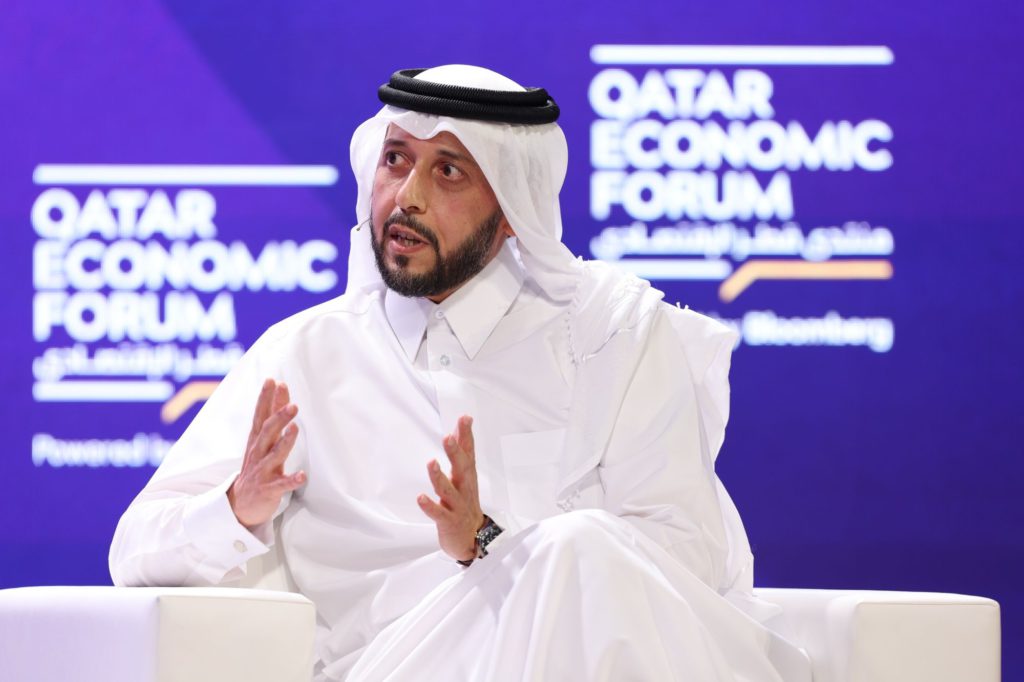
(Bloomberg) — Delegates at the second annual Qatar Economic Forum, from Tesla Chief Executive Officer Elon Musk and Nouriel Roubini to Atlas Merchant Capital’s Bob Diamond and StanChart’s Bill Winters, warned the United States was heading toward a recession. 

In a wide-ranging interview, Musk also left doubts about his commitment to a $44 billion takeover of Twitter. Qatar’s $450 billion wealth fund has backed that bid, and its CEO said Tuesday he believes in Musk’s leadership.  

Earlier, Exxon Mobil Corp. said it is investing in Qatar’s $29 billion North Field East project to boost Doha’s gas exports, joining other western energy firms. The Gulf state, among the world’s biggest LNG exporters, is one of few nations that can substantially replace Russian gas supplies to Europe — but the project will start operating only in early 2026.

Exxon’s CEO said global oil markets may remain tight for another three to five years. The head of Vitol, the world’s largest independent oil trader, said China’s fuel demand is reviving in a market struggling with supply constraints — meaning prices are unlikely to drop.

NOTE: Qatar’s Ministry of Commerce and Industry, Qatar Investment Authority and Investment Promotion Agency Qatar are the underwriters of the Qatar Economic Forum, Powered by Bloomberg. Media City Qatar is the host organization. 

Key Highlights:

  • Five Takeaways From What Elon Musk Said at Qatar Economic Forum
  • Musk Says Bots Are a Problem for Twitter Deal, Not China
  • Elon Musk Says Tesla Job Cuts Will Reduce Workforce by 3.5% 
  • Thiam Says He Turned Down Offers After Credit Suisse for SPAC
  • Exxon CEO Warns Oil Markets May Be ‘Tight’ for Up to Five Years
  • Kuwait State Oil Firm Says There’s $30 War Premium on Oil Prices

Qatar Central Bank Won’t Ditch Peg (4:30 p.m. Doha)

Qatar’s central bank has diversified its portfolio to include assets outside the US and remains confident it has the tools to contain inflation while maintaining its peg to the dollar.

Governor Sheikh Bandar bin Mohammed Al-Thani said the central bank’s reserves of over $57 billion have been used to invest in “different major currencies,” with capital allocated into Europe and the Far East region, alongside the US.

“This is our strategy: always to diversify not to depend on one currency in our portfolio,” he said at a panel. “We will continue to do so.”

Roubini’s Base Line Scenario Is Hard Landing (4 p.m. Doha)

“Unfortunately, this time around, we have both demand factors and supply factors that are causing stagflation and high inflation,” Roubini said on a panel. History suggests that whenever inflation in the US is above 5% and unemployment is below 5%, “any attempt by the Fed to essentially raise rates to fight inflation causes a hard landing rather than a soft landing,” he said.

Europe, the Euro-zone and the UK are even more fragile than the US, he said, adding that the European Central Bank is “in as much of a pickle as the Fed given the exposure to Russia, given the exposure to China.” A series of negative factors including de-globalization, aging of populations, migration restrictions, weaponizing of the US dollar and climate change could lead to a depression, he said.

Earlier on Tuesday, Roubini forecast a US recession by the end of the year. “We’re getting very close,” as measures of consumer confidence, retail sales, manufacturing activity and housing are all slowing down sharply while inflation is high, he said on Bloomberg TV.

Roubini’s comments were echoed by delegates at the forum. Musk said “a recession is inevitable at some point,” while Atlas Merchant Capital founding partner Bob Diamond warned a US recession was “almost unavoidable.” A cooling of the economy is part of the economic cycle and central banks should continue to act to stem inflation, he said. 

The Fed’s rate hike was the “correct move” and another 75 basis point increase in July is “probably appropriate,” Diamond said. “The more the Fed acts now, the more likely it is to be quick or short, not deep and longer.”

The comments come after Goldman Sachs economists cut their US growth forecasts and warned that the risk of recession is rising. The outlooks will stoke fears of a hard landing for the world’s biggest economy as the Fed jacks up interest rates to counter the fastest pace of inflation in decades.

StanChart’s Bill Winters joined the growing chorus later on Tuesday. “I think this inflation is quite bad, it’s intransigent, it’s not transitory, and the consequences will be recession.” Any recession is likely to last “a couple of quarters,” he added.

“There’s a silver lining, which is that the financial system is strong, and when you have a downturn in an economic cycle with a strong financial system it tends not to be amplified,” Winters said. “I think it’s very unlikely we’ll have a financial crisis.”

QIA Has No Interest in Cryptocurrencies (3:20 p.m. Doha)

Qatar’s wealth fund isn’t interested in investing in cryptocurrencies, though it believes in the underlying blockchain technology, according to CEO Mansoor Al Mahmoud. 

After a turbulent week that saw Bitcoin plunge below the $20,000 level for the first time since 2020, some market watchers are pointing to possible signs that prices have bottomed — at least for now.

The Qatari fund won’t invest more in Russia, though it still has some holdings in the country, Al Mahmoud said. It’s also seeking partners to invest in African infrastructure, and continues to be optimistic about Europe in the long-term, he added.

Kazakh Leader Seeks to Diversify Energy Exports (3 p.m. Doha)

Kazakhstan, one of the Kremlin’s few remaining international allies, values its ties with Vladimir Putin yet seeks to diversify energy and trade export routes to reduce reliance on transits via Russia, President Kassym-Jomart Tokayev said. 

Putin “is a staunch ally of Kazakhstan, and as President of Kazakhstan, of my country, I’m very much pleased having close relationships with Putin,” Tokayev said. While Kazakhstan’s oil, which is mostly exported via Russia, “is still in demand on the international markets” amid energy sanctions against the Kremlin, “we need to think how we could diversify our routes,” he said.

Mnuchin Downplays Fears of Prolonged Inflation (2:45 p.m. Doha)

Former US Treasury Secretary Steven Mnuchin said energy prices will be the biggest driver for global assets this year, downplaying the threat of a prolonged period of higher inflation.

“I think the major impact right now is where we end up on energy prices,” he said in an interview with Bloomberg News. “I think inflation in the US will come under control as the Fed raises rates. I think the bigger issue is, given the situation in Ukraine, what is the status of energy prices.”

Egypt Sees Green-Financing Challenges for Developing Nations (2 p.m. Doha)

Egyptian Finance Minister Mohamed Maait said international financial institutions need to take into account the challenges developing countries face in enacting environmentally-friendly policies. 

Egypt’s push to issue the first green bond in the Middle East ended up costing the country more than if it had opted for traditional financing, Maait told a panel at the Qatar Economic Forum. The North African nation, which raised $750 million from the bond in 2020, hosts the COP27 climate summit in November.

Maait also said there’s a “limit” to what Egyptians can bear, after inflation hit its highest level in three years in May. With higher costs of living particularly affecting the more than 30 million Egyptians on lower incomes, the government “had to give a package to ease the pressure” that includes increases in salaries, pensions and cash-transfer assistance.

Exxon Invests in Qatar (12:50 p.m. Doha)

Exxon Mobil joined others, including ConocoPhillips, TotalEnergies SE of France and Italy’s Eni SpA, to invest in a project to boost Qatar’s gas exports. 

The U.S. firm will take a 6.25% stake in the North Field East project, which is expected to start operating in early 2026. The expansion will increase Qatar’s LNG capacity to 110 million tons annually from 77 million, just as demand surges across the world. 

Vitol Sees High Energy Prices Persisting (12:40 p.m. Doha)

Vitol Group CEO Russell Hardy said that global consumption of gasoline and jet fuel were still below 2019 levels and that the market could expect to see high prices for energy remain until demand for energy drops.

“There’s still two to three million barrels a day of demand to come back next year,” Hardy, whose company is the world’s biggest independent trader of oil and oil products, said. Prices for oil and oil products were likely to remain elevated so long as there was more consumption to come from the market, although fuel remaining so expensive risks demand destruction.

“The one thing that everybody’s concerned about is that runaway prices risk recessions,” he said.

Thiam Says Central Banks Need to Shock Markets (11:30 a.m. Doha)

Tidjane Thiam, the former CEO of Credit Suisse Group AG, said central banks will need to continue to shock markets to fight inflation. Asset prices have not yet reached a bottom given existing levels of inflation, the continuing impact from Covid-19, and geopolitical worries about China, he said.

While the market slump is negative for special purpose acquisition vehicles like his Freedom Acquisition I, the dislocation creates opportunities to invest, he said. Thiam said his vehicle looked at 75 companies before announcing Monday that it signed a letter of intent for a combination with Human Longevity, a company focusing on life sciences.

Read More: Thiam Says He Turned Down Offers After Credit Suisse for SPAC

Musk Says He can Balance China, Tesla, Twitter (10:10 a.m. Doha) 

Musk said he doesn’t think there’ll be any issue balancing his Tesla interests in China with the future acquisition of Twitter Inc. The platform doesn’t operate in China and “China does not attempt to interfere with the free speech of the press in the US, as far as I’m aware,” he said in an interview.

Musk said there are still a few “unresolved matters” about Twitter, and is still waiting for a resolution on the matter of how many bots are on the social media platform. “There is the question of, will the debt portion of the round come together and then will the shareholders vote in favor,” he said.

The billionaire also said supply constraints are the biggest brake on Tesla’s growth, rather than competition from rival automakers. Jobs cuts at the electric-car maker will lead to a 3.5% reduction in headcount, he said. 

EU Was ‘Unfair’ to Georgia, Premier Says (9:40 a.m. Doha)

Georgia considers it “unfair” for the European Union not to grant candidacy status to the country after recommending it to Ukraine and Moldova, Prime Minister Irakli Garibashvili said in an interview at the Qatar Economic Forum with Bloomberg Editor-in-Chief John Micklethwait. 

The Caucasus nation “would be the first country to be granted the status” on the merits of complying with the EU’s requirements, and the bloc gave it to Ukraine and Moldova because of the situation created by Russia’s war, he said.

While Georgia supports Ukraine politically, it’s in a “very vulnerable” position and can’t impose national sanctions on Russia over the invasion, though it won’t let Russian companies use Georgian territory to bypass sanctions, Garibashvili said.

Georgia remains determined to join the North Atlantic Treaty Organization, but understands it must first resolve its territorial problems with 20% of Georgian territory under Russian occupation since a 2008 war, the premier said.

Namibia GDP May Double by 2040 on Oil Finds (8 a.m. Doha)

Namibia and its partners are “all aligned” on bringing country’s first two oil discoveries to production as soon as possible, Jennifer Comalie, chairperson of National Petroleum Corp. of Namibia, said in a Bloomberg TV interview Tuesday on the sidelines of the QEF.

TotalEnergies SE said in February it had made a “significant” oil discovery, weeks after Shell announced a find in the southwest African nation. “At peak, these two discoveries could bring $5.6 billion to a very small economy, doubling the GDP by 2040,” Comalie said, without giving details on when fields could start production or how much oil will be pumped.

More stories like this are available on bloomberg.com

©2022 Bloomberg L.P.

Roubini Sees Hard Landing; Recession Calls Grow: Qatar Update

(Bloomberg) — Delegates at the second annual Qatar Economic Forum, from Tesla Chief Executive Officer Elon Musk and Nouriel Roubini to Atlas Merchant Capital’s Bob Diamond and StanChart’s Bill Winters, warned the United States was heading toward a recession. 

In a wide-ranging interview, Musk also left doubts about his commitment to a $44 billion takeover of Twitter. Qatar’s $450 billion wealth fund has backed that bid, and its CEO said Tuesday he believes in Musk’s leadership.  

Earlier, Exxon Mobil Corp. said it is investing in Qatar’s $29 billion North Field East project to boost Doha’s gas exports, joining other western energy firms. The Gulf state, among the world’s biggest LNG exporters, is one of few nations that can substantially replace Russian gas supplies to Europe — but the project will start operating only in early 2026.

Exxon’s CEO said global oil markets may remain tight for another three to five years. The head of Vitol, the world’s largest independent oil trader, said China’s fuel demand is reviving in a market struggling with supply constraints — meaning prices are unlikely to drop.

NOTE: Qatar’s Ministry of Commerce and Industry, Qatar Investment Authority and Investment Promotion Agency Qatar are the underwriters of the Qatar Economic Forum, Powered by Bloomberg. Media City Qatar is the host organization. 

Key Highlights:

  • Five Takeaways From What Elon Musk Said at Qatar Economic Forum
  • Musk Says Bots Are a Problem for Twitter Deal, Not China
  • Elon Musk Says Tesla Job Cuts Will Reduce Workforce by 3.5% 
  • Thiam Says He Turned Down Offers After Credit Suisse for SPAC
  • Exxon CEO Warns Oil Markets May Be ‘Tight’ for Up to Five Years
  • Kuwait State Oil Firm Says There’s $30 War Premium on Oil Prices

Qatar Central Bank Won’t Ditch Peg (4:30 p.m. Doha)

Qatar’s central bank has diversified its portfolio to include assets outside the US and remains confident it has the tools to contain inflation while maintaining its peg to the dollar.

Governor Sheikh Bandar bin Mohammed Al-Thani said the central bank’s reserves of over $57 billion have been used to invest in “different major currencies,” with capital allocated into Europe and the Far East region, alongside the US.

“This is our strategy: always to diversify not to depend on one currency in our portfolio,” he said at a panel. “We will continue to do so.”

Roubini’s Base Line Scenario Is Hard Landing (4 p.m. Doha)

“Unfortunately, this time around, we have both demand factors and supply factors that are causing stagflation and high inflation,” Roubini said on a panel. History suggests that whenever inflation in the US is above 5% and unemployment is below 5%, “any attempt by the Fed to essentially raise rates to fight inflation causes a hard landing rather than a soft landing,” he said.

Europe, the Euro-zone and the UK are even more fragile than the US, he said, adding that the European Central Bank is “in as much of a pickle as the Fed given the exposure to Russia, given the exposure to China.” A series of negative factors including de-globalization, aging of populations, migration restrictions, weaponizing of the US dollar and climate change could lead to a depression, he said.

Earlier on Tuesday, Roubini forecast a US recession by the end of the year. “We’re getting very close,” as measures of consumer confidence, retail sales, manufacturing activity and housing are all slowing down sharply while inflation is high, he said on Bloomberg TV.

Roubini’s comments were echoed by delegates at the forum. Musk said “a recession is inevitable at some point,” while Atlas Merchant Capital founding partner Bob Diamond warned a US recession was “almost unavoidable.” A cooling of the economy is part of the economic cycle and central banks should continue to act to stem inflation, he said. 

The Fed’s rate hike was the “correct move” and another 75 basis point increase in July is “probably appropriate,” Diamond said. “The more the Fed acts now, the more likely it is to be quick or short, not deep and longer.”

The comments come after Goldman Sachs economists cut their US growth forecasts and warned that the risk of recession is rising. The outlooks will stoke fears of a hard landing for the world’s biggest economy as the Fed jacks up interest rates to counter the fastest pace of inflation in decades.

StanChart’s Bill Winters joined the growing chorus later on Tuesday. “I think this inflation is quite bad, it’s intransigent, it’s not transitory, and the consequences will be recession.” Any recession is likely to last “a couple of quarters,” he added.

“There’s a silver lining, which is that the financial system is strong, and when you have a downturn in an economic cycle with a strong financial system it tends not to be amplified,” Winters said. “I think it’s very unlikely we’ll have a financial crisis.”

QIA Has No Interest in Cryptocurrencies (3:20 p.m. Doha)

Qatar’s wealth fund isn’t interested in investing in cryptocurrencies, though it believes in the underlying blockchain technology, according to CEO Mansoor Al Mahmoud. 

After a turbulent week that saw Bitcoin plunge below the $20,000 level for the first time since 2020, some market watchers are pointing to possible signs that prices have bottomed — at least for now.

The Qatari fund won’t invest more in Russia, though it still has some holdings in the country, Al Mahmoud said. It’s also seeking partners to invest in African infrastructure, and continues to be optimistic about Europe in the long-term, he added.

Kazakh Leader Seeks to Diversify Energy Exports (3 p.m. Doha)

Kazakhstan, one of the Kremlin’s few remaining international allies, values its ties with Vladimir Putin yet seeks to diversify energy and trade export routes to reduce reliance on transits via Russia, President Kassym-Jomart Tokayev said. 

Putin “is a staunch ally of Kazakhstan, and as President of Kazakhstan, of my country, I’m very much pleased having close relationships with Putin,” Tokayev said. While Kazakhstan’s oil, which is mostly exported via Russia, “is still in demand on the international markets” amid energy sanctions against the Kremlin, “we need to think how we could diversify our routes,” he said.

Mnuchin Downplays Fears of Prolonged Inflation (2:45 p.m. Doha)

Former US Treasury Secretary Steven Mnuchin said energy prices will be the biggest driver for global assets this year, downplaying the threat of a prolonged period of higher inflation.

“I think the major impact right now is where we end up on energy prices,” he said in an interview with Bloomberg News. “I think inflation in the US will come under control as the Fed raises rates. I think the bigger issue is, given the situation in Ukraine, what is the status of energy prices.”

Egypt Sees Green-Financing Challenges for Developing Nations (2 p.m. Doha)

Egyptian Finance Minister Mohamed Maait said international financial institutions need to take into account the challenges developing countries face in enacting environmentally-friendly policies. 

Egypt’s push to issue the first green bond in the Middle East ended up costing the country more than if it had opted for traditional financing, Maait told a panel at the Qatar Economic Forum. The North African nation, which raised $750 million from the bond in 2020, hosts the COP27 climate summit in November.

Maait also said there’s a “limit” to what Egyptians can bear, after inflation hit its highest level in three years in May. With higher costs of living particularly affecting the more than 30 million Egyptians on lower incomes, the government “had to give a package to ease the pressure” that includes increases in salaries, pensions and cash-transfer assistance.

Exxon Invests in Qatar (12:50 p.m. Doha)

Exxon Mobil joined others, including ConocoPhillips, TotalEnergies SE of France and Italy’s Eni SpA, to invest in a project to boost Qatar’s gas exports. 

The U.S. firm will take a 6.25% stake in the North Field East project, which is expected to start operating in early 2026. The expansion will increase Qatar’s LNG capacity to 110 million tons annually from 77 million, just as demand surges across the world. 

Vitol Sees High Energy Prices Persisting (12:40 p.m. Doha)

Vitol Group CEO Russell Hardy said that global consumption of gasoline and jet fuel were still below 2019 levels and that the market could expect to see high prices for energy remain until demand for energy drops.

“There’s still two to three million barrels a day of demand to come back next year,” Hardy, whose company is the world’s biggest independent trader of oil and oil products, said. Prices for oil and oil products were likely to remain elevated so long as there was more consumption to come from the market, although fuel remaining so expensive risks demand destruction.

“The one thing that everybody’s concerned about is that runaway prices risk recessions,” he said.

Thiam Says Central Banks Need to Shock Markets (11:30 a.m. Doha)

Tidjane Thiam, the former CEO of Credit Suisse Group AG, said central banks will need to continue to shock markets to fight inflation. Asset prices have not yet reached a bottom given existing levels of inflation, the continuing impact from Covid-19, and geopolitical worries about China, he said.

While the market slump is negative for special purpose acquisition vehicles like his Freedom Acquisition I, the dislocation creates opportunities to invest, he said. Thiam said his vehicle looked at 75 companies before announcing Monday that it signed a letter of intent for a combination with Human Longevity, a company focusing on life sciences.

Read More: Thiam Says He Turned Down Offers After Credit Suisse for SPAC

Musk Says He can Balance China, Tesla, Twitter (10:10 a.m. Doha) 

Musk said he doesn’t think there’ll be any issue balancing his Tesla interests in China with the future acquisition of Twitter Inc. The platform doesn’t operate in China and “China does not attempt to interfere with the free speech of the press in the US, as far as I’m aware,” he said in an interview.

Musk said there are still a few “unresolved matters” about Twitter, and is still waiting for a resolution on the matter of how many bots are on the social media platform. “There is the question of, will the debt portion of the round come together and then will the shareholders vote in favor,” he said.

The billionaire also said supply constraints are the biggest brake on Tesla’s growth, rather than competition from rival automakers. Jobs cuts at the electric-car maker will lead to a 3.5% reduction in headcount, he said. 

EU Was ‘Unfair’ to Georgia, Premier Says (9:40 a.m. Doha)

Georgia considers it “unfair” for the European Union not to grant candidacy status to the country after recommending it to Ukraine and Moldova, Prime Minister Irakli Garibashvili said in an interview at the Qatar Economic Forum with Bloomberg Editor-in-Chief John Micklethwait. 

The Caucasus nation “would be the first country to be granted the status” on the merits of complying with the EU’s requirements, and the bloc gave it to Ukraine and Moldova because of the situation created by Russia’s war, he said.

While Georgia supports Ukraine politically, it’s in a “very vulnerable” position and can’t impose national sanctions on Russia over the invasion, though it won’t let Russian companies use Georgian territory to bypass sanctions, Garibashvili said.

Georgia remains determined to join the North Atlantic Treaty Organization, but understands it must first resolve its territorial problems with 20% of Georgian territory under Russian occupation since a 2008 war, the premier said.

Namibia GDP May Double by 2040 on Oil Finds (8 a.m. Doha)

Namibia and its partners are “all aligned” on bringing country’s first two oil discoveries to production as soon as possible, Jennifer Comalie, chairperson of National Petroleum Corp. of Namibia, said in a Bloomberg TV interview Tuesday on the sidelines of the QEF.

TotalEnergies SE said in February it had made a “significant” oil discovery, weeks after Shell announced a find in the southwest African nation. “At peak, these two discoveries could bring $5.6 billion to a very small economy, doubling the GDP by 2040,” Comalie said, without giving details on when fields could start production or how much oil will be pumped.

More stories like this are available on bloomberg.com

©2022 Bloomberg L.P.

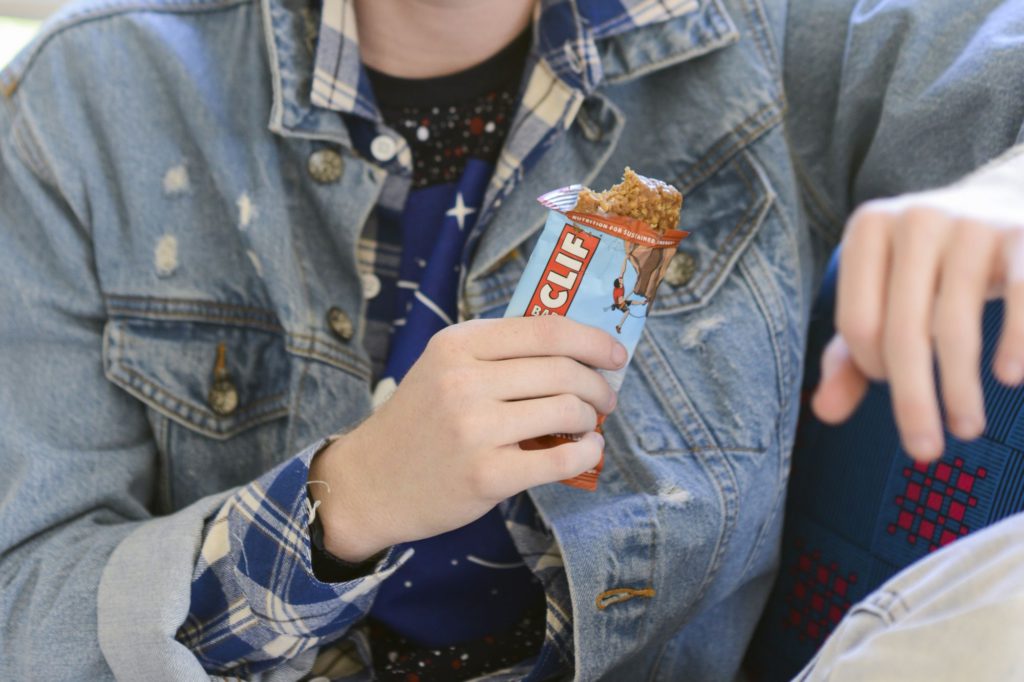
Mondelez Agrees to Purchase Energy-Bar Maker Clif for $2.9 Billion

(Bloomberg) — Mondelez International Inc. said it agreed to buy US organic energy-bar maker Clif Bar & Co. as part of its plan to boost its snacks segment. 

The Chicago-based maker of Oreos and Cadbury chocolates will buy Clif for $2.9 billion, according to a statement Monday. Further payments may be possible, contingent on events that weren’t specified — a clause known as an additional contingent earnout consideration, the statement showed.

The acquisition of Clif — whose brands include the Luna protein-bar range — expands Mondelez’s global snack-bar business that includes Perfect Snacks in the US and Grenade in the UK, it said. 

The purchase — which Mondelez said would be “top-line accretive in year two” — will see Clif keep operating from its headquarters in Emeryville, California, the company said. Manufacturing facilities in Twin Falls, Idaho, and Indianapolis, Indiana, will also continue, it said.

Mondelez shares rose as much as 0.9% Tuesday at the New York open after falling 11% this year through Friday’s close. Clif has operated for almost 30 years and is family- and employee-owned.  

Mondelez rode the pandemic snacking boom to boost online sales of cookies and candy, and in November said the retail trend will continue to grow even after mobility restrictions had been lifted as people became accustomed to using their digital devices to shop for food. 

(Updates with Tuesday trading in fifth paragraph.)

More stories like this are available on bloomberg.com

©2022 Bloomberg L.P.
Twitter Accounts Hyped Company Seeking Covid Vaccine Trials

(Bloomberg) — A network of Twitter accounts pushed messages to boost the share price of a biotech company as it sought approval to run a clinical trial of its Covid-19 vaccine, according to research provided to Bloomberg News. 

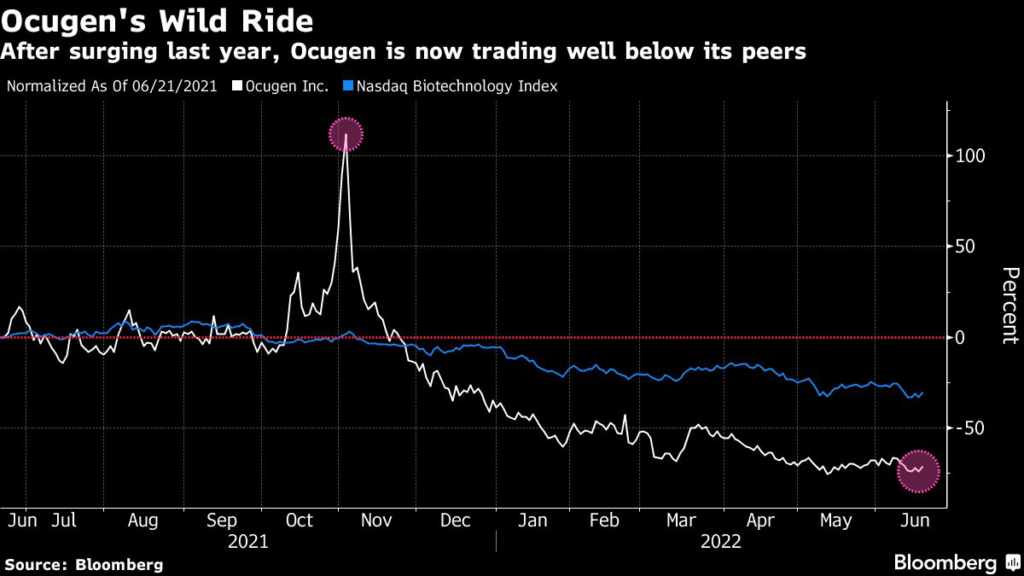
The tweets promoted stock for Ocugen Inc., which is based in Malvern, Pennsylvania, at rates well above market value, according to research by Alethea Group, a startup that tracks disinformation. The company’s share price nearly doubled in a little more than a week.

The findings suggest a coordinated social media effort to sway interest in an otherwise little known medical technology company, according to Lisa Kaplan, Alethea Group’s founder and chief executive officer. 

“Individuals sharing information about companies online is not new, but the use of social media manipulation tactics for financial gain is something we’ve long anticipated and believe will grow,” Kaplan said. “Given the volatility in the public markets, there’s increased incentive for these types of attacks, which ultimately hurts corporations, investors and stockholders.” 

In October, Ocugen asked the US Food and Drug Administration for permission to a clinical trial for a Covid-19 vaccine. The vaccine, known as Covaxin, was developed by India’s Bharat Biotech International Ltd. and doesn’t use the messenger RNA technology that Moderna Inc. and Pfizer Inc. relied on for their vaccines. 

The company formally filed the application on Oct. 27. The shares then surged 88% in the next seven days, closing at $15.67 on Nov. 2, before losing all those gains by Nov. 15, when it closed at $8.32. 

During that period, more than 100 Twitter accounts heavily promoted Ocugen stock, urging followers to invest, claiming that the value of the stock would soon exceed $200 per share, according to screenshots of the tweets, many of which have since been deleted. “$OCGN buy rumor sell news MFS #OCGN #Bullish,” stated one tweet replicated by a handful of Twitter accounts that used stock image photography, according to a Bloomberg News analysis.

Ocugen didn’t respond to messages seeking comment. 

Researchers said the accounts acted like bots and that they published more than 15,000 tweets, sometimes minutes apart. The account names included @SmileAI10 and @moviecriticbot, and they often used the hashtags #OCGN and #Bullish. Alethea researchers analyzed tweets from 105 Twitter accounts during a two-week period last year. In the two months immediately before Ocugen filed for FDA approval, the same accounts sent a total of some 3,400 tweets, according to Alethea’s findings.

Neither @SmileAI10 nor @moviecriticbot responded to messages from Bloomberg News seeking comment. The @moviecriticbot has since been suspended. 

The amount of bot activity on the social media service has became a point of contention in Elon Musk’s effort to buy Twitter Inc., as he threatened to walk away unless the social media company could prove bots made up fewer than 5% of users.

It remains unclear who was operating the Twitter accounts that participated in touting Ocugen stock, and Alethea researchers didn’t definitively determine that the motive was to boost share value.

Username and password credentials of some of the Twitter accounts that promoted Ocugen were available in publicly accessible databases on the code-sharing site GitHub. That the accounts were accessible to anyone with knowledge of the GitHub page suggested to researchers that anyone could have been in control of the suspicious Twitter accounts, as the username and password data was public.

The reach of the network was relatively limited, and it apparently failed to attract the kind of attention that would be desirable for anyone trying to influence public opinion on a large scale, according to an analysis by C. Shawn Eib, a senior analyst at Alethea Group who discovered the activity.

Much of the activity appears to have been coordinated through a Twitter profile known as @RecvProfit, an anonymous user that uses a stock image and tweets frequently about cryptocurrencies, non-fungible tokens and digital marketing techniques, according to Eib. The account’s followers would replicate @RecvProfit tweets within minutes, sending their own messages and promoting @RecvProfit in the form of retweets.

The account could have been the creation of an individual who invested in cheap stock, then used inauthentic social media activity to try to inflate the value of the share price, researchers said. 

The @RecvProfit account didn’t reply to multiple messages seeking comment for this story. The account has since been suspended. 

While the specific motive of the Ocugen tweets remains unclear, the case appears to be another example of how social media is a new tool being used to carry out traditional investment schemes, said Christopher Hetner, former senior cybersecurity adviser to the chair of the US Securities and Exchange Commission who now works as an adviser for the National Association of Corporate Directors.

Last month, the SEC warned investors to beware of “pump-and-dump” efforts in which promoters pump up the stock price of a company by spreading positive but often false rumors. They then dump the shares before the hype ends.

In April, a Florida day trader pleaded guilty to circulating false rumors in financial chat rooms and news services about public companies in order to drive up the price and make more than $130,000 in ill-gotten gains. The SEC in 2019 charged nine defendants in connection with a plot to hack the SEC’s EDGAR database in order to steal nonpublic data that allegedly helped them make more than $4 million in profits. 

“Pump-and-dump schemes aren’t new but social media gives the SEC a whole new element to consider in terms of contending with risk,” Hetner said.

(Updates with graphic)

More stories like this are available on bloomberg.com

©2022 Bloomberg L.P.
Cobalt Gets Cheaper as China’s Buyers Suffer From Battery Slump

(Bloomberg) — Cobalt prices are crashing back to earth as sellers offer increasingly steep concessions to Chinese buyers who have turned cold on the battery metal as demand slumps in electric vehicles and smartphones.

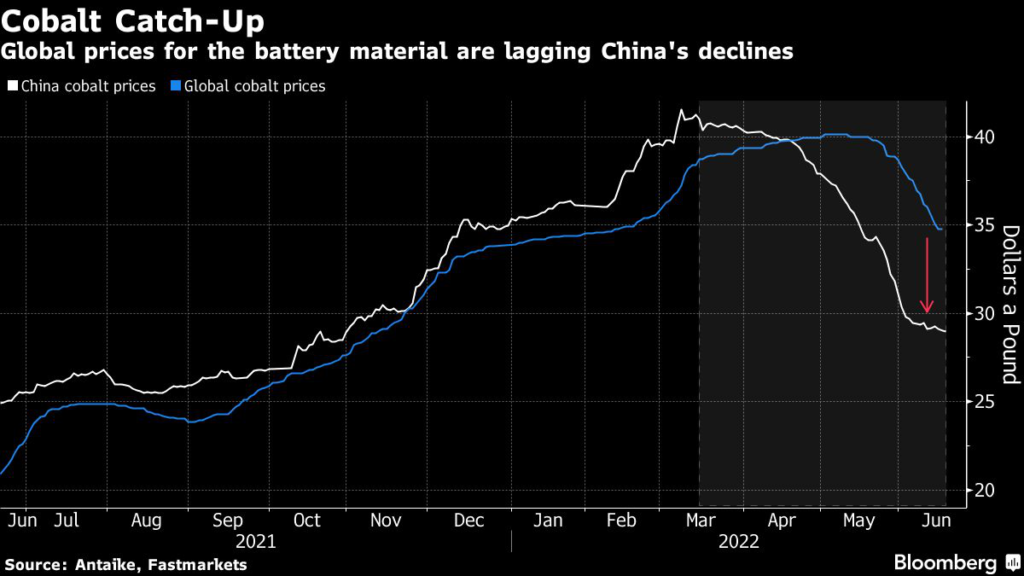
The benchmark price for cobalt in Europe has slid more than 13% since a peak in May, and an even sharper decline in Chinese prices signals the sell-off could have further to run. Buyers in the country are racing to renegotiate supply deals in order to stem heavy losses arising from an unusual disconnect between domestic and international prices, according to cobalt traders and buyers.

It’s a rapid reversal from conditions just a few months ago, when booming demand in China’s electric-vehicle sector sent cobalt rocketing along with other battery metals — notably lithium. China’s wave of strict pandemic curbs have since stifled cobalt’s main markets, with President Xi Jinping’s steadfast pursuit of zero-Covid ravaging manufacturing and consumer activity. The country accounts for about 70% of global cobalt demand. 

“What we’re seeing is buyers and sellers working together to make revisions to the pricing terms,” Ying Lu, analyst at Wood Mackenzie Ltd., said by phone from London. “There is still pressure on refiners, but it has eased compared to a few weeks ago.”

Lockdown-hit Shanghai registered zero car sales in April, reflecting the kind of ructions throughout the EV supply chain that have left China’s cobalt refiners exposed to losses on expensive imported raw materials. Buyers have walked away from similarly onerous supply deals in the past, and this time miners are granting significant concessions on prices to keep cobalt flowing into the all-important Chinese market, according to traders and buyers who asked not to be identified discussing a private matter.

“Suppliers have probably learnt from past experience that playing hardball can eventually backfire,” Andries Gerbens, a cobalt trader at Darton Commodities Ltd., said by phone. “Everyone is looking for long-term relationships and therefore in circumstances like this it’s better to talk things through and come to a compromise.” 

No Deal

There are already tentative signs of a demand recovery. China’s EV sales rose more than expected in May, and top carmaker BYD Co. showed almost no impact from the lockdowns and supply snarls. But electric vehicles still account for less than a third of global cobalt demand, according to trader Darton Commodities. 

“Demand from EV batteries and traditional usage such as in the airplane industry is expected to pick up in the next six months alongside subsidies support for EV while travel restrictions ease,” Susan Zou, senior analyst at Rystad Energy, said by phone from Shanghai. “But demand from consumer electronics remains uncertain.”

The global benchmark cobalt price, published by researcher Fastmarkets, dropped Monday to a mid-point of $34.5 a pound, its lowest since January. The price peaked in May, when cobalt chemicals destined for batteries were already plummeting in value in China. Cobalt sulphate has shed 37% since March.

Price Debate

Beyond strained negotiations between miners and refiners, dismay over the yawning gap between domestic and international markets could have lasting impacts on the way that cobalt is priced.

Chinese buyers are increasingly wary of a global price that’s based on refined cobalt metal, which represents an increasingly small sliver of global production. The major growing market is battery chemicals, with very different consumers and distinct dynamics. 

The recent stand-off is effectively an effort by China’s buyers to re-align the European price with conditions in their battery market. That “correction” will continue in the short term, especially since markets are typically quieter over summer months, Wood Mackenzie’s Ying Lu said.

More stories like this are available on bloomberg.com

©2022 Bloomberg L.P.
Qatar Wealth Fund Has No Interest in Crypto, Exploring Blockchain

(Bloomberg) — Qatar’s wealth fund isn’t interested in investing in cryptocurrencies, though it believes in the underlying blockchain technology, according to Chief Executive Officer Mansoor Al Mahmoud.

“Our team in the technology space are exploring opportunities in the blockchain,” the Qatar Investment Authority’s Al-Mahmoud said in an interview at the Qatar Economic Forum in Doha on Tuesday. “This is the space that we’re interested in, not the currency itself.”

Bitcoin, the most popular cryptocurrency, plunged below $20,000 last week as several platforms froze withdrawals. It peaked at around $69,000 last November.

The Qatari fund won’t invest more in Russia, though it still has some holdings in the country, Al-Mahmoud said. It’s also seeking partners to invest in African infrastructure, and continues to be optimistic about Europe in the long-term, he added.

More stories like this are available on bloomberg.com

©2022 Bloomberg L.P.
Elon Musk Sounds Off on Recession Risk, Twitter Deal and Trump

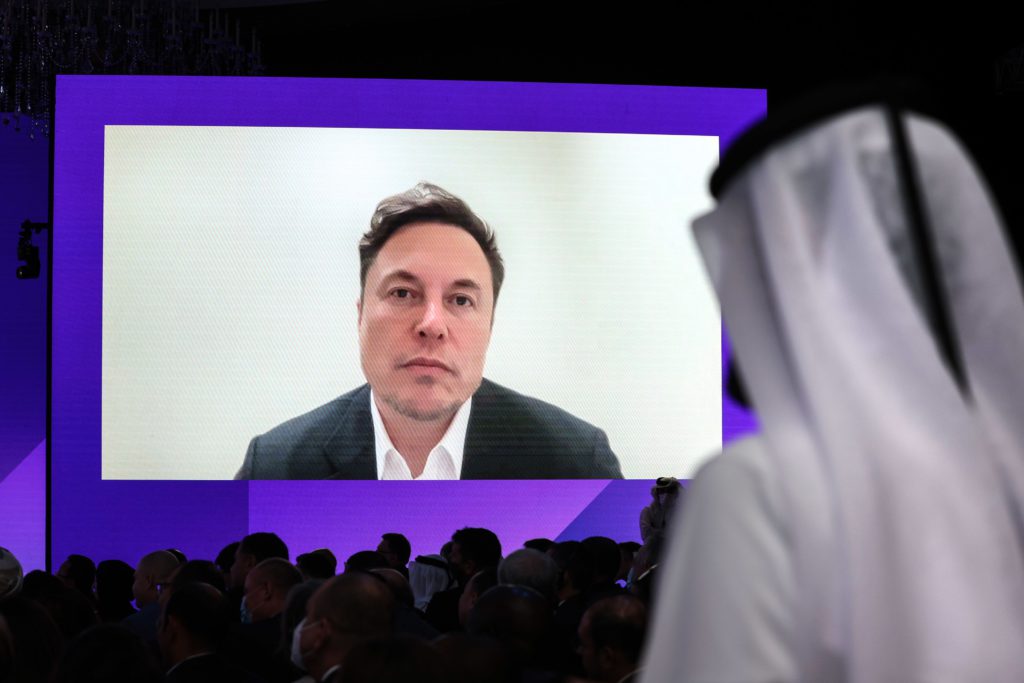
(Bloomberg) — Elon Musk, the billionaire visionary and oftentimes erratic entrepreneur, struck a sober tone Tuesday as he forecast a probable recession in the US and left doubts about his commitment to a $44 billion takeover of Twitter Inc.

In an interview with Bloomberg News Editor-in-Chief John Micklethwait at the Qatar Economic Forum in Doha, the Tesla Inc. chief executive officer said the electric-car maker’s workforce needs to be trimmed as supply-chain snarls crimp growth. He was also unguarded in his view that the US economy is headed toward contraction. It’s just a question of when.

“A recession is inevitable at some point,” said Musk, who joined the Middle East forum via video linkup from the US in the middle of his night. “As to whether there is a recession in the near term, that is more likely than not.”

Musk, who’s also the CEO of rocket-launch company SpaceX, was far from the jocular and sometimes edgy showman who’s a star on Twitter, with almost 100 million followers. Appearing in front of some of the Qatari backers of his planned acquisition of the social media platform, the billionaire was businesslike, measured and respectful. At 3 a.m. New York time, Musk was dressed in a dark suit jacket and a collared white shirt.

  • Do you own an electric car? US residents, Bloomberg Green wants to learn more about your experience with EVs. Take our brief survey.

His downbeat domestic economic outlook follows similar projections from Nouriel Roubini and Goldman Sachs Group Inc. Musk is also now at odds with President Joe Biden, who reiterated Monday that he thinks a US recession isn’t inevitable.

Twitter Deal

If Musk was unambiguous about his economic views, he left his devotion to one of the year’s most contentious deals — his April agreement to buy Twitter — in doubt.

The world’s richest man said there are “a few unresolved matters” and he’s still waiting for a resolution on how many bots — automated accounts rather than humans — there are on the social media platform. The transaction can’t be completed before that issue is cleared up and shareholders approve the deal, Musk said.

“There’s a limit to what I can say publicly,” he said. “It is somewhat of a sensitive matter.”

Read More on Elon Musk’s Interview: 

  • Elon Musk Says Tesla Job Cuts Will Reduce Workforce by 3.5%
  • Musk Says Bots Are a Problem for Twitter Deal, Not China
  • Musk, Roubini and Goldman Warn of Rising US Recession Risk
  • Musk Says He Supports Dogecoin as People Encouraged Him To
  • Musk ‘Undecided’ on Whether He Will Back Trump in 2024 Election
  • Elon Musk’s Interview in Full: On Twitter, Recession and Trump

Musk’s reluctance, or inability, to fully endorse the deal won’t dispel speculation that he’s using the bot issue to potentially blow up the transaction. Musk has said he wanted to put the takeover “on hold” while he investigated how many of Twitter’s users are real people. He has filed a formal letter with the Securities and Exchange Commission in which he told Twitter executives he might walk away from the deal if the company didn’t do more to prove the size of its user base. 

With the US economy poised to go into reverse, Musk acknowledged it’s time to slow Tesla’s expansion in some areas. He provided clarity on the Austin, Texas-based electric-car company’s job cuts, confirming the salaried workforce will be reduced by about 10% over the next three months, resulting in an overall reduction of around 3.5% in total headcount. Hourly staff numbers are still expected to grow, Musk said.

“We grew very fast on the salaried side and we grew a little too fast in some areas,” he said in the interview.

Musk, who has an estimated personal fortune of $206 billion, wasn’t all gloom and doom.

He laid out a far-reaching ambition to sign up half the world’s population to Twitter if his acquisition goes through. That’s even greater than his vision to get to 1 billion users, which he outlined to Twitter staff last week. The platform currently has about 229 million users.

Musk told the forum he would focus on “driving the product” at Twitter though he doesn’t necessarily plan to be the CEO if he buys the company.

The billionaire has emerged as a potential political force, and said last week he voted Republican for the first time in the primary election in Texas. Musk has also indicated that he’s leaning toward Florida Governor Ron DeSantis, who has positioned himself as a staunch conservative and heir apparent to former US president Donald Trump.

Political Views

Still, in the interview in Doha, Musk refused to be drawn on his political allegiances ahead of the presidential election. 

“I’m undecided at this point,” he said, when specifically asked whether he’d back Trump. Musk did say, though, that he’s willing to put a “non-trivial” amount of as much as $25 million in a super PAC.

Asked where he sees the most vibrant competition in electric vehicles, Musk said he was “very impressed with the car companies in China and just in general, with companies in China.”

“They’re extremely competitive, hardworking, and smart,” he said, adding that consumers can probably expect to see even more China-made products flowing from the world’s manufacturing powerhouse than there are now.

The audience also got a glimpse of Musk the futurist. A Tesla team is working to have a prototype humanoid robot ready by the end of September, he said. 

Dogecoin, Bitcoin

Asked about cryptocurrencies, Musk rebuffed a suggestion that he himself had said people should invest. But he pledged to support Dogecoin, the cryptocurrency created as a joke in 2013, because some of his employees have asked him to.

SpaceX and Tesla, for example, did buy some Bitcoin, “but it’s a small percentage of our total cash and near-cash assets,” Musk said. “I also bought some Dogecoin and Tesla accepts Dogecoin for some merchandise, and SpaceX will do the same.”

“And I intend to personally support Dogecoin because I just know a lot of people who are not that wealthy who, you know, have encouraged me to buy and support Dogecoin.”

Qatar’s Ministry of Commerce and Industry, Qatar Investment Authority and Investment Promotion Agency Qatar are the underwriters of the Qatar Economic Forum, Powered by Bloomberg. Media City Qatar is the host organization.


More stories like this are available on bloomberg.com

©2022 Bloomberg L.P.
Close Bitnami banner
Bitnami