
Bloomberg

Recession Warnings Multiply; Exxon Signs Gas Deal: Qatar Update

(Bloomberg) — Delegates at the second annual Qatar Economic Forum, from Tesla Chief Executive Officer Elon Musk and Nouriel Roubini to Atlas Merchant Capital’s Bob Diamond and StanChart’s Bill Winters, warned the United States was heading toward a recession. 

“A recession is inevitable at some point, as to whether there is a recession in the near term, that is more likely than not,” Musk told Bloomberg News Editor-in-Chief John Micklethwait. Diamond also said a downturn is almost unavoidable, and Roubini, nicknamed “Dr. Doom” for his bearish views, forecast a recession by the end of the year. 

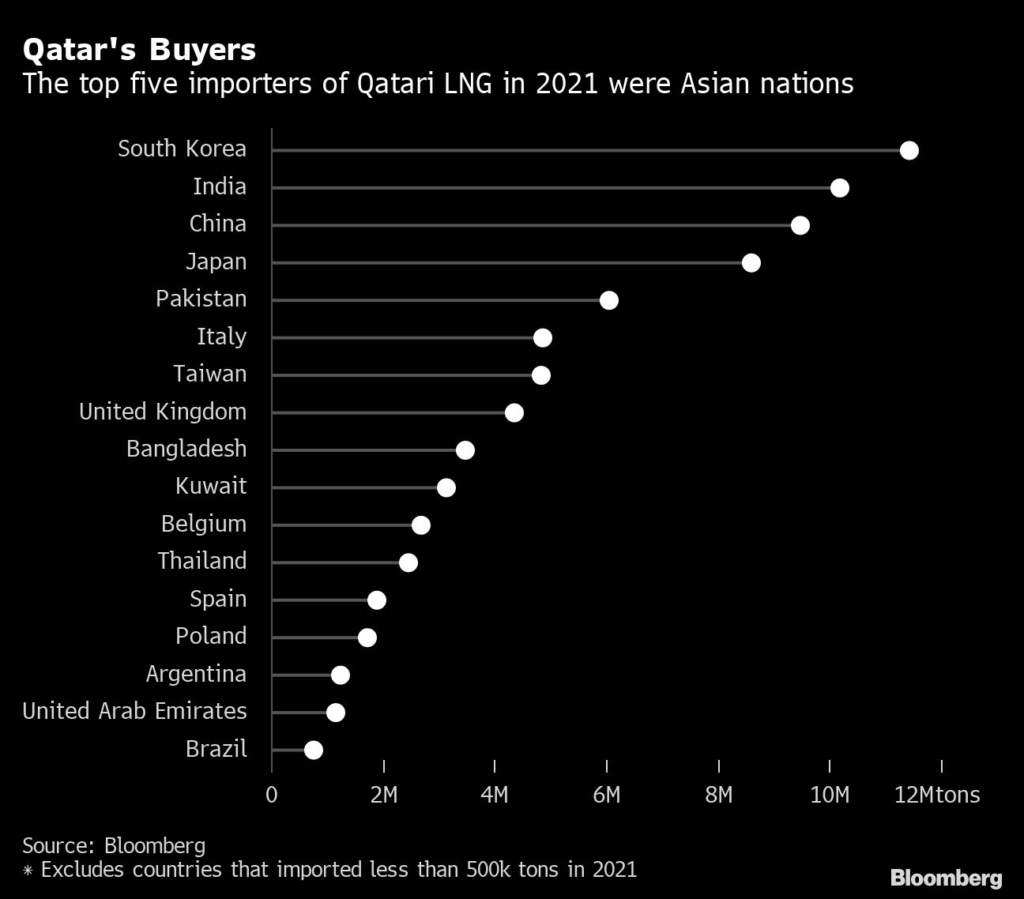
Exxon Mobil Corp. said it is investing in Qatar’s $29 billion North Field East project to boost Doha’s gas exports, joining other western energy firms. The Gulf state, among the world’s biggest LNG exporters, is one of few nations that can substantially replace Russian gas supplies to Europe — but the project will start operating only in early 2026.

Qatari Energy Minister Saad Al-Kaabi blamed underinvestment for high gas prices and called for higher spending, and Exxon’s CEO said global oil markets may remain tight for another three to five years.

NOTE: Qatar’s Ministry of Commerce and Industry, Qatar Investment Authority and Investment Promotion Agency Qatar are the underwriters of the Qatar Economic Forum, Powered by Bloomberg. Media City Qatar is the host organization. 

Key Highlights:

  • Five Takeaways From What Elon Musk Said at Qatar Economic Forum
  • Musk, Roubini and Goldman Warn of Rising US Recession Risk
  • Musk Says Supply Constraints Biggest Brake on Tesla’s Growth
  • Exxon CEO Warns Oil Markets May Be ‘Tight’ for Up to Five Years
  • Kuwait State Oil Firm Says There’s $30 War Premium on Oil Prices

StanChart’s Winters Adds to Recession Warnings (1 p.m. Doha)

“You’ve got to think that the odds are that there’s going to be a recession,” Bill Winters said. “I think this inflation is quite bad, it’s intransigent, it’s not transitory, and the consequences will be recession.” 

Any recession is likely to last “a couple of quarters,” he added. “There’s a silver lining, which is that the financial system is strong, and when you have a downturn in an economic cycle with a strong financial system it tends not to be amplified — a weak financial system it gets amplified, you get a financial crisis.”

“I think it’s very unlikely we’ll have a financial crisis,” Winters said.

Exxon Invests in Qatar (12:50 p.m. Doha)

Exxon Mobil joined others, including ConocoPhillips, TotalEnergies SE of France and Italy’s Eni SpA, to invest in a project to boost Qatar’s gas exports. 

The U.S. firm will take a 6.25% stake in the North Field East project, which is expected to start operating in early 2026. The expansion will increase Qatar’s LNG capacity to 110 million tons annually from 77 million, just as demand surges across the world. 

Vitol Sees High Energy Prices Persisting (12:40 p.m. Doha)

Vitol Group CEO Russell Hardy said that global consumption of gasoline and jet fuel were still below 2019 levels and that the market could expect to see high prices for energy remain until demand for energy drops.

“There’s still two to three million barrels a day of demand to come back next year,” Hardy, whose company is the world’s biggest independent trader of oil and oil products, said. Prices for oil and oil products were likely to remain elevated so long as there was more consumption to come from the market, although fuel remaining so expensive risks demand destruction.

“The one thing that everybody’s concerned about is that runaway prices risk recessions,” he said.

Thiam Says Central Banks Need to Shock Markets (11:30 a.m. Doha)

Tidjane Thiam, the former CEO of Credit Suisse Group AG, said central banks will need to continue to shock markets to fight inflation. Asset prices have not yet reached a bottom given existing levels of inflation, the continuing impact from Covid-19, and geopolitical worries about China, he said.

While the market slump is negative for special purpose acquisition vehicles like his Freedom Acquisition I, the dislocation creates opportunities to invest, he said. Thiam said his vehicle looked at 75 companies before announcing Monday that it signed a letter of intent for a combination with Human Longevity, a company focusing on life sciences.

Read More: Thiam Says He Turned Down Offers After Credit Suisse for SPAC

Delegates Warn of Rising US Recession Risk (10:50 a.m. Doha)

“A recession is inevitable at some point. As to whether there is a recession in the near term, that is more likely than not,” Musk said in an interview with Bloomberg News Editor-in-Chief John Micklethwait at the Qatar Economic Forum in Doha. 

Bob Diamond also said a US recession is “almost unavoidable.” A cooling of the economy is part of the economic cycle and central banks should continue to act to stem inflation, he said. The Fed’s rate hike was the “correct move” and another 75 basis point increase in July is “probably appropriate,” the Atlas Merchant Capital founding partner said. “The more the Fed acts now, the more likely it is to be quick or short, not deep and longer.”

Earlier, Roubini forecast a US recession by the end of the year. “We’re getting very close,” as measures of consumer confidence, retail sales, manufacturing activity and housing are all slowing down sharply while inflation is high, he said on Bloomberg TV. He sees further downside for both stocks and bonds in this environment.

The comments come after Goldman Sachs economists cut their US growth forecasts and warned that the risk of recession is rising. The outlooks will stoke fears of a hard landing for the world’s biggest economy as the Fed jacks up interest rates to counter the fastest pace of inflation in decades. 

Musk Says He can Balance China, Tesla, Twitter (10:10 a.m. Doha) 

Musk said he doesn’t think there’ll be any issue balancing his Tesla interests in China with the future acquisition of Twitter Inc. The platform doesn’t operate in China and “China does not attempt to interfere with the free speech of the press in the US, as far as I’m aware,” he said in an interview.

Musk said there are still a few “unresolved matters” about Twitter, and is still waiting for a resolution on the matter of how many bots are on the social media platform. “There is the question of, will the debt portion of the round come together and then will the shareholders vote in favor,” he said.

The billionaire also said supply constraints are the biggest brake on Tesla’s growth, rather than competition from rival automakers. Jobs cuts at the electric-car maker will lead to a 3.5% reduction in headcount, he said. 

EU Was ‘Unfair’ to Georgia, Premier Says (9:40 a.m. Doha)

Georgia considers it “unfair” for the European Union not to grant candidacy status to the country after recommending it to Ukraine and Moldova, Prime Minister Irakli Garibashvili said in an interview at the Qatar Economic Forum with Bloomberg Editor-in-Chief John Micklethwait. 

The Caucasus nation “would be the first country to be granted the status” on the merits of complying with the EU’s requirements, and the bloc gave it to Ukraine and Moldova because of the situation created by Russia’s war, he said.

While Georgia supports Ukraine politically, it’s in a “very vulnerable” position and can’t impose national sanctions on Russia over the invasion, though it won’t let Russian companies use Georgian territory to bypass sanctions, Garibashvili said.

Georgia remains determined to join the North Atlantic Treaty Organization, but understands it must first resolve its territorial problems with 20% of Georgian territory under Russian occupation since a 2008 war, the premier said.

Namibia GDP May Double by 2040 on Oil Finds (8 a.m. Doha)

Namibia and its partners are “all aligned” on bringing country’s first two oil discoveries to production as soon as possible, Jennifer Comalie, chairperson of National Petroleum Corp. of Namibia, said in a Bloomberg TV interview Tuesday on the sidelines of the QEF.

TotalEnergies SE said in February it had made a “significant” oil discovery, weeks after Shell announced a find in the southwest African nation. “At peak, these two discoveries could bring $5.6 billion to a very small economy, doubling the GDP by 2040,” Comalie said, without giving details on when fields could start production or how much oil will be pumped.

ConocoPhillips Invests in Qatar Gas (June 20)

ConocoPhillips CEO Ryan Lance said volatility in global gas markets may last years, as the Houston-based firm joined other Western energy companies investing in Qatar’s North Field East project, which is expected to start operating in early 2026. 

TotalEnergies SE of France and Italy’s Eni SpA have also bought stakes, while Shell Plc and Exxon Mobil Corp. are among the others making bids. The expansion will increase Qatar’s LNG capacity to 110 million tons annually from 77 million, just as demand surges across the world. 

European buyers have rushed to secure non-Russian supplies since Moscow’s invasion of Ukraine. Gazprom PJSC last week reduced pipeline gas flows, underscoring the continent’s vulnerability and raising the specter of fuel rationing. Prices in Europe surged 43% last week.

Once the extra gas is flowing, Qatar expects to send more shipments to Europe. Around 80% of Qatari LNG currently heads to Asia, but the proportion being shipped to Europe will rise to 40%-50%, according to QatarEnergy CEO Al-Kaabi.

More stories like this are available on bloomberg.com

©2022 Bloomberg L.P.
Rothschild Hires Buchbinder, Mastan for Tech Investment Banking

(Bloomberg) — Rothschild & Co. has added two technology bankers to its global advisory business in North America as it looks to expand coverage on the US East Coast. 

Michael Buchbinder joins from Oppenheimer & Co. and will cover education-technology companies, according to a statement reviewed by Bloomberg. Patrick Mastan, previously at KeyBanc Capital Markets Inc., will focus on software M&A, the statement shows. Both will be managing directors reporting to David Baron, Rothschild’s North America head of technology investment banking.

The hires represent “another significant step as we continue to strengthen our client coverage, global platform and roster of leading advisers in our technology team, expanding our team to include senior advisers in two major markets on the East Coast,” Baron said in the statement. 

Buchbinder will be based in New York while Mastan, who served in the US Air Force, will be based in Boston.

Rothschild’s tech team has advised on deals including blank-check firm CC Neuberger Principal Holdings II’s merger with Getty Images as well as Clearlake Capital’s buyout of Cornerstone OnDemand.

More stories like this are available on bloomberg.com

©2022 Bloomberg L.P.
China Junk Bond Selloff in New Phase With Record Fosun Rout

(Bloomberg) — The ongoing bond plunge for resort chain Club Med’s Chinese owner shows that financial stress among the country’s property developers is shifting to other weaker borrowers.

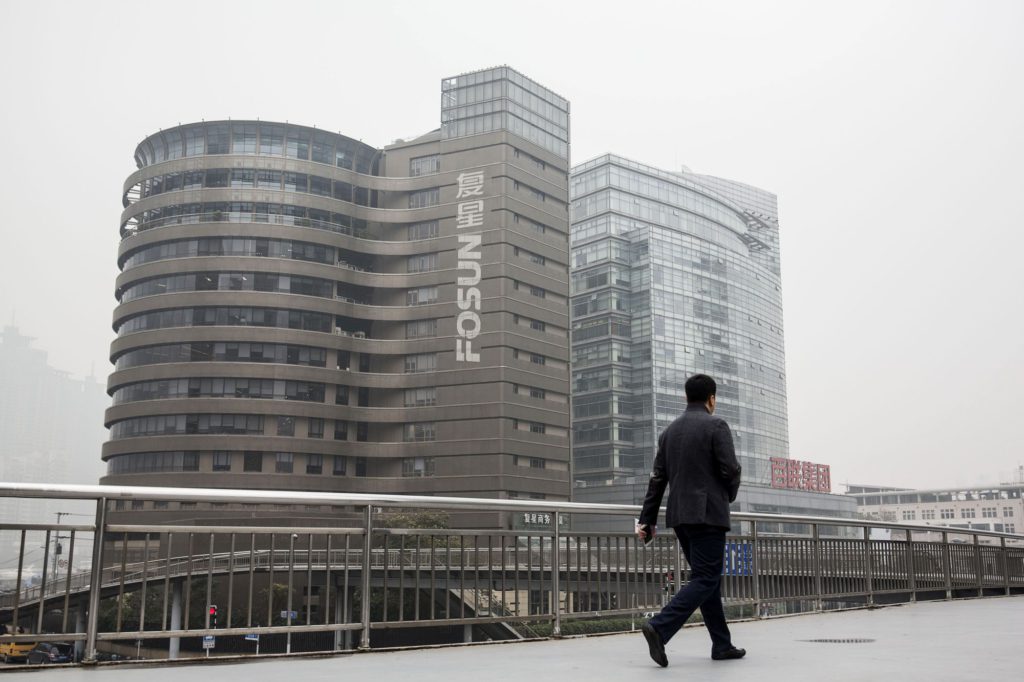
In a sign of contagion, prices slid Tuesday for some Chinese industrial firms’ offshore debt after a Monday selloff in Macau’s casino operators. Meanwhile, last week’s slump for conglomerate Fosun International Ltd.’s dollar bonds accelerated, with some on track for record declines. 

Fosun didn’t immediately respond to an emailed request for comment. 

The declines in Fosun’s offshore debt started last week after Moody’s Investors Service put the firm on review for a downgrade and highlighted contagion risk from China’s ongoing property-sector woes. Developers have been at the center of a record pace of corporate-debt defaults, which have occurred with junk-rated firms largely unable to refinance debt through selling new bonds as yields have been above 20%.

How China’s Property Developers Got Into Such a Mess: QuickTake

The steep losses in Fosun’s bonds spreading to non-property high-yield companies are pushing China’s junk dollar debt market into a new phase. The pressure on Fosun also is a reminder of the heavy economic toll that a two-month Covid lockdown took on businesses with heavy exposure to the Shanghai region.

The selling in Fosun’s offshore bonds “is a reflection of broader wariness of potential downside in this current market environment, with many risks remaining unresolved in China and globally,” said Henry Loh, investment manager at abrdn Asia. “I’d imagine that the aggressive downward spiral experienced in Chinese real estate remains very fresh in investors’ minds so that will likely be a factor in many investors’ reaction.”

Moody’s said in last week’s announcement that Fosun’s tight cash flow drove its decision to put the firm on downgrade review. Liquidity is “very weak at the holding company level” and insufficient to cover debt maturing over the next 12 months, according to Moody’s analysts including Lina Choi. Fosun, co-founded by tycoon Guo Guangchang, has operations from pharmaceuticals to tourism and insurance.

The credit assessor also cited contagion risks from China’s real estate sector on Fosun’s property exposure, saying it expects the firm to face challenges in accessing the bond market “amid onshore and offshore investors’ increasing risk aversion toward high-yield privately-owned companies with exposures to the property sector.”

(Updates details in the first four paragraphs.)

More stories like this are available on bloomberg.com

©2022 Bloomberg L.P.

Google Avoids More Fines After Settling French News Dispute

(Bloomberg) — Google brought an end to a dispute with publishers and avoided further fines after winning regulatory approval for pledges that pave the way for payments for displaying snippets of their news articles on its platforms.

The French competition authority said Google significantly improved commitments it initially offered last year, which now address its concerns and have been made binding, ending the case. The Alphabet Inc. unit made promises last year in the wake of a 500 million euro ($527 million) fine for failing to follow an earlier order to thrash out fair deals with publishers. The company also agreed to withdraw its challenge against the penalty.

Benoit Coeure, who heads the Autorite de la concurrence, told reporters at a Paris press conference Tuesday that this proves antitrust officials can wield “the carrot and the stick.”

“For the first time in Europe, Google’s commitments provide a dynamic framework for negotiating and sharing information to transparently assess” how much publishers are owed, Coeure added. He also highlighted that in case negotiations stumble, the matter would be brought in front of an arbitration court at Google’s cost. 

Google struck successive deals in recent months with news service Agence France-Presse, a grouping of French newspapers including Le Monde and Le Figaro and a separate group representing magazine publishers. They filed complaints in France in 2019 following the entry into force of fresh copyright laws at European Union level saying they weren’t paid a fair price for using news content on its platform. 

Google said in a blog post Tuesday that it already has agreements with more than 150 publications to cover content that goes beyond links and short extracts and which it labels as extended news previews. Google added that, outside of France, it has secured deals with more than 650 publications so far across the EU.

France’s competition arm has kept a close eye on Silicon Valley firm in recent years. In addition to the news case, Google last year agreed to pay a 220 million-euro penalty to settle a probe into its power over online advertising and it got a 150 million-euro fine in 2019 in a case focusing on its Google Ads platform. The regulator’s record 1.1 billion-euro fine was issued in 2020 against Apple Inc. over anti-competitive agreements with two distributors.

(Add comment from Google in sixth paragraph)

More stories like this are available on bloomberg.com

©2022 Bloomberg L.P.
Shift in Bitcoin Flows Stirs Hope for the Battered Crypto Market

(Bloomberg) — One notable source of selling pressure on Bitcoin is ebbing, buttressing arguments that the token is due at least a temporary reprieve.

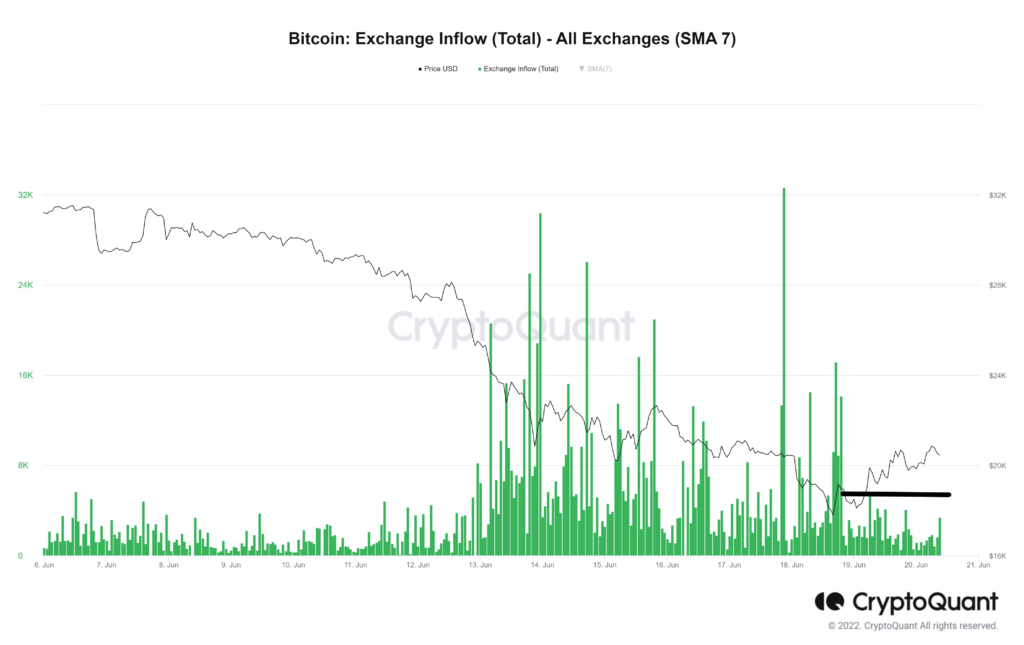
Fewer Bitcoins are being moved to exchanges from so-called cold wallets — offline stores of the digital asset — for potential sale, according to data from analytics firm CryptoQuant.

The seven-day average of such flows dropped to 92,470 tokens Tuesday from a weekend peak of 137,326. The latter was one of a string of elevated readings for much of last week that accompanied a slump in Bitcoin to $17,600 on Saturday, the lowest since November 2020.

When the exchange inflow metric was spiking, the “selling pressure” on the world’s largest cryptocurrency was as intense as in May — the month that saw the unraveling of the TerraUSD stablecoin, said Burak Tamac, senior researcher at CryptoQuant. 

“If another wave of capitulation occurs, we probably see this metric spike up again,” Tamac said in an interview.

Cryptocurrencies are stabilizing following last week’s rout, part of a nascent improvement in investor sentiment in global markets. Bitcoin climbed as much as 4.9% on Tuesday and was trading at $21,366 as of 10:09 a.m. in London. Tokens ranging from Ether to Solana and Polygon also rallied. Dogecoin gained after Elon Musk reiterated his support for the coin, which was created as a joke in 2013. 

Just how long this bout of calm can last is anyone’s guess. A global wave of monetary tightening is sucking liquidity from financial markets, leaving them vulnerable to setbacks. Bitcoin is down 54% this year, global stocks have shed almost 22% and world bonds are nursing losses of nearly 15%.

Katie Stockton, founder and managing partner of Fairlead Strategies, an independent research firm focused on technical analysis, flagged the $18,300 to $19,500 range that Bitcoin loitered in over Saturday and Sunday.

“It’s a very natural place to see some stabilization, a kind of relief rally,” Stockton said in an interview on Bloomberg Television. “We do think that relief rally would be muted, however, just given the downside momentum really across the board.”

More stories like this are available on bloomberg.com

©2022 Bloomberg L.P.
Musk Says He Supports Dogecoin as People Encouraged Him To

(Bloomberg) — It’s official, yet again: Elon Musk supports Dogecoin.

Musk, the chief executive officer of Tesla Inc. and SpaceX, reiterated his support of Dogecoin, a cryptocurrency created as a joke in 2013, on Tuesday. He noted that Tesla accepts Dogecoin as payment for merchandise and reiterated that SpaceX will do the same soon.

“I just know a lot of people who are not that wealthy who, you know, have encouraged me to buy and support Dogecoin,” Musk said in an interview with Bloomberg News Editor-in-Chief John Micklethwait at the Qatar Economic Forum in Doha. “I’m responding to those people.”

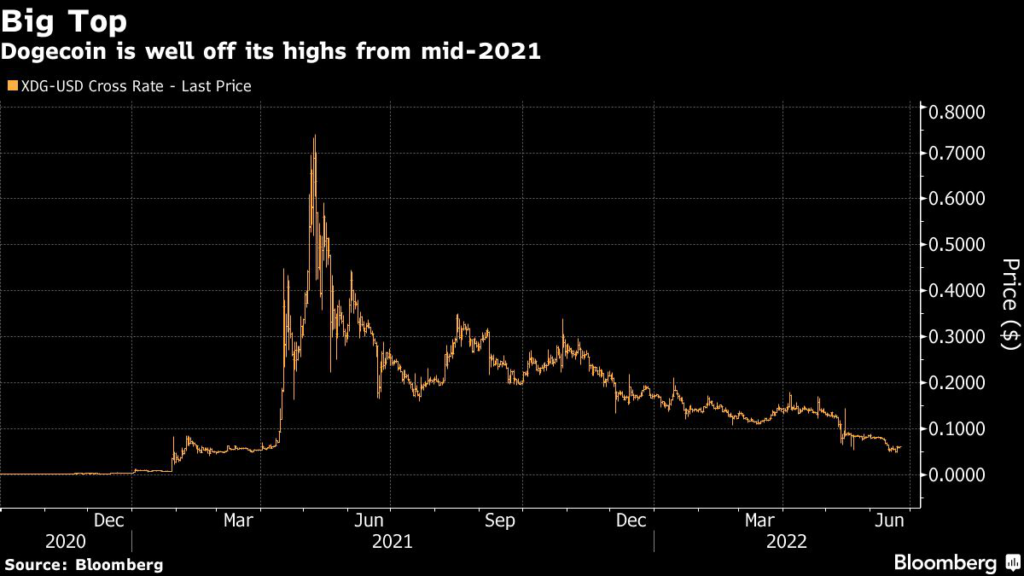
Dogecoin jumped as much as 7.9% after Musk’s comments, rallying along with other altcoins like Polygon and Solana. The token is still down 63% this year, dragged down by the cryptocurrency rout that saw Bitcoin plunge below $20,000 last week. 

Dogecoin tends to react to anything Musk says about it. The coin jumped about 9% in the span of a couple hours on Sunday after Musk tweeted that he would keep supporting it, and that he was continuing to buy it.

Musk has been vocal about crypto in recent years, sometimes even moving markets. He helped boost Bitcoin in early 2021 as Tesla bought some tokens for its corporate treasury — before then saying the price seemed “high” and expressing concern about the energy usage in Bitcoin mining, both of which caused declines. 

In March, Musk reiterated that he owns Bitcoin, Ether and Dogecoin and said he won’t sell them. 

He’s been in particular a proponent of Dogecoin, posting on Twitter about everything from mining the meme token with his kids to having SpaceX put a “literal Dogecoin on the literal moon.” Dogecoin hit its record in May 2021 in the leadup to Musk’s appearance on “Saturday Night Live” when he was widely expected to mention it on the show, then tumbled when he called it a “hustle.”

Read more: Musk Signals ‘Maybe More Down the Road’ for Dogecoin After Merch

Qatar’s Ministry of Commerce and Industry, Qatar Investment Authority and Investment Promotion Agency Qatar are the underwriters of the Qatar Economic Forum, Powered by Bloomberg. Media City Qatar is the host organization.

(Updates Dogecoin’s price advance in fourth paragraph.)

More stories like this are available on bloomberg.com

©2022 Bloomberg L.P.
Malaysia’s Carsome Is Said to Delay Singapore, US Dual Listing

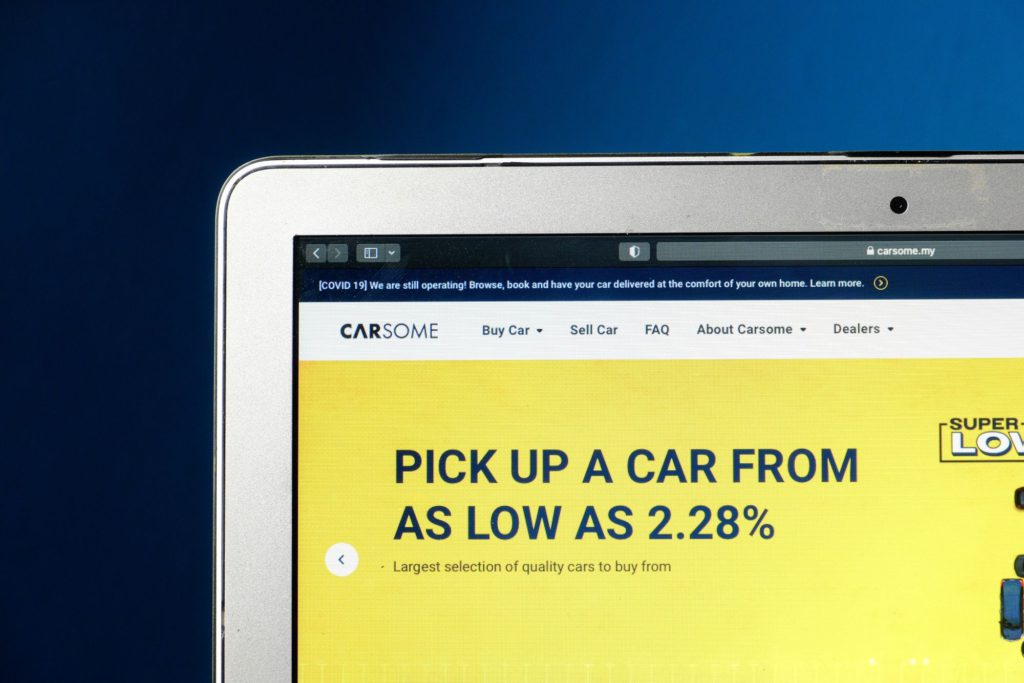
(Bloomberg) — Carsome Group, which operates a Southeast Asian used-car online marketplace, is delaying its dual listing plans in Singapore and the US on concerns that deteriorating macroeconomic conditions could dent its valuation, according to people with knowledge of the matter.

Malaysia’s most valuable technology startup has halted work on the planned offerings that were set for this year, the people said. Carsome may revive the first-time share sales next year if markets improve, said the people, who asked not to be identified as the process is private.

A representative for Carsome declined to comment.

Higher interest rates combined with slowing economic growth and geopolitical tensions have hurt market sentiment and weighed on first-time share sales. Since the start of the year, companies have raised about $101 billion through IPOs globally this year, down from $338 billion in the same period in 2021, according to data compiled by Bloomberg.  

Carsome raised $290 million in January at a valuation of $1.7 billion in a series E round led by the Qatar Investment Authority as well as 65 Equity Partners and Seatown Private Capital Master Fund, both of which are backed by Temasek Holdings Pte.

Founded in 2015, Carsome has expanded into Indonesia, Thailand and Singapore. The company works with more than 8,000 dealers and handles more than 100,000 transactions on an annualized basis, according to its website. It completed the acquisition of Australia-listed iCar Asia Ltd. for about A$191 million ($133 million) this year.

More stories like this are available on bloomberg.com

©2022 Bloomberg L.P.
Africa’s Rich Set to Get Wealthier From Technology Boost

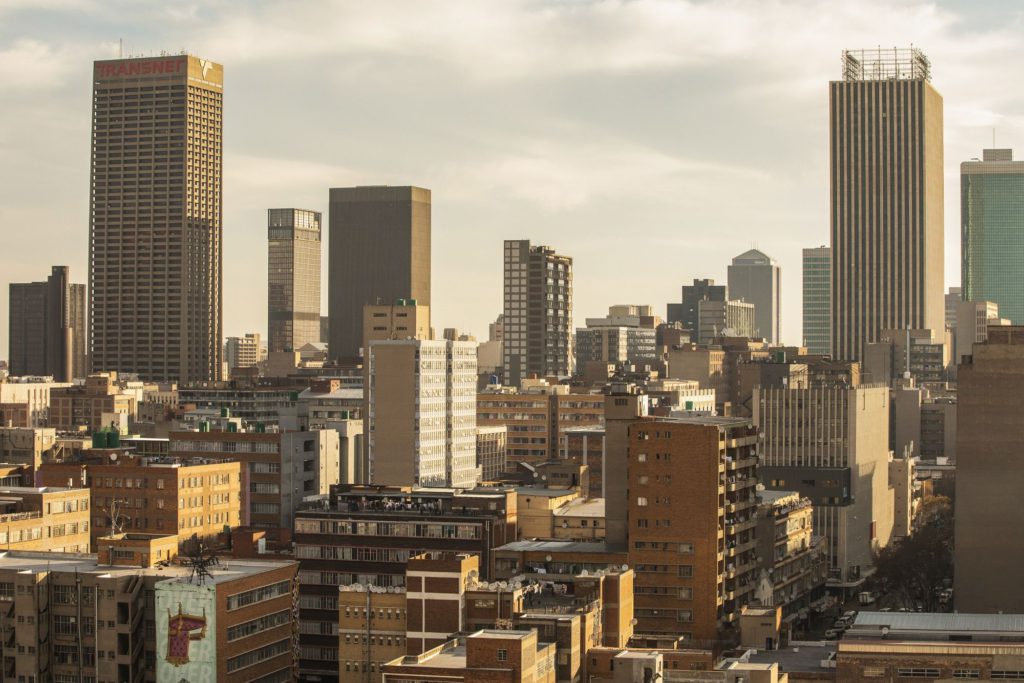
(Bloomberg) — Increased use of technology to improve the efficiency of mature African businesses is expected to boost the number of high net worth individuals, as the second generation of family owned businesses takes over management from founders. 

The first generation emerged following the oil boom and liberalization of economies, with most investing in heavy industries, trading and commercial farming, according to Faizal Bhana, the director for the Middle East, Africa and India at state-funded Jersey Finance. 

They became entrepreneurs in their twenties or in teenage years and are now in their sixties and seventies, compared with their successors who are at least in their thirties, Bhana said in an interview. 

“There’ll be a boom of ultra high net worth individuals in Africa over the next five to 10 years,” he said. “They’re still farming, they’re still doing infrastructure projects, but increasingly using technology.” 

The wealth transfer is to a generation of global citizens that are more educated and tech savvy, while the founders are keen to retain some level of control, Bhana said. There’s also a new generation of tech and fintech entrepreneurs, especially in Nigeria, Kenya and South Africa, he said. 

“The impact that technology is having on the African continent is unprecedented. And as a result of that, what I would expect is that there will be a lot more entrepreneurs,” Bhana said.

In the early days of the coronavirus pandemic, the founders were hardest hit due to advanced age, which resulted in increased focus on succession planning and governance structures to ensure business continuity and wealth preservation, he said. 

Private wealth in Africa is estimated at $2.1 trillion and is expected to increase 38% in the next decade, according to the Africa Wealth Report 2022 published in April. Half of the wealth is in five nations: South Africa, Egypt, Nigeria, Morocco, and Kenya. Africa currently has 136,000 high net worth individuals, or people worth $1 million and more, it said. 

More stories like this are available on bloomberg.com

©2022 Bloomberg L.P.
Tencent Slashes Wager on Stock That Soared 684% in Edtech Frenzy

(Bloomberg) — Tencent Holdings Ltd. slashed its stake in a Chinese education technology firm that staged an eye-watering rally in the past two weeks, as investors debate whether the sector’s surge is sustainable. 

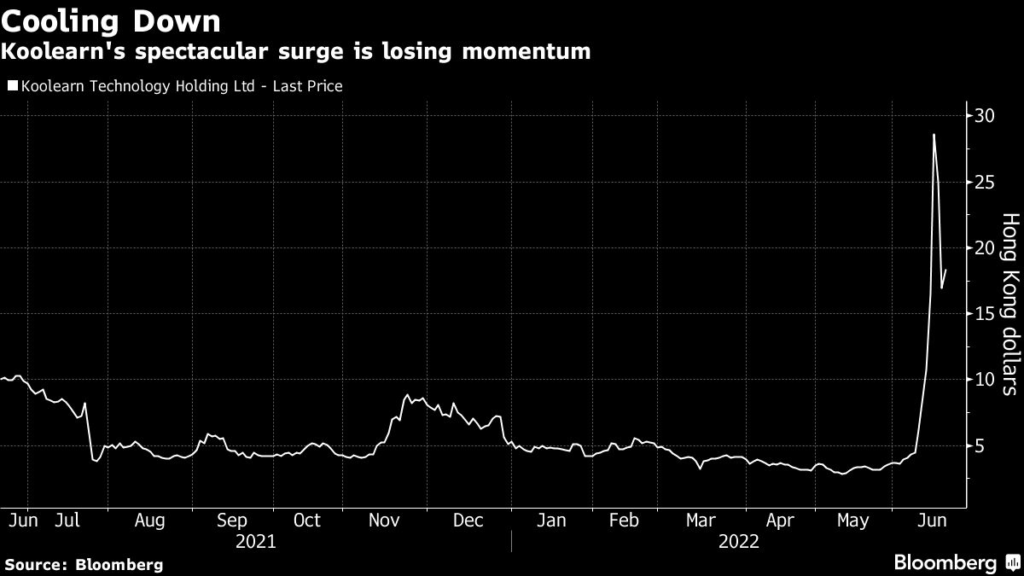
The mobile gaming giant reduced its holdings in Koolearn Technology Holding Ltd. to 1.6% from 9%, according to a Hong Kong Exchange filing late Monday. Koolearn surged 684% in just nine trading sessions through June 16, as its foray into livestreaming e-commerce created social media buzz and market excitement after the sector was knocked down in Beijing’s sweeping tech crackdown last year. 

The stock whipsawed on Tuesday to close 3.1% higher, having lost 41% in the previous two sessions.   

“This is a very negative signal for those who speculate on such theme, especially as Tencent has sold such a major portion,” said Steven Leung, executive director at Uob Kay Hian (Hong Kong) Ltd. It is “too early” to call Koolearn’s transition to livestreaming business a viable option for other education names, he added. 

Tencent said it sold Koolearn’s shares on June 15 and 16 at an average price of HK$9.62 and HK$9.68, respectively. The stock closed at HK$17.5 on Tuesday. 

Koolearn and its parent New Oriental Education & Technology Group led a surge in edutech stocks this month, as traders bet the combination of livestreaming, teaching and e-commerce may enable a turnaround of the beleaguered sector. Video clips of Koolearn’s tutors selling agricultural products while teaching English via online platforms have gone viral, spurring the rally. 

China Edutech Surge Lures Investors as US Melts Down: Tech Watch

Some analysts view Tencent’s reduction as part of its shift to lower exposure in areas that are subject to Beijing’s regulatory clampdown. 

“I think it is quite reasonable for Tencent to optimize its investment portfolio and book some profits,” said Redmond Wong, market strategist at Saxo Capital Markets.

Yet worrying signs are growing for the sector. China’s state-run Farmer’s Daily on Monday called on livestreaming platforms to share more profits with peasants. 

“I don’t know whether their businesses are sustainable. Most of the rally might be driven by retail investors,” said Kenny Wen, head of investment research at KGI Asia. “For the stocks that surged lately, I’m very cautious.”  

(Updates with Tuesday’s closing price)

More stories like this are available on bloomberg.com

©2022 Bloomberg L.P.
US Sanctions Help China Supercharge Its Chipmaking Industry

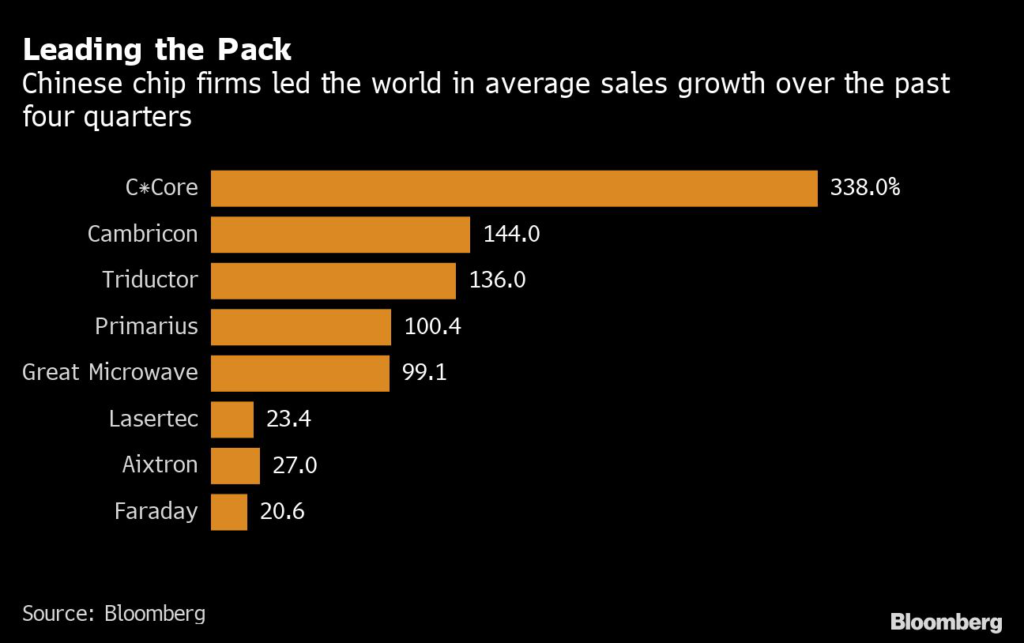
(Bloomberg) — China’s chip industry is growing faster than anywhere else in the world, after US sanctions on local champions from Huawei Technologies Co. to Hikvision spurred appetite for home-grown components.

Nineteen of the world’s 20 fastest-growing chip industry firms over the past four quarters, on average, hail from the world’s No. 2 economy, according to data compiled by Bloomberg. That compared with just 8 at the same point last year. Those China-based suppliers of design software, processors and gear vital to chipmaking are expanding revenue at several times the likes of global leaders Taiwan Semiconductor Manufacturing Co. or ASML Holding NV.

That supercharged growth underscores how tensions between Washington and Beijing are transforming the global $550 billion semiconductor industry — a sector that plays an outsized role in everything from defense to the advent of future technologies like AI and autonomous cars. In 2020, the US began restricting sales of American technology to companies like Semiconductor Manufacturing International Corp. and Hangzhou Hikvision Digital Technology Co., successfully containing their growth — but also fueling a boom in Chinese chip-making and supply.

Read more: China’s Chipmaking Power Grows Despite US Effort to Counter It

While shares in the likes of Cambricon Technologies Corp. have more than doubled from lows this year, analysts say there may still be room to grow. Beijing is expected to orchestrate billions of dollars of investment in the sector under ambitious programs such as its “Little Giants” blueprint to endorse and bankroll national tech champions, and encourage “buy China” tactics to sidestep US sanctions. The rise of indigenous names has caught the attention of some of the pickiest clients: Apple Inc. was said to consider Yangtze Memory Technologies Co. as its latest supplier of iPhone flash memory.

“The biggest underlying trend is China’s quest for self-sufficiency in the supply chain, catalyzed by Covid-related lockdowns,” Morningstar analyst Phelix Lee wrote in an email responding to inquiries from Bloomberg News. “Amid lockdowns, Chinese customers who mostly use imported semiconductors need to source homegrown alternatives to ensure smooth operations.”

Read more: China’s ‘Little Giants’ Are Latest Weapon in Tech War With U.S.

The FactSet China Semiconductor Index, which tracks some of the country’s biggest industry players, has gained roughly 20% since late April, when Covid lockdowns pushed local prices higher. But it remains down about a third from its July 2021 peak.

At the heart of Beijing’s ambitions is the impetus to wean itself off a geopolitical rival and more than $430 billion worth of imported chipsets in 2021. Orders for chip-manufacturing equipment from overseas suppliers rose 58% last year as local plants expanded capacity, data provided by industry body Semi show.

That in turn is driving local business. Total sales from Chinese-based chipmakers and designers jumped 18% in 2021 to a record of more than 1 trillion yuan ($150 billion), according to the China Semiconductor Industry Association. 

A persistent chip shortage that’s curtailing output at the world’s largest makers of cars and consumer electronics is also working in local chipmakers’ favor, helping Chinese suppliers more easily access the international market — sometimes with premiums tacked onto the best-selling products, such as auto and PC chips.

SMIC and Hua Hong Semiconductor Ltd., the biggest contract chip makers, have kept their Shanghai-based plants operating at almost full capacity even as the worst Covid-19 outbreak since 2020 paralyzes factories and logistics across China. With local authorities’ help, cargo flights from Japan delivered essential materials and gear to chip plants as the city went under lockdown. SMIC recently reported a 67% surge in quarterly sales, outpacing far larger rivals GlobalFoundries Inc. and TSMC.

Explainer: China’s Vast Blueprint for Tech Supremacy Over U.S.: QuickTake

Shanghai Fullhan Microelectronics Co.’s revenue grew 37% on average because of high demand for surveillance products. The video chip designer has pledged to expand into electric vehicles and AI after winning its “Little Giant” designation. And design tool developer Primarius Technologies Co. doubled sales on average over the past four quarters, saying it’s developed software that can be used in making 3-nanometer chips.

Putting aside long-term profitability concerns, Morningstar’s Lee said the aggressive capacity build-up from Chinese players will elevate their presence globally. That’s raising hackles in Washington.

“America is on the verge of losing the chip competition,” international relations scholar Graham Allison and former Google chief Eric Schmidt warned in a Wall Street Journal column. “If Beijing develops durable advantages across the semiconductor supply chain, it would generate breakthroughs in foundational technologies that the US cannot match.”

Read more: Eric Schmidt Urges US to Lean on TSMC, Samsung for Chip Security

(Updates with ex-Google chief’s comments, chip stocks from the 6th paragraph)

More stories like this are available on bloomberg.com

©2022 Bloomberg L.P.

Close Bitnami banner
Bitnami
