
Bloomberg

Once-Hot Stock Offering Market Buckles Under Recession Risk

(Bloomberg) — The market for share sales hasn’t been this bad in nearly two decades, with few willing to take a chance in a grim investment climate.

Just $198 billion worth of initial public offerings and follow-on sales have been priced so far this year, a 70% drop from a year ago. That puts them on track for the lowest first-half haul since 2005, data compiled by Bloomberg show.

RIght now, who can blame sellers for holding back? The alternative is the challenge of trying to find willing buyers in a stock market down 20% this year as surging inflation, aggressive central bank interest-rate hikes and the risk of a global recession erode sentiment.

And any lingering hopes for a pickup in IPO action keep getting ground down. The Federal Reserve jacked up rates by the most since 1994 on Wednesday, and even after a bounce on Friday, the S&P 500 suffered yet another weekly loss.

“Until relatively recently there was a well-balanced expectation for high quality IPOs to come to market in September,” said James Palmer, Bank of America Corp.’s head of EMEA equity capital markets. “But given market events over the last two weeks, that’s re-weighted the degree of hope.”

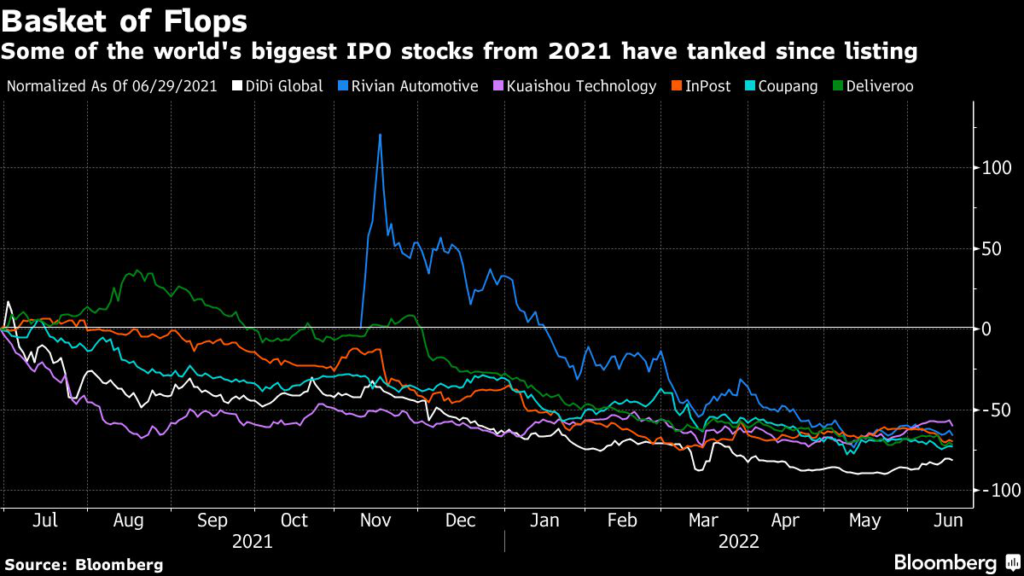
In addition to heightened volatility and uncertainty, the underperformance of some high-profile 2021 listings is another reason for caution. 

Among those that have recently thrown in the towel are Coca-Cola Co., which delayed the planned IPO of a part of its stake in an African bottler, and Asian insurer FWD Group Holdings Ltd., said to have postponed a $1 billion listing in Hong Kong.

Those that have forged ahead had to temper expectations. Life Insurance Corporation of India, once slated to number among the largest fundraisings of the year, slashed the size of its IPO by about 60%.

The drop in volumes has been particularly pronounced in the US, where just $47 billion of equity offerings have been priced, an 85% fall from a year ago.

A boom in blank-check listings helped propel US IPOs to record levels last year, but that has since turned to bust as regulators clamp down on the sector.

Cross-border listings from China, once a steady source of business for New York’s investment bankers, have also stalled amid higher regulatory scrutiny in the aftermath of Didi Global Inc.’s debacle. 

Follow-on offerings have been few and far between as last year’s IPOs, typically the top candidates, sell off at a faster pace than the broader market.

“It’s highly improbable we’ll see a re-opening pre-summer, but we should see a pick-up in activity on the other side,” said Gareth McCartney, global co-head of equity capital markets at UBS Group AG.

With quick-fire block trades being easier to execute than long-drawn out IPOs, bankers expect to see large holders opportunistically sell down stakes in the second half of the year. Fresh fundraising by listed companies, even on the spot market, is likely to lag behind stake sales.

Some of this year’s biggest deals are in listed companies, such as a $6.2 selldown in Eletrobras in Brazil and a $6.7 billion share placement by China’s CATL, the world’s biggest maker of batteries for electric cars.

A few markets have bucked the trend, most notably the Middle East. IPOs there are heading for a record first half as high oil prices and equity inflows shield the region. Energy giant Saudi Aramco is lining up a number of offerings for the second half, seeking to take advantage of elevated commodity prices.

Elsewhere, there’s no dearth of candidates waiting for the right moment. They include chip designer Arm Ltd., whose owner Softbank Group Corp. aims to list the company by next March, Thai Beverage Pcl’s brewery business, which is making its third attempt at going public, and Volkswagen AG’s planned share sale of Porsche.

Market conditions are also creating incentives for a second-half rebound in other transactions, such as convertible bond sales and spinoffs.

“We are now going through the bottom of the market, waiting for the revival,” said Shi Qi, head of ECM at China International Capital Corp. “The key question at the moment is just about the timing of the rebound.”

More stories like this are available on bloomberg.com

©2022 Bloomberg L.P.
Bitcoin, Ether Bounce Off Lows After Record-Breaking Rout

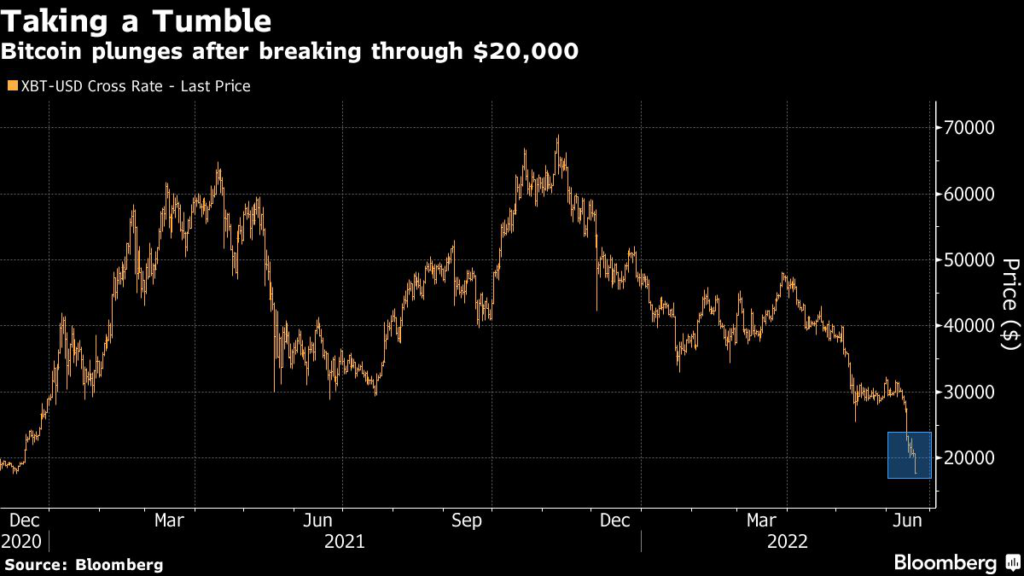
(Bloomberg) — Bitcoin plunged through several closely watched price levels to the lowest since late 2020 as evidence of deepening stress within the crypto industry keeps piling up against a backdrop of monetary tightening. 

The largest digital token by market value tumbled as much as 15% to $17,599 on Saturday, marking a record-breaking 12th consecutive daily decline according to Bloomberg data. It’s still only the biggest drop since Monday. The currency recovered some of those losses and was trading at $19,075 as of 8:30 a.m. in Singapore Sunday.

Ether fell as much as 19% to $881, the lowest since January 2021, before climbing 11% to $1,005 on Sunday morning in Singapore. The two bellwethers of the crypto market are both down more than 70% from all-time highs set in early November. 

“What we’re seeing is more liquidations driving prices and sentiment lower, which triggers more liquidations and negative sentiment — some flushing-out needed still, but this will at some stage exhaust itself,” said Noelle Acheson, head of market insights at Genesis, one of the largest and best-known lenders in the digital-assets space.

Total liquidations in the crypto market were $566.7 million in the past 24 hours, with Bitcoin and Ether at around $271 million and $192 million respectively, according to data from Coinglass.

The latest leg down pushed Bitcoin below $19,511, the high the coin hit during its last bull cycle in 2017, which it reached at the end of that year. Throughout its roughly 12-year trading history, Bitcoin has never dropped below previous cycle peaks.

Altcoins were no exception to soured investor appetite in the wake of Bitcoin’s fall, with every token on Bloomberg’s cryptocurrency monitor trading in the red. Cardano, Solana, Dogecoin and Polkadot recorded falls of between 12% and 14%, while privacy tokens such as Monero and Zcash lost as much as 16%. 

A toxic mix of bad news cycles and higher interest rates has been deleterious to riskier assets like crypto. The Federal Reserve raised its main interest rate on June 15 by three-quarters of a percentage point — the biggest increase since 1994 — and central bankers signaled they will keep hiking aggressively this year in the fight to tame inflation.

“Investors are continuing to position defensively following last year’s liquidity-driven digital asset bull market,” Alkesh Shah, head of crypto and digital assets strategy at Bank of America Corp., said in a note on Friday. “Although painful, removing the sector’s froth is likely healthy as investors shift focus to projects with clear road maps to cash flow and profitability versus purely revenue growth.”

Broader signs of stress emerged with last month’s collapse of the Terra blockchain, and worsened this week following crypto lender Celsius Network Ltd.’s recent decision to halt withdrawals. 

Adding to the mood, crypto hedge fund Three Arrows Capital suffered large losses and said it was considering asset sales or a bailout, while another lender, Babel Finance, followed in Celsius’s footsteps on Friday. Even long-term holders who have avoided selling until now are coming under pressure, according to researcher Glassnode. 

“After Celsius, the focus last few days has been Three Arrow Capital and Babel Finance.” said Teong Hng, chief executive of Hong Kong-based crypto investment firm Satori Research. “Su Zhu, the founder of 3AC seems to be missing in action, after purportedly suffering huge losses due to massive drop in crypto this round.”

Read More Crypto’s Excruciating Week Has Traders Bracing for Next Crisis

Stablecoins — a type of crypto asset pegged to the value of a fiat currency like the US dollar — have also struggled. 

The top four stablecoins saw exchange net outflows last week that were 4.5 times larger than the prior week, Bank of America’s Shah said, having charted net outflows in eight of the 10 prior weeks. Stablecoins are often relied upon by crypto traders to move funds around the ecosystem without needing to exit into traditional currencies, so persistent outflows indicate that investors remain defensive, he added.

Even with the piercing of the key $20,000 level, historical data show that Bitcoin may find key support around that mark as previous selloffs demonstrate where the token usually finds points of resilience, according to Mike McGlone, an analyst for Bloomberg Intelligence. 

Bitcoin may “build a base around $20,000 as it did at about $5,000 in 2018-19 and $300 in 2014-15,” he said in a note on Wednesday. “Declining volatility and rising prices are earmarks of the maturing digital store-of-value.”

Still, the digital currency is fast approaching its December 2020 low of $17,589. It traded as low as $13,222 the prior month that year.

Read More Bitcoin Rout Hits ‘Darkest’ Phase With Entire Market Underwater

The crypto market now stands at a fraction of its heights in late 2021, when Bitcoin traded near $69,000 and traders poured cash into speculative investments of all stripes. The total market cap of cryptocurrencies was around $881 billion on Sunday, down from $3 trillion in November, according to pricing data from CoinGecko.   

(Updates prices.)

More stories like this are available on bloomberg.com

©2022 Bloomberg L.P.
Apple Store Workers in Maryland Become First in US to Unionize

(Bloomberg Law) — Apple store workers near Baltimore voted for a union Saturday, becoming the first organized store in the US in a landmark decision that could change the face of the tech giant’s retail operation.

As of 8:30 p.m., 65 workers who voted at the Towson, Md., store had sided with the union, outnumbering anti-union votes 2 to 1. The bargaining unit includes about 100 workers and is affiliated with the International Association of Machinists.

The decision could spark a wider unionization movement among Apple store workers, similar to the first Starbucks union vote last year that has since prompted nearly 300 other stores to file for elections.

The union victory is likely to breathe new life into the labor movement’s mission to organize Apple and the wider tech sector, which suffered a setback after a store in Atlanta canceled its election last month. Those workers, organized by the Communications Workers of America, blamed an alleged union-busting campaign by Apple and said it planned to re-file for an election later.

To contact the reporter on this story: Ian Kullgren in Washington at ikullgren@bloombergindustry.com

To contact the editors responsible for this story: Martha Mueller Neff at mmuellerneff@bloomberglaw.com; Laura D. Francis at lfrancis@bloomberglaw.com

More stories like this are available on bloomberg.com

©2022 Bloomberg L.P.

Hedge Funds Are the Rage as ‘Nothing Seems to Be Working’: Q&A

(Bloomberg) — Anastasia Amoroso, chief investment strategist at iCapital, joined the latest episode of the “What Goes Up” podcast to discuss the market volatility that followed the Federal Reserve’s rate hike and how hedge funds are attracting client interest again after years of languishing in a raging bull market. 

She joined this week’s “What Goes Up” podcast to talk about that as well as the biggest Fed hike in almost three decades. Below are lightly edited and condensed highlights of the conversation. Click here to listen to the whole podcast, and subscribe on Apple Podcasts or wherever you listen. 

Q: Hedge funds, we see a lot of headlines about some that are struggling, but in aggregate, they’re outperforming. Has the decline revived the demand for hedge funds?

A: It absolutely has and this was part of our outlook — we anticipated this being a much, much better environment for hedge funds that we get clients interested. And the reason for that is for the last 10 years, really all you had to be is risk-on, for the most part, with a few exceptions. And you buy the dip along the way, but mostly, if you were invested in stocks and high-yield bonds, you probably did just fine. So you didn’t actually need hedged equity in your portfolio. You didn’t really need relative-value trades and so forth. But that changed dramatically this year. And we anticipated this year to be a year of higher velocity and higher volatility, and boy, did we get it? 

And so that’s what I think has been so narrative-changing for hedge funds, is all of a sudden there’s equity volatility to trade, there is fixed-income volatility to trade, there’s a lot of macro factors in the driver’s seat. So if you look at the hedge-fund performance, overall hedge fund, HFRI industries, for example, they’re outperforming the market nicely. But even if you further dissect within that, the global macro funds are doing really well. And within that, you have some really top-quartile winners that are really attracting client interest. If you look at relative-value hedge funds, arbitrage strategies, all of those are delivering above-market returns. And also quant — quant is actually working this year as well. So I do think in this environment, where nothing seems to be working, investors are looking for something that is, and right now that is in the hedge-fund space.

Q: What were your takeaways from the Fed meeting?

A: Even what happened earlier in the week is we got a massive pivot from the Fed during the time when this was supposed to be a no-communication time frame, and we got a pretty strong hint that they’re going to go for 75 basis points. And in retrospect, it makes a lot of sense because the problem with inflation for the Fed right now is they can’t just focus on the core because the headline inflation, the higher gasoline prices, the higher food prices, that’s what’s driving consumer sentiment and that’s what’s driving consumers’ expectations of future inflation. So as those expectations surged, the Fed had to react to it. What do we think now that they have hiked 75 basis points? First of all, we did anticipate this meeting to be a hawkish one. And it definitely was, but I don’t think we can say that it was a hawkish surprise to the markets. And you saw how the markets initially reacted to the path of increases. 

The reason I say that is a lot of the market pricing was already in place before that meeting. And if you think about what the markets have been pricing in through February of 2023, it’s close to 4% in the fed funds rate. A lot of those rate increases were already baked in, and that’s perhaps why the Fed was emboldened to do this. But my other takeaway, not a hawkish surprise, but I think a pretty significant move toward restoring the Fed’s credibility. When you look at 8.6% inflation or 6% core inflation, and if you look at the fed funds rate, we were far, far, far too low and the Fed needed to catch up very badly. The fact they’re acknowledging it, they’re doing it, they’re moving is actually a positive for markets because we feel like the Fed is maybe regaining some control. 

And then the last thing I’ll say about this, the reason why the equity markets have been so tough this year is because it was really hard to gauge the Fed reaction function. They say they’re trying to be balanced one week. And then they say, ‘Oh, we’re going for 50 basis points. Now we’re going for 75 basis points.’ So you got whipsawed by this Fed communication. But it seems like they’re giving us a more explicit reaction function. The focus now is on headline inflation. If it surprises to the upside, we should expect a more aggressive path of rate hikes. And if it doesn’t, perhaps they can pause. So at least we know that now, and perhaps it’s little consolation to the markets, but at least it does restore credibility in fighting inflation.

Q: You must get peppered with questions about crypto. How are you thinking about crypto these days?

For a while, I will give Bitcoin a little bit of merit for being an inflation hedge. I say that because when inflation was rising and the Fed was doing nothing about it, of course Bitcoin was the place that people wanted to go. But now that the Fed is doing something, doing quite a lot about inflation, you can’t make that argument about that being an inflation hedge anymore. So then you refer to the other side of the coin, which is that it is technology. It is innovative technology and it is unprofitable. So this is why you look at how all the crypto ecosystem has been trading. It’s been trading in lockstep with the Nasdaq and, specifically, with the unprofitable tech. And so that’s why you’re seeing this breakdown of momentum to the downside and until the Fed pauses, until we have a cap to the move higher in rates, you will continue to see pressure in crypto.

But here’s what I also say. And I was at the Consensus conference in Austin last week. And one of the quotes from one of the panels was, make sure that you are in crypto for the mission and not the money. And that really struck me because there is so much speculative froth that has been accumulated in crypto. And I am so, so glad that that is being flushed out as we speak — that needed to break, that needed to be out of the system. But what’s left is there is a significant utility function to blockchain technology — can you build better decentralized application for lending, for market making, for transaction settlement, for digital privacy? 

The answer is you probably can, and many innovative technologies are working on this. So there is a big mission-driven cohort within the crypto ecosystem. And that’s, what’s exciting and that’s what’s here to stick. But I’m glad that we’re seeing algorithmic alt-coins breaking down. I’m glad that we’re seeing unsustainable lending schemes breaking down. And I’m hopeful that what this ultimately leads to is regulation. 

Hear the rest of the conversation here or wherever you get your podcasts.

More stories like this are available on bloomberg.com

©2022 Bloomberg L.P.
Bitcoin Extends Decline to Below $19,000 in Record-Breaking Rout

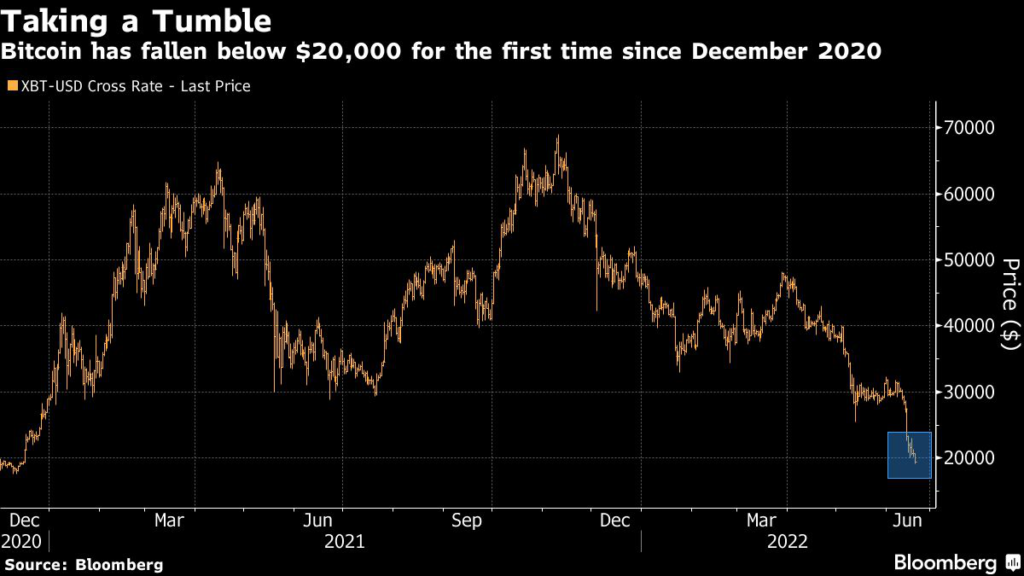
(Bloomberg) — Bitcoin plunged below $19,000 for the first time since December 2020 as evidence of deepening stress within the crypto industry keeps piling up against a backdrop of monetary tightening. 

The largest digital token by market value tumbled as much as 11% to $18,334 on Saturday, marking a record-breaking 12th consecutive daily decline according to Bloomberg data. Ether breached $1,000 and dropped almost 13% to $951, the lowest since January 2021. The two bellwethers of the crypto market are both down more than 70% from all-time highs set in early November. 

“What we’re seeing is more liquidations driving prices and sentiment lower, which triggers more liquidations and negative sentiment — some flushing-out needed still, but this will at some stage exhaust itself,” said Noelle Acheson, head of market insights at Genesis, one of the largest and best-known lenders in the digital-assets space.

The latest leg down pushed Bitcoin below $19,511, the high the coin hit during its last bull cycle in 2017, which it reached at the end of that year. Throughout its roughly 12-year trading history, Bitcoin has never dropped below previous cycle peaks.

Altcoins were no exception to soured investor appetite in the wake of Bitcoin’s fall, with every token on Bloomberg’s cryptocurrency monitor trading in the red. Cardano, Solana, Dogecoin and Polkadot recorded 24-hour falls of between 9% and 12% on Saturday, while privacy tokens such as Monero and Zcash lost as much as 11%. 

A toxic mix of bad news cycles and higher interest rates has been deleterious to riskier assets like crypto. The Federal Reserve raised its main interest rate on June 15 by three-quarters of a percentage point — the biggest increase since 1994 — and central bankers signaled they will keep hiking aggressively this year in the fight to tame inflation.

“Investors are continuing to position defensively following last year’s liquidity-driven digital asset bull market,” Alkesh Shah, head of crypto and digital assets strategy at Bank of America Corp., said in a note on Friday. “Although painful, removing the sector’s froth is likely healthy as investors shift focus to projects with clear road maps to cash flow and profitability versus purely revenue growth.”

Broader signs of stress emerged with last month’s collapse of the Terra blockchain, and worsened this week following crypto lender Celsius Network Ltd.’s recent decision to halt withdrawals. 

Adding to the mood, crypto hedge fund Three Arrows Capital suffered large losses and said it was considering asset sales or a bailout, while another lender, Babel Finance, followed in Celsius’s footsteps on Friday. Even long-term holders who have avoided selling until now are coming under pressure, according to researcher Glassnode. 

“After Celsius, the focus last few days has been Three Arrow Capital and Babel Finance.” said Teong Hng, chief executive of Hong Kong-based crypto investment firm Satori Research. “Su Zhu, the founder of 3AC seems to be missing in action, after purportedly suffering huge losses due to massive drop in crypto this round.”

Read More Crypto’s Excruciating Week Has Traders Bracing for Next Crisis

Stablecoins — a type of crypto asset pegged to the value of a fiat currency like the US dollar — have also struggled. 

The top four stablecoins saw exchange net outflows last week that were 4.5 times larger than the prior week, Bank of America’s Shah said, having charted net outflows in eight of the 10 prior weeks. Stablecoins are often relied upon by crypto traders to move funds around the ecosystem without needing to exit into traditional currencies, so persistent outflows indicate that investors remain defensive, he added.

Even with the piercing of the key $20,000 level, historical data show that Bitcoin may find key support around that mark as previous selloffs demonstrate where the token usually finds points of resilience, according to Mike McGlone, an analyst for Bloomberg Intelligence. 

Bitcoin may “build a base around $20,000 as it did at about $5,000 in 2018-19 and $300 in 2014-15,” he said in a note on Wednesday. “Declining volatility and rising prices are earmarks of the maturing digital store-of-value.”

Read More Bitcoin Rout Hits ‘Darkest’ Phase With Entire Market Underwater

The crypto market now stands at a fraction of its heights in late 2021, when Bitcoin traded near $69,000 and traders poured cash into speculative investments of all stripes. The total market cap of cryptocurrencies was around $870 billion on Saturday, down from $3 trillion in November, according to pricing data from CoinGecko.   

More stories like this are available on bloomberg.com

©2022 Bloomberg L.P.
Nearly All of Wall Street – and the Fed – Botched Calls for 2022

(Bloomberg) — So far 2022 has been a year where just about everyone on Wall Street got it wrong. As did the Fed and a cadre of global central banks.

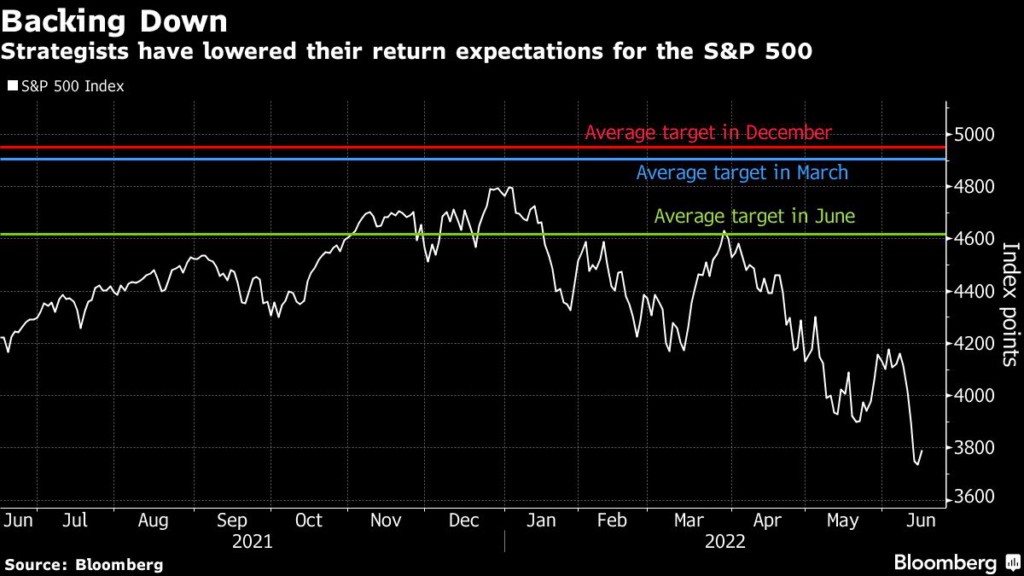
Back in December, strategists at the world’s top investment firms like JPMorgan Chase & Co. predicted the S&P 500 would gain 5% in 2022. Economists saw the U.S. 10-year Treasury yield hitting 2% on average by the year’s end. And even Goldman Sachs Group Inc. lent credibility to the claims Bitcoin was on track to hit $100,000.

Yet six months later, an unprecedented confluence of shocks has ended one the most powerful equity bull markets and sent safe-haven government bonds and other assets spiraling. The S&P 500 is down 23%, 10-year rates stand at 3.23% and Bitcoin has shed more than half its value.

The market has quickly turned from from “buy everything” to “sell everything,” with the multi-year “there is no alternative” (TINA) phenomena in equities now gone. Unforeseen events including the Russia-Ukraine war have contributed to the highest consumer prices in 40 years. And as a result, ultra-low interest rates and monetary stimulus — essentially the foundation of the post-pandemic rally — have evaporated as the Fed and its counterparts have sought to quell inflation. 

“This is absolutely the end of TINA for the foreseeable future” said James Athey, investment director at abrdn in London. “With 8% inflation not much is attractive on a real basis.”

Even Jerome Powell, the central bank chairman, didn’t see the turbulence that was coming from inflation. He expected price gains to decline to levels closer to the Fed’s longer-run goal of 2% by the end of 2022. But now bond markets are flashing recession signals as the Fed’s aggressive rate hikes pose a risk to the economy’s growth.

“This time last year the Fed were themselves still expecting [rates] to be floored near zero at this point,” said Deutsche Bank strategist Jim Reid. In less than half a year, that needle now points to 3.5% by 2022’s end.

Bear With Me

Even with the sharp declines, however, market gurus are keeping faith stocks will make a recovery by the end of the year.

Oppenheimer’s John Stoltzfus still sees the S&P 500 ending 2022 at 5,330 points, requiring a 45% rally in the next six months. A handful of others, including JPMorgan and Credit Suisse Group AG, have targets that require the index to rally at least 30% to be met. Wall Street strategists, on average, see the S&P 500 gaining 22% from Friday’s level in the latest Bloomberg survey. 

To be sure, it’s anyone’s guess on when Russia’s war in Ukraine will end or the supply chain bottle necks due to China’s stringent Covid policies will ease, lifting price pressures in addition to the Fed’s policy tightening. 

But for Max Kettner, chief multi-asset strategist at HSBC Global Research, equities haven’t fully priced in a recession relative to other asset classes. “All in all, this means there is further weakness for risk assets in store over the summer months.”

The benchmark S&P 500 fell 51% from peak to trough between 2000 and 2002, and by 58% during the period of the global financial crisis.

Likewise, Morgan Stanley’s Michael Wilson — one of the few bearish voices in December– said the market’s more than 20% drop still doesn’t fully reflect the risks to corporate earnings.

Nowhere to Hide

From the look of it, all one can do is stash cash under the mattress with gold and US Treasuries — arguably the safest financial assets in the world — also sinking. 

Stocks and bonds together are on track for their worst quarter ever. Meanwhile, credit markets have also taken a battering. 

So far this year the worldwide pool of the safest corporate debt has shed more than $900 billion, marking its worst first-half of a year on record, according to Bloomberg index data. Measures of corporate credit risk are also spiking, with default-swaps insuring the debt of Europe’s high-grade firms sitting at the highest since April 2020. 

Perhaps no other asset class has seen as wild of swings in 2022 as cryptocurrencies, however.

For all the calls for Bitcoin to hit $100,000 earlier this year and claims of it being an inflation hedge, the market for digital assets has been in a downward spiral. 

Bitcoin has over lost two-thirds of its value since it touched a high of nearly $70,000 in November. Arguments the world’s largest cryptocurrency was akin to gold and an independent store of value have gone quiet. Meanwhile, the crypto ecosystem of miners, traders and exchanges has been under growing scrutiny amid layoffs, freezes on withdrawals and liquidity problems.

It’s still not easy to get anything right in this market. There have been big rallies and big drawdowns, painting a bleak picture. But HSBC’s Kettner said this year’s trigger has been obvious.

“Just like investors were obsessed with the idea of ‘transitory inflation’ last year, the obsession of 2022 so far has been ‘peak inflation,’” he said. Inflation hasn’t turned out to be transitory, nor has it peaked yet. As such, “the last few days have been brutal.”

More stories like this are available on bloomberg.com

©2022 Bloomberg L.P.
DeFi Platform MakerDAO Pauses Some Aave-Related Lending Activity

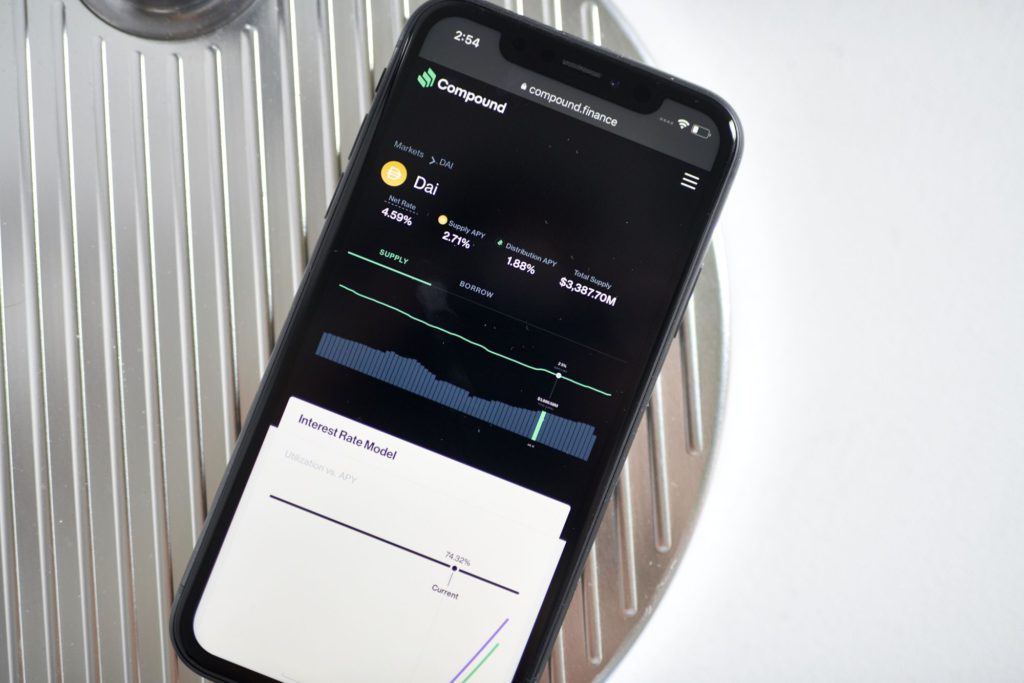
(Bloomberg) — MakerDAO, a long-established decentralized autonomous organization that supports the stablecoin DAI, has suspended the token from being deposited and minted in Aave’s crypto lending platform.

The organization cast the vote to disable the DAI Direct Deposit Module on Aave, which effectively prevents traders from borrowing the stablecoin against a troubled derivative token stETH, citing adverse market conditions in a post Friday.   

“The reason we believe this is risky is because out of 200 million DAI borrowed on Aave Ethereum v2, 100 million DAI is being borrowed by Celsius and collateralized mostly by stETH.” Primoz, a member of the Risk Core Unit Team at MakerDAO said in the Maker Forum. 

Aave, which has a decentralized lending platform where traders can use arbitrage in transactions while borrowing or lending in the protocol, earlier proposed a different measure to MakerDAO. The proposal suggested to freeze the stETH market and increase the token’s liquidation threshold from 81% to 90% to mitigate the risks from stETH. However, MakerDAO described the measure as “unacceptable risk” and came up with its own plan to disable DAI’s deposit on Aave. 

The derivative token stETH represents staked Ether, is designed to provide liquidity for those who put their Ether holdings in Ethereum’s new proof-of-stake protocol for high yields but still want to be able to sell their tokens before the network’s transition is complete and the lock-in period expires. However, sharp Ether price declines and a rout in the broader crypto market have prompted stETH holders to sell and send the token’s price lower than Ether. 

That token has cast a pall over major crypto firms and it has been among the major catalysts for the bear market. Lending platform Celsius Network has paused withdrawals while facing liquidations with their collateralized stETH. Singapore-based crypto hedge fund Three Arrows Capital, which has sold a large amount of stETH, is facing severe liquidity issues. 

“Contagion risks in DeFi are increasing,” Primoz said in the forum. There will be a meeting in two weeks to discuss potential reactivation of the module. 

More stories like this are available on bloomberg.com

©2022 Bloomberg L.P.
Mideast’s Largest Crypto Platform Trims Staff Amid Market Tumult

(Bloomberg) — BitOasis, the Middle East’s largest local crypto platform, reduced its headcount by about 7% this past week, the latest sign of stress at some of the region’s biggest digital-asset exchanges. 

“Earlier this week, nine employees were made redundant across offices in Dubai, Abu Dhabi and Amman,” Chief Executive Officer Ola Doudin said in a message to Bloomberg. “As the market slows down we ensure to stay focused on execution and growing our footprint across the region.”

READ MORE: Bankers Quit Jobs for Shot at Riches in ‘Wall Street of Crypto’

More stories like this are available on bloomberg.com

©2022 Bloomberg L.P.
UK Train Strike Part of Crisis for World’s Oldest Railway

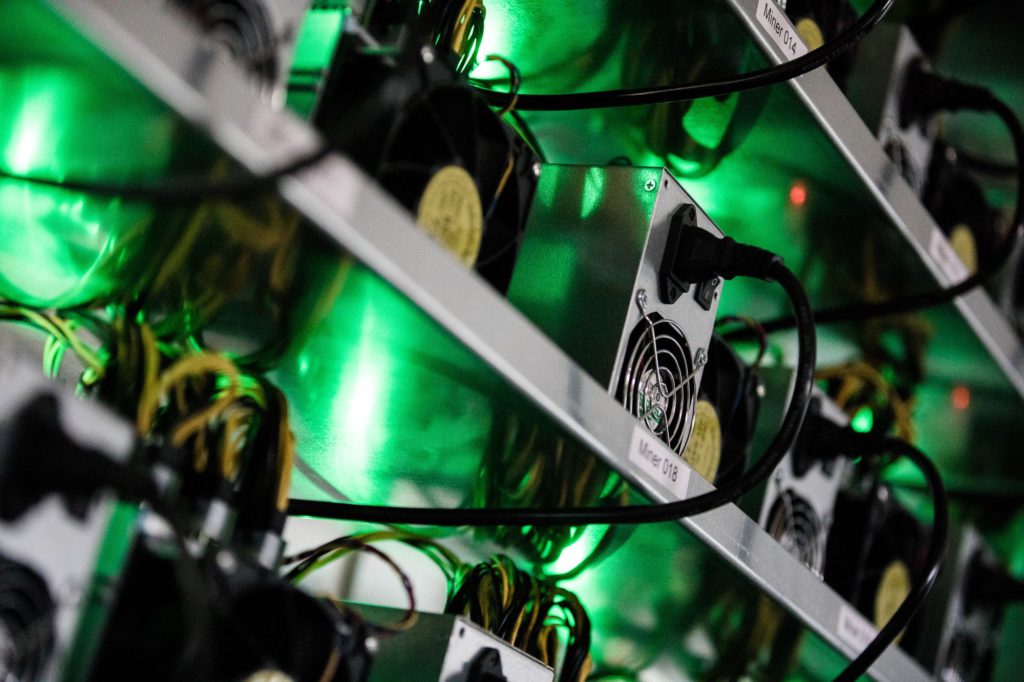
(Bloomberg) — Britain’s biggest train strike in 30 years is set to upend travel Tuesday as the world’s oldest railroad struggles to redefine its role in a commuting landscape transformed by the coronavirus crisis.

The planned walkouts by 40,000 staff at 13 train operating companies and track manager Network Rail are aimed at securing job guarantees and pay hikes against a backdrop of spiraling inflation, union leaders said.

The strike leaders confirmed Saturday that talks with Network Rail, train operators and London Underground had failed and the strike action would go ahead for the planned three days. The main transport union said in an online statement that despite negotiations which lasted several weeks, “no viable settlements to the disputes have been created.”

Only about 20% of services will survive an initial three days of stoppages, with Scotland and Wales hit hardest. Tuesday will also see action by 10,000 London Underground workers in a separate dispute over jobs and pensions. The upheaval on the tracks follows weeks of turmoil at airports and airlines as staff shortages trigger hundreds of flight cancellations and hours-long delays.

Yet as disruptive as the rail walkouts are likely to be, they’re symptomatic of more fundamental challenges facing the industry as the rise of home working weighs on demand long after the lifting of pandemic lockdowns. The shift in travel habits coincides with a wholesale makeover of the railway as the government seeks to simplify fares while scrapping Network Rail and a long-standing franchise system to reduce fragmentation of the network.

Figures released by the Office of Road and Rail on Thursday reveal the extent of rail’s retreat, with total journeys at only 62% of the pre-pandemic tally in the quarter through March. Most tellingly, season tickets — the cheapest travel option for daily peak-time commuters — accounted for just 17% of rail journeys over 12 months, less than half the former level.

‘Pole-Axed’

“The industry is in crisis,” says Tony Lodge, author of Changing Track, a report published last month by the Centre for Policy Studies think tank and subtitled “How to rescue the railways after the pandemic.”

Lodge argues that the sector is facing its third major reset since World War II, after the swingeing cuts of the 1960s, implemented in response to the rise of cars and trucks, and privatization in the 1990s, which lifted investment and saw passenger numbers revive as roads grew increasingly congested.

“The pandemic has pole-axed the railway, particularly in London, where the great daily Home Counties commute into Liverpool Street, Waterloo and Victoria looks like it could be gone forever,” he says. “We’re at a crossroads and there needs to be some radical thinking to respond to evolving passenger demands.”

While a headache for the government, the slump in ridership is less of an issue for Britain’s train operating companies. With the risk and reward-based franchising system already set to be scrapped before Covid hit, the pandemic prompted a switch to emergency measures which will be replaced by a new service-contract model. Firms will receive payments to run trains rather than relying partly on less predictable income from passenger fares.

Takeover Spree

The certainty offered by the change has brought a spate of takeover bids for players in public transport.

Go-Ahead Group Plc, the biggest operator of London commuter trains, last week accepted an offer led by Australian transportation firm Kinetic Holding Co. DWS Infrastructure agreed in March to buy bus operator Stagecoach Group Plc, while FirstGroup Plc this month rejected a takeover approach.

FirstGroup Executive Chairman David Martin, a rail veteran, said in an interview that firms understand they must cut their cloth to new realities. While future requirements are unclear, they could include steps to stimulate demand, as well as deliver on plans to eliminate diesel trains.

UK Transport Secretary Grant Shapps said that having received an extra £16 billion ($19.5 billion) in state support to see it through the pandemic without a single employee being fired or furloughed, the railway “needs a new direction,” with current subsidies unsustainable.

The Rail, Maritime and Transport Workers union, which called the strike, has suggested that Network Rail alone plans to cut as many as 2,500 jobs as it seeks to save £2 billion, and that train operating companies are freezing pay and seeking changes to contracts.

At the same time, rail investment remains a central plank of Boris Johnson’s policy of “leveling up” between UK regions as the prime minister seeks to retain former Labour heartlands that voted Conservative at the 2019 election.

Though plans for high-speed links have been scaled back, the government is committed to a £96 billion overhaul. Lodge says there’s probably still a need for the 225-mile-per-hour HS2 line from London to Manchester that’s at the center of infrastructure plans, if only to free up other lines to take freight off the roads and slash carbon emissions.

Results from last year’s once-a-decade UK census, due later this month, should reveal more about the changes in rail travel, helping to inform future policy, the UK Data Service has said.

Online Options

Reforms to be introduced next year with the creation of Great British Railways, designed to bring the network under a single state authority while modernizing fares and ticketing to better accommodate hybrid working, may already be obsolete given the pace of change, Lodge warns. He says more sweeping steps such as an end to peak travel periods and automatic charging when people board trains should be explored.

With the national strike looming, train operators have issued warnings against making unnecessary journeys. 

Shapps appealed to staff not to strike, saying they may protest themselves out of a job. Commuters who three years ago had little choice but to take the train now have other options, like Zoom meetings. “Wave them goodbye, and it will endanger the jobs of thousands of rail workers,” he said.

Lodge concurs that rather than furthering their campaign for job security and improved pay, unions risk further weakening rail’s appeal. That casts doubt on the future of a network that originated in 1825 with the world’s first public steam railway between Stockton and Darlington in northeast England.

“The risk is that after a summer of disruption commuters decide that they’ve had enough,” he said. “Most people seem to prefer working from home and companies can avoid city rents and funding half of a season ticket for their employees. It’s a dangerous game to play.”

(Update with confirmation of strike action)

More stories like this are available on bloomberg.com

©2022 Bloomberg L.P.

Memories of Bitcoin-Beating Returns Keep Hex Holders Hanging On

(Bloomberg) — The more than 100,000 devotees to a little-known token called Hex swapping jokes and encouraging each other to stay bullish over the Telegram messaging app shows the desire to get rich quick remains as strong as ever in the midst of the latest crypto winter. 

Even though the coin is among the thousands that trade at just a few cents, it has developed an outsized profile. Hex’s creator, who goes by Richard Heart, has positioned himself at the center of the hype, projecting an over-the-top presence on social media with his designer track suits, expensive jewelry and luxury vehicles. While Heart projects endless optimism amid aggressive marketing, which includes old-fashioned direct-mail promotions, the value of the token has tumbled more than 90% from its all-time high in September. 

But what really stands out is how Hex dangles a roadmap to great wealth for so-called Hexicans. Hex is an app on the Ethereum network that offers a staple of traditional investing packaged in a crypto wrapper in what it calls a “blockchain certificate of deposit.” Users lock up, or “stake” the Hex coins they’ve purchased from the app for up to 15 years to earn interest paid off with more Hex tokens. Hex’s website says the typical investor locks up their funds for 6.6 years to earn an average 38% annual return. 

That has raised eyebrows among industry observers, especially in light of the recent collapse of the TerraUSD stablecoin and related Luna token, and the freeze of withdrawals by lending platform Celsius Network, which were also dependent on promises of high-yielding returns to attract steady streams of new investors. Meanwhile, Heart said he’s developing a network called PulseChain, which will eventually issue tokens that will be distributed to Hex holders and other Ethereum users. 

“Hex increases in value the more people put money in and decreases when people pull money out,” said John Griffin, a finance professor at University of Texas at Austin. “The last people in will likely be left with nothing.”

Heart, who told Bloomberg News in an interview that his real name is Richard Schueler, remains undeterred. Hex’s direct mailings and ads on the sides of buses in places such as London noted that once the price went up “11,500% in 129 days.” As of late, the coin’s fortunes have mirrored the recent crypto boom and bust, with its price falling from an all-time-high of about 50 cents in September to around 3 cents. 

“How many things lost everything, Luna went to zero,” Heart said. “Rug pulls everywhere, bridge failures. You’re just like, ‘We are the only ones doing it right!’”  

Heart declined to disclose the size of his personal Hex stake, but likes to say that no one minds that Bitcoin’s supposed anonymous creator, Satoshi Nakamoto, holds a huge swath of Bitcoins. About 300,000 accounts hold Hex, but it’s unclear how many people they belong to, according to blockchain tracker Elliptic.

In addition to locking up their tokens, Hex owners can also contribute a portion of their holdings to one of two digital wallets in exchange for points that can eventually get them more PLS tokens, the PulseChain currency. The idea is to move Hex onto the blockchain, to make staking and unstaking Hex cheaper, Heart said. PLS tokens will be issued once PulseChain goes live.

Between 40% and 50% of the Hex in circulation over the past year has been “sacrificed” to the wallets, Heart said. One is designated to fund anti-aging researcher Sens Research Foundation. Who controls the other, and larger wallet, isn’t disclosed. Heart declined to comment on whether he is the owner or who controls the anonymous wallet. 

The devotion of the Hexicans is extraordinary even for the crypto world. Heart’s face is splashed across many Twitter profiles of his followers. The testimonial section of Hex’s website is stacked with claims that many Hexicans got “houses, cars, watches, paid off mortgages and student loans” with their Hex wealth. 

“They consider Richard to be a god inside the Hex community,” said Eric Wall, former chief investment officer at Arcane Assets, who considers himself Heart’s friend, but declined to say if he is invested in his projects. “The Hex project, in my opinion, is a rather pointless cryptocurrency. The only thing you can do with it is lock it up, and the longer you lock them up, the tokens inflate. That’s the whole idea.”

Before Hex, Heart says he once ran a stereo store in Florida before starting a search-engine-optimization company and a foreclosure company, among other businesses. He was once fined in Washington state for sending spam email. He started mining Bitcoin in 2011.

Roger Ver, one of the early advocates of Bitcoin, said his Bitcoin.com exchange was one of the first to list Hex after it first debuted in 2019.

“He is knowledgeable about the space, and a competent communicator,” Ver said about Heart. “Many people hated Hex when it launched, but even bad assets should be tradeable.”    

More stories like this are available on bloomberg.com

©2022 Bloomberg L.P.

Close Bitnami banner
Bitnami