Bloomberg

Japan’s NTT to Make Home Primary Work Place in Rule Change: NHK

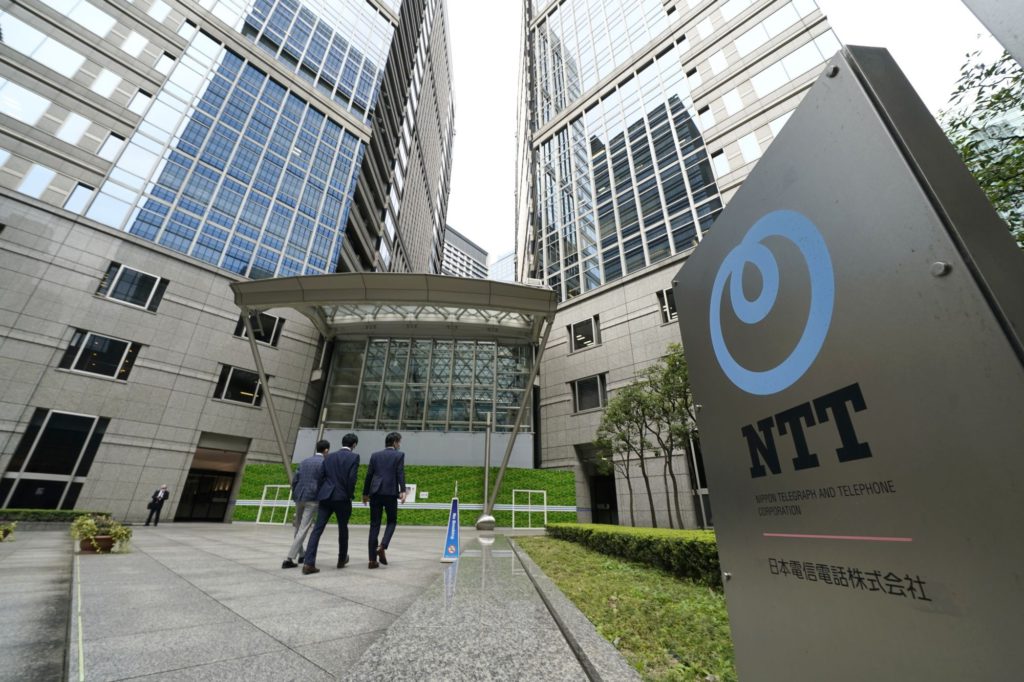
(Bloomberg) — Japanese telecom giant NTT will make the home the primary work place for employees under a rule change from next month, public broadcaster NHK reported, without identifying the source of the information. 

Commuting to the office will count as a business trip at the firm, which already last year strengthened its work-from-home practices, according to NHK. 

The move by the firm with about 180,000 domestic employees could have a ripple effect on other businesses, according to NHK. 


More stories like this are available on bloomberg.com

©2022 Bloomberg L.P.

UK Train Strike Part of Wider Crisis for World’s Oldest Railway

(Bloomberg) — Britain’s biggest train strike in 30 years is set to upend travel Tuesday as the world’s oldest railroad struggles to redefine its role in a commuting landscape transformed by the coronavirus crisis.

The planned walkouts by 40,000 staff at 13 train operating companies and track manager Network Rail are aimed at securing job guarantees and pay hikes against a backdrop of spiraling inflation, union leaders said.

Only about 20% of services will survive an initial three days of stoppages, with Scotland and Wales hit hardest. Tuesday will also see action by 10,000 London Underground workers in a separate dispute over jobs and pensions. The upheaval on the tracks follows weeks of turmoil at airports and airlines as staff shortages trigger hundreds of flight cancellations and hours-long delays.

Yet as disruptive as the rail walkouts are likely to be, they’re symptomatic of more fundamental challenges facing the industry as the rise of home working weighs on demand long after the lifting of pandemic lockdowns. The shift in travel habits coincides with a wholesale makeover of the railway as the government seeks to simplify fares while scrapping Network Rail and a long-standing franchise system to reduce fragmentation of the network.

Figures released by the Office of Road and Rail on Thursday reveal the extent of rail’s retreat, with total journeys at only 62% of the pre-pandemic tally in the quarter through March. Most tellingly, season tickets — the cheapest travel option for daily peak-time commuters — accounted for just 17% of rail journeys over 12 months, less than half the former level.

‘Pole-Axed’

“The industry is in crisis,” says Tony Lodge, author of Changing Track, a report published last month by the Centre for Policy Studies think tank and subtitled “How to rescue the railways after the pandemic.”

Lodge argues that the sector is facing its third major reset since World War II, after the swingeing cuts of the 1960s, implemented in response to the rise of cars and trucks, and privatization in the 1990s, which lifted investment and saw passenger numbers revive as roads grew increasingly congested.

“The pandemic has pole-axed the railway, particularly in London, where the great daily Home Counties commute into Liverpool Street, Waterloo and Victoria looks like it could be gone forever,” he says. “We’re at a crossroads and there needs to be some radical thinking to respond to evolving passenger demands.”

While a headache for the government, the slump in ridership is less of an issue for Britain’s train operating companies. With the risk and reward-based franchising system already set to be scrapped before Covid hit, the pandemic prompted a switch to emergency measures which will be replaced by a new service-contract model. Firms will receive payments to run trains rather than relying partly on less predictable income from passenger fares.

Takeover Spree

The certainty offered by the change has brought a spate of takeover bids for players in public transport.

Go-Ahead Group Plc, the biggest operator of London commuter trains, last week accepted an offer led by Australian transportation firm Kinetic Holding Co. DWS Infrastructure agreed in March to buy bus operator Stagecoach Group Plc, while FirstGroup Plc this month rejected a takeover approach.

FirstGroup Executive Chairman David Martin, a rail veteran, said in an interview that firms understand they must cut their cloth to new realities. While future requirements are unclear, they could include steps to stimulate demand, as well as deliver on plans to eliminate diesel trains.

UK Transport Secretary Grant Shapps said that having received an extra £16 billion ($19.5 billion) in state support to see it through the pandemic without a single employee being fired or furloughed, the railway “needs a new direction,” with current subsidies unsustainable.

The Rail, Maritime and Transport Workers union, which called the strike, has suggested that Network Rail alone plans to cut as many as 2,500 jobs as it seeks to save £2 billion, and that train operating companies are freezing pay and seeking changes to contracts.

At the same time, rail investment remains a central plank of Boris Johnson’s policy of “leveling up” between UK regions as the prime minister seeks to retain former Labour heartlands that voted Conservative at the 2019 election.

Though plans for high-speed links have been scaled back, the government is committed to a £96 billion overhaul. Lodge says there’s probably still a need for the 225-mile-per-hour HS2 line from London to Manchester that’s at the center of infrastructure plans, if only to free up other lines to take freight off the roads and slash carbon emissions.

Results from last year’s once-a-decade UK census, due later this month, should reveal more about the changes in rail travel, helping to inform future policy, the UK Data Service has said.

Online Options

Reforms to be introduced next year with the creation of Great British Railways, designed to bring the network under a single state authority while modernizing fares and ticketing to better accommodate hybrid working, may already be obsolete given the pace of change, Lodge warns. He says more sweeping steps such as an end to peak travel periods and automatic charging when people board trains should be explored.

With the national strike looming, train operators have issued warnings against making unnecessary journeys. 

Shapps appealed to staff not to strike, saying they may protest themselves out of a job. Commuters who three years ago had little choice but to take the train now have other options, like Zoom meetings. “Wave them goodbye, and it will endanger the jobs of thousands of rail workers,” he said.

Lodge concurs that rather than furthering their campaign for job security and improved pay, unions risk further weakening rail’s appeal. That casts doubt on the future of a network that originated in 1825 with the world’s first public steam railway between Stockton and Darlington in northeast England.

“The risk is that after a summer of disruption commuters decide that they’ve had enough,” he said. “Most people seem to prefer working from home and companies can avoid city rents and funding half of a season ticket for their employees. It’s a dangerous game to play.”

More stories like this are available on bloomberg.com

©2022 Bloomberg L.P.

Buffett’s Last Lunch Auction Draws Record $19 Million Bid

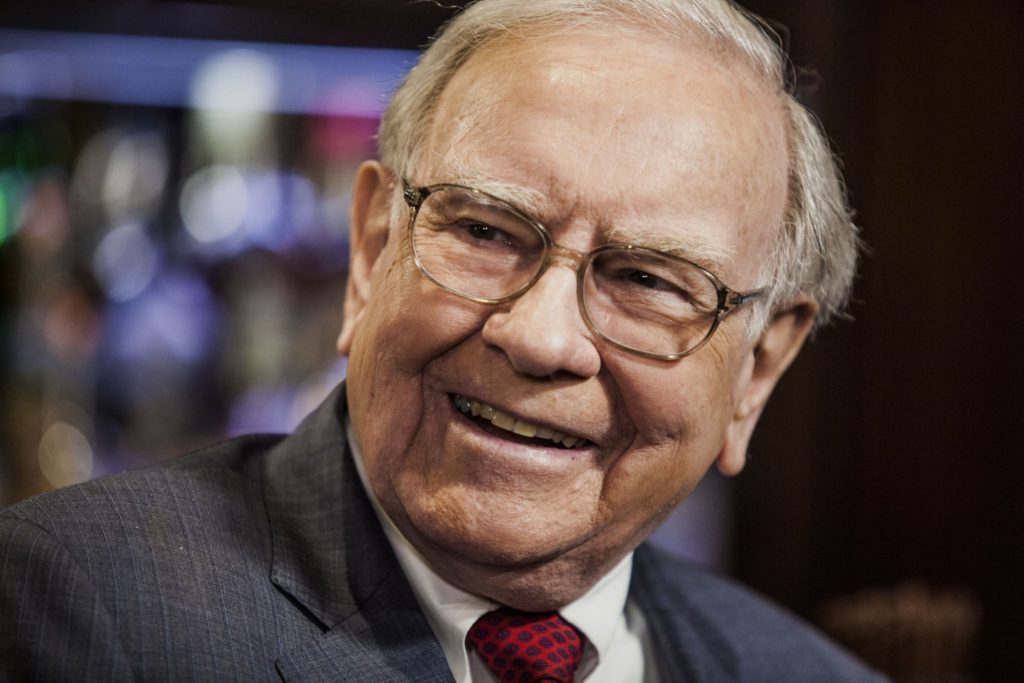
(Bloomberg) — Warren Buffett has cemented his legacy as one of the most expensive lunch guests of all time.

The winning bid in a benefit auctioning off a chance to dine with the billionaire investor clocked in at a little over $19 million, according to the Ebay listing. It secured the bidder, who opted to remain anonymous, and up to seven guests a meal with the Berkshire Hathaway Inc. chairman and chief executive officer at Smith & Wollensky in New York.

The auction to raise money for San Francisco-based charity Glide opened Sunday with a starting price of $25,000. By Monday, bids crept past $2 million. The competition took a sharp turn Friday, the last day of bidding, with one potential diner placing an $11 million bid that sparked a costly tug-of-war. A final-minute bid lifted the eventual price to $19.0001 million, beating the next highest bidder’s $19 million offer. 

The whopping sum easily surpassed the previous record set by cryptocurrency entrepreneur Justin Sun, who paid $4.57 million to win the auction in 2019. The event wasn’t held in 2020 or 2021 because of the pandemic.

The auction’s biggest-ever year will also be its last. Since it started in 2000, the benefit has raised more than $53 million to support Glide, which offers programs to address poverty and homelessness, particularly in San Francisco.

Winning bids across the years have come from financial figures like hedge fund manager David Einhorn. Ted Weschler bid more than $5 million combined over two auctions before Berkshire hired him as an investment manager.

“It’s been nothing but good,” Buffett was quoted as saying in a statement after the auction ended. “I’ve met a lot of interesting people from all over the world. The one universal characteristic is that they feel the money is going to be put to very good uses.” 

(Updates with more details from auction, Buffett’s comments.)

More stories like this are available on bloomberg.com

©2022 Bloomberg L.P.

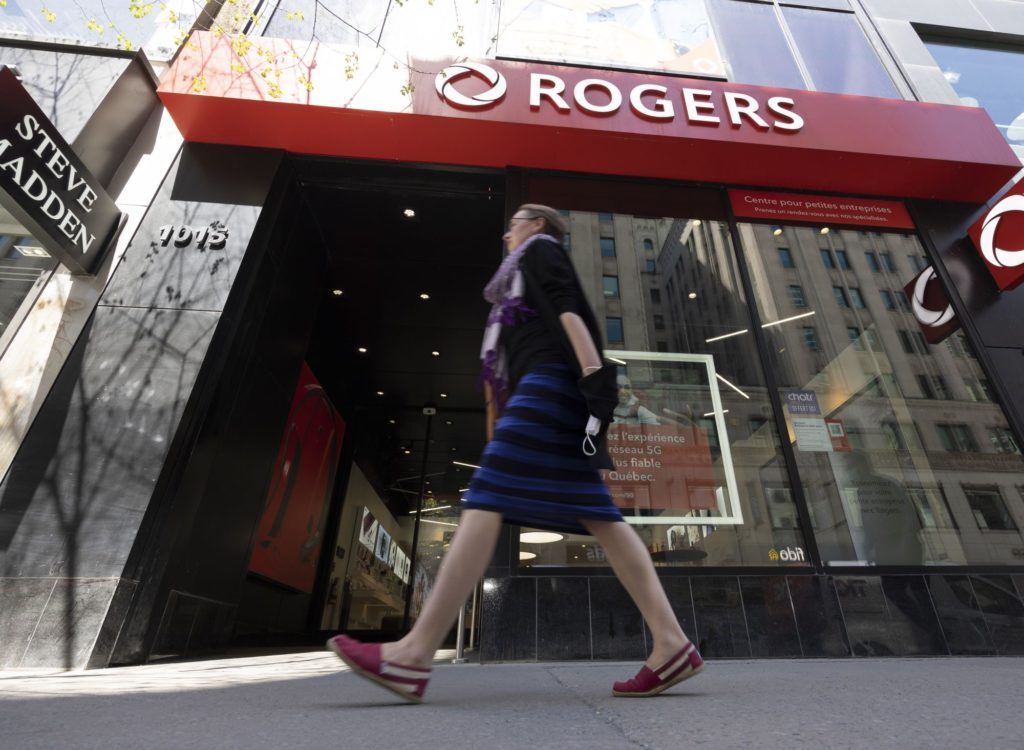
Rogers, Shaw to Sell Mobile Unit to Quebecor for $2.2 Billion

(Bloomberg) — Rogers Communications Inc. and Shaw Communications Inc. said they’ve reached a deal to sell Shaw’s wireless division to rival Quebecor Inc., taking a major step in their effort to solve antitrust concerns about their merger. 

Quebecor agreed to pay C$2.85 billion ($2.2 billion) for Shaw’s Freedom Mobile unit, the three companies said in a release Friday night. The deal is subject to approval by Canada’s antitrust body and the federal government. 

The sale may be Rogers’ best hope of getting the green light for its proposed C$20 billion takeover of Shaw, one of the biggest deals in Canadian history. Over the past few months, Toronto-based Rogers has been in discussions with potential buyers for Freedom Mobile — a move necessary to appease regulators and government officials who’ve made it clear they don’t want the country’s no. 1 wireless provider acquiring Freedom, the no. 4 player. 

There have been a number of suitors including Xplornet Communications Inc., which is backed by New York-based investment firm Stonepeak Partners LP, and the Aquilini family of British Columbia, which has investments in a wide range of businesses from real estate to hospitality to Vancouver’s National Hockey League team.

But after those plans met resistance in Ottawa, Rogers executives came to believe that a deal with Quebecor gave them the best odds of winning the approval of regulators and the government. 

“Our agreement with Quebecor to divest Freedom is a critical step towards completing our proposed merger with Shaw,” Rogers Chief Executive Officer Tony Staffieri said in a statement. “We strongly believe the divestiture will meet the Government of Canada’s objective of a strong and sustainable fourth wireless services provider.” 

Montreal-based Quebecor is a formidable competitor in cable, telecommunications and media in Quebec, the second-largest Canadian province, and has 1.6 million wireless subscribers. Buying Freedom Mobile would extend its footprint to southern Ontario, Alberta and British Columbia and more than double its number of wireless customers.

In an auction last year, Quebecor spent C$830 million to acquire wireless spectrum licenses. Some of that spectrum is in Western Canada and could potentially be used to upgrade Freedom’s service, which isn’t a fifth-generation network.

“This is a turning point for the Canadian wireless market,” said Quebecor CEO Pierre Karl Péladeau said in a statement. “Quebecor’s Videotron subsidiary is the strong fourth player who, coupled with Freedom’s solid footprint in Ontario and Western Canada, can deliver concrete benefits for all Canadians. We have always believed that for there to be healthy competition in wireless services only a player with a proven track record can successfully enter the market.”

Even if the side deal is enough to win support from Canada’s Competition Bureau, Rogers’ acquisition of Shaw will still need official approval from Industry Minister Francois-Philippe Champagne.

(Updates with more information on the deal)

More stories like this are available on bloomberg.com

©2022 Bloomberg L.P.

Payment Technology Company Paya to Explore Sale

(Bloomberg) — Paya Holdings Inc., a payments technology company that went public in 2020 through a blank-check deal, is exploring a potential sale amid takeover interest, according to people familiar with the matter. 

Paya is working with an adviser to field interest, the people said, asking not to be identified because the matter is private. Large, publicly traded payments companies are circling the company as bidders, the people said. 

An agreement hasn’t been reached and talks could end without one, or the company could still decide to remain independent, the people said.

Paya rose 2.3% to close at $5.37 in New York trading Friday, giving it a market value of about $709 million. 

A representative for Paya didn’t immediately respond to a request for comment.

The payments sector has been rapidly consolidating in recent years, as large players such as Global Payments Inc. and Fiserv Inc. scooped up smaller rivals to add scale and diversify. The sector also enjoyed strong growth during the pandemic, which accelerated the shift to cashless payments. 

Paya helps insurers, utilities, nonprofits and other customers collect payments and process checks, among other services, according to its website. 

It merged with a special purpose acquisition company backed by serial dealmaker Betsy Cohen at the height of the SPAC craze. Its shares have fallen more than 50% since that deal closed. Chicago-based private equity firm GCTR is its largest shareholder, according to data compiled by Bloomberg. 

Truist Financial Corp. analyst Andrew W. Jeffrey said last month that the company trades at a discount to its peers, measured by price-to-earnings.

More stories like this are available on bloomberg.com

©2022 Bloomberg L.P.

Sergey Brin Seeks Divorce, Joining Gates and Bezos in Split

(Bloomberg) — Sergey Brin, the Google co-founder and world’s sixth-richest person, filed for a divorce from his wife of three years, making him the third mega-billionaire to do so in as many years.

Brin filed a petition for dissolution of his marriage to Nicole Shanahan this month, citing “irreconcilable differences,” according to court documents. The couple, who have a three-year-old son, took steps to keep the details of the split private, requesting that documents be sealed by the court.

“Because of the high profile nature of their relationship, there is likely to be significance public interest in their dissolution case and any potential child custody issues,” according to the filing in Santa Clara, California.  

Business Insider earlier reported on the split. 

Brin, 48, has a fortune of $94 billion, according to the Bloomberg Billionaires Index, derived largely from his holdings in Google, the company he co-founded wth Larry Page in 1998 that later formed the holding company Alphabet Inc. Both he and Page left Alphabet in 2019, although they remain on the board and still are the controlling shareholders.

Brin’s earlier marriage to 23andMe co-founder Anne Wojcicki ended in divorce in 2015.

His most recent split comes a year after Bill Gates and Melinda French Gates announced the dissolution of their marriage and about three years after Jeff Bezos and MacKenzie Scott divorced. At the time, Gates and French Gates had a $145 billion fortune to divide, while Bezos and Scott had $137 billion at stake when they broke up. 

It’s likely Brin and Shanahan have a prenuptial agreement since the relationship began long after he became a billionaire, said Monica Mazzei, a partner at Sideman & Bancroft LLP in San Francisco. But because the case is being handled by a private judge, “we will never know the details” of the divorce, she said.

Bia-Echo Foundation

Philanthropy could also play a role in the divorce agreement, Mazzei said. Shanahan created the Bia-Echo Foundation, whose focus is on “longevity and equality, criminal justice reform and a healthy and livable planet,” according to its website. The foundation reported $16.7 million in assets and made $7.4 million in grants, according to its 2019 tax filing, the most recent available.

Mazzei said divorce agreements often include the support of an ex-spouse’s philanthropy because it’s mutually beneficial: The grantor gets a tax break and the grantee gets agency over their charitable giving. Brin was the only contributor to the foundation, according to the tax form, with a gift that year of more than $23 million.

A representative for the Bia-Echo Foundation didn’t return a call requesting comment. 

Scott has become the world’s most prolific philanthropist since her split from Bezos, granting billions of dollars to a wide range of causes thanks to the 4% stake in Amazon.com Inc. she ended up with in 2019. 

Following the Gateses’ divorce, their focus has also turned to philanthropy. Unlike Scott and Bezos, the former couple had already made their name as mega-donors with their Bill and Melinda Gates Foundation and there were questions about how the $50 billion charitable engine would be affected.

French Gates has since turned attention to her own philanthropic investment firm Pivotal Ventures, which was started in 2015 with a focus on implementing “innovative solutions to problems affecting U.S. women and families.” 

(Updates with French Gates’s Pivotal Ventures in final paragraph.)

More stories like this are available on bloomberg.com

©2022 Bloomberg L.P.

Crypto’s Excruciating Week Has Traders Bracing for Next Crisis 

(Bloomberg) — It was one of the most dramatic weeks in the short history of the cryptocurrency market, bookended by the type of announcements investors fear the most from a counterparty: We’re sorry, but we just can’t return your money right now.

In between, a nascent technocratic industry with grand ambitions to reinvent the financial system was rocked repeatedly by echoes of past crises in the old system. It was a week of margin calls, forced selling and important collateral being exposed as way too illiquid in a time of crisis. There were rumblings of hedge-fund blowups, tales of opportunistic predatory trading, job cuts and loud denials of problems from key players proven wrong almost immediately. 

Amid it all, the myth was shattered once and for all that this new crypto financial system was somehow immune to — or even able to benefit from — the economic fundamentals currently punishing the old system.

It all started late Sunday, when a sort of crypto shadow bank called Celsius Network suspended withdrawals from depositors who had been enticed by sky-high interest rates that, in retrospect, were likely too good to be true. By the end of the week, on the other side of the world in Hong Kong, the digital-asset lender Babel Finance also froze withdrawals.

We’re working on it, both firms told customers, and no doubt they are. Yet speculation is growing that Celsius Network, at least, is drowning in what research firm Kaiko called a “Lehman-esque” position.

Like Lehman Brothers did almost 14 years ago, Celsius’s woes showed how interconnected big players in this financial system are and how fast contagion can spread, making this week’s drama the sequel to last week’s and the prequel to next week’s.

Many analysts have pointed to problems that Celsius is having with an Ethereum-linked token called staked ETH, or stETH — a coin designed to be a tradable proxy for Ether that’s widely used in decentralized finance. While every stETH is meant to be redeemable for one Ether after long-awaited upgrades of the Ethereum blockchain take effect, recent market turmoil has caused its market value to fall below that level. 

Terra Connection

Research firm Nansen has also identified Celsius as one of the parties involved when the UST stablecoin lost its peg to the dollar in May. The episode with that token, which was driven largely by algorithms, crypto animal spirits and untenable yields of 19.5% for depositors in the Anchor Protocol, triggered the loss of tens of billions dollars in the spectacular implosion of the Terra blockchain. 

Nansen’s analysis confirmed that Terra’s Anchor program had been an important source of yield for Celsius, according to commentary from crypto exchange Coinbase. “In our view, this likely begged the question of how Celsius could fulfill its obligations without that 19.5% yield,” wrote the institutional team at Coinbase. That firm, by the way, said this week it will lay off 18% of its previously fast-growing workforce, joining other pink-slip-issuing crypto startups such as Gemini and BlockFi that are struggling amid a relentless plunge in asset prices that’s been dubbed “crypto winter.”

The drama ramped up on Wednesday with an alarming tweet that seemed to confirm speculation that had been swirling around one of the most influential hedge funds in crypto, Three Arrows Capital. “We are in the process of communicating with relevant parties and fully committed to working this out,” one of the firm’s co-founders wrote, without revealing any details about what exactly the “this” was that it was working out. 

By the end of the week, the multi-billion-dollar fund’s founders had explained to the Wall Street Journal that they were exploring options that include a rescue by another firm and an agreement with creditors that would buy them time to work out a plan. Three Arrows, too, was a casualty of both the stETH woes and Terra’s collapse. The fund had bought about $200 million in the Luna currency used to back up the value of Terra’s UST stablecoin, according to the Journal. Luna, which sold for more than $119 in April, is now worth about $0.000059.   

Just as Bear Stearns’s hedge funds were among the first to reveal problems from the subprime mortgage crisis, Three Arrows is likely not alone. The “cockroach theory” springs to mind: If you see one of those nasty bugs scurrying across the floor, chances are there are plenty more hiding behind the fridge or under the sink.

Crypto Shark Tank

In fact, the hot trade in crypto now is no longer pumping coins “to the moon” with tweets full of rocket-ship emojis, but rather trying to find where those roaches are hiding and make a meal out of them. Some crafty traders have dispatched bots to prowl blockchains in search of highly leveraged positions in danger of forced liquidation because the value of their collateral is no longer enough to back up their loans. If successful, they get a 10% to 15% cut of the collateral sale — incentives paid out by automated protocols that are meant to protect them from insolvency. 

As the dust settled at the end of the week, the damage was startling. Bitcoin has fallen for 11 straight days, its longest ever sustained slump. It’s currently hovering above the $20,000 level, a loss of more than 70% from its highs in November when it was approaching $70,000. Ether is struggling to hold above $1,000, having sold for as much as $4,866 seven months ago. What was once a more than $3 trillion industry is now a less-than $1 trillion industry.

And despite the similarity of past crises in traditional finance, there is one big difference as the weekend approaches: Players in the old-fashioned markets at least get to turn their machines off on Saturday and Sunday to get some sleep and lick their wounds. As a three-day holiday weekend approaches in the US, with forecasts for sunny skies in New York, those with heavy exposure to digital assets will remain glued to their screens, where crypto winter’s deadly blizzard shows little sign of letting up. 

More stories like this are available on bloomberg.com

©2022 Bloomberg L.P.

China Tests Tech That Could Beam Solar Power From Space to Earth

(Bloomberg) — Chinese researchers have successfully tested a full-system model of technology that could one day wirelessly transmit solar power from outer space to Earth.

A model power station at Xidian University in Shaanxi province captures sunlight high above the ground and converts it into microwave beams. It then transmits through the air to a receiver station on the ground, where it can be converted back to electricity. While the model only sends the energy 55 meters through the air, the researchers hope the technology could one day be expanded to send power from orbiting solar panels to Earth.

The research team behind it recently conducted tests in front of a panel of outside experts, who verified its success on June 5, the university said in a press release. 

The promise of solar power from space is that it would eliminate the clean energy technology’s biggest drawback — not being able to operate in darkness — by putting the panels in orbit where they can evade Earth’s shadow. 

China isn’t the only country looking into the technology. Researchers at the California Institute of Technology launched a space solar program after a $100 million grant in 2013. Researchers in India, Russia, the UK and France are also exploring possibilities, and Japan is particularly advanced in the field, according to Xidian. While individual components of solar-from-space technology have been tested before, the Chinese researchers are the first to successfully test a full-system model, Xidian said.

More stories like this are available on bloomberg.com

©2022 Bloomberg L.P.

Biden Team Negotiates Fresh Economic Plan as Inflation Antidote

(Bloomberg) — The White House and congressional Democrats are in advanced talks on legislation that aims to fight inflation, rein in the deficit and revive parts of President Joe Biden’s stalled economic agenda.

The contours of a potential deal remain under negotiation, but the package would likely include capping the price of insulin — a key medicine for diabetics — and federal investments in both clean energy and fossil fuels, according to people briefed on the talks. It would also further reduce the budget deficit and boost taxes on the wealthy, corporations or both, they said. 

An agreement could come together as soon as next week, two people said, though others were more cautious, noting many details remain to be resolved. Climate provisions are a particularly tricky area, and differences could still scotch a deal, one person said.

The people familiar with the talks asked not to be identified because of the sensitivity of the negotiations, in which Senator Joe Manchin of West Virginia plays a central role.

The president has hinted at a coming agreement, framing the legislation primarily as a move to cool consumer-price increases, which unexpectedly accelerated to an annual 8.6% in May.

Not Everything

“I believe I have the votes to do a number of things,” Biden said Thursday in an interview with the Associated Press, citing capping insulin costs as an example. “We can reduce it to 35 bucks a month and get it done. We have the votes to do it. We’re going to get that done. I can’t get it all done.”

Democrats are desperate for a policy response to inflation, which is at a four-decade high and, unless curbed, is all but certain to cost them control of the House, Senate or both in November’s midterm elections. Gasoline, a critical component of the American household budget, costs $5 a gallon on average nationwide, according to the AAA motor club, and hit a record earlier this month.

Seeking to quell the surge in living costs, the Federal Reserve accelerated its monetary-tightening campaign this week, executing the biggest interest-rate hike since 1994. The moves have driven fresh losses on Wall Street and increased the odds of a recession that would only compound Biden’s political troubles.

Biden ordered a record release from the nation’s oil reserves earlier this year to try to curb gasoline prices, but to little effect. Now, he’s looking to help households save money on everyday needs like drugs, utilities and internet access, and by cutting the government’s budget deficit, which reached a record $3.13 trillion in fiscal 2020, during the pandemic.

The president sought to cut drug prices and raise taxes on the wealthy in last year’s economic plan, called Build Back Better, which Manchin killed in December by saying he’d vote against it. Democrats need all 50 of their Senate caucus members to pass legislation in the 100-seat chamber under the so-called budget-reconciliation process, which can bypass a Republican filibuster.

The White House for months has refused to publicly comment on any talks with Manchin. The West Virginia senator bristled at White House statements late last year as he, other Democrats and the president’s aides negotiated.

The relationship between the White House and Manchin was so damaged in the aftermath of that chapter that some White House officials still avoid saying his name aloud.

Other Elements

“The president remains engaged with Congress. This is an important part of his economic agenda,” Cecilia Rouse, chair of the White House Council of Economic Advisers, said Friday at the White House. 

Along with the new legislation, Biden has recently touted a provision of the infrastructure law enacted last year that offers full rebates for some home-internet plans for low-income households.

He’s also urged Congress to pass separate legislation that would encourage domestic manufacturing of semiconductors to help ease global shortages that have contributed to rising prices for cars and consumer electronics.

Together, he argues the measures would provide Americans a counterbalance for higher food and gasoline prices. The administration is also clamoring for new Covid funding from Congress, but as of now there are no plans to roll that into any reconciliation deal, two of the people said.

Senate Duo

Biden met Wednesday with Senate Majority Leader Chuck Schumer and House Speaker Nancy Pelosi, with the trio discussing next steps on a fresh bill to pass through the reconciliation process. The White House called the measure their “shared agenda of tackling inflation and lowering prices and transitioning from a historic economic recovery to stable, steady growth” in a statement on the meeting.

The talks have largely narrowed to two men: Schumer and Manchin. The basis for their discussions is legislation the House passed last year that would raise federal revenue by $1.5 trillion over a decade, one person said.

White House spokespeople didn’t immediately respond to a request for comment on the talks. A person familiar with Manchin’s thinking said he is continuing to negotiate with Schumer, and hasn’t set a July 4 deadline for reaching a deal. The person said energy and climate is just one of the issues still being worked on.

The House bill included a surtax on wealthy Americans, expanded levies on investments, had a 15% minimum rate for corporations and a tax on stock buybacks. Savings in drug costs could push so-called pay-fors in the bill to $1.8 trillion over a decade. Manchin has insisted that at least half of the new tax revenue in the bill go to reducing the deficit.

Energy Components

Senator Kyrsten Sinema, however, has signaled objections to many tax increases, leaving unclear which revenue measures might make a final agreement. The Arizona Democrat this week said she’s focused on talks on new gun-safety legislation.

Energy provisions remain among the sticking points in the negotiations on the reconciliation bill, with Manchin — whose state still produces much of the nation’s coal supply — advocating for fossil-fuel suppliers. Proponents of the legislation are aiming for a deal soon that can pass before members of Congress leave for their annual August recess. 

After that, lawmakers will have little time to legislate as they focus on their re-election campaigns.

More stories like this are available on bloomberg.com

©2022 Bloomberg L.P.

Here’s Where Investors Took Cover in Miserable Week for Tech Stocks

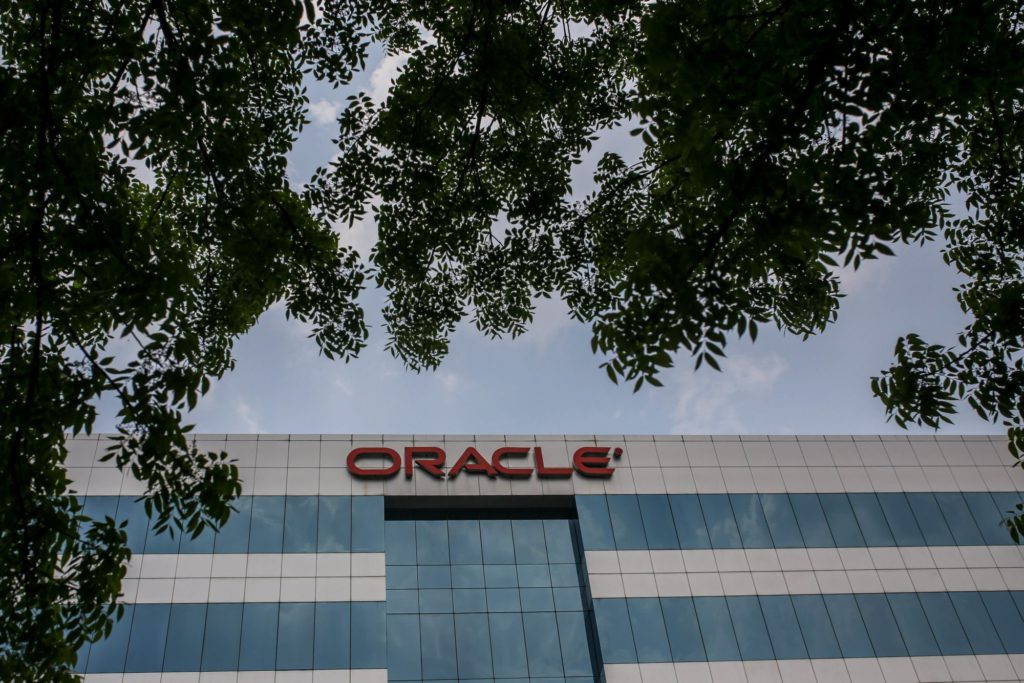
(Bloomberg) — It’s been an ugly week for tech stocks. But it turns out that investors who stuck with the likes of Oracle Corp. and Cisco Systems Inc. — cash generating, dividend-paying companies — managed to beat the market. 

With the Nasdaq 100 Stock Index sinking to the lowest in almost two years, Oracle managed to post a nearly 1% advance, followed by a 0.2% decline for Cisco.

It may not seem like much, but in a week that saw the floor under the world’s biggest technology stocks crumble and the S&P 500 enter into a bear market, the performance stands out. It’s also a testament to the resiliency of these companies that have been around for decades that boast lower growth profiles but strong profitability and the money to reward investors with payouts. 

“Names that have the cash to generate a sustained payout regardless of economic conditions should continue to work for the foreseeable future,” said Mark Luschini, chief investment strategist at Janney Montgomery Scott. “Quality stands out as a positive area.”  

Earlier this week, Oracle shares surged the most in six months after the software company reported cloud revenue that grew 19% to $2.9 billion in the fiscal fourth quarter. International Business Machines Corp. also outperformed broad markets this week, with a decline of just 0.9% compared with the Nasdaq 100’s nearly 5% drop. 

The renewed focus on stocks like Oracle, Cisco and IBM, whose dividend yield currently sits at about 5%, comes after years of fixation on companies like Netflix Inc. and their rapidly expanding revenues. That strategy though has taken a thrashing this year as Treasury yields have soared, hurting the present-day value of profits expected to be delivered years from now. 

Almost everywhere else in technology there was carnage this week as recession angst hit a fever pitch in the wake of the biggest Federal Reserve interest rate hike since 1994. Apple Inc., the world’s biggest tech company, dropped 4.1% for its third-consecutive week of losses. Meanwhile, an exchange-traded fund that tracks dividend paying technology companies is down 21% this year, compared with a 31% decline for the Nasdaq 100.  

With the era of ultra low interest rates now over, it’s important to focus on companies with strong profits that can be reinvested during periods of economic uncertainty, according to Jeremiah Buckley, a portfolio manager with Janus Henderson Investors. 

“These companies can emerge in a position of strength and accelerate market share gains as some of the current macro headwinds abate and we return to a more stable period of economic growth,” said Buckley.

(Updates with closing prices throughout.)

More stories like this are available on bloomberg.com

©2022 Bloomberg L.P.
Close Bitnami banner
Bitnami