
Bloomberg

China Edutech Surge Lures Investors as US Melts Down

(Bloomberg) — The rapid revival of Chinese education companies’ business is boosting investor appetite for the stocks that bore the brunt of Beijing’s yearlong regulatory crackdown. 

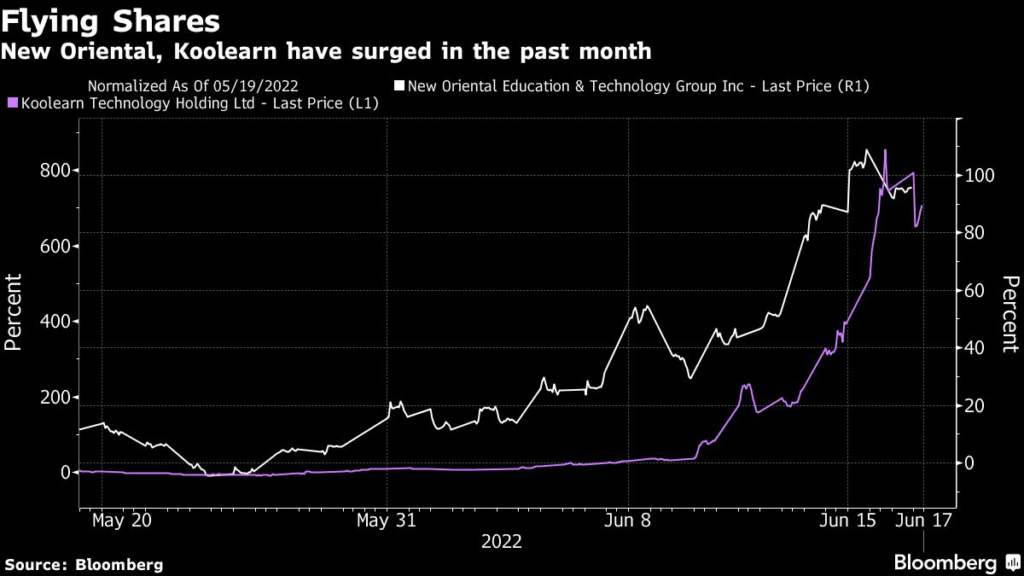
A bellwether of the sector, New Oriental Education & Technology Group Inc., has almost doubled in the past 30 days, turning itself from one of the worst-performing US-listed Chinese stocks since the clampdown into the best this month. Its unit Koolearn Technology Holding Ltd., which has pushed into livestreamed e-commerce alongside its classes, has surged more than 600% in Hong Kong, while the buying spree has spilled over to other players. 

The surge adds to the signs that the worst is probably over for the sector now that Beijing has been vowing since mid-March to maintain capital-market stability and boost the economy. It’s also a result of the country’s diverging monetary policy as the rest of the world tightens and lifts Covid restrictions. 

The stocks look especially appealing given the plunge in U.S. tech shares: The Nasdaq Golden Dragon China Index has been beating the Nasdaq Composite Index since the end of March. The gauge of US-listed Chinese stocks advanced 4.5% on Friday, led by a 9.3% rally in Alibaba Group Holding Ltd. after a report said that China’s central bank has accepted Ant Group Co.’s application to set up a financial holding firm — another signal that Beijing is dialing back from a regulatory crackdown.

“When risk appetite returns, those have been beaten up the most rally the first,” said David Waddell, CEO and chief investment strategist at Waddell & Associates. “The macro setup for Chinese equities is positive and now you get almost every Wall Street bank trying to direct investors’ attention there.”  

China’s $100 billion education technology sector was almost demolished last year when Beijing urged schools for young students to go non-profit as authorities sought to ease burden for students. Shares of New Oriental Education and TAL Education Group plunged more than 90% within months through July. The drastic, rapid regulatory overhaul deepened fears over the investability of Chinese stocks as a whole.

Citigroup Inc. analysts raised their price target on US-listed New Oriental by 39% after a call with management Thursday, citing the contribution from Koolearn, which combines online learning with livestreamed e-commerce. New Oriental holds more cash than its market value and has a good track record on share buybacks and special dividends, Citi said.

TAL Education’s American depositary receipts have almost tripled since mid-March, while Gaotu Techedu is up nearly 40% in the same period.  

To be sure, some investors are skeptical that many Chinese companies that suffered from the crackdown will be able to transform and revive their businesses as New Oriental did. 

“The hedge funds and institutional investors are still on the sidelines — unless they become more active and aggressive in buying, I don’t think that rally is going to be sustainable yet,” said Henry Guo, an analyst at M Science LLC, who believes the recent education rally has been driven by bargain-hunting retail investors. 

Still, the edutech surge has lured some investors to look at other stocks hit by the crackdown. This week, Chinese online gaming giant Tencent Holdings Ltd. overtook chipmaker Taiwan Semiconductor Manufacturing Co. as the most-valuable company in Asia following a recent rally. 

The multiples for Chinese ADRs “are likely close to a trough, offering stock opportunities at good bargain prices, albeit we remain cautiously selective,” said Jessica Tea, investment specialist for Greater China and APAC equities at BNP Asset Management. 

Tech Chart of the Day


The Nasdaq 100 Index rebounded Friday, but was set for a weekly drop of about 5% as recession fears returned to haunt stock markets.

Top Tech Stories

  • Elon Musk discussed his stance on what types of content should be allowed on Twitter Inc.’s social network in a meeting with Twitter employees, saying that people should be allowed to say “pretty outrageous things” but that the platform doesn’t have to give those posts reach.
    • Musk, who met with Twitter employees for the first time since signing the $44 billion deal to acquire the company, told staffers they shouldn’t worry about changes to their jobs once he takes over — as long as their work is “exceptional,” that is.
  • China’s No. 2 online retailer, JD.com Inc., sees worrying signs that shoppers are reluctant to reopen their wallets even as major cities emerge from bruising Covid lockdowns, suggesting consumer spending may take months to recover.
  • JD.com is exploring a possible foray into food delivery, a top executive said, potentially pitting the Chinese e-commerce giant against two of the country’s most formidable tech companies.
  • Adobe Inc. reduced its annual revenue forecast, saying its business would be affected by currency fluctuations, seasonal shifts in demand and the decision to end sales in Russia and Belarus after the invasion of Ukraine.
  • ByteDance Ltd. has shut down a game development studio it acquired just three years ago, slashing more than a hundred jobs in a major setback for its quest to challenge Tencent Holdings Ltd. in mobile gaming.

(Updated share moves at open and added details in the fourth paragraph)

More stories like this are available on bloomberg.com

©2022 Bloomberg L.P.

US Factory Output Surprises With First Decline in Four Months

(Bloomberg) — US factory production unexpectedly declined in May for the first time in four months, restrained by ongoing supply challenges and hints of cooler demand for some big-ticket consumer goods.

The 0.1% decrease followed 0.8% increases in the prior two months, Federal Reserve data showed Friday. Total industrial production, which also includes mining and utility output, rose 0.2% last month.

Median forecasts in a Bloomberg survey of economists called for a 0.3% advance in factory output and a 0.4% gain in overall industrial production.

The disappointing factory output figure suggests rising borrowing costs, more moderate demand for some consumer merchandise and concerns about a broader economic slowdown are beginning to temper the pace of manufacturing.

The Fed on Wednesday raised interest rates by the most since 1994 in an intensified effort to curb inflation, which Chair Jerome Powell said is largely being fueled by forces outside of its control. Since the Fed doesn’t have the tools to affect such supply shocks, it’s trying to bring demand down.

The drop in May’s manufacturing output reflected decreased production of wood products, machinery, and appliances and electrical equipment, the Fed’s report showed.

Business Equipment

Production of business equipment increased 0.3%, the smallest gain in four months. Output of consumer goods also cooled, rising just 0.1%. 

Motor vehicle output climbed 0.7% after sizable gains in the prior two months, further indicating semiconductor supply shortages are dissipating. Excluding autos, factory output fell 0.1%, the first drop since January.

Capacity utilization at factories decreased to 79.1% from 79.2%, the Fed’s report showed.

The data also showed a 1% increase in utility output as warmer weather boosted demand for air conditioning. Mining output rose 1.3%. Oil and gas well drilling advanced 6.2%, also the most since January, and is 57.2% higher than a year earlier.

Regional surveys so far this month have shown a weakening in manufacturing. A gauge of New York state manufacturing activity unexpectedly contracted for a second month in June, while a gauge of business activity in the Philadelphia area shrank for the first time since May 2020.

(Adds graphic)

More stories like this are available on bloomberg.com

©2022 Bloomberg L.P.

Crypto Exchange Giant FTX Enters Canada With Acquisition

(Bloomberg) — Crypto exchange giant FTX is expanding its global footprint with a new acquisition in Canada, despite turmoil in the digital-asset market.

The Bahamas-headquartered crypto exchange said in a statement it has entered into an agreement to buy Bitvo, Inc., a Canadian crypto asset trading platform based in Alberta. Terms of the deal were not disclosed. The acquisition is expected to close in the third quarter of 2022.

“Our expansion into Canada is another step in proactively working with cryptocurrency regulators in different geographies across the globe,” Sam Bankman-Fried, CEO of FTX, said in the statement.

The crypto billionaire told Bloomberg previously that the firm has billions of dollars for acquisitions. The exchange raised $400 million at a $32 billion valuation in January. FTX’s US entity separately raised $400 million and bought Ledger X, a Commodity Futures Trading Commission-regulated exchange and clearinghouse, last year to gain a foothold in the derivatives market in the US.

A report from crypto-data firm Kaiko showed that trading volume on FTX surpassed Coinbase, its main competitor in the US, for the first time ever in May. Earlier this week, Coinbase announced that it will lay off 18% of its workforce amid a worsening crypto downturn.

Bitvo is registered as a restricted dealer under the securities laws of all provinces and territories in Canada, according to the news release.

More stories like this are available on bloomberg.com

©2022 Bloomberg L.P.
Nexo Co-Founder Says Lender Has ‘Zero’ Exposure to Three Arrows

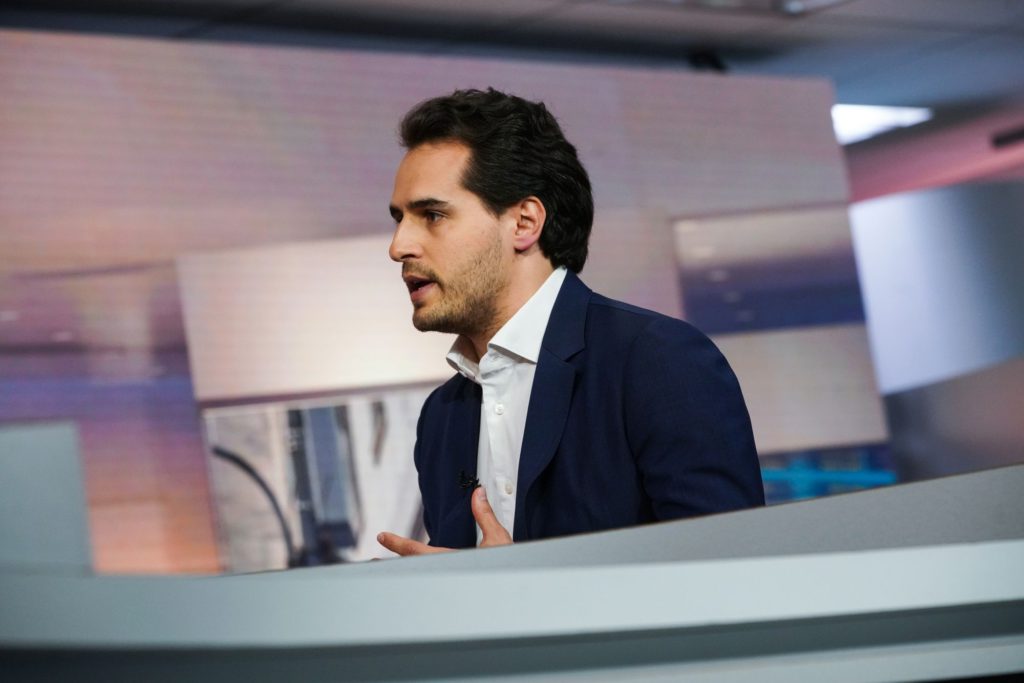
(Bloomberg) — Crypto lender Nexo says it has “zero” exposure to Three Arrows Capital LLC and at one point declined to provide a loan to the troubled hedge fund at the center of mounting speculation about its financial health.

“We have zero exposure to 3AC,” said Antoni Trenchev, Nexo co-founder, on Bloomberg Television Friday. “A few years ago they came to us and asked for an unsecured loan, which we did not feel comfortable providing because it goes against our risk-management parameters.” 

Singapore-based Three Arrows, a large crypto investor and holder of digital tokens, stirred concern about troubles at the firm after a cryptic tweet from its co-founder Zhu Su on Tuesday. The executive tweeted that Three Arrows is committed to “working this out,” without providing further details. The firm didn’t immediately respond to a request for comment by Bloomberg.

The crypto industry has been rocked by suspected problems at major exchanges and hedge funds after recent troubles at crypto lender Celsius Network and the global plunge in digital-asset prices.


Industry players are now seeking to reassure clients on their liquidity and exposure to counterparties. Crypto exchange BitMEX gave a $6 million secured loan to Three Arrows, a person familiar with the matter told Bloomberg on Friday. The amount is relatively small compared with BitMEX’s financial position, the person said. Crypto lending platform BlockFi Inc., meanwhile, said it continues normal operations and no client funds are impacted, in an apparent move to allay concerns over contagion risks from Three Arrows. 

BlockFi confirmed it recently had a large client that failed to meet its obligations on an overcollateralized margin loan, and it “fully accelerated the loan and fully liquidated or hedged all the associated collateral,” Chief Executive Officer Zac Prince said on Twitter, without naming the client. Earlier, the Financial Times reported that BlockFi was among companies that liquidated at least some of Three Arrows’ positions as the crypto hedge fund failed to meet margin calls.

Three Arrows has been liquidated by Deribit, according to The Block. (The parent company of the derivatives exchange also counts Three Arrows as a shareholder.) When contacted for comment by Bloomberg, a Deribit executive pointed to a statement that said the company has “a small number of accounts that have a net debt to us that we consider as potentially distressed”. 

The statement added that operations wouldn’t be affected and that the exchange would remain financially healthy even if none of that debt were repaid.

More stories like this are available on bloomberg.com

©2022 Bloomberg L.P.

SpaceX Fires Employees Over Letter Critical of Musk’s Behavior

(Bloomberg) — SpaceX has fired “a number of employees” responsible for an open letter critical of the behavior of Chief Executive Officer Elon Musk, according to an internal memo.

The open letter, which began circulating among staff in recent days, called Musk’s behavior and tweets “a frequent source of distraction and embarrassment for us, particularly in recent weeks.” The letter, which was viewed by Bloomberg, called on SpaceX leadership to condemn and distance itself from Musk’s “personal brand.”

SpaceX President Gwynne Shotwell said in an internal email also seen by Bloomberg that the company investigated the open letter and has terminated employees involved. The firings were reported earlier by the New York Times. A separate report from Reuters said at least five workers were fired.

SpaceX didn’t immediately respond to a request for comment.

The upheaval hints at discord internally at the rocket launch and satellite communications company over the billionaire’s frequently controversial comments, whether over his stances on overtly political topics, crass tweets or references to drug culture. Last month, Insider reported that Space Exploration Technologies Corp. had paid an employee $250,000 to settle a claim she was sexually harassed by Musk in 2016. He has pushed back against the allegations, calling them “utterly untrue.”

Musk also is in a contentious process to acquire Twitter Inc. for $44 billion. He met with employees Thursday for the first time, where he said people should be allowed to say “pretty outrageous things” on the social-media platform.

More stories like this are available on bloomberg.com

©2022 Bloomberg L.P.

Ambani Let Cricket League’s TV Rights Go in Favor of Streaming

(Bloomberg) — Mukesh Ambani’s group ultimately dropped the pursuit of television broadcast rights to India’s top cricket league that Walt Disney Co. secured for $3 billion as the Indian conglomerate saw limited opportunity for long-term profit from the legacy platform.

The joint venture between Ambani’s Reliance Industries Ltd. and US media giant Paramount Global instead focused on winning the rights to digitally stream the lucrative Indian Premier League, betting its advertising revenue will be four-fold bigger than that for TV in five years, a person familiar with the group’s strategy said. The view was that television would struggle to deliver double digit growth, according to the person, who didn’t want to be identified discussing deliberations that were private.

While Viacom18 Media Pvt., the Ambani-Paramount JV, bid for TV rights in the initial rounds of the auction, this person said the focus was always on ensuring it secured digital rights. A representative for Reliance Industries declined to comment on the auction strategy.

Viacom18 paid 238 billion rupees ($3.1 billion) for the rights to stream the IPL tournament, one of the world’s most-watched sporting events, almost on par with what Disney shelled out. The decision gels with Ambani’s ambitions for his digital unit Reliance Jio Infocomm Ltd. The billionaire, currently India’s richest man, wants to create a consumer ecosystem that marries entertainment and e-commerce to lure local users who are increasingly hooked to their smartphones.

The decision to let go of television rights saved Reliance billions of dollars, funds that can potentially be used to boost the conglomerate’s chances in the upcoming India auction for 5G spectrum. A prized cricket broadcast, which can add millions of subscribers, streamed on a speedy wireless network can be a potent mix for turbocharging Jio.

“The Jio DNA in Reliance gives them the foresight and the conviction to stay with very long-tail customer acquisition strategies,” said Utkarsh Sinha, managing director in Mumbai-based Bexley Advisors.

Jio debuted in 2016 and blew out competition to emerge the top telecom player. “They go for complete scale domination, and IPL has historically proven to be one of the most reliable properties” for adding sticky consumers on an OTT platform, Sinha said.

Pivot to Streaming

Jay Shah, the head of Board of Cricket Control in India, said in a separate interview that the country may see 900 million internet users in five years, underscoring the potential of digital rights. While TV was the staple source of entertainment in Indian middle class homes, the past few years have seen a rapid pivot toward online streaming — a trend exacerbated by the pandemic.

Reliance will be using its IPL rights as a tactical asset to build out streaming and digital platforms including Voot, Jio and others, this person said. Viacom18 has already secured media rights in soccer, badminton, tennis and basketball events, giving it a diverse portfolio of sports assets.

IPL’s streaming rights will propel Viacom18’s position in the local OTT market, according to Jai Lala, chief executive officer at media consultancy Zenith. “It will help Viacom18 to command better market share from its current No. 4 position, but it has to generate adequate content to engage subscribers when there are no cricket matches,” he said.

(Updates with analyst comment in the sixth paragraph.)

More stories like this are available on bloomberg.com

©2022 Bloomberg L.P.

Crypto Lender Babel Freezes Withdrawals as Industry Pain Spreads

(Bloomberg) — In a sign of deepening turmoil in the crypto community, Babel Finance became the second major digital-asset lender this week to freeze withdrawals, telling clients it is facing “unusual liquidity pressures” as it contends with recent market declines.

“The crypto market has seen major fluctuations, and some institutions in the industry have experienced conductive risk events,” the Asia-based lender and asset manager said in a notice on its website to explain the temporary measure.

The news came just a few days after Celsius Network, another crypto lending platform, paused withdrawals, swaps and transfers. Meanwhile, a tweet this week by Three Arrows Capital, a major crypto hedge fund, raised concerns about financial troubles at the firm, adding to the sense of broadening distress. A recent market downdraft has sent the value of all crypto below $1 trillion, a precipitous drop from its highs of $3 trillion late last year.

A spokesperson at Babel told Bloomberg that the team has faced “some pressure” and “are working on it.”

Just in May, Babel reached a $2 billion valuation in a funding round with investors including Jeneration Capital, 10T holdings. Babel’s website shows that Sequoia Capital and Tiger Global are listed as its current investors.

The firm is one of the largest crypto service providers to institutions, according to a recent news release. The firm manages about 500 clients and limits its business to Bitcoin, Ether and stablecoins. At the end of 2021, the firm had an outstanding loan balance of more than $3 billion.

More stories like this are available on bloomberg.com

©2022 Bloomberg L.P.
Inflation Turns EVs Into Luxury Items, Threatening Broader Electric Shift

(Bloomberg Businessweek) — Electric-vehicle prices are going up at a dizzying pace these days. Tesla raised prices by as much as $6,000 per car this week. Rivian bumped up the ask on its battery-powered R1T pickup truck in March, while Ford hiked the sticker on the Mach-E.

Add it all up and an electric car now costs $61,000 on average, according to researcher Edmunds.com. That’s a lot of money when the average new-vehicle price — across all cars — has inflated to $46,000.  And yet the buyers keep coming.

But there’s an underlying problem here. New cars are already out of reach for more than half of Americans, which means EVs are affordable to a limited group of well-off buyers only. Some 30% of all new cars sold last year had a suggested retail price above $50,000, up from just 6% ten years ago, according to Charlie Chesbrough, a senior economist at Cox Automotive. With many buyers priced out of the new-car market, ever fewer people will be able to make the switch to electric and instead keep burning gasoline for years to come.

“It’s clearly a product for the upper crust,” Chesbrough said in an interview. “It’s going to be a long time before electric vehicles are the majority of cars on the road.”

Part of this is the natural evolution of new technology. EVs are still expensive to build. Ford, for example, is in the midst of launching the F-150 Lightning plug-in pickup and is spending $50 billion to roll out more EVs, with plans to build 2 million annually by 2026. Rising raw-materials costs are rendering some battery-powered models unprofitable, the carmaker’s CFO John Lawler said at an investor conference this week. He added Ford is seeing an increase in auto loan delinquencies amid rising inflation and higher interest rates.

CEOs from General Motors, Ford, Toyota and Stellantis wrote to leaders in Congress this week to ask them to waive limits on the $7,500 federal tax credits. GM and Tesla have already maxed out the 200,000-vehicle cap on that program, and Toyota is getting close. Given the growth in EV sales, other producers likely won’t be far behind.

Despite the recent surge in EV sales, automakers will need to sell to middle-class buyers both to reach cost-effective scale with batteries and to make a dent in carbon emissions. That will be tough with $61,000 average sticker prices.

GM is the first to make a move. The company this month dropped the price of its Chevrolet Bolt and its slightly bigger cousin, the Bolt EUV, by $6,000, in part because its credits ran out. The bigger play comes next year, when the Chevrolet Blazer and Equinox go on sale for around $30,000. Both cars could change the game, and the EV market.

More stories like this are available on bloomberg.com

©2022 Bloomberg L.P.
N.Y. Sportsbooks Limit Promos, Ask for Tax Breaks as Losses Rise

(Bloomberg) — Mobile sports betting exploded when it was first offered in New York in January, with the state quickly becoming the top market for such wagers in the US.

But five months in, the business is starting to look a lot like the rest of the country, with operators cutting back on their marketing and promotional offers amid ongoing losses. Giants like DraftKings Inc. and FanDuel, a division of Irish bookmaker Flutter Entertainment Plc, are asking legislators to change the rules to lower their taxes after agreeing to them just last year.

“We simply can’t apply our capital against an irrational investment thesis,” Gary Deutsch, chief financial officer of BetMGM, a joint venture between MGM Resorts International and Entain Plc, said at an investor event in May. “Players would never continue to play if the house always won, and the house cannot continue to play if it’s always going to lose.” 

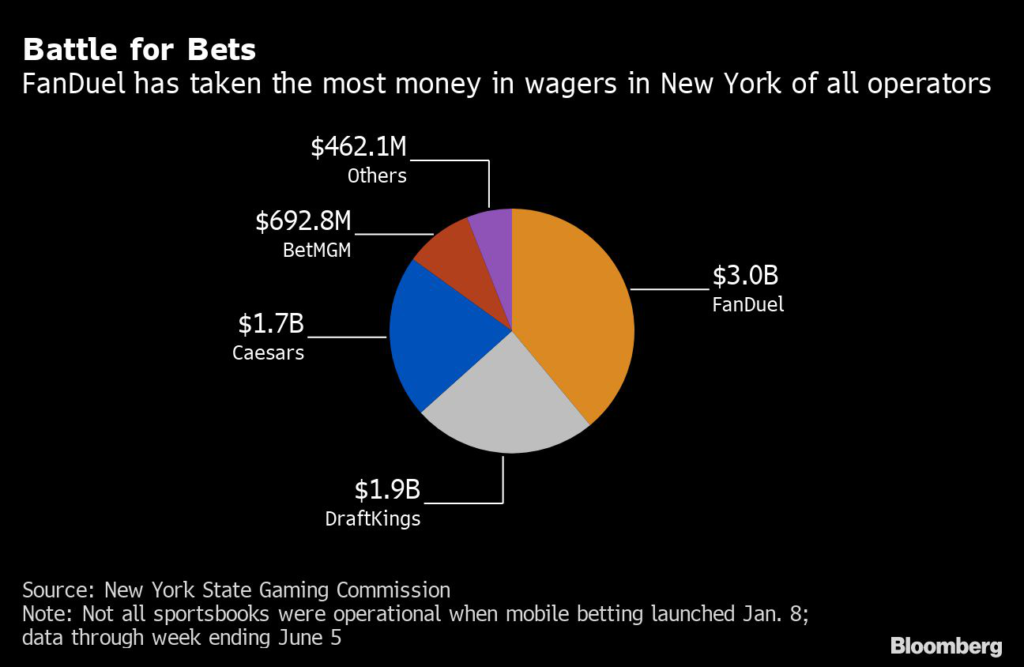
So far, mobile sportsbooks in New York have taken in more than $7.6 billion in bets. The bulk, though, is paid out to winners. It’s mostly the state, not the operators, reaping the benefits.

New York taxes gross gaming revenue from mobile sports wagering at a rate of 51%, among the highest in the country. The average sports-betting tax rate in the US is 19%, according to Morgan Stanley. New Jersey taxes online sports betting at 14.25%, while Pennsylvania charges 36%. New York also includes promotional credits given to players in the calculation of taxes. Many states do that, but it makes the tax bite even higher for operators.

When mobile sports betting went live in New York, companies offered eye-popping promotions to lure users to sign up. The goal was twofold: entice seasoned sports bettors who had been using illegal markets and draw new players to try their hand for the first time.

Free Money

Caesars Entertainment Inc. offered $300 in credit to users who signed up and a deposit match on as much as $3,000. DraftKings gave even odds of winning or losing on bets like either team scoring a point in an NBA game or on top NCAA tournament seed Gonzaga University winning its first round matchup versus the lowest-ranked team.

The incentives were essentially free money, and they worked. More than 1.1 million accounts were created in the first two weeks of legalization, according to GeoComply Solutions Inc. 

Since the online sports betting went live, the state has collected more than $275 million in taxes. That mostly goes to fund schools, with some allocated for youth sports and treatments for problem gamblers. New York collected more money in sports wagering revenue in five months than any other state has collected over several years, Governor Kathy Hochul said in a recent press release.

Operators, meanwhile, say they are struggling in the state because of the high tax rate. Adding to the pain, New York taxes “phantom revenue” from promotional credits, according to BetMGM’s Deutsch.

For instance, if a bettor receives and loses a free, $50 promotional bet, it is logged as $50 in gross revenue for the sportsbook, even though no money is changing hands. Taxing that promotion revenue along with gross gaming revenue can make it “untenable to run a business,” the Tax Foundation said in a February report. The research estimated that the effective tax rate as a percentage of actual revenue in New York, including federal tax, could be more than 77%.

The state’s tax structure “significantly hampers our ability to compete with pervasive, offshore online sportsbooks and undercuts one of the core benefits of legalization, bringing bettors into the legal, regulated market,” DraftKings said in a statement.

Fewer Promos

Once the glamour of the New York launch faded, operators started to adjust. Caesars, which briefly vaulted to the number one spot in terms of bets in New York in January, announced it would “dramatically curtail” marketing nationwide the following month. The company lost $576 million in its online division in the first quarter.

Customers are seeing the operators’ shift. Whitney Tilson, the founder of Empire Financial Research, which provides analysis and commentary on markets, said he made more than $9,000 by taking advantage of various early promotional offers in New York. But if the state was going live now, the companies wouldn’t be offering as lucrative promotions because the market has changed, the former hedge fund manager said.

Tilson said he keeps a bit of cash in the various sportsbooks in case a new promo catches his eye, but he hasn’t “seen an interesting offer in a month.”

Zack Knab was finishing his senior year at Syracuse University when sports betting launched. He put roughly $100 each into six different sportbooks to capitalize on the various offers, and estimates he was up as much as 400% thanks to first-time promotions. Since then he’s “slowly bit into those profits.” 

During the first couple of weeks Knab said he was making three to five bets a day, but he’s now placing just two a week. Sportsbooks are “smarter once you’re in, about not having nearly as high of a payoff or definitely increasing the risks,” Knab said.

Market Leaders

The New York market is starting to look like the rest of the US in terms of market share, with industry leaders FanDuel and DraftKings capturing the most bets.

The state has maintained the No. 1 position nationally every month since its launch, with total monthly wagers continuing to top $1 billion, according to the latest data from state gaming authorities and Legal Sports Report, a website that tracks legal betting in the US.

Even so, BetMGM made a concerted decision to pull back its pursuit of players in New York because of the tax environment.

Flutter, the Irish bookmaker, touted a successful launch in the Empire State, but said it’s seeing signs that competitors are scaling back their initial customer offers. The company said in March that given the current tax environment, the period of early aggressive spending is almost over.

“We hope policy makers in New York recognize that while the state benefited from an initial period of heavy investment amongst operators, such investment is not sustainable beyond a few weeks,” Flutter Chief Executive Officer Peter Jackson said during a March investor call. 

Joe Addabbo, the New York state senator who chairs the Senate’s Racing, Gaming, and Wagering Committee, said the operators were well aware of the taxes when they competed for licenses last year. “That was something that they always knew about,” he said in an interview.

That said, he thinks legislators will discuss changing the rate, along with other tweaks such as whether promotional credits are counted as revenue and whether there should be more operators. That discussion won’t happen until legislators convene for next year’s budget, he said.

“They were all full of fire right out the gate,” Addabbo said of the mobile-betting operators. “You knew they were investing a lot of money, some maybe over-the-top money.”

More stories like this are available on bloomberg.com

©2022 Bloomberg L.P.

China Accepts Ant’s Financial Holding Bid, Reuters Says

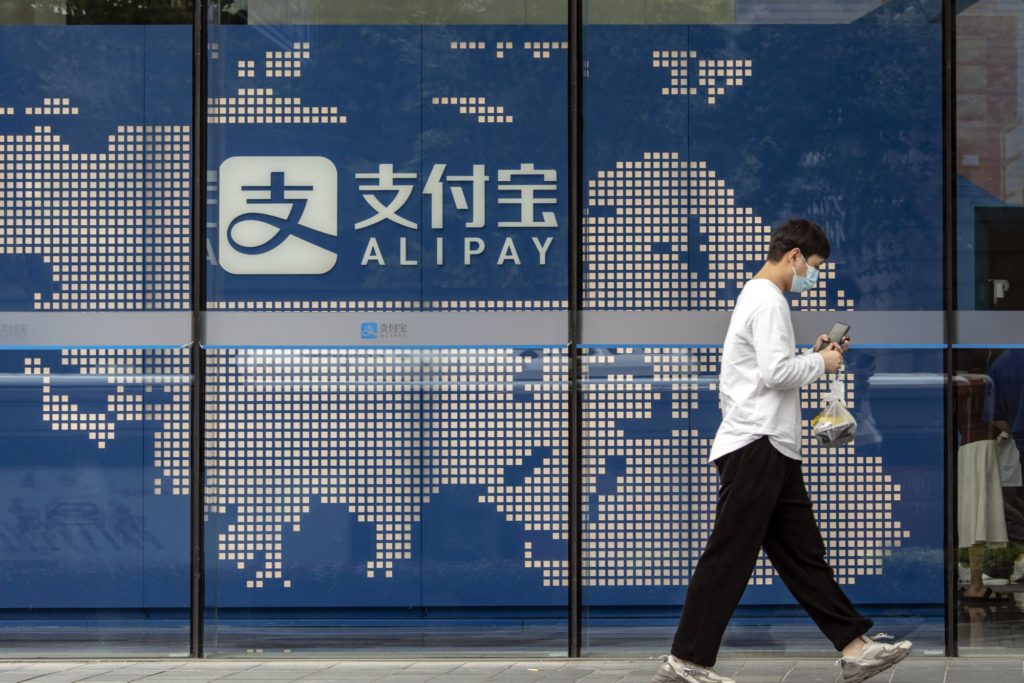
(Bloomberg) — China’s central bank has agreed to accept Ant Group Co.’s application to set up a financial holding company, Reuters reported, clearing a path for the fintech giant to potentially revive its listing plans following a lengthy regulatory overhaul.

The People’s Bank of China’s acceptance signals that approvals are expected and Ant is poised to emerge from a regulatory crackdown, Reuters reported, citing people familiar with the matter. 

Shares in Alibaba Group Holding Ltd., which owns part of Ant, surged more than 9% in pre-market trading in New York.

China Weighs Reviving Jack Ma’s Ant IPO as Crackdown Eases 

Beijing has promised to unwind crackdowns that torpedoed Ant’s record initial public offering in 2020 and ensnared every sector from online education to gaming. Once Ant is able to set up the financial holding company, it can fold key operations into the entity, following a framework laid down by the central bank last year. 

A meaningful relaxation of curbs on Ant and Didi Global Inc. — the most high-profile casualties of President Xi Jinping’s sweeping clampdown on the country’s tech giants — would send a powerful signal that policy makers are following through on recent pledges to support the industry. The Communist Party’s evolving stance toward the private sector has become one of the most closely watched developments in global markets in recent years, with some observers even calling China’s sprawling internet sector uninvestable.

While Ant said in June it has no plans to initiate an IPO, the company’s Chairman Eric Jing said last year that the company would eventually go public. 

More stories like this are available on bloomberg.com

©2022 Bloomberg L.P.

Close Bitnami banner
Bitnami