
Bloomberg

Trudeau Finance Chief Warns of Inflationary Turbulence Ahead

(Bloomberg) — Canada’s finance minister warned of a difficult exit from the pandemic as soaring prices and rising rates squeeze consumers, but said the government is doing all it can to ease the burden on families.

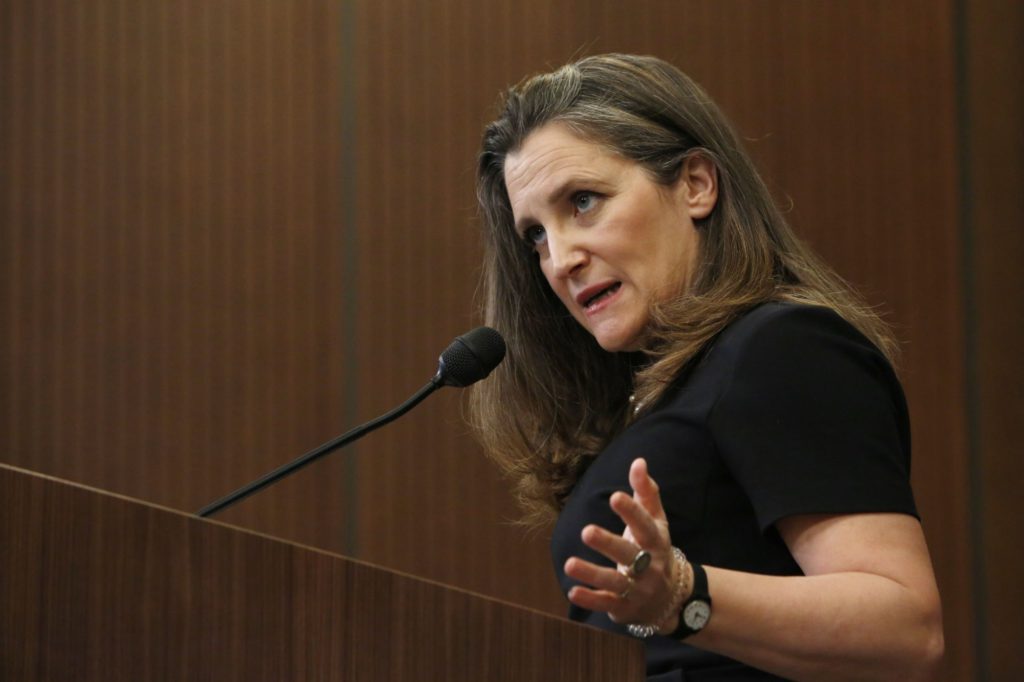
“I do not underestimate the economic difficulties and uncertainty of the months to come,” Finance Minister Chrystia Freeland said Thursday in prepared remarks to the Empire Club of Canada in Toronto. 

Her speech, which contained no new measures, lays out a five-part plan to tackle inflation, with annual price gains on track to exceed 7% when May data is released next week. She said the challenge is global, singling out China’s strict Covid-19 lockdowns and Russia’s invasion of Ukraine as exacerbating factors. 

“We have been through two years of remarkable turbulence,” she said. “Our challenge now is to land the plane. A soft landing is not guaranteed. But, fortunately for us, there is no country in the world better placed than Canada to achieve one.”

The finance minister prioritized the central bank’s role in bringing prices to heel, with officials embarking on an aggressive series of interest rate hikes. She also stressed the need for politicians to avoid “undermining Canada’s fundamental institutions” — an implicit rebuke of Pierre Poilievre, the front-runner to lead the main opposition Conservative Party who has vowed to fire the Bank of Canada’s governor.

Supply Side

Inflation “is a global phenomenon — one driven by factors that no single country is responsible for, and that no single country can insulate itself from,” Freeland said. But she argued Prime Minister Justin Trudeau’s government has a role to play in delivering policy to “make it easier by tackling the supply constraints which are driving the rise in prices.”

It’s doing so in four ways, she said: investing in skills training, keeping spending in check, creating jobs and targeting aid at lower-income households.

Freeland highlighted programs including an increase to old-age benefits, a one-time C$500 ($387) payment to people struggling with housing costs, and the government’s marquee child-care program that will cut fees by as much as 50% for most families by the end of the year.

She also pointed to her government’s move to index many benefits to inflation, including the Canada Pension Plan and old age security payments.

Canada’s fiscal response during the pandemic shot program spending up to almost 30% of gross domestic product. While the government resisted adding new expenditures in its April budget, Freeland’s department forecast expenses that remain elevated near 16% over the next year, higher than the 13% average in the two decades prior to the pandemic.

Freeland emphasized that programs meant to ease the inflationary burden have already been budgeted and said the government is focused on fiscal restraint. “I am determined to see our debt-to-GDP ratio continue to decline and our deficits continue to be reduced. Our pandemic debt must — and will — be paid down.”

Speaking to a room filled with Toronto’s business class, Freeland made reference to the fact many economists had projected much higher spending in the budget.

“I know that my fiscal prudence surprised many in this room,” she said. “Yes, I do read your predictions. This fiscal restraint was very intentional. At a time when inflation was elevated, we knew we needed to be careful not to increase aggregate demand.”

‘Achilles Heel’

Freeland also delivered an implicit response to criticism from her predecessor, Bill Morneau, who told a similar audience two weeks ago that Trudeau’s government isn’t sufficiently focused on long-term growth challenges.

“We are serious about tackling the productivity challenge that is Canada’s Achilles heel,” she said, acknowledging “a lot of skepticism about whether we can get it done.”

To quell those concerns, she cited her government’s success in getting other big things done including imposing a national carbon tax, fostering a thriving technology sector and getting provincial buy-in for the daycare plan.

Freeland also said that, like other industrialized economies, Canada faces a labor shortage. She hailed the government’s commitment to increasing immigration levels as one potential remedy. 

Some economists, however, have called for policy makers and businesses to retain older workers who are on the cusp of leaving the workforce and to attract those that have already left.

Increasing the participation rate of workers in their 50s and 60s would quickly ease a glut of job vacancies that’s grown to 1 million, according to a report Wednesday by Bank of Nova Scotia Chief Economist Jean-Francois Perrault and Robert Asselin, senior vice president at the Business Council of Canada.

Asselin, who was director of policy under Morneau at the finance ministry, offered a tepid assessment of Freeland’s speech.

“There is not much to see here other than political rhetoric, frankly. The reality is that the federal government fiscal policy is still expansionary,” he said by email. “This is all on the central bank now: They will be the ones in charge of cleaning up this inflation mess.”

(Updates with comments on productivity and labor shortage, plus economist reaction.)

More stories like this are available on bloomberg.com

©2022 Bloomberg L.P.
Elon Musk Tells Staff Twitter Should Allow ‘Pretty Outrageous’ Tweets

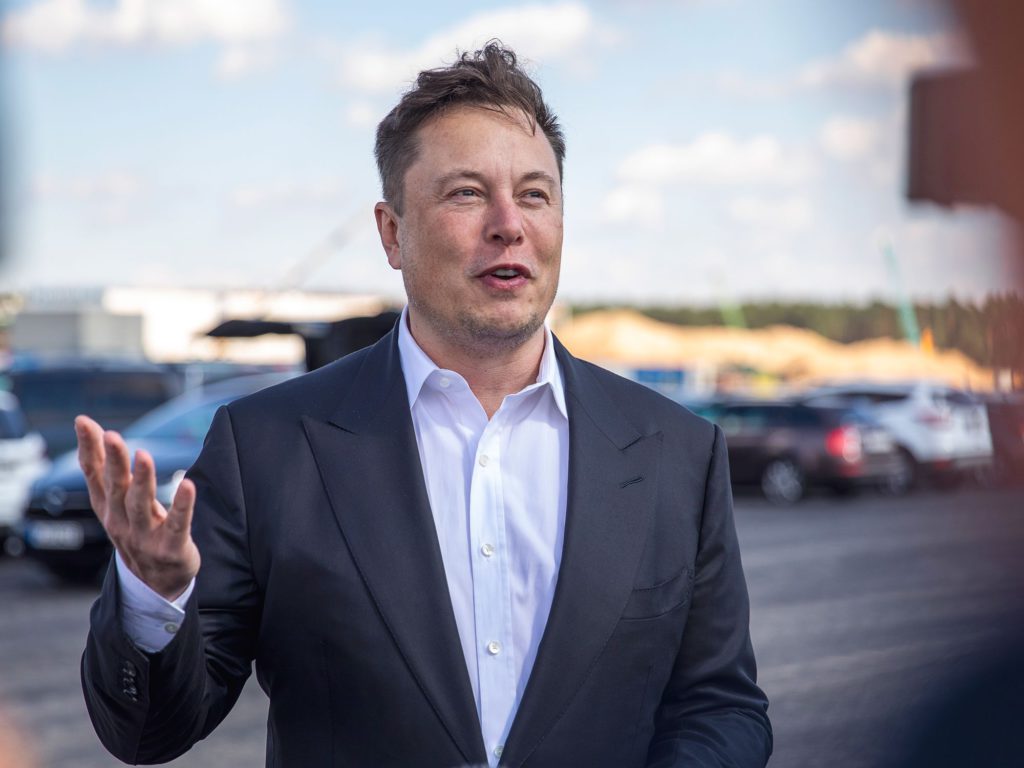
(Bloomberg) — Elon Musk discussed his stance on what types of content should be allowed on Twitter Inc.’s social network, saying that people should be allowed to say “pretty outrageous things” but that the platform doesn’t have to give those posts reach. 

Musk elaborated on his beliefs Thursday during an all-hands gathering at Twitter, according to staff who participated in the virtual meeting. It marked the first time the billionaire, who is chief executive officer of Tesla Inc., has addressed Twitter employees since agreeing in late April to buy the company for $44 billion.

Twitter needs to allow more space for people to say whatever they want, Musk said, as long as it doesn’t violate the law. But he added that the company needs to balance that by making sure people “feel comfortable” on the service, otherwise they won’t use it, according to people familiar with the discussion. His goal is to expand Twitter’s user base to 1 billion users, he said. The company had about 229 million daily active users as of March.

EXPLAINER: Twitter, Musk and Why Online Speech Gets Moderated

Employees who attended the meeting said Musk — who attended the video call wearing a white button-down shirt and appeared to be joining from his phone — also talked about possible product changes, including the idea that users should have to pay to be verified as a real human user, through a tool like subscription service Twitter Blue. He also proposed that Twitter use verification as a way of ranking content on the platform. His goal is to “maximize usefulness of the service,” Musk said.

When asked about potential layoffs, Musk didn’t dismiss the idea, saying that Twitter “needs to get healthy.”

“Anyone who is a significant contributor should have nothing to worry about,” he added.

Twitter started allowing full-time remote work more than two years ago, and Musk was asked multiple questions at the meeting about the staff’s future ability to keep working from home. Musk said that the priority would be for people to work together in person, but if someone is “exceptional at their job” then it’s possible for those people to continue working remotely.

Many employees posted in an internal Slack channel as the conversation unfolded, and Musk’s comments about remote work being reserved for “exceptional” workers prompted a number of heated replies, according to people with knowledge of the situation.

Musk wasn’t directly asked and didn’t address the question of whether he is committed to buying Twitter. He has created concern over recent weeks that he was no longer interested in acquiring Twitter, or might want to lower the per-share price. First he said he wanted to put the deal “on hold” while he investigated the number of bots on the service, and later he sent a formal letter to Twitter executives saying he might walk away from the deal if the company didn’t do more to prove the size of its user base. 

The Tesla CEO, who is also the world’s richest person, has publicly criticized Twitter’s products, executives and policies since striking the deal agreement, frustrating some employees who are concerned that he doesn’t understand the complexities of running a large social networking company.

Musk reiterated that he’s not against advertising as a model, noting that it’s very important to Twitter’s business, but that ads and subscriptions are both key to boosting revenue. He said ads should be entertaining, and he doesn’t want to let businesses advertise “bad products.” He told a story about how he recently bought a “scammy product” from a YouTube ad and it didn’t work as advertised. 

“That’s totally not cool,” Musk told employees.

Musk was also asked if he plans to take the CEO role at Twitter. He didn’t give a clear answer, saying he’s not hung up on titles, but does want to “drive the product in a particular direction.” 

“There’s a lot of chores if you’re the CEO,” he said. “I don’t really care what the title is, but obviously people do need to listen to me.”

(Updates with details from meeting starting in third paragraph.)

More stories like this are available on bloomberg.com

©2022 Bloomberg L.P.

Five Key Takeaways From Musk’s Twitter Staff Meeting

(Bloomberg) — Here are the key takeaways from Elon Musk’s remarks at the Twitter Inc. staff meeting Thursday. Click here for our TOPLive blog:

  • Musk outlined a vision to get Twitter to 1 billion users and floated options like a subscription model and charging users to verify their accounts (clarifying they wouldn’t necessarily reveal identities but that payment would in itself be verification). Musk also said that advertising was still important for Twitter’s business model, but both advertising and subscription options made him more worried about bots.
  • Top of mind for Twitter staff was Musk’s view on remote working. Musk said that only “excellent contributors” should be allowed to work remotely or from home and that too many people were dwelling on the idea of remote work. As a private company, Twitter would have a similar compensation structure to that of SpaceX, with stock and options awards and liquidity windows every six months, he said.
  • Musk said any layoffs would be considered on a performance basis with a performance bar. He said the priority was to have revenue that was higher than costs and to make product improvements. Musk said he was not hung up on being CEO himself if the deal goes through.
  • Musk said he’s in favor of “moderate politics,” and he’s “pretty close to center.” The world’s richest man also said he would allow a diverse range of views on the platform, including extreme views that are within the parameters of the law.
  • Ultimately, Musk did not address the issue of or state whether he was committed to a deal to buy Twitter. It should be noted that he also wasn’t asked the question.

More stories like this are available on bloomberg.com

©2022 Bloomberg L.P.

War in Ukraine Risks Shrinking Country’s Vital Harvests by Half, Satellite Data Show

(Bloomberg) — Satellite views of Ukraine’s vast farmland show some of the country’s key upcoming harvests could be halved by the war.

The weather division of Maxar Technologies Inc. used images taken from space, coupled with vegetation-health indexes, to examine the toll the war is taking on Ukraine’s agriculture sector. The findings point to a 30% drop in the spring-crop area, which could cut corn output by more than 50% and sunflower production by 40% from last year, it said in a report posted Thursday.

It’s among the latest evidence showing the devastating affect that Russia’s invasion is having on a country known as the breadbasket of Europe, as farmers have found it harder to sow and exports have been stifled. While planted crops largely appear in normal health, impacts from weather and shortages of crucial inputs like fertilizer remain in focus ahead.

The steepest planting shortfalls are near the northern border, where Russia launched its invasion. Ukraine’s agriculture ministry recently forecast a 40% drop in grains production. 

Maxar’s images also show two Russian-flagged bulk carriers recently loaded grain at the Crimean port of Sevastopol and were later shown to unload in Syria. Another ship was captured loading grain at the port several days ago, indicating it “does not appear to be an isolated incident,” Maxar said.

Ukrainian President Volodymyr Zelenskiy has said Russia is stealing its grain in occupied regions. Senior European officials see little chance Russia is willing to ease global food pressures by striking a deal to let Ukraine resume crucial grain exports, Bloomberg reported Wednesday. Russia denies using food as a weapon.

More stories like this are available on bloomberg.com

©2022 Bloomberg L.P.
SpaceX Staff Slam Musk to Company Executives, The Verge Says

(Bloomberg) — SpaceX employees have penned a letter to company executives, denouncing the behavior of Chief Executive Elon Musk in the wake of sexual harassment allegations. 

The letter which was shared with over 2,500 employees and reviewed by The Verge, states that employees “across the spectra of gender, ethnicity, seniority, and technical roles” had a role in writing.

The Verge did not report whether the letter had been delivered to SpaceX President Gwynne Shotwell or the anticipated timing. 

“Elon’s behavior in the public sphere is a frequent source of distraction and embarrassment for us, particularly in recent weeks,” the letter reads, according to The Verge. 

“As our CEO and most prominent spokesperson, Elon is seen as the face of SpaceX — every Tweet that Elon sends is a de facto public statement by the company. It is critical to make clear to our teams and to our potential talent pool that his messaging does not reflect our work, our mission, or our values,” the letter added.

The letter’s authors, who have remained anonymous, suggest the company “publicly address and condemn Elon’s harmful Twitter behavior,” and “hold all leadership equally accountable.”

Employees who have access to the letter have been asked to sign publicly or anonymously. 

SpaceX representatives did not immediately respond to Bloomberg for comment. 

To view the source of this information click here

More stories like this are available on bloomberg.com

©2022 Bloomberg L.P.
Token at the Center of Crypto Storm Becomes Arbitrage Target

(Bloomberg) — An arbitrage opportunity appears to be emerging already from the latest crypto meltdown, with traders pointing to the price disparity between Ether and a version of the second-largest digital-asset that has been at the center of the recent turmoil.

The token, stETH, represents staked Ether on the Ethereum blockchain and counts troubled crypto lender Celsius and hedge fund Three Arrows Capital as major holders. Since its launch by decentralized app Lido Finance in late 2020, stETH has become one of the most popular collateral assets for lending and borrowing in DeFi. But the recent market illiquidity and stETH’s worsening discount to Ether’s price has now made it the focal point of critical market chatter. 

The token’s deterioration is even being attributed as the main driver of Celsius’s decision to halt trading on its lending platform, according to crypto data firm Kaiko. Meanwhile, another crypto company seen as being deep into a liquidity crisis of its own, hedge fund Three Arrows, has sold off a chunk of its stETH tokens.

But as selloff pressures mount, crypto traders are increasing their position in stETH, according to blockchain data and market participants. 

Traders see the discount as an arbitrage opportunity since stETH will become redeemable 1-to-1 to Ether after the so-called Merge — an upgrade to the Ethereum network moving it from proof-of-work to proof-of-stake — according to Rahul Rai, co-head of market neutral at crypto fund BlockTower Capital.

“If you can buy stETH at 0.85 to Ether and you believe the Merge will happen in a realistic time frame, that’s a 15% return,” said Rai. 

Beached Whales

Sophisticated traders in particular are bullish on the discounted stETH, according to blockchain data analytics platform Nansen, which tracks addresses associated with more successful (or more profitable) traders which it has labeled “Smart Money.” The number of those digital wallets holding stETH hit a high of 101 on Wednesday, up from a count of 88 on June 7. 

“Plenty of smaller players are playing the [arbitrage trade] as these whales flop around,” said Nansen’s content lead Andrew Thurman, referring to large firms like Celsius and Three Arrows. 

Celsius and Three Arrows did not respond to requests for comment. 

Three Arrows started withdrawing stETH tokens as early as May, according to Nansen. On June 14, it pulled over 80,000 stETH from DeFi lending project Aave in just four transactions, and then swapped 38,900 of the stETH for 36,700 Ether. The swap represents a loss of 2,200 Ether — a “big haircut” for a fund like Three Arrows, said Thurman. Meanwhile, Celsius still has about $475 million in stETH holdings, according to a Kaiko post Wednesday citing Dune Analytics data. 

Risk and Reward

Even under normal market conditions, keeping stETH’s value pegged to Ether is tricky as the staked token comes with counterparty risks and won’t be redeemable until sometime after the Merge, said BlockTower’s Rai. The Merge has been postponed several times and is now anticipated to take place later this summer or toward the end of the year.

Possible “liquidation cascades” are also a concern, said Tarun Chitra, co-founder of crypto risk modeling platform Gauntlet. 

“If you’re doing the [arbitrage] but can’t hold through a large liquidation event, then you might sell into that event and cause the price to go down further,” Chitra said. “So you need to be very cognizant of the amount of leverage used.”

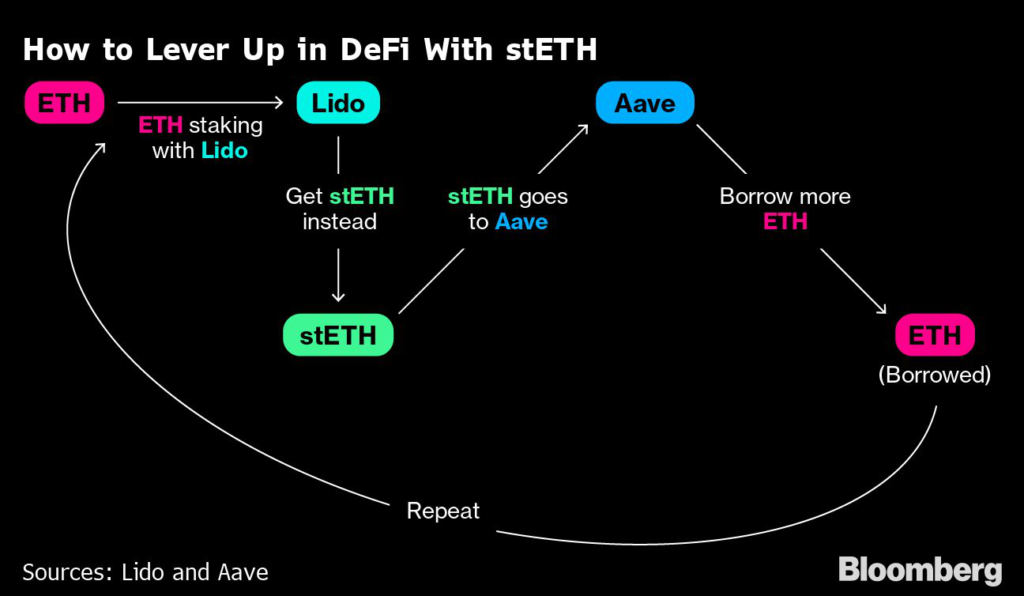
One of the most popular stETH trades involves using the token as collateral on Aave in order to borrow more Ether and then stake that borrowed Ether with Lido, resulting in even more stETH. But as stETH’s discount to Ether deepens, loans on Aave using stETH as collateral could be liquidated, driving the price of stETH further from Ether and causing even more loan liquidation, Chitra explained.

More than 1 million stETH sits on Aave at the moment, according to Nansen. 

“Fire Sale”

The team behind Lido has been aware of the discount for months, Vasiliy Shapovalov — one of the platform’s main developers — told Bloomberg. Since May 13, its staking page has pushed out notifications encouraging users to buy discounted stETH on decentralized exchange aggregator 1inch “rather than staking directly with Lido.” 

The token was meant to be a solution to Ether staking, which is a way for investors to lock up their Ether and earn rewards ahead of the network’s Merge upgrade. While directly staking Ether locks up the coins for months at a time, Lido’s solution offers users stETH that they can trade, lend and borrow with instead. 

Even so, this isn’t the first time that stETH has traded at a deep discount to Ether, said Shapovalov. In April 2021, a steep drop in Ether’s price caused the gap to widen between the two tokens. 

“In the situation of a fire sale over all of the market and when Ether has better liquidity than stETH, both are necessary, stETH will trade at discount,” said Shapovalov.

More stories like this are available on bloomberg.com

©2022 Bloomberg L.P.

Warehouse Worker Says Amazon Promised to Pass Concerns to Bezos, Violating Labor Law

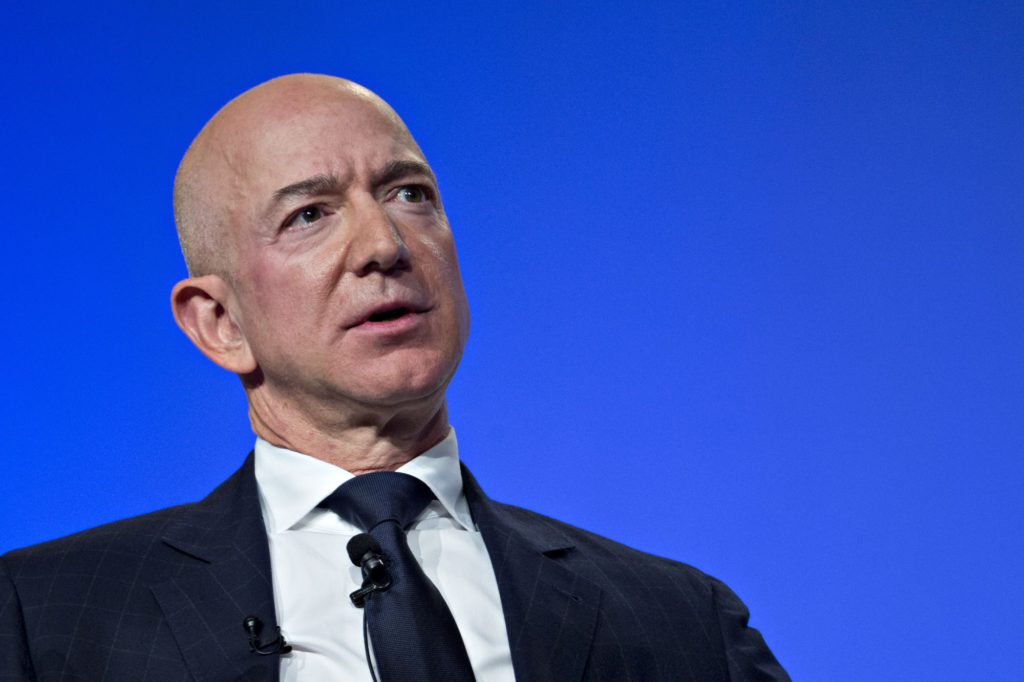
(Bloomberg) — An Amazon.com Inc. worker says a consultant hired to defeat a union campaign at a company warehouse in New York promised to take her workplace concerns to Jeff Bezos — a potential violation of US labor law. 

During a National Labor Relations Board hearing Thursday, Natalie Monarrez testified that she had a 45-minute conversation in May 2021 with Bradley Moss, a labor consultant who she said introduced himself as an Amazon auditor. Moss asked her to list her concerns and said his boss “had direct ties to Jeff Bezos and would be relaying all of my concerns and issues” to the Amazon founder, Monarrez said.

Monarrez also said it was the first time during her five years at Amazon that management had asked her to describe work-related problems. US labor law restricts companies from promising new perks to workers if they reject unionization or implying that their concerns will be fixed if they don’t unionize.

An NLRB judge is considering a complaint brought by the labor board’s general counsel accusing Amazon of interfering with workers’ rights at the Staten Island warehouse where workers recently voted to unionize, and firing an activist for organizing at another nearby facility. 

The complaint says that last year Amazon illegally coerced employees in numerous ways, including by prohibiting them from distributing union literature and telling staff that organizing efforts would fail because the union organizers were “thugs.” The complaint also says the company asked employees to reveal their workplace grievances and promised to fix them if they rejected unionization.

The case is one of several involving the Staten Island warehouse currently being pursued by the agency’s prosecutors.

Amazon has denied wrongdoing. “These allegations are without merit and we look forward to presenting the facts,” company spokesperson Kelly Nantel said via email at the start of the hearing.

“Unless a company has a pre-existing practice of soliciting grievances, beginning to do so during a union organizing campaign and promising to fix the grievances is coercive, in that it tells employees that they don’t need a union to address their issues,” former NLRB Chair Wilma Liebman, who led the agency under President Obama, said in an email last week.

Labor board judges’ rulings can be appealed to NLRB members in Washington and from there to federal court. The agency has no authority to impose punitive damages, but can require other remedies such as posting of notices and reversals of policies or punishments. 

In the case now before a judge, the labor board’s general counsel Jennifer Abruzzo is seeking an order requiring Amazon to read a message to employees about their rights, post it electronically and in locations including bathroom stalls. She’s also asking the judge to require mandatory training about workers’ rights for Amazon’s managers and its outside anti-union consultants.

Amazon has challenged the Amazon Labor Union’s April election win at the Staten Island warehouse, which was the first time organized labor has gained a foothold at one of the e-commerce giant’s US. facilities. Amazon claims the union broke election rules and that the NLRB violated its duty to be impartial, including by suing for a federal court injunction to reinstate another activist the agency alleges was illegally fired there. 

Abruzzo, appointed by President Joe Biden, dismissed that allegation in an interview last month. “But for Amazon’s unlawful labor practice,” she said, “we would not have had to go into district court to seek an injunction.”

More stories like this are available on bloomberg.com

©2022 Bloomberg L.P.
WTO Nears Vaccine, Fisheries Deals as Talks Hit Final Hours

(Bloomberg) — The world’s top trade ministers honed in on a package of accords including the reduction of fishery subsidies and a loosening of vaccine-production limits after marathon talks in Geneva that a day ago looked for many delegates to be destined for failure.

If finalized, the package would break the World Trade Organization’s seven-year negotiating drought and avert a damaging impasse for an organization that’s struggled to gain its footing after four years of attacks under former President Donald Trump, a pandemic, strained supply chains and Russia’s war with Ukraine. 

The possible outcome, described by an official involved in the latest talks, emerged after an all-night negotiating session at the WTO’s headquarters on the shores of Lake Geneva and may provide a sufficient basis for the WTO Director-General Ngozi Okonjo-Iweala to claim negotiating success after just over a year on the job. 

If approved by consensus before the closing ceremonies later Thursday, the pacts could put new momentum behind the WTO and its ability to govern the $28 trillion global trading system.

“On the march at the WTO for that final agreement at MC12… getting closer,” European Union Executive Vice President Valdis Dombrovskis tweeted, referring to the WTO’s 12th ministerial meeting, which started Sunday and was extended a day to avoid an impasse.

Among the surprising turnarounds was India’s embrace of a unified approach, after several days of threatening to hold a hard line even if it meant the talks collapsed.

“There was a lot of understanding amongst each other. There was a lot of sensitivity to each other’s concerns and needs,” Indian Commerce Minister Piyush Goyal told reporters Thursday. “In the true spirit that embodies world trade — in that spirit that the outcomes of the MC12 are being watched by the world as a signal that the multilateral order is not broken.”

Trade ministers will give their final consideration to a deal to water down the WTO’s intellectual-property protections for Covid-19 vaccines — a key agreement that Okonjo-Iweala said was necessary to end the “morally unacceptable” inequity of vaccine access in poorer nations. The WTO’s trade and health package also includes commitments to help ease the transportation and distribution of vaccines across borders. 

WTO members are also poised to agree to a scaled-down agreement to curb harmful government fishing subsidies, fulfilling a key 2015 United Nations sustainability target aimed at slowing the rapid depletion of global fish stocks. 

The package would also temporarily extend the WTO’s 24-year-old moratorium on e-commerce tariffs until March 31, 2023. There were fears that if the 1998 accord lapsed this week, it could open a new regulatory can of worms that could result in cross-border tariffs on Amazon.com purchases, Netflix movies, Apple music, and Sony PlayStation games. 

Ministers are expected to give their final assessments of the package at a WTO heads of delegation meeting this evening. The package is not guaranteed and there may be further changes because the WTO’s consensus principle permits any member to reject any agreement for any reason.

(Update’s with comments from India in sixth paragraph.)

More stories like this are available on bloomberg.com

©2022 Bloomberg L.P.

Anna Sorokin Wants to Change ‘Scammer Persona’ by Selling NFTs

(Bloomberg) — Anna Sorokin, the infamous scammer who inspired a Netflix series that chronicled her grifting pursuits, is exploring a new hustle — NFTs.

The exclusive collection of NFTs is an attempt to move away from her “scammer persona,” a decision made after Sorokin became known for her delinquencies, which ranged from stealing from businesses and friends while posing as German heiress. Sorokin announced the collection in an interview that first aired on NBC News NOW. 

A total of 10 NFTS will be offered to the public under the name “Reinventing Anna,” a nod to the Netflix title. 

Russian-born Sorokin, more commonly known by her alias, Anna Delvey, rose to fame after gaining traction in the elite Manhattan social scene. Her status as a pretend socialite, sitting on a make-believe $60 million trust fund gave her the platform to convince wealthy people to invest money in her art foundation and social club.

Sorokin was convicted of eight felonies including grand larceny and theft of services and spent nearly four years behind bars. She remains in custody in a US immigration detention center where she’s facing possible deportation.

Related:  The Luxury in Netflix’s Inventing Anna Is Ill-Gotten, But Still Delicious

More stories like this are available on bloomberg.com

©2022 Bloomberg L.P.

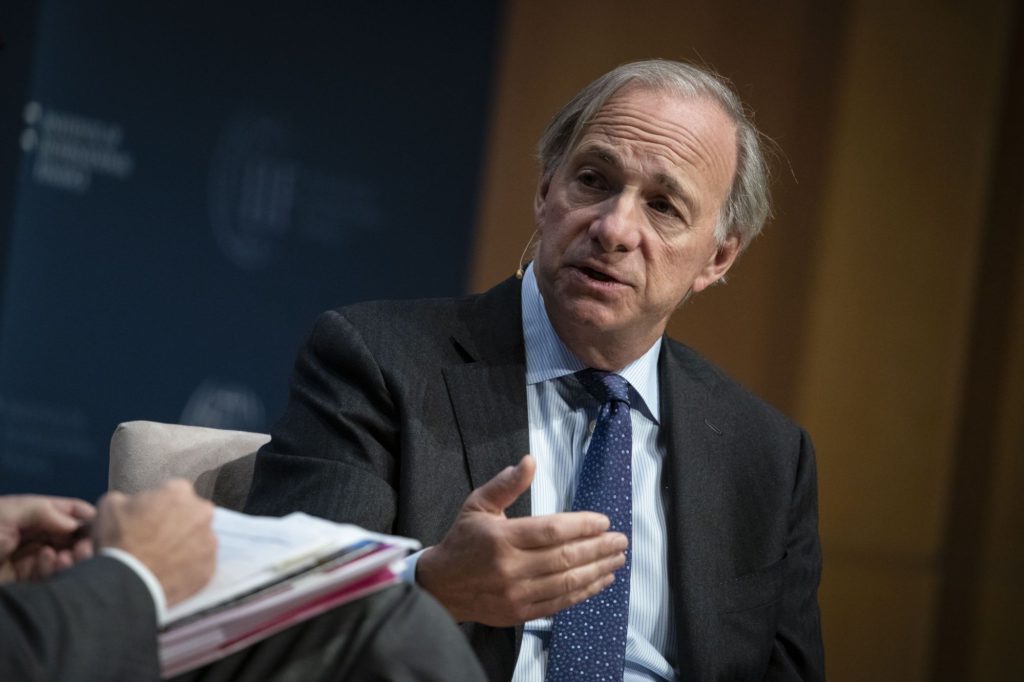
Ray Dalio’s Bridgewater Builds $5.7 Billion Bet Against European Stocks

(Bloomberg) — Ray Dalio’s Bridgewater Associates has emerged as the biggest short seller of European stocks, wagering more than $5.7 billion against them in a bid to profit from a potential decline in value.

The investment by the world’s biggest hedge fund firm includes a $1 billion position against semiconductor manufacturer ASML Holding NV and a short wager on TotalEnergies SE worth about $752 million, according to data compiled by Bloomberg based on regulatory filings. The firm has raised its short bets in the region this month to 18 companies.

Short positions are built by selling borrowed shares and buying them back at lower values, pocketing the difference as profit. It’s a handy tool for hedge funds with stocks globally diving into a bear market, under pressure from rising interest rates and spiraling inflation.

It’s not clear if the bets aim for pure profit from declining shares, or form part of a broader hedging strategy at the firm, which uses quantitative models to invest. The total short positions could be even higher because investment firms are not required to disclose smaller bets. Bridgewater, which manages about $150 billion in assets, is the biggest short-seller in Europe, based on the value of its positions.

Greg Jensen, the co-chief investment officer of Bridgewater, declined to comment specifically on the bets but said in a Bloomberg TV interview that assets are emerging from the “suspended animation” created by constant liquidity from central banks. The adjustments are abrupt but small compared to the rally over the last decade that was fueled by quantitative easing, he added.

“You still have very big moves in financial assets in Europe and in the US,” Jensen said. “And that’s what we see and our positions are essentially to protect ourselves from that type of environment.”

Dalio said in an interview with La Repubblica newspaper published Thursday that he is buying assets offering protection against inflation while steering clear of debt assets and countries at risk of domestic strife or international war.

Shorting equities is a tried-and-tested strategy for Bridgewater. Its $14 billion bet against European companies in 2020 also included a short against ASML, and the firm drew attention in 2018 after putting on a $22 billion wager against stocks in the region.

(Updates with Greg Jensen’s comments from fifth paragraph.)

More stories like this are available on bloomberg.com

©2022 Bloomberg L.P.

Close Bitnami banner
Bitnami