Bloomberg

Meta Avoids Fine With Online-Ads Pledges in French Probe

(Bloomberg) — Meta Platforms Inc. avoided heavy fines after offering to address French antitrust concerns over its online advertising market.

In July last year, Meta proposed a series of commitments to address concerns that Facebook’s behavior may make it harder to view available ad space online, and on smart phones, as well as data linked to campaigns on the social network.

The French regulator, which was seeking comments from rivals, accepted the concessions from Meta and closed the ongoing case, according to a Autorite de la concurrence statement published Thursday.

According to the statement, Meta commits to allow any adtech firm targeting customers in France to access its business marketing partner program. It will also develop a new application to allow “objective and transparent” access to data in order to offer targeted ads on its social networks.

The case stems from a complaint lodged in 2019 by Criteo SA, a French adtech firm which has been struggling to cope with changing policies at Meta and Apple.

In a statement, Criteo saluted the decision and said it looked forward to being “reinstated as an authorized partner in France, restoring the company’s ad buying capabilities on Facebook and now Instagram”. Meta is “glad to have agreed a comprehensive settlement” in cooperation with the regulator, a Meta spokesperson said.

Silicon Valley firms have been facing close scrutiny from French antitrust watchdogs in recent years. Apple Inc. was fined a record 1.1 billion euros ($1.3 billion) in 2020 over anti-competitive agreements with two distributors. In April Alphabet Inc.’s Google lost its court fight to topple a 150 million-euro ($163 million) French fine for mistreating companies using its online advertising platform.

(Adding comments in paragraph 6.)

More stories like this are available on bloomberg.com

©2022 Bloomberg L.P.

Crypto Rally Reverses as Post-Fed Mood in Global Markets Sours

(Bloomberg) — A rally in beaten-down cryptocurrencies stumbled Thursday on the prospect of a sustained campaign of Federal Reserve interest-rate hikes that will likely suck liquidity from global markets.

Everything from Bitcoin to smaller and sometimes lesser-known tokens known as altcoins reversed earlier gains. The prolonged selloff has led to a drop of more than $1 trillion in crypto market value this year. 

Bitcoin, which earlier added as much as 6.1%, fell to $21,190 at 11:21 a.m. in London, marking its longest losing streak in Bloomberg data going back to 2010. Ether fell 4.8% to $1,123. Cardano, Solana and Dogecoin also stumbled as a surprise rate hike by the Swiss central bank added to the gloom for risk assets. 

Read more: SNB Surprises With First Interest-Rate Hike in 15 Years

Today was a “short-term crypto bear market rally,” said Eric Schiffer, chief executive officer of the private equity fund Patriarch Organization in Beverly Hills, California. “This bear market won’t go away until the Fed decides that it’s going to soften, which I expect at the end of third quarter.”

Crypto markets have served up gut-wrenching losses over the past month, but many have welcomed the wring-out of excesses and sky-high speculation. 

“The reality is we need to see capitulation where that ‘noobishness’ gets washed out,” said Max Gokhman, chief investment officer for AlphaTrAI, adding that “we need to see the asset class evolve to a more mature state, and I think it’s in the process of doing that.”

Crypto started sliding late last year on expectations of a less accommodative Fed, with rising interest rates hurting the industry and its prospects.


Terra, Celsius

Last month’s collapse of the Terra blockchain and the recent decision by crypto lender Celsius Network Ltd. to halt withdrawals have also taken a toll, while a tweet this week from the co-founder of crypto hedge fund Three Arrows Capital fueled speculation that it had suffered large losses. 

Even long-term holders who have avoided selling until now are coming under pressure, according to researcher Glassnode.

“Crypto is a risk asset. It’s an expression of people taking where they are on the risk spectrum, whether they’re playing more risk-averse or if they’re playing more risk-seeking,” Anna Han of Wells Fargo Securities LLC said in an interview. 

Further Declines?

The Fed raised rates by 75 basis points Wednesday, stepping up the fight against inflation. Powell signaled another big hike in July but added “today’s 75 basis-point increase is an unusually large one and I do not expect moves of this size to be common.” 

Leaning against the risk of a string of jumbo moves initially becalmed global markets, before gloom over elevated price pressures and slowing economic growth again closed in.

All sorts of pockets in crypto have been beset by negative developments. A number of crypto firms have announced layoffs and hiring freezes, and many market-watchers are expecting further price declines ahead. 

Michael Purves, founder and CEO of Tallbacken Capital, sees that risk for Bitcoin. “We continue to think that Bitcoin’s broader picture is bearish, and perhaps our $15k target is not bearish enough,” he wrote in a note. “Nonetheless, for the near term, we recommend taking profits on short positions.” 

(Updates with Bitcoin losing streak in third paragraph.)

More stories like this are available on bloomberg.com

©2022 Bloomberg L.P.

Amazon Pulled the Plug on Cricket, Still Believes in India

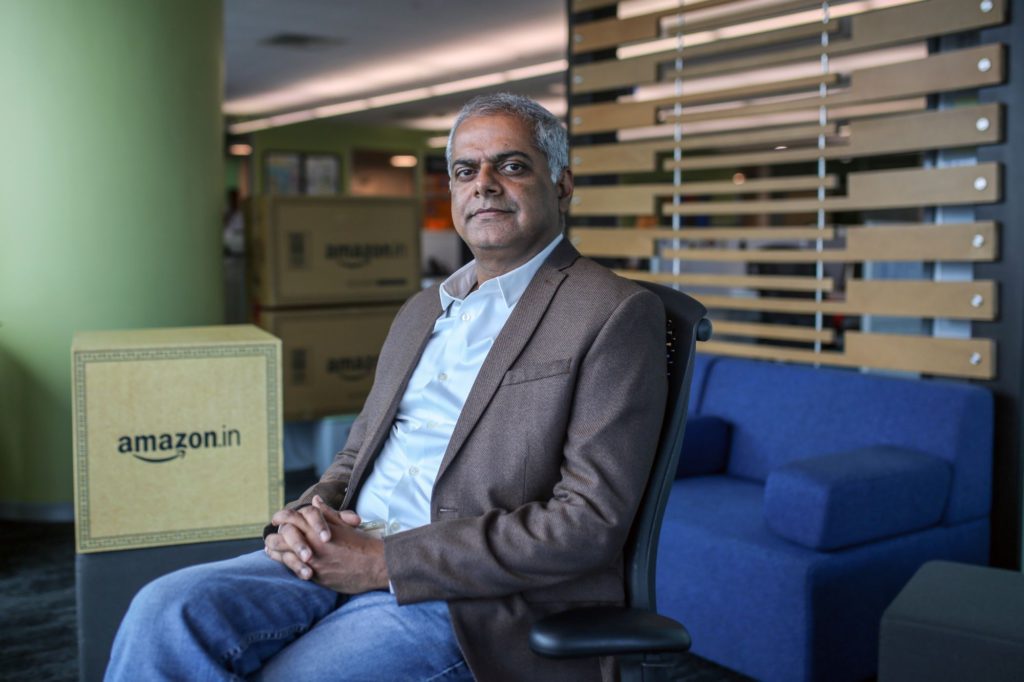
(Bloomberg) — Manish Tiwary had only been in his new job as head of Amazon.com Inc.’s India business a couple of months when he and his colleagues faced a weighty decision: How aggressively should the US e-commerce giant bid for media rights to the Indian Premier League?

Securing digital streaming rights to the cricket tournament would be a huge coup, potentially luring hundreds of millions of viewers to Amazon. But the US company would have to bid against deep-pocketed giants like Reliance Industries Ltd. In a stunning move, Amazon pulled the plug before the auction started. Tiwary and senior management in Seattle decided those billions would be better spent on Amazon’s e-commerce business.

“The final call was based on various numbers,” said Tiwary, in one of his first interviews since taking over as country head, on the 27th floor of Amazon’s India headquarters in the northwestern neighborhood of Yeshwanthpur in Bangalore.

He said the final decision on the IPL auction was made by Amazon’s Prime Video team in the US. The company pointed out it does hold rights to other, somewhat lower-profile cricket matches.

It’s a sign of the tough calls ahead for the 52-year-old former Unilever Plc executive, who took on his current role in February. The country of nearly 1.4 billion people may be Amazon’s most promising long-term opportunity, but it’s also extremely challenging, with tough local rivals, a cantankerous government and unusually price-sensitive consumers.

Amazon first began to target India under founder Jeff Bezos, who visited the country regularly and hob-nobbed with Prime Minister Narendra Modi. The company has invested more than $6.5 billion in India, hired 110,000 employees and built 60 warehouses to expand its reach in the country.

Tiwary anticipates the next stage of growth will come from pushing beyond India’s big cities to what’s known as Bharat, the less affluent, non-English speaking people in rural areas. He expects to add the next 100 million shoppers from this effort.

“I want Amazon to grow with India,” Tiwary said. “India is forecast to be the fastest-growing major economy in the world.”

India’s e-commerce market is projected to swell to $350 billion by 2030, growing at a clip of about 23% as hundreds of millions of first-time smartphone users access the internet. That’s drawn competition from giants like Reliance to Walmart Inc.’s Flipkart, as well as a flock of startups. Tiwary maintains there is room for several rivals to succeed given that only a few percent of the country’s $1 trillion retail market has moved online.

“At less than 3% online retail penetration, the last thing I’d worry about is competition,” he said. “Sellers and shoppers have both begun seeing value in online retail.”

His strategy for pushing beyond India’s big cities is a combination of technology and marketing. Central to it will be what Tiwary calls “Smart Commerce,” an initiative announced last month to help small merchants get online. The company has succeeded in getting about a million sellers on board so far, but that’s a fraction of the total.

“If the 13 million or more small businesses are digitized, online shopping can reach every corner of India,” said Tiwary, who during his two decades at Unilever worked in places from Thailand and Vietnam to India and Dubai.

He also thinks it’s critical to let more shoppers tap Amazon by voice, including with local languages. So the company’s engineers are enhancing app features to enable such purchases. It’s also expanding into buy-now-pay-later, an increasingly popular way to offer customers credit with no need for a credit or debit card.

His marketing strategy couldn’t be more different from that of Reliance, the sprawling conglomerate led by billionaire Mukesh Ambani. A joint venture backed by Reliance won the rights to show the Indian Premier League cricket matches online for 238 billion rupees ($3.05 billion). 

Tiwary is going to focus Amazon’s attention on developing local influencers to help market to Bharat customers. These aren’t stars like Kim Kardashian or Addison Rae. Instead, they’re homemakers like Kajal Srivastava from Deoghar in the state of Jharkhand or students like Ahmad Zahid from Kashmir who unbox and showcase products like affordable sports shoes, memory foam pillows or the latest instant curry concoction.

“It’s very different from the TikTok influencers you see elsewhere in the world,” said Tiwary. “It’s small now but looks extremely promising. It’s a new playbook for social commerce.”

(Updates with Amazon’s other cricket programming in fourth paragraph. An earlier version of this story corrected a word in first quote from India chief)

More stories like this are available on bloomberg.com

©2022 Bloomberg L.P.

Online Retailer Boohoo Mulls Charging UK Customers for Returns

(Bloomberg) — Boohoo Group Plc is considering charging customers to send back garments as an increasing rate of returns crimps sales at the fast-fashion retailer.

The British firm, whose business is purely online, is reviewing its returns policy across all markets, Chief Executive Officer John Lyttle said in a phone interview Thursday. While Boohoo already charges in some international markets, the move would be a first in some places, including the UK.

The company is weighing the change after Zara owner Inditex SA recently imposed fees for online returns to tempt customers into its brick-and-mortar stores. Lyttle said a number of sellers are beginning to charge shoppers who send back goods.

Boohoo and Asos Plc both reported slowing sales on Thursday as the retailers — which saw demand surge during pandemic lockdowns — contend with the return of normal shopping habits and persistent supply chain woes. When slashing its guidance for the year, Asos said that a significant rise in returns in the UK and Europe had hurt net sales.  

Shares of both companies plunged.

Changing its returns policy could be significant for Boohoo, which has many young customers who tend to buy a number of low-priced items and then decide what to keep or send back.

Customers are becoming more selective and more likely to return items as they shop for clothes to wear at special events like weddings and parties, according to Boohoo’s Lyttle. A year earlier, pandemic restrictions meant that athleisure was the dominant fashion and the fit was less important, he said. 

“In the UK, the returns rate is a big factor and in international it’s taking us a lot longer to get parcels to customers,” said Boohoo Chief Financial Officer Neil Catto, speaking in the interview. “Those factors still continue and we’re not expecting those to improve this year.”

More stories like this are available on bloomberg.com

©2022 Bloomberg L.P.

Online Merchants Lead Europe Retailers Back Toward Pandemic Lows

(Bloomberg) — Europe’s retail stocks are heading back towards pandemic lows. And after Thursday’s profit warning from Asos Plc and the first UK sales decline in Boohoo Group Plc’s history, it’s online merchants that are leading them there.

Asos shares sunk as much as 28% on Thursday, falling to the lowest since August 2010. The warning sent tremors through larger peer Zalando SE, which slid as much as 12% and pulled the Stoxx 600 Retail Index down to levels last seen in March 2020, when Covid-19 shock was sweeping through every business sector. Boohoo slumped as much as 19%, hitting its lowest since June 2016.

“The pace at which online retailers have gone from sitting on cloud nine to being stuck in the gutter is quite remarkable,” said AJ Bell investment director Russ Mould.

Consumers are less likely to spend on clothing and footwear due to a surge in food and energy bills. And the pain is spreading beyond clothing retail. Food delivery companies and athleisure stocks have also underperformed this year.

“The near-term remains pretty tough,” said Richard Saldanha, a global equity fund manager at Aviva Investors. “I think the consumer’s going to feel the pinch even more.”

The phenomena is global. The MSCI World Retailing Index, which includes the likes of Target Corp., Zalando and Amazon.com Inc., is on track for its first negative year since 2008 as US behemoths such as Walmart Inc. and Target have shaken investors.

What’s more, despite falling stock valuations, takeover bids are also faltering. A consortium backed by e-commerce investor Belerion Capital said Thursday it has decided to drop its pursuit of THG Plc, sending shares of the embattled UK online shopping emporium down as much as 23%. Property entrepreneur Nick Candy was also said to have walked away from making an offer.

More stories like this are available on bloomberg.com

©2022 Bloomberg L.P.

Huobi to Shut Thailand Crypto Unit as Regulator Revokes License

(Bloomberg) — Huobi Technology Holdings Ltd., a Hong Kong-listed operator of a cryptocurrency platform, will shut its unit in Thailand after the local regulator revoked its license.

The local platform will be shut “permanently” from July 1, according to a Huobi Thailand Co. statement on its website. Huobi Thailand will no longer have any connections nor legal bindings with Huobi Group after the closure, the statement said.  

Services the platform had provided included trading of an array of digital assets such as Bitcoin and Ether. 

Thailand’s Securities and Exchange Commission in May revoked the firm’s crypto-exchange license after it failed to set systems and personnel in accordance with rules and regulations, the regulator said in statement Wednesday. The company’s operation had already been suspended by the SEC since September because of similar issues. 

“We have been trying our best efforts to contact all customers to withdraw assets,” the statement said. “However, there are still an amount of out of reach customers.”

More stories like this are available on bloomberg.com

©2022 Bloomberg L.P.
Asos, Boohoo Sales Slow as Shoppers Face Inflation Crisis

(Bloomberg) — Two of Britain’s biggest online fashion retailers reported slowing sales in a fresh sign that the cost-of-living crisis in the UK is denting consumer confidence.

Asos Plc slashed its profit and sales guidance while Boohoo Group Plc recorded the first UK sales decline in its history as shoppers bought less online and returned more goods.

Shares in Asos slumped more than 16% and Boohoo stock fell about 11% in early trading in London. 

Previously considered lockdown winners, Asos and Boohoo have struggled as normal shopping trends return and supply chain woes persist. Fast-fashion retailers are also being hit by intense competition from rivals such as discount upstart SheIn, at the same time as shoppers cut back on non-essential items with bills rising. 

“We’ve started to see people looking at the money in their pocket and thinking that their fuel bills have gone up, they’re spending more on food and they’ve decided on balance to keep one less item,” said Mat Dunn, chief operating officer at Asos. “We do think that behavior will normalize.”

Asos now expects sales to grow 4% to 7% for the full year, down from previous guidance in January of 10% to 15%, according to a trading update on Thursday. The company expects adjusted pretax profit of £20 million ($24 million) to £60 million, compared with prior guidance of £110 million to £140 million. 

Asos said that net sales have been impacted by a significant rise in consumers returning garments in the UK and Europe, a sign of shoppers getting pickier under the pressure of rising inflation. In April, Asos warned that its full-year earnings goal was at risk from accelerating inflation and disruption from Russia’s war in Ukraine. 

The company separately named Jose Antonio Ramos Calamonte as chief executive officer. He is currently chief commercial officer of Asos. 

Returns headache 

Higher returns also hit Boohoo’s performance with sales falling 1% in its British home market and dropping 8% overall in the first quarter, according to a trading update. Boohoo blamed the fall on tough comparisons with last year when people were spending more online during lockdowns and returning fewer items. 

The retailer said that UK sales did start to improve month-on-month during the period and stuck to its previously lowered guidance for the full year of low single digit revenue growth. This would be the smallest increase since its initial stock sale in 2014. Boohoo’s profitability is also expected to be much lower than its historical average.

Boohoo, whose other brands include PrettyLittleThing and Nasty Gal, warned last month that sales growth may grind to a halt in the first half. It already cut its sales projections twice last year and is recovering from a labor supply scandal in 2020 which sparked governance changes.

“While the top-line deceleration was expected, it has been more pronounced than we have assumed,” said Andrew Wade, an analyst at Jefferies, adding that Boohoo’s guidance for first-half revenue to be “broadly flat now looks stretching.”

Boohoo could struggle to push up prices as many of its customers battle rising bills, according to Wayne Brown, an analyst at Liberum.

In a tough day for British retailers, shares in Halfords Group Plc plunged to their biggest intraday drop since March 2020 after the automotive and bicycle retailer warned of rising inflation and declining consumer confidence. 


(Updates with quotes from company executives and analysts throughout)

More stories like this are available on bloomberg.com

©2022 Bloomberg L.P.
Buckle Up: Where Does Crypto Go From Here?

  • Listen to Bloomberg Crypto on the iHeartRadio App
  • Listen to Bloomberg Crypto on Apple Podcasts
  • Listen to Bloomberg Crypto on Spotify 

(Bloomberg) — It’s been a wild week for crypto markets. Bloomberg reporters Muyao Shen and Matt Turner join the podcast to discuss what’s happening in the world of digital tokens and crypto-related stocks – and why sentiment is so negative.

Follow us on Twitter @crypto, and subscribe to the Bloomberg Crypto Newsletter at https://bloom.bg/cryptonewsletter

More stories like this are available on bloomberg.com

©2022 Bloomberg L.P.

FTC Is Scrutinizing Labor Impact of Microsoft-Activision Merger

(Bloomberg) — The Federal Trade Commission is investigating Microsoft Corp.’s proposed purchase of Activision Blizzard Inc. and how it might impact workers, chair Lina Khan told lawmakers.

In a June 9 letter to Senator Elizabeth Warren, a Democrat from Massachusetts, Khan confirmed the agency is looking into the proposed deal, noting that the companies previously disclosed the FTC’s merger review.

“I strongly believe that merger investigations must scrutinize the impact on labor markets,” Khan said. “Whenever the FTC initiates a merger review, we are committed to thoroughly examining effects on competition in all relevant markets for potential law enforcement action.”

Khan’s letter was a response to a March 31 missive from Warren and other senators urging the FTC to closely examine how the proposed deal would impact workers at Activision, who have called for greater accountability at the company in the wake of sexual harassment and discrimination allegations.

In her letter, Khan said the FTC is also focusing on whether certain types of contracts, such as non-compete clauses that bar workers from switching jobs within an industry or non-disclosure agreements, violate antitrust or consumer protection laws. 

Last month, a majority of video game testers at Activision’s Raven Software unit voted to form a union — a first for a US-listed game company. The company said it would begin negotiations with the Communications Workers of America to reach a collective bargaining agreement.

Activision has been shrouded in controversy since last year after a state agency filed a sexual harassment lawsuit against the Santa Monica, California-based company, describing its “frat boy culture” and accusing its leadership of failing to take action. The US Securities and Exchange Commission later launched an investigation into how the company handled the reports of misconduct.

On Monday, Microsoft announced a labor neutrality agreement with CWA, agreeing that the company will take a neutral approach if employees express interest in joining a union. The agreement will apply to Activision-Blizzard after the acquisition closes. 

The tech giant also said last week it would stop using non-competes or confidentiality clauses to bar workers from talking about discrimination or harassment as part of a settlement or separation deal.

The two moves are widely viewed as efforts by Microsoft to assuage potential regulatory concerns about its Activision buy.

More stories like this are available on bloomberg.com

©2022 Bloomberg L.P.

Anti-Tech Group Attacks Apple, Amazon Over Fees in Latest Ad Campaign 

(Bloomberg) — Tech critics and advocates alike are pouring money into advertising campaigns in hopes of swaying undecided lawmakers before a floor vote expected this summer on a bill aimed at curbing the power of technology giants.

The Tech Oversight Project, a nonprofit group that says its aim is to hold tech companies accountable, is launching a campaign worth several hundred thousand dollars attacking internet giants for charging small businesses unnecessary fees that are passed onto consumers. 

The ads urge constituents to call their senators and ask them to pass a bill that would prevent companies including Alphabet Inc.’s Google, Amazon.com Inc., Apple Inc., Microsoft Corp. and Facebook parent Meta Platforms Inc. from putting their own products ahead of those of competitors. 

The antitrust legislation, which is led by US Senator Amy Klobuchar, a Minnesota Democrat, is poised for a vote before the end of July. Time is ticking for Congress to take significant action on outstanding bills before the August recess, when lawmakers will switch to campaigning for the November midterm elections. The Senate also has competing priorities, including potential legislation on gun safety, US competitiveness and climate change.  

The Tech Oversight Project has funding from Omidyar Network, which was established by EBay founder Pierre Omidyar, and the Economic Security Project, which is chaired by Facebook co-founder Chris Hughes. The ads will appear on digital platforms and on television through July 4, running in swing states Arizona, Georgia, Nevada and New Hampshire. The campaign will also be featured digitally in Colorado and New York. 

The ads criticize tech companies and industry groups for spending millions lobbying against the antitrust legislation. Amazon, Google, Apple and Meta spent $16.7 million lobbying in the first quarter of 2022, according to federal lobbying disclosures.

The Computers and Communications Industry Association, a tech-funded lobbying group, spent $22 million on broadcast and cable TV ads in early June, plus another $2.8 million on social media ads since the beginning of this year, according to AdImpact. The Competitiveness Coalition, which is led by former Senator Scott Brown and favors minimal regulation, launched its first television ad campaign against the Klobuchar bill this week.

The tech bill has received increased media attention in recent weeks, including a 20-minute segment on John Oliver’s “Last Week Tonight” on HBO and appearances by Klobuchar on MSNBC shows.

More stories like this are available on bloomberg.com

©2022 Bloomberg L.P.

Close Bitnami banner
Bitnami