
Bloomberg

Elon Musk’s Boring Co. Is Feuding With Texas Over a Driveway

(Bloomberg) — While Elon Musk is publicly making a big deal about moving to Texas and cozying up to the governor, behind the scenes his tunnel-building venture, Boring Co., is wrangling with local authorities in the state over a host of seemingly mundane permitting issues.

Since Boring bought land last May to create a research and development center in Bastrop, Texas, a rural area outside Austin, the company has put workers up on mobile homes at the site without authorized sewage facilities, failed to get air and stormwater permits and built a driveway without first getting official approval, according to documents obtained by Bloomberg News through a public records request. 

The company’s dealings with Bastrop are yet another illustration of how Musk’s businesses often push the boundaries of or simply ignore regulations that bind other companies. In recent years his Tesla Inc. restarted production at its Fremont plant in defiance of pandemic rules to stay closed, Boring tried to build a tunnel in Los Angeles without going through an environmental review process and the US Securities and Exchange Commission is examining the disclosure of Musk’s stake in Twitter Inc.

Boring staff mentioned in this article did not reply to requests for comment. 

Texas was supposed to be different. For a start, officials including Governor Greg Abbott gave him a big welcome. “Woohoo!” a Bastrop development official emailed County Judge Paul Pape, the presiding officer of the county government, after Boring closed on the property. “Elon Musk is now a Bastrop County property owner! Project Submarine has landed!!” 

And part of the reason Musk traded California for Texas was its business-friendly climate. This has worked out for Tesla, he said in an interview with the Tesla Owners of Silicon Valley club published Tuesday.

“We built the factory here in less time than it would have taken to get the permits in California,” he said, speaking from Tesla’s Gigafactory in Texas. “The typical permitting time for a greenfield in California is two years, and you’re going to get sued, because you’re in California. We didn’t get any lawsuits here, and we got the factory built in 18 months.”

For Boring, even a Texas permitting process is too slow.

The company’s venture into Bastrop was at first cooperative. On April 16, 2021, Boring asked the Texas Department of Transportation what information officials needed to approve driveways from the new site to a nearby farm-to-market road, the FM 1209. It said it was submitting a driveway planning application on July 27. The next day, Texas DOT engineer Margaret Lake replied that the document was missing key items, including an overall site plan, and that the proposed driveway was at least 153 feet too close to the nearby Walker Watson Road. 

About six weeks later, the DOT found out that Boring had gone ahead and built the driveway anyway. Lake sent photos of it to another DOT engineer, Diana Schulze, who alerted Deputy District Engineer Mike Arellano. “Mike,” she wrote in a Sept. 16 email, “As we discussed they put this driveway in without a permit.”

Arellano emailed Boring’s project development lead, Mike Thompson, later that day to say that for safety reasons the driveway was too close to the nearby Walker Watson Road, and Boring should submit the documents required for a driveway permit while finding a safer location. He included a photo of the driveway.

Boring submitted a variance request on Sept. 30 to allow the driveway to stay where it was. The variance hasn’t been approved, a spokesperson for the Texas DOT said Monday.

Texas has found other shortcomings with Boring’s submissions for the site. An Oct. 25 email from Lake to Boring said the company would have to build space for vehicles to get on and off the road as it lacked an appropriate shoulder. Boring senior civil engineer Hunter Brauer made the case Jan. 9 that this wasn’t needed in part because the deliveries from large trucks were infrequent. Lake replied Jan. 18 that the extra space was needed for safety reasons irrespective of the volume of traffic and was “non-negotiable.” 

It’s “extremely unusual, especially for a major company like that, to basically ignore state safety laws,” said Lyndon Henry, a transportation planning consultant based in Austin. “I would think it reflects very badly on them to be ignoring safety regulations regarding something as simple and elementary as an access driveway.” 

Then there is the sewage problem.

On the morning of Feb. 28, county commissioners met at the courthouse in downtown Bastrop, about a 10 minute drive from the Boring site, to discuss matters including Boring’s application for a permit to build a massive manufacturing facility. A local homeowner said workers were already living in mobile homes there. Once Judge Pape pointed out letting people reside on the site without a sewage permit might violate the permitting process, the commissioners tabled the application for the manufacturing facility.

After the meeting, Commissioner Mel Hamner, who represents the area of Bastrop where the Boring facility is located, returned to his office in the building next door. There he found an unexpected visitor waiting for him: Boring President Steve Davis. They had a “terse” conversation about the postponed manufacturing facility permit, and left it that Boring would continue working with the county to resolve the issues, Hamner said. 

About a month later, officials from the Texas Commission on Environmental Quality visited the site in response to complaints that it was operating without authorization and that there was liquid spilled on the ground near the machinery. Officials observed three silos had been installed without permits for air quality or stormwater management, and a spokesman for TCEQ said its inspectors didn’t find any spills. The agency recommended Boring obtain the needed approvals, which it has done. 

Meanwhile, officials continued to raise concerns about the driveway. A March 4 email from Arellano to Boring Business Development Lead Brian Gettinger highlighted the liability risks:

Elected officials and local residents are reporting that the truck traffic in and out of this driveway is frequent on a daily basis. Given this unpermitted, unapproved driveway does not meeting spacing criteria, I need your cooperation to add a turn lane immediately to address this safety concern. 

I am sure The Boring Company does not want to bear this liability so we are here to help expedite the approval of the design and permit for a driveway and turn lane as required.

Gettinger pushed back in a March 29 email, saying “the traffic flow on FM 1209 and the frequency of truck deliveries does not represent a risk to traffic great enough to warrant a center turn lane at this time.” 

Arellano replied the same day:

It only take on one truck turning movement to create a preventable hazard to the public.

Again, with the decision to construct this driveway with no permit or approval at the location chosen, all liability is on the Boring Company at this point in time. 

DOT engineer Schulze sent Boring an ultimatum on the morning of Monday, April 25.

After discussing with General Counsel, TxDOT will require from your company a traffic control plan for safely getting your trucks in and out of the driveway. I need to have this by the end of the day. If we do not receive this traffic control plan then we have been directed to barricade the driveway on FM 1209 from further use until the traffic control plan is submitted.

Later that day, Gettinger replied with an interim traffic plan, and Schulze approved it by return email. By the end of the week, the company had installed orange signs on the FM 1209 to warn traffic about its driveway. 

Boring received a temporary permit for its driveway earlier this month, the Texas DOT spokesperson said. The final permit could take up to 60 days. 

More stories like this are available on bloomberg.com

©2022 Bloomberg L.P.
Bitcoin Veterans Know to Keep Their Eyes on $19,511 Level

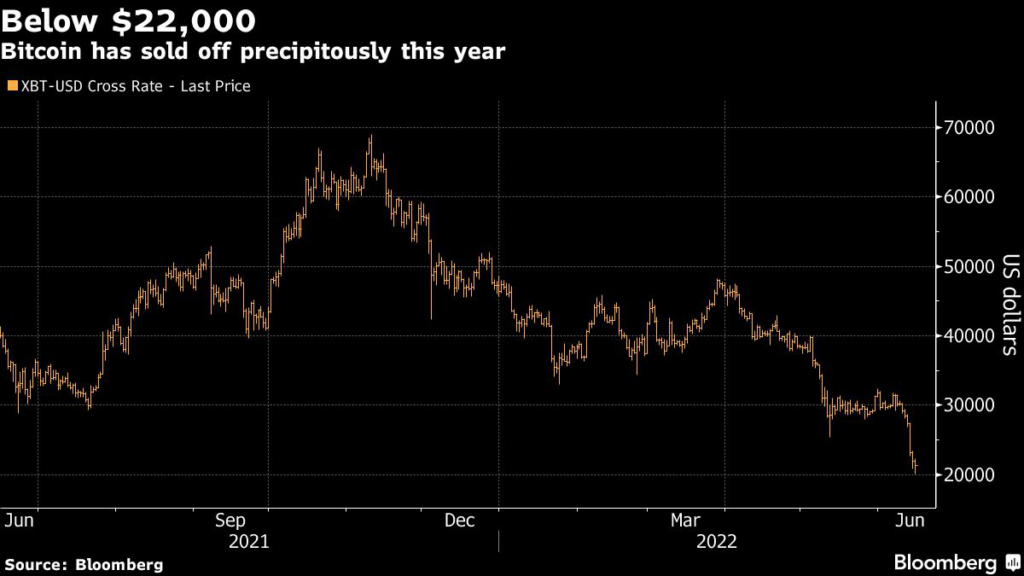
(Bloomberg) — Round numbers tend to be a fixation for Bitcoin chart-watchers, with many keeping their eyes peeled on $20,000 amid the latest swoon. But veterans know to be on the lookout for a more noteworthy one: $19,511.

That’s the high the coin hit during its last bull cycle in 2017, which it reached at the end of that year. Throughout its roughly 12-year trading history, Bitcoin has never dropped below previous cycle peaks, according to Vetle Lunde and Jaran Mellerud at Arcane Research, so a break below it would be momentous. 

“A potential visit below this level could lead to a lot of hodlers capitulating and a wind-down of leverage, making this a very important support level to pay attention to onwards,” the pair wrote in a note, referencing long-term, staunch holders. 

In addition, besides the psychological importance of the level, most of the open interest in Bitcoin options is based on the $20,000 strike price, according to Arcane, “which can contribute to selling pressure in the spot market should the price fall below.”

Cryptocurrencies have tumbled this year, with prices of some digital assets falling as much as 90% as the Federal Reserve raises interest rates to combat rampant inflation. Tokens have suffered a bad stretch this week in particular as the market prices in even more aggressiveness from the central bank. Bitcoin is down roughly 30% since Friday, one of its worst six-day stretches on record. It hasn’t seen a single up day over the last nine sessions. 

The coin’s drop this year has brought it to around $20,700 Wednesday, its lowest point since December 2020, meaning no one who bought over the past year and a half has made a profit. Many analysts are now watching indicators to see who else might come under pressure to sell. 

Whether crypto prices continue their declines going forward is anyone’s guess, but market-watchers say that a lot will depend on the Fed. The US central bank on Wednesday raised its main interest rate by three-quarters of a percentage point — the biggest increase since 1994 — and signaled they will keep hiking aggressively this year. A higher-rate environment has been deleterious to riskier assets like crypto.

Katie Stockton, founder of Fairlead Strategies, a research firm focused on technical analysis, is seeing a “decisively negative shift in short-term momentum” for Bitcoin. A breakdown below $27,200 has increased the risk of the coin dropping to around $18,300-$19,500, another support area. “Bitcoin and most other risk assets remain out of favor in this environment,” she wrote in a note this week. 

Meanwhile, the selloff in the crypto space has already spurred a number of companies to announce layoffs and hiring freezes. Coinbase Global Inc. announced this week it will lay off 18% of its workforce, following in the footsteps of others — including Gemini Trust Co. and lender BlockFi Inc. — who have made similar moves. 

Peter Tchir, head of macro strategy at Academy Securities, says such developments — along with potentially reduced spending on advertisements, conferences and other things by crypto companies — can start to have an effect on wealth. 

“If the slowdown is real — and I think it is — I think we will maybe hit $10,000 on Bitcoin, you could see a knock-on effect in the economy that we would not have thought about two or three years ago,” he said on Bloomberg TV and Radio. 

(Adds the Federal Reserve rate increase.)

More stories like this are available on bloomberg.com

©2022 Bloomberg L.P.
Most Shopify Investors Opposed CEO Power Gain, Glass Lewis Says

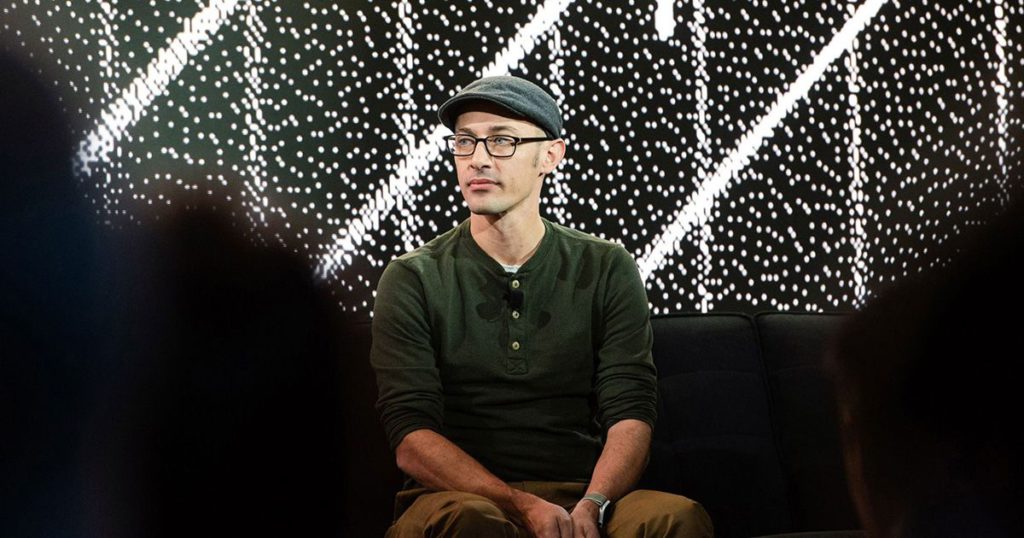
(Bloomberg) — Shopify Inc.’s plan to enhance Chief Executive Officer Tobi Lutke’s power was likely opposed by most of the company’s shareholders — yet it passed anyway because of a single influential director, according to investor advisory firm Glass Lewis & Co.

Shopify said last week that shareholders voted 54% to approve a board proposal to grant Lutke a “founder share” with special voting rights at the company’s June 7 annual meeting.

But Glass Lewis says the math suggests a strong majority of shareholders actually opposed giving Lutke the special share. It appears the proposal squeaked through only because of the votes of longtime director John Phillips, whose Klister Credit Corp. is the only shareholder other than Lutke to control a significant number of Shopify Class B shares. 

The B shares, which aren’t listed on an exchange, carry 10 votes each, giving Phillips just enough power to tip the vote in favor of Lutke despite the opposition of the much larger group of common shareholders, according to Glass Lewis. 

In fact, if Klister’s shares had been counted as having only one vote each instead of 10, the proposal would have been soundly defeated, 65% to 35%, Glass Lewis said in a blog post. 

“The vast majority of minority shareholders who opposed the new multi-class arrangement, only to see it edged over the line by the existing multi-class structure, may feel aggrieved by the outcome,” the advisory firm said. Glass Lewis questioned why “the Phillips family was permitted to participate with a 10:1 advantage in the vote of ‘disinterested’ shareholders.”

The founder share guarantees that Lutke will hold at least 40% of the voting rights at the Ottawa-based company under certain conditions, including that he remains at the firm. 

Leading up to the meeting, Glass Lewis and Institutional Shareholder Services Inc. recommended that investors vote against the founder-share proposal. Three major public funds — Canada Pension Plan Investment Board, the Caisse de Depot et Placement du Quebec and California Public Employees’ Retirement System — have disclosed that they voted against it. 

Dual-class share structures are common in the technology sector, helping founders shield companies from activist investors and unwanted takeover bids. In the case of Shopify, the proposal does not provide adequate protections for shareholders and gives Lutke effective control of the board, Glass Lewis said.

“While it doesn’t represent a majority of the voting stock, a 40% stake is generally enough to exercise effective control of a public company in which not every shareholder will vote,” Glass Lewis said. “As such, non-affiliated shareholders at Shopify will have relatively little recourse to influence governance at the company going forward.”

Shopify declined to comment on Glass Lewis’s remarks. Phillips didn’t respond to an emailed question from Bloomberg. 

Shopify’s stock has been pummeled amid the broad tech selloff, falling more than 76% this year in Toronto.

More stories like this are available on bloomberg.com

©2022 Bloomberg L.P.
Crypto-SPAC Deals Get Stuck in SEC Limbo as Token Demand Plunges

(Bloomberg) — Crypto companies that have been trying to go public since last year’s boom remain stuck in a lengthy back-and-forth with US regulators, adding to the pile of challenges facing the industry.

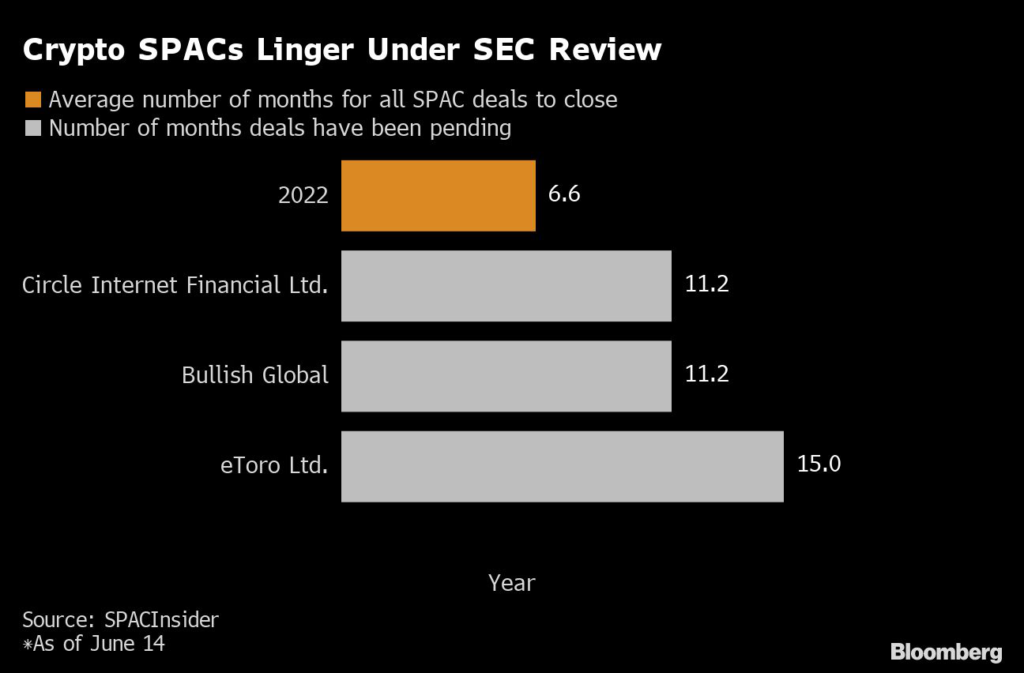
Bids to merge with blank-check companies are getting scrutiny from accountants at the Securities and Exchange Commission because the asset class raises fresh bookkeeping issues, according to people familiar with the matter. Dates for closing multibillion-dollar deals involving Circle Internet Financial Ltd., a stablecoin issuer, and exchanges run by Bullish Global and eToro Group Ltd. have all been pushed back multiple times. 

While the SEC has been stepping up oversight of all deals involving special purpose acquisition companies, the delays are particularly fraught for virtual-coin companies already reeling from a steep market downturn. The total market value of cryptocurrencies has plunged to less than $1 trillion from $3 trillion in November amid high-profile blowups and a rise in interest rates that’s sapped demand.

“This is just another brick in the obstacle wall that has been steadily constructed by the SEC to impede crypto developments,” said Gary DeWaal, chair of Katten Muchin Rosenman’s financial markets and regulation practice.

In some cases, the regulator now takes twice as long to review paperwork from firms in the crypto industry as they do for other sectors, according to data and research provider SPACInsider. The SEC declined to comment. 


The SEC doesn’t technically approve SPAC deals, but sponsors are loathe to finalize a tie-up until the agency is satisfied. That means that even for those involving more vanilla companies, the back-and-forth over investor disclosures can go on for months. 

Topsy-turvy markets can create new risks that companies must disclose to investors and lead to prolonged discussions with regulators. For crypto, another major sticking point has been accounting guidance that the SEC issued in March. To satisfy the agency, firms must count assets they’re safeguarding for customers as liabilities on their balance sheets. 

It’s standard for the SEC chief accountant’s office to get involved in the review process when businesses raise new accounting issues, said one of the people familiar with the matter who asked not to be named discussing the agency’s internal procedures. 

Successfully navigating that process with the regulator is crucial for SPAC sponsors who generally must complete a deal within two years. 

Bullish Global revised its paperwork for a sixth time on May 31, and now has until July to close its SPAC deal that last year was valued at $9 billion. Trading platform eToro, which has until June 30 to complete its SPAC deal that’s been valued at $8.8 billion, is studying the accounting guidance, a spokesperson said. Bullish Global declined to comment beyond its filings. Meanwhile, Circle restated its past financial results last month, offering its fourth revision for SEC reviewers. 

“We appreciate that the SEC is being thorough as they navigate fairly novel businesses that want the trust, transparency and accountability that come with being a public company,” Circle said in a statement. The firm announced in February that the terms of its planned merger changed and the value of the transaction had doubled to $9 billion. 

Since taking over as head of the agency in April 2021, Gensler has frequently raised concerns around crypto and SPACs.

In March, the SEC proposed sweeping rule changes for all blank-check companies. That proposal would tighten oversight of the market, require more disclosure about potential conflicts of interest and impose new responsibilities on banks underwriting the transactions. Since then the once white-hot SPAC market has cooled significantly with underwriters including Goldman Sachs Group Inc. and Bank of America Corp. have distanced themselves.

While some have applauded the SEC’s plan to crack down on SPACs, others on Wall Street are pushing back. The specter of increased legal liability for banks underwriting the transactions emerged as a particular sticking point in comment letters filed with the regulator this week. 

Of 14 total crypto-related SPAC deals announced since 2019, only five of have closed, according to SPACInsider.

More stories like this are available on bloomberg.com

©2022 Bloomberg L.P.

Fast-Delivery Startup Jokr Cuts Back US Operations to Focus on Latin America

(Bloomberg) — Rapid delivery startup Jokr is pulling back from its US operations to focus on its core Latin America business, joining a growing number of similar companies that are paring down and prioritizing profitability amid fading investor enthusiasm.

Jokr said it will end delivery operations in Boston and New York, which include a network of nine micro-fulfillment centers out of about 200 worldwide. As part of the restructuring, the company will also cut about 50 workers from its 950-member office staff globally.

“We have decided to stop our business activities in the US for now which have lately only accounted for about 5% of our business,” Chief Executive Officer Ralf Wenzel said in a statement. “Latin America is particularly underpenetrated and underserved, that’s why Jokr has put its focus and emphasis on the Latin American opportunity since the beginning.”

The startup will retain some staff in New York and is exploring selling or closing its existing fulfillment centers in the US. Jokr loses less than $10 million a month across its Latin American markets, and plans to invest further in the region, including through potential mergers and acquisitions.

Along with Jokr, competitors such as Getir and Zapp have also laid off workers and pulled out of less profitable markets as investors shift from favoring money-burning fast-growing companies to ones that generate profits. Jokr, which last raised funding at a $1.2 billion valuation in December, has said it has enough money on hand to continue operating for two years and expects to reach break-even across in about 18 months. 

Jokr offers its service delivering consumers groceries within minutes across Brazil, Mexico, Colombia, Chile and Peru. It has previously also pulled back from offering its service in Europe. 

In May, Jokr rolled out a media platform to sell targeted advertising in a separate bid to get closer to profitability.


More stories like this are available on bloomberg.com

©2022 Bloomberg L.P.
Tesla Reports Most Automated System-Related Crashes, US Says

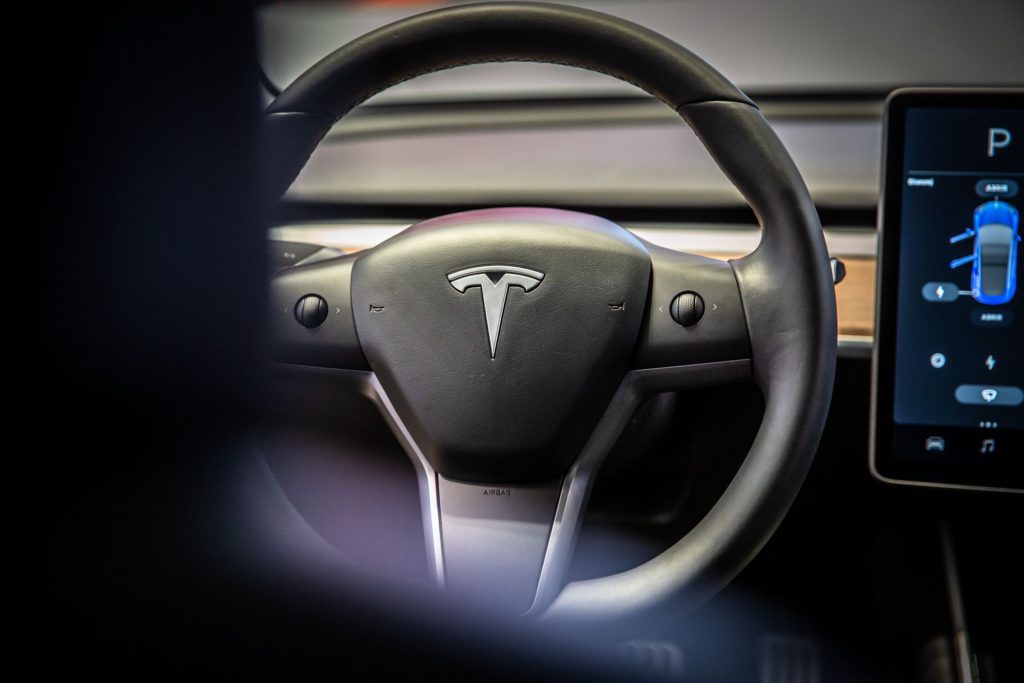
(Bloomberg) — Tesla Inc. reported the vast majority of crashes involving automated driver-assist systems that have been disclosed to the US National Highway Traffic Safety Administration, according to new figures from the regulator that it says are too limited to draw any safety conclusions.

Tesla accounted for 273 of 367 such crashes reported by 12 auto companies to NHTSA between July 2021 and May 15 of this year, the agency said. Across all reported accidents, serious injury or death occurred in 11 of the 98 collisions for which severity data was collected. A further 294 incidents lacked information about harm to vehicle occupants. 

Behind Tesla was Honda Motor Co. with 90 reported crashes, while Subaru Corp. disclosed 10 collisions. All remaining companies including General Motors Co., Ford Motor Co. and Toyota Motor Corp. cited five or fewer collisions.

The figures were included in the first public release of data collected about crashes involving so-called Level 2 automated driving systems, a broad look at how technologies that automate some of the driving task in certain situations but need constant monitoring by drivers have performed in real-world settings. 

The reports were collected under a June 2021 order demanding carmakers and technology companies report the incidents. Its release comes as safety advocates in Washington call for more action from regulators and lawmakers to set firmer rules for so-called self-driving cars, as technologies such as Tesla’s driver-assist features gain popularity with customers.

NHTSA also reported crash figures for vehicles equipped with automated systems designed to drive a vehicle without a driver that are being developed by companies such as Cruise LLC, the robotaxi startup controlled by GM. Some 25 companies reported a total of 130 crashes over the same period, with Alphabet Inc.’s Waymo self-driving car unit reporting 62, followed by Transdev Alternative Services with 34. Cruise disclosed 23 collisions.

See also: Cruise’s Driverless Taxis Get OK to Charge Fares in California

Advocates for self-driving cars and driver-assist systems point to the potential to reduce the millions of crashes that occur in the US each year and curb traffic road deaths, which have recently spiked and fueled worries among safety advocates and policymakers. More than 9 million vehicles of all types were involved in police-reported crashes in 2020, according to NHTSA.

“These technologies hold great promise to improve safety, but we need to understand how these vehicles are performing in real-world situations,” NHTSA Administrator Steve Cliff told reporters ahead of the release of the data.

At the same time, NHTSA said the figures shouldn’t be used to make safety conclusions. The data lacked contextual information needed to establish a rate of incidents, such as the number of vehicles in each manufacturer’s fleet that were equipped with driver-assist systems, how often drivers use them or the number of miles driven. Crash reports may also be duplicative, it said.

The Alliance for Automotive Innovation, the industry’s main trade association, underlined NHTSA’s caution, saying that broad conclusions about the safety of these systems shouldn’t be drawn from the new information.

“This is important data, but it’s only a small piece of the overall picture,” John Bozzella, the group’s chief executive officer, said in a statement. “There’s more work to do.”

The new data comes soon after the agency escalated an investigation into whether Tesla’s Autopilot system is defective. It opened the probe into a possible defect of the electric-car maker’s partially automated driver-assistance feature in August 2021, when it began looking into how the system handles crash scenes following a dozen collisions with first-responder and other vehicles.

Read more: Tesla Autopilot Stirs US Alarm as ‘Disaster Waiting to Happen’

In spite of its limitations, NHTSA said the data will help it better understand how the systems are performing in the field, potential risks to pedestrians and other vulnerable road users, rule-making efforts and enforcement actions. The agency will also update the data on its website monthly, it said.  

“This will help our investigators quickly identify potential defect trends that could emerge, some of which will warrant further explore exploration,” Cliff said.

In December, NHTSA launched an evaluation after reports of Tesla car occupants playing video games on front-center touch screens. The carmaker told the agency it would work on a software update to lock the feature when vehicles are in motion.

Tesla has marketed driver-assistance features using the names Autopilot and Full Self-Driving that still require drivers to keep their hands on the wheel. The company has drawn criticism from the likes of the National Transportation Safety Board, former NHTSA leaders and members of Congress over issues including how it has branded the systems and whether it does enough to safeguard against inattentiveness and misuse.

(Adds additional detail beginning in fifth paragraph)

More stories like this are available on bloomberg.com

©2022 Bloomberg L.P.

Bitcoin Veterans Know to Keep Their Eyes on the $19,511 Level

(Bloomberg) — Round numbers tend to be a fixation for Bitcoin chart-watchers, with many keeping their eyes peeled on $20,000 amid the latest swoon. But veterans know to be on the lookout for a more noteworthy one: $19,511.

That’s the high the coin hit during its last bull cycle in 2017, which it reached at the end of that year. Throughout its roughly 12-year trading history, Bitcoin has never dropped below previous cycle peaks, according to Vetle Lunde and Jaran Mellerud at Arcane Research, so a break below it would be momentous. 

“A potential visit below this level could lead to a lot of hodlers capitulating and a wind-down of leverage, making this a very important support level to pay attention to onwards,” the pair wrote in a note, referencing long-term, staunch holders. 

In addition, besides the psychological importance of the level, most of the open interest in Bitcoin options is based on the $20,000 strike price, according to Arcane, “which can contribute to selling pressure in the spot market should the price fall below.”

Cryptocurrencies have tumbled this year, with prices of some digital assets falling as much as 90% as the Federal Reserve raises interest rates to combat rampant inflation. Tokens have suffered a bad stretch this week in particular as the market prices in even more aggressiveness from the central bank. Bitcoin is down roughly 30% since Friday, one of its worst six-day stretches on record. It hasn’t seen a single up day over the last nine sessions. 

The coin’s drop this year has brought it to around $21,300 Wednesday, its lowest point since December 2020, meaning no one who bought over the past year and a half has made a profit. Many analysts are now watching indicators to see who else might come under pressure to sell. 

Whether crypto prices continue their declines going forward is anyone’s guess, but market-watchers say that a lot will depend on how the Federal Reserve moves this week. Investors are expecting the central bank to raise rates by 75 basis points Wednesday in what would be its biggest hike in decades. A higher-rate environment has been deleterious to riskier assets like crypto.

Katie Stockton, founder of Fairlead Strategies, a research firm focused on technical analysis, is seeing a “decisively negative shift in short-term momentum” for Bitcoin. A breakdown below $27,200 has increased the risk of the coin dropping to around $18,300-$19,500, another support area. “Bitcoin and most other risk assets remain out of favor in this environment,” she wrote in a note this week. 

Meanwhile, the selloff in the crypto space has already spurred a number of companies to announce layoffs and hiring freezes. Coinbase Global Inc. announced this week it will lay off 18% of its workforce, following in the footsteps of others — including Gemini Trust Co. and lender BlockFi Inc. — who have made similar moves. 

Peter Tchir, head of macro strategy at Academy Securities, says such developments — along with potentially reduced spending on advertisements, conferences and other things by crypto companies — can start to have an effect on wealth. 

“If the slowdown is real — and I think it is — I think we will maybe hit $10,000 on Bitcoin, you could see a knock-on effect in the economy that we would not have thought about two or three years ago,” he said on Bloomberg TV and Radio. “

More stories like this are available on bloomberg.com

©2022 Bloomberg L.P.

Nio Unveils Mid-Range SUV to Catch Up to Chinese Rivals

(Bloomberg) — Chinese electric carmaker Nio Inc. unveiled a five-seater SUV as it seeks to close the sales gap with local rivals Xpeng Inc. and Li Auto Inc. and other competitors. 

Named ES7, the car will start at 468,000 yuan ($69,700) with a driving range of 485 kilometers (300 miles), the Shanghai-based automaker said during an online launch event Wednesday. 

The car will also feature the latest autonomous driving technologies in-house developed with several high-performance sensing units and four Nvidia Orin chips. Aside from competing with home-grown electric models, Tesla Inc. offers its Model Y at a more affordable 316,900 yuan in China. 

The vehicle, starting deliveries in August, “might be our fastest delivery from unveiling,” Chief Executive Officer William Li said at the event. 

Nio has long labeled itself as a premium car producer catering to middle class consumers. This model, with an optional electric tow bar, is one of the first certified passenger vehicles in China to be able to tow a caravan or a trailer.  

The company is betting the car will boost sales after lagging rival EV upstarts Xpeng and Li Auto while second-quarter sales and revenue missed analyst forecasts. The company’s US-listed shares have plunged 41% this year. 

All three Chinese EV makers trail Tesla, which produced more than 180,000 Model 3 sedans and Model Y SUVs at its Shanghai factory in the same period, with 60% entering the domestic market. 

More stories like this are available on bloomberg.com

©2022 Bloomberg L.P.

Morgan Stanley, Felicis Alums Raise $450 Million for Debut Fund

(Bloomberg) — Felicis Ventures and Morgan Stanley alumni Wesley Chan and Pegah Ebrahimi have raised $450 million for a debut fund that launches their venture capital firm FPV, defying the sour mood among private technology investors.

The pair will be investing across all stages, with an emphasis on early stage deals, where they have experience. Chan, who recently left venture capital firm Felicis and previously worked at Alphabet Inc.’s venture arm GV, made early bets on Flexport Inc., Robinhood Markets Inc., Plaid Inc. and Gusto. 

Ebrahimi, a longtime employee of Morgan Stanley’s investment bank and more recently at Cisco Systems Inc., has advised or invested in startups such as Canva Inc., Snyk Ltd., DataRobot Inc. and Guild Education.

FPV will be looking in a range of categories across consumer, enterprise and health care. The name stands for Founder’s Point-of-View, to reflect its entrepreneur-friendly approach. 

The pair first met as undergraduates in the dorms at Massachusetts Institute of Technology more than 20 years ago. They’ve collaborated on deals including both being involved in Google’s initial public offering, when Chan was at the tech giant and Ebrahimi was at Morgan Stanley.

Chan has been speaking publicly about the impending correction in the venture capital industry for months, but decided to go out on his own anyway to raise a fund. He said now can be a good time for better companies to stand out. In a downturn, “the winners become very obvious,” he said.

The investor also recently recovered from cancer, which got him thinking about the next phase in his life. “Now that you’ve gone through it, it gives you much more of a mission and much more empathy to really truly understand what patients have to go through,” Chan said about investing in health-care. 

In an industry that is often criticized for lacking diversity, the two are proud to launch a firm that represents a mix of genders, ethnicities and sexual orientations. Chan, who is openly gay, said that being from a non-traditional background has helped him keep an open mind about founders who don’t fit the traditional mold. He added that he invested early in overlooked female founders at Canva and Guild, which are now both worth billions. 

Ebrahimi pointed to her experience in banking, where “you get really attuned to recognizing great founders.” The former chief operating officer of Morgan Stanley global technology banking said that working with companies from the early stage through the exit gives a sense of the life cycle of successful startups.

A first-time fund gathering $450 million would be considered large in any environment, never mind in a technology downturn. Tom Lenehan, chief investment officer for philanthropic organization The Wallace Foundation, previously backed Chan through Felicis. 

Lenehan said generally he’s reluctant to invest in new funds right now because “we may not have found the bottom” for valuations. However, he said that FPV’s founders have such a good track record that, even in this market, “they could have taken more money and they didn’t.”

More stories like this are available on bloomberg.com

©2022 Bloomberg L.P.

Disney+ Could Lose 20 Million Subscribers by Ceding Cricket

(Bloomberg) — Walt Disney Co. could lose as many as 20 million of its Disney+ subscribers after being outbid for the streaming rights to Indian Premier League cricket matches this week.

The estimate, from Media Partners Asia, means the company may have trouble reaching its goal of as many of as 260 million global Disney+ subscribers by 2024, according to Vivek Couto, executive director of the research firm.

“IPL drives customer acquisition,” he said in an email. “It’s regarded as entertainment not just sports by Indian households – women and men.”

Few consumer products have been as successful as Disney+. The service, which offers unlimited Disney movies and TV shows, garnered 10 million subscribers on its first day in November 2019 and boasted nearly 138 million at last count. Chief Executive Office Bob Chapek made a bold forecast in late 2020, predicting the company would triple its subscriber count in four years. 

About 50 million, more than one-third, of the worldwide subscribers come from Disney+ Hotstar, a product offered in India and other South Asian nations, and cricket has a been a big driver of that.

For months investors have been debating whether the company will have to lower its forecast. The drumbeat began after a weak quarter last year and continued after Netflix Inc. reported its first subscriber loss in a decade in April. Disney shares are down 39% this year.

Disney lost the cricket bidding war to a group that includes Paramount Global and India’s Reliance Industries. 

While Disney lost the streaming rights, it retained the rights for broadcast on traditional TV networks, agreeing to pay nearly $3 billion over five years to broadcast the games. The company has some 70 channels in India, distributed by cable and satellite TV operators. In a statement Tuesday Disney said it can still use those traditional channels to promote Disney+Hotstar.

“We made disciplined bids with a focus on long-term value,” the company said. 

Subscribers to Disney+ Hotstar pay only 76 cents a month on average for the service, versus the standard fee of about $8 a month in the US for Disney+. That’s annualized revenue of less than $500 million, making it hard to justify the high yearly IPL rights fees.

Chapek said in February that he didn’t see a loss of cricket streaming rights impacting the longterm Disney+ forecast as the company has other content it can offer Indian subscribers. “It’s not like we see that business evaporating if we don’t get it,” he said.

Some analysts see an opportunity for the company to change its guidance with the cricket loss. 

“It is important for Disney to use IPL to reset expectations in a more manageable range,” Barclays analyst Kannan Venkateshwar wrote in a research note Tuesday.

A lower forecast may not have much impact on the stock at this point, he wrote, because investors are already factoring in that likelihood. Disney shares rose 1.7% to $95.79 at 9:53 a.m. in New York. They had slid 39% this year through Tuesday.

Disney didn’t comment on its subscriber guidance Tuesday. It usually does that during quarterly earnings calls and other events for investors.

(Updates with trading in penultimate paragraph)

More stories like this are available on bloomberg.com

©2022 Bloomberg L.P.

Close Bitnami banner
Bitnami