
Bloomberg

Amazon’s New India Chief Pulled Plug on Cricket, Not the Country

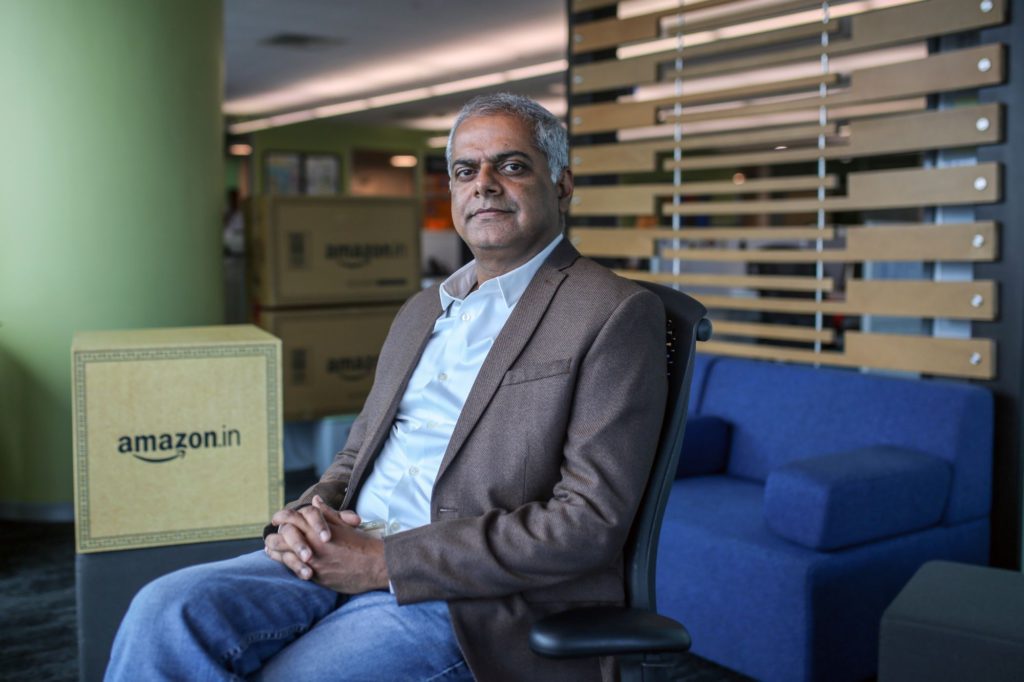
(Bloomberg) — Manish Tiwary had only been in his new job as head of Amazon.com Inc.’s India business a couple of months when he faced a weighty decision: How aggressively should the US e-commerce giant bid for media rights to the Indian Premier League?

Securing digital streaming rights to the cricket tournament would be a huge coup, potentially luring hundreds of millions of viewers to Amazon. But Tiwary and his colleagues would have to bid against deep-pocketed giants like Reliance Industries Ltd. In a stunning move, Amazon pulled the plug before the auction started. Tiwary and senior management in Seattle decided those billions would be better spent on Amazon’s e-commerce business.

“The final call was based on cost numbers,” said Tiwary, in one of his first interviews since taking over as country head, on the 27th floor of Amazon’s India headquarters in the northwestern neighborhood of Yeshwanthpur in Bangalore.

It’s a sign of the tough calls ahead for the 52-year-old former Unilever Plc executive, who took on his current role in February. The country of nearly 1.4 billion people may be Amazon’s most promising long-term opportunity, but it’s also extremely challenging, with tough local rivals, a cantankerous government and unusually price-sensitive consumers.

Amazon first began to target India under founder Jeff Bezos, who visited the country regularly and hob-nobbed with Prime Minister Narendra Modi. The company has invested more than $6.5 billion in India, hired 110,000 employees and built 60 warehouses to expand its reach in the country.

Tiwary anticipates the next stage of growth will come from pushing beyond India’s big cities to what’s known as Bharat, the less affluent, non-English speaking people in rural areas. He expects to add the next 100 million shoppers from this effort.

“I want Amazon to grow with India,” Tiwary said. “India is forecast to be the fastest-growing major economy in the world.”

India’s e-commerce market is projected to swell to $350 billion by 2030, growing at a clip of about 23% as hundreds of millions of first-time smartphone users access the internet. That’s drawn competition from giants like Reliance to Walmart Inc.’s Flipkart, as well as a flock of startups. Tiwary maintains there is room for several rivals to succeed given that only a few percent of the country’s $1 trillion retail market has moved online.

“At less than 3% online retail penetration, the last thing I’d worry about is competition,” he said.

His strategy for pushing beyond India’s big cities is a combination of technology and marketing. Central to it will be what Tiwary calls “Smart Commerce,” an initiative announced last month to help small merchants get online. The company has succeeded in getting about a million sellers on board so far, but that’s a fraction of the total.

“If the 13 million or more small businesses are digitized, online shopping can reach every corner of India,” said Tiwary, who during his two decades at Unilever worked in places from Thailand and Vietnam to India and Dubai.

He also thinks it’s critical to let more shoppers tap Amazon by voice, including with local languages. So the company’s engineers are enhancing app features to enable such purchases. It’s also expanding into buy-now-pay-later, an increasingly popular way to offer customers credit with no need for a credit or debit card.

His marketing strategy couldn’t be more different from that of Reliance, the sprawling conglomerate led by billionaire Mukesh Ambani. A joint venture backed by Reliance won the rights to show the Indian Premier League cricket matches online for 238 billion rupees ($3.05 billion).

Tiwary is going to focus Amazon’s attention on developing local influencers to help market to Bharat customers. These aren’t stars like Kim Kardashian or Addison Rae. Instead, they’re homemakers like Kajal Srivastava from Deoghar in the state of Jharkhand or students like Ahmad Zahid from Kashmir who unbox and showcase products like affordable sports shoes, memory foam pillows or the latest instant curry concoction.

“It’s very different from the TikTok influencers you see elsewhere in the world,” said Tiwary. “It’s small now but looks extremely promising. It’s a new playbook for social commerce.”

More stories like this are available on bloomberg.com

©2022 Bloomberg L.P.

Paul Pogba-backed Startup Wahed Now Valued at $300 Million

(Bloomberg) —

Wahed Invest LLC has completed a funding round of $50 million as it looks to disrupt the Islamic finance space. 

The funding was led by Wa’ed Ventures, the venture capital arm of Saudi Aramco Entrepreneurship Center and gives the Islamic fintech a post-money valuation of around $300 million, according to a statement by the firm. Other backers included family offices and soccer star Paul Pogba.

The startup will use the funds to expand into the Middle East and North Africa, including Saudi Arabia. And it will start a digital banking service on its UK platform aimed at underserved communities.

The aim is “to make the Wahed platform a one-stop-shop for ethical banking and investing tools,” said Chief Executive Officer Junaid Wahedna. 

Wahed Invest offers saving and investment options that let Muslim customers invest in line with their faith, for instance by avoiding companies earning profits from lending, gambling, alcohol and tobacco. 

The New York-headquartered firm was founded in 2015 and has about 300,000 customers in countries like the US, UK and Malaysia. It now has 11 offices around the world, and currently holds nine regulatory licenses including in India and South Africa. 

Islamic banking is booming worldwide, with the industry growing 11% in 2020 to encompass $2.7 trillion of assets, according to an August 2021 report by the Islamic Financial Services Board. Wahed said there was high demand for fintech products that are both ethical and easily accessible for individual investors.

HSBC Holdings Plc was the lead financial advisor for Wahed in the series B funding round.

More stories like this are available on bloomberg.com

©2022 Bloomberg L.P.

QuantumScape’s Manufacturing Drama Tests Silicon Valley Moonshot

(Bloomberg) — Battery startup QuantumScape dropped some news last week that we reporters like to call a Friday night news dump. That’s when companies try to bury unpleasant information by releasing it at the end of the work week, when reporters are tired and readers are headed to happy hour.

The company did just that on Friday, announcing the departure of Chief Manufacturing Officer Celina Mikolajczak after a year in the job. The Tesla and Panasonic veteran was a key hire when she joined QuantumScape to help bring battery innovations from the lab to the factory floor.

It’s a bad sign for the company backed by Volkswagen. QuantumScape has been targeted by shortsellers and pummeled with shareholder lawsuits alleging it oversold its technology to investors ahead of a buzzy SPAC merger in 2020 that raised $680 million. Mikolajczak brought credibility and the expertise to take the company’s ballyhooed battery into production.The startup cited “differing management styles,” and said its manufacturing and supply chain teams will now report directly to CEO Jagdeep Singh, a well-regarded salesman and tech leader in Silicon Valley, but not a manufacturing expert. Mikolajczak will join the company’s scientific advisory board for at least one year, and keep her stock grants. She’s going to focus on building a “U.S.-based battery supply chain,” according to the filing. In response to this newsletter, QuantumScape said it has been “growing and strengthening our manufacturing team across the board.”

No doubt, Mikolajczak will have a new job soon. In the hyper-competitive race for battery talent, her experience scaling up Tesla’s Nevada gigfactory — and her years as a consultant figuring out “why batteries go boom,” as she once described it — make her a rare find. She’s also a female executive with serious technical chops in a very male-dominated field.

In her absence, Clayton Patch, a veteran of silicon chip foundries who joined the company in May 2021, will run manufacturing, QuantumScape told me. Patch worked closely with Mikolajczak.QuantumScape is one of dozens of startups trying to reach the “holy grail” of battery innovation: a solid-state battery that can deliver longer range, faster charging times, long cycle life, lower fire risk, and lower cost. The company can make this battery at lab scale.

The big question is whether it can produce it for millions of EVs. Doubters say making QuantumScape’s key component, a ceramic separator, without too many flaws is very hard to do at an economically viable cost. QuantumScape’s solution is hidden behind closely-guarded IP.There are differing theories on the split. One view is that Mikolajczak was brought in too early, when the cells weren’t yet ready for high-volume production and the kind of inflexible deadlines that large-scale manufacturing requires. She had the right skills but at the wrong moment in time and was trying to change too much. The counterpoint to that is: that’s what she was hired to do. Mass production requires change. And a perusal of her LinkedIn page suggests early-stage cell work is well within her grasp.QuantumScape, spun out of Stanford University and backed by tech luminaries John Doerr and Vinod Khosla, represents the Silicon Valley moonshot approach to innovation. The company wants to leapfrog Asia in the battery race with a big breakthrough, not by incrementally improving what Korean and Chinese battery makers already do.

“I just think that’s a tough hill to climb,” Doug Campbell, the CEO of Solid Power, another battery startup, told me last month. “You’re going head to head with the Asians, and I think it just elevates your risk profile.”

Singh, the QuantumScape CEO, often compares his company to Tesla in its disruptive ambitions. But it’s not just large, well-funded battery manufacturers he’s up against. While he spends the next couple of years working toward commercialization, competitors are bringing improved batteries to market that could erode the value of QuantumScape’s innovation. And he now must get from the R&D lab to the factory without Mikolajczak’s knowledge and skills.

More stories like this are available on bloomberg.com

©2022 Bloomberg L.P.
Bitcoin’s Unrelenting Selloff Puts Prices on Verge of $20,000

(Bloomberg) —

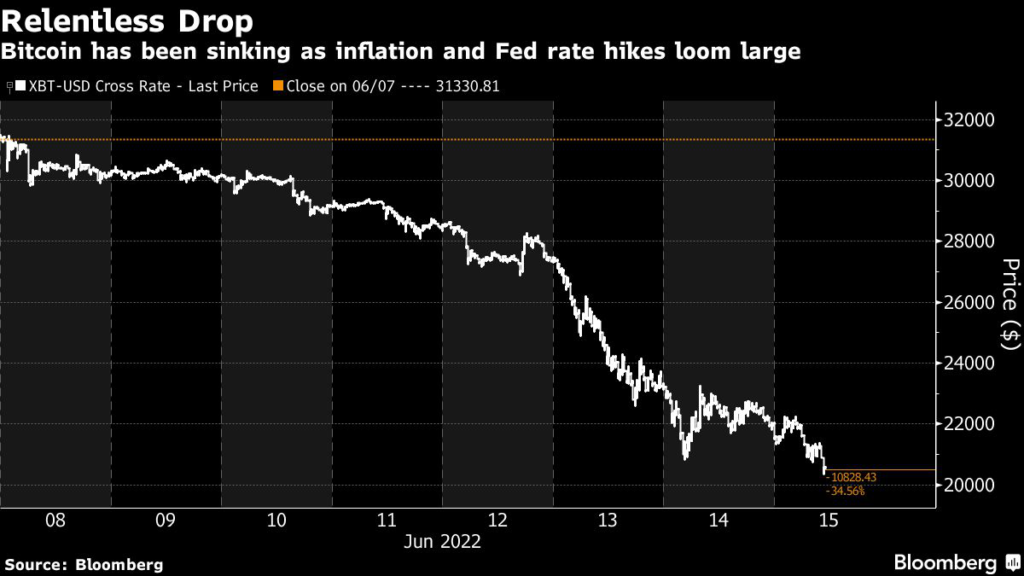
Bitcoin tumbled again, driving the token to the brink of $20,000 as evidence of deepening stress within the crypto industry kept piling up. 

There’s a growing sense of anxiety about the stability of crypto projects large and small. Tron founder Justin Sun’s roughly month-old stablecoin USDD drifted from its intended dollar peg, at one point dipping below 96 cents, data from CoinGecko show. A tweet from the co-founder of crypto hedge fund Three Arrows Capital fueled speculation that it had suffered large losses. 

Read more:  Crypto Hedge Fund’s Tweet Fuels Speculation Over Losses 

Bitcoin fell as much as 8.6% on Wednesday $20,081.95. The largest token has fallen for nine straight days, the longest losing streak since 2014. Ether was on the cusp of breaking the $1,000 mark after a 10% plunge. 

A market that started sliding late last year on expectations of tighter monetary policy is now showing signs of widespread panic, after last month’s collapse of the Terra blockchain and the recent decision by crypto lender Celsius Network Ltd. to halt withdrawals. Even long-term holders who have avoided selling until now are coming under pressure, according to researcher Glassnode. 

“What we’re seeing now are the weak hands exiting the market as we wash out the excess of what in retrospect can only be seen as an overextended build up of speculation and leverage,” said Mati Greenspan, founder of Quantum Economics. 

Historical data show that Bitcoin may find key support around the $20,000 level, as previous selloffs demonstrate where the token usually finds points of resilience, according to Mike McGlone, an analyst for Bloomberg Intelligence. 

Prices may “build a base around $20,000 as it did at about $5,000 in 2018-19 and $300 in 2014-15,” he said in a note Wednesday. “Declining volatility and rising prices are earmarks of the maturing digital store-of-value.”

Fresh apprehension was triggered on Wednesday with traders closely watching developments from the Tron DAO Reserve, the entity that oversees the cryptocurrency reserves backing USDD. The group said on Wednesday that it planned to withdraw 2.5 billion TRX tokens from the Binance crypto exchange in an apparent attempt to counter the selling pressure. Sun has repeatedly taken to Twitter this week to tout efforts to support USDD’s peg.

The Tron network’s governance token TRX, which has come under attack from short sellers in recent days, has dropped 14% in the past 24 hours.

Shrinking Crypto Market

Adding to the market’s nerves, the founder of Three Arrows Capital, an influential hedge fund that has been liquidating crypto holdings, posted a vague tweet. “We are in the process of communicating with relevant parties and fully committed to working this out,” former Credit Suisse Group AG trader Zhu Su tweeted from his verified account, without providing further details. 

The crypto market now stands at a fraction of its heights in late 2021, when Bitcoin traded at a heady $65,000 and traders poured cash into speculative investments of all stripes. The total market cap of cryptocurrencies is $925 billion, down from $3 trillion in November, according to CoinGecko. 

With prices continuing to dive, there are more predictions that losses will accelerate if key levels are broken. 

“If these levels break, $20,000 Bitcoin and $1,000 Ether, we can expect massive sell pressure in the spot markets as dealers hedge themselves,” BitMEX co-founder Arthur Hayes said in a tweet.

Bitcoin Rout Hits ‘Darkest’ Phase With Entire Market Underwater

More stories like this are available on bloomberg.com

©2022 Bloomberg L.P.

PayPal Extends Buy-Now, Pay-Later Push With Installment Loans

(Bloomberg) — PayPal Holdings Inc. is pushing deeper into the rapidly expanding “buy now, pay later” arena by offering installment loans for larger purchases.

Consumers will be able to make monthly payments on purchases of $199 to $10,000 for as long as two years, PayPal said in a statement. Annual percentage rates on the loans could reach 29.99% and consumers will be subject to credit approval. The move comes almost two years after PayPal introduced its pay-in-4 offering, which allowed consumers to break up purchases into 4 payments over six weeks.   

“We’ve been really, really pleased with the progress and traction that pay in 4 has received but we also heard pretty frequently that one size does not fit all,” Greg Lisiewski, PayPal’s vice president of shopping and pay later, said in an interview. “There’s demand from both sides of the network — particularly on the consumer side — to have additional choice.”

The San Jose, California-based firm is broadening its offerings as buy now, pay later attracts rivals including Apple Inc., which announced Apple Pay Later earlier this month. Analysts expect consumers will spend more than $100 billion a year on such products by 2024.

Still, investors have begun to grow weary of the offerings. PayPal’s stock has slumped 62% this year, outpacing the 28% decline of the S&P 500 Information Technology Index. 

Other firms known for buy now, pay later offerings are also facing pressure. Klarna Bank AB is looking to tap investors for more cash in a move that would slash the valuation of the Swedish fintech. And Block Inc. has warned investors in recent weeks that credit losses soared 347% to $91 million in the first three months of the year, most of which came from its purchase of Afterpay.

For PayPal, the hope is that consumers will give buy now, pay later a try and then seek out other of its offerings. That will be crucial as the company works to boost usage of its app rather than frantically adding new customers. PayPal has processed more than 105 million pay-in-four transactions — accounting for $15 billion in payments volume on its platform — since 2020. 

“People perpetually need help with their cash-flow management to finance larger purchases and to pay over time,” Lisiewski said. “That need is perpetual.”

More stories like this are available on bloomberg.com

©2022 Bloomberg L.P.

Qualcomm Wins Bid to Topple $1 Billion EU Antitrust Fine

(Bloomberg) — Qualcomm Inc. won its bid to topple a 997 million-euro ($1 billion) European Union antitrust fine for allegedly pressuring Apple Inc. to only buy its 4G chips, after judges said regulators made a series of blunders in their case.

The EU General Court overturned the penalty, saying “a number of procedural irregularities” in the European Commission’s decision “affected Qualcomm’s rights of defense and invalidate” its analysis of the firm’s conduct.

The 2018 fine against the chipmaker came after years of EU scrutiny and an earlier unsuccessful probe. Qualcomm was handed a second EU penalty of 242 million euros in 2019 for deliberately pricing some chips so low they could eliminate a smaller rival. A newer probe into the company was dropped last year.

While the ruling can be appealed one more time, it’s yet another stinging defeat for the EU’s antitrust arm, which until January — in a landmark ruling involving another chip giant Intel Corp. — hadn’t lost a big competition case in court for more than 20 years. 

The commission said it “will carefully study the judgment and its implications and will reflect on possible next steps.” Qualcomm said in an emailed statement that it was “pleased with the General Court’s decision.”

San Diego-based Qualcomm told the court in a hearing last year that the bloc’s probe was “biased” and allowed Apple to “dictate the evidence, narrative and conclusions.” The commission had said Apple had been cornered by Qualcomm with a 2011 deal that offered “significant” sums and rebates if it only bought the company’s chips. 

The case is: T-235/18, Qualcomm v. Commission.

(Updates with Qualcomm, EU responses in fifth paragraph)

More stories like this are available on bloomberg.com

©2022 Bloomberg L.P.
China Rally Stands Out as Global Stocks Fret Over Fed Hikes

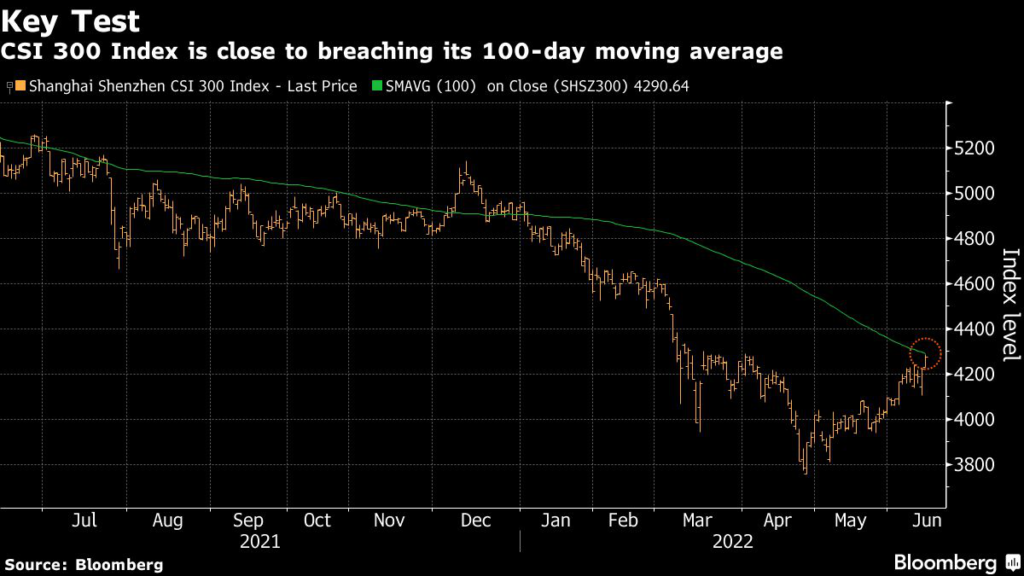
(Bloomberg) — Chinese stocks rallied to the highest in three months, extending their recent outperformance over global peers, as the country’s growth-focused policy lures investors seeking a reprieve from the widespread market meltdown.

The benchmark CSI 300 Index closed 1.3% higher on Wednesday, taking its gains in June to almost 5% amid a global sea of red. The S&P 500 Index earlier this week plunged into a bear market as did a key MSCI Inc. index of world equities, with traders pricing in a 75-basis-points rate hike by the Federal Reserve later today.

Read: Decoupling China Market Is a Refuge in Global Rout: Taking Stock

Bets that China’s policy support will help revive the Covid-hit economy got a boost Wednesday from better-than-expected May data on industrial output and retail sales. Having been hammered during weeks-long lockdowns in key cities, Chinese equities have shown extraordinary resilience during the latest global selloff, helped also by Beijing’s dialing back of a crackdown on the key technology sector.

“We are seeing some improvements in May which are certainly positive to market sentiments,” said Redmond Wong, market strategist at Saxo Capital Markets. “The key is now whether the Covid situation can remain contained and if there’s a resumption of more stringent pandemic control measures.”

Chinese stocks were the best performers in Asia Wednesday, with financials leading the advance. A number of brokerages including Everbright Securities Co. and Hongta Securities Co. rose up to 10% for a second day. The Bloomberg Intelligence gauge of property developers also climbed as new-home sales posted the first month-on-month rise this year.

Large-cap Chinese internet stocks listed in the US mostly climbed in premarket trading, adding to Tuesday’s 6.9% gain in the Nasdaq Golden Dragon China Index. Education stocks including New Oriental Education and Technology Group Inc. and Gaotu Techedu Inc. were the top gainers, while e-commerce giants Alibaba Group Holding Ltd. and JD.com Inc. rose more than 1.5% each.

The overall market gains came even as the People’s Bank of China kept a key policy rate unchanged. The rate on the central bank’s one-year medium-term lending facility was left at 2.85%. A small number of polled analysts had expected a reduction of either five or 10 basis points.

China’s consumer prices rose a mere 2.1% in May from a year earlier, a fraction of the pace in the US at 8.6%. That’s seen as giving Chinese authorities the room to further loosen monetary and fiscal policy settings as necessary.

“Not cutting rates for now is a reasonable move given that China is not in a rush to do it,” as recent economic figures were not very bad, said Castor Pang, head of research at Core Pacific-Yamaichi International. “Investors are waiting for a slew of measures to keep pushing up the market, from property to auto market incentives, rather than just a single cut.”

In a sign that sentiment is on the mend, the turnover for stocks topped 1 trillion yuan ($149 billion) again for the day, marking seven out of eight sessions above that level this month.

In Hong Kong, the benchmark Hang Seng Index rose as much as 1.7% and the Hang Seng gauge of tech shares advanced more than 2%.

Adding to the upbeat mood over mainland assets, the first batch of a Chinese offshore yuan sovereign bond sale saw the strongest demand in nearly two years at a Wednesday auction. Both offshore and onshore yuan appreciated 0.4% against the US dollar.

As Chinese stocks continue their climb out of a mid-March trough, the list of strategists and money managers turning bullish, or reiterating optimism on the market, has only been growing. Foreigners have snapped up more than 13 billion yuan of mainland shares Wednesday, extending a buying streak that’s continued in all but one day this month. 

READ: June’s Looking Like a Game Changer for Beleaguered China Stocks 

A key factor still weighing on stocks is Beijing’s adherence to Covid Zero. Small scale movement controls are frequent even as a blanket lockdown across Shanghai has been lifted, and the specter of restrictions returning with just a handful of infection cases may put a cap on the rally.

Lockdowns in China are “one of the key risks and hopefully, we had already seen the worst,” Selina Sia, head of Greater China equity research at Credit Suisse Wealth Management, said on Bloomberg TV. “Moving forward, of course, a full recovery is likely going to take some more time, but I hope that we would move toward the right direction and things can move more positively from here.”

READ: Beijing Virus Cases Remain Elevated in Threat to Covid Zero

(Updates with US premarket trading in sixth paragraph.)

More stories like this are available on bloomberg.com

©2022 Bloomberg L.P.
Alibaba’s SCMP Poaches Former Expedia, AOL Exec for New CEO

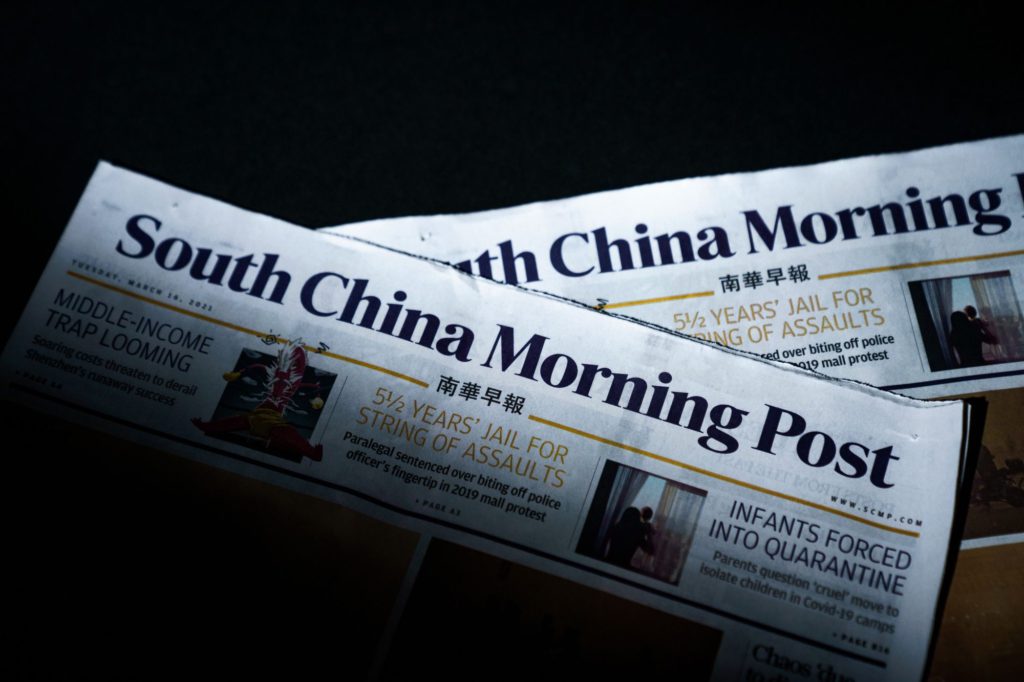
(Bloomberg) — The South China Morning Post has picked Expedia’s Asian head Catherine So to become its new chief executive officer, putting a technology and media veteran at the helm of the news outlet owned by Alibaba Group Holding Ltd.

So replaces Gary Liu, who will leave in July to oversee crypto-spinoff Artifacts Lab, the SCMP said in a statement. The Harvard-educated So, who’s also worked at Groupon, Star TV and AOL Time Warner, will focus on growing the newspaper’s global readership and expanding its commercial opportunities. 

She is the second woman to lead the storied organization after Kuok Hui Kwong, daughter of former owner Robert Kuok, who held the role between 2008 and 2012. So’s appointment means the top two leadership positions at the paper are both filled by women, with Tammy Tam as Editor in Chief.

So, a Hong Kong native, joins the paper at an uncertain time. In 2021, China’s top economic planner unveiled a proposal that aims to bar private capital from news operations. The restrictions — which would apply only to domestic investments — came months after concerns were expressed in Beijing about Alibaba’s controversial handling of a scandal involving one of its executives.

Bauhinia Culture (Hong Kong) Holdings Ltd. was interested in adding the city’s most prominent English-language newspaper to its stable of media properties, Bloomberg News has reported. Alibaba representatives have denied the company is for sale. 

Founded in 1903, SCMP was once one of the most profitable newspapers in the world, boosted by a large classified job-advertisement section. Media mogul Rupert Murdoch acquired control of the paper in 1986 before selling his stake to Malaysian tycoon Robert Kuok in 1993. The paper changed hands again in 2015 when Alibaba agreed to buy it for about HK$2 billion ($256 million).

The organization has come under fire in recent years for allegedly avoiding sensitive issues in coverage involving Beijing.

More stories like this are available on bloomberg.com

©2022 Bloomberg L.P.
WTO Enters ‘Crunch Time’ Trying to Reach Deals on Food, Vaccines

(Bloomberg) —

Prospects for World Trade Organization deals aimed at resolving some of the global economy’s most pressing but politically thorny issues hung in the balance as the trade body extended by a day its ministerial conference in Geneva.

Trade ministers on Wednesday were hoping to clinch deals aimed at widening vaccine distribution, boosting food security, reducing fishing subsidies and extending a moratorium on digital-commerce tariffs. So talks will go into Thursday to try to loosen the key sticking points. India, for instance, was refusing to bend on its defense of its domestic fishing industry.

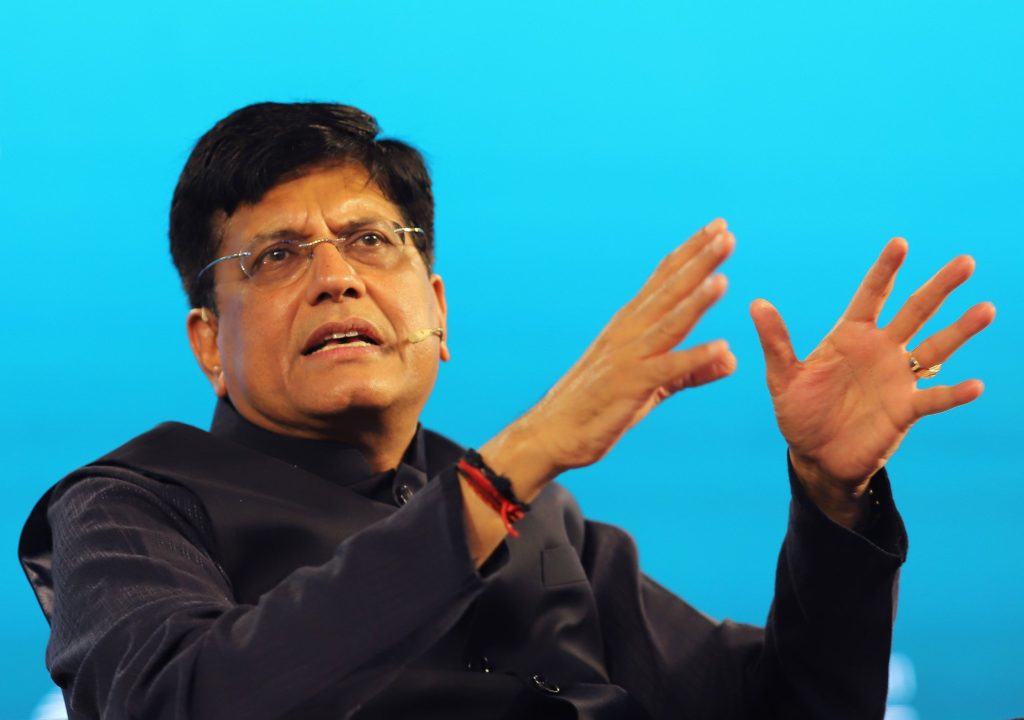
Indian Commerce Minister Piyush Goyal told a meeting of delegates that it wants exceptions on a 20-year negotiation to curb harmful government fishery subsidies, according to a statement on his ministry’s website. He also insisted members water down the WTO’s subsidy rules for government-backed food-purchasing programs aimed at feeding poor citizens, according to a separate statement.

“The Indian delegation has raised everybody’s eyebrows,” Mexican Undersecretary of Foreign Trade Luz Maria de la Mora said in an interview. “You cannot come to a negotiating forum, particularly at this stage, making demands that they brand as non-negotiable.”

Lowered Expectations

The tough stance by one of the world’s largest developing economies is just one example of the difficulty the WTO faces reaching a package of small but symbolically important deals. Failure to do so may cement the view that the WTO is no longer a viable forum to address the shortcomings of international commerce.

“We are getting to the tough spot of the negotiations now,” WTO Spokesman Dan Pruzin said in a press briefing late Tuesday. “The not-so-good news is that we are running out of time. It is crunch time.”

The WTO has operated for more than a quarter century on the basis of consensus decision-making — meaning any one member’s veto can scuttle agreements. That model, critics say, is also why it’s been largely ineffective as a deal-making forum for much of the past decade.

The world’s top trade officials are now mulling the prospect of a more polarized era of trade relations where multilateral deals become a relic and like-minded nations move forward without the holdouts.

Read More: India Seen as Thwarting G-7 Push to Avert Global Food Crisis

“That should be a concern to India and smaller, poorer countries that rely on the certainty of a rules-based system to benefit from trade,” said Chad Bown, a senior fellow at the Peterson Institute for International Economics.. “They risk that being eroded in ways that we don’t know what a replacement would look like.”

Overtime Negotiations

Prior to Tuesday, many governments were hopeful that a fisheries agreement — which aims to help prevent overfishing of oceans — would be the WTO’s first multilateral accord in almost a decade.

But India is seeking broad exemptions for its fishing industry, including a 25-year phase-in period and a 200-nautical-mile exclusion for its artisanal anglers. “We feel that without agreeing to the 25-year transition period, it will be impossible for us to finalize the negotiations, as policy space is essential for the long-term sustainable growth and prosperity of our low-income fishermen,” Goyal said. 

“There are countries which are taking some very strong positions — very far-reaching demands — which weakens the purpose of this agreement,” European Union Executive Vice President Valdis Dombrovskis told reporters.

Brink of Failure

Another EU official said the fisheries talks looked to be on the brink of failure, but added that some countries may be hiding behind India’s position on this and other controversial issues of the meeting. A spokesman said Goyal was unavailable for comment. 

There were also concerns among some delegates that India’s position may jeopardize a pair of broadly supported proposals aimed at alleviating a looming global food crisis and avoid a cascade of international food-export restrictions.

India wants assurances that its so-called public stock-holding program, which buys exclusively from the nation’s farmers and has exported in the past, cannot be challenged at the WTO as illegal.

Key agricultural exporters like the US, Argentina, Australia, Brazil and Canada fundamentally oppose India’s request to stock up unlimited reserves of subsidized crops and then dump them on global markets — and there doesn’t appear to be much room for compromise.

Vaccine Waiver, E-Commerce

It remains unclear whether India’s position will also sink prospects for a pair of deals to waive IP rights for vaccines and to extend the WTO’s ban on digital duties, but several delegates weren’t yet ready to declare defeat as the discussions wound down on Tuesday. 

On the intellectual-property waiver, “there is still work to do but I think there is some optimism that that can be achieved,” Pruzin told reporters. “The others it’s a little bit difficult to say. I think the electronic-commerce moratorium is a challenge.” 

Ultimately, any failure to conclude multilateral agreements won’t unravel WTO’s system of rules that govern more than $28 trillion worth of trade flows each year. But it could be the clearest sign yet that the world’s trading partners are redrawing allegiances along geopolitical lines.

More stories like this are available on bloomberg.com

©2022 Bloomberg L.P.

What Happens To Your Bitcoin When You Die? Estate Planners Have Some Ideas

(Bloomberg) —  


  • Listen to Bloomberg Crypto on the iHeartRadio App
  • Listen to Bloomberg Crypto on Apple Podcasts
  • Listen to Bloomberg Crypto on Spotify 

What happens to your crypto after  you die? Beyond the existential question of the permanence of the blockchain, the answers here aren’t straightforward. For estate planners, what to do with digital assets like Bitcoin and NFTs present a new challenge to inheritance law.  There’s more and more money pouring into these assets, and people are starting to think about their digital legacies. But how do you pass on something that’s built on principles of anonymity and individuality, and that requires both passwords and tech savvy to access? In this episode, Bloomberg reporter Jill Shah explores these questions.

Follow us on Twitter @crypto, and subscribe to the Bloomberg Crypto Newsletter at https://bloom.bg/cryptonewsletter

More stories like this are available on bloomberg.com

©2022 Bloomberg L.P.

Close Bitnami banner
Bitnami
