Bloomberg

New German KF51 Panther Battle Tanks Is ‘Game Changer,’ Rheinmetall Says

(Bloomberg) — Rheinmetall AG unveiled a new main battle tank that will replace its flagship Leopard 2 as demand for military equipment is poised to surge in the wake of Russia’s war against Ukraine.

The KF51 Panther is “destined to be game changer on the battlefields of the future,” Rheinmetall said this week when presenting the 59-ton vehicle at the Eurosatory 2022 defense exhibition in Paris. 

“The main battle tank concept sets new standards in all areas — lethality, protection, reconnaissance, networking and mobility,” the company said in a statement.

The German arms maker expects revenue to surge by as much as 20% per year driven by growing demand for military equipment, according to Chief Executive Officer Armin Papperger. Rheinmetall is boosting capacity and can at least triple ammunition production within the next twelve months, he told Germany’s Bild am Sonntag in an interview. The company also is able to double truck output “because a lot of Cold War infrastructure can be reactivated fairly quickly,” the CEO said. 

Rheinmetall’s first modernized Marder tanks are also ready for delivery, Papperger said, adding that when and where the vehicles get shipped depends on the German government. Berlin has faced criticism for what some see as tepid commitments to deliver weapons to Ukraine.

Rheinmetall is currently updating 100 decommissioned Marder vehicles, 88 Leopard 1 tanks and additional Leopard 2 versions. The vehicles could potentially be delivered to Ukraine or replace equipment dispatched by other countries.

More stories like this are available on bloomberg.com

©2022 Bloomberg L.P.

Baidu Aims to Sell iQiyi Stake at $7 Billion Value, Reuters Says

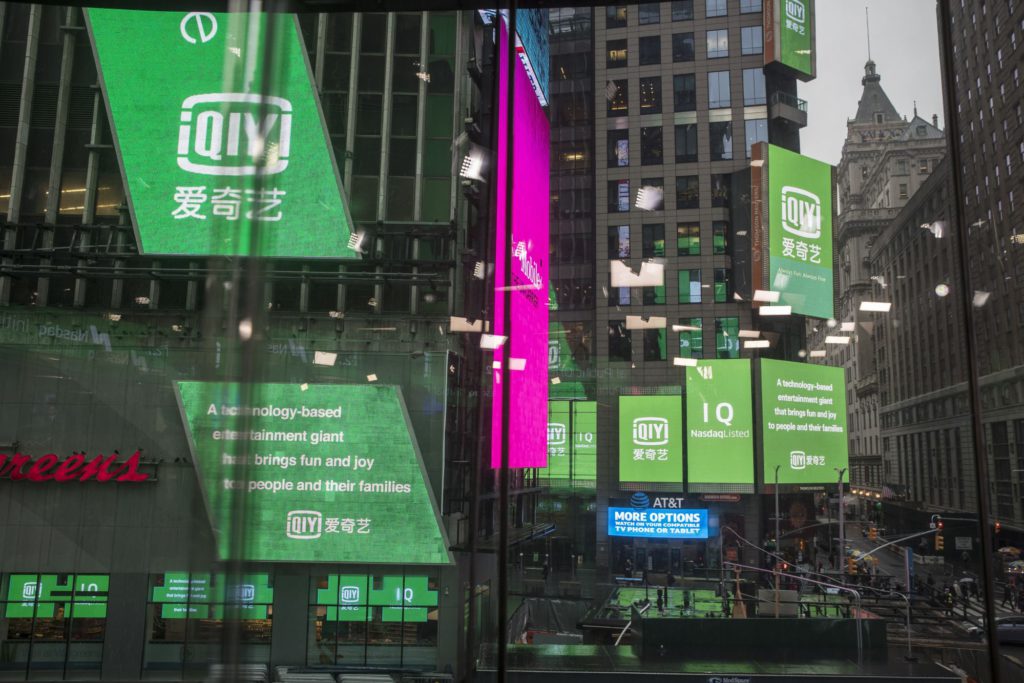
(Bloomberg) — Baidu Inc. is in discussions to sell its majority stake in iQiyi Inc. in a deal that could value the Netflix-style streaming service at $7 billion, Reuters reported, citing people with knowledge of the matter.

Baidu intends to offload its 53% stake in a unit it’s decided is no longer core to its business, Reuters reported. The iQiyi shares have drawn early interest from several financial sponsors and state-owned companies, the news agency added. A deal could value iQiyi as a whole at roughly $7 billion, Reuters reported.

China’s search leader is delving deeper into areas it’s identified as longer-term growth drivers, including AI and autonomous driving, as its core ad business decelerates. IQiyi said in a statement that the idea of a stake sale is “purely market rumor.”


More stories like this are available on bloomberg.com

©2022 Bloomberg L.P.

From Big Tech to Bank Stocks, Traders Brace for Fed Rate Hike

(Bloomberg) — The US stock market remains on edge ahead of Wednesday’s Federal Reserve announcement, with investors expecting a 75 basis-point increase in rates, which in turn will add more pressure on growth stocks and corporate profit margins.

Stocks have tumbled since Friday in anticipation of an aggressive move by the Fed in its fight against inflation, with the S&P 500 Index entering bear market territory. 

Apple Inc., Microsoft Corp. and other technology stocks have slumped to new lows as US Treasury yields have soared. Homebuilders and lenders have tumbled even more as investors bet that higher borrowing costs will slow down the US housing market.

The recent selloff could potentially set the stage for a rally if the Fed does indeed raise rates by 75 basis points, which would help re-establish the central bank’s inflation fighting bonafides, according to Michael Mullaney, director of global market research at Boston Partners. 

On the flip side, if the central bank raises rates by 50 basis points, unless Fed Chair Jerome Powell “comes with real hawkish content afterwards, I think it’s going to be taken as somewhat dovish and letting inflation get away,” Mullaney said.

Here’s a look at sectors where the stakes for the Fed’s rate decision are high.

Tech

Tech stocks have been among the hardest hit amid soaring U.S. Treasury yields, which dent the present value of profits expected to be delivered far in the future. The tech-heavy Nasdaq 100 is down 31% this year led by DocuSign Inc. and Netflix Inc. that are more focused on revenue growth than profitability.

Higher rates have also taken a toll on behemoths like Amazon.com Inc., which is on the verge of seeing its market value sink below $1 trillion for the first time since 2020 as it grapples with higher costs and slowing growth. The stock is down 45% from last year’s record.

Most on Wall Street don’t expect a sustained rebound in tech stocks until there are signs inflation is slowing down.

Read more: Big Tech’s Floor Collapses on Renewed Fears of Bigger Rate Hikes

Consumer Discretionary

After rallying earlier this year, consumer discretionary stocks are now under pressure as rising rates dampen consumer sentiment and spending. The S&P 500 Consumer Discretionary Index has tumbled 33% this year after surging 24% in 2021.

Shares of furniture and apparel retailers, such as RH and Abercrombie & Fitch Co., could experience more selling if the Fed signals that consumers are cutting back. Winners could include companies that sell a greater mix of staples products, like grocers including Kroger Co., and Walmart Inc. and Costco Wholesale Corp.

Wall Street has been changing its tune on the sector. BofA recently downgraded its recommendation on consumer electronics retailer Best Buy Co. and raised Tractor Supply Co., which sells farm supplies and animal feed, as the firm sees US consumers shifting their budgets to staple items.

Read more: If You Thought the Tech Rout Was Bad, Spare a Dime for Retailers

Banks and Homebuilders

Rising rates are a double edged sword for banks. While the lenders are typically viewed as one of the biggest beneficiaries from a rising interest rate environment, the sector has been under pressure as concerns grow about a potential US recession and drop in mortgage lending. 

The S&P 500 Banks Index has fallen 25% this year. All six of the largest US bank stocks are down by at least 20% in 2022, with JPMorgan Chase & Co. and Bank of America Corp. down more than 28%.

For homebuilders, rising borrowing costs and elevated home prices have spurred concerns over housing market demand. Lennar Corp. and D.R. Horton Inc. have tumbled this year, pummeled by rising mortgage rates. 

Read more: Mortgage Stocks Slump as Rate Worries Sour Investor Sentiment

Precious Metals Miners

Gold mining stocks have lost their appeal as an inflation hedge as interest rates have climbed. The VanEck Gold Miners ETF is down more than 7% in 2022 after rallying earlier in the year. Kinross Gold Corp. has slumped 29% while Wheaton Precious Metals Corp. and Agnico Eagle Mines Ltd. have dropped more than 8%.

The “only thing keeping gold above” a technical support level of $1,810 per ounce is inflation, Sevens Report founder Tom Essaye wrote in a Tuesday note. That could change Wednesday as rising interest rates mean gold “is likely to break below” $1,800.

More stories like this are available on bloomberg.com

©2022 Bloomberg L.P.

Premier Inn Owner Raises Wages in Tight Market: The London Rush

(Bloomberg) — Here’s the key business news from London-listed companies this morning.

Whitbread Plc: The owner of Premier Inn reported what it called an “impressive” performance in the first quarter, saying their businesses in the UK and Germany are both trading above expectations.

  • Tight labor supply in the hospitality sector, however, will force the company to raise some wages, which together with spending on refurbishment and IT investment will cost up to £30 million pounds

Bloomsbury Publishing Plc: Lockdown readers have stuck with the hobby, according to the publishing house, with profit before tax surging 25% in its consumer division in the first quarter.

WH Smith Plc: The convenience store has benefited from the recovery in the travel industry, with sales from its stores in locations like airports and railway stations exceeding pre-pandemic levels in the third quarter.

  • Although its sales on the high street have not recovered as well, the group expects its full year outturn to be towards the higher end of analyst expectations


Outside The City

The UK cancelled its first deportation flight to Rwanda after an eleventh-hour intervention by the European Court of Human Rights, which ruled there is “a real risk of irreversible harm” to the asylum seekers involved.

Meanwhile, UK students from the poorest families are set to receive the lowest level of support in seven years after forecasting errors left increases trailing well behind inflation.

In Case You Missed It 

SoftBank Group Corp. is planning to list some of its stake in Cambridge-based chip designer Arm Ltd. on the London Stock Exchange, switching from an earlier plan to only use the US market, people familiar with the matter told Bloomberg. 

Looking Ahead

Tomorrow, the Bank of England is expected to deliver an unprecedented fifth consecutive rate hike as it battles the highest inflation in decades.

Boohoo Group Plc is among the companies expected to publish results. The online fast-fashion retailer had warned that first-half sales growth may grind to a halt as cash-strapped consumers were returning more garments.

(Corrects description of Whitbread in second paragraph and removes reference to Costa Coffee.)

More stories like this are available on bloomberg.com

©2022 Bloomberg L.P.

Crypto Hedge Fund’s Tweet Fuels Speculation Over Losses

(Bloomberg) — A vague tweet by a founder of Three Arrows Capital, an influential hedge fund that has been liquidating crypto holdings as prices plummeted, is stirring fresh apprehension in an already shaken industry.

“We are in the process of communicating with relevant parties and fully committed to working this out,” former Credit Suisse Group AG trader Zhu Su tweeted from his verified account, without providing further details. Zhu and Three Arrows co-founder Kyle Davies didn’t respond to requests for comment.

Read more: Ex-Credit Suisse Traders Amass Billions of Dollars of Crypto 

While information on the fund’s size and trading strategies is sparse, blockchain analytics firm Nansen estimated in early March that Three Arrows managed about $10 billion. It owned more than 5% of the Grayscale Bitcoin Trust as of December 2020, according to the latest available regulatory filings, though it’s unclear whether Three Arrows has maintained that position. The trust has a market value of about $10 billion.

Crypto markets had already witnessed two high-profile blowups since early May, roiling an asset class that was already under pressure from tightening monetary policy. First, the Terra decentralized-finance ecosystem collapsed when an algorithmic stablecoin that was a key part of it crumbled from its dollar peg. About a month later, crypto lender Celsius froze withdrawals on a platform where it offered high returns, citing a need to “stabilize liquidity”.  

Recent attention on Three Arrows has centered around its exposure to a cryptocurrency called staked Ether, or stETH. 

The fund started withdrawing stETH from decentralized platforms last month, according to Nansen. As recently as Tuesday morning, it withdrew more than 80,000 stETH from decentralized lending project Aave in four transactions and then swapped 38,900 of the stETH for 36,700 Ether.

‘Big Haircut’

The trade may have resulted in a “big haircut,” said Andrew Thurman, content lead at Nansen. The stETH token is supposed to be redeemable for one Ether coin, after a planned upgrade to the Ethereum network takes effect. Swapping stETH into Ether at lower than 1-to-1 ratio could be an indicator of urgent liquidity needs, market observers say. 

The price of stETH has tumbled 41% in the past seven days to $1,055.14, while Ether has declined 39% to $1,116.17, according to CoinGecko. 

Three Arrows was among investors in a $1 billion sale of the Luna cryptocurrency in February. Luna, the sister token of the TerraUSD stablecoin, lost almost all its value in May when TerraUSD’s dollar peg broke. A coin that was distributed to Luna holders to help compensate for their losses has slumped 87% from a May 28 high, data from CoinGecko show. 

Zhu said in late April that Three Arrows was planning to move its headquarters to Dubai from Singapore, citing opportunities to expand the business. The fund was at the “early stages of exploring” raising money, he said on the Signal messaging app at the time, without providing details. 

The total market value of cryptocurrencies tracked by CoinGecko has plunged to $944 billion from $3 trillion in November. 

(Updates with Three Arrows Luna investment in eighth paragraph.)

More stories like this are available on bloomberg.com

©2022 Bloomberg L.P.
Philippines’ Call Centers Want Tax Perks While Workers Stay Home

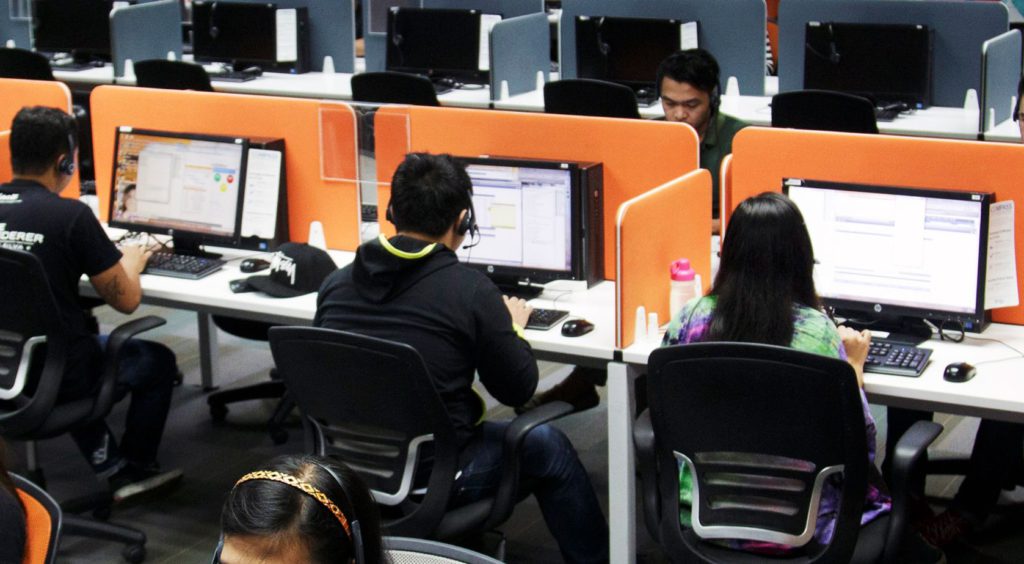
(Bloomberg) — Philippine outsourcing companies said a government return-to-office order threatens the growth of the industry, a key pillar of the economy.

The directive by the Fiscal Incentives Review Board for workers in economic zones to return to office “poses a threat to the industry’s growth and remains a big challenge to industry players,” the IT and Business Process Association of the Philippines said in a statement Wednesday.  

The largest association of outsourcing companies issued the statement as some firms opted to give up tax perks to implement a mix of onsite and remote work for employees. California-headquartered Concentrix Corp. chose to waive tax benefits to continue a work-from-home setup, the finance department said last week, adding that this shows incentives are not a priority for investors. 

Letting go of tax perks is a “difficult interim measure” to meet clients’ needs and employees’ increased preference for work flexibility, the group said. “A critical risk that industry players face is increased employee attrition if the work-from-home or hybrid work setup is not available.”

Many outsourcing firms typically get tax perks by operating in economic zones. In 2021, the industry, which employs 1.4 million full-time staff, added 120,000 new employees and posted an 11% increase in revenue to $29.5 billion. The group said it’s standing by a Philippine Economic Zone Authority directive that allows a 30% work-from-home arrangement until September, before a permanent work policy is established.

The nation’s Fiscal Incentives Review Board, headed by Finance Secretary Carlos Dominguez, has said it will suspend tax incentives for companies in economic zones who are unable to comply with a 100% return-to-office order. The ongoing tussle highlights difficulties in navigating the future of work, two years after the pandemic forced a rethink of how people do their jobs.

More stories like this are available on bloomberg.com

©2022 Bloomberg L.P.

India Plans 5G Airwaves Auction by End-July to Spur Rollout

(Bloomberg) — India will auction 5G airwaves by the end of July when three private-sector operators — Reliance Jio Infocomm Ltd., Bharti Airtel Ltd. and Vodafone Idea Ltd. — are expected to compete as they gear up to roll out ultra-speedy networks.

The federal government plans to sell 72 gigahertz of telecom spectrum for a 20-year tenure, according to a statement from the Ministry of Communications. The auction will be held for airwaves in various frequency bands ranging from 600 megahertz to 26 gigahertz.

“It is expected that the mid and high band spectrum will be utilized by telecom service providers to roll-out of 5G technology-based services,” the ministry said in the statement, without specifying how much the government is looking to collect through the sale.

The airwaves auction will help the Narendra Modi-led government boost the exchequer at a time when it will be footing a $26 billion inflation-fighting fiscal package that includes lower fuel taxes and import levies. The spectrum sale will also be the next battlefield for billionaires Mukesh Ambani’s Reliance Jio, Sunil Mittal-helmed Bharti and Vodafone Group Plc’s India unit which are planning to launch 5G networks and sign up high-end subscribers.

The latest auction, however, may not see the kind of intense, competitive bidding witnessed in the last decade when Reliance Jio was prepping to launch its services. Ambani’s disruptive entrant debuted in 2016 with free calls and ultra-cheap data, triggering a bruising tariff war. That forced rivals to quit, merge or go bankrupt and shriveled the sector from a dozen players to just three private sector operators now.

Affordable Airwaves

Ravaged by the cut-throat price competition and the back-dues the government demanded in the past few years, Indian telecom operators have been petitioning to reduce the 5G spectrum’s floor prices. Affordable 5G airwaves will help telecom companies invest in expanding services and ensuring faster network speeds, Mittal, chairman of Bharti Airtel, said in April.

Poor Network, Low Speed Plagues 92% of India Mobile Phone Users

Local lobby, the Cellular Operators Association of India, warned in August that the country risks lagging in the rollout of 5G networks unless the government makes the airwaves cheaper. India is trying to catch up with other Asian countries such as South Korea and China which have had 5G networks for years.

The actual auction collection will depend on how much spectrum is sold and how competitive the operators get. 

Ambani’s conglomerate, which owns Reliance Jio — India’s biggest wireless operator — has already agreed to pay $3 billion for streaming rights of a coveted cricket league earlier this week.

(Updates with details throughout.)

More stories like this are available on bloomberg.com

©2022 Bloomberg L.P.
SoftBank Plans Additional London Listing for Arm IPO

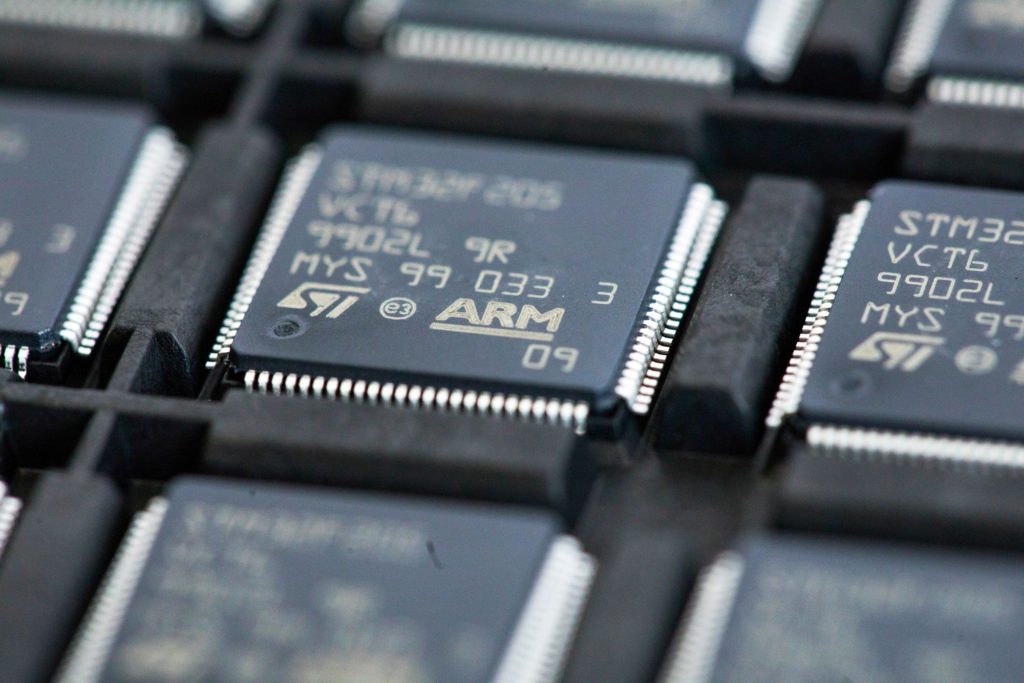
(Bloomberg) — SoftBank Group Corp. is considering listing some of its stake in chip designer Arm Ltd. on the London Stock Exchange, switching from an earlier plan to only use the US market, according to people familiar with the matter.

If it decides to also list in the UK, the Japanese company will likely still conduct its initial public offering in New York, according to the people, who asked not to be identified because the matter hasn’t been made public. The size and timing of the sale hasn’t been finalized and plans for the listing still may change, according to the people.

Arm, which SoftBank acquired in 2016, is based in Cambridge, England. Arm was one of the UK’s most important technology companies before the purchase and still has the majority of its operations there. An IPO that would list only in the US would be a blow to the UK government and capital market. 

Prime Minister Boris Johnson has led overtures to senior SoftBank management in a attempt to convince them to list ARM in the UK, according to people familiar with the matter. Earlier this week, Chris Philp, the UK’s Minister for Tech and the Digital Economy, told reporters that the government was working with the company to ensure there would be a listing in Arm’s home country.

However, a secondary UK listing comes with limitations, including ARM’s exclusion from the FTSE 100, where it once was the largest tech company in the index.

Arm sells and licenses technology that’s used by semiconductors in everything from smartphones to super computers. The pervasiveness of its products has made its planned IPO a closely watched event in the $550 billion chip industry. 

The chip technology provider’s path to becoming a publicly traded company again has been complicated by the slump in semiconductor shares this year. Investors have sold chip-related equity, concerned that a huge run-up in industry earnings sparked by shortages will end with a supply glut as demand slows and more production is brought on line.

SoftBank founder Masayoshi Son said he plans to sell a portion of Arm before the end of the company’s financial year next March. 

Tokyo-based SoftBank is seeking a valuation of at least $60 billion for Arm, Bloomberg has reported. It’s aiming for a higher amount than it would have gotten from its proposed sale of the chip designer to Nvidia Corp. That deal collapsed in the face of opposition from regulators.

JPMorgan Chase & Co., Barclays Plc, Banco Santander SA, BNP Paribas SA, Credit Agricole Corporate and Investment Bank and Goldman Sachs Group Inc. are among 11 lenders that SoftBank has lined up for an $8 billion term loan secured by Arm shares, the Japanese company confirmed earlier this month.

Son acquired Arm for about $32 billion and gave it the resources to go on a hiring spree, aiming to crack new markets such as the server chips used in data centers.

The Philadelphia Stock Exchange Semiconductor Index has lost 32% this year, a worse performance than that of the S&P 500 and other benchmarks. Prior to that pullback, the chip index had more than tripled since 2017.

(Updates with additional context in paragraph four.)

More stories like this are available on bloomberg.com

©2022 Bloomberg L.P.

End of Internet Explorer Era Spells Trouble for Japan Businesses

(Bloomberg) — Microsoft Corp. is finally retiring its Internet Explorer on Wednesday, putting an end to a quarter-century-old app while also sparking a small panic among businesses and government agencies that built internal systems around the unpopular browser.

Japan may be the country most affected by the move, as a survey in March found that 49% of companies in the Asian nation still use IE. Among them, the most common use was for in-house management, data exchange and accounting systems. All of those should have been updated or transitioned to different software in the time since Microsoft announced its IE retirement plans a year ago, but the Nikkei reports that many procrastinated.

Businesses across the country are now having to move swiftly to ensure they’re still able to run operations that previously relied on apps built atop Microsoft’s long-tenured browser.

Internet Explorer, once the globe’s dominant browser and the de-facto setter of web standards, fell out of favor with its IE6 version, which was marred by feature bloat and frustrating performance. Faster and better browsers like Google’s Chrome and Mozilla’s Firefox took over and IE’s share of the worldwide market was a negligible 0.64% last month, according to Statcounter.

Microsoft’s successor to IE, called Edge, is a browser built on the same basic platform as Chrome, called Chromium, and is thus compatible with Chrome extensions and supports much of the same functionality. Microsoft has integrated an IE mode inside Edge, which it will support for an additional period of time beyond today.

More stories like this are available on bloomberg.com

©2022 Bloomberg L.P.
Bitcoin Rout Hits ‘Darkest’ Phase With Entire Market Underwater

(Bloomberg) — The bear market for Bitcoin has entered its “deepest and darkest” phase, with even long-term holders who had toughed it out until now coming under extreme pressure.

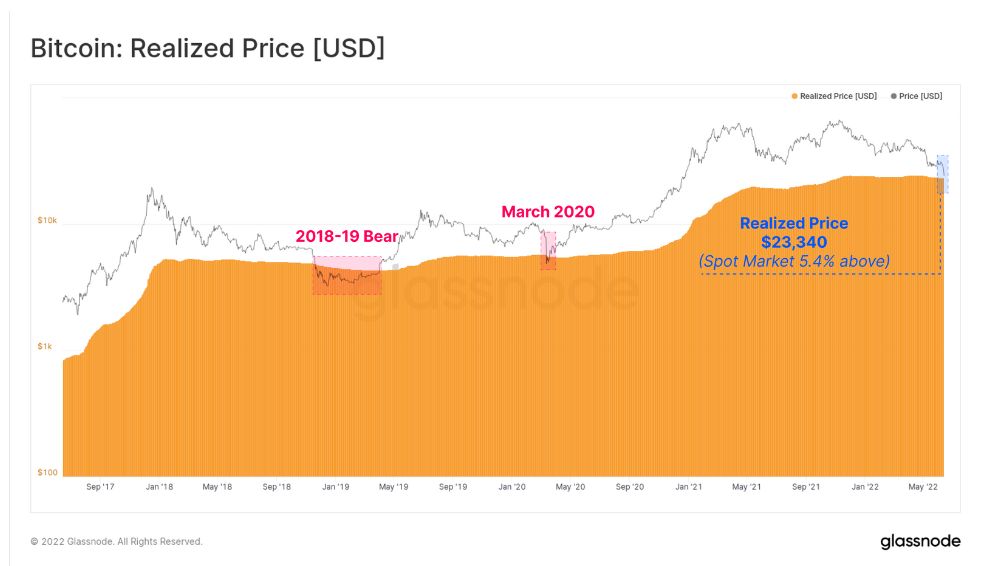
That’s according to strategists at Glassnode, which tracks an indicator known as realized price, the average purchase price of all Bitcoins in circulation. The cryptocurrency is currently trading roughly $1,000 below the coin’s current realized price of $23,430, according to the firm. Bitcoin dropped as much as 5.2% to $20,833 early Wednesday in London.  

“The current bear market is now entering a phase aligned with the deepest and darkest phases of previous bears,” the strategists wrote in a note. “The market, on average, is barely above its cost basis, and even long-term holders are now being purged from the holder base.”

Market watchers have become preoccupied with figuring out which cohorts of investors are getting hurt the most during the current crypto winter. With Bitcoin now hovering around December 2020 lows, many newer entrants are now underwater. Meanwhile, UBS strategists are monitoring Bitcoin miners — whose businesses have been under pressure due to high energy costs and capex commitments — for potential signs of capitulation, which could also have an impact on prices.

Digital-asset investors have been partially spooked by crypto lender Celsius Network Ltd. pausing withdrawals, swaps and transfers, though the broader market remains under duress after a key inflation print came in hotter than expected last week, meaning that the Federal Reserve will have to be aggressive in its attempts to cool rising prices. 

Lori Calvasina, head of US Equity Strategy at RBC Markets, said she’d like to see Bitcoin stabilize. “It has become another helpful indicator of sentiment and risk assets generally,” she said on a podcast. 

Meanwhile, Glassnode strategists said that a change in the net position of HODLers — the staunchest investors who refuse to sell — can be used to estimate the magnitude of coin volume they’re accumulating or distributing. That reading suggests that approximately 15,000-20,000 Bitcoins per month are transitioning into the hands of HODLers, a decline of 64% since early May, an indication of weakening accumulation. 

Bitcoin has fallen more than 30% this month. Its decline Wednesday marks its ninth straight day of losses, with the rate of change over the past three days at 24% — the starkest drop in its history. 

“Bitcoin trades like a penny stock,” Brian Nick, chief investment strategist at Nuveen, said in an interview. “There’s all kinds of reason to think that once it starts falling quickly, it can continue to fall. If it can move 20% in two days, it can move another 20% the next two days.”

(Updates Bitcoin price in the second paragraph.)

More stories like this are available on bloomberg.com

©2022 Bloomberg L.P.
Close Bitnami banner
Bitnami