
Bloomberg

Goldman Backs Biotech Firm in Volatile Year for China Deals

(Bloomberg) — Six-year-old biotech startup MegaRobo Technologies has raised about $300 million from investors including an arm of Goldman Sachs Group Inc., securing one of the year’s largest Chinese venture capital investments despite a global tech sector rout.

Goldman’s private investing arm, venture capital firm GGV Capital and Asia Investment Capital led the Series C round, joined by existing backers Sinovation Ventures, Pavilion Capital and Starr Capital, the firm said in a statement. MegaRobo, which applies robotics and artificial intelligence toward life sciences research, aims to deepen forays into fields from stem cell therapy and genetics to traditional Chinese medicine.

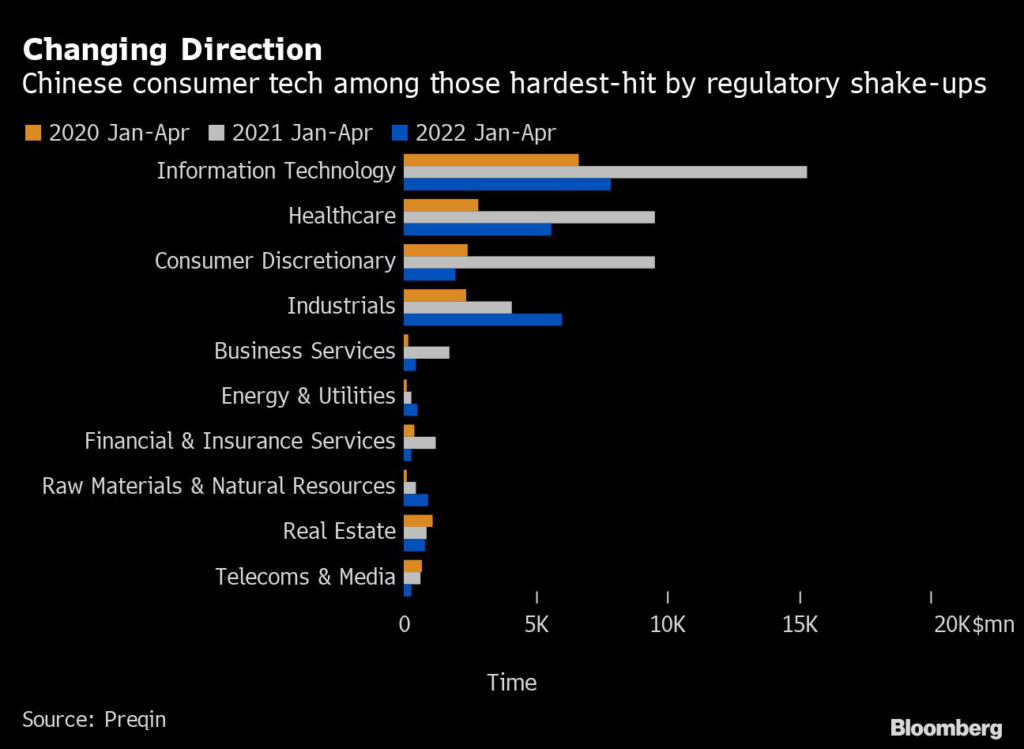
The investment highlights how cutting-edge firms can still attract capital, after a global selloff in names from Amazon.com Inc. to Tesla Inc. and Beijing’s crackdown on its own internet sector spooked startup financiers. China — once envisioned as challenging Silicon Valley’s place in the technology sphere — is now leading a global decline in venture capital investments and investors don’t foresee a quick recovery.

Read more: Top Tech Dealmaker Warns China’s VC Winter Is Far From Over

Still, money is flowing into sectors favored by the government, including robotics, renewable energy and electric vehicles. Under President Xi Jinping, the Chinese authorities have made a priority of increasing the competitiveness of key industries, including semiconductors and AI.

Beijing-based MegaRobo, founded in 2016 by first-time entrepreneur Daniel Huang and two former colleagues, plans to use the fresh funding to advance technology and expand production. MegaRobo is now also stepping up efforts to tap international markets, the 36-year-old chief executive officer told Bloomberg News. Roughly 10% of its revenue comes from overseas sales, but the company aims to increase that to 50% by 2027, Huang said in an interview.

The financing will “build the next-generation life sciences infrastructure,” MegaRobo’s chief scientist, Wang Chengzhi, said in the statement.

Read more: China Is Leading the Global Contraction in Venture Capital Deals

MegaRobo didn’t disclose its valuation but has joined the “unicorn club” of startups valued at more than $1 billion, according to Huang. It’s one of just about a dozen Chinese health-care unicorns, according to CB Insights, in a country where consumer-oriented giants such as ByteDance Ltd. have commanded most of the investment and attention.

Founded in 2016, the firm employs nearly 1,000 people — of which three-fifths are researchers — in offices and labs from China to the US and the UK, it said in the statement. It’s raised about 1 billion yuan ($150 million) in seven rounds of private financing prior to the latest deal, from backers including the venture arm of German conglomerate Robert Bosch GmbH.

AI and robotics have emerged as a key area of competition between the US and China, which are racing to develop technologies of the future. Firms like MegaRobo are expected to benefit from government support as Beijing seeks to move beyond low-end manufacturing and up the technology ladder by dominating key fields like automation and machine learning.

Read more: Xi Eyes Innovation, Oversight to Grow China’s Digital Economy

More stories like this are available on bloomberg.com

©2022 Bloomberg L.P.
Shanghai’s Reopening Comes Too Late for Stressed Developers

(Bloomberg) — China’s stop-start reopening may be too little, too late to save some cash-strapped property developers. 

Among 32 builders that have defaulted since the start of last year or are currently facing debt-repayment pressure, at least 13 have derived more than a third of their sales from the Yangtze River Delta area anchored by Shanghai, according to Bloomberg calculations based on company data. The manufacturing heartland has started emerging from crippling lockdowns imposed as part of the country’s Covid Zero policy following a surge of infections.

“The lifting of the lockdowns won’t necessarily provide an imminent relief to developers that have traditionally invested in the region,” said Amy Kam, a senior portfolio manager at Aviva Investors Global Services Ltd. “Unless funding channels are reopened, many private developers will continue to struggle to pay down debts with operating cash flow.”

Many Chinese developers were struggling long before the Covid outbreak of the last several months slammed the brakes on the economy. Declines in new-home contracted sales, which started in mid-2021, have crimped a key cash source for builders that have already seen debt financing dry up.

Developers with more exposure to the Yangtze River Delta region had bigger sales drops in March and April than the industry average, Kam said. As Shanghai ground to a standstill and mobility slowed in adjacent areas, defaults spread to Sunac China Holdings Ltd. and Zhenro Properties Group Ltd. Meanwhile, state-backed Greenland Holdings Corp. stunned investors last month with a proposed bond-repayment extension. All three firms cited the Covid outbreak.

Green shoots have started to emerge. New-home sales in Shanghai during the second week of the city’s reopening climbed to 162,400 square meters from near zero, according to property-services firm Centaline Group. Still, that’s about 20% below a closely watched level used to gauge sales health.

Nationwide new-home sales rose 26% in May from April, the first month-on-month gain since December, government figures showed Wednesday. Sales dropped 42% from a year earlier, easing from 49% in April. “Some positive signs have emerged in the property market,” statistics bureau spokesman Fu Linghui said. 

Regional economic hubs in the Yangtze delta, including Shanghai and Hangzhou, are likely to see home sales recover in the third quarter as demand is exceeding supply, China Real Estate Information Corp. analysts predicted in a Saturday note. Stronger so-called tier 3 cities like Suzhou, where industrial parks abound, may not see a recovery until the fourth quarter.


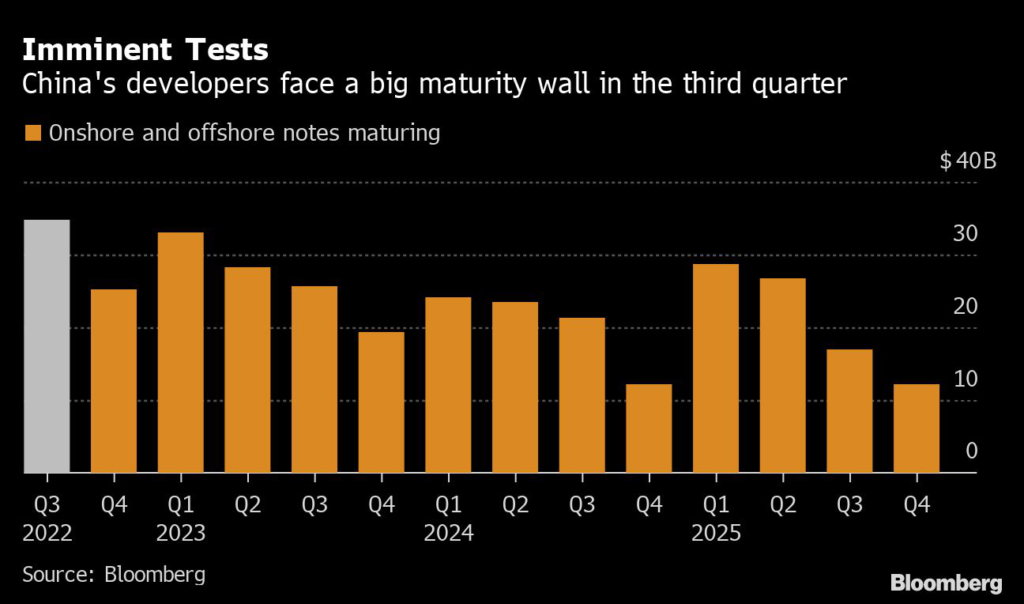
But improving sales at developers with heavy exposure to the region may be of little benefit to the likes of Greenland and Powerlong Real Estate Holdings Ltd., given sizable near-term debt payments. Chinese builders overall have $34.8 billion of local and offshore notes maturing in the third quarter, according to data compiled by Bloomberg, and property firms have already set a full-year record for offshore defaults.

“The unlocking of Shanghai came too late for some distressed developers, including Greenland and Powerlong,” said Dan Wang, a Bloomberg Intelligence credit analyst. “It may not bring in enough cash flow in the short term.” The two developers didn’t immediately provide a comment to Bloomberg News, but Greenland told investors last month it will restore its ability to repay debt through the second half of 2022 if Covid impacts ease.

Firms are also facing fallout from fresh Covid outbreaks in Shanghai that have prompted officials to reimpose some restrictions. That as President Xi Jinping is unlikely to shift from his Covid Zero approach any time soon, leaving the country stuck in a cycle of shutdowns and reopenings.

Some Shanghai-based builders are poised to withstand the disruptions, according to Aviva’s Kam, with CIFI Holdings Group Co. seen having better refinancing prospects and Seazen Group Ltd. likely to handle this year’s debt maturities. 

Kam expects “a slow recovery given China’s ‘one step forward two steps back’ approach in relaxing Covid restrictions.” 

It will take more than easing of the curbs to revive confidence among homebuyers, according to William Ma, chief investment officer of Grow Investment Group, a Shanghai-based distressed investor. 

“Shanghai’s lockdown has done more damage to buyer sentiment than the actual sales of local developers,” Ma said. “It had a ripple effect in other first-tier cities in China, making buyers think twice.”

(Updates with May home sales data in seventh paragraph, investor comment in last two)

More stories like this are available on bloomberg.com

©2022 Bloomberg L.P.
China Stock Resilience Stands Out as Global Market Rout Deepens

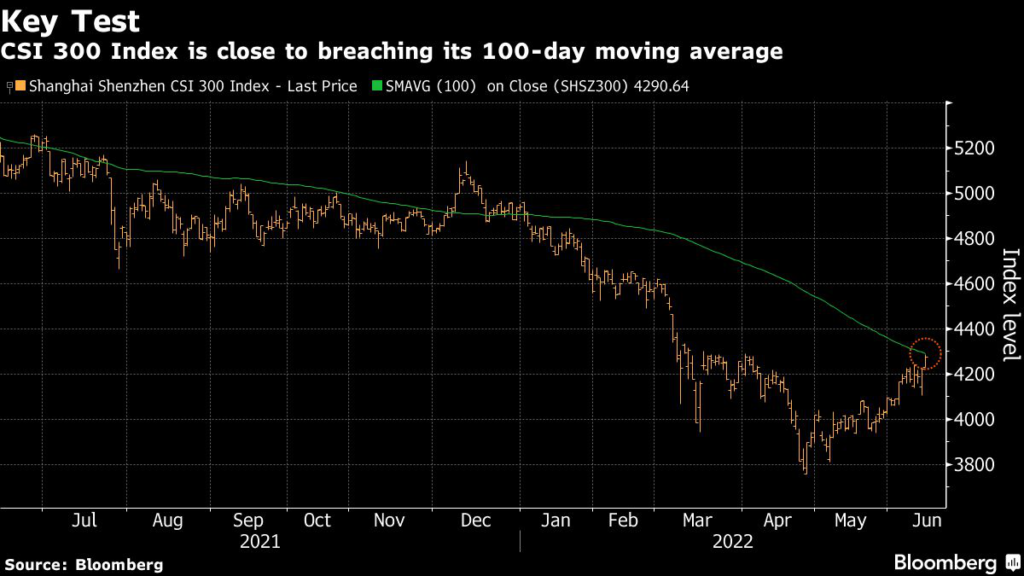
(Bloomberg) — Chinese stocks rallied to their highest in three months, extending a recent outperformance over global peers, as the country’s growth-focused policy lures investors seeking a reprieve from global market meltdown.

The benchmark CSI 300 Index jumped 1.8% as of mid-day trading break on Wednesday, taking its gains in June to more than 5% amid a global sea of red. The S&P 500 Index earlier plunged into a bear market as did a key MSCI Inc. index of world equities, with traders pricing in a 75-basis-points rate hike by the Federal Reserve later today. 

Read: Decoupling China Market Is a Refuge in Global Rout: Taking Stock

Bets that China’s policy support will help revive the Covid-hit economy got a boost Wednesday from better-than-expected May data on industrial output and retail sales. Having been hammered during weeks-long lockdowns in key cities, Chinese equities have shown extraordinary resilience during the latest global selloff, helped also by Beijing’s dialing back of a crackdown on the key technology sector. 

“We are seeing some improvements in May which are certainly positive to market sentiments,” said Redmond Wong, market strategist at Saxo Capital Markets. “The key is now whether the Covid situation can remain contained and if there’s a resumption of more stringent pandemic control measures.”

Chinese stocks were the best performers in Asia early Wednesday. The gains came even as the People’s Bank of China kept a key policy rate unchanged. The rate on the central bank’s one-year medium-term lending facility was left at 2.85%. A small number of polled analysts had expected a reduction of either five or 10 basis points.

China’s consumer prices rose a mere 2.1% in May from a year earlier, a fraction of the pace in the US at 8.6%. That’s seen as giving Chinese authorities the room to further loosen monetary and fiscal policy settings as necessary. 

“Not cutting rates for now is a reasonable move given that China is not in a rush to do it,” as recent economic figures were not very bad, said Castor Pang, head of research at Core Pacific-Yamaichi International. “Investors are waiting for a slew of measures to keep pushing up the market, from property to auto market incentives, rather than just a single cut.”

In a sign that sentiment is on the mend, the turnover for stocks on the mainland has topped 1 trillion yuan ($149 billion) in six out of the past seven sessions, with the figure already approaching 800 billion yuan as of the mid-day break on Wednesday. 

In Hong Kong, the benchmark Hang Seng Index rose as much as 1.6%. The Hang Seng gauge of tech shares advanced more than 2%. 

As China stocks continue their climb out of a mid-March trough, the list of strategists and money managers turning bullish, or reiterating optimism on the market, has only been growing. Foreigners have snapped up more than 8 billion yuan of mainland shares through Wednesday morning, poised to extend their buying streak that’s continued in all but one day this month. 

READ: June’s Looking Like a Game Changer for Beleaguered China Stocks

A key factor still weighing on stocks is Beijing’s adherence to Covid Zero. Small scale movement controls are frequent even as a blanket lockdown across Shanghai has been lifted, and the specter of restrictions returning with just a handful of infection cases may put a cap on the rally. 

Lockdowns in China are “one of the key risks and hopefully, we had already seen the worst,” Selina Sia, head of Greater China equity research at Credit Suisse Wealth Management, said on Bloomberg TV. “Moving forward, of course, a full recovery is likely going to take some more time, but I hope that we would move toward the right direction and things can move more positively from here.”  

READ: Beijing Virus Cases Remain Elevated in Threat to Covid Zero (1)

(Updates with latest prices, China stocks trading data)

More stories like this are available on bloomberg.com

©2022 Bloomberg L.P.
Gut-Wrenching Surge in US Real Yields Is Crushing Risky Assets

(Bloomberg) — It’s fast and it’s furious and it’s toxic for other asset classes.

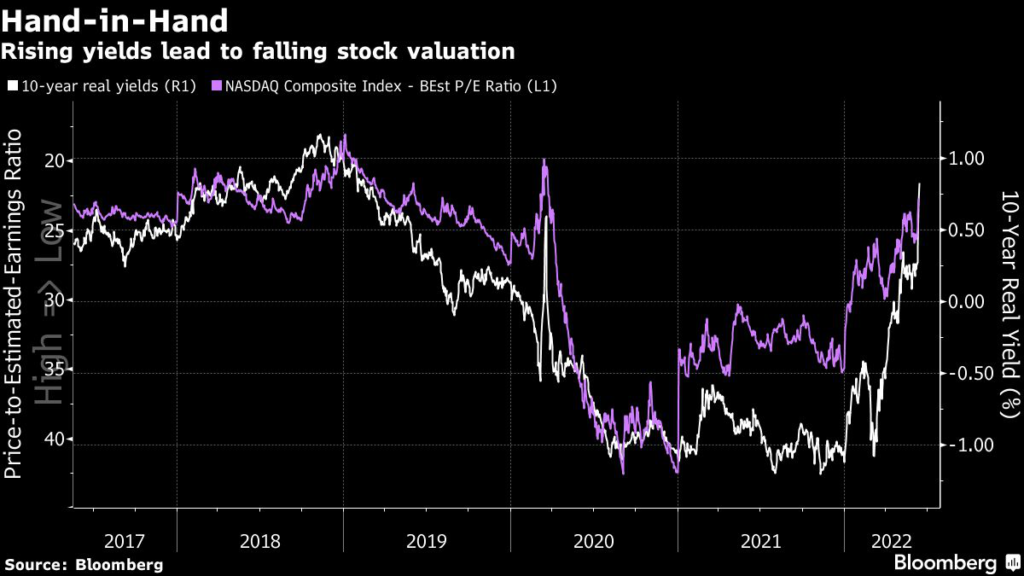
It’s the rise in 10-year US real yields — seen by some as the true benchmark for borrowing costs — which have soared over 150 basis points in the past 60 trading days, while the Federal Reserve turned ever-more hawkish. Investors calculate real yields by adjusting nominal ones for inflation.

That’s the biggest surge since the US government started selling inflation-protected securities in the late 1990s, surpassing routs during the global financial crisis and the Taper Tantrum of 2013. 


Inflation-adjusted bond yields were negative for about two years, providing a key pillar of support for risk assets, which looked more appealing as a result. Their climb above zero has evaporated that positive backdrop, undermining equity valuations and threatening their relative attraction to bonds.

Positive U.S. Real Yields Will Rip Up Global Markets Playbook

Ten-year real rates have jumped to 0.88%, compared with a record low of minus 1.25% just seven months ago. The move accelerated after last week’s inflation report fueled expectations of more forceful rate hikes and helped push nominal 10-year Treasury yields to the highest since 2011.

The growing risk that the Fed will become more hawkish after concluding its policy meeting on Wednesday points to a further rise.

Rate Pain

All this is spurring big moves in risky corners of financial markets. 

Over the past two years, negative real borrowing costs allowed everything from cryptocurrencies to profitless tech stocks to shoot to the moon, minting countless young millionaires who claimed old-school investors such as Warren Buffett were relics of the past. 

Now these rate-sensitive trades are reeling. The received wisdom is that when inflation-adjusted yields rise, assets bereft of immediate income streams will naturally fall given the rising opportunity costs for investors who hold them.

At same time, rising yields hammer stock valuations by reducing the present value of corporates earnings ahead, especially those companies that can only generate cash flow years in the future. The price-to-estimated earnings of the Nasdaq Composite Index fell to about 21 this week, from 31 at the start of the year.

That’s not all. Higher US real rates are draining foreign capital away for leveraged emerging-market borrowers, sending currencies from the Turkish lira to Indian rupee to historic lows.

“Almost every EM currency weakens vs the dollar as US yields rise,” wrote Mitul Kotecha, emerging-market strategist at TD Securities in a note. “Much going forward will depend on the message the Fed delivers this week, but it’s hard to call a top in nominal US or real yields at present.”

(Updates throughout)

More stories like this are available on bloomberg.com

©2022 Bloomberg L.P.
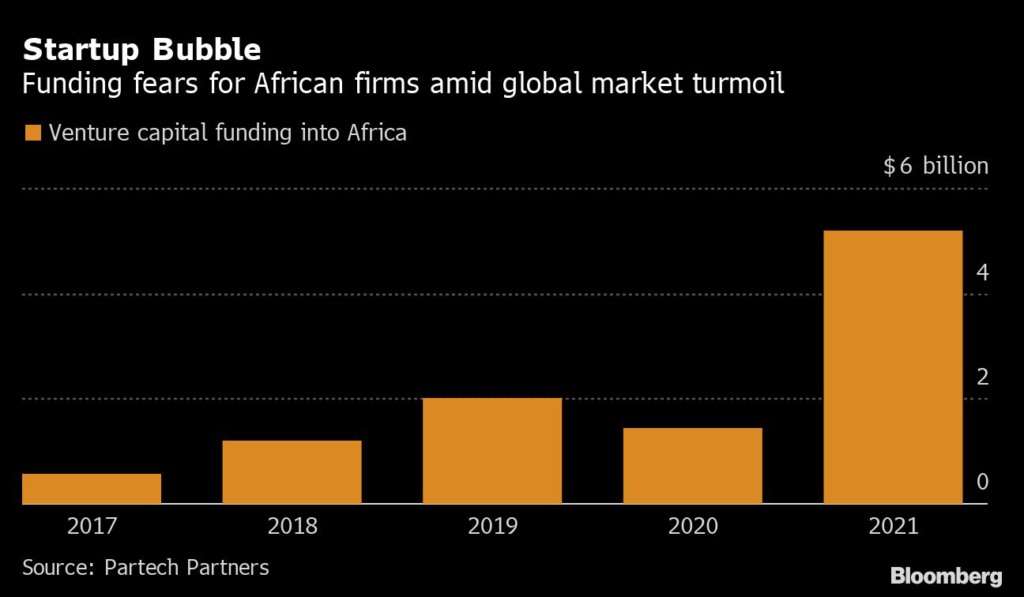
US Recession Fears Set to Close Funding Tap for African Startups

(Bloomberg) — The flood of venture capital into African tech companies over the past three years is drying up as western investors retreat amid the global market downturn.

Some 80% of last year’s record $5 billion put into companies on the continent came from international funds like Tiger Global and Sequoia Capital, according to data from the East Africa Venture Capital Association. Now, fears of a recession, soaring inflation and rising interest rates have made fundraising harder, and African startups — like the Nigerian fintech firms that grew explosively in recent years — are expected to suffer.

“The trajectory of the African startup ecosystem depended on the big guys coming in during the Series A, and that’s dried up,” said Aubrey Hruby, non-resident senior fellow at the Atlantic Council’s Africa Center. Bigger startups will find it difficult to raise money needed for expansion that traditionally came from western venture funds, she said. “It puts a ceiling on investment.”

‘Some Will Not Make it’

Just before the market turmoil, Tiger Global led a $125 million round for Wasoko, valuing the Kenyan e-commerce platform at $625 million. There are only a handful of Africa-focused funds with over $100 million that can meet that level of investment, including Partech, Helios Digital Ventures and TLCom Capital, but they do not control enough cash to make up for the western withdrawal. 

“The ‘raise, raise, raise’ headlines will be no more and there will be a flight to quality,” Hruby, who is also a co-founder of the venture fund Tofino Capital, said by phone from Washington. 

The momentum for fundraising was still strong during the first quarter of 2022. African startups raised some $1.8 billion, up 148% from the same period a year earlier, according to data collected by Renaissance Capital. But the next 18 months will “start to get difficult,” and fledgling firms will need to run leaner, more efficient operations to survive, said Ido Sum, partner at TLcom, a pan-African fund which expects to close its latest $150 million fund by end of this year.

“Some will not make it,” he said. 

There may be some benefits to a flight to quality, “and it solidifies the need for stronger, bigger and dedicated African funds,” said Sum, whose portfolio includes Kenyan supply chain startup Twiga Foods and Nigerian car-services firm Autocheck. 

Valuations, which exploded in recent years, will come down, said Sum. But the fundamentals havn’t changed. Africa has 1.3 billion people, most of whom are young, technology savvy and under-served by good services firms. There are large infrastructure deficits in finance, health care, logistics and education, which create great opportunities for startups.

Traditional financing

Founders should re-assess their growth and spending plans before they run out of cash, said Adesoji Solanke, Rencap’s director for frontier, sub-Saharan African banks and fintech.

“If you need to do a down round, do it. If you need to raise debt, do it. If you need to resize the team and refocus your spend, do it,” Solanke said. “If you had acquisition offers on the table from better-funded companies, reconsider them. If you need to pull back from some countries or pull back some products, do it.” 

The exit of foreign investors doesn’t take away the option of traditional financing from local banks, more established fintech companies and local investors, Solanke said. 

Governments including in South Africa, Tunisia and Ghana are investing in startups through pension and insurance funds or corporate venture capital, said Eva Warigia, head of the East Africa Venture Capital Association. “This local capital offers a buffer to the young companies for trying times,” she said.

More stories like this are available on bloomberg.com

©2022 Bloomberg L.P.

Disney+ Could Lose 20 Million Subscribers After Ceding Cricket

(Bloomberg) — Walt Disney Co. could lose as many as 20 million of its Disney+ subscribers after being outbid for the streaming rights to Indian Premier League cricket matches this week.

The estimate, from Media Partners Asia, means the company may have trouble reaching its goal of as many of as 260 million global Disney+ subscribers by 2024, according to Vivek Couto, executive director of the research firm.

“IPL drives customer acquisition,” he said in an email. “It’s regarded as entertainment not just sports by Indian households – women and men.”

Few consumer products have been as successful as Disney+. The service, which offers unlimited Disney movies and TV shows, garnered 10 million subscribers on its first day in November 2019 and boasted nearly 138 million at last count. Chief Executive Office Bob Chapek made a bold forecast in late 2020, predicting the company would triple its subscriber count in four years. 

About 50 million, more than one-third, of the worldwide subscribers come from Disney+ Hotstar, a product offered in India and other South Asian nations, and cricket has a been a big driver of that.

For months investors have been debating whether the company will have to lower its forecast. The drumbeat began after a weak quarter last year and continued after Netflix Inc. reported its first subscriber loss in a decade in April. Disney shares are down 39% this year.

Disney lost the cricket bidding war to a group that includes Paramount Global and India’s Reliance Industries. 

While Disney lost the streaming rights, it retained the rights for broadcast on traditional TV networks, agreeing to pay nearly $3 billion over five years to broadcast the games. The company has some 70 channels in India, distributed by cable and satellite TV operators. In a statement Tuesday Disney said it can still use those traditional channels to promote Disney+Hotstar.

“We made disciplined bids with a focus on long-term value,” the company said. 

Subscribers to Disney+ Hotstar pay only 76 cents a month on average for the service, versus the standard fee of about $8 a month in the US for Disney+. That’s annualized revenue of less than $500 million, making it hard to justify the high yearly IPL rights fees.

Chapek said in February that he didn’t see a loss of cricket streaming rights impacting the longterm Disney+ forecast as the company has other content it can offer Indian subscribers. “It’s not like we see that business evaporating if we don’t get it,” he said.

Some analysts see an opportunity for the company to change its guidance with the cricket loss. 

“It is important for Disney to use IPL to reset expectations in a more manageable range,” Barclays analyst Kannan Venkateshwar wrote in a research note Tuesday.

A lower forecast may not have much impact on the stock at this point, he wrote, because investors are already factoring in that likelihood.

Disney didn’t comment on its subscriber guidance Tuesday. It usually does that during quarterly earnings calls and other events for investors.

More stories like this are available on bloomberg.com

©2022 Bloomberg L.P.

Senate Passes State Venue Antitrust Bill That Google Opposed

(Bloomberg) — The Senate passed legislation Tuesday evening to allow state attorneys general to pick the location where their federal antitrust suits are heard, a blow to Alphabet Inc.’s Google, which had opposed the bill.

The chamber passed the measure by unanimous consent. An amendment removed a provision that would have applied the measure retroactively to a 2020 antitrust suit filed by Texas and 14 other states and territories against the operator of the world’s largest search engine. 

The bill, which has widespread bipartisan backing, now requires a House floor vote. If enacted, the legislation would give states the power to decide where antitrust trials are held, with companies not allowed to challenge those decisions. The federal government already has the same right.

The measure grew out of a 16-month investigation by a House antitrust panel into the power of giant technology platforms. It represents a key step by US lawmakers to curb the monopoly power of internet giants in the nearly 30 years since the worldwide web was made available for commercial use — with the exception of a measure to protect online privacy for children in 1998. It’s part of a package of antitrust bills designed to rein in Big Tech that Congress is pushing to turn into law before the August recess.

Other bills, which are expected to be voted on as soon as next week, would bar large technology platforms like Amazon.com Inc., Microsoft Corp. and Meta Platforms Inc. from favoring their own products over those of smaller rivals who use their platforms. A second proposal would open up distribution of apps on mobile devices, forcing Apple Inc. and Alphabet Inc. to allow alternate app stores and payment methods. 

The states’ antitrust suit against Google — which accuses the search giant of monopolizing the advertising technology market — was originally filed in Texas federal court. But Google successfully got the case transfered to New York, where it’s now being heard alongside a group of private antitrust cases against Google. 

Senator Alex Padilla, a California Democrat, had raised concerns about the fairness of applying the bill to cases already filed. Efforts to move the states’s antitrust lawsuit back to Texas will likely now be subject to litigation.

Senator Mike Lee, a Utah Republican and co-sponsor, had twice previously sought the bill’s passage and been stymied by Senate Democrats, who wanted to wait and move the legislation alongside other antitrust measures. 

Representative Ken Buck, a Colorado Republican and lead bill sponsor in the House, has urged House Speaker Nancy Pelosi to schedule a floor vote on the measure, which advanced out of committee a year ago. 

(Updates with additional details from fourth paragraph)

More stories like this are available on bloomberg.com

©2022 Bloomberg L.P.
Strike Ends as Korea Truckers Reach Settlement With Ministry

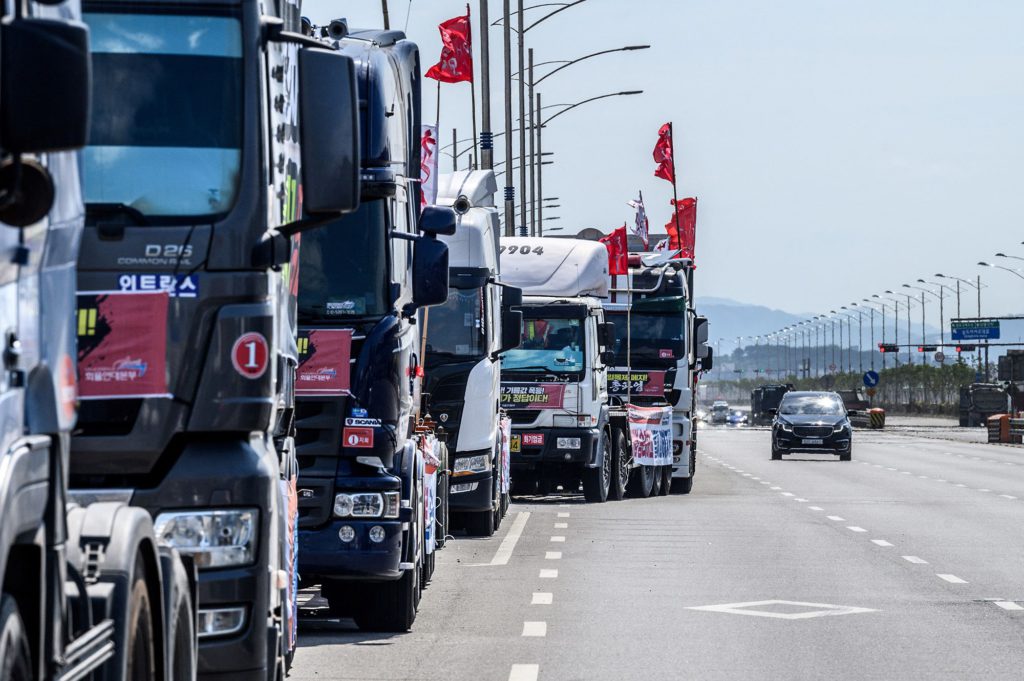
(Bloomberg) — Striking truckers in South Korea reached an agreement with the government, ending a weeklong strike that threatened the nation’s economy and added to strains on global supply chains.

Truck drivers began returning to work Wednesday morning after agreeing to extend a freight rate system that guarantees minimum wages. Under the agreement, the transport ministry will provide subsidies to alleviate pressure on surging fuel costs, according to a statement from the Cargo Truckers Solidarity division of the Korean Public Service and Transport Workers Union.

The settlement was reached Tuesday evening after four previous discussions failed to make progress.

The strike, which started June 7, roiled industries amid fears of higher costs and wider upheaval to global supply chains after Covid-19 lockdowns in China and Russia’s invasion of Ukraine. The Ministry of Trade, Industry and Energy estimated this week that key industries have seen production disruptions worth about 1.6 trillion won ($1.2 billion).

Shares of some companies affected by the strike rose in early trading Wednesday. Hyundai Motor Co. climbed as much as 4.4%, while Korea Cement Co. jumped 11%. Posco Holdings Inc. and LG Chem Ltd. were little changed.

Deliveries of cars, petrochemical products, steel and materials for semiconductor chips have been suspended or delayed, and concerns grew that a prolonged strike would force bigger production shutdowns and even put the nation’s energy security at risk. 

See also: Raw-Material Snarls in Korea to Ripple Across Asia Factories 

Posco, the nation’s top steelmaker, suspended output at its four wire-rod factories and a cold-rolled steel plant after the strike exhausted warehouse space. Petrochemical producers also saw warehouses fill up, as they were unable to deliver raw materials used to make everything from clothing to cars.

The daily volume of container boxes transported to and from the nation’s 12 ports dropped 53% on Tuesday compared with the average for May, according to data from the transport ministry. Inbound and outbound volumes at Busan, the world’s seventh-busiest port, were about half their usual amount. 

LG Chem, Kumho Petrochemical Co. and Hanwha Totalenergies Petrochemical Co. said they expect deliveries to resume Wednesday and production to normalize gradually.

The strike presented one of the first economic challenges to newly elected President Yoon Suk Yeol, putting to the test his desire to have less state intervention in labor disputes.

“We’re still on pins and needles. It’s like we’re walking on thin ice, as we face high inflation and economic crisis,” Yoon said Wednesday. “I think we should all put our community as a whole first and comply with it.”

The union was demanding the extension of the freight rate system to help drivers cope with rising fuel prices. The transport ministry said in a separate statement it will consider expanding the freight rate system, which currently applies to shipments of containers and cement, to other items.

The Safe Trucking Freight Rates System was introduced in 2020 for a three-year run, aimed at preventing dangerous-driving practices, such as cargo overload, and guaranteeing minimum rates for truckers. The system was due to expire this year.

(Adds share moves in fifth paragraph and Yoon comment in 11th paragraph.)

More stories like this are available on bloomberg.com

©2022 Bloomberg L.P.

Bill Gates Blasts Crypto, NFTs as Based on ‘Greater-Fool’ Theory

(Bloomberg) — Billionaire Bill Gates dismissed cryptocurrency projects such as nonfungible tokens as shams “based on the greater-fool theory” at a climate conference Tuesday, reviving past criticisms of digital assets.

“Obviously, expensive digital images of monkeys are going to improve the world immensely,” Gates said sarcastically while speaking at an event in Berkeley, California hosted by TechCrunch. He said he’s neither long nor short the asset class.

Gates has criticized crypto before, sparring with Elon Musk last year over whether Bitcoin is too risky for retail investors and the environmental harm of mining coins. Speaking Tuesday as the founder of Breakthrough Energy Ventures, the climate-focused fund he began in 2015, Gates noted the difficulty of recruiting Silicon Valley engineers to work in industries like chemicals and steel production in need of lower greenhouse gas emissions.


Bitcoin plunged more than 15% Monday and another 5.4% Tuesday, part of a broader crypto selloff fueled by higher than forecast US inflation and the halt of withdrawals by the lending platform Celsius. Popular NFT collections, including the celebrity-favored Bored Ape Yacht Club (BAYC), are also being hit hard. 

Gates also defended digital banking efforts he’s supported through his philanthropic foundations, which he described as “hundreds of times more efficient” than cryptocurrencies.

Michael Bloomberg, founder and majority owner of Bloomberg LP, is a backer of Breakthrough Energy Ventures.

More stories like this are available on bloomberg.com

©2022 Bloomberg L.P.

Education Unicorn Upgrad Doubles Valuation With Murdoch Funding

(Bloomberg) — An education technology unicorn built by a cable TV-era entrepreneur almost doubled its valuation after raising $225 million in fresh funding, balking a frosty global venture capital environment.

India’s UpGrad Education Pvt, founded by Ronnie Screwvala, increased its valuation to $2.25 billion in the round that included billionaire James Murdoch’s Lupa Systems LLC and US testing and assessment provider Educational Testing Service, according to a person familiar with the deal. ETS develops and administers standardized tests including the TOEFL (Test of English as a Foreign Language) and Graduate Record Examination (GRE).

The family offices of Indian billionaires Lakshmi Mittal of steelmaker ArcelorMittal SA and Sunil Bharti Mittal of telecom operator Bharti Airtel participated in the round, as did existing investors including Temasek Holdings Pte, said the person who asked not to be identified as the details are confidential.

UpGrad’s fundraising bucks the trend. Indian edtech startups, particularly those in the K-12 segment, have shuttered operations, fired employees or curtailed expansion plans, after a temporary boost from pandemic-induced school closures. Venture capital investments globally have declined as technology valuations have suffered this year.

India’s higher-education and “upskilling” startups, the niche UpGrad is in, have fared better by catering to older customers seeking expertise, an additional degree or help to crack the ultra-competitive entry tests for India’s elite engineering, medical and business schools.

“India will write the global higher-edtech story,” Screwvala, the company’s chairman, said over a video call. “There’s an insatiable global appetite for upskilling and upgrading to diplomas, degrees and doctorates, all of which have measurable outcomes such as a new job, a raise or a promotion.”

Screwvala, 65, confirmed the funding amount but declined to comment on the valuation or investors. An email sent to an UpGrad spokeswoman elicited no response. The funding round is set to increase by a further $100 million during a second close at a higher valuation, said the person familiar with the plans.

Screwvala built a trend-setting cable-TV company in India in the 1980s, turning it into a unicorn that was acquired by Walt Disney Co. His latest startup raised capital from Temasek and others a year ago at a valuation of $1.2 billion.

UpGrad is targeting $500 million in gross revenue in the year ending in March 2023, the founder said. College students and working professionals in India will account for four-fifths of that, but in about three years, domestic and international sales will even out, he said.

The Mumbai-based company spans several segments, from test prep to study abroad, and undergrad degrees to campus courses in 250 universities. Its offerings include finance, law, business and software for the 18-60 age group. Screwvala founded UpGrad in 2015 with Mayank Kumar and Phalgun Kompalli to offer short courses on entrepreneurship and data science. The founders combined own about 55% of the equity.

In the financial year ending next March, an estimated 3 million learners will take UpGrad courses that run from a few months to a few years, and cost 50,000 rupees ($640) to 800,000 rupees. Besides India, the startup is growing rapidly in Indonesia, Vietnam and the Middle East.

“Global edtech consolidation is on the cards and we’ll build a $30 to $40 billion higher-ed company,” Screwvala said. “We plan to have an IPO in about two years — for solidly built companies, there’s no good or bad time for an IPO.”

More stories like this are available on bloomberg.com

©2022 Bloomberg L.P.

Close Bitnami banner
Bitnami
