Bloomberg

Ongoing Market Selloff Is No Reason Not to Buy, Says Avenue’s Marc Lasry

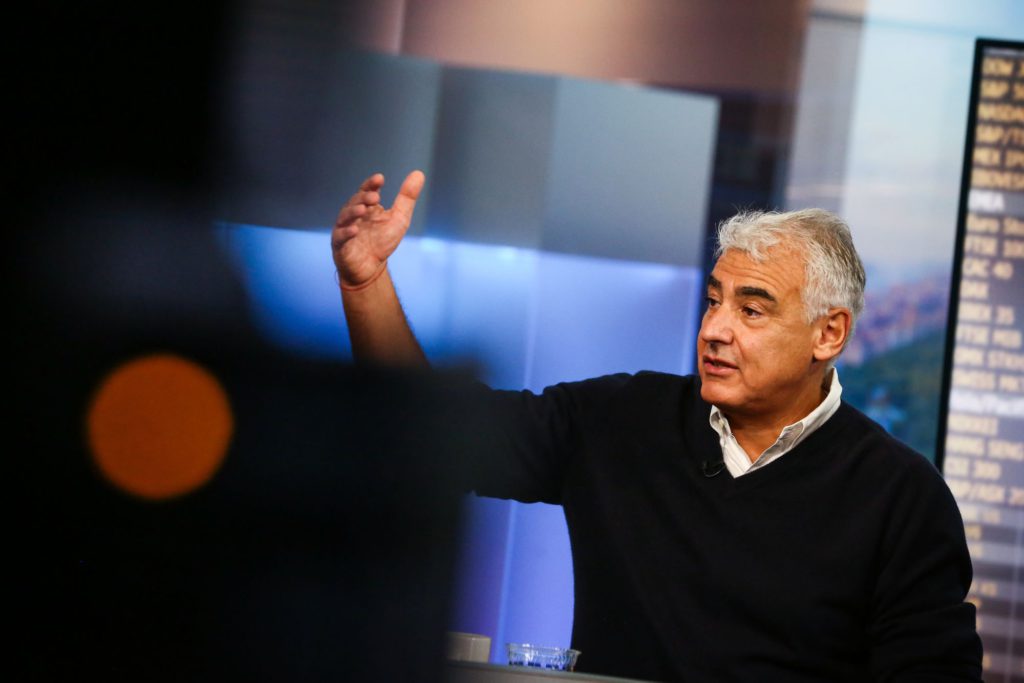
(Bloomberg) — Markets likely haven’t hit bottom but that’s no reason not to buy the dip, Marc Lasry, chief executive officer of Avenue Capital Group LLC, said in an interview with Bloomberg TV.

“You’re going to have more selling, more pain, and it will continue between now and the end of the year,” Lasry said. “But you can never time a bottom, so you want to get invested when you can.” 

Equity indices could fall another 5% or 10% as investors try to game out the Federal Reserve’s moves, but much of the downside potential is already priced in, Lasry said. In credit, the selloff is a boon to funds like Avenue, which focuses on troubled corporate debt. 

“We’re seeing a huge amount of opportunities out there,” he said, citing Exela Technologies Inc. debt as one example. Avenue bought Exela bonds at 35 cents for an approximately 33% yield, which means “we’re getting paid quite a bit” for the risk even as the fund believes that Exela will avoid a painful restructuring. 

In the longer term, recession concerns are well-founded but the important question is how long such a contraction would last, Lasry said. He expects the strength of the U.S. economy would keep such a downturn “pretty short.” 

Meanwhile in crypto markets, where Lasry is invested through his 2021 investment in BlockTower Capital, he sees a bleaker outlook, largely because Bitcoin and other assets have been considered such a haven that their decline has inspired more panic. 

“Nobody thought Bitcoin was going to go as low as it has, or Coinbase,” so “people now are very nervous,” Lasry said.  “Nobody knows what the bottom is for that.” 

More stories like this are available on bloomberg.com

©2022 Bloomberg L.P.

India Sticks to Fishing Demands as WTO Tries to Avoid Impasse

(Bloomberg) — Prospects for a grand redemption of the World Trade Organization dimmed as India stuck to its demands on several fronts during the third day of the trade body’s ministerial conference in Geneva.

Indian Commerce Minister Piyush Goyal told a meeting of delegates Tuesday that it would not bend on demands for extensive exceptions on a 20-year negotiation to curb harmful government fishery subsidies, according to a statement on his ministry’s website. 

He also insisted members water down the WTO’s subsidy rules for government-backed food-purchasing programs aimed at feeding poor citizens, delegates in attendance said.

“The Indian delegation has raised everybody’s eyebrows,” Mexican Undersecretary of Foreign Trade Luz Maria de la Mora said in an interview. “You cannot come to a negotiating forum, particularly at this stage, making demands that they brand as non-negotiable.”

Lowered Expectations

The tough stance by one of the world’s largest developing economies could threaten a multi-year effort to conclude a package of small but symbolically important deals and may cement the view that the WTO is no longer a viable forum to address the shortcomings of international commerce.

“We are getting to the tough spot of the negotiations now,” WTO Spokesman Dan Pruzin said in a press briefing. “The not-so-good news is that we are running out of time. It is crunch time.”

The WTO has operated for more than a quarter century on the basis of consensus decision-making — meaning any one member’s veto can scuttle agreements. That model, critics say, is also why it’s been largely ineffective as a deal-making forum for much of the past decade.

The world’s top trade officials are now mulling the prospect of a more polarized era of trade relations where multilateral deals become a relic and like-minded nations move forward without the holdouts.

Read More: India Seen as Thwarting G-7 Push to Avert Global Food Crisis

“That should be a concern to India and smaller, poorer countries that rely on the certainty of a rules-based system to benefit from trade,” said Chad Bown, a senior fellow at the Peterson Institute for International Economics.. “They risk that being eroded in ways that we don’t know what a replacement would look like.”

Overtime Negotiations

Pruzin said delegates may extend the ministerial conference, originally scheduled to conclude on June 15, to try to provide more time to pull off a victory under the leadership of Director-General Ngozi Okonjo-Iweala. But other attendees were pessimistic that there is anything that could convince India to show flexibility. 

Prior to Tuesday, many governments were hopeful that a fisheries agreement — which aims to help prevent overfishing of oceans — would be the WTO’s first multilateral accord in almost a decade.

But India is seeking broad exemptions for its fishing industry, including a 25-year phase-in period and a 200-nautical-mile exclusion for its artisanal anglers. “We feel that without agreeing to the 25-year transition period, it will be impossible for us to finalize the negotiations, as policy space is essential for the long-term sustainable growth and prosperity of our low-income fishermen,” Goyal said. 

“There are countries which are taking some very strong positions — very far-reaching demands — which weakens the purpose of this agreement,” European Union Executive Vice President Valdis Dombrovskis told reporters.

Brink of Failure

Another EU official said the fisheries talks looked to be on the brink of failure, but added that some countries may be hiding behind India’s position on this and other controversial issues of the meeting. A spokesman said Goyal was unavailable for comment. 

There were also concerns among some delegates that India’s position may jeopardize a pair of broadly supported proposals aimed at alleviating a looming global food crisis and avoid a cascade of international food-export restrictions.

India wants assurances that its so-called public stock-holding program, which buys exclusively from the nation’s farmers and has exported in the past, cannot be challenged at the WTO as illegal.

Key agricultural exporters like the US, Argentina, Australia, Brazil and Canada fundamentally oppose India’s request to stock up unlimited reserves of subsidized crops and then dump them on global markets — and there doesn’t appear to be much room for compromise.

Vaccine Waiver, E-Commerce

It remains unclear whether India’s position will also sink prospects for a pair of deals to waive IP rights for vaccines and to extend the WTO’s ban on digital duties, but several delegates weren’t yet ready to declare defeat as the discussions wound down on Tuesday. 

On the intellectual-property waiver, “there is still work to do but I think there is some optimism that that can be achieved,” Pruzin told reporters. “The others it’s a little bit difficult to say. I think the electronic-commerce moratorium is a challenge.” 

Ultimately, any failure to conclude multilateral agreements won’t unravel WTO’s system of rules that govern more than $28 trillion worth of trade flows each year. But it could be the clearest sign yet that the world’s trading partners are redrawing allegiances along geopolitical lines.

More stories like this are available on bloomberg.com

©2022 Bloomberg L.P.

Coinbase to Lay Off 18% of Workers as Crypto Winter Worsens

(Bloomberg) — Coinbase Global Inc. announced Tuesday will lay off 18% of its workforce in another sign of a worsening crypto downturn that’s shaved off trillions of the total cryptocurrency market value.

The largest US digital-asset trading platform is following in the footsteps of other cryptocurrency-related businesses that have recently cut staff, including follow exchange Gemini Trust Co. and lender BlockFi Inc., both of which cited the arrival of a crypto winter — a prolonged market downturn — as the reason for the layoffs.

Coinbase had hired aggressively in recent years, with its workforce ballooning by about 1,200 employees this year. The company plans to fire roughly that amount, ending the current quarter with about 5,000 employees. It came under criticism earlier this month for rescinding recently made employment offers. Coinbase had sought to present an optimistic outlook through the market downturn, even as its shares dropped around 80% since it went public more than a year ago. 

Coinbase reported lower-than-expected first-quarter revenue at the start of May, and warned that trading volume and monthly transacting users in the second quarter was expected to be lower than in the first. A new risk disclosure in its filing triggered concerns among some users about the safety of their crypto assets held in custody by the company in the event of a bankruptcy. 

Terminated employees will receive a minimum of 3.5 months of severance, plus two weeks for every year of employment.

The layoffs were likely a surprise to many employees, with Coinbase Chief Executive Brian Armstrong saying in a blog post that workers would get a notice sent to their personal email accounts and have access to the company’s network cut off because of their access to sensitive customer information. 

The cryptocurrency downturn began soon after Bitcoin hit its all-time-high in November. Earlier this year, the collapse of the TerraUSD stablecoin and related Luna token erased billions of market gains. In the past week, coin prices plunged after crypto lender Celsius Network froze withdrawals amid what many suspect was a bank-run-like event.

Shares of  Coinbase fell less than 1% to $51.58 as of 4:30 p.m. in New York.   


(Add the closing share price.)

More stories like this are available on bloomberg.com

©2022 Bloomberg L.P.

Bayer, Planet Labs To Expand Agriculture Data Partnership

(Bloomberg) — Bayer AG and Planet Labs PBC are expanding their partnership in an effort to bolster sustainable agriculture.

Planet is providing Bayer with increased access to its Fusion and SkySat data sets, which are obtained from satellites. The two companies will also work together as partners to accelerate innovation and solve problems in agriculture, Kevin Weil, Planet’s president of product and business, said in an interview.

As Russia’s invasion of Ukraine has stoked fears of food shortages, Weil said it’s more important than ever to focus on improving the way we grow food, he said. The partnership aims to help Bayer optimize seed production, enhance supply chain efficiency, and understand historical crop data and performance.

“It’s critical that we learn how to grow food more efficiently, that we catch issues before they happen, that we learn how to grow food more sustainably,” Weil said.

Planet shares tumbled more than 10% after regular market trading Tuesday after it reported a net loss of $44 million in its fiscal first quarter, worse than analysts estimated. Its revenue in the three months ended April 30 increased by 26% from a year earlier to $40 million, and the company said in a statement it expects that to reach $41 million to $43 million next quarter. 

Planet, founded in 2010 by three NASA scientists, provides data, insights and software services to more than 800 clients in industries including agriculture and forestry, as well as for government agencies.

(Updates with Planet Labs earnings in fifth paragraph)

More stories like this are available on bloomberg.com

©2022 Bloomberg L.P.

Oracle Jumps Most in Six Months as Cloud Sales Show Momentum

(Bloomberg) — Oracle Corp. shares jumped the most in six months after the company reported results suggesting its effort to move customers to the cloud is gaining momentum and the acquisition of health care records provider Cerner Corp. will help accelerate growth.

Investors sent the stock up more than 10% to $70.72 at the close Tuesday in New York, the biggest single-day increase since December. The move came just a day after the shares hit a 16-month low.

“Couple a high growth rate in our cloud infrastructure business with the newly acquired Cerner applications business — and Oracle finds itself in position to deliver stellar revenue growth over the next several quarters,” Chief Executive Officer Safra Catz said Monday in a statement. 

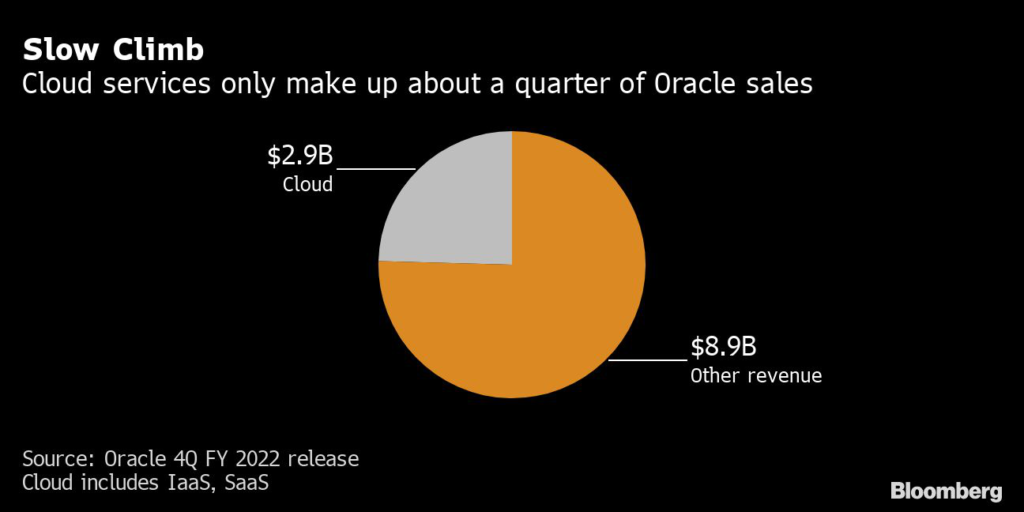
Cloud revenue — the highly watched segment that Oracle has been trying to expand — rose 19% to $2.9 billion in the fiscal fourth quarter, the Austin, Texas-based company said. Cloud sales growth had been greater than 20% since Oracle, the second-biggest software maker by revenue, began disclosing it last year.

While sales of applications for management and financial operations have fueled the company’s cloud effort thus far, Oracle “experienced a major increase in demand in our infrastructure cloud business” of 36% in the three-month period ended May 31, Catz said in the statement. 

Cloud revenue will accelerate as much as 25% in the current quarter and more than 30%, in constant currency, in the fiscal year, Catz said during a conference call after the results. That revenue may increase as much as 47% in the period ending in August including cloud sales from Cerner, she added.

“Oracle’s strong on-premise and cloud results were a surprise but show that companies are still investing in new software products to improve productivity because of supply-chain challenges and a shortage of skilled IT labor,” Anurag Rana, an analyst at Bloomberg Intelligence, wrote in a report after the results. 

Economic headwinds like inflation and currency volatility could lead to corporate cost-cutting that may help drive cloud adoption, JPMorgan’s Mark Murphy said ahead of the results. The fast-growing cloud market is led by Amazon.com Inc., Microsoft Corp. and Alphabet Inc.’s Google.

“Often, customers save money” by moving to Oracle’s cloud infrastructure, Catz said during the call.

Oracle is hoping its $28.3 billion acquisition of Cerner, completed last week, will build inroads in the health care industry, which has been comparatively slow to adopt cloud technology. During the call, co-founder and Chairman Larry Ellison said health care is “clearly going to be our largest business.”

The deal will be accretive to Oracle’s earnings in fiscal year 2023, Catz said. With Cerner now part of Oracle’s business, revenue may increase as much as 19% in the current quarter, she said. Profit, excluding some items, will be $1.04 to $1.08 a share in the period.

In the fiscal fourth quarter, sales increased 5.5% to $11.8 billion, topping the average analyst estimate of $11.7 billion. The results marked Oracle’s eighth straight quarter of year-over-year revenue increases. Profit, excluding some items, was $1.54 a share, compared with the average estimate of $1.38 a share.  

With a surging US dollar, tech peers with significant overseas exposure including Salesforce Inc. and Microsoft Corp. have seen growth eaten by currency volatility. Oracle, with nearly half of its sales outside the Americas, said quarterly revenue was reduced 5% by currency fluctuations. On Monday, the US dollar hit its highest level since April 2020 as traders bet on an increasingly-rapid round of interest rate hikes from the Federal Reserve.

Oracle’s biggest positive surprise was in license spending, which reflects continuing investment from the company’s customers in uncertain times, Rana, of Bloomberg Intelligence, said in an interview. “It’s a good reflection of broad-based technology spending and bodes well for the entire sector,” he said.

Cloud license and on-premise license sales gained 18% to $2.54 billion, beating the average estimate of $2.17 billion. Sales of the Fusion application for managing corporate finances rose 20% in the quarter, compared with 33% in the previous period. Sales of NetSuite enterprise planning tools, targeted to small- and mid-sized businesses, increased 27%, the same as in the previous quarter.

(Updates with closing share price in the second paragraph.)

More stories like this are available on bloomberg.com

©2022 Bloomberg L.P.

FedEx Surges Most Since 1986 on Activist-Backed Overhaul Plan

(Bloomberg) — FedEx Corp.’s shares soared the most in almost 36 years after the courier hiked its dividend and announced board changes in coordination with activist investor D.E. Shaw & Co., a bold shakeup just two weeks into the tenure of new Chief Executive Officer Raj Subramaniam.

The quarterly dividend will jump 53% to $1.15 per share, the Memphis, Tennessee-based company said Tuesday in a statement. That’s well above the 87-cent prediction by Bloomberg analytics. FedEx also said it would cut capital spending and rework its executive compensation program.

The shares surged 14% to $229.95 in New York, the biggest one-day gain since September 1986. The stock has declined 11% this year, better than the S&P 500’s slide.

The higher-than-expected dividend increase and reduction in capital spending will be accompanied by the addition of Amy Lane and Jim Vena as independent directors effective immediately, with a third new director to be named at a later date and agreed upon by FedEx and D.E. Shaw.

“We appreciate the collaboration with the D. E. Shaw group, a long-time FedEx stockholder, with whom we have maintained an ongoing and constructive dialogue in reaching this agreement,” Subramaniam said in the statement.

“Investors have been speculating about an activist at FDX for years, without one materializing,” Jack Atkins, an analyst with Stephens with an “overweight” rating on the stock, wrote in a note to clients. “Now, with a new leadership team and fresh voices on the board (including a proven operator like Mr. Vena), we are hopeful that a new day is dawning.”

Under New Management

The moves indicate that Subramaniam, who took over as CEO from founder Fred Smith on June 1, may be more open to addressing investor concerns as FedEx struggles to boost profit margins and has trailed the performance of its larger rival, United Parcel Service Inc. Smith, who started FedEx operations in 1973 with a handful of private jets converted to freighters, remained as chairman of the board. He is FedEx’s single largest stockholder with 7.5% of outstanding shares.

FedEx’s annual operating profit margins haven’t topped 7% since 2017 and lately the company has struggled to hire enough workers at its sorting hubs, hurting its on-time delivery performance. UPS, which hired former Home Depot Inc. CFO Carol Tome as CEO in June 2020, increased its profit margins to 13.2% last year, up from 9.1% in 2020, and has maintained its on-time service. 

The structural pressures on FedEx “are intensifying” as more retailers ship directly from the store, the US Postal Service expands operations and Amazon.com Inc. looks to extend its logistics service to also pick up packages, which will put the e-commerce giant in direct competition with FedEx and UPS, said Ravi Shanker, an analyst with Morgan Stanley in a note to clients. 

“While the market may welcome today’s ‘shareholder friendly’ actions, in our view none of this addresses the real pressures facing the business,” Shanker, who has a rating of “equal weight” on the stock, wrote in the note. 

FedEx is planning to hold its first investor day meeting in a decade at the end of this month and more changes are likely to be announced. Still, Smith has a big say in how to run the company and he appointed his son, Richard Smith, as chief of the company’s largest unit FedEx Express in March before announcing that Subramaniam would be his successor. 

“We are surprised that we have seen a prolonged slow drip of meaningful news items (CEO transition, today’s announcements) well before the marquee event,” Shanker said in the note. Management “will need to have more aces in hand to meet expectations at the event.”

Combine Units

Some investors have clamored for FedEx to combine its Ground and Express networks to improve efficiency and emulate UPS’s one network. That may be difficult because the Ground business is operated by independent contractors, a major structural difference from the Express business that owns aircraft and vehicles and has employees and pilots directly on payroll. 

As part of the agreement with D.E. Shaw, the company made several changes to board committees. Separately, FedEx also tied executive pay more to its total shareholder return.

D.E. Shaw owned about 1 million shares as of March 31, making it FedEx’s 35th largest holder, according to Bloomberg data. With $60 billion in assets under management, D.E. Shaw has pushed for changes at several companies in the past, including Exxon Mobil Corp., Bunge Ltd., and Lowe’s Cos., among others. 

Vena is a former railroad executive who worked at Canadian National Railway Co. and recently helped Union Pacific Corp. improve efficiency. Lane is a former Merrill Lynch & Co. banker who also sits on the boards of NextEra Energy Inc. and TJX Companies Inc. 

More stories like this are available on bloomberg.com

©2022 Bloomberg L.P.

Big Money in Stock Market Is In Mad Dash to Get Out of Fed’s Way

(Bloomberg) — Despite a lot of confident predictions, nobody knows what will happen at the Federal Reserve Wednesday, never mind what the impact will be on markets. Professional investors aren’t waiting around to find out.

Particularly among managers who premise strategies on quantitative signals, exposure to stocks and other risky assets has been cut to the bone. Weeks of selling has pushed systemic positioning as measured by Deutsche Bank AG two standard deviations below average levels in data starting in 2010, among other examples.

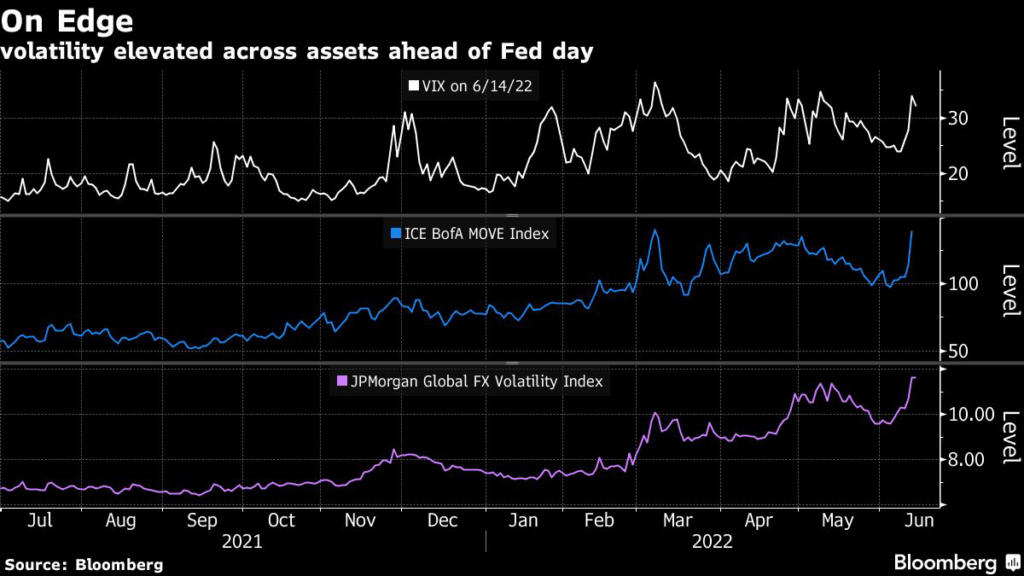
Hedge funds have been similarly expeditious, selling equities at the fastest rate on record over two days through Monday, according to Goldman Sachs Group Inc. prime brokerage data. They’re pulling out as implied volatility across assets sits at levels not seen for any pre-Fed session in more than a decade. 

All of it is testament to swelling uncertainty headed into Wednesday’s Fed meeting, where anything from a half-point to a full-point increase in the federal funds rate is forecast. Stock prices have been flattened in the rush to the exit, with the S&P 500 heading for the worst month since the pandemic selloff in 2020. Bond turmoil is everywhere, with two-year Treasury yields spiking to the highest level since 2007. 

“We’re sitting at the bottom and there’s plenty of dry powder, but everybody’s fleeing to cash because they’re afraid of runaway inflation,” Benjamin Dunn, president of Alpha Theory Advisors, said by phone. “There’s doomsayers out there saying that policy makers cannot engineer what they need to do to bring down prices without completely breaking the bond market.”

Anxiety is on vivid display. In the note published Tuesday, Goldman said short sales at its hedge-fund clients climbed “aggressively” over the previous two sessions, with broad-based investing strategies — or macro products — like exchange-traded funds dominating the flows. A gauge of their risk appetite that takes into account both bullish and bearish bets — known as gross leverage — sat near five-year lows, the data show.  

It’s not hard to see why sentiment is deteriorating. All year, any attempt to buy the dip — a strategy that had worked for a decade  — has been met with fresh lows in the market. Having fallen more than 20% from its January peak amid concern the Fed’s efforts to subdue inflation will cause a recession, the S&P 500 this week entered a bear market for the second time since 2020.

On Monday, when losses spread across major assets, trend-following Commodity Trading Advisors — which make long and short bets in the futures market — sold about $11 billion of bonds and $21 billion of stocks, according to an estimate by Charlie McElligott, a cross-asset strategist at Nomura Holdings. Meanwhile, volatility target funds, such as risk parity, slashed holdings cross credit and bonds.

The risk aversion has been so intense that the equity exposure among these groups has fallen to the 2nd percentile of the historic range, data compiled by Deutsche Bank show.

“For systematic strategies it is purely a function of how the market is behaving, specifically the sharp rise in volatility,” said Parag Thatte, a strategist at Deutsche Bank. “For discretionary investors, whose positioning is aligned with slowing growth but not a recession, we think positioning will come down as more of them position for recession.”

Increasingly, angst is building that the Fed will have to raise rates more aggressively to tame the hottest inflation in four decades at the risk of causing an economic recession. The two-year and 10-year yield curve inverted briefly this week, signaling concerns that restrictive monetary policy may take a bigger toll on the economy.

“We’re going to tend to be short in a rising rate environment particularly when we get to close to inversion type of point where we’re moving into a more recessionary environment,” Katy Kaminski, AlphaSimplex’s chief research strategist, said in an interview on Bloomberg TV. “During those environments, our strategy will tend to be 70% short bonds. If we move into that environment, we will see more short bond signals over the next few years.”

More stories like this are available on bloomberg.com

©2022 Bloomberg L.P.

Gensler Warns About Crypto Lenders Offering High Returns

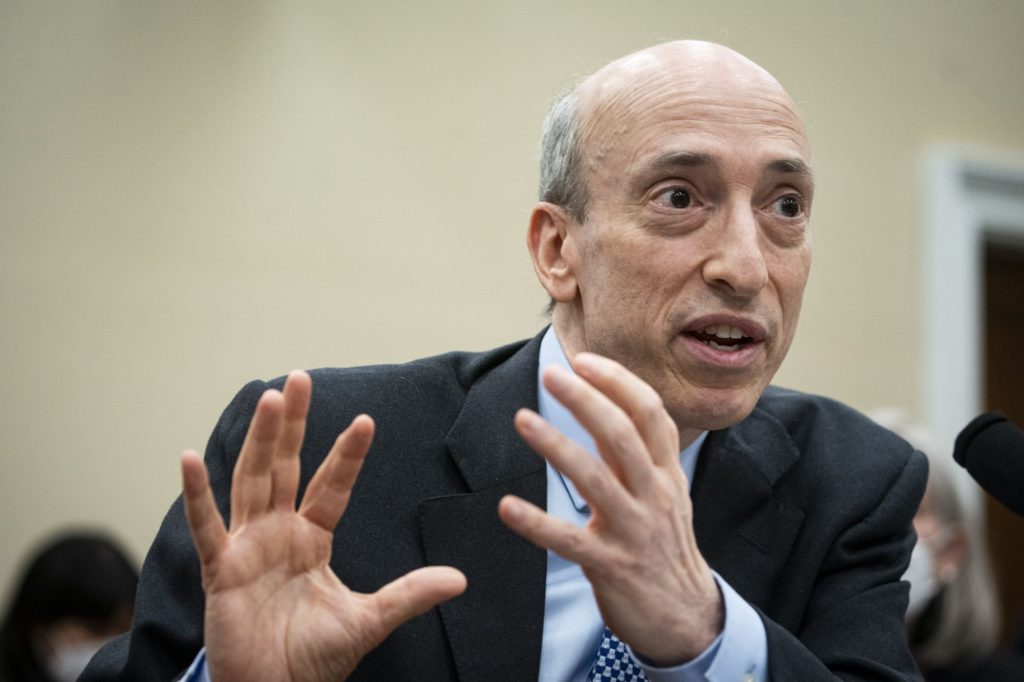
(Bloomberg) — Gary Gensler has a message for people pouring money into crypto on promises of high returns: beware.

The US Securities and Exchange Commission chief on Tuesday repeated his warnings over lending platforms. Gensler said investors need to be wary of claims of double-digit interest rates.

“They’re operating a little bit like banks,” he said in remarks delivered virtually at the RFK Human Rights Compass Summer Investors Conference. “I caution the public.” 

Gensler didn’t mention any lenders by name. Since taking over in April 2021, he’s taken a tough line on crypto products that may fall under the agency’s purview and the platforms that they trade on. 

Cryptocurrencies have plunged this week after crypto lender Celsius Network Ltd. said Monday that it was freezing withdrawals. Bitcoin, the largest coin, fell as much as 10% on Tuesday.

Lending products have been a particular sticking point with the regulator. Last year, Coinbase Global Inc. shelved plans to start one after the agency threatened to sue.

BlockFi Inc., a popular crypto platform, in February agreed to pay $100 million to the SEC and state regulators over allegations it illegally offered a product that pays customers high interest rates to lend out their digital tokens. BlockFi didn’t admit or deny the allegations.

Senator Elizabeth Warren, a Massachusetts Democrat, said on Tuesday that regulators and lawmakers needed to do more to crack down. 

“Too many crypto firms have been able to scam customers with too-good-to-be-true claims about safe sky-high returns, leaving ordinary investors holding the bag while insiders make off with their money,” she said in an e-mailed statement.

Speaking later in the day on Tuesday at The Wall Street Journal’s CFO Network Summit, Gensler said that lawmakers should be careful not to write new crypto-focused laws that could unintentionally hamper to SEC’s ability to oversee other markets. 

“There might be something done legislatively that undermines” existing rules for stocks or investment funds by creating different regulations for similar activities, he said.

(Updates with comments from SEC Chair Gensler in final two paragraphs.)

More stories like this are available on bloomberg.com

©2022 Bloomberg L.P.

Food Truck Startup From Jet.com Founder Hits $3.5 Billion Value

(Bloomberg) — The food truck startup Wonder, led by Jet.com founder Marc Lore, has raised $350 million, bringing its total fundraising haul to $900 million in a market where checks are getting harder to come by.

Wonder was valued by investors at $3.5 billion in the latest round, according to a person familiar with the deal who asked not to be identified discussing private information. The company operates food trucks in suburban New Jersey that people can summon to their driveways using a smartphone app. Its offerings include items from 19 restaurants, including Bobby Flay Steak and Di Fara Pizza. 

Lore sold Jet.com to Walmart Inc. in 2016 for $3.3 billion, after selling the parent company behind his earlier startup, Diapers.com, to Amazon.com Inc. in 2010. The fundraising round was earlier reported by the Wall Street Journal. 

More stories like this are available on bloomberg.com

©2022 Bloomberg L.P.

Corporate ‘Self-Sanctioning’ of Russia Has US Fearing Economic Blowback

(Bloomberg) — Russia’s invasion of Ukraine galvanized the US, UK and European Union to unleash a slew of sanctions meant to punish Vladimir Putin’s government and pressure him to pull his forces back. 

But some Biden administration officials are now privately expressing concern that rather than dissuading the Kremlin as intended, the penalties are instead exacerbating inflation, worsening food insecurity and punishing ordinary Russians more than Putin or his allies. 

Officials were initially impressed by the willingness of companies from BP Plc. to McDonald’s Corp. to abruptly “self-sanction,” sometimes selling assets at fire-sale prices. But the administration was caught off-guard by the potential knock-on effects — from supply chain bottlenecks to uninsurable grain exports — due to the companies’ decisions to leave, according to people familiar with internal discussions. 

In some cases, companies have signaled that they are being extra-cautious or want clearer guidance from the US before continuing business with Russia. Until that happens, they are going beyond any legal requirements to ensure they don’t accidentally violate sanctions policies, according to Justine Walker, the head of global sanctions and risk at the Association of Certified Anti-Money Laundering Specialists, an industry group.

“Because we just have so many changes at once, governments are not able to step in and give precise clarification and we are seeing many, many examples of authorities coming to different positions,” Walker said in an interview. “Companies ask, ‘Should we be applying sanctions to this entity?’ and the government will come back and say, ‘You need to make your own decision.’”

US Quietly Urges Russia Fertilizer Deals to Unlock Grain Trade

In an acknowledgment of that concern, on May 25 the Treasury Department’s Office of Foreign Assets Control, or OFAC, which oversees sanctions regimes, extended a general license so that companies could continue to pay taxes, fees and import duties related to doing business in Russia until Sept. 30. The message was clear: Doing business in Russia is allowed, provided companies aren’t working with sanctioned entities.

In addition, a recent Executive Order barring management consulting and accounting companies from doing business with Russia didn’t include anything on agriculture, medicine or telecommunications, an intentional move to let that business activity continue, according to Adam Smith, a former senior adviser to OFAC.

The concessions and adjustments highlight the difficulties involved in sanctioning the world’s 11th-largest economy. Previous sanctions campaigns against countries such as Iran and North Korea sought to impose a similar level of isolation on much smaller economies. Russia’s ties to the global commodities markets — particularly energy and grains — has made this a much more complicated case. 

The Evolution of Sanctions as Financial Warfare: QuickTake

There’s no sign that administration officials feel their sanctions policy was a mistake or that they want to dial back the pressure. If anything, officials have said a key US goal is to ensure Russia can’t do to other nations what it has done in Ukraine. 

But the collateral damage from the sanctions has been wider than expected. 

When the invasion began, the Biden administration believed that if penalties exempted food and energy, the impact on inflation at home would be minimal. Since then, energy and food have become key drivers of the highest US inflation rates in 40 years, a huge political liability for President Joe Biden and the Democratic party heading into November’s mid-term elections. Treasury Secretary Janet Yellen has said that she “was wrong” in believing last year that inflationary pressures would pass. One of the results that she’s now seeing is related to the spike in prices due to unexpected self-sanctioning, according to one person familiar with her thinking.So while Ukrainian President Volodymyr Zelenskiy has urged US businesses to cease operations in Russia, telling a joint session of Congress that the Russian market was “flooded with our blood,’’ the Biden administration has been encouraging some commerce, including for agriculture, medicine and telecommunications. For instance, the US government is quietly encouraging agricultural and shipping companies to buy and carry more Russian fertilizer, according to people familiar with the efforts, as sanctions fears have led to a sharp drop in supplies, pressuring food costs.

That follows warnings from the United Nations and humanitarian groups that hunger and poverty may soar if the price of staples like wheat stay high. Turmoil triggered by rising food and energy prices has already hit countries including Sri Lanka, Egypt, Tunisia and Peru. 

The Biden administration rejects any suggestion that sanctions are part of the problem, emphasizing that the US isn’t penalizing humanitarian goods or food, and putting the blame on Putin’s decision to attack Ukraine, including by targeting shipping on the Black Sea. 

“The story that the sanctions are causing the problem, I think, is deeply misleading,” Ambassador Jim O’Brien, head of the State Department’s Office of Sanctions Coordination, told reporters last week. “Sometimes companies are confused about what’s allowed and what’s not, and we will try to clarify so that they are able to go forward. But we are also working proactively by trying to inform companies about what they are allowed to do.” About 1,000 companies have so far announced that they are curtailing operations in Russia, according to data collected by the Yale Chief Executive Leadership Institute.  That underscores one reason sanctions are so popular with policy makers: They essentially outsource US policy to the private sector, which makes it less surgical, less calibrated and less responsive to policy changes, said Smith, the former OFAC adviser.

This becomes important as all sides seek an end to the war. The lifting of sanctions can be dangled as an incentive to help bring about a diplomatic resolution to the conflict. But right now it’s hard even to offer that as a potential benefit of entering into negotiations because much of the pullout by American businesses has been self-inflicted. Companies could face public blowback if they are seen as rushing back into the Russian market. 

Smith also said that longer-term, the US may undercut its “soft power” in Russia by abandoning the local market to brands from other countries — or even to Russian firms that are snapping up company assets at little or no cost. 

The departure of high-profile US firms “does some psychological harm to Russia, psychological injury,’’ Smith said. But “at the end of the day, is removing elements of US soft power where the US wants to be?”


More stories like this are available on bloomberg.com

©2022 Bloomberg L.P.

Close Bitnami banner
Bitnami