Bloomberg

Citigroup Hires Trio of Tech Bankers From Barclays, Credit Suisse

(Bloomberg) — Citigroup Inc. hired three bankers from Credit Suisse Group AG and Barclays Plc as the firm builds out its investment-banking division focused on technology. 

Credit Suisse’s Dan McDow joined as Citigroup’s global head of software, according to a memo to staff. He will be based in New York and report to Mark Keene, who leads technology investment banking globally at Citigroup. 

“Within technology, software represents the largest global universe wallet segment and is experiencing tremendous growth through convergence with all sectors,” Keene said in the memo. “We intend to continue to invest in dedicated vertical software domain expertise.”

Citigroup has been seeking to advise more technology companies on their mergers and acquisitions as well as other capital-markets needs, and recently has been advising Broadcom Inc. on its $61 billion acquisition of the cloud-computing company VMware Inc. The New York-based firm last year reorganized the division and tapped Philip Drury to lead a new investment-banking group focused on advising companies in technology, media, entertainment, data and telecommunications.

The lender finished last year as the seventh-largest adviser to technology companies, according to data compiled by Bloomberg. That’s up from 12th five years earlier. 

Citigroup also added Steve Anderson and Andrew Delia as managing directors in the software division, according to separate memos to staff. Anderson, who previously spent 12 years at Barclays, will be based in San Francisco, while Delia, who spent a decade at Credit Suisse, will be based in New York. 

McDow will work alongside Niall Cannon and Brian Marshall, according to the memo. Cannon and Marshall will continue to focus on cybersecurity and infrastructure, respectively, Keene said. 

More stories like this are available on bloomberg.com

©2022 Bloomberg L.P.

AT&T Sees Possibility for a Second Price Increase on Wireless Plans as Costs Rise

(Bloomberg) — AT&T Inc., facing higher costs than expected due to inflation, may have to raise mobile-service prices again, according to Chief Financial Officer Pascal Desroches. 

Only weeks have passed since AT&T hiked rates by $6 per line and $12 for family plans in May. 

“We’re seeing inflation in labor, supplies, energy and transport. So we’re keeping an eye on it,” Desroches said at an investor conference Tuesday. If the pressure persists, “we’re going to have to look at pricing again as a potential leverage to help offset that.”

Wireless rival Verizon Communications Inc. said Friday that it was raising monthly service charges by $6 a line and $12 for limited data family plans starting in July. The largest US carrier has already added a $1.35 service charge to all mobile phone customers as a economic adjustment.  

With the inflationary backdrop, Verizon and AT&T are raising prices on what they consider outdated plans in the hopes that customers will opt for higher priced unlimited offers. The move is also designed to spur more 5G adoption among consumers who have been largely ambivalent about the faster connections.

AT&T’s Desroches offered a brighter outlook for the second half of the year. Despite rising costs, AT&T sees some lower expenses as it completes the shutdown of its 3G networks. The company is also getting some benefit from more roaming revenue. 

“We should see very nice expansion of margins over the course of the back half of the year and improving profit rates,” he said.

AT&T rose less than 1% to $19.83 at 10:17 a.m. in New York. The stock is up close to 7% this year, nearly even with T-Mobile US Inc., while Verizon is down 4%. 

More stories like this are available on bloomberg.com

©2022 Bloomberg L.P.

MicroStrategy’s Bitcoin-Backed Loan Risks Margin Call Amid Fall

(Bloomberg) — MicroStrategy Inc. may need to post additional collateral for a Bitcoin-backed loan as the price of the world’s largest cryptocurrency tests a key price level of $21,000 flagged by the company.

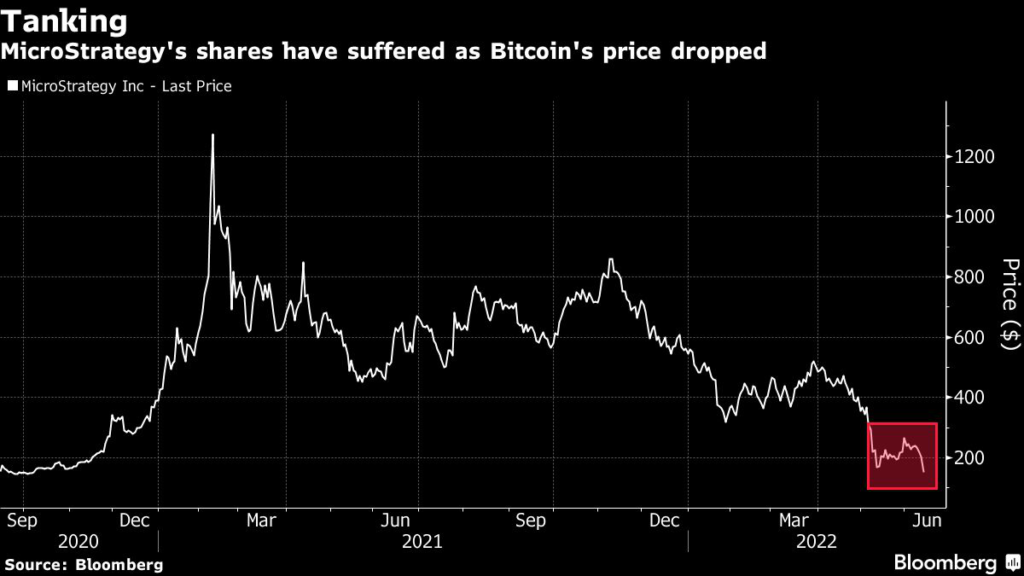
The software firm controlled by Bitcoin advocate Michael Saylor had used its vast Bitcoin holdings to secure a $205 million loan in March to buy even more cryptocurrency. But as the value of that collateral initially worth around $820 million falls to about half that, the company may need to provide more capital to back the loan.

MicroStrategy has become closely linked with Bitcoin, after it was one of the first major companies to buy the tokens for its corporate treasury, effectively making its stock a proxy for the cryptocurrency. Saylor, the company’s chief executive officer, frequently touts crypto on social media and at conferences — including a tweet on Monday amid the selloff saying “In #Bitcoin We Trust.” 

But the firm’s bet in the token has backfired as of late with paper losses on the firm’s digital holdings approaching $1 billion, after it paid nearly $4 billion to amass about 130,000 Bitcoins over the last two years, according to a company filing.

Read more:

  • MicroStrategy Leads Crypto Stock Selloff as Bitcoin Unravels
  • MicroStrategy’s Losses From Bitcoin Bet Approach $1 Billion

A MicroStrategy spokesman didn’t immediately respond to an email sent outside regular office hours. In May, Phong Le, MicroStrategy’s president, said on a call Bitcoin would need to reach around $21,000 before the company would have a margin call. But that before it got to that level, the company could “contribute more Bitcoin to the collateral package, so it never gets there.”

A BTIG analyst said concerns about a margin call were overblown as about 96,000 of the company’s tokens are still available for MicroStrategy to post as additional collateral.

Shares of MicroStrategy were modestly higher Tuesday, following a 25% plunge to the lowest level since 2020 on Monday. Bitcoin traded at roughly $22,000 after falling as low as $20,800 earlier in the day. 

(Updates to add details and update trading throughout)

More stories like this are available on bloomberg.com

©2022 Bloomberg L.P.

Korea Trucker Strike Ends After Settlement Reached With Ministry

(Bloomberg) — Striking truckers in South Korea reached an agreement with the government, ending a weeklong strike that added to the strain on global supply chains.

The truck drivers will immediately resume their duties after agreeing to extend a freight rate system that guarantees minimum wages, according to a statement from the Cargo Truckers Solidarity division of the Korean Public Service and Transport Workers Union.

Under the agreement, the transport ministry will provide subsidies to alleviate pressure on surging fuel costs, according to the statement. The union was demanding the extension of the freight rate system to help drivers cope with rising fuel prices. The Safe Trucking Freight Rates System was introduced in 2020 for a three-year run, aimed at preventing dangerous-driving practices, such as cargo overload, and guaranteeing minimum rates for truckers. The system was due to expire this year.

The agreement with the transportation ministry was reached Tuesday evening after four previous discussions failed to make progress.

The strike, which started June 7, roiled industries amid fears of higher costs and wider upheaval to global supply chains after Covid-19 lockdowns in China and Russia’s invasion of Ukraine. The Ministry of Trade, Industry and Energy estimated this week that key industries have seen production disruptions worth about 1.6 trillion won ($1.2 billion).

Deliveries of cars, petrochemical products, steel and materials for semiconductor chips have been suspended or delayed, and concerns grew that a prolonged strike would force bigger production shutdowns and even put the nation’s energy security at risk. 

See also: Raw-Material Snarls in Korea to Ripple Across Asia Factories 

The nation’s top steelmaker, Posco, suspended output at its four wire-rod factories and a cold-rolled steel plant after the strike exhausted warehouse space. Petrochemical producers also saw warehouses fill up, as they were unable to deliver raw materials used to make everything from clothing to cars.

The daily volume of container boxes transported to and from the nation’s 12 ports dropped 53% on Tuesday compared with the average for May, according to data from the transport ministry. Inbound and outbound volumes at Busan, the world’s seventh-busiest port, were about half their usual amount. 

More stories like this are available on bloomberg.com

©2022 Bloomberg L.P.

Indian Cricket Rights Cost Broadcasters More Than English Football League

(Bloomberg) — Aggressive bidding for the rights for India’s most-watched cricket tournament has made the competition more expensive to broadcast than England’s top-flight football.

Walt Disney Co. secured television rights for the Indian Premier League (IPL) while Viacom18 Media Pvt., a joint venture between Paramount Global Ltd. and Mukesh Ambani’s Reliance Industries Ltd., landed the tournament’s digital streaming license for a total 483.9 billion rupees ($6.2 billion), according to people with knowledge of the matter. 

This amount breaks down to $15.1 million per match, while the rights for England’s Premier League cost $11 million for each game, according to the Board of Control for Cricket in India, the local governing body for the sport. The IPL pips the top baseball and basketball leagues in the US too, but trails the National Football League’s $17-million per match. 

Luring more than 600 million viewers this year, the IPL is seen as a key catalyst to boost subscribers in a market with almost 1.4 billion people. The latest bidding round raised nearly three times the amount collected at the previous auction in 2017.

“There are media companies that are looking at IPL as the most important sporting event in the world,” Tarun Pathak, research director at consultancy Counterpoint Research, told Bloomberg Television. “You’re getting the maximum eyeballs from a young nation. The key message here is that companies are betting on India’s future.”

More stories like this are available on bloomberg.com

©2022 Bloomberg L.P.

Gensler Warns About Crypto Lenders Offering Sky-high Returns

(Bloomberg) — Gary Gensler has a message for people pouring money into crypto on promises of high returns: beware.

The US Securities and Exchange Commission chief on Tuesday repeated his warnings over lending platforms. Gensler said investors need to be wary of claims of double-digit interest rates.

“They’re operating a little bit like banks,” he said in remarks delivered virtually at the RFK Human Rights Compass Summer Investors Conference. “I caution the public.” 

Gensler didn’t mention any lenders by name. Since taking over in April 2021, he’s taken a tough line on crypto products that may fall under the agency’s purview and the platforms that they trade on. 

Cryptocurrencies have plunged this week after crypto lender Celsius Network Ltd. said Monday that it was freezing withdrawals. Bitcoin, the largest coin, fell as much as 10% on Tuesday.

Lending products have been a particular sticking point with the regulator. Last year, Coinbase Global Inc. shelved plans to start one after the agency threatened to sue.

BlockFi Inc., a popular crypto platform, in February agreed to pay $100 million to the SEC and state regulators over allegations it illegally offered a product that pays customers high interest rates to lend out their digital tokens. BlockFi didn’t admit or deny the allegations.

Senator Elizabeth Warren, a Massachusetts Democrat, said on Tuesday that regulators and lawmakers needed to do more to crack down. 

“Too many crypto firms have been able to scam customers with too-good-to-be-true claims about safe sky-high returns, leaving ordinary investors holding the bag while insiders make off with their money,” she said in an e-mailed statement.

(Updates with comments from Senator Elizabeth Warren in final two paragraphs.)

More stories like this are available on bloomberg.com

©2022 Bloomberg L.P.

Nasdaq Bulls See Glimmer of Hope in Aggressive Fed

(Bloomberg) — For technology-stock investors, a more aggressive Federal Reserve could be the best possible outcome from this week’s meeting of central bank policy makers. 

The Fed could send a signal to markets that it’s determined to get inflation under control, and that might cool down the surge in U.S. Treasury yields, the benchmark for global borrowing costs, which climbed Monday to the highest since 2011.

Soaring inflation has brought an end to the era of essentially free money and laid waste to vast swaths of the speculative investment landscape. Cryptocurrencies, electric-vehicle stocks and tech shares have all plunged, miring the tech-heavy Nasdaq 100 Index in a deepening bear market.  

But after Monday’s market plunge, valuations are now relatively low, and bond yields already reflect significant further rate increases by the Fed, so the time to buy is near. At least, that’s what the tech bulls hope.

“The 10-year has already discounted quite a bit of Fed tightening, and we should be well through the adjustment to the bond market, and well through the selloff, given how much stocks have come down,” said Justin Kelly, chief investment officer at Winslow Capital Management, which counts Microsoft Corp., Amazon.com Inc., and Alphabet Inc. among its biggest holdings.

Shares rebounded on Tuesday, with the Nasdaq 100 gaining 0.6% and the biggest technology and internet names all rising. 

Fed Chair Jerome Powell indicated last month that the central bank would raise rates by half a percentage point this week as long as economic data came in as expected. Friday’s surprisingly strong consumer price data sent markets tumbling and prompted increased investor bets on a 0.75-point move. The decision is due at 2 p.m. Wednesday in Washington. 

Higher rates mean investors place a bigger discount on the present value of future profits, and many highly valued tech stocks offer nothing but future profits, so they’ve gotten hit the hardest. A basket of the priciest software names sank 8% Monday, bringing its year-to-date drop past 50%. However, the pain has been widespread, and the Nasdaq 100 is down 30% in 2022.

Major companies like Apple, Microsoft, and Alphabet are all down more than 25% this year. Amazon is off 37% and both Nvidia Corp. and Meta Platforms Inc. have shed more than 45%.

Investors are pricing in a slowdown in earnings growth on the view that surging inflation and the resulting higher interest rates will curb consumer and industrial demand, possibly leading to a recession. The yield on the 10-year US Treasury note soared to almost 3.4% Monday from below 1.35% in December.

“We need to see inflation begin to cool off before we can have a sustained rebound,” said David Lebovitz, who helps oversee $2.6 trillion in assets as global market strategist at JPMorgan Asset Management. 

Analysts now forecast earnings for growth companies will rise 1.4% in 2022, down from the 5.8% pace that had been expected in April, according to Bloomberg Intelligence. Consensus expectations for so-called value companies, which sell at a relatively low multiple of profit or book value, have risen over the same period.

At the same time, investors remain optimistic about the long-term prospects for tech, even in a weaker macroeconomic backdrop, and the market’s rout has eased concerns about valuations. The Nasdaq 100 is trading at about 18.8 times estimated earnings, below its 10-year average multiple of 20, while industry bellwethers like Alphabet, Amazon, Meta and Salesforce Inc. are all below their long-term averages.

“High-multiple stocks still don’t look like the place to be, but if you have defensive growth businesses where the multiple is in line with the historical trend, that looks like a nice fat pitch from the market,” said Winslow Capital’s Kelly.

Tech Chart of the Day

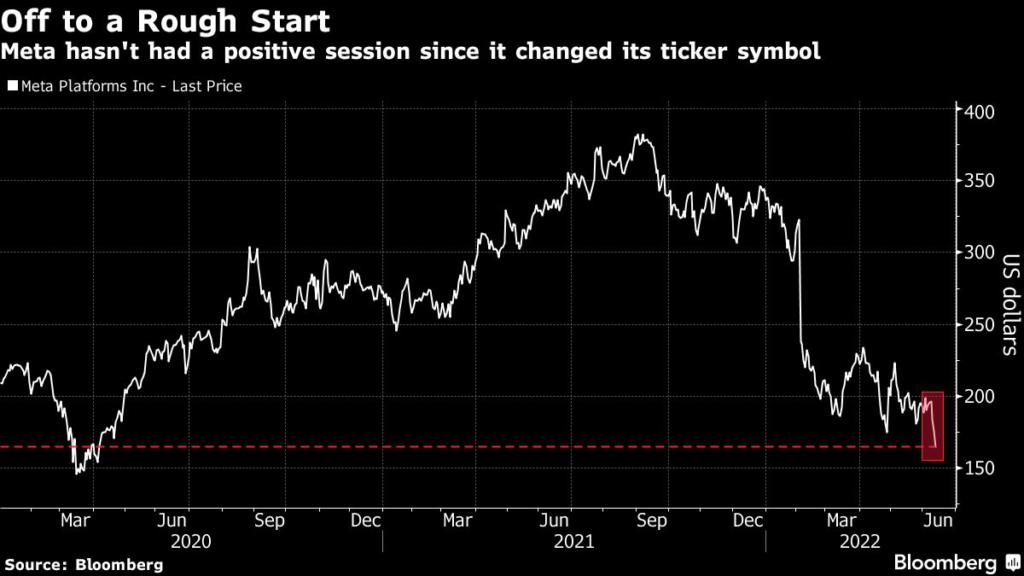
If Meta Platforms was hoping that its new ticker symbol would help investors forget about the months of weakness in the stock, that plan hasn’t worked out so far. The stock slumped in each of the three trading days since it started trading as META, and the more than 16% slump over that stretch represents its biggest three-day drop since February. The stock also closed Monday at the lowest since April 2020.

Top Tech Stories

  • Elon Musk will address Twitter Inc. employees at a company-wide meeting this week, the first time the Tesla Inc. chief executive officer will meet with employees since agreeing to buy the company for $44 billion in late April, according to people familiar with the matter.
  • Oracle Corp.’s effort to move its customers to the cloud appears to be gaining momentum, and the acquisition of health care records provider Cerner Corp. will help accelerate the growth of the business.
  • Viasat Inc. defended its proposed purchase of Inmarsat Group Holdings Ltd. as rival SpaceX called on US regulators to deny the $4 billion transaction.
  • Billionaire Mukesh Ambani’s media venture won the digital streaming rights to the Indian Premier League, outbidding entertainment giants including Walt Disney Co. and Sony Group Corp., according to a person familiar with the matter.
  • China’s semiconductor industry is showing signs of flourishing even in the face of Biden administration efforts to counter its growth, raising alarm bells in Washington.
  • Sea Ltd. is making its first major job cuts in areas spanning shopping and food, joining other tech firms downsizing this year in anticipation of unprecedented market and economic volatility.
  • Sequoia India and Sequoia Southeast Asia raised $2.85 billion across three funds to continue backing startups in the region despite a stock market rout roiling tech companies.
  • MicroStrategy Inc. may need to post additional collateral for a loan as Bitcoin tests a key price range flagged by the software company last month.
  • Atos SE shares tumbled the most on record after the company said Chief Executive Officer Rodolphe Belmer would resign just five months into his tenure, following a failure to agree on a potential restructuring that will lead to a breakup of the French IT business.

(Adds Tuesday trading.)

More stories like this are available on bloomberg.com

©2022 Bloomberg L.P.

SEC’s Gensler Warns About Crypto Lenders Offering High Returns

(Bloomberg) — Gary Gensler has a message for people pouring money into crypto on promises of high returns: beware.

The US Securities and Exchange Commission chief on Tuesday repeated his warnings over lending platforms. Gensler said investors need to be wary of claims of double-digit interest rates.

“They’re operating a little bit like banks,” he said in remarks delivered virtually at the RFK Human Rights Compass Summer Investors Conference. “I caution the public.” 

Gensler didn’t mention any lenders by name. Since taking over in April 2021, he’s taken a tough line on crypto products that may fall under the agency’s purview and the platforms that they trade on. 

Cryptocurrencies have plunged this week after crypto lender Celsius Network Ltd. said Monday that it was freezing withdrawals. Bitcoin, the largest coin, fell as much as 10% on Tuesday.

Lending products have been a particular sticking point with the regulator. Last year, Coinbase Global Inc. shelved plans to start one after the agency threatened to sue.

BlockFi Inc., a popular crypto platform, in February agreed to pay $100 million to the SEC and state regulators over allegations it illegally offered a product that pays customers high interest rates to lend out their digital tokens. BlockFi didn’t admit or deny the allegations.

More stories like this are available on bloomberg.com

©2022 Bloomberg L.P.

Disney, Reliance Bid $6.2 Billion to Beam India Cricket

(Bloomberg) — The cost to acquire media rights for the Indian Premier League tripled to 483.9 billion rupees ($6.2 billion), catapulting the cricket tournament over the English Premier League as global firms vie for subscribers on the subcontinent.

Viacom18 Media Pvt., a joint venture between Paramount Global and Mukesh Ambani’s Reliance Industries Ltd., won digital streaming rights for 238 billion rupees, Jay Shah, secretary of the Board of Control for Cricket in India, said on Twitter Tuesday. Walt Disney Co. bagged television rights for about 236 billion rupees.

For the first time ever, streaming rights beat traditional broadcast bids, highlighting how crucial the five-year contract is for Ambani’s ambitions to vault into the club of global over-the-top media behemoths. The IPL lured more than 600 million viewers this year and is seen as the quickest way to boost subscribers in a market with almost 1.4 billion people.

At $15.1 million per match, the IPL overtakes the English football league’s $11 million, leaving it behind only America’s National Football League at $17 million, according to data from the BCCI. The total money raised exceeds the 328 billion rupees floor-price set by the BCCI and is nearly three times the amount collected at the previous auction in 2017.

Disney shares fell 3.7% on Monday amid a broad market selloff, extending this year’s loss to 38%. Reliance shares slipped 1.3% in Mumbai on Tuesday.

Maximum Eyeballs

“There are media companies that are looking at IPL as the most important sporting event in the world,” Tarun Pathak, research director at consultancy Counterpoint Research, told Bloomberg Television. “You’re getting the maximum eyeballs from a young nation. The key message here is that companies are betting on India’s future.”

Four contracts starting 2023 were up for grabs, broadly covering television and digital rights in the Indian subcontinent and overseas, as well as a pick of key matches. KPMG Corporate Finance advised the sports body on the auction, according to the BCCI. 

Despite Amazon.com Inc.’s surprise pullout at the last moment, the auction has seen heated competition. Before the US technology giant exited the race, people familiar with the developments expected the auction to lure more than 400 billion rupees in total bids, with one analyst even predicting as much as 600 billion rupees.

Cricket, a quintessential English summer sport, has legions of fans in mostly the British Commonwealth countries, and particularly in the Indian subcontinent. Trailing only the English Premier League and the National Football League in global popularity, the IPL is increasingly being seen as a critical catalyst for any media company looking to capture the Indian consumer going online for shopping and entertainment. 

Started in 2008, the IPL is a much shorter and more entertaining format. Typically held in April and May, each match lasts between three and four hours, compared to the one-day version and the classic five-day test cricket known for its tea breaks. Stadiums hosting an IPL match feature merchandise and a carnival-like atmosphere, often with Bollywood actors cheering from VIP boxes. 

Little Impact

Though Disney lost the streaming rights it inherited from its 2019 acquisition of 21st Century Fox Inc.’s global entertainment assets, some shareholders may breathe a sigh of relief. If Disney doesn’t bag the contract, it won’t have a material impact on earnings as “the profit potential out of India is minimal,” Ben Swinburne, an analyst with Morgan Stanley, wrote in a May 12 research note.

“We made disciplined bids with a focus on long-term value,” Rebecca Campbell, chairman for international content and operations at Disney, said in a statement. “We chose not to proceed with the digital rights given the price required to secure that package.”

She added that Disney plans to explore other multiplatform cricket rights. For Reliance, a first-time bidder in IPL’s 15-year history, the cricket streaming rights are also about fueling the e-commerce and retail ambitions of its technology venture Jio Platforms Ltd. 

Reliance “went in with the deepest pockets and the longest staying power to juice the IPL property,” said Utkarsh Sinha, managing director, Bexley Advisors, a boutique investment firm that focuses on technology and media. “As the consumer media wallet keeps getting divided into smaller pieces in an overcrowded market, Reliance may be approaching it with a ‘consolidate and dominate’ strategy. The IPL win is a strategic step in that direction.”

(Updates with confirmation from the BCCI, Disney quote)

More stories like this are available on bloomberg.com

©2022 Bloomberg L.P.

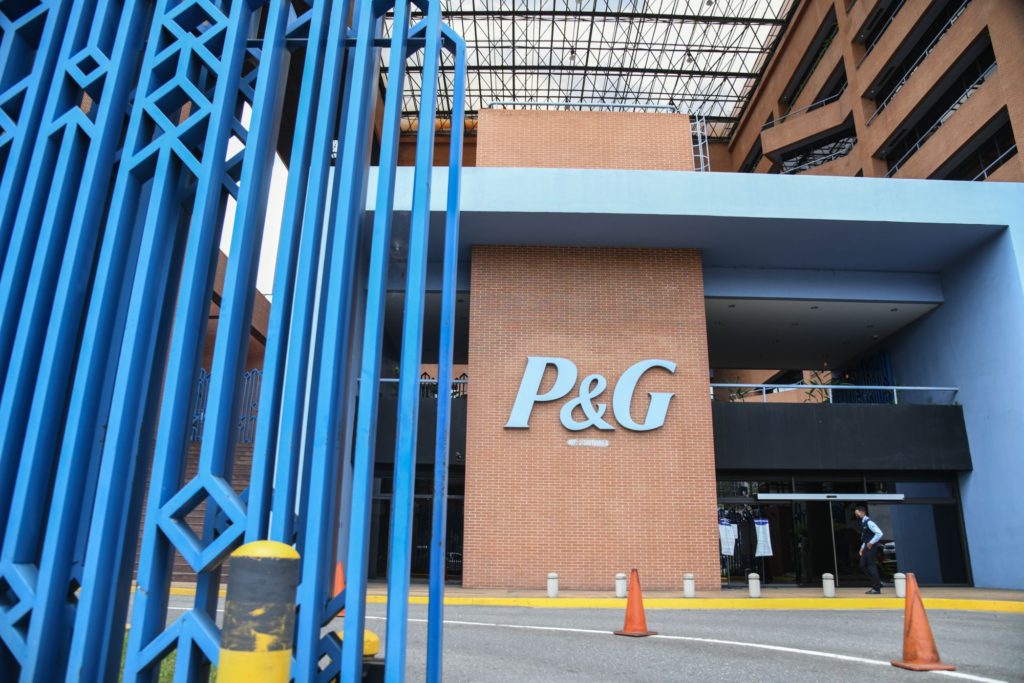
Former P&G Building in Venezuela Converted Into Tech Hub

(Bloomberg) — Back when Venezuela was a hub for multinationals, Procter & Gamble’s research and development facility helped develop brands like Pampers and Pantene. Now, two ambitious entrepreneurs think the building can jump start a new kind of innovation for the country: the tech industry. 

Backed by foreign capital, Luis Cifuentes and Carlos Aguilo are building the country’s first tech hub in offices P&G left five years ago amid a historic economic collapse. A combination of co-working space and tech accelerator program, Wave Tech Hub is a risky bet in a country plagued by slow Internet connections, power disruptions and an unpredictable business environment. But the pair see potential for an emerging startup scene. 

“Venezuela is like a laboratory to test the market,” said Aguilo, who brings a background in tech including founding another business incubator in 2014, which supported projects such as a news website and a fintech. “Our competitive indexes are among the lowest, but that doesn’t mean we can’t innovate.”

While Latin America was the fastest-growing region in the world for venture funding in 2021, Venezuela has been left behind as international investors have avoided the sanctioned country and its crumbling economy. But socialist President Nicolas Maduro has eased controls on the private sector and allowed for a non-official dollarization.

That helped the country emerge from four years of hyperinflation and break a recession. Cifuentes and Aguilo see signs tech is poised to take off as the country stabilizes. 

Delivery app Yummy recently raised $47 million in the largest venture round ever for a Venezuelan startup. And projects like private collective transportation app La Wawa and payment platform Ubii have started to gain traction. 

Startups can find talented programmers, engineers and software developers among residents and some of the 6 million Venezuelans who fled during the collapse, said Cifuentes, an accountant by training. “There is a lot of talent in technology areas here. What it needs is a catalyst,” he said. 

Standing in the outskirts of Caracas, the former Latin American Innovation Center was used by P&G to carry out research and develop brands for the Latin American market starting in the late 90s. It was the heyday for Venezuela as a hub for multinationals. 

When the company relocated the unit to Brazil in 2017, it left behind dusty desks, and outdated phones and TV sets. It has been refurbished with modern furniture, top-notch technology, and office space that replicates the atmosphere of global tech companies, including mindfulness lounges, an internal garden, fish tank offices, and a large cafe.

The walls of the upper floors, which haven’t been renovated, still display some of the images and colors of P&G’s most-recognized brands, from Pampers diapers to Oral-B toothpaste. Someday, Aguilo says, they will host more office space, an academy for software developers and a virtual reality studio.

The initial refurbish was financed by a private equity fund focused on real estate that purchased the building last year. The fund is backed by undisclosed international investors, including some from the US. Cifuentes and Aguilo also declined to disclose the total investment in the project.

Guaranteeing basic services for entrepreneurs is not easy in Caracas. The hub had to invest in a dedicated Internet connection and re-used P&G’s water tank and the building’s emergency power plant. 

Entrepreneurs can purchase flexible memberships for both individual work stations and offices for larger teams. They can also sign up for advisory services on how to get their projects ready for funding. 

Aguilo and Cifuentes have identified 11 projects they say are ready to pitch to investors, including fintechs and delivery apps. 

“We could’ve moved to an office anywhere. But we wanted to find a community where companies use technology to lever up scale,” said Eduardo Martinez, co-founder of Lukapay, a marketplace for multiple currency payment methods and Wave’s first tenant. 

“The structural problems of the country are still there. But we are seeing some winds of change that give us a chance to breathe and a feeling that there are opportunities,” he said. “We are taking a bet.” 

More stories like this are available on bloomberg.com

©2022 Bloomberg L.P.
Close Bitnami banner
Bitnami