Bloomberg

China’s Geely Takes Over Alibaba-Backed Smartphone Maker

(Bloomberg) — Zhejiang Geely Holding Group Co., the satellite-to-automobile group controlled by billionaire Li Shufu, has purchased a majority stake in Chinese smartphone maker Meizu Technology Co., according to a Caixin report that cited an announcement from the State Administration of Market Regulation.

Geely unit Hubei Xingji Shidai Technology Co. bought a 79% interest in Meizu from Meizu’s founder and a unit of Alibaba Group Holding Ltd., the report, which didn’t give a value of the transaction, said on Tuesday. Speculation that Geely was in talks to acquire the mobile phone maker surfaced earlier this year.

For Geely, adding a smartphone maker to its stable comes as cars morph from mere forms of transport into electric, internet-connected and autonomous vehicles powered by highly sophisticated technology. 

Xingji Shidai, which counts Li as its main investor, announced its entry into the mobile devices sector in September last year, setting out its intention to “focus on integrating global technologies and resources to develop premium smart devices including smart phones to global consumers.”

Mobile phones have evolved into mobile terminals and application platforms that “also act as a pathway to greater automotive applications,” Li said at the time. “There is a close connection in technologies within intelligent vehicle cockpits and smartphone software technologies.”

Indeed several large Chinese tech companies have entered into the autonomous and electric car space, with Xiaomi Corp. planning four EVs and eyeing mass production of automobiles in the first half of 2024. Baidu Inc. and Geely have meanwhile poured around $700 million into their electric car joint venture Jidu.

Alibaba invested in Meizu in hopes of staking out a spot in the lucrative smartphone arena, but the brand has never taken off due to aggressive competition from Xiaomi, Huawei Technologies Co. and Oppo. The Chinese e-commerce giant also hoped to encourage wider adoption of its YunOS operating system, though it’s unclear if Geely would gain access to that from the acquisition.

Geely earlier this month put its first satellites into space as it rolls out a celestial network to help it and other companies access and transmit data for autonomous driving.

Li has a net worth of about $19.2 billion, according to the Bloomberg Billionaires Index.

More stories like this are available on bloomberg.com

©2022 Bloomberg L.P.

Market Rout Evokes Memories of Trading Before Lehman Blowup

(Bloomberg) — Quincy Krosby couldn’t wait for Monday’s trading session to be over.

“I was glued to the screen,” LPL Financial’s chief equity strategist said in an interview.

It was just one of those days with losses so gigantic that solely looking at stocks wasn’t enough. Her eyes strayed to bonds, to credit default swaps and elsewhere as she tried to figure out how bad things were and might get.

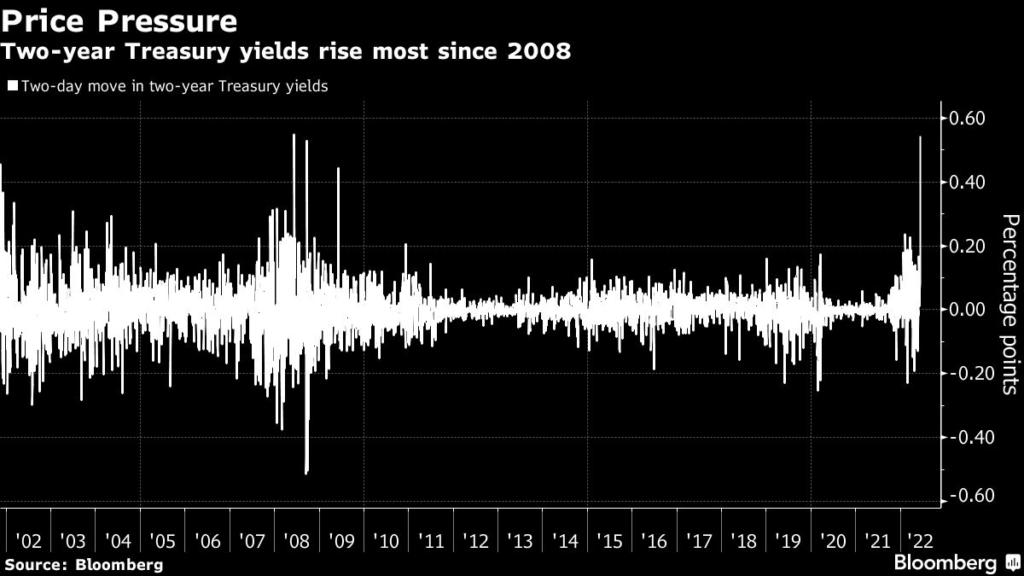
What she saw was ugly. Even by the standards of this volatile year, Monday’s wild ride throughout financial markets stands out. Two-year US Treasury yields surged 29 basis points as bond prices tanked. The yield jumped 54 basis points since Thursday night, the biggest two-day increase since 2008, a sign of just how rapidly traders are adjusting where they think the Federal Reserve will take interest rates.

All but five stocks in the S&P 500 tumbled, and the benchmark posted a more than 20% loss since its January peak, crossing into a bear market. On Tuesday morning in Asia, stocks extended the selloff as investors continued to process the possibility of more rapid Fed tightening, with MSCI’s Asia-Pacific share index falling more than 1.5%. 

Cryptocurrencies plummeted so violently that a popular lending platform froze withdrawals to prevent a very modern kind of bank run. Over in old-school currencies, the U.S. Dollar Index roared to the highest level in almost two decades as investors sought safety.

It was enough, for some, to resurface scary memories of the global financial crisis more than a decade ago. Christian Hoffmann, a portfolio manager for Thornburg Investment Management, said market liquidity has deteriorated so much that he’s thinking about the dark days of 2008.

“Liquidity in the market is worse than it was leading up to Lehman,” said Hoffmann, who worked at the firm that imploded back then, triggering the worst financial crisis since the Great Depression. It’s the kind of problem that can exacerbate losses in a big way. “That creates even more risk, because if the market doesn’t have liquidity, it can gap down very quickly.”

Since a surprisingly hot inflation report Friday, investors have become increasingly worried that the Fed will have to tighten monetary policy so aggressively that it tips the economy into a recession. Economists at JPMorgan Chase & Co., Goldman Sachs Group Inc. and Nomura Holdings Inc. Monday joined their peers at Barclays and Jefferies to call for the central bank to announce a 75-basis-point hike on Wednesday, which would be the biggest increase since 1994.

Instead of serving as a haven in times like this, the Treasury market and its huge spike in yields has become a catalyst for the marketwide plunge. It reminded Priya Misra of former President Bill Clinton’s political adviser, James Carville, who famously observed that he’d like to be reincarnated as the bond market given how intimidating it is.

“It was quite the day. Like a freight train approaching and you can’t turn anywhere for help,” said Misra, global head of rates strategy at TD Securities. “Today the bond market was present in all ferociousness!”

Subadra Rajappa, head of U.S. rates strategy at Societe Generale, said poor liquidity, some “panic selling” and margin calls contributed to Monday’s rout. But even that couldn’t fully explain the market moves, she said.

Rajappa spent all day fielding calls from clients and scuttled between internal virtual meetings while working from home in Manhattan. A few clients were scratching their heads trying to figure out why the markets have sold off so much.

“People are trying to process what’s behind these large moves,” Rajappa said. “We don’t know for sure.”

(Updates with Asia market reaction in fifth paragraph. A previous version of this story was corrected to fix the spelling of a fund manager’s surname.)

More stories like this are available on bloomberg.com

©2022 Bloomberg L.P.

Hedge Funds Spawned by Hillhouse Burned in China Tech Crash

(Bloomberg) — For years, it’s been one of the best calling cards that hedge fund startups in Asia could ask for: getting support from billionaire Zhang Lei or gaining experience at his Hillhouse Capital Group.

After leveraging that Hillhouse pedigree to raise a combined $20 billion, the offshoot funds are losing some of their luster. Most have posted double-digit declines this year on the same Chinese tech, consumer and health-care sectors that Hillhouse itself backed to mint so many millionaires.

None of the nine Hillhouse next-generation funds Bloomberg tracked has been spared. Franchise Capital Management lost two-thirds of its value in the 14 months to April, according to a newsletter sent to investors. Brilliance Asset Management’s flagship fund dropped 27% in the first four months of 2022, according to people familiar with the matter, while a retail version dropped 47% from a February 2021 peak to June 2. CoreView Capital Management and Snow Lake Capital also had losses.

While most funds with sizable China exposure have suffered, the Hillhouse offshoots have been particularly hard hit. Several of them easily exceeded the 9% drop in a Eurekahedge index for the first four months of the year. That same gauge that tracks Asia stock hedge funds eked out a gain in 2021, unlike half of the Hillhouse progeny.

“Some hedge funds were early to grasp the opportunities in tech stocks — unfortunately, many held on for far too long when fortunes turned against them,” said Andrew Beer, founder of New York-based Dynamic Beta Investments, which seeks to replicate hedge fund returns. “The shocking magnitude of drawdowns among some stock-picking hedge funds calls into question whether they were ever hedged at all.”

The losses are a painful reversal for the funds, which have had success in recent years in part by focusing on some of the same industries as Hillhouse, the investment giant Zhang founded 17 years ago with $30 million from Yale University’s endowment fund. 

Thanks to winning bets on firms like JD.com Inc., Meituan, Sea Ltd., Tencent Holdings Ltd.  and Zoom Video Communications Inc., Hillhouse — named after a street on the Yale campus — became an investment behemoth with $106 billion in assets at the end of 2021. That makes it one of the biggest asset managers in Asia.

Given Zhang’s track record, a Hillhouse connection helped hedge fund entrepreneurs start their own firms, much like the Tiger Cubs in the US, whose founders cut their teeth at Julian Robertson’s Tiger Management. (The Tiger Cubs are also getting whacked this year by the tech plunge.)

Like Hillhouse, the funds know their industries inside-out, according to an investor with knowledge of most of them. When confronted with corrections in core positions, they have tended to dig in or double down rather than cut losses and flee like more active-trading rivals.

The funds often share Hillhouse’s fondness for long-term, gutsy bets, and it’s not unusual for them to select stocks like JD.com and GDS Holdings Ltd. that have counted Hillhouse as a top shareholder, according to regulatory filings since June 2021. Until recently, that’s been a winning formula, with some of the acolyte funds posting returns as high as 203% in better years.

That strategy is now being put to the test by policy shifts. Chinese stocks in industries from e-commerce to tutoring have been hammered by regulatory tightening, while the US has threatened to delist Chinese companies over access to audits. These moves, combined with a global tech rout, have contributed to a 67% drop in the Nasdaq Golden Dragon China Index since February 2021. The index has rebounded from a nine-year low in March, providing potential relief to the funds.

China Bets

The Hillhouse offsprings’ bets such as TAL Education Group, New Oriental Education & Technology Group Inc. and Chinese cosmetics company Yatsen Holding Ltd. have lost more than 90% of their value in the past 16 months, among the biggest decliners of the Golden Dragon gauge. 

“Hedge fund managers are paid a ton precisely because investors expect them to step off the tracks before the train hits,” said Beer. “Here, it looks like a whole group of funds was convinced trains were obsolete.”

Firms across the region are feeling the pinch. Net outflows for Asia hedge funds excluding Japan were about $3.6 billion in the first four months of the year, compared with net inflows of $8.1 billion for all of 2021, according to figures from Eurekahedge.

While not immune to the carnage, Hillhouse has invested in a wider array of countries and industries than its progeny, backing global firms like Salesforce Inc. and Mondelez International Inc. The fund has posted annualized returns of 28% before fees from 2015 to the end of 2021, according to a person familiar with the matter. 

Still, assets at its $62.7 billion HHLR Advisors Ltd. unit — the public investment arm — declined 9% last year, in part due to investment losses. And some of its biggest holdings have seen steep declines this year. Health-care firm BeiGene Ltd. is down 46%, while Doordash Inc. has dropped 58% to June 10. Hillhouse began investing in BeiGene before it went public, and the shares are still well above the IPO price.

Here are details on returns and snapshots of some of the bigger funds:

Franchise

Founder Simon Wang, a former Hillhouse analyst specializing in finance and real estate, has focused his $900 million hedge fund on technology, consumer and healthcare, according to an April newsletter seen by Bloomberg News. 

Franchise has been one of the top holders of Chinese education company Gaotu Techedu Inc. Even after the July clampdown by Beijing, Franchise added to its Gaotu position into the fourth quarter, before starting to cut it early in 2022, according to Bloomberg data based on regulatory filings.

More than half of Franchise’s 24 US-listed stocks as of March 31 have lost 40% or more of their value this year, according to a regulatory filing. They included e-commerce giants Sea, Shopify Inc., and Bilibili Inc., the live-streaming platform.

Wang blamed the deep losses on the “huge” correction in growth stocks, especially the fund’s key US-listed positions, poor “exposure control” and “lack of attention to business, organization and valuation,” according to the newsletter.

Still, investors who have stayed with Franchise from inception in 2015 have more than doubled their money even after the recent hemorrhage.

Brilliance

Former Hillhouse analyst Shi Lin struck out on his own in 2013 with $5 million and three analysts, eventually becoming a $6.1 billion firm with offices in Hong Kong and Beijing, according to a profile for a UBS Group AG event this year. 

Brilliance’s flagship fund plunged last July, prompting an apology from Shi for failing to quickly grasp the impact of Beijing’s education reform. While he remained bullish on New Oriental and TAL Education at that time, Brilliance no longer held those stocks by the third quarter, based on filings. 

The Brilliance China Core Long Short Fund, a retail version of its hedge fund, dropped 26% this year through June 2, according to Bloomberg data. Assets tumbled to less than $120 million from a high of $676 million.

Brilliance pivoted last year to domestic stocks, which accounted for 80% of its bullish holdings. Still, the majority of the shares held at year end by a vehicle that includes the Brilliance retail fund have declined more than 20% in 2022. China’s main equity gauge is off 15% as of June 13.

Snow Lake

Sean Ma set up Snow Lake in 2009 with backing from Zhang, and oversaw $2 billion in hedge and long-only Asia and China funds as of August. It announced in November it was shuttering its Asia fund that lost 31% in the first nine months of the year after two managers left.

A wrong bet on MGM China Holdings Ltd. was the key driver. The firm built an 8% stake early last year, hoping to push the Macau casino’s parent to sell shares to a Chinese company. Instead, the government’s proposal to increase oversight of the industry sent the stock into a tailspin. It’s down about 70% from a March 2021 high.

A strong fourth-quarter rebound helped its China hedge fund narrow the annual loss to about 25%. This year, the fund is down mid-single-digits through early June, said a person with knowledge of the matter. Zhang no longer has a stake in Snow Lake.

CoreView

Founder Vincent Gao spent more than 10 years at Hillhouse, specializing in consumer technology companies. As one of the nearly dozen Hillhouse investment partners at the time of his departure, Gao’s hedge fund was one of the most anticipated startups last year, attracting some $3 billion in gross assets. That’s no small feat considering the average hedge fund in Asia runs $142 million, according to Bloomberg data.

CoreView began trading in February 2021 amid a perfect storm for Chinese technology companies. The firm lost money last year and this year, said a person with knowledge of the matter. CoreView doubled down on Chinese online property platform KE Holdings Inc., which by March represented nearly 43% of its reported US holdings. The stock has tumbled 28% this year.

Aspex

Gravity finally caught up with Aspex Management. The Zhang-backed firm led by Hermes Li, the former head of Asia equities at Och-Ziff Capital Management, lost 15% in the first four months of 2022, people familiar said. That followed returns ranging from 31% to more than 100% in each of its first three years, as assets swelled to $8 billion. 

Its US holdings — worth $2.3 billion at the end of March — were much to blame. Aspex is a top shareholder of GDS, with a stake worth more than $300 million. GDS is down about 70% from its February 2021 high to Monday. 

Aspex has fared better than some of the other funds given its more balanced investments across Asia and in a broader set of industries.

Brilliance, Franchise and Octagon Capital representatives didn’t reply to several emails seeking comment. Hillhouse, AIHC Capital Management, Aspex, AnglePoint Asset Management, CoreView, Snow Lake and Toroa Management declined to comment. 


(Updates returns on second chart)

More stories like this are available on bloomberg.com

©2022 Bloomberg L.P.

China Hits Back at Call for UN Labor Body to Visit Xinjiang

(Bloomberg) — China dismissed the need for a United Nations mission to review its labor standards in the remote Xinjiang region, after a committee branded its policies for Uyghurs as “discriminatory.”

“We firmly oppose the unfounded accusation of the committee,” Foreign Ministry spokesman Wang Wenbin said Monday at a regular press briefing in Beijing, responding to a question about whether China would agree to such a trip. 

“The Chinese government stays committed to putting people first,” he added. “It attaches great importance to protecting the rights and interests of all workers, and protecting the equal right to employment of people of all ethnicities.”

A committee reporting to the UN’s International Labor Organization said in a June 9 statement that China used “repressive” measures against the majority Muslim Uyghur ethnic minority, creating a discriminatory environment. The report also “expressed grave” concern at authorities’ alleged efforts to pass “de-radicalization responsibilities” onto employers.

The statement called for China to accept an ILO advisory mission, with the support of the International Trade Union Confederation and the International Organization of Employers, and asked President Xi Jinping’s government to submit a report to the committee by September.

The Dispute Over Forced Labor Is Redefining the Entire US-China Relationship

China has been accused of running a state-sponsored forced labor program in Xinjiang under the guise of anti-poverty efforts, contributing to a broader genocide campaign that has seen as many as 1 million Uyghurs sent to reeducation camps. From June 21, the US will block imports from the far western region under the Uyghur Forced Labor Prevention Act unless companies can prove they weren’t made with forced labor. 

While Beijing has categorically denied forced labor allegations in Xinjiang and calls the camps vocational training centers, it has pledged to improve labor standards. In April, the nation’s top legislative body decided to sign on to the Forced Labor Convention and Abolition of Forced Labor Convention, which were respectively adopted in 1930 and 1957 by ILO members. The move was dismissed by some Xinjiang scholars such as Adrian Zenz as “window dressing.”

Bachelet Tells China Anti-Terror Actions Must Respect Rights

A spokesperson for the ILO said the committee’s conclusions didn’t say that a mission must involve a visit to Xinjiang, and earlier noted that it was a panel of independent experts rather than ILO personnel.

Last month, former Chilean president Michelle Bachelet became the first UN human rights chief to visit China since 2005. Her visit was largely panned by activists and scholars, who accused her of whitewashing China’s rights record and failing to acknowledge abuses in Xinjiang. 

(Updates with comment from ILO.)

More stories like this are available on bloomberg.com

©2022 Bloomberg L.P.

Sequoia Raises $2.85 Billion for India, Southeast Asia Funds

(Bloomberg) — Sequoia India and Sequoia Southeast Asia raised $2.85 billion across three funds to continue backing startups in the region despite a stock market rout roiling tech companies. 

For the first time, Sequoia is launching a dedicated Southeast Asian fund, totaling $850 million, while $2 billion will be allocated to the Indian venture and growth funds, according to a blog post on Tuesday. 

“This fundraise, which comes at a time when markets are starting to cool after a very long bull run, signals our deep commitment to the region,” the firms said in the post. 

Since starting in India 16 years ago, Sequoia India has broadened its geographical reach to include Southeast Asia, betting on companies like Gojek and Tokopedia, which have merged to become Indonesia’s largest publicly listed tech company known as GoTo Group. Sequoia India and Southeast Asia now have about $9 billion of assets under management. 

Sequoia India has invested in more than 400 startups across India and Southeast Asia, 36 of which are valued at more than $1 billion including Byju’s and Zomato Ltd., according to the firm. An additional 13 companies have gone public.

Not all investments have panned out. Sequoia-backed fashion startup Zilingo Pte fired Ankiti Bose as chief executive officer last month after an investigation into allegations of financial irregularities. The board has appointed an independent financial adviser to explore options for the company’s future. 

Read more: Sequoia Capital Warns Founders After ‘Crucible Moment’

More stories like this are available on bloomberg.com

©2022 Bloomberg L.P.
GogoX to Hold Rare In-Person Hong Kong IPO Press Briefing

(Bloomberg) — It’s been months since bankers and reporters in Hong Kong have gone to any in-person press conferences for an initial public offering. GogoX Holdings Ltd. is ending the lull.

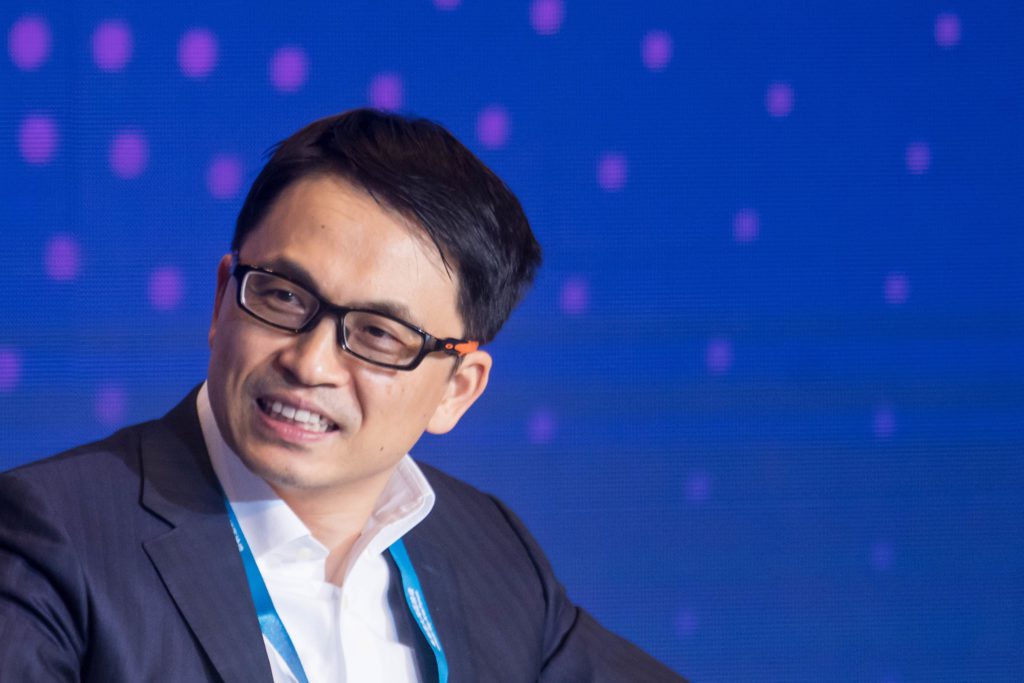
The Hong Kong-based logistics startup is inviting the press on Tuesday to its IPO briefing, taking place in an office building in Admiralty neighborhood. He Song and Steven Lam, its co-chief executive officers, will be among those attending the occasion.

The press conference signals how the financial circle in Hong Kong has revived face-to-face events after more than two years of stringent social distancing measures and travel restrictions. Online events remain the norm though as the city still maintains certain Covid policies including a capacity cap at event premises.

GogoX, though it’s only raising about $86 million, has enlisted four banks as its IPO sponsors: China International Capital Corp., UBS Group AG, Bocom International Holdings Co. and ABC International Holdings Ltd.

Any deal will test the waters in Hong Kong’s capital market where the deal flow has significantly slowed down amid market turmoil from inflation concerns and the war in Ukraine. Companies have raised about $2.3 billion through IPOs so far this year, only a fraction of the $25.9 billion raised during the same period in 2021, according to data compiled by Bloomberg.

More stories like this are available on bloomberg.com

©2022 Bloomberg L.P.
‘Bear-Market Blues’ Test Mettle of Most Devout Bitcoin Holders

(Bloomberg) — With Bitcoin caught in the throes of its worst slide in years, analysts are wading through any number of indicators to see at what point even more investors might start to throw in the towel. 

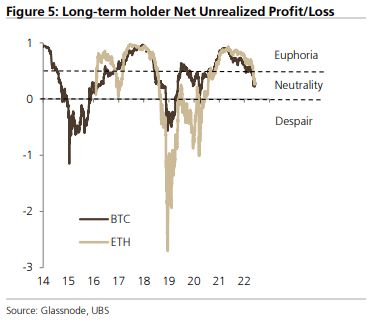
Bitcoin, down about 20% this week, fell to as low as $21,932 on Tuesday, putting it squarely below the average investor cost base of $23,500, according to UBS. That means prices have declined enough to test even long-term holders, who up until now in the 2022 drawdown were largely in the green with their investments. 

“Bear-market blues have set in among even the most ardent crypto proponents,” said James Malcolm, head of foreign exchange and crypto research at UBS. “Capitulation can come in many forms. Equally, relief too as we are now in full-blown panic mode, and the bar for a hawkish Fed this week is pretty high.”

One way this could snowball is if miners, whose businesses have been under “significant pressure” due to high energy costs and capex commitments, start capitulating to sell down their holdings of existing coins, he said. Their sales last month coincided with a lurch lower, for instance. “There is little positive news to offset such concerns,” Malcolm said.

A 17% plunge in Bitcoin at the start of the week brought it down to its lowest level since the end of 2020. Other cryptocurrencies were also in the gutter: the MVIS CryptoCompare Digital Assets 100 Index, which measures 100 of the top tokens, dropped as much as 17%, also its lowest point since December 2020. 

Meanwhile, the ProShares Bitcoin Strategy ETF (ticker BITO) and the Valkyrie Bitcoin Strategy ETF (BTF) each lost as much as 20%, the most since their inceptions at the end of 2021. Shares of MicroStrategy Inc. fell more than 25%. 

Partly, digital-asset investors have been spooked by crypto-lender Celsius Network Ltd. pausing withdrawals, swaps and transfers, though the broader market remains under pressure after an inflation print came in hotter-than-expected last week, meaning that the Federal Reserve will have to be aggressive in its attempts to cool rising prices. 

Read more: Crypto Market Sinks Below $1 Trillion After Latest DeFi Blowup

“It does feel like there is more downside to come,” Fiona Cincotta, senior financial markets analyst at City Index, said in an interview. “Down to $20,000 is something that we should be watching for.”

Market-watchers have been obsessed with figuring out who is getting hurt during this year’s drawdown. Many retail investors and institutions had gotten in just over the past year or two. Bitcoin is now hovering around December 2020 levels. 

The number of anonymous Bitcoin addresses in the money, meaning those that acquired their holdings at prices below today’s, has reached lows not seen since March 2020, which analysts at Bequant say points to “capitulation.” Elsewhere, strategists at Glassnode say the $20,560 to $23,600 span is where the market might see a “full-scale capitulation scenario.”

Steve Sosnick, chief strategist at Interactive Brokers LLC, is watching the $20,000-$21,000 range because MicroStrategy, a large Bitcoin holder, might have to offload some of its coins at that point. “We’ve taken out many of the prior support levels that we would have established since the run-up in late 2020,” he said in an interview. “When there’s this idea of a looming potential margin-call driven seller out there, yeah, the low $20,000, that’s a real line in the sand.”

Bitcoin hit a high of $19,041 in December 2017, its last cycle. Matt Maley, chief market strategist for Miller Tabak + Co., says that level will be important to watch. It forms the “old” resistance level, which makes it a new key support. “When it broke above that resistance level in 2020, it skyrocketed higher. So it needs to hold that level on this decline,” he said. 

UBS’s Malcolm points to a number of hacks and outages, as well as regulators getting more serious about the crypto space. “None of this is to argue that crypto is going to slide into oblivion,” he said. “Yet what it does point to is how the future will look very different. Players will have to embrace regulation and collaborate with existing financial service providers.”

Chiente Hsu, co-founder and CEO at ALEX, a DeFi platform, strikes a hopeful note. 

“Crypto is a high-volatility sector. So we feel the ups and downs much more,” she said. “There will be projects gone, for sure, but crypto won’t cause systemic risk.” 

More stories like this are available on bloomberg.com

©2022 Bloomberg L.P.

Elon Musk to Address Twitter Staff for First Time Since Deal

(Bloomberg) — Elon Musk will address Twitter Inc. employees at a company-wide meeting this week, the first time the Tesla Inc. chief executive officer will meet with employees since agreeing to buy the company for $44 billion in late April, according to people familiar with the matter.

The virtual meeting is set for Thursday morning, and Musk will take questions from Twitter employees, the people said.

Twitter has been in a chaotic state since the deal came together in April. Many employees are unhappy with Musk, who has been openly critical of the company, its products and its policies. CEO Parag Agrawal has also made changes to the top of Twitter‘s product organization, and announced a series of cost-cutting measures since the deal was announced.

In recent weeks, Musk has questioned whether Twitter‘s user base is as big as the company claims, specifically suggesting that Twitter has a big problem with spam bots.

At times it has also appeared as though Musk is trying to use the alleged bot issue to renegotiate his deal, but Twitter executives have told employees they plan to enforce the agreement.

Insider first reported on this week’s meeting with Musk.

More stories like this are available on bloomberg.com

©2022 Bloomberg L.P.

‘Jurassic World’ Ends Box Office Winning Streak of ‘Top Gun’

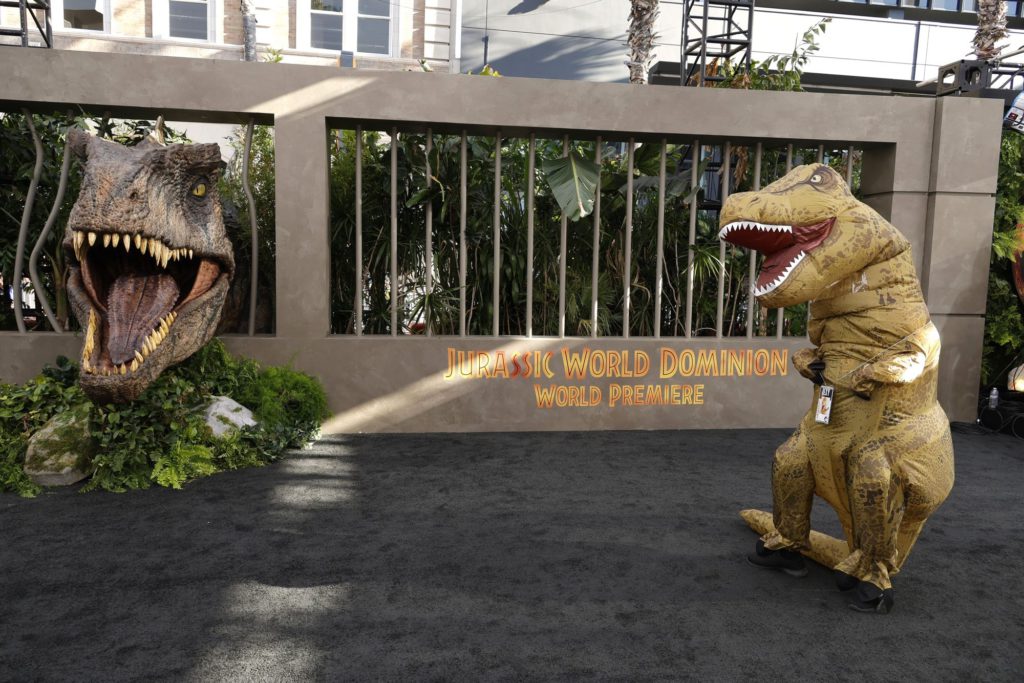
(Bloomberg) — “Jurassic World Dominion,” the sixth film in the franchise about dinosaurs that escape from an amusement park, fought off weak reviews to lead the North American box office, snatching the crown from “Top Gun: Maverick.”

  • The film from Comcast Corp.’s Universal Pictures division made $145 million in its domestic opening weekend, across 4,676 theaters, according to data from Comscore Inc. That makes it the second-largest debut of 2022, behind Walt Disney Co.’s “Doctor Strange in the Multiverse of Madness.” Boxoffice Pro was forecasting $137 million to $167 million.
  • “Jurassic World Dominion” picks up a storyline first created in the classic 1993 Steven Spielberg movie “Jurassic Park.” It’s the third movie in the franchise to star Chris Pratt, a scientist navigating the challenges of a world in which dinosaurs live among humans. Some of the actors from the original film, including Laura Dern and Jeff Goldblum, reprise their roles.

Key Insights

  • The movie had a poor critical reception, scoring recommendations from only 30% of critics on Rotten Tomatoes. Still, movies with familiar stories and spectacular visuals consistently overcome bad reviews to generate strong ticket sales. The film’s 2018 predecessor, “Jurassic World: Fallen Kingdom,” had a 47% Rotten Tomatoes rating and made $148 million in its domestic debut.
  • “Top Gun: Maverick,” from Paramount Global and Skydance Media, continued to generate strong ticket sales, taking home $51.9 million in its third weekend, Comscore said. The week-to-week drop in sales has been smaller than usual, with some older fans who hadn’t yet returned to theaters since the start of the pandemic motivated to see Tom Cruise fly fighter jets.
  • “Jurassic World” is the latest in a series of regularly scheduled big-budget releases on tap as more fans show they’re willing return to theaters. Next week it will be up against the family-friendly “Toy Story” spinoff “Lightyear.” The film from Walt Disney Co.’s Pixar division is based on the character Buzz Lightyear.

Get More

  • See the schedule for upcoming releases.
  • See Boxoffice Pro’s long-range forecast.

(Updates with final number in second paragraph.)

More stories like this are available on bloomberg.com

©2022 Bloomberg L.P.
Oracle’s Cloud Business Shows Momentum, Sending Shares Higher

(Bloomberg) — Oracle Corp. reported results and gave a forecast suggesting the effort to move its customers to the cloud is gaining momentum, and the acquisition of health care records provider Cerner Corp. will help accelerate the growth of the business.

Investors reacted positively, sending shares up more than 13% in extended trading after a day in which the overall market plunged and Oracle’s stock hit a 16-month low.

“Couple a high growth rate in our cloud infrastructure business with the newly acquired Cerner applications business — and Oracle finds itself in position to deliver stellar revenue growth over the next several quarters,” Chief Executive Officer Safra Catz said Monday in a statement. 

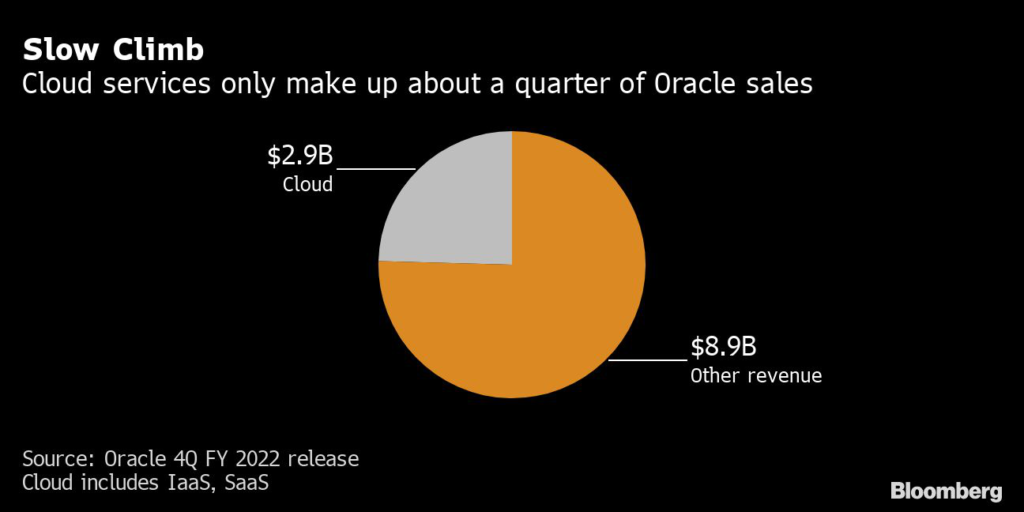
Cloud revenue — the highly watched segment that Oracle has been trying to expand — rose 19% to $2.9 billion in the fiscal fourth quarter, the Austin, Texas-based company said. Cloud sales growth had been greater than 20% since Oracle, the second-biggest software maker by revenue, began disclosing it last year.

While sales of applications for management and financial operations have fueled the company’s cloud effort thus far, Oracle “experienced a major increase in demand in our infrastructure cloud business” of 36% in the three-month period ended May 31, Catz said in the statement. 

Cloud revenue will accelerate as much as 25% in the current quarter and more than 30%, in constant currency, in the fiscal year, Catz said during a conference call after the results. That revenue may increase as much as 47% in the period ending in August including cloud sales from Cerner, she added.  

Economic headwinds like inflation and currency volatility could lead to corporate cost-cutting that may help drive cloud adoption, wrote JPMorgan’s Mark Murphy ahead of the results. The fast-growing cloud market is led by Amazon.com Inc., Microsoft Corp. and Alphabet Inc.’s Google.

“Often, customers save money” by moving to Oracle’s cloud infrastructure, Catz said during the call.

Oracle is hoping its $28.3 billion acquisition of Cerner, completed last week, will build inroads in the health care industry, which has been comparatively slow to adopt cloud technology. During the call, co-founder and Chairman Larry Ellison said health care is “clearly going to be our largest business.”

The deal will be accretive to Oracle’s earnings in fiscal year 2023, Catz said. With Cerner now part of Oracle’s business, revenue may increase as much as 19% in the current quarter, she said. Profit, excluding some items, will be $1.04 to $1.08 a share in the period.

In the fiscal fourth quarter, sales increased 5.5% to $11.8 billion, topping the average analyst estimate of $11.7 billion. The results marked Oracle’s eighth straight quarter of year-over-year revenue increases. Profit, excluding some items, was $1.54 a share, compared with the average estimate of $1.38 a share.  

With a surging US dollar, tech peers with significant overseas exposure including Salesforce Inc. and Microsoft Corp. have seen growth eaten by currency volatility. Oracle, with nearly half of its sales outside the Americas, said quarterly revenue was reduced 5% by currency fluctuations. On Monday, the US dollar hit its highest level since April 2020 as traders bet on an increasingly-rapid round of interest rate hikes from the Federal Reserve.

Oracle’s biggest positive surprise was in license spending, which reflects continuing investment from the company’s customers in uncertain times, said Anurag Rana, an analyst at Bloomberg Intelligence. “It’s a good reflection of broad-based technology spending and bodes well for the entire sector,” he said.

Cloud license and on-premise license sales gained 18% to $2.54 billion, beating the average estimate of $2.17 billion. Sales of the Fusion application for managing corporate finances rose 20% in the quarter, compared with 33% in the previous period. Sales of NetSuite enterprise planning tools, targeted to small- and mid-sized businesses, increased 27%, the same as in the previous quarter.

The shares closed at $64.05 in New York, the lowest value since February 2021, and have slipped 27% this year amid a broad rout among technology companies.

More stories like this are available on bloomberg.com

©2022 Bloomberg L.P.
Close Bitnami banner
Bitnami