Bloomberg

Rogers Family Matriarch Loretta Rogers Dies at the Age of 83

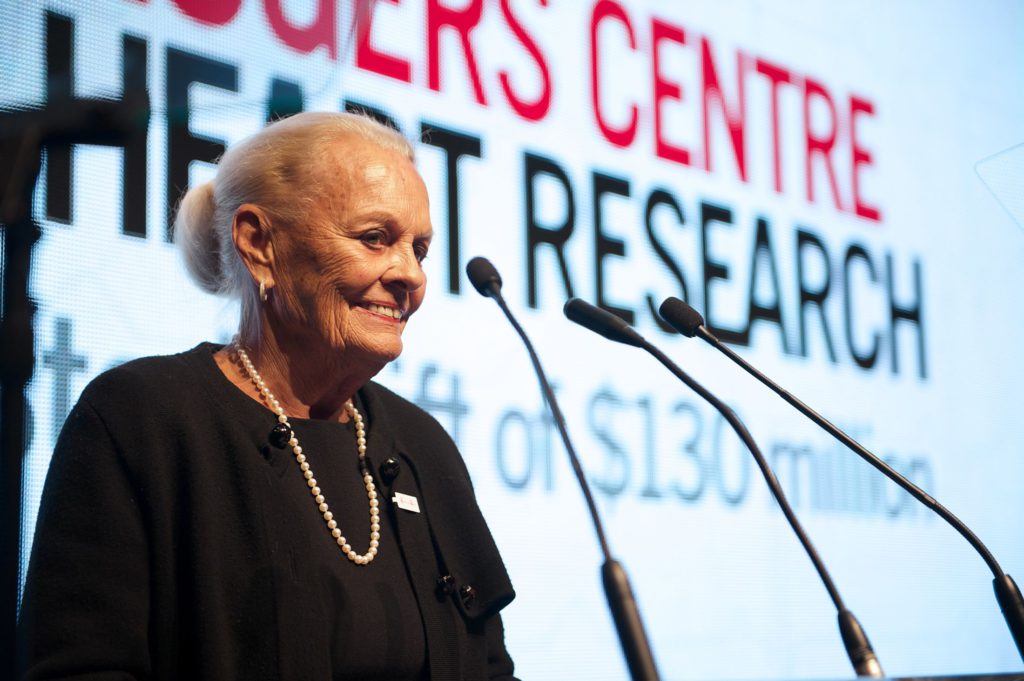
(Bloomberg) — Loretta Rogers, the Rogers family matriarch who co-founded the Canadian telecommunications company of the same name, died on Saturday at the age of 83.

“The Rogers family is profoundly saddened by our mother’s passing,” the family said in a statement. “We are grieving together for an amazing woman who held love and compassion in her heart, kindness in her soul and who possessed an incredible strength of character. We plan to honour and build upon her many invaluable contributions in business, charity and community. She lived a full and vibrant life and we, like all those who knew her, will deeply miss her friendship, leadership and guidance.”

In a post on Twitter, daughter Martha Rogers said that “A beautiful soul left us today. She was a one of a kind spirit who spread love like wildfire.”

Since 1979, Loretta Rogers served as as director of Rogers Communications Inc. She co-founded the company with her husband Ted Rogers, who died in 2008.

The firm is awaiting regulatory approval of its takeover of Shaw Communications Inc., which Canada’s competition bureau is attempting to block.

Last year, the Rogers family was divided over a dispute that saw chairperson Edward Rogers pitted against his sisters and his mother, Loretta, over an attempt to oust Chief Executive Officer Joe Natale.

Edward won a lawsuit against the company in November and then replaced five members of the board, fired Natale and installed Tony Staffieri as chief executive officer.


More stories like this are available on bloomberg.com

©2022 Bloomberg L.P.

Sun Valley Mogul Confab Could Lead to Some Awkward Encounters

(Bloomberg) — The Sun Valley Conference, the annual confab for tech, media and business moguls held every July in Idaho, is an event that’s hard for some people to turn down, even it means running into someone you’d probably rather avoid for now.

Outgoing Meta Platforms Inc. Chief Operating Officer Sheryl Sandberg is on the guest list this year after announcing earlier this month that she was stepping down. Her boss, Meta Chief Executive Officer Mark Zuckerberg, is also listed as attending.

Elon Musk, whose highly leveraged bid for Twitter Inc. has turned out to be far from straightforward, is included. So is Parag Agrawal, the CEO of Musk’s target.


Former Walt Disney Co. CEO Bob Iger, who left the company in December, and his successor, Bob Chapek, are both on the list. Ninety-one-year-old mogul Rupert Murdoch, a frequent guest in the past, is not listed as attending this year. But his sons Lachlan and James and ex-wife Wendi are.

Probably the most prominent non-attendee this year is Amazon.com Inc. Chairman Jeff Bezos, a regular who stepped down as CEO of the online retailing giant last year.

Dubbed the “summer camp for moguls,” Allen & Co.’s annual invite-only jamboree has historically been a fertile ground for media deals. And in a likely nod to the pandemic, Pfizer Inc. CEO Albert Bourla is listed as attending, although the event has always had guests from the health-care field.

Regulars this year include Berkshire Hathaway Inc. Chairman Warren Buffett, Paramount Global Chairman Shari Redstone, Microsoft Corp. founder and philanthropist Bill Gates, sports mogul Casey Wasserman and Michael Bloomberg, founder of Bloomberg LP.

More stories like this are available on bloomberg.com

©2022 Bloomberg L.P.

Can the Electric Scooter Grow Up?

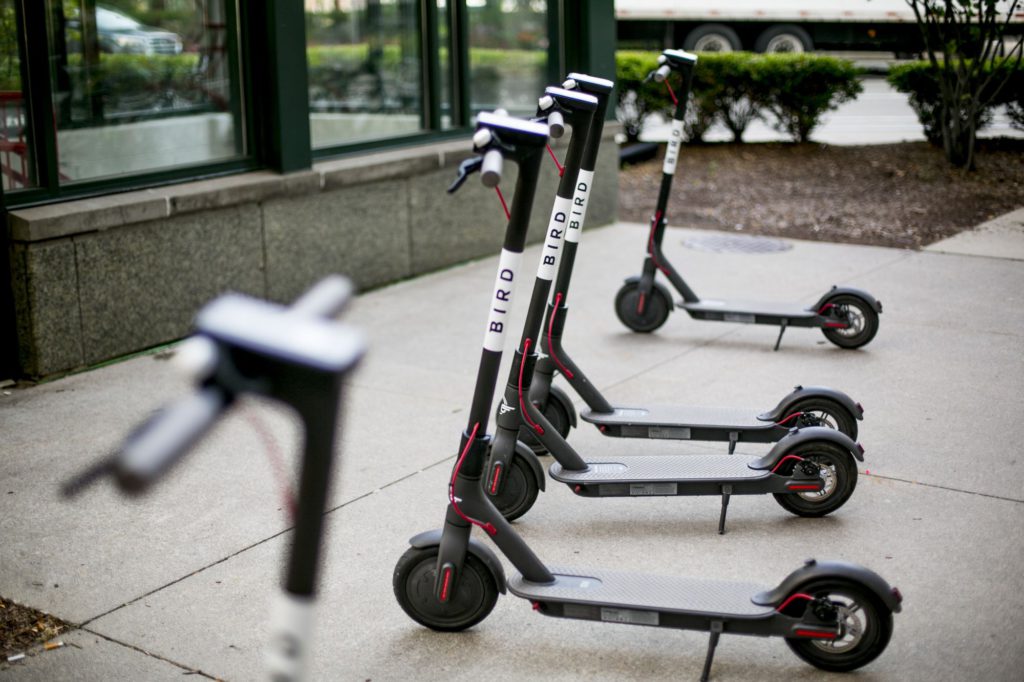
(Bloomberg) — At first, it seemed as though nothing could go wrong. Dockless shared electric scooters began showing up on the streets of the world’s cities in 2017, and the vanguard — techies, baristas, twentysomething daredevils — hopped on and rode, confident that they were tilting against two looming threats, urban congestion and climate change. The future of scootering seemed so bright that the valuation of the largest manufacturer, Bird, went from $300 million in March, 2018, to $2 billion three months later, an astronomical leap, even by Silicon Valley standards.

But Bird’s earliest scooters were so flimsy that, in one 2018 study, their average life span on the streets of Louisville, Kentucky, was just 28.8 days. (Bird disputes the study’s findings pointing to an investor presentation from 2022 claiming that the “half-life” of its earliest scooters was three to four months.) Reports of scooter battery fires and brake failures across scooter brands began hitting the news. In August 2018, Bird’s CEO, Travis VanderZanden, made a highly unusual move, selling off tens of millions of dollars worth of his company’s stock.

Today, the scooter industry encompasses over 200 brands, but it is still shadowed by a bad reputation. Scooter-related injuries are so frequent among riders that several law firms offer websites targeting prospective e-scooter plaintiffs. Scooter operators are frequently banned from cities — in January, for instance, Miami kicked out five of the seven companies operating in the city; Manhattan has banned shared scooters. Paris deputy mayor David Belliard last year joined numerous other city leaders in scooter-hate when he proposed “getting rid of them completely.”

Despite all the attention they command, e-scooters are used for only about one one-thousandth of all trips made in the world’s cities, according to McKinsey & Co. The global consulting giant has predicted that by 2030, micromobility — think bikes, mopeds, e-bikes and scooters — will triple in popularity to sustain a $500 billion industry. Can the scooter grow up and meet that economic promise?

A Boston brand is earnestly trying to make it happen, by focusing on safety. Superpedestrian has put nine years of research into making what’s been called “the Volvo of scooters.” It recently raised $125 million in funding to enhance its technology. And by year’s end, in several U.S. and European cities, including San Diego, Rome and Madrid, thousands of Superpedestrian scooters will come equipped with a Pedestrian Defense AI system. This software can instantly stop the vehicle’s engine if the rider hops up onto a curb, starts slaloming wildly or travels up a one-way street. Additional gadgetry will alert headquarters if a rider parks more than 10 centimeters outside a designated area and will self-check 140 components to ascertain if, say, the battery is at risk of igniting or if the throttle is stuck. No other scooter integrates such a suite of safety features, according to Augustin Friedel, an independent industry analyst and mobility expert based in Germany.

Superpedestrian scooters are weird. Weighing in at 60 pounds apiece, they’re inordinately bulky, with a thick stem and solid metal frame. Built with a long wheelbase and a low center of gravity, they’re engineered to roll smoothly, without the shimmying and shaking that plagues some scooters at speed. (A typical, first-generation scooter weighed between 30 and 50 pounds.) And while nearly all scooter companies buy their vehicles from a third-party manufacturer such as Segway or Okai, a Japanese company, Superpedestrian designs its hardware in-house, aiming to become a key player in the shared scooter space. (The company has no plans to sell its scooters directly to consumers.)

Part of Superpedestrian’s Cambridge, Massachusetts, office functions as a sort of torture chamber where engineers load up to 1,000 pounds atop test scooters, subjecting them to a million simulated potholes. There is also a dunk tank, and on a recent afternoon, Superpedestrian’s director of product management, Ilya Sinelnikov, found himself musing over how well a Superpedestrian scooter would survive if hooligans tossed it into salt water. “It happens sometimes,” he said. “In Turkey, they needed to use scuba divers to get scooters out of the Bosphorus.”

Superpedestrian was born in 2013, at the Massachusetts Institute of Technology, where the company’s founder and CEO, Assaf Biderman, an Israeli immigrant, is the associate director of the Senseable City Lab. Biderman has spent nearly 20 years obsessing on a mounting global problem: With more people moving to the world’s cities, he says, “We’re going to see a 3x increase” in demand for personal mobility by 2050. Our streets, Biderman contends, are facing unprecedented demand.

The answer, Biderman believes, lies in small, nimble, low-cost electric vehicles. In 2013, he introduced a $1,500 motorized wheel that a cyclist could attach to the back of a bike, to fortify pedaling with electric power as sensors on the wheel collected data on air pollution, congestion and road conditions. The Copenhagen Wheel, as it was known, is no longer being produced. In 2017,  Biederman looked at the early shared scooters and saw opportunity. “The demand was incredible,“ he says, “but the execution was Wild West. And the problems that scooters were having — fires and brake failures — were exactly what our technology was made to address. We’re an engineering company, a robotics and automation specialist, that learned how to become a scooter operator, not the other way around.”

Today, Superpedestrian regularly hosts classes on scooter safety. It’s helped fund a protected bikeway in Los Angeles, and it’s brought on a seasoned policy director, Paul Steely White, to help scooters make peace with the urban ecosystem. White, once the director of the New York City-based advocacy group Transportation Alternatives, laments that “some early companies used cities’ streets as a Petri dish.” He says, “Since micromobility is new, norms haven’t been established yet.” White is trying to bring what he calls “an urban planning culture” to scootering. “Public space is sacred,” White argues, “and we can’t grow unless cities let us grow.”

Scootering’s user base has always skewed white and affluent, and Superpedestrian is trying to change that too. In Hartford, Connecticut, it’s enrolled over 400 riders into an equity program, providing discounted fares to residents facing financial hardship. Challenges remain, of course. Kate Lowe, a mobility justice advocate and urban planning professor at the University of Illinois Chicago cites “racist policing and inadequate protected infrastructure in communities of color” as two looming obstacles to equity in scootering.

Meanwhile, scootering is getting a boost from the coronavirus. Transit use is still below pre-pandemic levels in most cities worldwide, and scooter users are traveling longer distances. Bird has reported that in 2021, its average trip length leapt 58%. In Los Angeles, the average ride was 1.4 miles.

It’s unclear how much Superpedestrian can profit from its safety push, though. Its innovations may just go nearly unnoticed amid an industry-wide scramble to wow consumers with cutting-edge safety features. Bird now has its own suite of precision-parking and component-checking hardware, and at least four scooter companies — Tier, Wheels, Wind and Dott — sport folding helmets integrated into their steering columns. (Bird earlier this week announced it will be laying off 23% of its staff.)

There’s a bigger problem for Superpedestrian, though: There is no data that proves scooter safety features mitigate accidents, and it’s clear that they don’t address scootering’s biggest menace — cars, which have been involved in 24 of the 30 scooter fatalities known to have happened in the US (as of 2021). David Zipper is, consequently, skeptical of the new craze for safety apparati. Their main benefit, argues Zipper, a visiting fellow at Harvard Kennedy School of Government and a contributor to Bloomberg CityLab, is “their appeal to city transportation officials who want to minimize complaints about, say, scooters being left on the sidewalk. It’s not a life-or-death matter. The real threat is that you’ll be hit by somebody in a four-ton SUV going 45 miles an hour.”

Superpedestrian’s White acknowledges the threat of cars but defends his company’s safety features. “If we are not doing our job to protect riders and pedestrians, how can we expect the city to do theirs?” he asks. “If people think scooters are inherently dangerous, then there will be insufficient political will, and ridership, to win protected bike lanes and other necessary safety infrastructure.”

In the interest of quelling the melee on the streets, cities have made scooter tenders competitive. In both San Diego and Chicago this year, Superpedestrian got the municipal green light to distribute scooters but the program is currently stalled because scooter companies that didn’t get a license  — Bird in San Diego; Bird and Helbiz in Chicago — have appealed. In a statement prepared for this reporter, Bird argued that the RFP processes in both cities were “botched. Officials have refused to provide any documentation that explains or justifies their decisions,” the statement said. The appeals are pending in both San Diego and Chicago. Superpedestrian eventually will put its scooters out on the street, but it’s unclear when. 


Horace Dediu, an industry analyst widely known as “the father of micromobilty,” doesn’t like the fraught quality of today’s tenders and their focus on safety features. “With scooters, there has to be geofencing,” he snipes. “No such regulations are applied to carmakers. They’re allowed to build vehicles that go 200 miles an hour.”

He’s right, but scooters are up against a large problem: Cars have ruled the world’s roads for the last century, and for now scooter use is confined to a demographic willing to tango with fast-moving vehicles. While older riders have been catching on of late, McKinsey’s statistics show that, among adults over 29, scooter use declines sharply and steadily by age group. And a racial disparity in ridership still prevails. In Chicago, where Superpedestrian has done outreach in the Black community, a recent study found that 59% of the riders there were white, in a city that is 67% Black and brown.

There are hints, though, that urban infrastructure may be poised to undergo a phase shift and become more friendly to slow-moving micros. During the pandemic, Zipper points out, numerous cities have hosted “ open street” events, excluding cars from the pavement. London has created 72 “ low-traffic neighborhoods” utilizing planters and concrete posts to filter out automobiles. “All of this has been wildly popular,” Zipper says. “Car owners may want to revert to the auto centric status quo, post-pandemic, but at least in big cities I don’t see them succeeding.”

Another new twist is congestion pricing. By the end of next year, New York City’s MTA may begin charging vehicles a steep fee, probably between $9 and $23, to drive south of 60th Street in Manhattan. San Francisco and Los Angeles also are considering similar measures, and the tactic has already thinned traffic — and made the streets safer — in cities like Singapore and Stockholm.

Dediu believes that in time micromobility will attain critical mass, as other modes of transit have already done, and that infrastructure will come as the user base grows. “We didn’t build airports and then have airplanes show up,” he’s said. “I’m confident, given the history, that we’ll see things like more safe roadways for micromobility vehicles.”

At Superpedestrian, Assaf Biderman is trying to hasten the scooter’s arrival and also harboring a geek’s faith that now is the scooter’s technological moment. “The robotics and the AI,” he says, “have finally become robust and affordable enough.” He’s heartened by the latest ridership numbers — amid rising gas prices in March, use of Superpedestrian scooters shot up 41 % in Seattle.

Still, Superpedestrian is just one brand in a crowded industry. And there’s no guarantee that scooters will transcend their current niche. For even another small e-vehicle could come along and soon eclipse them. It could be the quadricycle, or the e-skateboard or the e-cargo bike.

And so for now Superpedestrian is, like smart startups everywhere, working, strategizing. And waiting and hoping.

(Corrects Kate Lowe’s affiliation in 11th paragraph.)

More stories like this are available on bloomberg.com

©2022 Bloomberg L.P.

Can Electric Scooters Become a Safer Way to Travel?

(Bloomberg) — At first, it seemed as though nothing could go wrong. Dockless shared electric scooters began showing up on the streets of the world’s cities in 2017, and the vanguard — techies, baristas, twentysomething daredevils — hopped on and rode, confident that they were tilting against two looming threats, urban congestion and climate change. The future of scootering seemed so bright that the valuation of the largest manufacturer, Bird, went from $300 million in March, 2018, to $2 billion three months later, an astronomical leap, even by Silicon Valley standards.

But Bird’s earliest scooters were so flimsy that, in one 2018 study, their average life span on the streets of Louisville, Kentucky, was just 28.8 days. (Bird disputes the study’s findings pointing to an investor presentation from 2022 claiming that the “half-life” of its earliest scooters was three to four months.) Reports of scooter battery fires and brake failures across scooter brands began hitting the news. In August 2018, Bird’s CEO, Travis VanderZanden, made a highly unusual move, selling off tens of millions of dollars worth of his company’s stock.

Today, the scooter industry encompasses over 200 brands, but it is still shadowed by a bad reputation. Scooter-related injuries are so frequent among riders that several law firms offer websites targeting prospective e-scooter plaintiffs. Scooter operators are frequently banned from cities — in January, for instance, Miami kicked out five of the seven companies operating in the city; Manhattan has banned shared scooters. Paris deputy mayor David Belliard last year joined numerous other city leaders in scooter-hate when he proposed “getting rid of them completely.”

Despite all the attention they command, e-scooters are used for only about one one-thousandth of all trips made in the world’s cities, according to McKinsey & Co. The global consulting giant has predicted that by 2030, micromobility — think bikes, mopeds, e-bikes and scooters — will triple in popularity to sustain a $500 billion industry. Can the scooter grow up and meet that economic promise?

A Boston brand is earnestly trying to make it happen, by focusing on safety. Superpedestrian has put nine years of research into making what’s been called “the Volvo of scooters.” It recently raised $125 million in funding to enhance its technology. And by year’s end, in several U.S. and European cities, including San Diego, Rome and Madrid, thousands of Superpedestrian scooters will come equipped with a Pedestrian Defense AI system. This software can instantly stop the vehicle’s engine if the rider hops up onto a curb, starts slaloming wildly or travels up a one-way street. Additional gadgetry will alert headquarters if a rider parks more than 10 centimeters outside a designated area and will self-check 140 components to ascertain if, say, the battery is at risk of igniting or if the throttle is stuck. No other scooter integrates such a suite of safety features, according to Augustin Friedel, an independent industry analyst and mobility expert based in Germany.

Superpedestrian scooters are weird. Weighing in at 60 pounds apiece, they’re inordinately bulky, with a thick stem and solid metal frame. Built with a long wheelbase and a low center of gravity, they’re engineered to roll smoothly, without the shimmying and shaking that plagues some scooters at speed. (A typical, first-generation scooter weighed between 30 and 50 pounds.) And while nearly all scooter companies buy their vehicles from a third-party manufacturer such as Segway or Okai, a Japanese company, Superpedestrian designs its hardware in-house, aiming to become a key player in the shared scooter space. (The company has no plans to sell its scooters directly to consumers.)

Part of Superpedestrian’s Cambridge, Massachusetts, office functions as a sort of torture chamber where engineers load up to 1,000 pounds atop test scooters, subjecting them to a million simulated potholes. There is also a dunk tank, and on a recent afternoon, Superpedestrian’s director of product management, Ilya Sinelnikov, found himself musing over how well a Superpedestrian scooter would survive if hooligans tossed it into salt water. “It happens sometimes,” he said. “In Turkey, they needed to use scuba divers to get scooters out of the Bosphorus.”

Superpedestrian was born in 2013, at the Massachusetts Institute of Technology, where the company’s founder and CEO, Assaf Biderman, an Israeli immigrant, is the associate director of the Senseable City Lab. Biderman has spent nearly 20 years obsessing on a mounting global problem: With more people moving to the world’s cities, he says, “We’re going to see a 3x increase” in demand for personal mobility by 2050. Our streets, Biderman contends, are facing unprecedented demand.

The answer, Biderman believes, lies in small, nimble, low-cost electric vehicles. In 2013, he introduced a $1,500 motorized wheel that a cyclist could attach to the back of a bike, to fortify pedaling with electric power as sensors on the wheel collected data on air pollution, congestion and road conditions. The Copenhagen Wheel, as it was known, is no longer being produced. In 2017,  Biederman looked at the early shared scooters and saw opportunity. “The demand was incredible,“ he says, “but the execution was Wild West. And the problems that scooters were having — fires and brake failures — were exactly what our technology was made to address. We’re an engineering company, a robotics and automation specialist, that learned how to become a scooter operator, not the other way around.”

Today, Superpedestrian regularly hosts classes on scooter safety. It’s helped fund a protected bikeway in Los Angeles, and it’s brought on a seasoned policy director, Paul Steely White, to help scooters make peace with the urban ecosystem. White, once the director of the New York City-based advocacy group Transportation Alternatives, laments that “some early companies used cities’ streets as a Petri dish.” He says, “Since micromobility is new, norms haven’t been established yet.” White is trying to bring what he calls “an urban planning culture” to scootering. “Public space is sacred,” White argues, “and we can’t grow unless cities let us grow.”

Scootering’s user base has always skewed white and affluent, and Superpedestrian is trying to change that too. In Hartford, Connecticut, it’s enrolled over 400 riders into an equity program, providing discounted fares to residents facing financial hardship. Challenges remain, of course. Kate Lowe, a mobility justice advocate and urban planning professor at the University of Illinois Chicago cites “racist policing and inadequate protected infrastructure in communities of color” as two looming obstacles to equity in scootering.

Meanwhile, scootering is getting a boost from the coronavirus. Transit use is still below pre-pandemic levels in most cities worldwide, and scooter users are traveling longer distances. Bird has reported that in 2021, its average trip length leapt 58%. In Los Angeles, the average ride was 1.4 miles.

It’s unclear how much Superpedestrian can profit from its safety push, though. Its innovations may just go nearly unnoticed amid an industry-wide scramble to wow consumers with cutting-edge safety features. Bird now has its own suite of precision-parking and component-checking hardware, and at least four scooter companies — Tier, Wheels, Wind and Dott — sport folding helmets integrated into their steering columns. (Bird earlier this week announced it will be laying off 23% of its staff.)

There’s a bigger problem for Superpedestrian, though: There is no data that proves scooter safety features mitigate accidents, and it’s clear that they don’t address scootering’s biggest menace — cars, which have been involved in 24 of the 30 scooter fatalities known to have happened in the US (as of 2021). David Zipper is, consequently, skeptical of the new craze for safety apparati. Their main benefit, argues Zipper, a visiting fellow at Harvard Kennedy School of Government and a contributor to Bloomberg CityLab, is “their appeal to city transportation officials who want to minimize complaints about, say, scooters being left on the sidewalk. It’s not a life-or-death matter. The real threat is that you’ll be hit by somebody in a four-ton SUV going 45 miles an hour.”

Superpedestrian’s White acknowledges the threat of cars but defends his company’s safety features. “If we are not doing our job to protect riders and pedestrians, how can we expect the city to do theirs?” he asks. “If people think scooters are inherently dangerous, then there will be insufficient political will, and ridership, to win protected bike lanes and other necessary safety infrastructure.”

In the interest of quelling the melee on the streets, cities have made scooter tenders competitive. In both San Diego and Chicago this year, Superpedestrian got the municipal green light to distribute scooters but the program is currently stalled because scooter companies that didn’t get a license  — Bird in San Diego; Bird and Helbiz in Chicago — have appealed. In a statement prepared for this reporter, Bird argued that the RFP processes in both cities were “botched. Officials have refused to provide any documentation that explains or justifies their decisions,” the statement said. The appeals are pending in both San Diego and Chicago. Superpedestrian eventually will put its scooters out on the street, but it’s unclear when. 


Horace Dediu, an industry analyst widely known as “the father of micromobilty,” doesn’t like the fraught quality of today’s tenders and their focus on safety features. “With scooters, there has to be geofencing,” he snipes. “No such regulations are applied to carmakers. They’re allowed to build vehicles that go 200 miles an hour.”

He’s right, but scooters are up against a large problem: Cars have ruled the world’s roads for the last century, and for now scooter use is confined to a demographic willing to tango with fast-moving vehicles. While older riders have been catching on of late, McKinsey’s statistics show that, among adults over 29, scooter use declines sharply and steadily by age group. And a racial disparity in ridership still prevails. In Chicago, where Superpedestrian has done outreach in the Black community, a recent study found that 59% of the riders there were white, in a city that is 67% Black and brown.

There are hints, though, that urban infrastructure may be poised to undergo a phase shift and become more friendly to slow-moving micros. During the pandemic, Zipper points out, numerous cities have hosted “ open street” events, excluding cars from the pavement. London has created 72 “ low-traffic neighborhoods” utilizing planters and concrete posts to filter out automobiles. “All of this has been wildly popular,” Zipper says. “Car owners may want to revert to the auto centric status quo, post-pandemic, but at least in big cities I don’t see them succeeding.”

Another new twist is congestion pricing. By the end of next year, New York City’s MTA may begin charging vehicles a steep fee, probably between $9 and $23, to drive south of 60th Street in Manhattan. San Francisco and Los Angeles also are considering similar measures, and the tactic has already thinned traffic — and made the streets safer — in cities like Singapore and Stockholm.

Dediu believes that in time micromobility will attain critical mass, as other modes of transit have already done, and that infrastructure will come as the user base grows. “We didn’t build airports and then have airplanes show up,” he’s said. “I’m confident, given the history, that we’ll see things like more safe roadways for micromobility vehicles.”

At Superpedestrian, Assaf Biderman is trying to hasten the scooter’s arrival and also harboring a geek’s faith that now is the scooter’s technological moment. “The robotics and the AI,” he says, “have finally become robust and affordable enough.” He’s heartened by the latest ridership numbers — amid rising gas prices in March, use of Superpedestrian scooters shot up 41 % in Seattle.

Still, Superpedestrian is just one brand in a crowded industry. And there’s no guarantee that scooters will transcend their current niche. For even another small e-vehicle could come along and soon eclipse them. It could be the quadricycle, or the e-skateboard or the e-cargo bike.

And so for now Superpedestrian is, like smart startups everywhere, working, strategizing. And waiting and hoping.

(Corrects Kate Lowe’s affiliation in 11th paragraph.)

More stories like this are available on bloomberg.com

©2022 Bloomberg L.P.
Ukraine Latest: Von der Leyen Visits Kyiv, Touts Nation’s EU Bid

(Bloomberg) —

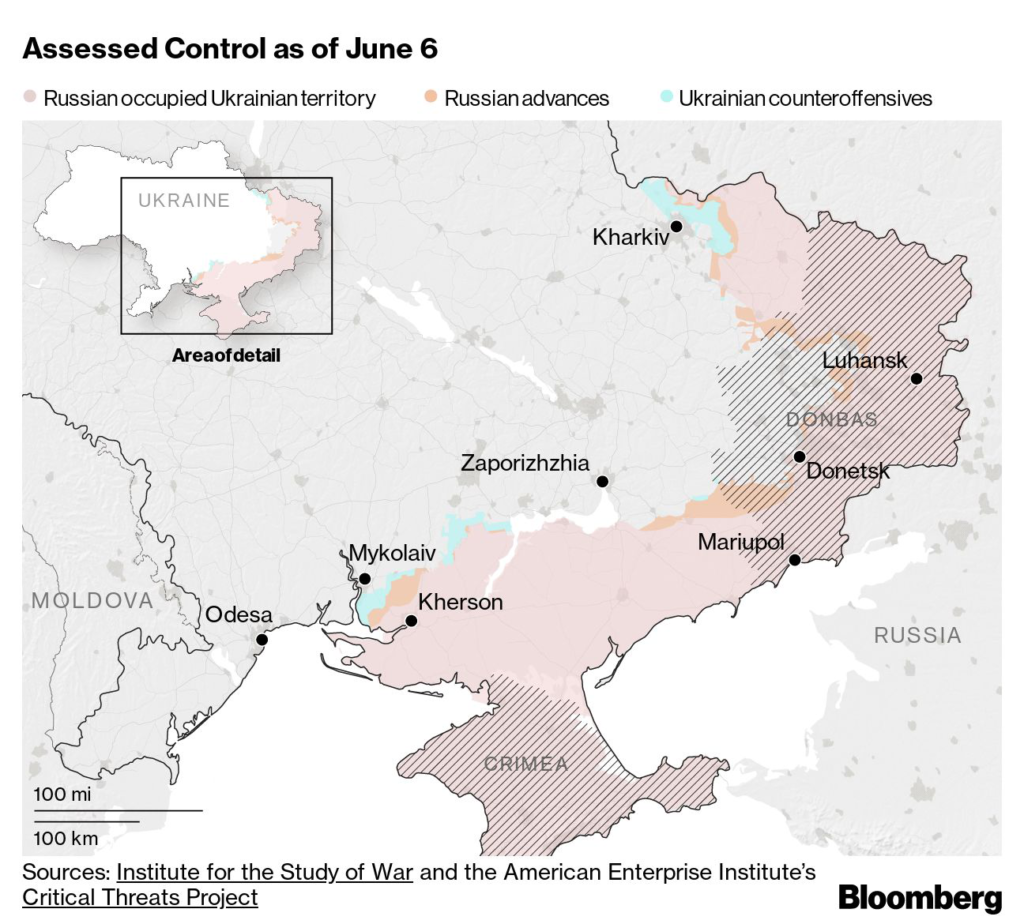
European Commission President Ursula von der Leyen made an unannounced visit to Kyiv, where she held talks with President Volodymyr Zelenskiy and said Ukraine is making progress on its bid for candidacy status to join the European Union.

“We have been working day and night on this assessment,” she said, referring to preparations for June 17 when the commission is expected to recommend Ukraine for candidate status — the start of a membership process that could take as long as a decade. 

Ukraine said its partners didn’t heed its plea for preemptive sanctions that could’ve persuaded Russia to withdraw its troops from the border before Feb. 24. Zelenskiy’s office was responding to President Joe Biden, who said the Ukrainian leader brushed off his warnings about an imminent invasion. The average US gasoline price climbed to more than $5 per gallon, a runup exacerbated by western sanctions on Russian energy.    

(See RSAN on the Bloomberg Terminal for the Russian Sanctions Dashboard.)

Key Developments

  • Von der Leyen Visits Kyiv Ahead of Key Week for Ukraine’s EU bid
  • Biden Says Zelenskiy Brushed Off Warnings of Russia’s Invasion
  • Iran Has Lessons on Grim Survival for Russia Under Sanctions
  • Ukraine Seeks New IMF Deal to Shore Up Its War-Ravaged Finances
  • US Gasoline Tops $5 a Gallon on Average in New Inflation Marker

(All times CET)

Ukraine Sees Reconstruction Plan by Early July (7:20 p.m.)

Ukraine is planning to finalize drafting its reconstruction plan in early July in time for a donors’ conference scheduled for July 4-5 in Lugano, Switzerland, members of the parliament said.

The plan aims to strengthen Ukraine’s economic resilience and modernize the country, Danilo Getmantsev, a governing-party lawmaker, told reporters in Kyiv. “We want to present something aligned with our partners” who will help finance reconstruction, opposition lawmakers Yaroslav Zheleznyak said.

The European Union has said it expects to finance the bulk of Ukraine’s reconstruction costs. 

US Average Gasoline Price Breaches $5 a Gallon (7:10 p.m.)

Gasoline topped an average of $5 per gallon in the US, signaling the latest pain point for American consumers and President Joe Biden’s efforts to curb inflation. 

A global shortage has been exacerbated by European and US efforts to sidestep oil from Russia to punish President Vladimir Putin for the invasion of Ukraine. Record prices at the pump are fueling the highest US inflation rate in 40 years. Pump prices rose to $5.004 a gallon early Saturday, according to auto club AAA. 

German Missile System for Ukraine Next Week (3:40 p.m.)

Ukraine expects to get the advanced German air defense system IRIS-T in August, the country’s ambassador to Germany, Andrij Melnyk, told NV.ua. The system can defend a territory the size of Kyiv from air attacks. Ukraine expects to put such systems near the major cities within next three to four years, said Melnyk, who has been a regular critic of German government for being hesitant to supply military aid to Ukraine.

Von der Leyen Visits Kyiv in Boost for Ukraine’s EU Bid (2:03 p.m.)

The head of the EU’s executive arm made her second visit to Kyiv since the start of the war and met Zelenskiy. She said officials were working day and night on Ukraine’s bid to join the European Union.

The European Commission is expected to recommend on June 17 that Ukraine be granted candidate status to join the bloc, starting a process that could last more than a decade in which the country must adopt EU rules and standards.

“We will take stock of the joint work needed for reconstruction and of progress made by Ukraine as it pursues its European path,” von der Leyen had said before the visit. “This will feed into our assessment, which we will present soon.”

Ukraine Steps Up Diplomatic Outreach (12:32 p.m.)

Ukraine’s foreign minister Dmytro Kuleba tweeted he spoke with Polish counterpart Zbigniew Rau to discuss the next deliveries of heavy weapons and a seventh EU sanctions package on Russia. Defense Minister Oleksii Reznikov met Britain’s Defence Secretary Ben Wallace and had a “productive and frank discussion.” Meanwhile Ukrainian lawmaker Fedir Venislavskyi said the country was taking all necessary measures to save the two Britons and a Moroccan captured by Russia and sentenced to death, Reuters reported.

Ukraine Open to Prisoner Swap for Britons, Telegraph Says (9:19 a.m.)

Ukraine is open to a prisoner swap to secure the release of two British sentenced to death by Russia, the Telegraph reported, citing Vadym Prystaiko, Ukraine’s ambassador to the UK. The two men, who have lived in Ukraine for several years, were serving members of the Ukrainian military. The UK is keen to avoid treating their capture as a bilateral issue, the Telegraph said.

US, Ukraine Spar Over Invasion Warning (9:17 a.m.)

Biden said Zelenskiy tuned out warnings that Russia would invade Ukraine in the lead-up to the February attack.

“I know a lot of people thought I was maybe exaggerating, but I knew, and we had data to sustain, he was going in off the border. There was no doubt. And Zelenskiy didn’t want to hear it, nor did a lot of people,” Biden said Friday. The president acknowledged that the possibility of Russian President Vladimir Putin launching a full-scale invasion may have seemed far-fetched at that time.

Zelenskiy’s spokesman, Serhiy Nikiforov, said the Ukrainian president had had multiple calls with Biden before the invasion where the two leaders shared their assessments of the situation. Besides, Zelenskiy had called upon the country’s partners to prepare preemptive sanctions to push Russia to de-escalate, but “our partners didn’t want to hear us.”

More Children Die in Mariupol (9:09 a.m.)

Ukraine’s prosecutor general has learned of the death of 24 more children in Mariupol, Guardian report. That means at least 287 children have died so far in the war, while 492 have been injured, the paper said, citing a statement from the prosecutor general’s office.

“These figures are not final, as work is under way to establish them in places of active hostilities, in the temporarily occupied and liberated territories,” according to the statement.

BASF CEO Bats for Tech Sanctions (9:00 a.m.)

The chief executive officer of BASF SE, which would have to shut down its main site in Ludwigshafen if Russian gas supply is cut off, said he favors sanctions on the technology industry instead. Curbs on aircraft replacement parts, semiconductors or software updates would have a much bigger impact on Russia than a possible gas embargo, Martin Brudermueller said in an interview with Sueddeutsche Zeitung.

Japan Says China-Russia Ties May Deepen Further (4:20 a.m.)

Japanese Defense Minister Nobuo Kishi said ties between Moscow and Beijing may deepen further as Russia is under intense international sanctions. The joint military activities carried out by the two countries are also a cause for concern, he said at the IISS Shangri-La Dialogue in Singapore. 

More stories like this are available on bloomberg.com

©2022 Bloomberg L.P.

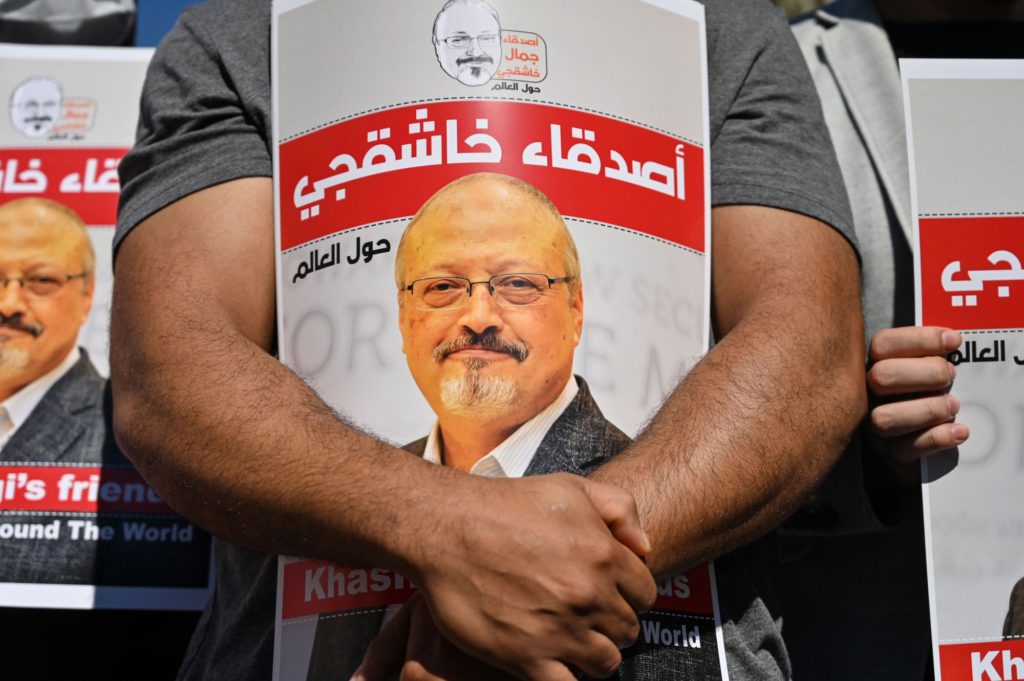
Accused Saudi Spy Says Khashoggi Killing Irrelevant to His Trial

(Bloomberg) — A former Twitter Inc. employee accused of helping Saudi Arabia crack down on dissidents says there should be no mention at his US trial of the government’s involvement in the slaying of Washington Post columnist Jamal Khashoggi.

Ahmad Abouammo, who is charged with acting as an illegal foreign agent in the US, is asking a federal judge to declare certain evidence off limits when he goes to trial in July in San Francisco. Prosecutors claim that while working as a Middle East media liaison for Twitter in 2014, Abouammo was recruited and paid by the Saudi royal family to look up confidential account details on users of the platform who had posted criticism of the regime.

Lawyers for Abouammo argued in a court filing late Friday that the narrow charges against him provide no justification for prosecutors to link him more broadly to actions allegedly taken by the Kingdom of Saudi Arabia against government critics.

“KSA is not on trial for its human rights abuses, and Mr. Abouammo is not charged with assisting KSA’s human rights crimes, but with violating Twitter policies and failing to register with the Attorney General during a specific time period,” the attorneys wrote. “Any evidence of such abuses, however, would suggest that Mr. Abouammo is responsible for KSA’s crimes.”

Read More: Two Ex-Twitter Employees Charged With Spying on Users for Saudis

A U.S. intelligence report released last year concluded that the Saudi crown prince likely approved an operation to capture or kill Khashoggi, who was dismembered by Saudi agents in Turkey in 2018. It also stated that Prince Mohammed bin Salman supported “using violent measures to silence dissidents abroad.” Prince Mohammed has denied involvement in the Khashoggi killing, while saying he accepts symbolic responsibility as the country’s de facto ruler.

Human rights groups have alleged that Twitter data about thousands of account holders mined by Abouammo and another former employee of the company were used by Saudi Arabia to harass or arrest people critical of the government. The other ex-employee left the US quickly after Twitter fired him in 2015. He and a third man charged along with Abouammo remain at large.

Abouammo’s lawyers said it appears that prosecutors want to introduce at trial a New York Times article about the Twitter breach and 2018 text messages between Abouammo and a former colleague at the company in which he said he knew Khashoggi and was sad about his death. The lawyers said the article is “hearsay” and should not be presented to the jury as “truth” about the alleged conspiracy involving Abouammo.

The defense lawyers also objected to the prosecution’s plan to call as a witness the sister of a Saudi man who ran an anonymous Twitter account and who has said her brother’s disappearance in 2018 resulted from the activities of the alleged Twitter spies. 

Abdulrahman al-Sadhan was a regular commentator on human rights and social justice issues in Saudi Arabia. He voiced his opinions on an anonymous Twitter account that had garnered thousands of followers, his sister, Areej al-Sadhan, told Bloomberg News in 2020.

The US public defenders representing Abouammo argued in Friday’s filing that the Twitter users who will be referenced at the trial should not be identified as “victims” or “dissidents” because that might prejudice jurors against him.

Prosecutors asked US District Judge Edward Chen in a separate filing to order that personal identifying information about the Twitter users remain confidential at the trial, in part to protect them from potential persecution by the royal family. They said defense lawyers refused to agree to that condition.

The case is USA v. Abouammo, 19-cr-00621 US District Court, Northern District of California (San Francisco). 

More stories like this are available on bloomberg.com

©2022 Bloomberg L.P.
Apple Resolves Dating Apps Dispute, Dutch Regulator Says

(Bloomberg) —

The Dutch consumer protection regulator said Apple Inc. “has changed its unfair conditions” and will now allow different methods of payment in dating apps, ending a dispute after penalizing the tech firm 50 million euros ($53 million) for rule breaking.

“With this concession, Apple will meet the requirements that the Netherlands Authority for Consumers and Markets set under European and Dutch competition rules,” the ACM said in a statement on Saturday.

In response to a request for comment from Bloomberg News, Apple said it didn’t believe some of the changes are in the best interests of its users’ privacy or data security. Because Apple is committed to constructive engagement with regulators, it’s making the additional changes at the ACM’s request, the company said in an email, while adding that, as it’s previously said, Apple disagrees with the ACM’s original order and is appealing it.

Apple usually requires developers to use its own payment system, which helps it ensure a commission for apps on its platform. That tight control over app payments has attracted lawsuits and antitrust scrutiny, often focusing on Apple’s refusal to allow developers to steer users to other payment methods. 

The ACM had insisted Apple isn’t complying with its antitrust regulations, slapping the company with a series of weekly fines. The Cupertino, California-based company had filed a proposal to fully comply with an order to offer payments outside the app store to dating app providers after being fined.

“In the digital economy, powerful companies have a special responsibility to keep the market fair and open; Apple avoided that responsibility, and abused its dominant position vis-à-vis dating-app providers,” said Martijn Snoep, chairman of the board of ACM, according to today’s statement. 

“We are glad that Apple has finally brought its conditions in line with European and Dutch competition rules,” he said. “That offers app providers more opportunities to compete. And consumers will ultimately reap the benefits, too.”

(Adds comment from Apple in third paragraph.)

More stories like this are available on bloomberg.com

©2022 Bloomberg L.P.
Social Media Buzz: March for Our Lives, Justin Bieber, Inflation

(Bloomberg) — What’s buzzing on social media this morning:

BUZZING HEADLINES

March for Our Lives, a gun safety group, plans around 450 marches across the country this weekend. Thousands are expected in Washington DC on Saturday, calling on lawmakers to take action against gun violence after the recent massacres in Texas and New York.

Justin Bieber has been diagnosed with Ramsay Hunt Syndrome, which is a rare neurological disorder that paralyzed one side of his face. He canceled several of his upcoming shows, and told the public on Friday about his diagnosis.

Inflation rose 8.6% in May from a year earlier, a new 40-year high. Average gas prices are now over $5 per gallon for the first time ever, and are topping $6 per gallon in California. All eyes now shift to next week’s Federal Reserve meeting and interest-rate announcement as the Fed tries to get prices under control. 

Cooper Noriega, a 19-year-old TikTok star, died Thursday, according to the Los Angeles County Medical Examiner-Coroner. The social media star had around 1.7 million followers, and posted a video hours before his death about dying young, according to Page Six. The cause of death is currently unknown. The case is still under investigation, the coroner’s office said on its website. 

Jennifer Lopez said in her new Netflix documentary that co-headling the 2020 Super Bowl halftime show was the “worst idea in the world.” She added that she and Shakira should’ve gotten extra time for the show, rather than combining the two performances, according to the Los Angeles Times. Lopez’s documentary, “Halftime,” debuted at the Tribeca Film Festival on Thursday. 

  • Spike in readership: Alibaba, Deliveroo, DiDi
  • Spike in Twitter volume: Sneakersnstuff, Revlon, Exxon Mobil
  • Gaining momentum on social media: Ashland Global Holdings, VMware, Pinterest


More stories like this are available on bloomberg.com

©2022 Bloomberg L.P.
Biggest Ether Staking Service Has a Centralization Problem

(Bloomberg) — A cryptocurrency project touted as helping to democratize the Ethereum blockchain is coming under criticism for potentially taking too much control of the network as it undergoes a closely-watched software upgrade.

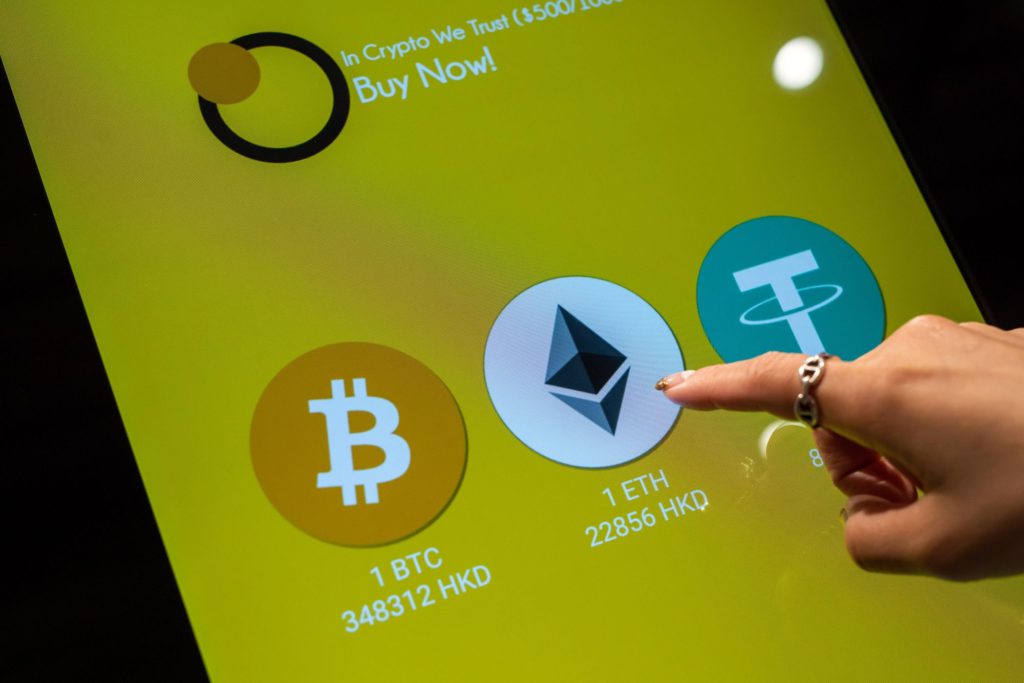
The DeFi, or decentralized finance, platform Lido Finance has become the largest provider of staking services for Ethereum, a practice that allows owners of the Ether cryptocurrency to earn passive income without having to sell their tokens. The staked coins are used to help validate transactions and secure the network in exchange for rewards, based in part on the amount of new tokens minted and fees collected. The practice is also popular among users of leading exchanges such as Coinbase, Kraken and Binance.

With more than 4 million Ether deposited through Lido, or 32% of the total amount of the token being staked, the concentration is raising red flags. One entity holding a huge amount of Ether could raise security risks for the network, critics say. Ethereum is moving to what’s billed as a less-energy intensive process known as proof-of-stake from its current proof-of-work mechanism. Under the system upgrade known as the Merge, so-called solo-staking requires setting up dedicated hardware and holding a minimum amount of 32 Ether, valued at about $54,000, based on current prices. Staking services like Lido don’t have those requirements and make staking easier for small investors.   

Lido’s dominance in staking could lead to a centralized attack of the network, when it switches to proof-of-stake consensus because the majority of staking power would be too concentrated, Danny Ryan, a researcher at the Ethereum Foundation that supports the network, warned in an recent article.

Ryan suggested Lido and similar projects should set limits on their level of Ether staking, and warned investors that they should reduce their exposure to the protocol because of the “inherent” risks from too much concentration. If one entity gains majority control of the distributed ledger, it could interrupt the recording of new blocks. 

Lido developer Vasiliy Shapovalov said he disagrees with the self-limit solution. One of the reasons Lido was built was to decentralize Ether staking and prevent centralized exchanges from dominating the market, he said in an interview.

Lido also provides more transparency on validators who are responsible for the staking: there are 21 validators responsible for Ether staking, according to Lido’s website.

If Lido limits itself on Ether staking, it will not necessarily lead to growth for other staking projects, according to Will Harborne, founder of the decentralized exchange DeversiFi. The second largest project similar to Lido is Rocket Pool, which has about 182,192 Ether staked, according to Dune Analytics.

“I think it’s too soon to impose self-limitation, if ever,” said Alex Svanevik, chief executive officer at the blockchain analytics platform Nansen and a member of the DAO, or decentralized autonomous organization, that runs Lido. “You could easily imagine a more centralized or more malicious entity with no self-limitation racing past Lido.”

Kraken, the second-largest entity for Ether staking, declined to disclose information regarding validators. The exchange pointed out that it has a market share of less than 10%.  

More stories like this are available on bloomberg.com

©2022 Bloomberg L.P.
We Asked 22 Dads to Tell Us What They Want for Father’s Day

(Bloomberg) — Why is dad always so hard to shop for? Because he doesn’t know how to ask for what he wants! So we did the hard work of soliciting requests, which we hope will give you ideas for things to give your own pops. Each suggestion comes with a shopping recommendation, so click away. (Yes, you can even buy dad some alone time, if that’s what he really wants.)

Garage Time

The most obvious place to start looking for a Father’s Day gift is consider his natural habitat: the garage. A dad of four boys who lives near Memphis has only ever asked for a muscle car. (He’s yet to receive one.) Head to Bring a Trailer, where a ‘69 Corvette is available. And it just so happens that Barrett-Jackson is hosting an auction in Las Vegas that will begin on June 30 and run through July 2. If you can’t afford this gorgeous 1967 Mustang Fastback, powered by a Ford Racing 427/530hp small-block engine with a five-speed manual transmission, tickets to the event cost just $70. To make it extra special, spring for the $1,800 “luxury lounge” VIP passes.

A father of two in Westchester, N.Y., on the other hand, says he is looking for a good power drill. The $129 Bosch 31-2A cordless drill gives you 90% of the power and clocks in at only 2 pounds. 

If his garage is more a creative studio than a hardware store, look for some new camera gear, which is what the dad of a newborn in New Orleans wants. Pair the new XF70-300mmF4-5.6 OIS—a compact, lightweight $799 telephoto zoom designed for the demands of the photo enthusiast—with a Fujifilm Xpro 3.

Either way, help him stay organized with Sidio Crates, a modular storage unit requested by the dad of a newborn. They start at $40 and are sturdy, lightweight, and can be configured to suit whatever he needs.

Backyard Time

A father of a one-year-old boy who recently bought a home with a backyard wants to get something to block the view of the shed behind the house. He’s got an eye on these DIY pergola kits from Toja Grid, which can be customized—and added to—as needed. And these brightly colored $2,500 fire pits from Tohst would make a handsome addition to any outdoor space at night.

Another new home-with-a-backyard owner who is the father of one (with another on the way) wants some outdoor entertainment options to go with the grill he recently bought. These Klipsch AWR-650-SM speakers are designed to look like big rocks in order to blend into the landscaping but weigh just 13 pounds each. 

The Seura Full Sun Series line of outdoor TVs will be perfect for the father of two in East Hampton, N.Y., who is looking for a way to keep guests—and his children—occupied during the summer months.

The best entertainment, however, may be cold drinks, which explains a very specific request from of a father of two in London: The $350 Hopper M30 Soft Cooler from Yeti. Its newly widened mouth makes it easier than ever to load and unpack while strong magnets at the top lock the cold in.   

Snack Time

If you believe that the way to a man’s heart is through his stomach, follow the advice of a father of two who asks for “steak and beer.” The $110 omakase box from Butcher Girls delivery service should satisfy his meaty cravings; a single monthly delivery can be arranged as well. A subscription to the Original Craft Beer Club will let you schedule 12 beers in four different styles, from a pair of featured brewers, for delivery monthly, every other month, and even quarterly. It’s perfect for the beer-nerd dad of two in Miami who asks for some good beer options.

Another dad who has three boys under the age of 5—and desperately needs caffeinated sustenance—asks for “a fancy espresso maker.” There are fancier ones than Illy’s $250 E.S.E. machine, but this one comes in a cool, red color, has a small countertop footprint, and uses certified compostable pods. A dad of one in Brooklyn, N.Y., is a fan of Cometeer’s subscription packs; a mixed-roast pack includes a selection of four light, medium, and dark roasts (each contains eight capsules) for $64.

Sports Time

A recently retired father who has taken up tennis with his typical gusto asks for lessons from a pro. They don’t get much more official than the John McEnroe Tennis Academy on Randall’s Island in New York City, where instructional classes and workshops are offered to players at all levels. 

One dad of two in Ohio simply seeks “six hours by myself.” That’s why he’ll want new golf irons, specifically the Mizuno Pro 223 set. If you don’t know your father’s preferred brand, the Tag Heuer Connected Golf watch is a gadget to combine his passion with the inscrutable joys of mechanical watchmaking.  

A father who spends weekends driving his two kids to various sporting events says that what he wants most is “a day nap. To be specific, falling asleep during a ball game.” We assume he means baseball: A subscription to MLB.TV costs $25 per month. 

Style Time

A dad of three in Bolton, Mass., makes it easy: He wants some Air Force 1s. Find out what color and ankle height he likes and go shopping at Nike. A father of one in Westchester requests a chic backpack, and it’s hard to do better than at Frank Clegg Leatherworks, which will customize one for his particular wishes.

A father of a 1-year-old (and many cats) in Tortola, British Virgin Islands, asks for “a robe that makes me feel like a king.” A $385 Soleia black-and-yellow quilted robe from Desmond & Dempsey will fit that bill. A dad of four in California wishes soft pajamas; the $115 short set from Bedfellows will do quite nicely, thank you very much. He will, too. 

Alone Time

It’s fair to assume that, if your dad is under the age of 50, he grew up playing video games. Give him some time to revisit his youth for awhile with a subscription to Xbox Game Pass—the gamer dad we talked to called it “dope.” 

The father of one extremely rambunctious toddler in Brooklyn says he needs physical therapy for poor posture caused by pandemic-related working from home while chasing a two-foot-tall child constantly. We recommend the Spear Center, which has multiple locations throughout the tristate area and offers a wealth of activities to make it fun getting your back into shape.

“A kid-free evening at a concert of my choosing,” is what a dad of one in Los Angeles requested. The Hollywood Bowl is one of the best places, in our opinion, to spend a summer evening. There’s a lot to choose among, but the July 28 performance of Carl Orff’s masterpiece Carmina Burana, which opens with O Fortuna and will be conducted by Gustavo Dudamel, ranks high.

More stories like this are available on bloomberg.com

©2022 Bloomberg L.P.

Close Bitnami banner
Bitnami