

Bloomberg

Wall Street and the SEC Are Headed for Clash on Commission-Free Trading

(Bloomberg) — Gary Gensler’s bid to overhaul rules for the stock market is reigniting a longstanding debate over how good mom-and-pop investors really have it and whether anything Wall Street is selling is actually free.

Some industry insiders say it’s never been better to be a small-time trader. Buying and selling shares is cheap and easy, they say. 

But, Gensler, the chair of the US Securities and Exchange Commission, argues the $45-trillion US equities market is actually littered with hidden costs and rife with conflicts-of-interest. There’s a “lack of a level playing field,” the SEC chief said on Wednesday.

The two sides are headed for a major clash and one issue is already taking center stage: the future of commission-free trading.

Since 2019 most major online brokerages haven’t charged retail clients fees for their transactions, following a model made popular by Robinhood Markets Inc. A legion of traders who put money in the market for the first time during the Covid-19 pandemic have known nothing else.

According to some executives, the lack of commissions is a direct result of Robinhood and other retail brokerages bringing in revenue from arrangements known as payment-for-order flow, which let them sell their clients’ trade orders to market-making firms like Citadel Securities and Virtu Financial Inc. for execution.

Larry Tabb, director of market structure research at Bloomberg Intelligence, said that there’s evidence that retail investors are getting a better deal than institutional traders in the current system, which involves payment-for-order flow.

But Gensler is not a fan because while a trade may be free, there are questions over the quality of the execution and whether an investor is getting the best price. He’s repeatedly suggested ending the practice and this week he again refused to rule out pushing to ban it in the US. The SEC chief also suggested creating an auction mechanism where the major market-making firms would have to compete directly to fill retail orders, rather than purchasing them from Robinhood and others.

While any changes would take months to make their way through the SEC’s byzantine rule-making process, Gensler’s latest comments nonetheless have unleashed a flurry of speculation over what an overhaul could mean for commission-free trading. 

“This could be much worse for retail investors, especially if payment-for-order flow goes away and retail traders go back to paying $5 or more for each trade,” said Mike Bailey, director of research at wealth-management firm FBB Capital Partners. “If the SEC kills payment-for-order flow, then yes, commissions go higher and friction comes back into part of the capital markets.”

Chris Grisanti, chief equity strategist at MAI Capital Management, said regulators “may be trying to solve a problem that isn’t there.” However, he was skeptical that what Gensler laid out would actually result in the end of commission-free trading.

“Who’s going to want to be the first one to raise fees, and are others going to follow?” Grisanti said. Instead, brokers could try to hold onto their margins by adding fees elsewhere. 

Read more: Robinhood Leads Brokerage Selloff as SEC Eyes New Trading Rules

There are also retail brokerage firms seeking to gain a foothold in the market that see an opportunity in Gensler’s plans. 

Kerim Derhalli, founder of the investing app Invstr which offers commission-free trading but says it doesn’t sell clients orders through payment-for-order-flow, asserts that the changes could bring more transparency. Even without paying brokerage fees for each transaction, ordinary traders still bear a cost, he says.

“Retail investors already understand they’re paying a price somewhere or other,” he said. “If the cost of buying and selling becomes more explicitly known, it might discourage people from thinking they’re Gordon Gekko,” Derhalli said, referring to the fictional character played by Michael Douglas in the 1987 film “Wall Street.” 

(Updates with quote from strategist in eleventh paragraph. An earlier version corrected the spelling of Invstr app in penultimate paragraph.)

More stories like this are available on bloomberg.com

©2022 Bloomberg L.P.

Airlines Get Relief From Covid Rule, But May Not Be Ready for It

(Bloomberg) — Airlines have been petitioning for months to ease a pandemic-era restriction on arrivals from abroad. Now that the White House has lifted mandatory Covid testing for inbound passengers, the industry may rue having its collective wish granted just ahead of the busiest time of year for travel.

As of June 12, travelers by air will join those at land ports of entry in no longer needing to submit negative Covid test results. That rule has depressed traffic and delayed a recovery for long-haul international service, airline lobbyists and the U.S. Travel Association have told the Biden administration repeatedly. 

But no more mandatory tests may presage an upswell in demand the industry is ill-prepared to handle. The situation in Europe — where mandatory testing was abandoned as early as January in the UK — isn’t encouraging. 

From Dublin to London, Amsterdam to Frankfurt, airports in Europe are awash in leisure travelers they can’t process quickly enough because of insufficient staffing. The spectacle of enormous airport queues has become a travel blight across Europe, inciting the Irish government’s ire, prompting Dutch airline KLM, a unit of Air France-KLM, to cap ticket sales to help alleviate the burden at its main hub and persuading airlines to curb their schedules.

Read more: Strikes and Labor Shortages Leave European Airports in Chaos (1)

The lapse of the testing requirement in the US will attract 5.4 million additional travelers, and $9 billion in spending through the rest of 2022, the association said Friday in a statement. Otherwise, the rule would have kept U.S. visitor arrivals at 48 million for all of this year, 40% below 2019 levels, according to the association’s previous forecast.

Overall passenger numbers at US airports have remained slightly below pre-pandemic levels, according to Transportation Security Administration data. But passenger counts at some airports such as Miami International are above pre-pandemic numbers and the TSA last month warned travelers to be patient as volumes grow this summer.

More stories like this are available on bloomberg.com

©2022 Bloomberg L.P.
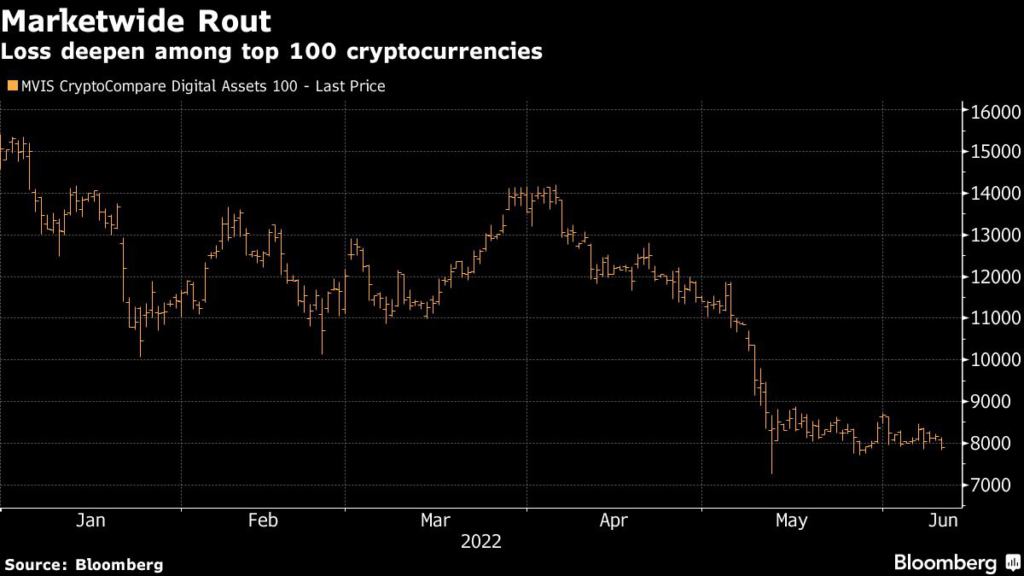
Crypto Washout Sends Major Coins to Lowest Levels of the Year

(Bloomberg) — Losses in cryptocurrencies deepened Friday, with everything from Bitcoin to Ether to Solana either setting or approaching their lowest levels of the year. 

The MVIS CryptoCompare Digital Assets 100 Index, a market cap-weighted measure which tracks the performance of the 100 largest tokens, declined 4.9%, bringing the drawdown for the year to almost 50%. Bitcoin, which accounts for almost half the index, slumped for a fourth day. Ether, which makes up about 18%, breached an earlier low set at the start of May after the collapse of the Terra blockchain. Popular DeFi tokens such as Solana and Cardano fell even more.

“We are entering into a crypto winter,” said Paul Veradittakit, a partner at Pantera Capital Management. “Capital is going to consolidate with the larger cap coins like BTC and ETH for the time being.”

Investors are increasingly saying the market is in the midst of crypto winter, as extended period of declines have become known over the years. Last week, Gemini Trust, run by the Winklevoss brothers, laid off 10% of employees citing worsening market conditions. Coinbase Global Inc., the biggest US cryptocurrency exchange, froze hiring and rescinded some job offers.

While crypto prices have been dropping since early November, when Bitcoin reached its all-time high, the declines accelerated after the collapse of the TerraUSD (UST) stablecoin and related Luna cryptocurrency that resulted in losses of tens of billions in market value.

The market is also digesting bad economic news, which had hit tech stocks — which many coins have shown correlation to — particularly hard. Data released Friday on US consumer prices showed inflation continues to accelerate.

“The only event that mattered for markets this week was CPI, and the data yet again proved inflation is far from under control, which leads to higher interest rates, stronger dollar, lower stock and digital asset prices as investors continue to increase the probability of more rate hikes and a hard landing leading to recession,” said Jeff Dorman, chief investment officer at Arca.   

More stories like this are available on bloomberg.com

©2022 Bloomberg L.P.
Activision Blizzard Agrees to Union Negotiations With CWA

(Bloomberg) — Activision Blizzard Inc. Chief Executive Officer Bobby Kotick said the US’s biggest independent video-game publisher will start negotiating with the Communications Workers of America over a collective bargaining agreement for employees at its subsidiary Raven Software. 

Last month, a majority of video game testers at Raven Software employees voted to form a union — a first for a US-listed game company. Workers came together in response to job cuts at the company last December.

“While first labor contracts can take some time to complete, we will meet CWA leaders at the bargaining table and work toward an agreement that supports the success of all our employees,” Kotick wrote in an email to employees.   

Microsoft Corp. has agreed to acquire Activision Blizzard for $69 billion and the software giant has said it will work with unions. Acknowledging that “the workplace is changing,” Microsoft President and Vice Chair Brad Smith wrote in a blog post earlier this month that “We respect this right and do not believe that our employees or the company’s other stakeholders benefit by resisting lawful employee efforts to participate in protected activities, including forming or joining a union.”

Activision Blizzard has faced controversy over its reaction to Raven Software’s union push, including allegations of union-busting. One day after Smith’s blog post, the CWA filed a complaint with the US National Labor Relations Board alleging that Activision Blizzard illegally retaliated against employees over unionization efforts.

CWA Secretary-Treasurer Sara Steffens described Kotick’s message as a positive step toward better labor relations at Activision Blizzard. “We know that the management approach recommended by anti-union consultants is ineffective and detrimental,” she said in a statement to Bloomberg. We “hope that today’s announcement is the first of many steps towards full collaboration between ABK leadership and employees to positively shape the future of Activision through a strong union contract.”

(Updates with comment from CWA in final paragraph.)

More stories like this are available on bloomberg.com

©2022 Bloomberg L.P.

DocuSign Plummets as Forecast Cut Dents Pandemic-Era Halo Again

(Bloomberg) — DocuSign Inc. plunged the most since December after the e-signature company cut its full-year billings outlook, extending a string of disappointments for a pandemic-era darling.

The pullback “shows a weak demand environment, which may not reverse in the near term,” Bloomberg Intelligence analyst Anurag Rana said in a note. 

Thursday’s earnings report triggered downgrades from analysts at Bank of America and William Blair, and several others reduced their share-price targets. This is set to be the third straight quarter in which DocuSign results were met with a selloff of at least 20%. The stock has lost most of its pandemic-driven gains, sinking nearly 80% since its 2021 peak.

DocuSign tumbled as much as 26%, the most in intraday trading since Dec. 3. The stock was down 25% to $65.70 at 11:33 a.m. in New York.

Billings for 2023 will be $2.52 billion to $2.54 billion, less than a previous forecast for a range of $2.71 billion to $2.73 billion, according to the company, whose fiscal year runs through January. San Francisco-based DocuSign reported adjusted first-quarter earnings per share of 38 cents, less than the estimate for 46 cents in a Bloomberg survey of analysts.

(Updates stock price in first paragraph)

More stories like this are available on bloomberg.com

©2022 Bloomberg L.P.
Everything in the Stock Market Is Being Sped Up Including the Crash

(Bloomberg) — When the nineties ended, an overvalued stock market took three long years to rid itself of its accumulated excess in what is now known as the dot-com crash.

That a similar reckoning has needed just 14 months to play out now is a sign of how fast moving this market is — and how dangerous it’s become for anyone believing they can pick a moment to buy and sell.

The perils were on full display Friday as a hot inflation reading jolted financial markets, shaking the S&P 500 out of a range it had settled into this month. Investors who had seen the index rally 9% since it nearly tipped into a bear market May 20 were blindsided by the latest bout of selling.

Persistent inflation is only the latest threat to a market pounded by a flurry of macro blows. Trying to figure out which matters most has become something of a fool’s errand. That’s essentially the view of Eric Schoenstein, co-manager of the $9.7 billion Jensen Quality Growth Fund (ticker JENSX), which according to Bloomberg data has beaten 96% of peers in the past year. With inflation, the Federal Reserve, a pandemic and war bearing down on investor psyches, the only safe bet at this point is that equity volatility will continue.

“It just feels like there’s nothing that you could point to and say, ‘that’s the reason, and if we get this piece cleared up, everything will pass and we can move on to the next iteration,’” Schoenstein said by phone. “With all of that uncertainty, the market is going to pull back, and investors, frankly, are probably in a mode where they’re doing a bit more indiscriminate selling.”

Read: It’s the Worst Equity Price Action in Four Decades: Macro Man

The S&P 500 tumbled more than 2.5% as of 11:05 a.m. in New York Friday, as unexpectedly hot consumer-prices fueled bets the central bank will have to toughen its battle against inflation. Down almost 5% over five days, the index is on course for its worst week since January.

That tendency to sell whatever you can has contributed to an epic drop in valuations. After peaking above 30 times earnings a year ago, the S&P 500’s multiple shrunk by roughly 40% through its trough in May — almost matching the size of the contraction during the entire 2000-2002 crash. 

In other words, the correction to valuations is happening three times faster than the bursting of the internet bubble. 

To Bloomberg Intelligence’s Gina Martin Adams, the accelerated drawdown reflects how much the post-pandemic equity rally relied upon the Fed. Once the central bank turned hawkish, the unwinding was vicious. 

“When easy money disappears, the bubble disappears,” Martin Adams said. “The foundation of the bubble in the 1990s was market psychology about growth prospects and equity ownership. It was harder to deflate.” 

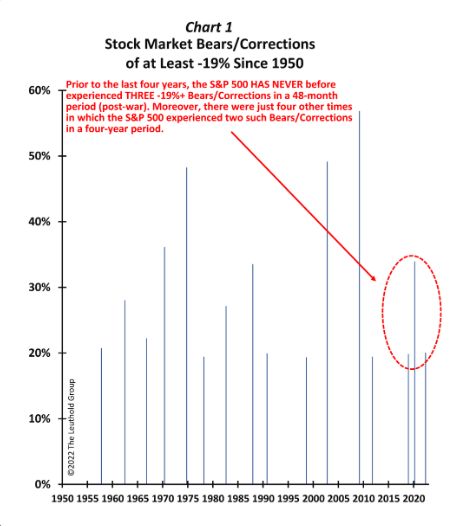
Thanks to solid earnings, the meltdown in P/E has done less damage to the market on the price level. Still, down 19% from its January peak to the May bottom, the S&P 500 just endured its third retrenchment of at least that magnitude in four years. Such oft-repeated turbulence had never happened since at least 1950, according to Leuthold Group.

Underpinning the extreme recurrence of equity turmoil is an unusually volatile economic and policy backdrop. After sinking into a recession during the pandemic, the US is now booming after unprecedented government and central bank stimulus. The Fed, which spent most of the past decade fighting deflation, is battling the fastest inflation in four decades. 

To the delight of the bulls, the first two losses, one in late 2018 and the other in early 2020, were all but erased in a matter of months. While stocks have yet to recover from their 2022 slide, anyone who had bought shares four years ago and stayed invested would have since enjoyed an annualized return of 12%.

“The fact the S&P 500 has somehow delivered solid results during four years of incredible volatility and uncertainty is fascinating,” Jim Paulsen, chief investment strategist at Leuthold, wrote in a recent note. “Often, the stock market ‘returns’ while most are waiting for the dust to settle. Volatility and uncertainty can be signs of trouble ahead, but they also frequently signal great opportunities.”  

But one big difference now is the Fed’s stance. Unlike in 2018 and 2020, when the central bank quickly came to the rescue, such safety net no longer exists with policy makers laser-focused on taming inflation. 

Conflicting narratives abound. While recession talk is building, economic data and corporate earnings continue to point to a healthy business cycle.

Schoenstein at Jensen says he refrains from predicting where equities are heading. Rather than timing the market, he says, investors should focus on picking stocks that will be able to endure any prolonged economic troubles. 

His firm has taken advantage of this year’s selloff to add to holdings of stable growers, such as insurance broker Marsh & McLennan Co. and Moody’s Corp., a credit-rating company. 

“When you do that individually, company by company, in a high conviction manner, you don’t spend as much time trying to figure out ‘is the market at the bottom, is the market at the top, or is the market going to turn around?’” Schoenstein said. “That will give you more ability to sort of sleep at night.”

More stories like this are available on bloomberg.com

©2022 Bloomberg L.P.

Nigerian Bourse to Adopt Blockchain for Settling Trades by 2023

(Bloomberg) — Nigerian Exchange Ltd., plans to start a blockchain-enabled exchange platform next year to deepen trade and lure young investors to the market.

The move follows the introduction of regulations to guide trade in digital assets by the Nigerian Securities and Exchange Commission, and the growing interest to adopt the distributed-ledger technology by businesses and policy makers across the continent including in Kenya and South Africa.

The exchange looks to deploy the blockchain technology in settlement of capital market transactions, Temi Popoola, the chief executive of Nigeria Exchange Ltd., said in an interview. “For a lot of young and upcoming Nigerians, that is the kind of technology they adopt and we want to see how we can deploy it to grow our market,” Temi said. 

The plan is unfolding in the wake of a rout in cryptocurrency markets following the collapse of the Terra blockchain in May. Bitcoin has plunged more than 50% since reaching a record high last November. 

While young Nigerians account for the largest volume of cryptocurrency transactions outside the US, according to Paxful, a Bitcoin marketplace, they have largely ignored the local bourse. Nigerians traded $185 million of Bitcoins on the platform in the first three months of the year, accounting for a quarter of transactions in the period on Paxful. 

The Nigerian bourse will partner with a technology firm and get the approval of regulators before the launch in 2023, according to Popoola. “Blockchain technology can facilitate different parts of the capital market, whether around creation of products or facilitation of the Exchange to trade financial assets,” he added.

Digitizing transactions will help attract young buyers looking for diversified products as well as fast and easy access to the market, Popoola said. The bourse’s first complete electronic share offering, issued by MTN Group Ltd.’s Nigeria unit last year, was 1.2 times oversubscribed, with 85% of the investors under 40 years.

“It’s almost impossible to think of blockchain without including cryptocurrency, so if the adoption is not in agreement with central bank’s position, there may be skepticism from investors,” Gbemisola Alonge, a tech policy analyst at Stears in Lagos, said by telephone. Besides blockchain, the listed companies should be able to deliver returns to attract the target investors, she said.

Last year, the central bank ordered commercial lenders to stop transactions or operations in cryptocurrencies, citing a threat to the financial system. Nigeria’s SEC said at the time it would seek to protect investors and make the market more transparent.

Blockchain technology is catching on across the continent. South African authorities are engaging with the fintech industry to enable the incorporation of the distributed-ledger technology in the financial markets. In Kenya, lenders are seeking approval to deploy the technology in payments to reduce the incidence of bad loans. Nigeria introduced the eNaira, a digital currency last year, in a bid to boost financial inclusion in Africa’s most populous nation where a third of population have no access to financial services. 

More stories like this are available on bloomberg.com

©2022 Bloomberg L.P.
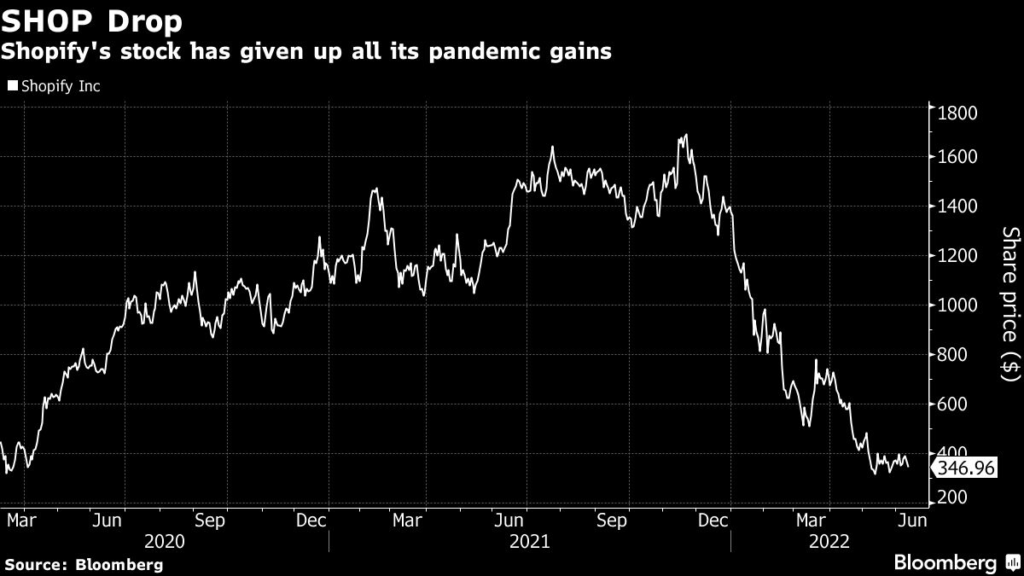
Shopify Loses Early Investor Mawer Over Rising Competition, Deliverr Deal

(Bloomberg) — Shopify Inc. lost one of its longtime supporters after Mawer Investment Management’s Vijay Viswanathan said he exited the stock over concerns about rising competition and risks in e-commerce. 

Ottawa-based Shopify became Canada’s most valuable public company during the pandemic, soaring above $200 billion in market value, but the stock has plummeted 75% this year. 

Mawer first invested in the e-commerce software provider in 2017, two years after it went public, and later trimmed its position as the stock went up, Viswanathan said. But the business of e-commerce is getting “crowded,” he said, citing a move by Amazon.com Inc. to combine payment and fulfillment services and make them available on other websites — a direct encroachment on Shopify’s turf. 

“Amazon is making their foray with their ‘Buy With Prime’ piece. We’re seeing a slowdown in e-commerce, and we’re seeing a slowdown in the results at Shopify. It became harder and harder to justify the valuation,” Viswanathan said on a Mawer podcast. 

In May, Shopify announced the largest acquisition in its history, a $2.1 billion deal for delivery startup Deliverr Inc. Viswanathan said he thinks Shopify may have spent too much.

“They made a pretty expensive acquisition in our estimation,” he said. “It may work out great for them, but essentially moving into fulfillment. That probably increases the risk as they have to get that right in order to continue to compete.”

Mawer clients made four to five times their money on the Shopify investment, said Viswanathan, who’s director of research and lead manager of the Mawer Canadian Equity Strategy. 

“We still think it’s a good business or a very good business that’s well-run,” he said. “One day it may be back in the portfolio.” 

More stories like this are available on bloomberg.com

©2022 Bloomberg L.P.
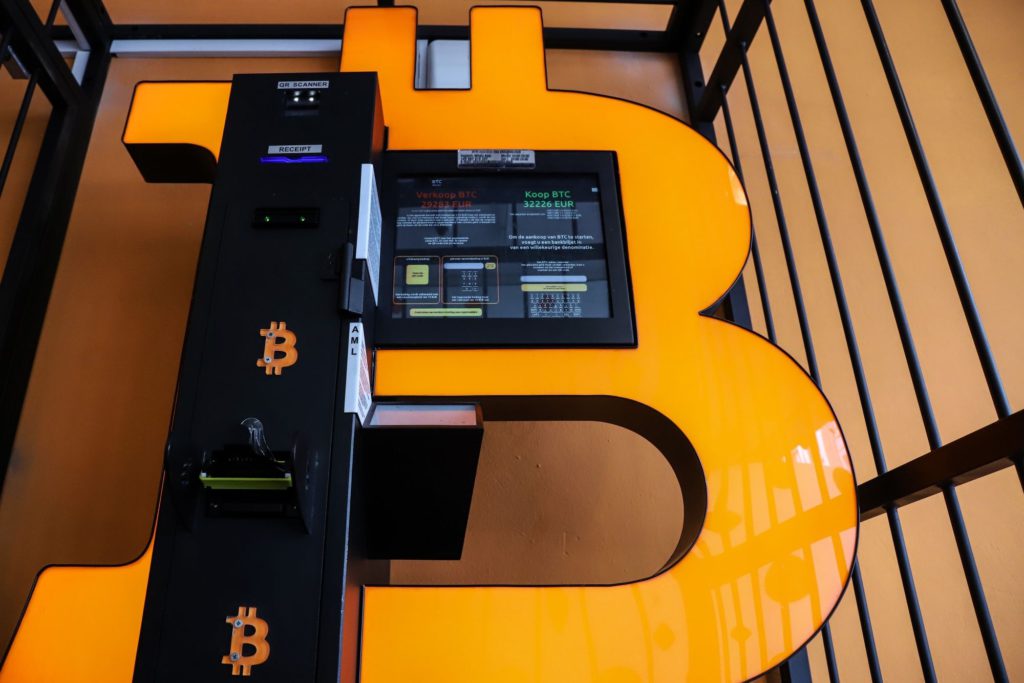
EU Aims to Clinch Deal on Landmark Crypto Law This Month

(Bloomberg) — The European Union is nearing an agreement on key legislation to regulate the cryptocurrency sector that would set common rules across the 27 member states, people familiar with the matter said.  

France, which currently chairs the EU, and the European Parliament are optimistic about resolving remaining issues holding up the Markets in Crypto-Assets (MiCA) package and reaching a deal this month, according to the people. Negotiators are expected to meet on June 14 and June 30.

MiCA, first presented in 2020, will put European regulators at the forefront of supervising cryptocurrencies by creating unified rules across the $17 trillion economy. Addressing issues such as investor protection and crypto’s impact on financial stability has taken on added urgency after last month’s collapse of the TerraUSD algorithmic stablecoin. 

Read more: SEC Investigating UST Stablecoin Blowup in Fresh Threat to Terra

Member states and the parliament still disagree on several key aspects of MiCA. According to the people, areas of disagreement include:  

  • Whether to include nonfungible tokens in the new set of rules
  • How to regulate significant stablecoins
  • Supervision of the largest crypto-asset service providers, or CASPs

Both sides are also discussing how to limit the use of stablecoins as a payment method by introducing a ceiling, in particular for transactions not denominated in euros, the people said, asking not to be identified discussing confidential information. 

Environmental Impact

The parliament is also pushing for factoring in the environmental impact of cryptoassets in the legislation, according to the people. Bitcoin mining relies on using vast computing power to process transactions, which in turn consumes massive amounts of energy.  

The French presidency is willing to accept the European Commission’s proposal to disclose the energy consumption of CASPs, according to the people. In addition, members of parliament want the EU executive’s arm to produce technical standards for such disclosures, along with a review clause. 

Member states and the parliament are also clashing over the inclusion of anti-money laundering clauses in the MiCA package. National governments consider there to be a separate set of rules for it, while lawmakers want to create a list of CASPs that aren’t compliant with anti-money laundering rules, according to the people. 

The French presidency is ready to consider such a list in order to strike a deal, but with a different configuration than what’s been proposed, the people said. 

More stories like this are available on bloomberg.com

©2022 Bloomberg L.P.

Crypto Lender Celsius’s Token Falls 20% as Terra Concerns Linger

(Bloomberg) — Celsius Network Ltd.’s digital token slumped about 20% on Friday as concern increases over the sustainability of the high yields being offered by the lending platform and others in the crypto market in the wake of the collapse of the Terra blockchain. 

Celsius’s CEL token promises “actual financial rewards,” including as much as 30% extra returns weekly, according to its website. CEL was trading at around 53 cents, down 21% in the past 24 hours, according to pricing data site CoinGecko. 

While its unclear what triggered the latest decline, demand for high-yielding lending protocols has slumped since Terra failed in May. The defunct blockchain promised yields as high as 20% to TerraUSD (UST) stablecoin depositors, which had been the main factor driving Terra’s growth. Celsius has noted its exposure to Terra, but said earlier it was able to exit Terra’s crisis early on.

Celsius acknowledged the decline in a statement to Bloomberg, while noting that the price is often affected by market factors that are not related to the company’s performance. 

“Looking across the entire crypto sector, we are undoubtedly in a crypto winter. The price of all cryptocurrencies have clearly been affected by a general market downturn. We are squarely focused on building for the long-term,” the statement said.

Ethereum blockchain data shows that the largest single digital wallet holding CEL tokens is a wallet belongs to Celsius itself, with more than 184 million CEL tokens, or 26.6% of the total supply in circulation.

More stories like this are available on bloomberg.com

©2022 Bloomberg L.P.

Close Bitnami banner
Bitnami
