Bloomberg

Hedge Funds Maverick, Lone Pine Have Dropped About 30% This Year

(Bloomberg) — Lee Ainslie and Steve Mandel’s hedge funds tumbled by roughly a third this year, joining other Tiger Cubs stung by the slide in technology stocks.

Ainslie’s main hedge fund at Maverick Capital dropped 32.5% through May, according to people familiar with the results. Among its largest first-quarter bets were stakes in South Korean e-commerce giant Coupang Inc. and Amazon.com Inc. Both wagers would have been among its biggest losers if the firm continued to hold the stocks through last month.

Mandel’s Lone Pine slid about 30% in the period, other people said. Two stocks it held in the first quarter, Workday Inc. and Shopify Inc., have been among the hardest-hit, dropping 43% and 73%, respectively, through May 31. Mandel, 66, stepped back from running the firm in 2019, though he remains involved in researching investments and sits on the management committee. 

This year has been a disaster for most of the managers who trained under Julian Robertson at Tiger Management as the tech rout vaporized billions of dollars of investor capital. 

Chase Coleman, once one of Robertson’s most successful proteges, has lost 52% at Tiger Global Management, the biggest decline among the Cubs.

Andreas Halvorsen’s Viking Global Investors managed to sidestep the worst of the carnage. His fund fell about 9% through May.   

Representatives for the firms declined to comment.

More stories like this are available on bloomberg.com

©2022 Bloomberg L.P.

Tesla Autopilot Defect Probe Spirals as US Reviews 191 Crashes

(Bloomberg) — US authorities escalated an investigation into whether Tesla Inc.’s Autopilot is defective and revealed they’ve reviewed almost 200 crashes involving vehicles using the driver-assistance technology.

The National Highway Traffic Safety Administration announced Thursday its preliminary evaluation of how Tesla Autopilot handles crash scenes with first-responder vehicles warrants further review and upgraded the probe. Since opening the inquiry almost 10 months ago, NHTSA has reviewed a much broader set of collisions beyond Teslas running into fire trucks and police cars.

The agency has sifted through the circumstances of 191 crashes involving Tesla vehicles operating some version of Autopilot. In roughly 50 cases, NHTSA found drivers were insufficiently responsive to the driving task. In approximately two-dozen other incidents, the agency said the primary factor appears to be drivers using the system in environments and conditions where the technology runs up against limitations, such as off highways or in inclement weather.

The risk for Tesla extends beyond the potential for NHTSA to ultimately conclude a defect does exist. The regulator has the power to order recalls, and its investigation could lead Chief Executive Officer Elon Musk to come up with better safeguards against driver inattentiveness or ways to restrict Autopilot from being used in situations it can’t handle safely.

“NHTSA appears to be increasingly closer to taking firm action against Tesla, which will hopefully be strong enough to permanently dissuade the company from continuing to mislead the public about the capabilities of its vehicles,” Michael Brooks, acting executive director and chief counsel of the Center for Auto Safety, said in an email.

Read more: Tesla Autopilot Stirs US Alarm as ‘Disaster Waiting to Happen’

Tesla didn’t respond to a request for comment on NHTSA upgrading its investigation. The company’s shares closed down 0.9%, erasing earlier gains. The stock has fallen 32% this year.

In a document posted to its website, NHTSA said its probe now applies to an estimated 830,000 vehicles, roughly 65,000 more than when it started evaluating the potential defect in August. Three more crashes involving Teslas hitting first responder vehicles have occurred since the investigation started, the latest occurring in January.

NHTSA said in the document that it will “explore the degree to which Autopilot and associated Tesla systems may exacerbate human factors or behavioral safety risks by undermining the effectiveness of the driver’s supervision.”

The agency also dispelled the notion that driver misuse of Autopilot may preclude it from making a defect determination.

“This is particularly the case if the driver behavior in question is foreseeable in light of the system’s design or operation,” NHTSA said.

Tesla has for years marketed certain assistance features as Full Self-Driving and charged customers thousands of dollars to beta-test the technology. In a statement Thursday, NHTSA reiterated that “no commercially available motor vehicles today are capable of driving themselves.”

Autopilot is facing increased scrutiny from NHTSA on another front. Last week, the agency disclosed the number of complaints it’s received about Teslas suddenly braking at high speeds had more than doubled since it opened a defect investigation into that issue in February.

NHTSA has given Tesla until June 20 to respond to pages of questions and information requests related to that probe. The agency is also planning to release data in the coming weeks about crashes involving automated-driving features roughly a year after it issued a standing general order for automakers to begin sharing information.

(Updates with shares in fourth paragraph, safety advocate comment in final paragraph.)

More stories like this are available on bloomberg.com

©2022 Bloomberg L.P.

Argentina Approves Ualá’s Purchase of Eurnekian’s Wilobank

(Bloomberg) — Argentina’s central bank has approved fintech Ualá’s purchase of billionaire Eduardo Eurnekian’s digital bank Wilobank.

The deal was finalized Thursday by the central bank’s board of directors, according to a central bank statement. The agreement between the companies was first reached in April 2021, making Eurnekian a minority shareholder of Ualá in exchange for the latter acquiring 100% of Wilobank, the country’s first digital bank. The central bank also approved Ualá’s business plan. 

The close of the deal marks another key milestone for Ualá, which was valued at $2.5 billion in its latest funding round. For the company, which provides a slew of financial services based on a prepaid card managed through a mobile app, the deal will allow faster growth and access to more clients. 

The acquisition, which includes access to Wilobank’s bank license, would allow the company to target clients it couldn’t fully serve before, including pensioners and recipients of government welfare. Government payments are made through savings accounts which only banks are allowed to provide.

“We’re delighted about this opportunity because it will allow us to greatly enhance Ualá’s financial ecosystem,” founder and chief executive officer Pierpaolo Barbieri said in a phone interview. “This will allow us to do things in Argentina that are reserved for bank entities.”

Barbieri declined to say how soon the company would seek to launch these products. 

With the approval, Ualá can move forward from the memorandum of understanding signed last year and looks to close the transaction as soon as next week, Barbieri added. The company is not looking to raise additional capital and is fully funded following its last $350 million Series D round last August, he said. 

Ualá is also awaiting approval from Mexico’s regulators to move forward with the purchase of ABC Capital SA. The company also launched operations in Colombia in January, where it has a license as a financing company to offer debit cards.  

The company declined to disclose the size of the transaction. 

Ualá has 5 million accounts across the region, with 4 million of those in Argentina. According to central bank data, by December Wilobank had over 250,000 savings accounts and had issued over 113,000 debit cards. 

Ualá is backed by Japanese conglomerate SoftBank Group Corp. and Chinese Internet giant Tencent Holdings Ltd., along with early backers including the billionaire George Soros, Goldman Sachs Group Inc., Ribbit Capital and Monashees. 

(Updates with CEO quotes from fifth paragraph.)

More stories like this are available on bloomberg.com

©2022 Bloomberg L.P.

Alibaba Slips as Big Hopes on Ant IPO Revival Quickly Fade

(Bloomberg) — Alibaba Group Holding Ltd.’s US-listed shares slipped after China’s regulator denied a Bloomberg News report that it has started early stage discussions on reviving the initial public offering of Jack Ma’s Ant Group Co.. 

Shares of the e-commerce giant dropped 8.1% Thursday, after shooting up around 7% in premarket trading on the Bloomberg report. The stock quickly erased earlier gains after the China Securities Regulatory Commission said it isn’t conducting work on reviving the Ant IPO, although it supports eligible internet platform companies to list in China and overseas. Meanwhile, Ant said it has no plans to initiate an IPO.

Other US-listed Chinese stocks also fell, sending the Nasdaq Golden Dragon China Index down 6.8%, snapping a three-day rally of 15%. Nio Inc. and Bilibili Inc. were among the worst performers amid earnings, declining 7.7% and 15% respectively. Restaurant operator Yum China Holdings Inc. lost 8.1% amid news that Shanghai puts part of city back into lockdown as cases return.

A restart of Ant’s IPO is “too good to be true” and “there are a lot of questions to be answered on the political side,” said Xiadong Bao, an emerging-markets fund manager at Edmond de Rothschild Asset Management. While Alibaba’s stock still looks cheap after the recent rally, more patience is needed before further improvements on fundamentals, he said.

Bullish calls are returning to China’s tech sector amid signs that regulators are taking a more lenient line after more than a year of regulatory squeeze. Chinese stocks have staged strong rallies in Hong Kong and New York this week following news of a likely wrap-up of a probe into Didi Global Inc. and a slew of new game approvals.

The sudden scuttling of Ant’s IPO in November 2020 — just days before the fintech juggernaut was to go public — marked the beginning of China’s hallmark regulatory crackdown that has swept across the country’s internet sector. The crackdown has seen foreign investors flee and the sector labeled “uninvestable.” Alibaba owns about a third of Ant.

“We were only saying a few days ago that if Ant was rehabilitated, it would mark a major positive. This, in a sense, was where the trouble started,” said Gary Dugan, chief executive officer of the Global CIO Office. “If true, it would be very good news and a major potential turning point for the China tech sector and broader Chinese markets.”

Bullish Pivot 

While many strategists have started to turn bullish from late 2021, citing cheap valuation and expectations of better policy environment, a sustainable rally had seemed elusive with rebounds barely lasting a few days. Goldman Sachs Group Inc. and Jefferies Financial Group Inc. have been among the early believers of a China turnaround, only to see the Hang Seng Tech Index slide to new lows. 

Sentiment took a turn for the better in mid-March this year, when China’s economic czar — Vice Premier Liu He — promised to swiftly end tech scrutiny, stabilize financial markets, and deploy measures to prop up the economy. While the pledges initially seemed to ring hollow with no concrete action, increasing signs are pointing to a softening in the country’s stance toward internet firms.

The Ant news “is a sign that regulators are following through on their pledge to end the crackdown on tech platforms, which will continue to improve sentiment on the sector,” said Marvin Chen, analyst at Bloomberg Intelligence. “Potential revival of the Ant IPO may also help support financial markets in the region as fundraising activity has dried up this year.”

One big market overhang, though, still remains — China’s Covid Zero policy. Having earlier moved to lift lockdowns in Shanghai and reopen Beijing’s economy, partial movement restrictions are returning as authorities remain determined to stamp out the highly-transmissible omicron. 

Still, the number of strategists and money managers saying it’s time to buy China has been growing by the day, with even the most bearish participants seeing opportunities, at least for the short term. 

Various market indicators also suggest the nascent rally in both local and overseas-listed Chinese shares may have further momentum, partially aided by the lifting of Covid-induced lockdowns in Shanghai and Beijing. The tech gauge in Hong Kong has breached its 50-day and 100-day moving averages, key technical hurdles that indicate more gains may be in store.

The market might be reading too much into the news flow around the potential revival of Ant’s IPO, but the Chinese government has clearly become more supportive to its internet sector, according to Jian Shi Cortesi, a portfolio manager at GAM Investment Management. 

“The regulation risk has peaked, but most investors need more and more confirmation of that,” she said.

(Updates with share price moves and charts at close)

More stories like this are available on bloomberg.com

©2022 Bloomberg L.P.

Coatue, JPMorgan Weigh Funds to Buoy Capital-Hungry Startups

(Bloomberg) — Coatue Management is raising a structured equity fund that could help cash-strapped startups stave off raising money at lower valuations amid turbulent public markets, and JPMorgan Chase & Co. is weighing a similar fund, according to people familiar with the matter. 

Philippe Laffont’s Coatue has begun discussing its planned Tactical Solutions Fund with potential investors, some of the people said. The firm is targeting $2 billion for the effort and already has raised $1.2 billion from anchor investors, a presentation shows. While it will mostly provide capital to publicly traded companies, about 20% will be earmarked for closely held startups, potentially including those the hedge fund has previously backed, one of the people said. 

The fund will deploy capital to the same sectors where Coatue typically invests, including enterprise software, health care, climate technology, consumer internet and financial technology. The alternatives arm of JPMorgan’s asset-management unit is in the early stages of exploring whether to raise a fund that would pursue a related strategy, some of the people said.

Representatives for Coatue and JPMorgan declined to comment.

Coatue has told investors that structured equity may appeal to dilution-sensitive companies whose boards may be reluctant to issue equity at depressed valuations, even as they burn cash to maintain their rapid growth, according to the presentation reviewed by Bloomberg. It may also be a capital alternative for firms whose shares have tumbled this year that are seeking cash as an insurance policy or to consolidate or restructure themselves.

More companies may seek capital in part because of a slowdown in the market for initial public offerings as well as scarcity of private funding, the presentation shows. Coatue intends to make a “significant” capital commitment to the fund and invest the war chest within two years, though it has an option to extend that period by an additional year.

The vehicle will charge early investors a 1.5% management fee, which can be adjusted based on the size of a commitment. The performance fee is 20%. The fund has a 5% hurdle, one of the people said, meaning it will have to produce that return before collecting a fee.

Structured equity, which features both debt and equity characteristics, generally includes convertible debt, senior equity or debt plus warrants. It differs from traditional growth equity funding, which tends to take the form of common equity.

Annualized returns on structured investments, which often resemble convertible debt, outperformed in past episodes of market turmoil, particularly the 2000 dot-com crash and 2008 financial crisis, according to the presentation. 

Coatue’s flagship hedge fund — which invests in publicly traded stocks and private startups — fell about 2% last month, extending its decline for the year to roughly 17%, according to a person familiar with the matter. Peers including Dan Sundheim’s D1 Capital Partners and Chase Coleman’s Tiger Global Management are also deep underwater so far in 2022. 

If portfolio companies turn to structured equity as an alternative to common equity, investment firms may be able to continue marking companies’ valuations at the level in which they last raised common equity. To be sure, such marks may face scrutiny from limited partners if rivals or mutual funds write down their holdings in the same companies to varying degrees.

(Updates with descriptions of size, fees from second paragraph.)

More stories like this are available on bloomberg.com

©2022 Bloomberg L.P.

Meta Halts Development of Apple Watch Rival With Two Cameras

(Bloomberg) — Facebook parent company Meta Platforms Inc. has halted development of a smartwatch with dual cameras and is instead working on other devices for the wrist, according to a person with knowledge of the matter.

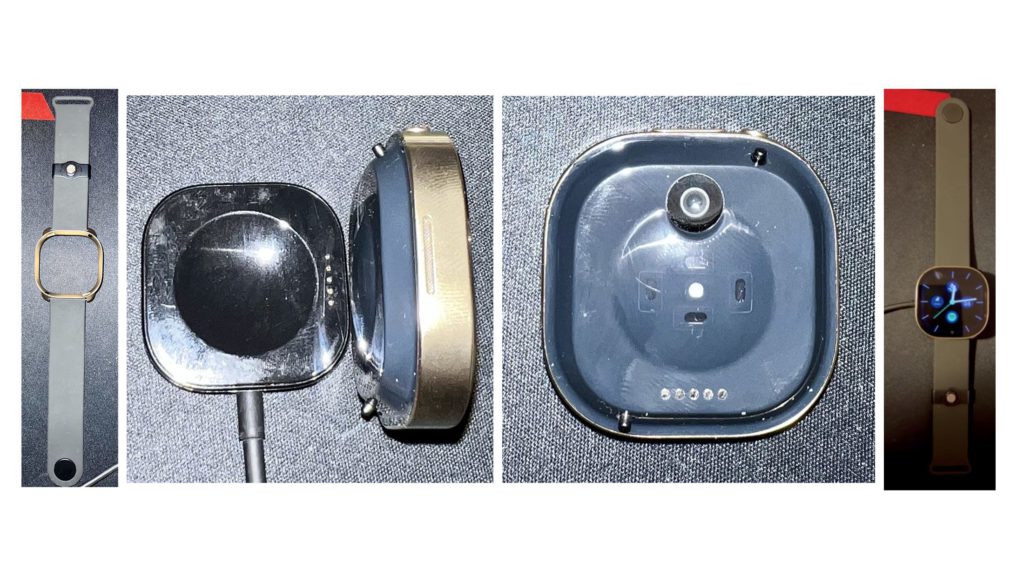
The device, which has been in development for at least two years, was designed to include several features common in other smartwatches, including activity tracking, music playback and messaging. A prototype of the now halted device includes dual-cameras, a key differentiator from market leaders like the Apple Watch. One camera was located below the display and another sat on the backside against the wearer’s wrist, according to images and video of a prototype seen by Bloomberg.

The second camera was designed so users could remove the watch face from its strap to quickly take pictures. But the presence of the camera caused issues with another feature for translating nerve signals from the wrist into digital commands, the person said. Having that technical ability, known as electromyography, is a top priority for Meta. 

Meta has touted the benefits of electromyography as a way of using a person’s hands as a “controller” for other devices, including those geared toward the metaverse. “This is about decoding those signals at the wrist — the actions you’ve already decided to perform — and translating them into digital commands for your device,” a blog post from Meta published earlier this year said. 

Meta executives have discussed the potential of smartwatches as part of its vision for the so-called metaverse, an immersive version of the internet where people will interact with other users as digital avatars. Sensors within wrist devices could be used to help people control their avatar, or interact with what they observe through a pair of augmented reality glasses, for example.  

Despite the dual-camera device being halted, Meta is still working on multiple other wrist-worn devices. Employees working on the watch, code-named Milan, were told this week that the device is no longer on track for production, the person said. It was originally targeted for release in spring 2023 at price point around $349, they added.

A spokesperson for Meta declined to comment.

Cost cuts likely also played a role in the company’s decision to halt development of the watch. Meta executives said on an earnings call in April that the company’s annual expenses would decrease by $3 billion this year given a broader business slowdown. That has also impacted hiring at Meta, where filling some management roles has been paused or slowed in recent months. General cost cutting means prioritizing certain projects and efforts over others, Chief Executive Officer Mark Zuckerberg told investors at the time. 

This week, Meta also told employees that it won’t be selling a version of its AR glasses that have been in development for three years, the person said. The company has shifted focus to a later version of those AR glasses, with plans for an eventual commercial release. The Information previously reported details of changes to Meta’s glasses strategy.

Meta will also shift strategy for its video-calling device. The Portal, initially marketed with consumer tools like animated story time for children, will be aimed at business customers working from their home offices.

Some of the features developed for the dual-camera watch will likely still appear in future products. The prototype device seen by Bloomberg has the following features:

  • A removable watch face with a gold-colored casing. The case has two buttons on the side, including a long, pill-shaped one and a small circular control.
  • Dual cameras: A 5-megapixel camera on the front of the watch face, and a 12-megapixel camera on the back side of the watch for use when the face has been detached.
  • WiFi, GPS and cellular connectivity via eSIM.
  • Apps for Spotify, WhatsApp, Instagram Stories, daily activity tracking, workouts, the photo gallery, heart rate monitoring, calendar, settings, and breathing.
  • 18 hours of battery life.

The watch also includes a notification center and lock screen. The device doesn’t have a built-in App Store and users instead would manage apps and features from their Facebook account. Wearers would also have been able to post details of their fitness activities or achievements directly to Facebook and Instagram from the device.

An image of the prototype first appeared inside of Meta’s app to manage its Ray-Ban Stories smart glasses and was published by Bloomberg last year. Some prior details of the device were also previously reported by The Verge. 

The Milan smartwatch was being developed by Meta’s Reality Labs division, the part of the company working on long-term bets and building the metaverse. Zuckerberg has said that though Reality Labs is a key investment area for the company, those expenditures will cut into profits and result in “significant” financial losses in the unit in the short term. 

(Updates with changes to Portal plan in 10th paragraph)

More stories like this are available on bloomberg.com

©2022 Bloomberg L.P.

Coinbase Retracted Job Offers to Recruits From Some of Wall Street’s Biggest Banks

(Bloomberg) — Individuals from at least 10 of the biggest financial firms left Wall Street to join Coinbase Global Inc. only to have the company rescind their employment offers. 

Goldman Sachs Group Inc., Morgan Stanley, BlackRock Inc., Wells Fargo & Co. and Citigroup Inc. were among the firms that people departed to join Coinbase, according to a talent directory posted by the company. They’re part of a group who last week received an email from the largest US cryptocurrency exchange rescinding offers and announcing a freeze on hiring for the “foreseeable future.”  

Read more: Coinbase’s Hiring Freeze Shatters Crypto Hopefuls’ Career Plans

A Coinbase spokesperson declined to comment, instead pointing to a June 7 blog post by the company’s chief people officer announcing a new talent hub to help the affected individuals. So far, more than 300 individuals have appeared in the portal. 

Coinbase was also hiring software engineers from banks including Credit Suisse Group AG, Capital One Financial Corp. and Goldman Sachs, as well as hedge funds Millennium Management and AQR Capital Management. Several tech companies, including Uber Technologies Inc., Amazon.com Inc., Meta Platforms Inc., Twitter Inc. and TikTok, were also listed in the hub. 

Coinbase cited market conditions and ongoing business “prioritization efforts” for forcing it to freeze hiring. Along with the plunge in crypto prices, Coinbase shares have tumbled by more than 70% since its April 2021 initial public offering.

The company ballooned to 4,948 full-time employees from about 1,700 just a year ago.  

More stories like this are available on bloomberg.com

©2022 Bloomberg L.P.

China Ties at ‘Lowest Moment’ Since 1972, US Ambassador Says

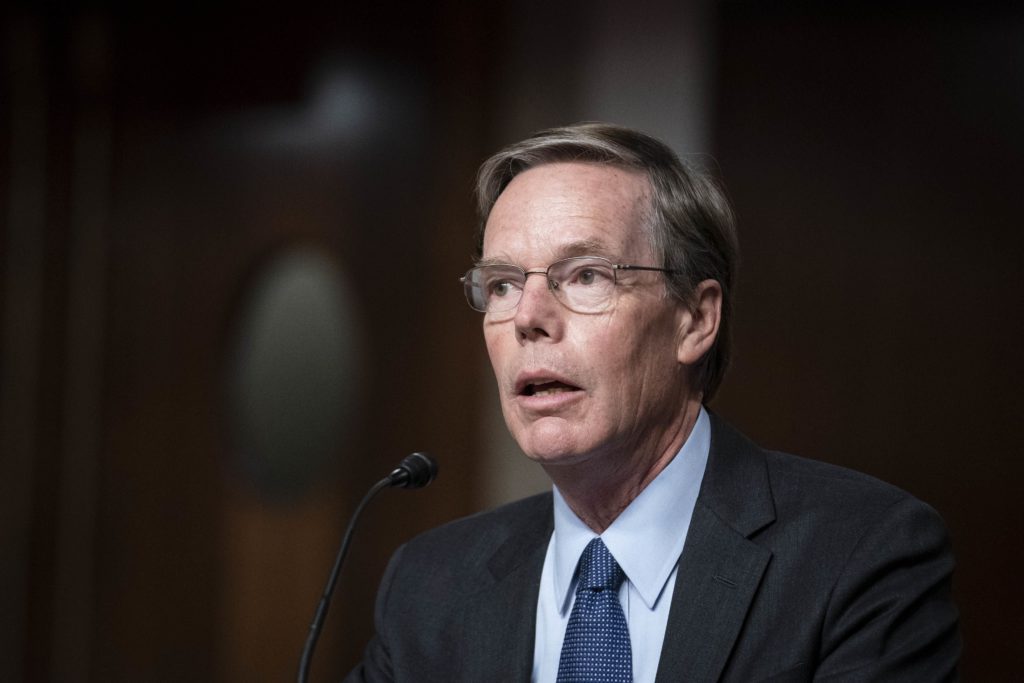
(Bloomberg) — US relations with China are likely in the worst state since former President Richard Nixon’s historic trip in 1972 helped re-establish diplomatic ties between Washington and Beijing, according to Nicholas Burns, the current American ambassador to the Asian nation. 

“This might be the lowest moment since then,” Burns told the Utah Valley University’s China Challenge Summit via video from Beijing on Thursday. “We have seemingly unremitting competition between us.”

The ambassador’s frank comments came as Defense Secretary Lloyd Austin arrived in Singapore for a regional security forum that will include a meeting with a top Chinese defense official.

Noting the “profound divisions” between the US and China on everything from economics and technology to security and human rights, Burns said that Beijing was “pushing out for power militarily against the United States” and allies including Japan, South Korea and Australia.

Americans believe China isn’t playing by the rules on economics and trade, Burns said, adding that there is intense competition between the world’s two largest economies on the key industries of the future, including artificial intelligence and biotechnology. Burns said that commercial competition was fair, “but the Chinese are seeking to militarize many of these technologies, and that presents a real challenge to us.” 

Burns also criticized China for repressive policies in Hong Kong, where he said Beijing has “snuffed out” all remaining freedoms, and in Xinjiang, where he reiterated US accusations that Chinese actions amount to genocide. China has rejected criticism of its policies in Hong Kong and Xinjiang as unwarranted interference in its internal affairs.

More stories like this are available on bloomberg.com

©2022 Bloomberg L.P.

Jack Dorsey and Jay-Z Launch Free Bitcoin Academy to Lift NYC Public Housing Residents

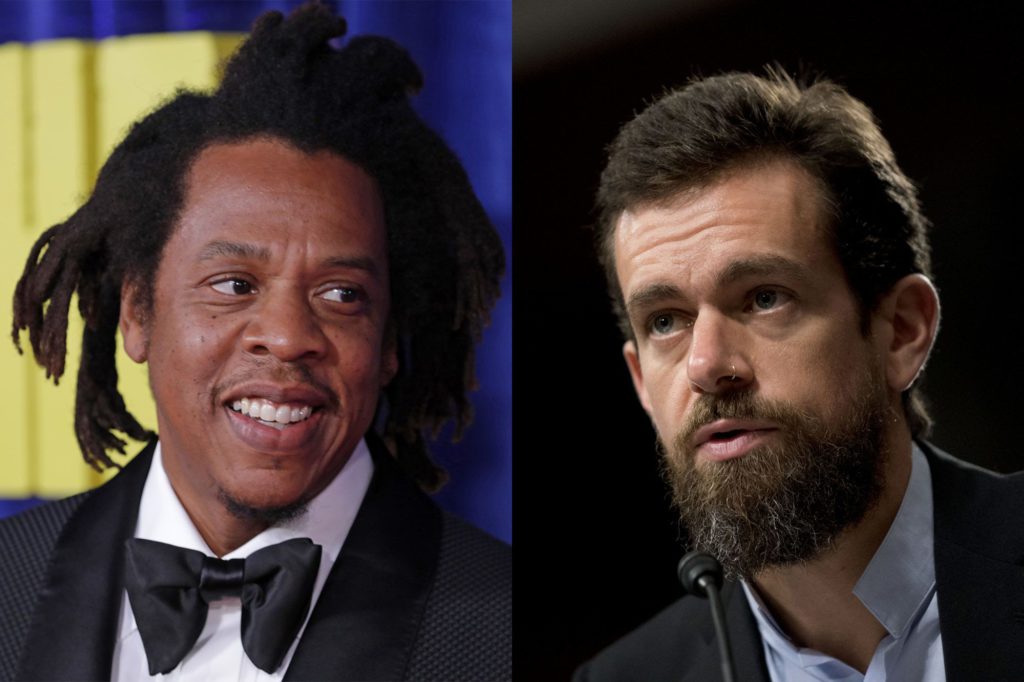
(Bloomberg) — Hip-hop mogul Jay-Z and Block CEO Jack Dorsey are teaming up to take Bitcoin and financial education to the rapper’s childhood home. Dorsey announced the launch of Bitcoin Academy on Thursday. The financial education program will be free for residents living at the Marcy Houses, a public housing complex in Brooklyn.

The program will be offered both in-person and online from June to September. It launches in the midst of a turbulent year for cryptocurrencies. After soaring to almost $69,000 in November, Bitcoin has been in freefall for most of this year, with the largest cryptocurrency tumbling as much as 63% from that all-time high. More than $200 billion in overall market value was erased in a single day after the collapse of TerraUSD in May.

The Bitcoin Academy said it aims to “provide education, empower the community with knowledge” about how to manage their finances with a focus on Bitcoin — which the website describes as the “future of money.” Because the digital asset “doesn’t have barriers,” the pair launched the program to “prove that making powerful tools more available to people enables them to build greater independence,” Dorsey said. 

Dorsey and Shawn Corey Carter, better known as “Jay-Z,” said they wanted to educate residents about Bitcoin after seeing how the cryptocurrency became a “critical tool for many in Africa and Central and South America,” Dorsey said on Twitter. 

An avid Bitcoin enthusiast, Dorsey has said that cryptocurrency would replace banks and bring economic opportunity to the developing world. Jay-Z has a history in the industry, too. The rapper invested in blockchain start-up Alchemy, which has powered a number of web3 giants including the NFT marketplace OpenSea.

Dorsey and Jay-Z are also long-time business partners. In early 2021, Dorsey agreed to pay $300 million for Tidal, the music streaming service owned by the rapper. In return, Jay-Z got a seat on Block’s board of directors as part of the deal.

(Updates with background on the crypto market.)

More stories like this are available on bloomberg.com

©2022 Bloomberg L.P.

Biden’s $52 Billion Chips Plan Stuck; Lawmakers Eye Election

(Bloomberg) — Long-stalled legislation to boost US semiconductor manufacturing and strengthen competitiveness against China risks collapsing in Congress, with Republicans growing skeptical of the measure as midterm elections near and Democrats focusing instead on gun violence.

The bill has been a top priority for Joe Biden’s administration, particularly Commerce Secretary Gina Raimondo, but some lawmakers fault the White House for not being more engaged. And time is running short for Congress to act on it before lawmakers depart for a summer recess and then the campaign trail, with many issues unresolved, according to people familiar with negotiations.

Republicans who had worked with the administration on the measure are now balking at giving Biden a win ahead of the November election, with their party poised for big gains in Congress, the people said. Instead, they aim to write their own China bill after taking control of the House, Senate, or both.

Meanwhile, a push by Senate Democrats to reach consensus on gun-safety legislation after a string of mass shootings, including a massacre at a Texas elementary school last month, has sidelined other work including the chips bill. 

“There needs to be a greater sense of urgency,” said Senator Mark Warner, a Virginia Democrat who is one of the authors of the chips legislation. “I worry that there’s some of us, this is our top priority, but it feels like for too many, this is their second.”

How US and China Jockey for Economic Sway Across Asia: QuickTake

The legislation would provide billions of dollars to boost research and development with an eye toward creating new technologies to help the US stay ahead of a rising China. A key portion of the bill would appropriate $52 billion for domestic semiconductor manufacturing. 

Supporters say that without passage, the US will fall further behind other countries in making the components of everything from fighter jets to vacuum cleaners, putting it at the mercy of overseas supply chains.

Frustration with the Biden administration looms large on Capitol Hill and among business lobbyists who have pushed for the measure. Senators and other people close to the negotiations said the White House has not pressed hard enough on House Speaker Nancy Pelosi and Democrats in her chamber to finish the legislation.

Arizona Senator Mark Kelly, a Democrat who faces a tough re-election contest, said he’d like the White House to get more involved, especially with the House.

Republican supporters of the bill, too, have been puzzled by the White House’s strategy, saying Biden’s team hadn’t pushed House Democrats more forcefully and let months go by without throwing their weight behind what was supposed to be a top priority. 

‘Must-Haves’

“Anyone who’s been around here for a while knows that politics can screw up prospects of good legislation passing, especially in a political year,” Senator Todd Young, an Indiana Republican and one of the bill’s sponsors, said in an interview. “It just needs to remain a priority.”

Raimondo said in an interview that she’s engaged consistently with Pelosi and that she and House Democrats “are very clear-eyed on how this is going to come together.” 

“They understand that an agreement requires 60 votes in the Senate. The president, we, the administration, have asked them to prioritize the absolute must-haves and be practical here,” Raimondo said.

Administration officials concede that any legislation that eventually passes both chambers is likely to be little-changed from the Senate version of the bill that won bipartisan support in June 2021. 

The officials believe the private sector could do much more to maintain lawmakers’ focus on the bill and especially to prod Republicans to vote for it. Semiconductor companies have been vocal in asking lawmakers to advance the legislation, but companies that consume chips, such as medical devices and consumer electronics makers, have been much more muted, people close to the talks say. 

One official said it appears as if the business community is trying to run out the clock so Congress won’t have time left for a budget reconciliation package, which would increase corporate taxes.

The officials asked not to be identified because of the sensitivity of the negotiations.

Engineer Charged With Stealing Chip Technology Thriving in China

Some Republicans have also grown more hesitant to negotiate on the bill after being targeted as soft on China by conservative television personalities and former President Donald Trump’s trade representative, Robert Lighthizer. At issue are trade provisions of the measure that would roll back China tariffs imposed by Trump. 

Lighthizer, the chief architect of the duties, has re-emerged to help shape the final version of the bill, which has complicated talks for some Republicans, according to people familiar with the matter.

Some lawmakers have pushed to simply pass the money for chips manufacturing by itself, or as part of higher priority legislation such as spending bills. That’s still a possibility, but it would cast negotiations on the broader bill as a waste of time.

Intel Corp., Samsung Electronics Co. and Taiwan Semiconductor Manufacturing Co. would be among the biggest beneficiaries of the measure. All three have committed to investing billions in new manufacturing in the US but have made clear the projects are contingent on Congress approving the subsidies.

Senior administration officials aren’t yet ready to give up on a compromise and say they’re not at the point of asking congressional leaders to pass the chips funding by itself.

“That’s going to be based on their assessment of what’s the art of the possible and what time frame,” Raimondo said.

But there’s new urgency that didn’t exist a year ago: The same companies that want to invest in the US are being courted by Germany, South Korea and other countries to build plants in their countries. And those governments are already offering subsidies, even with momentum fast eroding in Washington. 

(Adds Republican senator’s comments in 11th paragraph.)

More stories like this are available on bloomberg.com

©2022 Bloomberg L.P.

Close Bitnami banner
Bitnami