
Bloomberg

Tesla Autopilot Scrutiny Grows as US Upgrades, Expands Probe

(Bloomberg) — US authorities have expanded an investigation into Tesla Inc.’s Autopilot system after about a dozen collisions at crash scenes involving first-responder vehicles, the latest sign that regulators are stepping up scrutiny of the automated driving features.

The probe, initially announced by the National Highway Traffic Safety Administration in August, was widened to cover an estimated 830,000 Tesla Model Y, X, S and 3 vehicles from the 2014 model year onward. The regulator, which has the power to deem cars defective and order recalls, said the vehicles now under investigation have been involved in 14 crashes that resulted in 15 injuries and one fatality.

The probe was also converted from a preliminary investigation to an engineering analysis, according to documents posted Thursday on the NHTSA’s website. The agency says the move will allow it to “extend the existing crash analysis” and take other steps to determine the extent to which Tesla’s technology “may exacerbate human factors or behavioral safety risks by undermining the effectiveness of the driver’s supervision.”

See also: Tesla Autopilot Stirs US Alarm as ‘Disaster Waiting to Happen’

Tesla didn’t respond to a request for comment. Its shares rose 2.8% at 12:44 p.m. in New York after data released earlier showed a rebound in the company’s production in China. The stock fell 31% this year through Wednesday’s close.

In a statement, NHTSA addressed a common misconception over automated driving systems, often referred to as self-driving, saying that “no commercially available motor vehicles today are capable of driving themselves.”

In the documents posted Thursday, the agency cited “foreseeable misuse” of Autopilot as a factor in its decision to expand the probe.

“A driver’s use or misuse of vehicle components, or operation of a vehicle in an unintended manner does not necessarily preclude a system defect,” the agency wrote. “This is particularly the case if the driver behavior in question is foreseeable in light of the system’s design or operation.”

Increased Scrutiny

Tesla is facing increased federal scrutiny on multiple fronts. Last week, NHTSA announced it’s investigating 758 complaints of Tesla cars that suddenly brake at high speeds, part of a probe launched in February into the so-called “phantom braking” phenomenon. No crashes or injuries stemming from the braking issue have been reported.

Tesla has marketed driver-assistance features using the names Autopilot and Full Self-Driving that still require drivers to keep their hands on the wheel. The company has drawn criticism from the likes of the National Transportation Safety Board, former NHTSA leaders and members of Congress over issues including how it has branded the systems and whether it does enough to safeguard against inattentiveness and misuse.

Safety advocates in Washington cheered NHTSA’s move to expand the probe into the company’s Autopilot system on Thursday. 

“NHTSA appears to be increasingly closer to taking firm action against Tesla, which will hopefully be strong enough to permanently dissuade the company from continuing to mislead the public about the capabilities of its vehicles,” Michael Brooks, acting executive director and chief counsel of the Center for Auto Safety, said via email.

(Updates with shares in fourth paragraph, safety advocate comment in final paragraph.)

More stories like this are available on bloomberg.com

©2022 Bloomberg L.P.
Salesforce Investors Reject Racial Audit in Activist Loss

(Bloomberg) — Salesforce Inc. shareholders rejected a proposal for a racial equity audit in a loss for activist investors.

The resolution called for the board to authorize an independent audit into Salesforce’s impact on racial equity, which includes employees, external civil rights organizations and communities where the San Francisco-based software company operates. Stockholders rejected the bid Thursday during Salesforce’s annual meeting, the company said, without specifying the vote. Final totals on the proposal will be released later.

The company’s board opposed the proposal, saying it already discloses employee demographics, and its efforts on racial justice have resulted in “meaningful change.” The board also said Salesforce has reached a goal of 50% of US employees from “underrepresented groups,” which includes women, LGBTQ+, veterans, those with a disability and Black, Latinx and Indigenous peoples.

Proponents of the measure said the company’s “underrepresented” metric is overly broad, and that Black and Hispanic employee representation has not meaningfully improved since 2015. They cited the departure in early 2021 from the company of two prominent Black women who said Salesforce’s internal culture was much less progressive than its outward image.

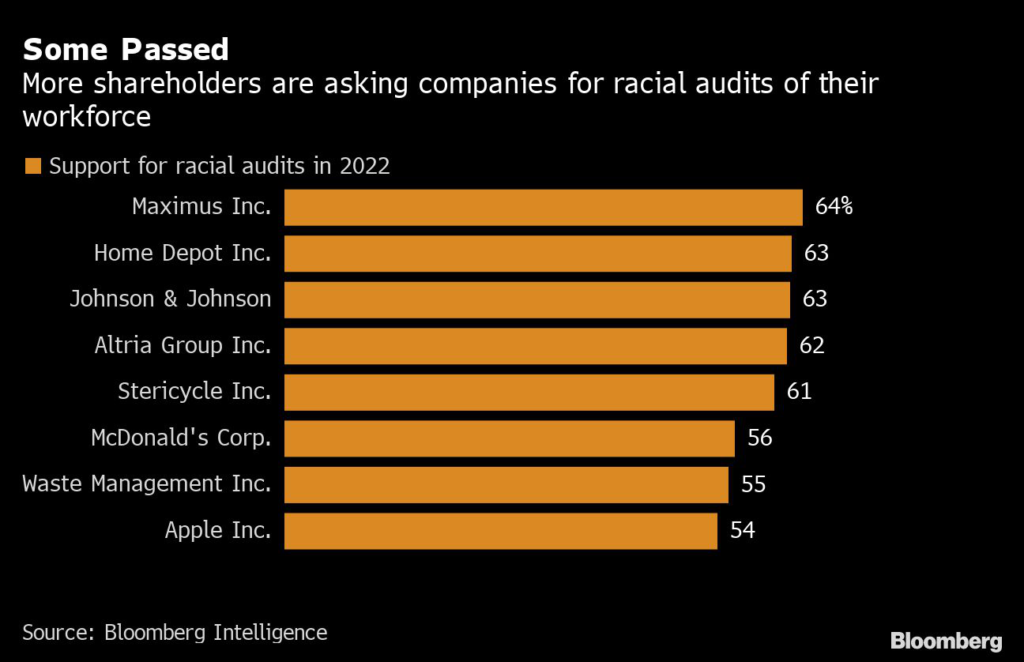
A record number of initiatives on racial justice, gender equality and gun violence have been on the agenda at shareholder meetings this year. McDonald’s Corp., Apple Inc. and at least a half dozen other companies have been asked to conduct racial audits. Several have received significant backing, and others have been adopted by companies even when the vote fails. Microsoft Corp. said Wednesday it would commit to a “civil rights” audit by a third party aimed at improving diversity and inclusion.

According to a Bloomberg analysis of 2020 disclosures, Salesforce’s share of Black and Hispanic workers in management and professional roles lagged many S&P 100 peers. In 2021, leadership was about 70% White and 70% male. Native Hawaiian or Pacific Islanders made up less than 0.2% of U.S. employees despite a corporate identity built around Hawaiian motifs. 

Institutional Shareholder Services Inc., which advises investors on corporate governance votes, recommended against the proposal from the Salesforce shareholders, saying the company has sufficient disclosure and inclusion policies. ISS backing was a key factor in a successful racial audit initiative by Home Depot Inc. investors last month. 

The Salesforce resolution was led by Tulipshare Ltd., a UK-based activist investor platform for retail traders. The group also initiated a proposal aimed at reviewing warehouse conditions for Amazon.com Inc. workers that received 44% of the vote during a meeting last month.  

Another stockholder proposal, to create an independent board chair and oust co-founder and co-Chief Executive Officer Marc Benioff from the role, was rejected. It was initiated by The National Legal and Policy Center, a conservative group that took issue with Benioff’s public support for causes like gun control and reproductive health care access. ISS recommended in favor of the bid, saying that although the company has no specific governance issues, it can be difficult to counterbalance a board chaired by a long-time CEO and founder.

More stories like this are available on bloomberg.com

©2022 Bloomberg L.P.

Nasdaq’s Friedman Says Healthier Markets Needed for IPO Revival

(Bloomberg) — Nasdaq Inc. has companies “on file,” waiting for better conditions before they tap the public markets, according to Chief Executive Officer Adena Friedman.

“It’s a good, healthy pipeline, but they need a healthy environment” before they launch an initial public offering, Friedman said at the Piper Sandler exchange conference Thursday. “We have to see whether that will develop as we go later into the year.”

Friedman’s comments echo earlier statements by the leader of the exchange operator, which helps companies manage the process of going from a private to public corporation. It has 1,000 more listed companies today than before the pandemic, according to Friedman. 

Nasdaq, the second-largest stock exchange in the U.S., bills itself as a technology company. Beyond running the exchange, the New York-based firm offers data, analytics, software and other surveillance services to clients including publicly traded and closely held companies and investors.

Friedman, who took over as CEO of Nasdaq in 2017, has focused on diversifying its revenue stream to make it less reliant on the market for growth. The firm has invested in technology, data and other advisory offerings beyond the exchange where shares in public companies trade.

Despite the slowdown in IPOs and a volatile market environment this year, Friedman said the company has other software products, including for anti-financial crime and investor-relations needs, that contribute recurring revenue. 

“We are an all-weather company,” she said. “We look at ourselves as providing services in a variety of economic backgrounds.”

More stories like this are available on bloomberg.com

©2022 Bloomberg L.P.

SEC Investigating UST Stablecoin Blowup in Fresh Threat to Terra

(Bloomberg) — The US Securities and Exchange Commission is investigating whether the marketing of the TerraUSD stablecoin before it crashed last month violated federal investor-protection regulations, according to a person familiar with the matter.  

SEC enforcement attorneys are looking into whether Terraform Labs, the firm behind the coin also known as UST, broke rules for securities and investment products, said the person who asked not to be named discussing the confidential probe. The stablecoin was supposed to maintain a 1-to-1 peg to the US dollar through an algorithm and trading in a related token called Luna. 

The implosion of UST starting on May 7 sent shock waves across crypto markets. In the aftermath, Treasury Secretary Janet Yellen said the episode exposed the dangers of tokens that purport to be pegged to the US dollar and Acting US Comptroller of the Currency Michael Hsu called it a “wake-up call.” 

The SEC investigation may ratchet up pressure on Terraform and its Chief Executive Officer Do Kwon, which are already facing scrutiny from the regulator for offering another crypto project known as the Mirror Protocol, which lets people to trade digital assets that track the price of US stocks. Neither Terraform nor Kwon has been accused of any wrongdoing related to UST.

The SEC declined to comment. Terraform Labs, which is based in Singapore, said in a statement that it wasn’t aware of an SEC investigation into UST. “We are not aware of any SEC probes into TerraUSD at this time – we’ve received no such communication from the SEC and are aware of no new investigation outside of that involving Mirror Protocol,” Kwon said in a separate statement. 

Stablecoins play a critical role in crypto because their relatively steady value can provide a safe haven for many investors in the highly volatile market. Unlike others that purport to be backed by cash and similar assets to maintain their peg, UST used algorithms and trader incentives to maintain its price. 

Under the mechanism, every time a UST token was created, a dollar’s worth of Luna — the value of which was determined by the market — was destroyed, or vice versa. If the price dropped below $1, traders were motivated to swap UST for Luna, which would decrease the amount of the former in circulation and drive up its price. A computer program would work in tandem to do the same. The opposite occurred if UST’s value rose above $1.

Under securities rules, a virtual currency may fall under the SEC’s remit if Americans buy the token to fund a company or project with the intention of profiting from the efforts of those involved in it. That determination is based on a 1946 US Supreme Court decision defining investment contracts. The agency has also argued that in some instances a crypto firm may face investment-company strictures if it holds assets.

In a February case, the regulator said that BlockFi Inc., a popular crypto platform, was operating as an unregistered investment company “because it is an issuer of securities engaged in the business of investing, reinvesting, owning, holding, or trading in securities and owning investment securities.” The company agreed to pay $100 million in fines to the SEC and state regulators to settle those allegations and others without admitting to the alleged violations.

Terra’s unraveling marked one of the biggest crypto busts in history, wiping out tens of billions of dollars in value. Since then Terraform has relaunched its blockchain and the Luna coin, which plunged close to zero during the debacle, under new names. The TerraUSD stablecoin wasn’t included in the new version.

Meanwhile, in a separate development Bloomberg News reported on Thursday that Seoul police are investigating allegations that staff of Terraform Labs embezzled Bitcoin holdings amassed to help defend the UST’s peg to the dollar. The firm didn’t immediately respond to en email seeking comment on that probe. 

More stories like this are available on bloomberg.com

©2022 Bloomberg L.P.
Bolsonaro’s Plan to Curb Inflation Reaches Brazil Congress

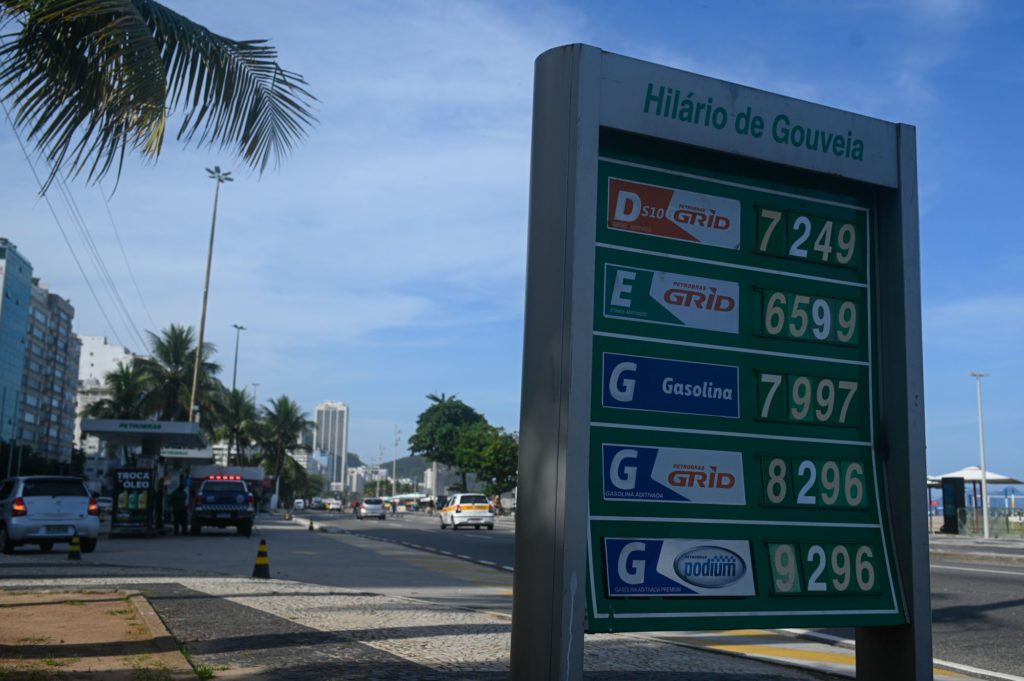
(Bloomberg) — Brazilian lawmakers are debating three proposals to lower the price of fuel and other items, President Jair Bolsonaro’s latest attempt to curb inflation that’s eroding his popularity less than four months before October’s election.

The proposals reached the senate Wednesday and are expected to go to a vote next Monday as the government wants them approved before congress starts its mid-year break in July. 

Fuel prices have become a headache for most global leaders in the aftermath of the pandemic and the war in Ukraine. For Bolsonaro, time is running out as he trails former President Luiz Inacio Lula da Silva in all electoral polls, with a growing number of Brazilians blaming him for soaring prices. 

Read More: Brazil’s Economic Troubles Leave Lula Closer to Winning Election

Inflation would be 2.9 percentage points lower this year if the plan is fully approved, according to local asset manager XP Inc. But since most measures run out by year-end, prices would quickly rise in 2023, said Caio Megale, chief economist at XP.

Here are the three proposals and their main points:

Tax Cap

  • A proposal that caps at 17% to 18% a state tax known as ICMS on fuel, electricity, public transportation and telecommunications is currently in the senate after being approved by the lower house
  • This week, at the government’s request, the rapporteur of the bill amended the proposal which now also removes a number of federal taxes on ethanol and gasoline
  • As a complementary bill, it needs to be approved by 41 of 81 senators and 257 of 513 lower house representatives
  • The proposal allows states to reduce debt owed to the federal government in case revenue stemming from the ICMS tax charged on those items falls by more than 5%

Scrapping Taxes

  • This constitutional amendment determines that the Treasury will make up for revenue losses of states that agree to completely remove until the end of the year the ICMS tax on diesel, natural gas and cooking gas, and lower to 12% the same tax on ethanol
  • It establishes a limit of 29.6 billion reais ($6 billion) for that compensation, which would be paid by the Treasury in five monthly installments of up to 5.9 billion reais ($1.2 billion)
  • As a constitutional amendment, it must be approved by 49 senators and 308 lawmakers in a total of four rounds of voting, two in the lower house and two in the senate

Biofuels Bill

  • This constitutional amendment sets a favorable tax regime for biofuels to ensure they remain cheaper than fossil fuels
  • Details will be determined in a supplementary law
  • It also needs to be approved by 49 senators in two senate votes and 308 deputies in two lower house votes.

Governors are critical of the proposals, saying they will mean a total revenue loss of about 100 billion reais ($20.5 billion) a year. Bolsonaro’s administration calculates such losses at 65 billion reais ($13.3 billion).

“The goal of reducing prices won’t be achieved with a major fiscal crisis in states and municipalities,” Bahia state Governor Rui Costa told reporters after meeting with the bill’s rapporteur, Senator Fernando Bezerra. 

More stories like this are available on bloomberg.com

©2022 Bloomberg L.P.
Apple Plans 15-Inch MacBook Air for 2023 and New 12-Inch Laptop

(Bloomberg) — Apple Inc. plans to expand the lineup of laptops using its new, speedier in-house chips next year, aiming to grab a bigger share of the market, people with knowledge of the matter said.

The company is working on a larger MacBook Air with a 15-inch screen for release as early as next spring, said the people, who asked not to be identified because the plans aren’t public. This would mark the first model of that size in the MacBook Air’s 14-year history. Apple is also developing what would be its smallest new laptop in years. 

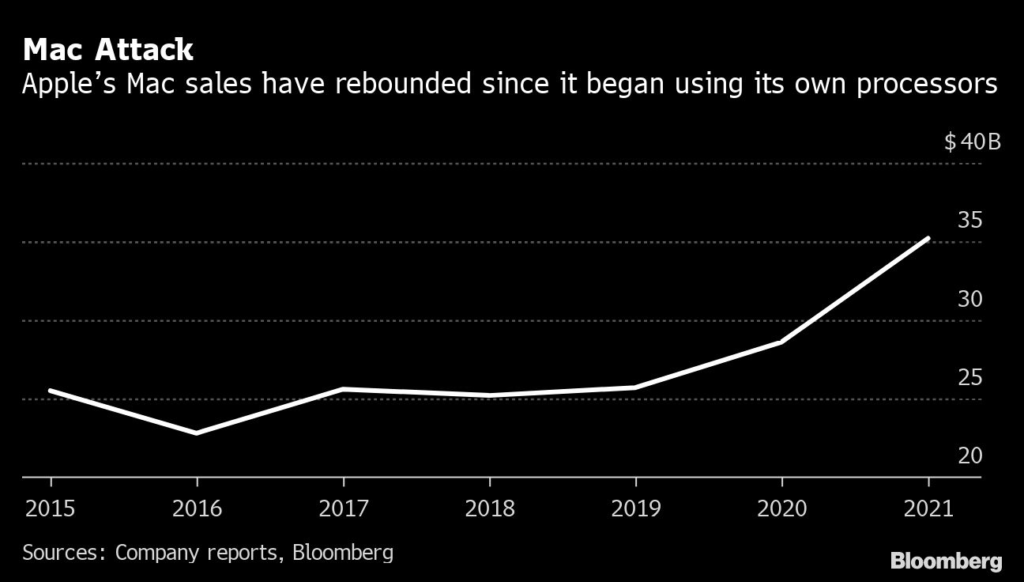
The new models underscore Apple’s strategy to use homegrown processors to make gains in a market led by Lenovo Group Ltd. and HP Inc. The company began splitting from longtime partner Intel Corp. in 2020 and announced its latest chip, the M2, at a developers conference earlier this week. Better performance and new designs have helped spur a resurgence for the Mac lineup, which accounts for about 10% of Apple’s sales.

The 15-inch model under development is a wider version of the 13.6-inch MacBook Air that Apple announced this week. That design, unveiled at the developers event Monday, is thinner than recent models, relies on the M2 chip and abandons the previous wedge-shaped frame. It’s considered to be the biggest overhaul to the MacBook Air since it was introduced by Steve Jobs in 2008.

Apple had previously considered a 15-inch variation for this year’s MacBook Air, but shelved those plans to focus on the 13.6-inch version. Still, even that model will take time to reach consumers. Despite the unveiling this week, supply-chain constraints will prevent it from going on sale until July. 

Apple has also begun work on a new 12-inch laptop and is considering launching it at the end of 2023 or in early 2024. If Apple moves forward with the release, it would represent the company’s smallest laptop since it discontinued the 12-inch MacBook in 2019. 

A spokesperson for Cupertino, California-based Apple declined to comment on the company’s plans.

Apple debuted its last 12-inch laptop in 2015 with a slim frame, but the device was criticized for keyboard failures and sometimes sluggish performance. It’s unclear if the new 12-inch laptop would be a low-end device or a higher-end machine that’s part of the MacBook Pro line, which currently comes in 13.3-inch, 14.2-inch and 16.2-inch sizes.

Between 2003 and 2006, Apple also sold a 12-inch version of the PowerBook, the predecessor to the MacBook Pro. And it briefly offered a MacBook Air with an 11.6-inch screen. Apple’s new Mac processors, based on the same architecture as the iPhone and iPad, are designed to let the company boost performance inside of slimmer casings. 

Apple is also planning new high-end MacBook Pros with M2 Pro and M2 Max chips for as early as the end of 2022, though the release date may slip into early 2023. These new 14-inch and 16-inch models, codenamed J414 and J416, won’t be radically new products beyond offering the speedier chips. Apple is also releasing a new 13-inch MacBook Pro next month with the same M2 chip as the MacBook Air. 


The M2 Max chip in the next high-end MacBook Pros will include 12 main processing cores and up to 38 graphics cores, up from a maximum of 10 processing cores and 32 graphics cores in the current models. New versions of the Mac mini and a revamped Mac Pro are also in testing within Apple, Bloomberg has reported. And the company is already working on an M3 chip destined for a future iMac and other products.

The shift away from Intel chips has been a success for Apple so far, helping boost Mac revenue significantly. The company reported $10.4 billion in Mac sales during the fiscal second quarter, nearly double the $5.4 billion it generated in the second quarter of 2020, before Apple made the switch.

Apple is also planning to release a larger version of the iPad Pro next year, Bloomberg has reported. The new model will take advantage of new multitasking capabilities included in iPadOS 16. And the company is readying new 11-inch and 12.9-inch iPad Pros for later this year. 

More stories like this are available on bloomberg.com

©2022 Bloomberg L.P.

Biden’s $52 Billion Chip Plan Sputters as Lawmakers Eye Election

(Bloomberg) — Long-stalled legislation to boost US semiconductor manufacturing and strengthen competitiveness against China risks collapsing in Congress, with Republicans growing skeptical of the measure as midterm elections near and Democrats focusing instead on gun violence.

The bill has been a top priority for Joe Biden’s administration, particularly Commerce Secretary Gina Raimondo, but some lawmakers fault the White House for not being more engaged. And time is running short for Congress to act on it before lawmakers depart for a summer recess and then the campaign trail, with many issues unresolved, according to people familiar with negotiations.

Republicans who had worked with the administration on the measure are now balking at giving Biden a win ahead of the November election, with their party poised for big gains in Congress, the people said. Instead, they aim to write their own China bill after taking control of the House, Senate, or both.

And a push by Senate Democrats to reach consensus on gun-safety legislation after a string of mass shootings, including a massacre at a Texas elementary school last month, has sidelined other work including the chips bill.

“There needs to be a greater sense of urgency,” said Senator Mark Warner, a Virginia Democrat who is one of the authors of the chips legislation. “I worry that there’s some of us, this is our top priority, but it feels like for too many, this is their second.”

How US and China Jockey for Economic Sway Across Asia: QuickTake

The legislation would provide billions of dollars to boost research and development with an eye toward creating new technologies to help the US stay ahead of a rising China. A key portion of the bill would appropriate $52 billion for domestic semiconductor manufacturing. 

Supporters say that without passage, the US will fall further behind other countries in making the components of everything from fighter jets to vacuum cleaners, putting it at the mercy of overseas supply chains.

Frustration with the Biden administration looms large on Capitol Hill and among business lobbyists who have pushed for the measure. Senators and other people close to the negotiations said the White House has not pressed hard enough on House Speaker Nancy Pelosi and Democrats in her chamber to finish the legislation.

Arizona Senator Mark Kelly, a Democrat who faces a tough re-election contest, said he’d like the White House to get more involved, especially with the House.

Republican supporters of the bill, too, have been puzzled by the White House’s strategy, saying Biden’s team hadn’t pushed House Democrats more forcefully and let months go by without throwing their weight behind what was supposed to be a top priority. 

‘Must-Haves’

Raimondo said in an interview that she’s engaged consistently with Pelosi and that she and House Democrats “are very clear-eyed on how this is going to come together.” 

“They understand that an agreement requires 60 votes in the Senate. The president, we, the administration, have asked them to prioritize the absolute must-haves and be practical here,” Raimondo said.

Administration officials believe the private sector could do much more to maintain lawmakers’ focus on the bill and especially to prod Republicans to vote for it. Semiconductor companies have been vocal in asking lawmakers to advance the legislation, but companies that consume chips, such as medical devices and consumer electronics makers, have been much more muted, people close to the talks say. 

The officials asked not to be identified because of the sensitivity of the negotiations.

Engineer Charged With Stealing Chip Technology Thriving in China

Some Republicans have also grown more hesitant to negotiate on the bill after being targeted as soft on China by conservative television personalities and former President Donald Trump’s trade representative, Robert Lighthizer. At issue are trade provisions of the measure that would roll back China tariffs imposed by Trump. 

Lighthizer, the chief architect of the duties, has re-emerged to help shape the final version of the bill, which has complicated talks for some Republicans, according to people familiar with the matter.

Some lawmakers have pushed to simply pass the money for chips manufacturing by itself, or as part of higher priority legislation such as spending bills. That’s still a possibility, but it would cast negotiations on the broader bill as a waste of time.

Intel Corp., Samsung Electronics Co. and Taiwan Semiconductor Manufacturing Co. would be among the biggest beneficiaries of the measure. All three have committed to investing billions in new manufacturing in the US but have made clear the projects are contingent on Congress approving the subsidies.

Senior administration officials aren’t yet ready to give up on a compromise and say they’re not at the point of asking congressional leaders to pass the chips funding by itself.

“That’s going to be based on their assessment of what’s the art of the possible and what time frame,” Raimondo said.

But there’s new urgency that didn’t exist a year ago: The same companies that want to invest in the US are being courted by Germany, South Korea and other countries to build plants in their countries. And those governments are already offering subsidies, even with momentum fast eroding in Washington. 

More stories like this are available on bloomberg.com

©2022 Bloomberg L.P.
McDonald’s Shrinking Menu Means Healthier Foods Are Vanishing

(Bloomberg) — McDonald’s diners have said goodbye to salads. Stock investors should be glad they’re gone.

A pandemic-driven menu overhaul at McDonald’s Corp. has eliminated more nutritious menu options such as grilled-chicken sandwiches and fruit and yogurt parfaits. The world’s biggest restaurant company is trimming out offerings to move diners through lines and drive-thrus faster and with less staff — a key necessity as restaurants struggle to attract and retain workers.

These items likely won’t be returning anytime soon, and that should bolster profitability, BTIG LLC analyst Peter Saleh said. While mounting commodity and wage expenses have weighed on restaurants’ margins in recent quarters, faster service and higher sales can help to offset that. McDonald’s says it has shaved about 30 seconds off of its drive-thru wait times over the past few years, in part thanks to the menu cuts. This has a noticeable impact for investors: Restaurant margin, a key measure that takes into account operating costs, is expected to improve to 16.2% in the second quarter, up from 14% in the prior period, according to estimates compiled by Bloomberg.

“With the shortage of labor, you’re trying to keep your menus as streamlined and as simple as possible,” Saleh said. “For many of these restaurants, their menus get bloated with some of these new items, and then you cut it off to help with speed.”

Restaurant operators are happy with the new strategy, which cut some healthy items due to longer prep time and lower demand. “Our simplified menu enables for speed,” said the National Owners Association, a large group of McDonald’s franchisees, in an email last month viewed by Bloomberg News. An efficient car lane is key to sales growth, according to the group:  “We love fast drive thrus, happy customers, and happy crews.” Franchisees operate about 95% of McDonald’s US locations. 

McDonald’s shares have fallen about 9% so far in 2022, less than the decline of the S&P 500 Index. The stock has 27 buy ratings from Wall Street analysts, with 11 holds and only one sell recommendation. 

Limited Options

The losers, of course, are health-conscious consumers whose options are now limited. Salads, which McDonald’s first introduced decades ago and only made up a very small percentage of sales, are still available in certain local markets, but they’re no longer listed on the McDonald’s website. There are no plans to bring them back nationally right now. Also gone: The 250-calorie Egg White Delight McMuffin, rolled out with much fanfare in 2013 amid a push for nutrition with Olympic gold medalist Gabby Douglas. In comparison, a regular Egg McMuffin has 310 calories.

McDonald’s still offers apple slices and oatmeal with fruit. But it’s clear the fast-food chain, which has faced criticism for not offering more nutritional options, is focusing on core items including burgers, fried-chicken sandwiches and desserts such as a new McFlurry that’s made with chocolate-covered pretzels. The company’s “Favorites Under 400 Calories” menu, started in 2012, is no more. Offerings such as kale salads and wraps with cucumbers and tomatoes have come and gone over the years. 

The Chicago-based company says its menu is fueled by customers’ appetites. “Our transition to a limited menu, involving taking dozens of less popular national and regional items off menus, helped simplify operations for our restaurant crew while also improving our customers’ experience,” McDonald’s said in an emailed statement. “We continue to evaluate our menu through this lens to improve order accuracy and speed.”

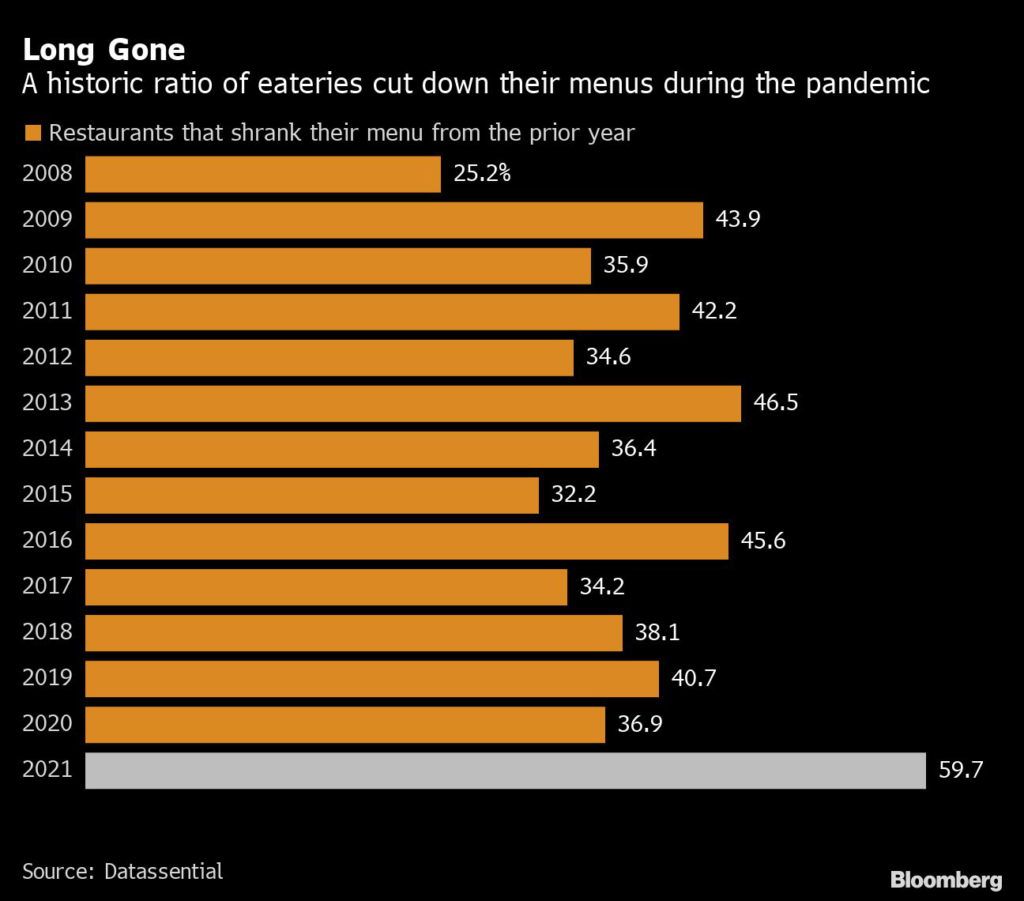
Since Covid-19 upended daily life, restaurant menus have been cut more than 10% on average, according to industry researcher Datassential. Nearly 60% of restaurants last year axed items, especially in the appetizer, dessert and beverage categories, up from the 37% that made cuts the previous year. Burger King, for example, has also gotten rid of salads, removing them from the chain’s national menu in December.

Meanwhile, consumers are tiring of cooking at home, which has helped restaurant sales. But companies will have to work to keep diners’ attention. McDonald’s’ healthy options, while never a big driver of revenue, helped the company to stand out, according to Tom Cook, principal at restaurant consultant King-Casey.

“You always need to have something, some news to drive traffic, particularly these days,” said Cook, who worked with McDonald’s in the mid-2000s to help introduce a handful of new salads, including one with apples. He said the leafy-green entrees were a big deal at the time — even though management knew they’d never rival burgers sales. The goal with salads was to draw in female diners and especially mothers with children, he said. 

“Here’s a case of knowing that it’s never going to be popular and sell a lot, but we’re going to make a big story out of it to communicate that we’re healthy,” he said. “It was a very high priority.”  Fast forward to today, and “they’re just probably saying, ‘we don’t really need those,’” Cook said.

To be sure, the menu cuts have also included indulgent items such as the McChicken biscuit and a bacon, egg and cheese bagel that had more than 500 calories and half-a-day’s worth of salt. But McDonald’s seems to have gone farther than some peers in cutting low-calorie options. For example, Wendy’s Co. and Chick-fil-A Inc. still have salads and grilled chicken on their national lineups.

The story changes to some extent for McDonald’s overseas. Australia offers oat milk, and salads are still on the menu in countries such as Italy and the Netherlands. UK locations offer cucumber sticks. But the disappearance of healthy items at most of the chain’s 13,000 US locations is “a huge step backwards,”  said Lindsay Moyer, senior nutritionist at food and health watchdog Center for Science in the Public Interest.

“You have to wonder if McDonald’s has almost given up trying to pretend they have something to offer people who want healthier items,” she said. 

More stories like this are available on bloomberg.com

©2022 Bloomberg L.P.
Volkswagen Plans to Sell First Electric Car in India in 2023

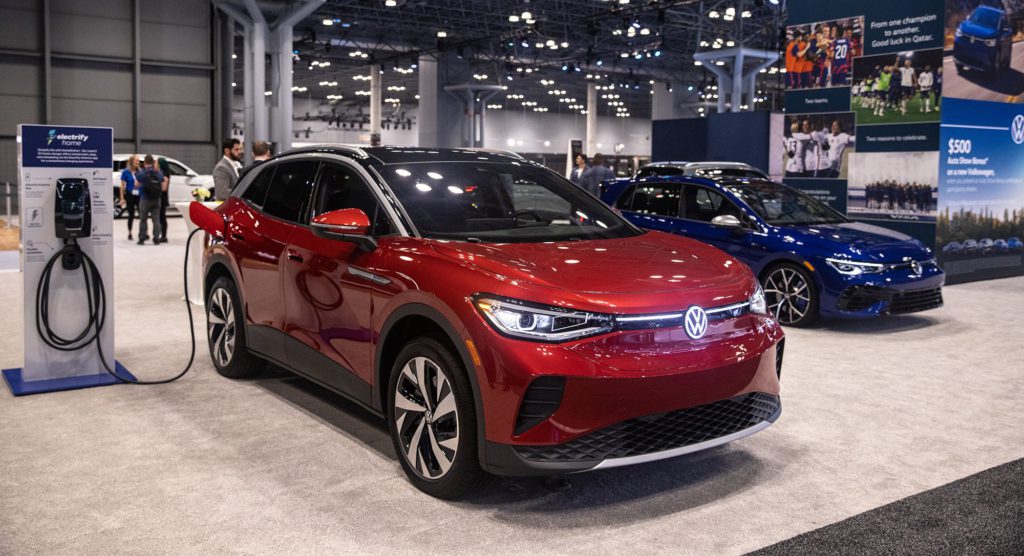
(Bloomberg) — Volkswagen AG is looking to sell its first electric car, the ID.4 sports utility vehicle, in India in limited quantities next year as the South Asian nation pushes for faster adoption of cleaner vehicles.

The German carmaker will begin testing the ID.4 around September for its technical capabilities and if any adaptations are needed for local weather conditions, Ashish Gupta, brand director at Volkswagen’s passenger cars division in India, said in an interview Thursday. Once the testing is over, the company will import a limited number of the electric car next year, he said. 

Since the Indian government allows automakers to import only 2,500 cars without homologation, Volkswagen will bring its global electric portfolio into the country within that limit to test the market, Gupta said. While it would like to import all 2,500 units, the availability of vehicles is a concern worldwide due to worsening supply chain constraints, he said. 

Volkswagen is expecting to start local assembly of its electric cars in India around 2025 or 2027, Gupta said. At that time, the carmaker will consider making its own batteries — the costliest component of an EV — locally in India, he said.

India, the world’s fourth-largest automobile market, is seeing a spurt of interest from global carmakers in the race for green mobility. Volkswagen’s EV will be up against Honda Motor Co.’s first hybrid electric sedan in India, priced at 1.95 million rupees, or about $25,000. Japanese giant Toyota Motor Corp. has agreed to consider adapting its hydrogen-powered fuel cell car, the Mirai, for local road and weather conditions. Kia Corp. is bringing its first electric car to the country later this year, while Hyundai Motor Co. has vowed to roll out six battery models by 2028 and launch its first electric crossover SUV, the Ioniq 5, this year. 

Rising commodity prices have had a significant impact on Volkswagen’s margins despite two price hikes to offset inflation, Gupta said. It will raise prices of vehicles further as it doesn’t have the capacity to absorb surging input costs that have increased 10%-12% on an average this year, he said. 

For many carmakers, including Volkswagen, Ukraine was a provider of specific components, whose supply has been hit because of the war, Gupta said. Russia and Ukraine are major sources of metals such as nickel, which is used to make high-strength steel for automobiles, he said. Volkswagen is making an effort to increase the capacity of existing suppliers and form alternate supply chains. It’s offering new variants in cars to counter the shortage of infotainment and display systems, he said.

The supply chain constraints and semiconductor shortage will continue for the next six months at least, he said. The supply squeeze has resulted in higher wait times for Volkswagen’s cars. The waiting period for the Taigun small SUV is two months and the backlog is as much as six months for some higher variants, he said.

More stories like this are available on bloomberg.com

©2022 Bloomberg L.P.

Paul Allen Institute Helps South Africa Thwart Locust Swarms

(Bloomberg) — South Africa is bracing for a repeat of last season’s locust swarms, the worst in decades, and is banking on a tracking technology backed by the institute of Microsoft Corp.’s late co-founder, Paul Allen, to tackle the infestation. 

Agri Eastern Cape, which represents farmers in the coastal province, started using the Allen Institute for AI’s EarthRanger system in April to pinpoint where swarms will erupt in September and October, according to Jason Kümm, manager of rural safety and communications, at the organization.

“Things are quietening down but these locusts have laid eggs,” he said in an interview. “EarthRanger has allowed ueas to understand where this has taken place. When conditions are right and these eggs hatch, we will have the resources in place.”

Swarms that spread across the Eastern Cape and neighboring provinces in the summer growing season were as big as 10,000 hectares (24,711 acres) in some cases and the infestation rivaled those seen in 1935 and 1983. 

The locusts razed pastures used to feed livestock across large parts of the region, including in areas that were recovering from eight-year droughts. The heaviest rains since records began in 1921 in many districts allowed the insects to multiply rapidly. While citrus-growing areas were infested, the locusts didn’t cause significant damage to fruit trees. 

The area is also home to dairy farms and sheep and angora goats, whose hair is used in mohair garments.

“This is one of the biggest we have experienced in history,” said Gunther Pretorius, manager for economics and natural resources at Agri Eastern Cape. 

EarthRanger allows farmers to call in reports of swarms, and whether the locusts are at a juvenile hopping stage or already airborne. Those are then logged and tracked on the system, allowing for more efficient allocation of pesticides and resources. They can also decide whether ground teams or aircraft are needed to tackle the insects. 

Offered as a free service, the tracking system was developed in 2015 as part of the Great Elephant Census, a program to measure the size of Africa’s savanna elephant population by assessing data from aerial surveys. It was first used primarily to help protect elephant populations.

Waves of locusts often plague the Horn of Africa and Kenya, razing crops and pastures as recently as last year.

(Updates with Great Elephant Census in second last paragraph)

More stories like this are available on bloomberg.com

©2022 Bloomberg L.P.

Close Bitnami banner
Bitnami
