
Bloomberg

Amazon’s CEO Talks Present and Future Challenges, Opportunities

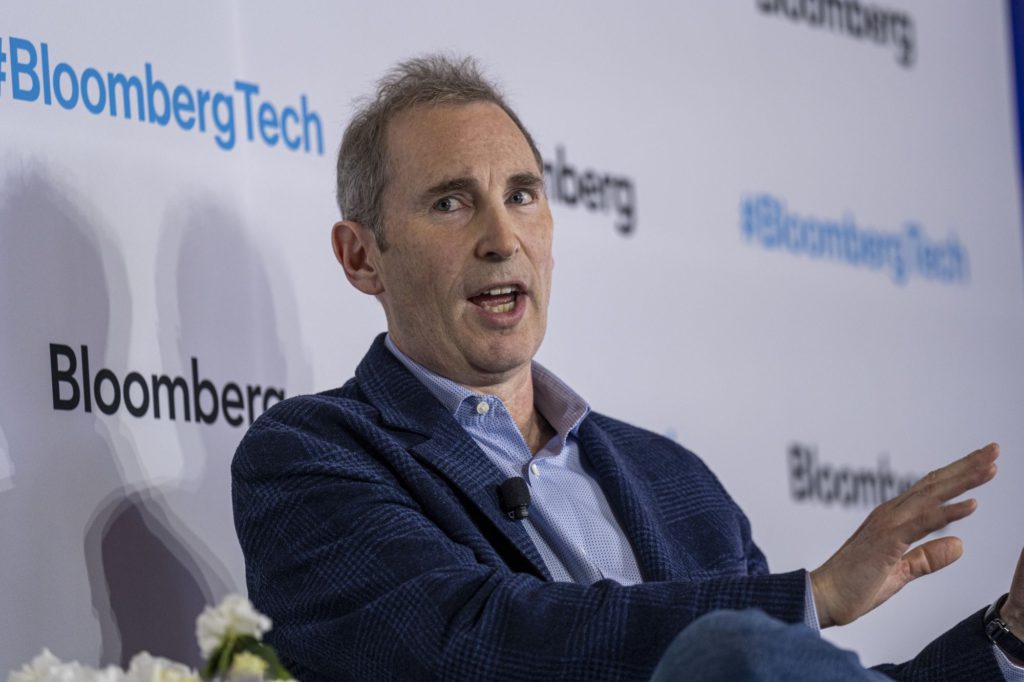
(Bloomberg) — Amazon.com Inc. Chief Executive Officer Andy Jassy, in a wide-ranging interview at the Bloomberg Technology Summit in San Francisco, discussed the departure of his consumer chief and pledged to keep investing in such moonshots as autonomous vehicles, video streaming and internet satellites.

Asked about the departure of Dave Clark, who is leaving to run logistics software startup Flexport Inc., Jassy said he doesn’t blame the 23-year veteran for moving on to something new. 

“I think that Dave wanted a different gig at this point, and I don’t begrudge him at all,” Jassy said Wednesday. 

Clark was instrumental in building Amazon’s massive warehousing and logistics network, which proved to be a lifeline for many shoppers during the pandemic. But the company has too many workers and warehouses now that consumers have returned to their usual spending habits, and Amazon is seeking to sublease some of its facilities. Amazon during the first quarter posted its first loss in seven years and the slowest revenue growth since 2001. 

Jassy said the company had made the decision early in the pandemic to err on the side of having too many workers and too much warehouse space rather than too little. “We knew it might mean that we might have more capacity for some short period of time,” he said.

Turning to the global supply chain, he said there were still “a lot of challenges” that wouldn’t recede soon. Amazon is placing orders from suppliers significantly earlier than it used to and has worked to get access to more ports, he said. 

Despite slowing online sales growth and harbingers of a global recession, Jassy said Amazon was continuing to invest in big bets — including building a grocery chain, launching a constellation of internet-beaming satellites, Alexa software and Zoox, the company’s autonomous taxi subsidiary. 

Lord of the Rings

Jassy expressed optimism about Amazon’s streaming video businesses even as rival Netflix Inc. lays off staff amid subscriber losses. “I’m incredibly encouraged about what we have coming” in Prime Video, he said, including a big-budget series set in the Lord of the Rings universe. Some of the assets from its recently acquired film studio Metro-Goldwyn-Mayer “will go very well with what we’re doing entertainment-wise,” he added.

The CEO said he didn’t know if all of these moonshots would be a long-term success but said if any met Amazon’s goals “we’re a completely different company.”  

Jassy also addressed the labor unrest roiling Amazon’s warehouses.

Workers at an Amazon warehouse in New York’s Staten Island voted earlier this year to join the upstart Amazon Labor Union. The company is challenging the result. The same group failed in a second vote at a smaller facility, but Amazon faces organizing efforts from unions across the US who accuse the company of pushing punishing productivity goals at the expense of worker safety. 

It’s up to Amazon workers whether to join a union, Jassy said, echoing US labor law that codifies that right. “We happen to think they’re better off without a union,” he added, saying it’s easier for managers to get feedback from employees and for teams to make improvement on the fly under the current regime. 

“We need to continue to provide the right benefits and we need to continue to work on safety, and that’s our intention,” he said. 

Jassy also sought to rebut persistent criticism that Amazon is a sometimes abusive operator of its third-party marketplace, which hosts millions of sellers. Some of those small businesses have long said the company pushes them to use extra services like logistics and advertising that cut into their profit. They also claim Amazon’s largely automated system leaves them little recourse when something goes wrong, complaints that have found receptive ears in Congress and among US regulators. 

Amazon was working to improve services for sellers, and Jassy said “we agonize over every single email or communication we get from sellers that’s, you know, critical or where they’re unhappy.” Still, he said, “a lot more sellers are happy with Amazon than unhappy with Amazon.”

Online merchants throng to Amazon in part because they can easily reach the company’s millions of customers, he said. A large customer base, he added, is much more compelling than e-commerce software that lets merchants set up their own web stores. Shopify Inc. and other e-commerce software startups thrived during the pandemic by helping businesses sell directly to shoppers.

Jassy said his predecessor, Jeff Bezos, who remains Amazon’s executive chairman, is still involved at the company despite spending more time on philanthropy and his space company Blue Origin.

“It’s very useful for me to be able to seek his counsel,” Jassy said. “He did the job for so long, and he’s always made himself available.”

More stories like this are available on bloomberg.com

©2022 Bloomberg L.P.

Do Celebrities Have a Responsibility to Fans When Backing an NFT?

  • Listen to Bloomberg Crypto  on the iHeartRadio App

  • Listen to Bloomberg Crypto  on Apple Podcasts

  • Listen to Bloomberg Crypto  on Spotify

(Bloomberg) — Did you know that both Madonna and Justin Bieber own expensive digital images of apes? It’s true: Bored Apes and other nonfungible tokens are a must-have celebrity accessory these days. But should you put your trust in movie stars, pop singers and athletes when it comes to crypto? What are some of the legal questions at play with these celebrity endorsements? Bloomberg reporter Misy Egkolfopoulou stops in for a look at what’s behind the buzz with celebrities’ interest in crypto investments.

Follow us on Twitter @crypto, and subscribe to the Bloomberg Crypto Newsletter at https://bloom.bg/cryptonewsletter

More stories like this are available on bloomberg.com

©2022 Bloomberg L.P.

Intel Drags Down Chipmakers With Views on Weakening Demand

(Bloomberg) — Intel Corp., the largest maker of computer processors, dragged down chip industry stocks after executives said a weaker economy will affect demand and hurt financial performance.

“I think on the macro side, clearly, it’s weaker,” Chief Financial Officer Dave Zinsner said Tuesday at a Bank of America conference. “That’s clearly going to impact us, as it will virtually everybody else in not only the semiconductor industry but globally in terms of corporations.”

Zinsner’s comments added to concern that booming demand for semiconductors and electronics in general is going to be slowed by inflation and weaker consumer and corporate spending. Zinsner declined to update the company’s projections for the second half of the year, forecasts that some analysts had already projected were too optimistic. 

The Santa Clara, California-based company’s products are the heart of the majority of the world’s personal computers and are the key component in most of the servers that run data centers and corporate networks. 

Intel shares fell 5.3% to $41.23 at Wednesday’s close in New York, the lowest price since October 2017. Intel’s drop paced declines by semiconductor industry stocks. Advanced Micro Devices Inc. dropped 3.2% while Nvidia Corp. fell 1.5%. The Philadelphia Stock Market Semiconductor Index declined 2.4%. 

In April, Intel gave a disappointing second-quarter sales and profit forecast, indicating weaker demand for all types of its semiconductors. PC chip revenue dropped in the first quarter as some customers cut orders to reduce unsold inventory and consumers bought fewer devices for education purposes, Intel said at the time. Nonetheless, Intel executives stuck by annual projections arguing that demand would improve in the second half of the year. 

“I think we’ll wait to give a firm number when we get all the data for this quarter,” Zinsner said at the conference. “At this point, I would just say it’s gotten a lot noisier than it was even a month ago.”

(Updates with closing share prices in the fifth paragraph.)

More stories like this are available on bloomberg.com

©2022 Bloomberg L.P.

Alibaba, Bilibili Extend Gains as China Approves More Games

(Bloomberg) — US-listed Chinese stocks rallied for a third day after China approved a second batch of video games this year, marking a further softening in the country’s stance toward internet firms.

The Nasdaq Golden Dragon China Index gained 5.7% on Wednesday, hitting a three-month high and extending an 8.9% rally across the previous two sessions. Tech giant Alibaba Group Holding Ltd. was among the top gainers, advancing 15% to its highest since early February. Live-streaming platform Bilibili Inc. jumped 6%, while e-commerce firm JD.com rose 7.7%. 

After a tech crackdown that ensnared sectors from e-commerce to fintech and even online education, Beijing has taken a more lenient line, introducing policies aimed at propping up the group and the Chinese economy. The Wall Street Journal reported that regulators are preparing to wrap up their investigation into Didi Global Inc. and restore the ride-hailing giant’s main apps to mobile stores as soon as this week.

“The worst is behind us in terms of earnings and regulations,” said Adam Montanaro, investment director at Abrdn. The gaming approvals are a continuation of “the government’s more supportive tones and gestures toward the internet economy,” he said.

Bruised Chinese internet stocks have emerged as a bright spot at a time when US peers are still gripped by prospects of higher interest rates. Easing of lockdown measures in major cities, together with a string of better-than-expected earnings, are also boosting risk sentiment. 

That said, Beijing’s persistence with its Covid Zero strategy remains a source of concern, and some bearish strategists, including DZ Bank AG’s Manuel Muehl, view the current optimism as premature.

Read more: Contrarian Who Called China Tech Rout Says Sector Still a Sell

The gains have trimmed the Nasdaq Golden Dragon China Index’s drop this year to 11%, beating the Nasdaq 100’s 23% slump. While the basket has topped a key moving average, it’s still down more than 60% from its peak set in February last year.

(Updates shares and chart at close)

More stories like this are available on bloomberg.com

©2022 Bloomberg L.P.
Invest in Crypto Ecosystem, Just Not the Coins, PGIM COO Says

(Bloomberg) — Investing in the future of the crypto industry doesn’t need to require buying digital currencies, according to a PGIM executive. 

Investors should focus on the so-called picks and shovels of the crypto arena, who are helping to build out the industry’s infrastructure, Taimur Hyat, PGIM chief operating officer, said. While speculative traders may be able to turn a quick profit, there’s not a long-term case for buying actual cryptocurrencies, which Hyat says are highly correlated with equities and offer no portfolio diversification benefits. 

“There’s a bit of a misconception that if you believe in the crypto ecosystem, you have to invest in a cryptocurrency,” Hyat, who oversees operations at the $1.4 trillion asset manager, said on Bloomberg’s “QuickTake Stock” broadcast. “We do see value in some of the incidental innovation that’s happened in the creation of these currencies, where you don’t need to go into the currency itself. But you can invest in blockchain, particularly private-permission blockchains and all the infrastructure around them. You can invest in smart contracts and the companies using smart contracts.”

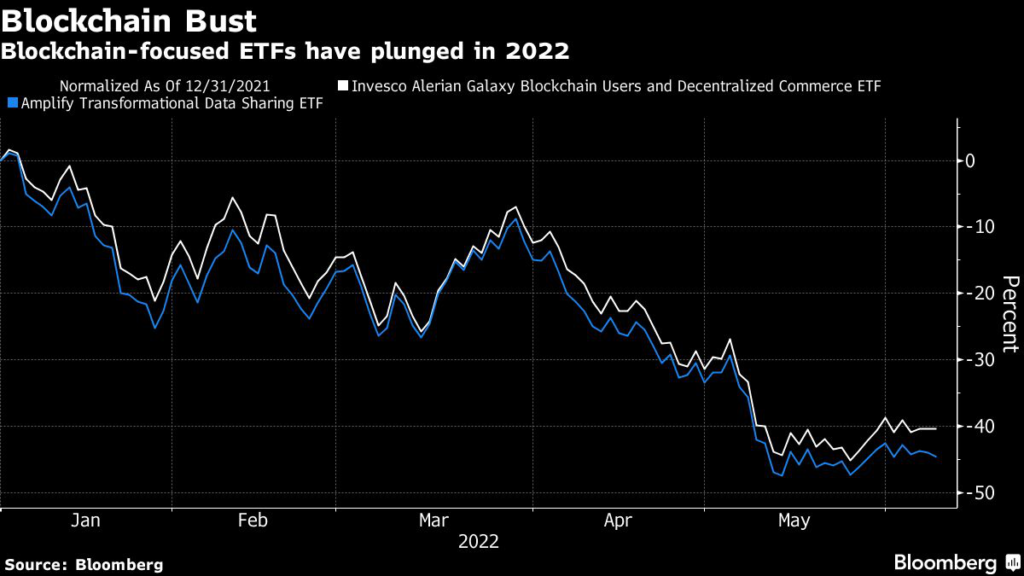
Exchange-traded funds that seek to capture those themes are deeply underwater. The Invesco Alerian Galaxy Blockchain Users and Decentralized Commerce ETF (ticker BLKC), which tracks firms engaged in blockchain technology that aren’t necessarily tied to cryptocurrency, has plunged more than 40% so far this year. The Amplify Transformational Data Sharing ETF (BLOK) has dropped more than 44%. 

That’s a bigger decline than Bitcoin itself, which has fallen roughly 35% in 2022 as inflation builds and the Federal Reserve tightens monetary policy, lowering demand for riskier asset classes.

Additionally, there’s opportunity to be found in the metaverse, Hyat said. Companies such as Meta Platforms Inc. — formerly known as Facebook — have invested heavily in the nascent digital world, an investment that will mean losing “significant” amounts of money in the near term. 

“People should be looking at the metaverse and virtual reality,” Hyat said. “At the moment, it’s like the 1990s; there’s going to be a lot of losers and a couple of winners. We haven’t yet picked who those winners are but it’s a space where there’s so much value creation that you have to look at it.”

More stories like this are available on bloomberg.com

©2022 Bloomberg L.P.
SEC Chief Takes Aim at Payment-for-Order Flow in Sweeping Plans for Stock Markets

(Bloomberg) — Wall Street’s top regulator previewed a set of sweeping changes to rules underpinning the US stock market, setting up a major clash with some of the biggest names in equity trading.

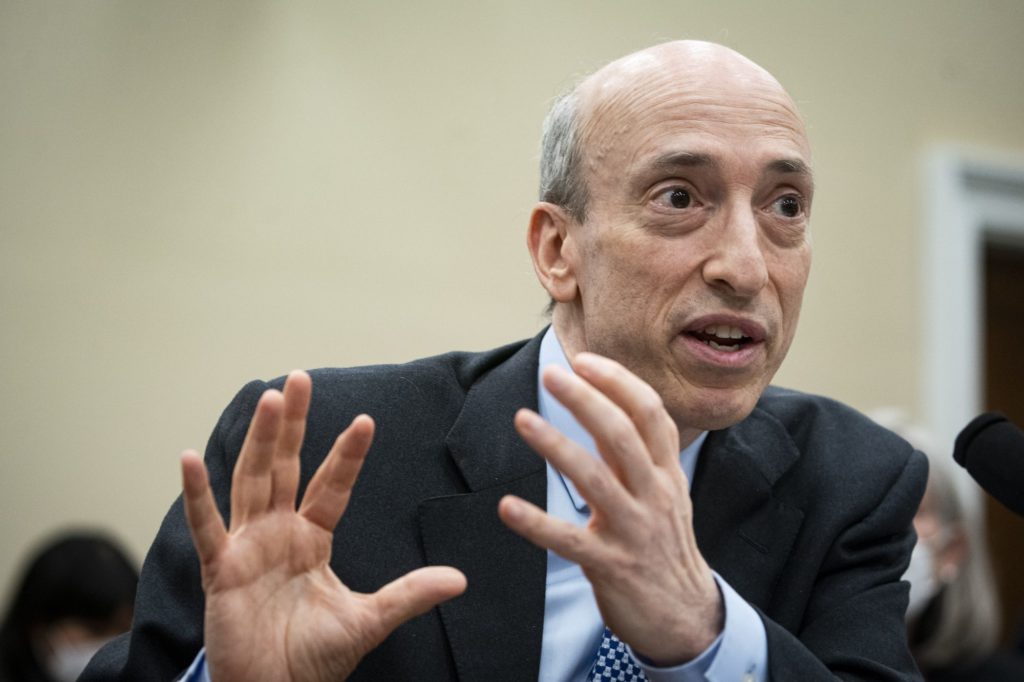
Securities and Exchange Commission Chair Gary Gensler said he’s asked the agency’s staff to weigh the moves with the aim of making the $45 trillion US equities market more transparent and fair. 

His plans could directly impact how firms including Citadel Securities, Virtu Financial Inc. and Robinhood Markets Inc. process retail trade orders, and market dynamics that industry executives say have allowed brokerages to stop charging their clients commissions. 

The changes outlined by Gensler would require two votes by the agency’s commissioners to take effect. If enacted, they could mark the biggest overhaul for the US stock market in more than 15 years, and the agency’s most-direct response yet to last year’s wild trading in GameStop Corp. and other meme stocks. 

Significant changes

“Right now, there isn’t a level playing field among different parts of the market: wholesalers, dark pools, and lit exchanges,” Gensler said in remarks delivered virtually for an event hosted by Piper Sandler in New York. “It’s not clear, given the current market segmentation, concentration, and lack of a level playing field, that our current national market system is as fair and competitive as possible for investors,” adding that there was a cost being borne by retail investors.  

In what would be one of the most significant changes, Gensler asked staff to consider creating an order-by-order auction mechanism intended to help retail traders obtain the best pricing for their orders. The structure would draw on practices now in place in the options market.

Gensler rattled financial firms last year when he refused to rule out prohibiting the practice of brokers getting paid to send customers’ stock orders to market makers as part of the agency’s rule changes, known as payment-for-order flow. While the SEC chief on Wednesday stopped short of calling for an outright ban on the practice, Gensler said he’s asked staff to find ways “to mitigate” conflicts of interest he says that are inherent to the arrangements. He floated the idea of tweaking rules to encourage trading directly on exchanges, rather than through market makers. He also refused on Wednesday to rule out a ban.

Paying for orders

Payment-for-order flow has been around since at least the 1980s, and its backers say the practice has dramatically reduced trading costs. Years after Robinhood began offering commission-free trades, most major online brokerages followed suit in 2019. Citadel Securities and Virtu are among market makers that dominate the business of paying brokers for orders and executing transactions. 

“Retail has a great experience,” Joe Mecane, who heads execution services for Citadel Securities, said in an interview following Gensler’s remarks. “If the stated purpose is to make things better for retail, then I think it’s going to come down to a robust analysis of the data and validating, so that we all agree that the changes proposed will actually work in the favor of retail and not an unintended consequence that actually reduces the experience of retail investors in the market.”

Virtu Chief Executive Officer Doug Cifu said that while he was supportive of some of the plans Gensler discussed such as increased transparency through data disclosure, ultimately it’s on the SEC to show the need. “If he thinks that there’s a better system, the burden is on the chair to demonstrate why this new system would be better,” Cifu said. He added that payment-for-order flow actually costs his firm money, a point that Ken Griffin, who leads Citadel Securities, has also raised. 

Separately, the two wholesale brokerages are building a cryptocurrency trading platform, Bloomberg News reported on Tuesday. 

‘Best execution’

Measures targeting payment for order flow threaten the business models of Robinhood and other retail brokers that rely on the revenues to offer commission-free trading. Speaking at the same conference ahead of Gensler’s remarks, Robinhood’s Chief Legal Officer Dan Gallagher warned the SEC’s forthcoming proposal had better include “a lot of economic analysis” to justify changes. After Gensler’s speech, Gallagher said the firm’s “model of commission-free, no account minimums investing has saved investors billions” and had helped boost retail participation in the stock market. 

Read more: Robinhood Legal Chief Sees Challenges With SEC Rule Changes

Meanwhile, Gensler said he’s also asked staff to review potential conflicts of interest associated with exchanges offering rebates to traders to encourage them to send more orders their way. He said he’s asked staff to consider for the first time defining what it means for a broker to give its clients “best execution” under agency rules. 

Gensler didn’t say when he expects the SEC to release any of the proposals he suggested. If a majority of the commissioners vote to propose the plans, they would be released for public comment and the agency would then hold another vote months later to finalize the regulations after taking into account the feedback. “Give us feedback, economic ground truths really help,” he said.

The Market Plumbing Behind the Meme Stock Frenzies: QuickTake

(Updates with comments from Virtu and Robinhood starting in tenth paragraph.)

More stories like this are available on bloomberg.com

©2022 Bloomberg L.P.
DigitalBridge Group Seeks Over $1 Billion for Long-Term Wagers

(Bloomberg) — DigitalBridge Group Inc. is in talks to raise more than $1 billion for a new fund dedicated to longer-term bets, according to people with knowledge of the matter.

The firm is discussing DigitalBridge Strategic Assets Fund with prospective investors, said the people, asking not to be named because the matter is private. It’s targeting returns of roughly 8% to 12%, net of fees, from wagers in companies that have a tenure of 10 to 20 years. Terms aren’t finalized and the fund’s target may change.

A DigitalBridge spokesman declined to comment. 

The Boca Raton, Florida-based firm described an opportunity to invest in “long-duration, predictable-return strategies,” and assets with lower risk and return profiles, according to a February presentation. “We believe that we’re uniquely positioned with global strategic customer relationships and deal-sourcing capabilities to identify and prosecute opportunities that fit this profile,” Chief Executive Officer Marc Ganzi said on a call with analysts at the time. The strategy would be led by executives Matt Evans and Peter Hopper, Ganzi said.

DigitalBridge isn’t alone in its pursuit of long-dated bets, which are also referred to as a “core” strategy. Peers including Carlyle Group Inc., EQT AB and Global Infrastructure Partners are all raising similarly focused funds, Bloomberg News has reported.

The firm in January said it raised $8.3 billion for its second flagship fund, DigitalBridge Partners II LP. Investors in that vehicle include the Teacher Retirement System of Texas and Indiana Public Retirement System, data compiled by Bloomberg shows. 

Last month, that fund teamed up with Australia’s IFM Investors and reached an agreement to acquire data-center operator Switch Inc. 

More stories like this are available on bloomberg.com

©2022 Bloomberg L.P.
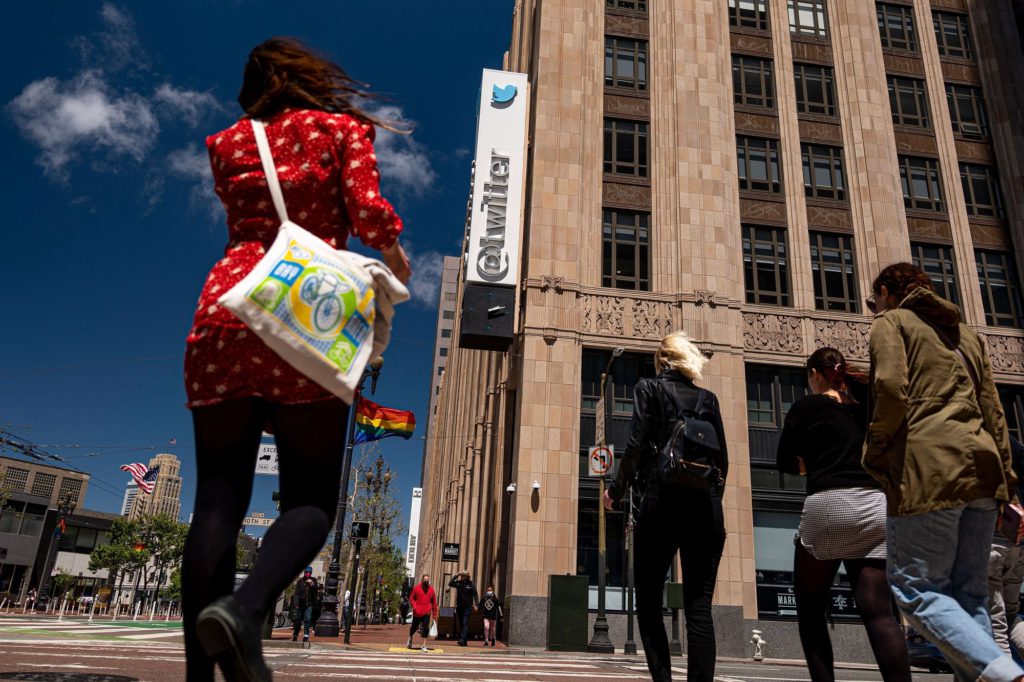
Twitter Reassures Staff on Musk Deal, Sees Vote by August

(Bloomberg) — Twitter Inc.’s top lawyer reassured staff Wednesday that the deal to sell the company to billionaire Elon Musk is still progressing, and that a shareholder vote will occur in late July or early August, according to people familiar with the matter.

The company is just waiting for the Securities and Exchange Commission to approve its proxy, after which it will be sent to shareholders, Vijaya Gadde, Twitter’s head of legal and policy, said at an employee meeting, the people said. 

Musk in recent weeks has been publicly skeptical of Twitter’s user numbers, and the amount that are automated bots, driving uncertainty about whether he will complete the deal. The company has agreed to share its firehose of public tweet data with Musk in an effort to assuage his concerns, according to a person familiar with the situation. The Washington Post earlier reported on the data agreement. 

“Twitter has and will continue to cooperatively share information with Mr. Musk to consummate the transaction in accordance with the terms of the merger agreement. We believe this agreement is in the best interest of all shareholders,” the company said. “We intend to close the transaction and enforce the merger agreement at the agreed price and terms.”

Gadde and other executives Wednesday responded to a flurry of employee questions and concerns about the deal. Among them: whether people will be able to continue to work from home, as Twitter has promised would be possible.

Gadde said remote work is not protected by the merger agreement, so there’s no guarantee Musk will continue to allow it, the people said. 

(Updates source of firehose data in third paragraph.)

More stories like this are available on bloomberg.com

©2022 Bloomberg L.P.

Spotify Forecasts Its Podcasting Business Will Soon Be Profitable

(Bloomberg) — Spotify Technology SA expects its podcast operation — an expensive bet that has sparked investor skepticism — to turn profitable in the next one to two years.

“This drag will not last,” Chief Financial Officer Paul Vogel said Wednesday at a presentation for investors. He was joined by Chief Executive Officer Daniel Ek and other Spotify officials.

Spending on podcasts has been a source of worry for Spotify investors: The company laid out more than $1 billion to become the No. 1 name in that business. Those concerns sent the stock tumbling in April when Spotify said costs for nonmusic content were weighing on profitability.

The pressure on margins will let up after 2022, executives said at the presentation. Over the next three to five years, Spotify sees podcasts generating gross margins 30% to 35%, Vogel said. Longer term, the company anticipates margins of 40% to 50% — an increase of 10 percentage points from previous predictions. 

Spotify shares jumped during the presentation, rising almost 9% before paring some of the gain. The stock was up 6.1% to $116.08 at 2:46 p.m. in New York trading after reaching historic lows in May.

Podcasting revenue grew more than 300% in 2021 to reach nearly 200 million euros ($214 million), Vogel said. However, the business reduced gross profit by 103 million euros.

Officials emphasized the company is building not only subscription revenue, but also a robust advertising business and marketplace for podcast creators.

The big goal, they said, is a “Spotify machine” that will offer many types of listener programming in one consumer app. This, they said, will attract 1 billion users globally and more than 90 billion euros in revenue in the next decade. Sales last year totaled 9.67 billion euros.

“That’s the thing you just have to get about Spotify,” Ek said. “We’ll put out these big, audacious targets.”

Podcast consumption now accounts for more than 7% of all listening hours on the platform, said Dawn Ostroff, chief content and advertising business officer, and Spotify monetizes 14% of that listening time.

More stories like this are available on bloomberg.com

©2022 Bloomberg L.P.

 Ethereum Moves Closer to Blockchain Revamp After Milestone Test

(Bloomberg) — Ethereum, the world’s most used cryptocurrency blockchain network, passed a milestone test ahead of a highly anticipated technical upgrade without any major glitches. 

Developers ran the latest software for the upgrade known as the Merge on Ropsten, which is one of the oldest so-called testnets of the network. The testnets are used by developers to find potential bugs and glitches before moving their applications to the blockchain. While the Merge has been carried out on other testnets earlier this year, Ropsten was seen as providing the most realistic technical environment and the best estimate for the outcome of the final process. 

The first post-Merge block of transactions was finalized around 12 pm in New York time, which means the Merge on the testnet was complete, said Tim Beiko a computer scientist who coordinates Ethereum developers.

“The network is stable, but there are some minor (known + expected) issues we are looking into.” Beiko said in a message. “Overall, though, things are looking good.” 

While the Merge has faced multiple delays in the past few years, Ethereum co-founder Vitalik Buterin said recently that it can take place as soon as August. The upgrade will enable the network to move from the proof-of-work consensus mechanism, where miners use powerful computers to authenticate and order transactions to secure Ethereum, to proof-of-stake. Holders of the network’s native token Ether will perform the same tasks after the switch. 

Investors have considered the revamp as a bullish signal for the network and its token as the switch is seen reducing Ethereum’s carbon footprint by 99% and addressing concerns from environmentalist groups. It will also slow issuance of new tokens, which some observers says could give a boost to the price of the second-largest cryptocurrency by market value after Bitcoin. 

(Updates with additional detail on the upgrade, beginning in the fifth paragraph.)

More stories like this are available on bloomberg.com

©2022 Bloomberg L.P.

Close Bitnami banner
Bitnami
