
Bloomberg

Congress’s Big Tech Crackdown Quickens With Rare Show of Unity

(Bloomberg) — A bipartisan group of lawmakers defended a bill to rein in big technology companies, signaling that momentum is building for the first major piece of legislation to curb the power of giant online platforms. 

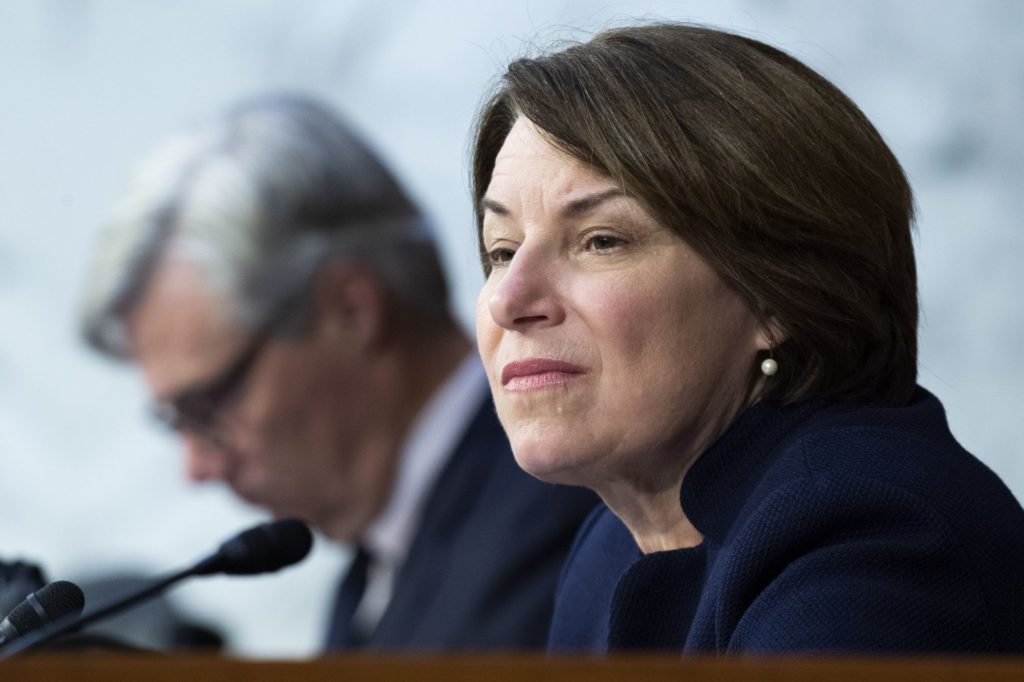
Senators Amy Klobuchar and Chuck Grassley and Representatives David Cicilline and Ken Buck in a Wednesday press conference addressed concerns brought up by tech groups and their supporters about a measure that would prohibit companies like Apple Inc., Amazon.com Inc., Alphabet Inc.’s Google, Microsoft Corp. and Facebook parent Meta Platforms Inc. from favoring their own products over those of competitors. 

“For too long, big tech companies have said ‘just trust us’ while putting profits ahead of their users,” Klobuchar said. “We’re coming together to say the era of ‘just trust us’ has ended.”

The bill, which is sponsored by Klobuchar, a Minnesota Democrat, and Grassley, an Iowa Republican, would prohibit companies from giving an advantage to their own products over those of smaller competitors that depend on their platforms. 

“This is the best way to address the problems of big tech’s power over what we buy, what we see, what we read, what we say online,” said Grassley.

The appearance of the bipartisan pairs of Senate and House lawmakers at a joint press conference about a bill aimed at putting guardrails on tech giants was unprecedented, indicating the rising stakes involved in moving the controversial measure forward. 

Tech giants and industry groups argue that the bill would jeopardize cybersecurity and harm popular products like Amazon Prime and Google Maps. Recently, Amazon attempted to rally third-party sellers in an online forum to oppose the legislation, claiming it would harm business.

The lawmakers denied those concerns, saying the measure would increase innovation through competition, improve national security and wouldn’t eliminate services such as Amazon Prime and Google Maps.

Time is running out for Congress to pass major legislation. With only seven weeks left before the August recess, lawmakers are facing a barrage of competing priorities, including potential measures on climate change, gun safety, and a package to bolster US competitiveness. 

The narrowing window has sparked a flurry of lobbying as industry and consumer groups press their concerns before lawmakers pivot to campaigning for the November midterm elections. 

Apple, Amazon, Google and Meta spent $16.7 million lobbying in the first three months of 2022, according to lobbying disclosures filed with Congress, with all four identifying the antitrust bills as their top priority. 

Tech-backed trade groups have also opposed the bills. The Computer and Communications Industry Association spent $22 million last week on broadcast and cable TV ads, according to Ad Impact, and another $2.8 million on Facebook and Instagram ads since the beginning of the year.

The bill is “more focused on advancing a political agenda than promoting competition,” said Neil Bradley, chief policy officer of the U.S. Chamber of Commerce, which has vigorously attacked efforts by Congress and the Biden administration to toughen antitrust enforcement.

Senate Majority Leader Chuck Schumer has promised to bring the bill to a floor vote in upcoming weeks. 

“As long as Schumer is willing to bring it up, I think we’ve got it tweaked so that we can get it moving now,” said Senator Grassley in an interview with Bloomberg News. “It’s pretty much up to Schumer at this point.” 

A number of undecided lawmakers from both parties are facing a flood of lobbying about the measure. Fight for the Future, a progressive tech advocacy group, launched a crowdfund campaign on Monday to pay for billboards targeting Democrats Maggie Hassan of New Hampshire and Michael Bennet of Colorado, saying they should support the legislation and stop “shilling for big tech.” 

Senators released a revised version of the bill in May in response to criticism from the tech industry, specifying that it wouldn’t affect subscription services like Amazon Prime and would strengthen protection for the platforms’ cybersecurity. Tech giants and their trade groups said that the changes aren’t enough to meet their concerns.

A group of progressives and antitrust advocates, alongside Cicilline, led a call earlier this week rallying support for the legislation and asking constituents to reach out to their senators, specifically voters in Washington and California.

The bill was approved by the Senate Judiciary Committee with bipartisan support in January. The House companion, which was introduced by Representatives Cicilline and Buck, was approved 24-20 by the House Judiciary Committee last June.

More stories like this are available on bloomberg.com

©2022 Bloomberg L.P.
Guns, Abortion and Race Heat Up Company Annual Meetings

(Bloomberg) — As Americans struggle to find common ground on a growing list of social issues, investors are demanding some of the country’s biggest companies take action.

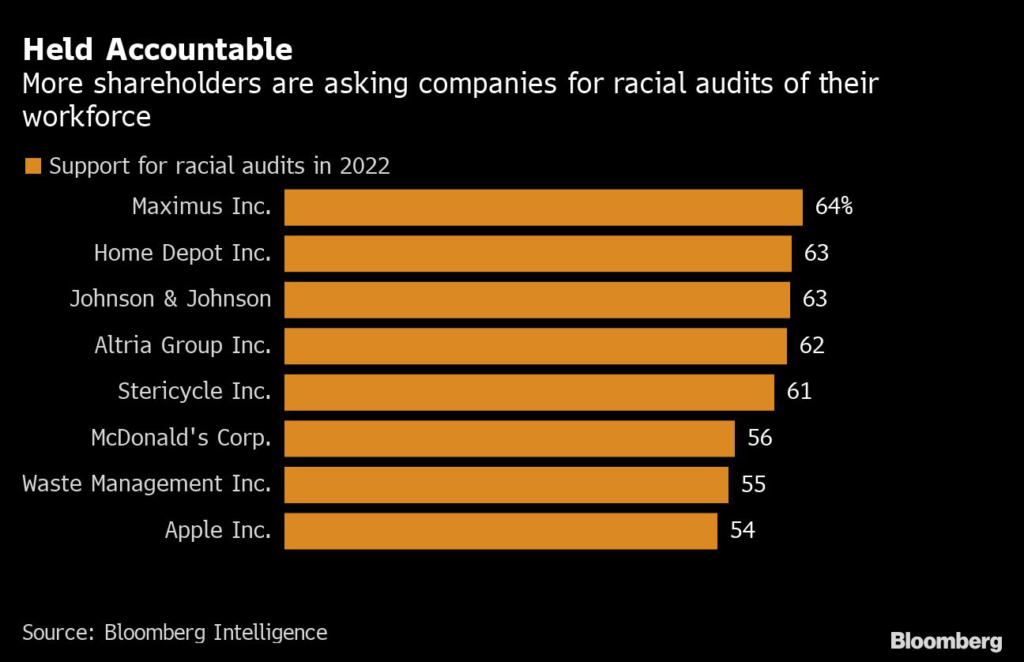
A majority of Sturm Ruger & Co.’s shareholders want the gunmaker to investigate the human rights impact of its firearms. McDonald’s Corp. and Apple Inc. and at least a half dozen other companies have been asked to measure and account for potential racial disparities in the workforce and local communities. Abortion also was on the agenda at several company meetings, including Lowe’s Cos. and Walmart Inc.A record number of shareholder proxy questions addressing issues of racial justice, gender equality and gun violence have been on the agenda at annual meetings this year. While a majority failed — most shareholders campaigns do — some initiatives received significant backing. Average support for racial audits has been running at about 46% and eight of the resolutions passed, according to Bloomberg Intelligence. BlackRock Inc. recently released research that showed about two-thirds of resolutions that get 30% to 50% support lead to companies partially or fully meeting the requests.

“This is how corporations are being held to the fire,” said Amanda Jackson, economic justice campaign manager for civil rights advocacy group Color of Change, which has been pushing companies to conduct third-party racial audits. “The groundswell, the groundwork, has been calling for companies to be more accountable.”  

And the growing momentum has been increasingly backed by large asset managers such as BlackRock and Vanguard Group Inc., which have been more willing to back plans agitating around previously taboo topics. Sexual harassment revelations spurred by the #MeToo movement and the racial injustice protests sparked by the murder of George Floyd have combined to bring greater public attention — and corporate promises — to address societal inequities.

Read more: Investors Crank Up Pressure With Record ESG Proxy Votes

Proxy voting advisory companies led by Institutional Shareholder Services Inc. and Glass, Lewis & Co. also have been active in recommending shareholders support social topics. Home Depot Inc., Johnson & Johnson, and Waste Management Inc. were among the companies where requests for independent racial audits succeeded. The civil-rights initiative was the only shareholder proposal to gain the backing of the majority of votes at McDonald’s annual meeting.

“The ball is now in the board of directors’ court to show that they’re going to be serious and do a quality audit,” said Dieter Waizenegger, executive director at SOC Investment, which has been advocating for racial audits. It remains to be seen whether companies will respond with robust reports that go beyond “greenwashing,” he said.

Conservative shareholder advocates have countered with requests for their own twist on the racial audit, riding a growing  backlash against companies making business decisions governed by environmental, social and governance principles. The National Center for Public Policy Research Inc. filed a dozen resolutions with companies, including Bank of America Corp. and Walmart, demanding reports that assess whether their initiatives are detrimental to the civil rights of workers other than those “companies label diverse.” The proposals received less than 4% backing from investors.

The shareholder request for a human-rights impact assessment at Sturm Ruger, which attracted 68.5% support, is more proof that big investors are more willing to confront controversial topics, said Judy Byron, a member of the Adrian Dominican Sisters, who advocated for the report as part of the Interfaith Center for Corporate Responsibility. The focus on guns comes as the US continues to grapples with mass shootings, most recently at grocery store in Buffalo, New York, and an elementary school in Uvalde, Texas.

A similar resolution will confront Smith & Wesson Brands Inc. later this fall. And Mastercard Inc. shareholders will vote June 21 on whether the company should restrict the use of its credit cards to purchase so-called ghost guns, or kits that can be assembled into working firearms without serial numbers or federal registration. 

Sturm Ruger Chief Executive Officer Christopher Killoy said June 1 during the company’s annual meeting that institutional shareholders are “blindly” following the guidance of ISS and Glass Lewis. The gunmaker has said it promotes responsible ownership and isn’t directly the cause of human rights abuses. “I anticipate that the board will take up the matter in the near term and decide how best to proceed,” he said. 

Shareholder proposals asking companies to report on  abortion restrictions have been less successful. One filed at Lowe’s won 32% backing, while a near identical request at Walmart got just 13%. Results of a third resolution filed at TJX Cos. aren’t yet available. All three proposals had the support of ISS, but not Glass Lewis. Companies also are being asked to measure whether their political contributions are being used to weaken abortion rights, said Shelley Alpern of nonprofit Rhia Ventures, who coordinated and drafted the proposals. 

“So many companies are dragging their feet on this issue,” she said. “We hope that they hear from employees and other stakeholders and realize that this is in their long-term interests.”

More stories like this are available on bloomberg.com

©2022 Bloomberg L.P.
Don’t Be Fooled by Daily Drama. The Stock Market Is in a Rut.

(Bloomberg) — It might not exactly feel like it, but the stock market has been, well, kind of boring. 

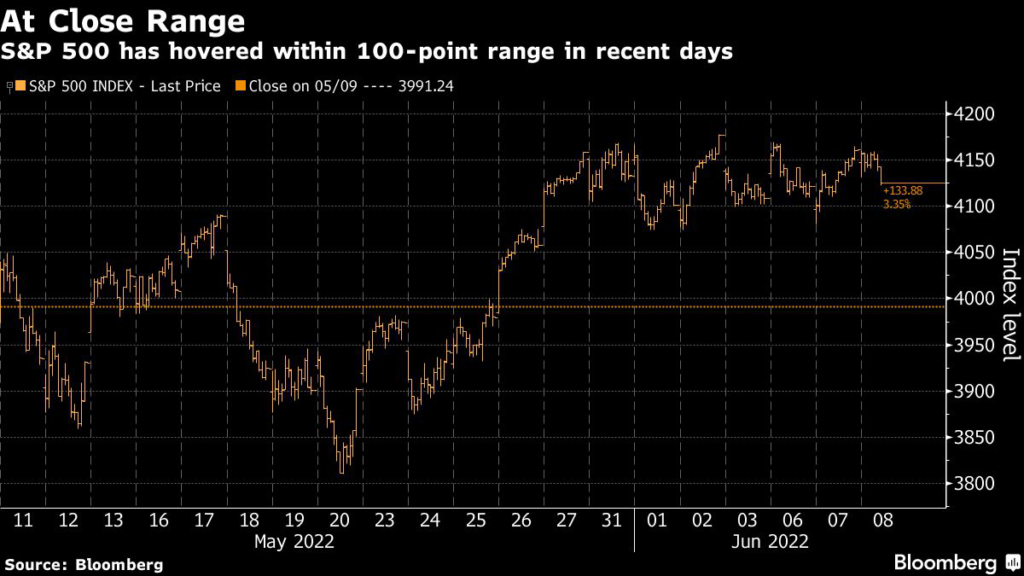
The choppiness and seemingly constant mid-session about-faces are obscuring the bigger picture: the S&P 500 has been vacillating within a roughly 100-point range over the past two weeks. It has stayed above 4,050 since the end of May and pushed over 4,160 earlier in the week, a level it’s had difficulty sustaining. It was around 4,117 on Wednesday afternoon in New York.

“We’re trapped in a range,” Anastasia Amoroso, the chief investment strategist at iCapital, told Bloomberg TV, saying investors are trying to decide what the fair value of the market is. “How much are you going to pay for $235 worth of earnings? 16.5x is fair. Maybe 17.5x is fair, which is roughly where we are today,” she said. “But how much more do you push that?”

The sideways direction of stocks echoes other parts of the financial markets, where high uncertainty about the direction of the economy, inflation and interest rates has pushed asset prices back and forth based on the latest data. The benchmark 10-year Treasury yield has also been range-bound since it pulled off its highs in early May. Even the notoriously volatile Bitcoin has hovered around $30,000 for a month, failing to break meaningful one way or the other.

Investors have become obsessed with whether the Federal Reserve can raise rates enough to dampen inflation without the economy falling into a recession. But that’s still an open question, given that the Fed is at the early stages of its cycle. And for all the executives and economists putting out dire warnings, there’s seemingly just as many predicting the central bank can manage a soft landing.

“Markets are going to continue to be choppy until we have reliable evidence that inflation is abating,” said Kara Murphy, CIO of Kestra Holdings. 

Other evidence also points to the stock market being stuck in a rut. The S&P 500’s rebound from its mid-May lows is following a path similar to previous bounces this year, according to Nicholas Colas, co-founder of DataTrek Research. 

Colas is tracking the VIX, the volatility index. He says that stocks tend to bottom when the gauge gets to between 29 and 37 and top out when it drifts down to 20. The VIX closed at 24 on Tuesday. “That tells us most of the bounce is done unless fundamentals start to improve,” he wrote in a note.

More stories like this are available on bloomberg.com

©2022 Bloomberg L.P.
Crypto In-the-Money Traders Dwindle, Hinting at Capitulation

(Bloomberg) — More crypto traders are finding their Bitcoin investments underwater and may be ready to throw in the towel.

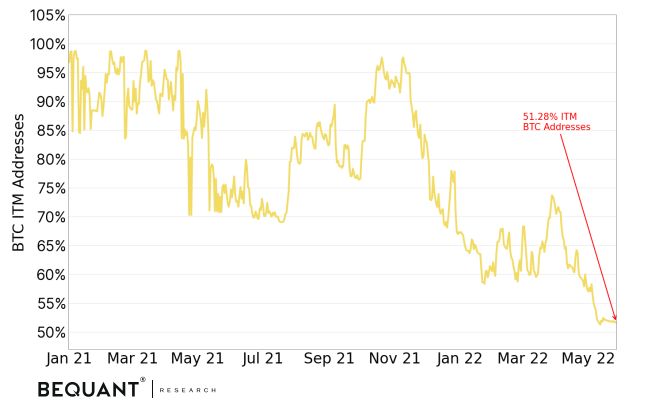
The number of anonymous Bitcoin addresses in the money, meaning those that acquired their holdings at prices below today’s, has reached lows not seen since March of 2020, according to Bequant, a digital-asset firm. The level, currently hovering around 51%, “points to capitulation,” though bear markets in 2015 and 2018 saw even lower lows, wrote Martha Reyes and Emiliano Bruno in a note.

Crypto prices have been in a slump this year as the Federal Reserve withdraws stimulus and hikes rates to combat inflation. The environment has been toxic for all manner of riskier assets, including richly valued tech companies. But cryptocurrencies have been hit particularly hard, with Bitcoin losing more than a third of its value this year, and others, including Ether, shedding 50%. Even Bitcoin miners have started to offload tokens they had hoarded as many are seeing few signs prices could recover soon. 

“It feels very much to me like crypto is also subject to a lot of the monetary cycle that’s been hitting the more traditional asset classes,” Kara Murphy, CIO of Kestra Holdings, said. “Looking at the rapid increase in crypto prices, it seems clear that they really benefited from easy-money policies, and now that the money is coming out of the system, that’s a good part of the reason why crypto is declining more recently.”

In its second consecutive session lower, Bitcoin fell as much as 4.8% on Wednesday to trade around $29,800. 

Read more: Bitcoin Miners Are Selling Tokens as Prices Linger Near Lows

With prices trading at the lower end of the last 17-month range, the bulk of buyers over that span are holding unrealized losses, according to strategists at Glassnode, who cite something called the Net Unrealized Profit/Loss metric, or NUPL, which maps out unrealized profits and losses as a proportion of market value. Since early May, the measure has fluctuated in a range of around 18% to 25%, “indicating less than 25% of the market cap is held in profit,” they wrote. They say the $20,560 to $23,600 span is where the measure “would imply a full-scale capitulation scenario.”

To be sure, it’s unlikely that a lot of crypto “OGs”, meaning those who bought early on at very low price levels, are dumping their holdings, said Wilfred Daye, chief executive officer of Securitize Capital, a digital-asset management firm. But those who bought in recent months might be more likely to sell. 

“There may be capitulation because larger institutional players, guys who got in during the current cycle, they’re at risk of selling their assets and liquidating their assets,” Daye said. “This particular cycle that started late 2020, you had a lot of institutional folks getting in at a higher price, so I think it’s more institutional capitulation.”

And sentiment remains sour still. The Bitcoin put-to-call ratio hit a recent high of 0.75 last week, according to Skew data compiled by Babel Finance. 

That indicates that “traders continue to buy puts for price protection or look to profit from BTC’s price decline,” Babel strategists wrote in a note. 

(Updates with additional loss details in sixth paragraph.)

More stories like this are available on bloomberg.com

©2022 Bloomberg L.P.
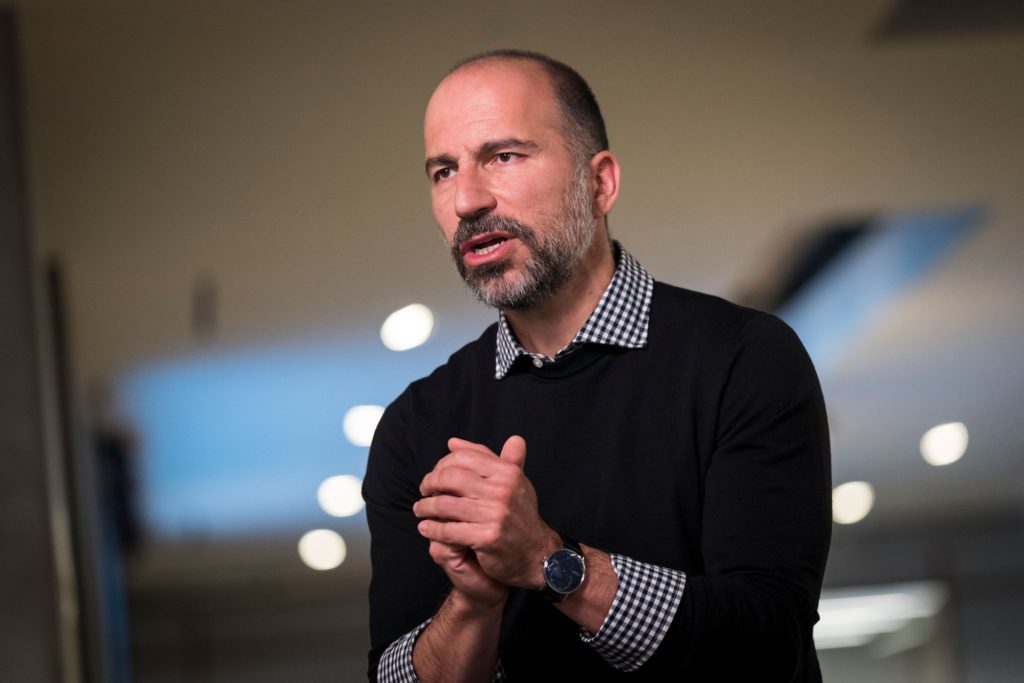
Uber’s CEO Says Company Is ‘Recession Resistant,’ Sees No Job Cuts

(Bloomberg) — Uber Technologies Inc. Chief Executive Officer Dara Khosrowshahi said the company is “recession resistant” and doesn’t see a need for job cuts, even as market volatility and the prospect of a global recession loom over technology companies.

“The signal on the street is things are really strong and the spend on services continues to be quite robust,” Khosrowshahi said during an interview Wednesday at the Bloomberg Technology Summit.

The optimistic tone comes after Khosrowshahi told staff in May that the ride-hailing giant would “treat hiring as a privilege and be deliberate about when and where we add headcount.” Rival Lyft Inc. also said it plans to significantly slow hiring and cut costs. 

The global global economic uncertainty has added a further challenge for Uber’s ride-hailing business, which cratered during Covid-19. Unlike Lyft, Uber was able to rely on its food delivery unit, which tripled as home-bound customers ordered more takeout. Restaurant delivery has been largely resilient even as indoor dining has resumed in a boon for Uber Eats and competitor DoorDash Inc. As Khosrowshahi steers the company out of Covid, a key strategy has been to capitalize on the boom in delivery by expanding into other categories like convenience-store items, alcohol and grocery, and turning the Uber rides app into much more than just ride-sharing. 

Last month Uber introduced Uber Charter, a service to book shuttles and coaches for large groups directly in the app. The San Francisco-based company also debuted Uber Travel which compiles flight, hotel and restaurant bookings and allows people in the US and Canada to reserve rides for each leg of their itinerary. In the UK, Uber is piloting a service to allow customers to book long-distance travel in the app.

Even as demand for rides has slowly recovered, both Uber and Lyft have struggled to attract sufficient drivers onto their platforms. The imbalance has led to stubbornly high fares and longer wait times for customers. After spending hundreds of millions of dollars last year to entice drivers back, a spike in gas prices when the war in Ukraine broke out dealt a blow to those efforts just as companies were scaling back bonuses. 

Khosrowshahi said driver supply increased 78% in May from a year earlier, but the company will extend a fuel surcharge on rides in an effort to ease the burden of high gas prices on drivers’ take-home pay. 

“As we see our sessions increasing, demand increasing, and as we see supply increasing, essentially the marketplace will start to come into more balance,” Khosrowshahi said. “You’ll see less surge and you should see prices moderate.”

In the interview, Khosrowshahi said Uber would look to exit its roughly 11% stake in Didi Global Inc., worth $1.4 billion as of March 31, once the Chinese ride-hailing firm relists in Hong Kong. Didi secured the blessing of shareholders to delist from the New York Stock Exchange, after an 11-month ordeal that wiped out about $70 billion of its market value at one point and turned the ride-hailing giant into a symbol of China’s tech crackdown.

More stories like this are available on bloomberg.com

©2022 Bloomberg L.P.

Lessons From the Newest Unicorn Startup: Be Frugal, and Drink Costco Coffee

(Bloomberg) — In some ways, Vanta Inc. looks like a startup from a frothier era. It’s run by a 35-year-old entrepreneur in San Francisco and sells software primarily to other startups. On Wednesday, Vanta became a unicorn, with a valuation of $1.6 billion, less than a year after raising its first institutional capital, a rare achievement even in boom times.

But Christina Cacioppo, the founder and chief executive officer, wants everyone to know she’s not running a typical, cash-burning technology startup. She bootstrapped the company for years after founding it in 2016. She refuses to serve gourmet coffee in the office. (Vanta buys beans in bulk from Costco.) The company used to pay for employees to access multiple workplace chat tools with overlapping functions. (Now they use only Slack.)

These are the things venture capitalists want to see right now. Investors who, for the last decade, prized the costly art of user growth are suddenly charmed by thriftiness. Economic uncertainty is driving the shift. Although it’s resulting in fewer investments, the change is lifting companies like Vanta, which raised $100 million this week in a deal led by Craft Ventures.

Vanta’s software offers companies a way to easily make their systems compliant with data security standards. Sequoia Capital, which led Vanta’s previous round and kicked more into this one, sees Cacioppo as a founder for the moment. “She has made a bunch of choices along the way that has allowed them to stay lean,” said Andrew Reed, a partner at the firm. “The market is rewarding disciplined companies.”

To drive the message home, Cacioppo invited Kevin Kelly, a senior managing director at Sequoia Heritage, the firm’s wealth-management arm, to deliver a downer of a speech to Vanta’s 250 employees last month. Kelly adapted a talk Sequoia had been giving to leaders of its portfolio companies about how to survive tough times.

Cacioppo started Vanta in the more buoyant days of 2016. She left her job as a product manager at the file-storage provider Dropbox Inc., where she experienced the complexities of securing people’s data. Enabling startups to achieve the same standards as a big company—the mishmash of acronyms and numbers, like SOC 2, ISO 27001, HIPAA and GDPR—would allow them to compete for the same security-conscious customers. It also runs compliance tools continuously, letting startups quickly prove to prospective customers that they’re careful with data. The name Vanta is a play on the word advantage.

Modern Treasury, a startup that makes money transfer tools, said Vanta’s compliance tools helped it win clients. “Vanta is a game changer,” said Sam Aarons, the chief technology officer.

David Sacks, a partner at Craft, said he recognized the importance of compliance when he chose to lead the investment in Vanta. Before co-founding Craft, he took over Zenefits, a human-resources startup, after it failed to comply with insurance-licensing rules. “The cost of screwing up compliance or having a security breach are huge,” he said. J Zac Stein, a venture partner at Craft, sits on Vanta’s board.

Last year, Vanta was generating revenue at an annual rate of $10 million, according to the company. Cacioppo declined to disclose sales numbers for this year. Vanta isn’t profitable, though it has been at times in the past, she said, and for now has chosen sustainable growth over profitability.

The new financing brings Vanta’s total to about $163 million. The company attributes the fundraising triumph to the company’s ability to grow without profligate spending. “Last year, the game was ‘growth at all costs,’” Cacioppo said. “This year, it’s ‘cash is king.’”

(Updates with board member detail in the eighth paragraph. Previous versions corrected the company’s valuation and number of employees.)

More stories like this are available on bloomberg.com

©2022 Bloomberg L.P.

Meta Hit With 8 Suits Claiming Its Algorithms Hook Youth and Ruin Their Lives

(Bloomberg) — Meta Platforms Inc. is now a leader in another social media trend — lawsuits claiming the company built algorithms in its platforms that lure young people into destructive addiction.

Eight complaints filed in courthouses across the US over the last week allege that excessive exposure to platforms including Facebook and Instagram has led to attempted or actual suicides, eating disorders and sleeplessness, among other issues.

“These applications could have been designed to minimize potential harm, but instead, a decision was made to aggressively addict adolescents in the name of corporate profits,” attorney Andy Birchfield, a principal at Beasley Allen, the law firm that drafted the suits, said in a statement Wednesday.

The complaints add to a spurt of recent cases against Meta and Snap Inc., including some filed by parents whose children took their own lives. The litigation follows a former Facebook employee’s high-profile testimony in Congress that the company refused to take responsibility for harming the mental health of its youngest users.

Read More: Meta, Snap Sued Over Social Media ‘Addicted’ Girl’s Suicide 

A Meta spokesperson declined to comment on the litigation but noted that the company has developed tools for parents to keep track of their children’s activity on Instagram and set time limits. Meta also offers “Take A Break” reminders that nudge users to take a moment away from social media.

In addition, the company is providing resources specific to eating disorders, making potentially sensitive content harder to find and developing the use of artificial intelligence to make sure that children under 13 can’t sign up for Facebook or Instagram, according to the spokesperson.

One of the new suits was filed by Naomi Charles, a 22-year-old woman who says she started using Meta platforms when she was a minor and that her addiction led to her to attempt suicide and other suffering.

Meta “misrepresented the safety, utility, and non-addictive properties of their products,” according to the complaint in Miami federal court.

Read More: Instagram Probed by States Over Efforts to Lure Young People

Charles, like the other users, is seeking monetary damages to compensate for mental anguish, loss of enjoyment of life and costs of hospitalization and medical bills.

The claims in the suits include defective design, failure to warn, fraud and negligence. The complaints were filed in federal courts in Texas, Tennessee, Colorado, Delaware, Florida, Georgia, Illinois and Missouri.

(Updates with comment by Meta spokesperson.)

More stories like this are available on bloomberg.com

©2022 Bloomberg L.P.

Amazon Exiting Consumer Chief Is Joining Flexport as Co-CEO

(Bloomberg) — Dave Clark, who spent two decades climbing the ranks at Amazon.com Inc. to become its consumer chief, is joining logistics software startup Flexport Inc.

Clark will be co-chief executive officer for six months starting Sept. 1, before taking on the job solo, the company said on Wednesday. Founder and current CEO Ryan Petersen will become executive chairman.

Clark, 49, announced his departure from Amazon last week. His exit came amid slowing online sales growth that has left the company with too much warehouse space. 

Clark joined Amazon out of business school in 1999, working to manage some of its earliest warehouses. As head of global fulfillment, he introduced robots into Amazon warehouses and took the lead in building a transportation arm, when partners like United Parcel Service Inc. and the U.S. Postal Service proved unable to handle surging online demand.

Read more about Clark’s Amazon career.

Clark was among senior executives whose compensation package was singled out by investment advisory firms that argued his pay should be better tied to company performance. Clark’s pay package was $56 million in 2021.

Founded in 2013 and based in San Francisco, Flexport provides software and other digital tools designed to streamline cumbersome logistics processes — consolidating shipments in cargo containers, say, or getting those items through customs — that often require manual data entry or a series of phone calls.

Bloomberg Beta, the venture capital arm of Bloomberg LP, is an investor in Flexport.

(Updated with Flexport background.)

More stories like this are available on bloomberg.com

©2022 Bloomberg L.P.
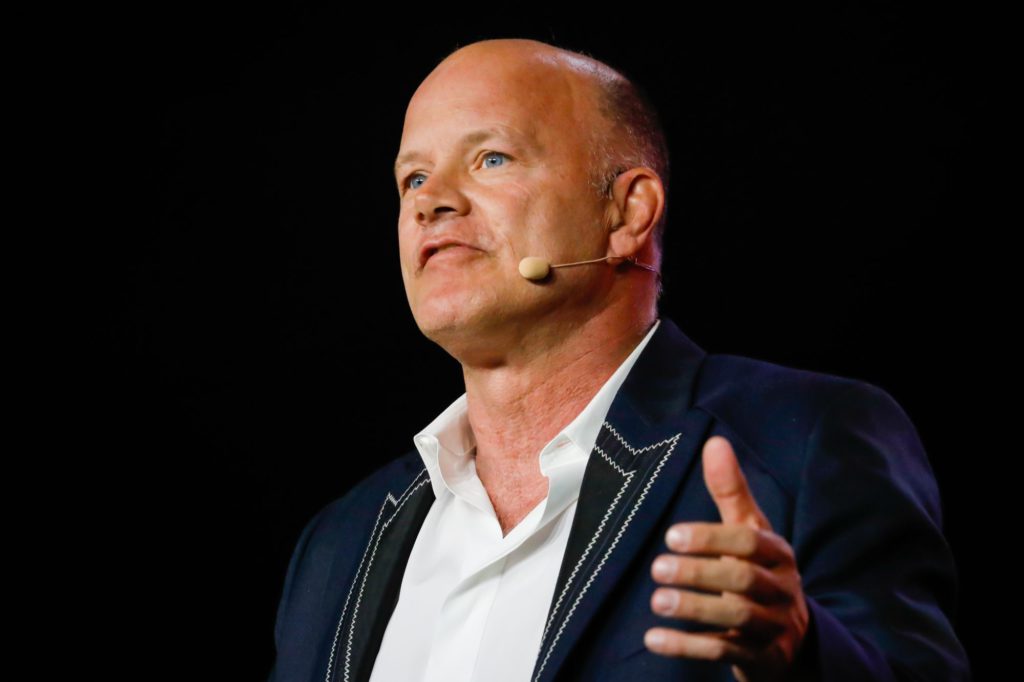
Galaxy’s Mike Novogratz Says Two-Thirds of Crypto Hedge Funds Will Fail

(Bloomberg) — Mike Novogratz, the founder and chief executive officer of Galaxy Digital Holdings Ltd., said two-thirds of the hedge funds that invest in cryptocurrencies will fail as a consequence of the current market downturn. 

“Volume will go down, hedge funds will have to restructure,” Novogratz said at the Piper Sandler Global Exchanges & Brokerage Conference in New York. “There are literally 1,900 crypto hedge funds. My guess is two-thirds will go out of business.”

The former Fortress Investment Group hedge fund manager cited the broader financial market’s reaction to the removal of stimulus by the Federal Reserve as the reason for the collapse in token prices over the past six months. Bitcoin has dropped more than 50% from a record high reached in November. Novogratz also attributed last month’s collapse of the Terra blockchain — in which he and Galaxy were investors — to the broader macroeconomic factors rather than to flaws in the project. 

“It wasn’t strong enough to deal with the headwinds of Bitcoin prices going down, crypto prices going down. It was a catastrophic loss,” Novogratz said. “The CEO was unbelievably bright and charismatic and there was a tremendous amount of momentum behind what he was doing.” 


PwC’s annual global crypto hedge fund report showed that Terra USD (UST), was the third most popular stablecoin among crypto hedge funds they surveyed in April 2022, or right before Terra collapsed. And 49% of PwC’s survey respondents also traded the affiliated Luna token, which Novogratz immortalized with his now infamous tattoo.

Even so, Galaxy will continue to expand in the downturn, in contract to rivals such has Gemini Trust Co. that are laying off staff to survive the bear market, Novogratz said. The New York-based crypto brokerage and asset-management firm wants to be “the go-to-place” after the downturn is over, the crypto billionaire said.

(Adds additional comments from Novogratz, starting in the fourth paragraph.)

More stories like this are available on bloomberg.com

©2022 Bloomberg L.P.
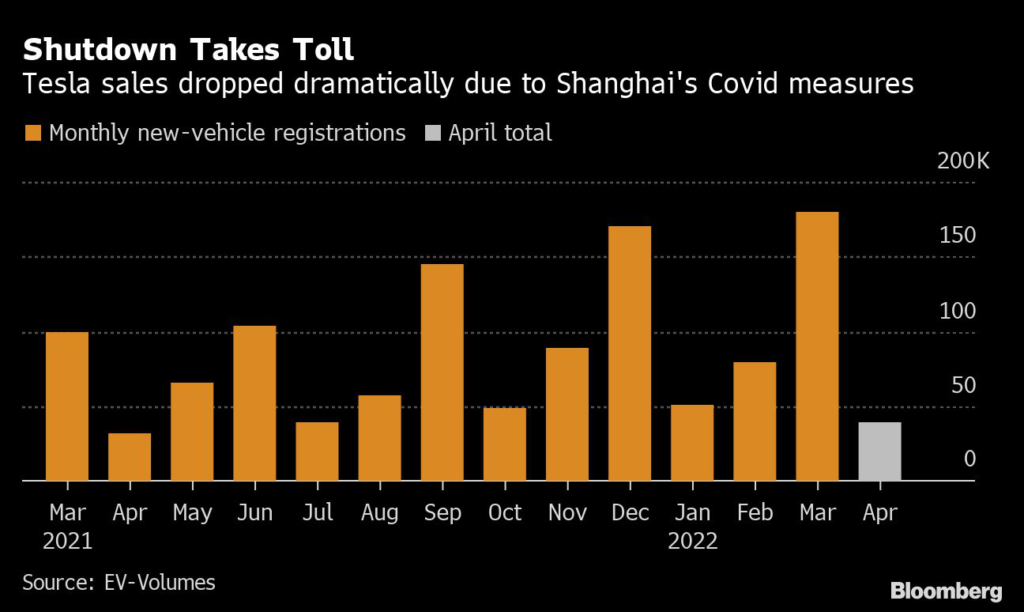
Tesla’s Share of EV Sales Hits 3-Year Low on Shanghai Lockdown

(Bloomberg) — Tesla Inc.’s share of global electric vehicle sales fell to the lowest in more than three years due to Shanghai’s lockdown, which cost the carmaker weeks of output from its most productive plant.

The Model 3 maker registered 39,650 vehicles in April, down 78% from the month of March, according to a report Dan Levy, Credit Suisse’s US auto analyst, published Wednesday. Tesla’s share of global EV sales dropped to 10% from 27%, Levy wrote, citing data from EV-Volumes, which tracks more than 80 markets.

Tesla did not reply to a request for comment.

Tesla is going to great lengths to restore production at its Shanghai factory, which was shut for about three weeks beginning in late March when the city implemented restrictions to contain a Covid-19 outbreak. Thousands of workers have been working 12-hour shifts, six days a week, to bring the facility back up to speed. Many slept on the plant floor as part of a so-called closed-loop system to keep Covid out and cars rolling off production lines.

It’s not unusual for Tesla’s sales to drop substantially from the last month of one quarter to the first month of the next. Chief Executive Officer Elon Musk has said the company concentrates on making cars for export early each quarter, and that the time it takes to transport those vehicles to customers back-ends deliveries every three months.

Musk tweeted in September that Tesla was hoping to reduce this end-of-quarter wave by early this year, and wrote that starting production at a new factory near Berlin would help the company smooth out its deliveries. The Shanghai plant became the carmaker’s primary export hub last year.

More stories like this are available on bloomberg.com

©2022 Bloomberg L.P.

Close Bitnami banner
Bitnami
