Bloomberg

Vale Creates Venture Capital Arm to Spur Mining Innovation

(Bloomberg) — Vale SA, the world’s No. 2 iron ore producer and one of the biggest nickel suppliers, has created a corporate venture capital arm to back startups focused on developing game-changing innovations for mining and metals challenges.

Vale Ventures is starting with a $100 million budget to invest in firms involved in sustainable mining initiatives. The unit seeks to provide initial funding and early-stage investments in startups worldwide, with a goal of holding 3% to 5% stakes in the firms.

“We’ll be part of a pool of investors working for the success of these startups,” Vale Ventures head Viktor Moszkowicz said in an interview.

Vale’s outlay will be enough to build an initial portfolio of investments in about five years, generating financial and strategic return, he said. The first in Vale’s portfolio is Boston Metal, a firm focused on steel decarbonization technology that has the backing of cleantech venture capital funds, mining companies and steel users. Vale invested $6 million in the US company in February 2021.

Vale’s venture capital push follows similar initiatives pursued by rivals including BHP Group Ltd. and Rio Tinto Group. The Brazilian mining giant looks to gain access to business opportunities and innovative technologies with the potential to be used in its operations amid a push to meet its environmental targets.

The Rio de Janeiro-based company has four main themes that drive Vale Ventures portfolio selection: decarbonization, zero-waste mining, technology that changes mining operations, and energy transition metals.

The last theme aims to boost the supply and demand of key metals needed to support the shift from fossil fuels to less polluting energy. Startups that are developing batteries that use metals produced by Vale are on the radar as is technology that creates “urban mines”—places where discarded metals can be recycled, Moszkowicz said.

(Corrects date of Boston Metal investment in fourth paragraph.)

More stories like this are available on bloomberg.com

©2022 Bloomberg L.P.

New US Nuclear-Missile Submarines Hobbled by Billions in Growing Costs and Delays

(Bloomberg) — The US Navy’s two newest submarine programs have been hampered by growing costs, poor contractor performance and delays in the last year, according to an assessment by congressional auditors.

Costs for the 12-vessel Columbia class, the US’s next nuclear-missile submarine, have grown by $3.4 billion to a projected $112 billion before the first planned deployment in 2031, the Government Accountability Office said in its latest annual report on major US weapons systems. 

Similarly, over the last year work on the latest model Virginia-class attack submarine, which shares some of the same workforce, “fell further behind schedule, and construction costs continued to grow above original targets due to overall higher workforce demand and additional factors such as correspondingly less experienced workers,” the agency said.

The Columbia class will replace the fleet of 14 Ohio-class submarines that carry Trident nuclear missiles and is envisioned as the front line of US nuclear deterrence strategy into the late 21st century. The subs will carry one leg of the so-called nuclear triad along with land-based intercontinental ballistic missiles and air-launched weapons.

The 252-page GAO assessment  — the most comprehensive evaluation of the Defense Department’s weapons portfolio — reviewed 40 major current defense acquisition programs, four future major programs and 19 middle-tier projects. The submarine setbacks are among the most telling in the report released Wednesday. Both submarines are built jointly by General Dynamics Corp. and Huntington Ingalls Industries Inc.

Seventeen of the major programs GAO reviewed had delays, some of them “on top of past postponements,” according to the report. Those include the DDG-1000 destroyer from General Dynamics, the MQ-4C Triton surveillance drone made by Northrop Grumman Corp., the CH-53K cargo helicopter from Lockheed Martin Corp. and Boeing Co.’s new Air Force One presidential jet and its MH-139A Gray Wolf helicopter to patrol ICBM silo fields.

China Challenge

As lawmakers press the Pentagon to accelerate deployment of new systems to counter China’s rapid military development, the GAO findings provide little comfort. “This year, we continued to see significant numbers of programs reporting delays, even as the department emphasizes the need to deliver capabilities to the warfighter more quickly,” the agency concluded.

“In our 20 years of annual reports on DoD’s costliest acquisition efforts, we have highlighted the consistent commitment of DoD senior leadership to improving outcomes, including recent efforts to accelerate the development and delivery of capabilities,” said the agency. “However, we continue to find that the department misses opportunities to gain appropriate knowledge before making significant investment decisions.”

The Army’s Extended Range Cannon Artillery, which is being developed as a rapid prototype and promoted as a counter to China, has “encountered multiple challenges during the past year, including delays in maturing critical technologies. These issues are likely to lead to schedule delays” and “may lead to cost growth,” the GAO said.

Also of relevance to countering China’s rapid development of hypersonic weapons, the joint Army-Navy Conventional Prompt Strike hypersonic program “identified a capacity-constrained supply market and limited manufacturing sources as high-priority risks,” the GAO said. The delivery “of critical components was significantly delayed, impacting the flight test schedule.”

For the first time in its annual assessment, the GAO highlighted programs vulnerable to industrial base disruptions or shortages, such as the CH-53K helicopter, as the Defense Department “reported that the supplier that produces the main gear box has not been able to produce enough parts or meet quality specifications for years. In order to mitigate this problem, the program is certifying two new suppliers to produce these parts.”

Cyber Risk

The Air Force “continues to track a cybersecurity vulnerability risk stemming” from the design of Boeing’s F-15EX fighter, which is derived from a model sold to Qatar. The Air Force is buying 60 through 2024 to replace older F-15C models, the GAO said.

The F-15EX is “not designed to US Air Force cybersecurity requirements” so the program office planned to bring subject matter experts together in April “to conduct a tabletop exercise in which they talk through how they would respond to simulated scenarios in identifying vulnerabilities,” according to the report.

Space Launches

The United Launch Alliance — the Boeing-Lockheed joint venture that competes with Elon Musk’s SpaceX for national security satellite launches — continued to have difficulty last year developing an alternate engine for its new Vulcan rocket to replace the Russian-made RD-180 used for decades, the GAO said. The first flight with the new engine was delayed to this year but “until ULA resolves the rocket and engine issues, the program must rely” on the Atlas V rocket “with engines manufactured in the Russian Federation.”

Submarine Troubles 

The Columbia submarine’s price increase reflects “an August 2020 independent cost estimate for the whole class, expenditures on the supplier base and missile tubes that required costly rework, poor contractor performance during design and updated construction costs, among other things,” the GAO said. The keel for the first of 12 submarines, the USS District of Columbia, was laid June 4. 

As of August 2021, the Columbia’s workforce “completed less construction than planned due to errors and quality problems that resulted in rework, as well as late supplier materials, among other things.” GAO said.

The shipbuilders are “mitigating delays by prioritizing construction of the Columbia class” over other submarine work, the GAO said. “Program officials reported that the shipbuilders added more workers to the Columbia class construction efforts than the Virginia class, contributing to delays on the Virginia class submarine.” It said “additional cost increases and schedule delays are likely.”

The GAO said it provided a draft of its assessment to the Navy’s submarine program office for review and it provided technical comments, “which we incorporated where appropriate.” The program office stated “that it took actions to reduce risks, such as ensuring stable requirements, executing manufacturing readiness and supplier base efforts, and pursuing cost reduction actions.”

More stories like this are available on bloomberg.com

©2022 Bloomberg L.P.

Microsoft’s HoloLens Future in Question After Project Leader Departs

(Bloomberg) — Microsoft Corp. said the executive in charge of its HoloLens goggles is leaving the company, putting the future of its augmented-reality project in question.

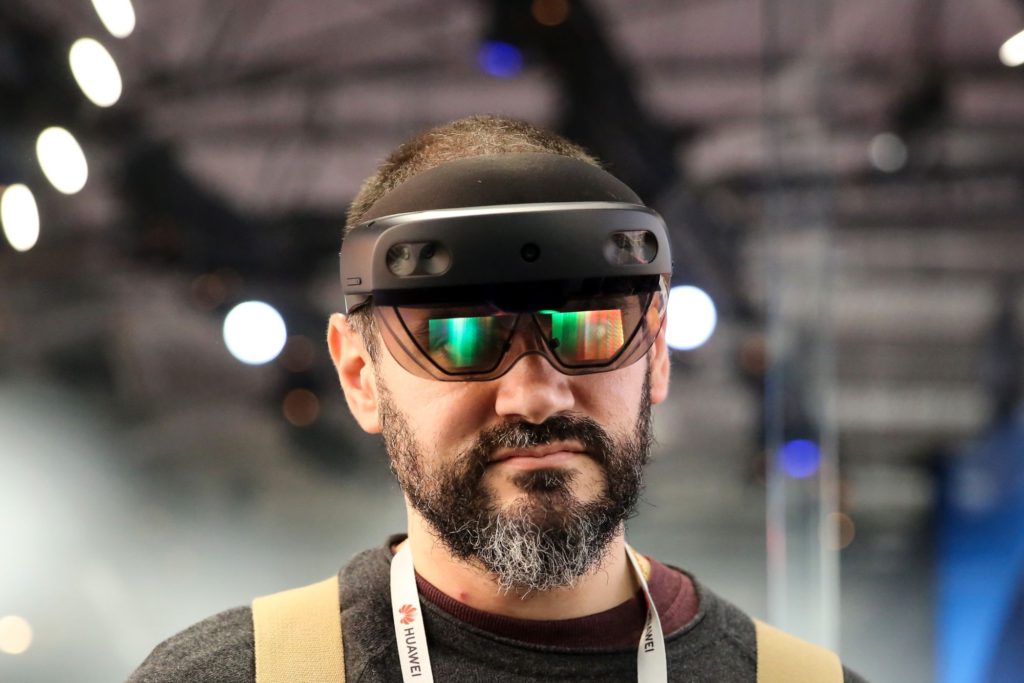
Alex Kipman, who had been with the Redmond, Washington-based software firm since 2001, was accused of inappropriate behavior toward female employees at Microsoft by current and former workers in an Insider report in late May. He had been the public face of the HoloLens initiative and his departure comes at a sensitive time for the project, as Microsoft is deciding on whether to continue developing its own AR hardware, according to two people familiar with the matter.

HoloLens hardware will now be overseen by Panos Panay, who heads up Microsoft’s Surface computer division, while Jeff Teper, a corporate vice president managing areas like the Teams collaboration product, will take over the software part of the group, the people said. Microsoft Cloud chief Scott Guthrie detailed the changes on Tuesday in a memo sent to executive staff, according to the people, who declined to be named because the company isn’t publicly discussing the decision.

Before HoloLens, Kipman had stints at Microsoft’s Windows and Xbox teams and was one of its longest-tenured employees. The Insider report alleged that longtime executives at the company like Kipman had been allowed to engage in verbal and sexual harassment of workers.

Microsoft declined to comment on Kipman or the product’s future.

The changes come as Microsoft waits on the fate of a $21.9 billion contract that may determine whether there’s enough demand for the HoloLens to continue the product’s development. The company had agreed to provide a customized version of the head-worn accessory for the US Army in a 10-year accord that would include as many as 121,500 goggles along with spare parts, logistics and program management support. But that project has not gone smoothly and the Army said in April that it may spend less than half the maximum amount. Army Secretary Christine Wormuth last month expressed confidence that the kinks in that system, called IVAS, have been resolved.

Microsoft has other commercial customers for HoloLens, but needs the Army deal to secure enough scale for the product, the people said.

If the Army deal doesn’t come to fruition, Microsoft may have to re-evaluate whether to keep making HoloLens hardware. It already has a deal with Samsung Electronics Co. that could enable the South Korean electronics giant to start making hardware for Microsoft’s corporate customers, the people said. Kipman, as one of the HoloLens’ original executives and an outspoken evangelist for the technology, was committed to the device being made in-house in a way that Panay may not be, they added. 

Microsoft unveiled what was then the top-secret HoloLens project at a Windows event in 2015 to much fanfare, showing prototype applications such as 3-D Minecraft where users could blast through a room’s walls and coffee tables to reveal lava and caves as well as a holographic conferencing system. But the company has never been able to get the price of the headset below several thousand dollars and as a result it’s focused on corporate applications rather than consumer ones. 

The questions  about HoloLens’ future come as Microsoft tries to figure out its strategy for the so-called metaverse, a concept for future computing built around users living, working and playing in interconnected virtual worlds. HoloLens had been seen as a key pillar of that strategy and changes to it might push Microsoft to focus its metaverse development on software.

Much of the early metaverse work Microsoft has shown also works with headsets from other companies and relies on software like the Teams app — where Microsoft has pitched the idea of holographic avatars in meetings.  That’s part of why software oversight of HoloLens will move under Teper, as his group already houses some of the company’s metaverse engineers.

Insider reported Kipman’s departure earlier. 

(Adds HoloLens history in ninth paragraph.)

More stories like this are available on bloomberg.com

©2022 Bloomberg L.P.
Shopify Vote on Lutke’s Powers Won With 54% Support

(Bloomberg) — Shopify Inc. investors were divided on the e-commerce company’s proposal to entrench Chief Executive Officer Tobi Lutke’s voting power.

Just under 54% voted in favor of creating a special “founder share” that guarantees Lutke at least 40% of the voting rights at the company under certain conditions, according to a statement Wednesday from Shopify.

To pass, the proposal required the support of a majority of the votes cast by shareholders, excluding the shares Lutke controls, at Tuesday’s virtual annual meeting. 

Ahead of the meeting, shareholder advisory firms Glass Lewis & Co. and Institutional Shareholder Services Inc. recommended that investors reject the arrangement. The California Public Employees’ Retirement System had indicated it would vote against the proposal.

Shopify rose 2.4% to $389.98 as of 9:43 a.m. in New York.

Read more: Shopify’s Lutke Wins New Voting Rights on Shareholder Ballot

(updates with shares in last paragraph)

More stories like this are available on bloomberg.com

©2022 Bloomberg L.P.

Western Digital Says It Will Consider Splitting Main Units

(Bloomberg) — Western Digital Corp. has announced a review of “strategic alternatives” following discussions with activist investor Elliott Investment Management and other shareholders, the company said in a statement Tuesday, a plan that could result in the separation of its two businesses. 

The Wall Street Journal earlier reported that the company is nearing a deal with Elliott, citing people familiar with the matter.

Western Digital is one of the world’s largest makers of a type of chips, flash memory, that provide storage in everything from smartphones to supercomputers. Those chips come from a partnership with Japan’s Kioxia Holding’s Corp. The technology is slowly taking over the role of data storage in electronics from Western Digital’s other main offering, hard disk drives. 

“The Board is aligned in the belief that maximizing value creation warrants a comprehensive assessment of strategic alternatives focused on structural options for the company’s Flash and HDD businesses,” Western Digital Chief Executive Officer David Goeckeler said in a statement. 

Elliott endorsed the announcement and said it’s willing to invest in a plan that will increase the value of the company’s two units. 

“We’re encouraged by the positive direction of our discussions so far, and by Western Digital’s openness to considering a full separation of its Flash business,” Elliott said in the joint statement. “We are pleased that Western Digital’s Board is conducting this review, and Elliott is prepared to provide strategic resources and additional capital to help the company realize the full value of both of its businesses.”

In May, Elliott, which manages funds that have about a $1 billion investment in Western Digital, sent a letter to the chipmaker’s board calling on it to conduct a full strategic review of the value that could be created by separating the businesses.

At the time, Elliott said Western Digital has underperformed — operationally, financially and strategically — as a result of the challenges of running both businesses as part of the same company. In the letter, Elliott argued that a separation of the flash business would allow both businesses to be more successful and create significant value, which could send Western Digital’s stock above $100 a share by the end of 2023.

According to the agreement between Western Digital and Elliott, the hedge fund has agreed to certain standstill restrictions until the chipmaker’s annual stockholder meeting in 2022. If the review doesn’t result in a transaction by that time, Elliott has the right to appoint one director of its choosing and both sides will appoint one director that they mutually agree upon, according to a filing with the US Securities and Exchange Commission on Wednesday. A strategic transaction could include a sale of all or parts of the company, or a sale, spin-off or carve-out of its two business segments. It may also include a merger or acquisition of Kioxia, according to the filing.

(Updates with terms of agreement in final paragraph.)

More stories like this are available on bloomberg.com

©2022 Bloomberg L.P.
Surge in China Tech Stocks Kindles Hopes for Sustained Rally

(Bloomberg) — Alibaba Group Holding Ltd. and Bilibili Inc. led another rally in China tech stocks on Wednesday, giving stock bulls renewed hope that a nascent rebound in tech shares could sustain. 

The Hang Seng Tech Index jumped 4.8% after the Chinese government approved 60 new game licenses, bolstering bets that a yearlong crackdown that wiped out $2 trillion in market value from the sector was nearing its end. The gauge pushed further away from its recent downtrend and climbed above a key moving average for the first time in 15 months.

The gaming approvals come on the heels of a report this week that China is wrapping up its investigation into Didi Global Inc. — a major flash point in Beijing’s move to curb the power and influence of the nation’s largest companies. To some investors, this suggests a marked turnaround in a sector that until recently had been considered uninvestable. 

Having spent most of the past year under pressure, China’s tech gauge has also started to outperform the Nasdaq 100 Index in recent months as the Federal Reserve’s aggressive tightening and inflation woes hammer US stocks. Wednesday’s buying frenzy lifted most members of the Hang Seng Tech gauge including Tencent Holdings Ltd. and NetEase Inc., despite the companies being absent from the approval list. 

The rally in Chinese tech stocks continued in the US, with Alibaba up 4.3% and Bilibili rising 8.8% in premarket trading. The KraneShares CSI China Internet Fund, an exchange-traded fund that tracks Chinese tech stocks, gained 3.2%, extending a 9% rally in the previous two sessions.

“The market is still excited about the potential restore of Didi on Apps stores and feels a bit risk-on sentiment,” said Willer Chen, an analyst at Forsyth Barr Asia Ltd. “The newest batch of gaming license approval, though Tencent and NetEase are not on the list, is also good news.” 

Beijing’s wide-ranging tech crackdown spread to online gaming last summer when regulators introduced stringent measures to curb addiction. China’s entertainment regulator on Tuesday approved licenses for 60 new games in what is seen as a step toward policy normalization. 

All Encompassing

From the sudden scuttling of Ant Group’s IPO in late 2020 to sweeping reforms for online tutoring firms last summer to a shake-up of Macau casinos, Beijing’s hallmark crackdown on the private sector had forced a rethink of not just where but whether investors should put their money in the world’s second-largest economy. 

Reforms have landed most heavily on tech companies, with nearly $2 trillion of market value wiped out since a 2021 peak. While the Hang Seng Tech gauge has risen almost 40% from its mid-March low, it remains more than 50% below its 2021 high.

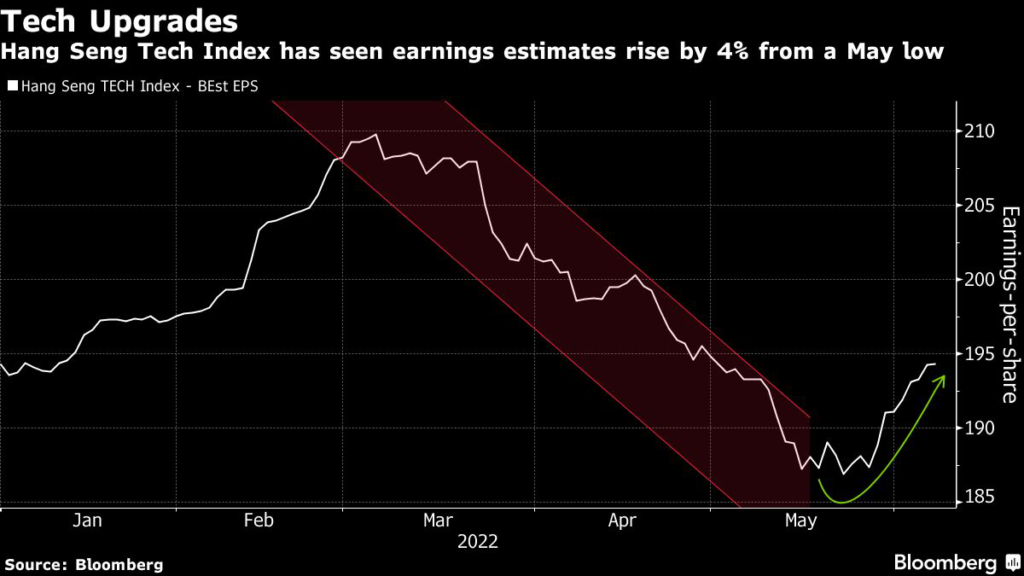
The outlook looks a bit brighter this time around. Forward earnings estimates for companies on the sector benchmark have risen by about 4% from a low in May after slumping nearly 11% from a peak in March, according to data compiled by Bloomberg.

Bullish calls on China stocks are growing by the day. Ayaz Ebrahim, a portfolio manager for JPMorgan Asset Management, said Wednesday investors can “get more juice out of China” over a six-month period. 

Still, much will depend on the path of the economy, with China’s strict Covid Zero policy leaving the specter of future lockdowns hanging. Investors that have repeatedly been burned by buying tech shares on the dip are still waiting for more actions from Beijing after a March promise from China’s top economic official — Vice Premier Liu He –to end the tech crackdowns.

And some of the more bearish strategists still aren’t convinced. DZ Bank AG’s Manuel Muehl, who was the first among analysts tracked by Bloomberg to issue a sell rating on China tech last year, sees current optimism as premature and is sticking to his recommendation. 

“When the economy is struggling, the tightenings will take a break and the policy will become more pro-growth,” Winnie Wu, China equity strategist at BofA Securities, said in a Bloomberg TV interview. “So during those times we could see a strong trading rally of the internet sector in general, because they remain to be some of the largest, most liquid stocks that investors are familiar with.”

(Updates US premarket trading in the fifth paragraph.)

More stories like this are available on bloomberg.com

©2022 Bloomberg L.P.

Contrarian Who Called China Tech Rout Says Sector Still a Sell

(Bloomberg) — The tide of optimism surrounding China’s technology stocks is rising, but one analyst remains unconvinced.

DZ Bank AG’s Manuel Muehl, who was the first among over 70 analysts tracked by Bloomberg to issue a bearish call on China’s tech shares, is sticking to his sell recommendation amid growing bets that a crackdown on the sector may be easing.

A report that Chinese regulators are preparing to wrap up a probe into Didi Global Inc. has been taken “very positively” but “I feel this is a bit premature and highly undifferentiated,” Muehl said in a June 7 email. “Jumping to conclusions and expecting the regulator to change other rules, which currently harm the companies in my coverage, seems a bit too soon.”

The Didi report has sparked a flurry of positive calls from the likes of JPMorgan Chase & Co. and Bank of America Corp. amid growing optimism that China’s battered assets may have reached an inflection point. A relaxation of virus curbs in major cities and stimulus from policy makers are reinforcing the sense of confidence.

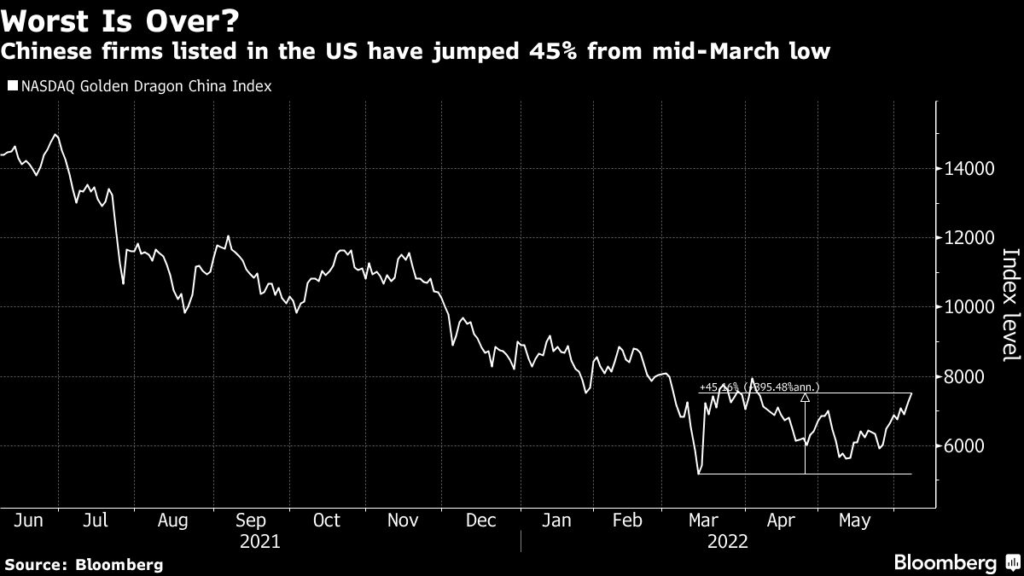
There are growing signs that China’s tech sector may have hit a bottom. The Nasdaq Golden Dragon China Index has jumped 45% from a mid-March low, while the Hang Seng Tech Index, which tracks tech stocks listed in the Asian financial hub, is up more than 30%, with news that the government has approved more gaming licenses driving another advance on Wednesday. 

Meanwhile, US-listed Chinese stocks are on track for a third day of gains, with the KraneShares CSI China Internet Fund, an exchange-traded fund that tracks Chinese tech stocks, rising as much as 4.4% premarket. The ETF is set to add to a 9% rally in the previous two sessions.

But, Muehl isn’t buying the story.

Recent earnings posted by tech firms suggest the sector’s woes may persist for a while, he said. “Revenue growth has slowed considerably, margins have deteriorated and free cash flows have also fallen substantially,” Muehl said. “From a fundamental perspective, I see no reason to become bullish just yet.”

Muehl was the first to issue sell ratings on Alibaba Group Holding Ltd. and JD.com Inc. last summer, with the calls being more accurate than that of his peers. Investors who followed his recommendations would have avoided losses of 52% and 16%, respectively in the shares over the past 12 months.

Muehl has a target price of $85 for US-listed Alibaba and $49.5 for JD.com, which imply a downside of around 20% from their last close. 

What would it take to make Muehl reverse his bearish call? The analyst cites a deal with Washington that would prevent the US delisting of Chinese firms, a step-back from anti-monopoly rules and a substantial uptick of consumer confidence and spending. But “for the sentiment to turn and stay positive, we still need more action than words.”

(Adds Chinese ADR premarket moves in the sixth paragraph)

More stories like this are available on bloomberg.com

©2022 Bloomberg L.P.
Cathie Wood Is Back Buying Tesla After Stock’s Nearly 50% Plunge

(Bloomberg) — After a year of selling down her Tesla Inc. stake, Cathie Wood is back buying shares in the electric carmaker.

Wood’s Ark Investment Management LLC has acquired more than 55,000 shares in Elon Musk’s company since May 23, according to Ark funds’ trading data compiled by Bloomberg.

The purchases come after Tesla fell almost 50% from November’s all-time high, prior to a recent rally. They also mark a reversal by Ark, which had sold the stock for at least four quarters in a row, reducing its stake to 1.59 million shares as of the end of March, from 5.79 million a year earlier.

Wood’s current bout of buying started days after Tesla lost its crown jewel status in her main fund for the first time in about four-and-a-half years.

The purchases were made by the flagship Ark Innovation ETF, Ark Autonomous Technology and Robotics ETF and Ark Next Generation Internet ETF.

Ark Investment has been facing a steep drawdown in assets due to a weak performance. While all nine Ark ETFs have posted double-digit losses in 2022, dragged down by declines in richly valued technology shares, the lineup was still clinging to net inflows of $167 million as of June 7.

More stories like this are available on bloomberg.com

©2022 Bloomberg L.P.
Coinbase’s Hiring Freeze Shatters Crypto Hopefuls’ Career Plans

(Bloomberg) — Coinbase Global Inc. was seen as a gateway to a promising career in cryptocurrencies. Now would-be hires who’ve had their offers rescinded are racing to make alternative arrangements after the company’s abrupt halt on expanding its ranks. 

A computer science grad in Illinois regrets giving up his PhD offer. A slew of foreign workers are facing deadlines to find sponsors for their work visas. Some are even rethinking the decision to join the crypto industry after experiencing its brutal boom-and-bust cycles first hand.

Many were caught flat-footed last week when they received an email from the largest US cryptocurrency exchange rescinding offers and announcing a freeze on hiring for the “foreseeable future.” In a blog post, Coinbase’s Chief People Officer L.J Brock said that while the company did not “make this decision lightly,” it is the prudent one given market conditions. Coinbase declined to share the total number of offers rescinded. However, a job portal set up by the company for affected candidates had over 330 people signed up within the first day of launch.

“I got laid off even before I got a chance to prove myself,” said Conner Hein, 22, who graduated from University of Michigan in May. He accepted an offer from Coinbase in February, after which he said he turned down offers from PricewaterhouseCoopers LLP and Amazon.com Inc. Drawn by Coinbase’s remote-first policy, he has been city-shopping between Chicago and Austin. 

A self-proclaimed “hesitant” crypto believer who sees promise in the technology but dislikes its get-quick-rich schemes, Hein said that he’d now “look twice” if a prospective employer is related to blockchain or cryptocurrencies. Coinbase management failed to plan the runway accordingly, making promises that it wasn’t ready to keep, he said.

“I’ve always had my hesitations,” he said. “I just didn’t think the crypto industry would drop this hard.”

Along with the plunge in crypto prices, shares of Coinbase have gone from one of the stock market’s most hotly anticipated debuts to one of its most spectacular crashes in a little more than a year. The company ballooned to 4,948 full-time employees, from about 1,700 just a year ago. But now, its hiring freeze comes after broad crypto-market declines and subsequent doldrums have led other firms such as Gemini Trust Co. and Mercado Bitcoin SA’s owner to cut jobs. 

Visa Issues 

The situation is even more dire for would-be hires reliant on work visas, which make up a sizable amount of the talent pool for technology jobs in the US. Ashutosh Ukey, 23, moved to the states from India when he was 8 years old. He now has about 150 days to find a new job that would sponsor a visa. 

When searching for employment, he was deciding between offers from Coinbase and a computer science doctorate program at the University of Illinois Urbana-Champaign. “I was curious and interested in learning about crypto, and learning from one of the biggest players was a one-of-a-kind opportunity,” he said. 

For Ukey, a job at Coinbase meant not only a ticket to join the next big tech firm, but also a chance to get an employment-based visa. 

“I would say my experience with Coinbase strayed me away from working in crypto,” Ukey said. “In the immediate future, I am looking into more long-established tech firms.” 

On LinkedIn, posts by similarly situated international job candidates are being widely shared. In response, Coinbase’s Brock said on Twitter: “We acknowledge this is a particularly difficult situation for those looking to either enter or stay in the US on work-related visas.” 

In addition to the severance packages and job-seeking support, the company is providing legal services to those with visa issues, Brock said. 

India Expansion 

A hiring freeze could spell further trouble for growth at Coinbase, especially when it comes to global expansion. In April, Chief Executive Officer Brian Armstrong announced a major hiring plan at its technology hub in India, tripling the headcount to about 1,000 within the year.  

Gaurav Rawal, a 24-year-old software engineer from Bengaluru, was to join Coinbase in India. He has resigned from his previous job, but days before his start date, his offer was rescinded. 

The recruiter had just recently assured him of his start date. “Even he [the recruiter] was clueless,” Rawal said in an interview. “The whole Indian team was clueless on what’s happened.”

More stories like this are available on bloomberg.com

©2022 Bloomberg L.P.
Salesforce Pilots NFT Service as Token Trading Is Down 90%

(Bloomberg) — Salesforce Inc., the leading maker of customer relations software, is introducing a cloud-based service for creating and selling NFTs even as sales of the digital assets have plummeted.

The service announced Tuesday is designed for consumer brands that want to sell NFTs for special access, such as admission to an event, rather than art or trading value, said Adam Caplan, who oversees emerging technology at Salesforce. “The art should look great. But that’s not really the point.”

Nonfungible tokens — tradeable digital collectibles that use the same technology as cryptocurrencies to prove ownership — are currently sold on third-party marketplaces. OpenSea, the largest such online store, was hit with a phishing attack earlier this year, which led to millions in loses and a drop in trading activity, and has been plagued by other scams.

Salesforce, with an eye toward those cybersecurity fears, said it will provide a more-secure service for its customers who want to create and release tokens. Sales can be hosted on a brand’s own site to convey legitimacy to shoppers while Salesforce handles back-end security, contract-writing and authentication, Caplan said during a press briefing. The company is rolling out the service for a select group of customers with plans to make it widely available in October.

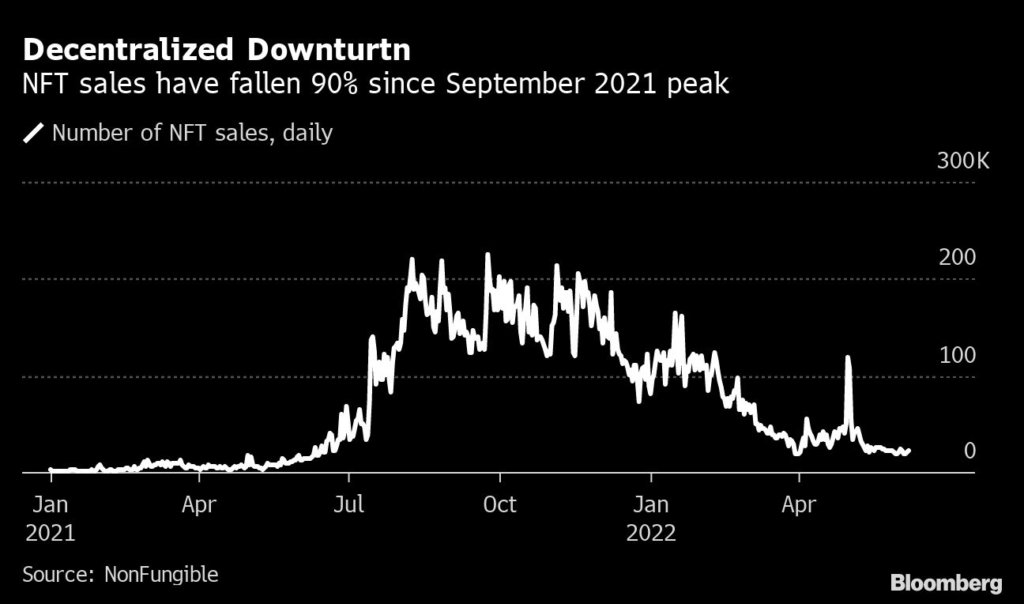
NFT trading activity has declined about 90% from a September peak according to industry analyst NonFungible, though more than $2 billion was still spent on tokens last month. Salesforce’s customers are more interested in NFTs as a driver of engagement than asset value, Caplan said.

Earlier this year, news that Salesforce was developing an NFT service ignited pushback from employees who believe the effort violates Salesforce’s broader commitment to sustainability, citing the environmental impact and numerous scams associated with crypto. More than $1 billion has been reported lost to crypto scams since the start of 2021, according to a Federal Trade Commission report released last week. 

Caplan said the service would let brands buy carbon offsets and use more environmentally friendly blockchains. As for security, the company will have the ability to pause assets or wallets associated with fraud and help with education, he said. 

Software peer Microsoft Corp. said it was looking into NFTs earlier this year, and its venture capital arm has invested $27 million into startup Palm NFT Studio, according to report from CoinDesk. International Business Machines Corp. offers private blockchain services and has said its working with IPwe to turn corporate patents into NFTs.

More stories like this are available on bloomberg.com

©2022 Bloomberg L.P.
Close Bitnami banner
Bitnami