Bloomberg

This Week in Crypto: BlockFi’s Chapter 11 Bankruptcy (Podcast)

(Bloomberg) — Listen to Bloomberg Crypto on the iHeartRadio App, Apple Podcasts or  Spotify.

Cryptocurrency lender BlockFi filed for bankruptcy, becoming the latest firm to crumble after the collapse of Sam Bankman-Fried’s FTX empire. Meanwhile, crypto hedge funds seem to be losing faith in centralized exchanges. In this episode, our crypto editors review which other companies remain vulnerable, and search for any bright spots emerging in the digital-asset ecosystem.

Hosted by senior crypto editor Philip Lagerkranser, with Bloomberg senior crypto editor Anna Irrera and crypto reporter Tanzeel Akhtar.

Subscribe to the Bloomberg Crypto Newsletter at https://bloom.bg/cryptonewsletter

This podcast is produced by the Bloomberg Crypto Podcast team: Supervising producer: Vicki Vergolina, Senior Producer: Janet Babin, Producers: Sharon Beriro and Muhammad Farouk, Associate Producers: Mo Andam and Ty Butler. Sound Design/Engineer:  Desta Wondirad. 

More stories like this are available on bloomberg.com

©2022 Bloomberg L.P.

Crypto Exchange Zipmex To Get $100 Million Venture Capital Buyout

(Bloomberg) — Embattled Asian cryptocurrency exchange Zipmex Asia Pte. is poised to be acquired by a venture capital fund for about $100 million in digital coins and cash, one of the first rescues in Asia since a wave of defaults ripped through the sector.

V Ventures, a subsidiary of Thoresen Thai Agencies Pcl, is offering $30 million in cash and the remainder in crypto tokens, said a person familiar with the matter. A share sale agreement detailing the deal terms was presented, according to a court hearing on Friday in Singapore, which did not identify the buyer. 

The fund is set to acquire about 90% in Zipmex, the person said, asking not to be named as the information about the buyer isn’t public. The crypto received from the deal will be used to gradually unlock Zipmex customers’ frozen wallets by early April, according to the court hearing, after withdrawals were suspended in the wake of a crypto rout. 

A spokesperson at Zipmex declined to comment “given the current sensitivities.” V Ventures didn’t respond to an email seeking comments. Chalermchai Mahagitsiri, a general partner at V Ventures, declined to comment when reached by phone and asked if the firm has reached a deal to buy Zipmex.

Zipmex, which has operations in Thailand, Singapore, Indonesia and Australia, has been under restructuring after it was granted protection from creditors in Singapore in August. 

More stories like this are available on bloomberg.com

©2022 Bloomberg L.P.

Stocks Rally Pauses as Traders Await US Jobs Data: Markets Wrap

(Bloomberg) — Global stocks were on the backfoot on Friday, steadying after recent sharp gains as traders awaited the monthly US jobs report for clues on the Federal Reserve’s next policy steps.

Europe’s Stoxx 600 index edged lower following two days of gains that have put it on track for a seven-week rising streak. Futures contracts on the S&P 500 and Nasdaq 100 also slipped, though both underlying indexes are set for a second week of gains. 

Stocks got a boost this week from a softening in China’s stringent Covid zero stance and signals from Fed Chair Jerome Powell of a downshift in the pace of rate hikes. Bets on where the US central bank’s rate will peak have now dropped below 4.9%, according to swap markets. The current benchmark sits in a range between 3.75% and 4%.

However, many economists reckon Friday’s employment report may fall short of the turning point Fed officials are seeking in their battle to beat back inflation. The median projection in a Bloomberg survey calls for payrolls to rise 200,000 in November, cooling only slightly from the previous month. 

Others point to signs that steep rate hikes will tip more economies into recession.

“Consensus is that recession is coming but equities cannot bottom before it starts, inflation won’t fall quickly so central banks can’t blink, China reopening will be a messy process, and Europe remains tricky,” Barclays Plc strategist Emmanuel Cau wrote in a note. 

Recession concerns have become more pronounced after data on Thursday showed November factory activity sliding in a range of countries, with American manufacturing contracting for the first time since May 2020. 

There are also signs of pressure on company earnings, with software maker Salesforce Inc. the latest to warn of slowing sales, while companies, ranging from Amazon.com to Ford Motor Co., have announced tens of thousands of job cuts. Chipmakers including Nvidia Corp., fell more than 0.5% in US premarket trading.

Bank of America Corp. strategists highlighted the labor market cooldown as one reason to prefer bonds to equities. They join a chorus of bears including JPMorgan Chase & Co. and Goldman Sachs Group Inc. who warn of equity declines early next year amid the specter of an economic recession.

“We’re selling risk rallies from here,” the BofA strategists said, warning unemployment would replace inflation as the main worry in 2023. 

The ebbing rate hiking bets have pushed the dollar lower, fueling a rebound in lower-yielding G-10 currencies such as the yen and euro. The greenback slipped for the fourth straight day against a basket of currencies, while ten-year Treasury yields held just off 2-1/2-month lows. 

Earlier, a gauge of Asian shares dropped for the first time in four days, led by Japan, where the yen’s five-day rally increased downward pressure on stocks. 

Investors are watching for the annual early-December convention of the Chinese Communist Party’s top decision-making body, which is expected to signal a pragmatic approach toward Covid controls, while stressing the need to boost economic growth.

Elsewhere, South Africa’s rand rebounded, paring some of Thursday’s 2.6% drop. The rand has bucked this week’s upswing in emerging market currencies because of political turmoil swirling around President Cyril Ramaphosa. 

Oil slipped but headed for its biggest weekly gain in almost two months, benefiting from looser Chinese curbs, calls by the Biden administration to halt sales from US strategic reserves and an OPEC producers’ group decision to cut crude supply by the most since 2020.

Key events this week:

  • US unemployment, nonfarm payrolls, Friday

Some of the main moves in markets:

Stocks

  • The Stoxx Europe 600 fell 0.2% as of 9:40 a.m. London time
  • Futures on the S&P 500 were little changed
  • Futures on the Nasdaq 100 fell 0.2%
  • Futures on the Dow Jones Industrial Average fell 0.1%
  • The MSCI Asia Pacific Index fell 0.4%
  • The MSCI Emerging Markets Index fell 0.3%

Currencies

  • The Bloomberg Dollar Spot Index fell 0.2%
  • The euro was little changed at $1.0524
  • The Japanese yen rose 1.1% to 133.80 per dollar
  • The offshore yuan rose 0.3% to 7.0187 per dollar
  • The British pound rose 0.2% to $1.2267

Cryptocurrencies

  • Bitcoin rose 0.3% to $16,978.9
  • Ether rose 0.2% to $1,279.27

Bonds

  • The yield on 10-year Treasuries advanced two basis points to 3.52%
  • Germany’s 10-year yield declined three basis points to 1.78%
  • Britain’s 10-year yield declined four basis points to 3.06%

Commodities

  • Brent crude fell 0.2% to $86.73 a barrel
  • Spot gold was little changed

This story was produced with the assistance of Bloomberg Automation.

–With assistance from Rob Verdonck.

More stories like this are available on bloomberg.com

©2022 Bloomberg L.P.

John Lewis, Abrdn to Build New Homes Above London Waitrose Shops

(Bloomberg) — John Lewis Partnership Plc has teamed up with investment firm abrdn Plc to build about 1,000 new homes in and around London. 

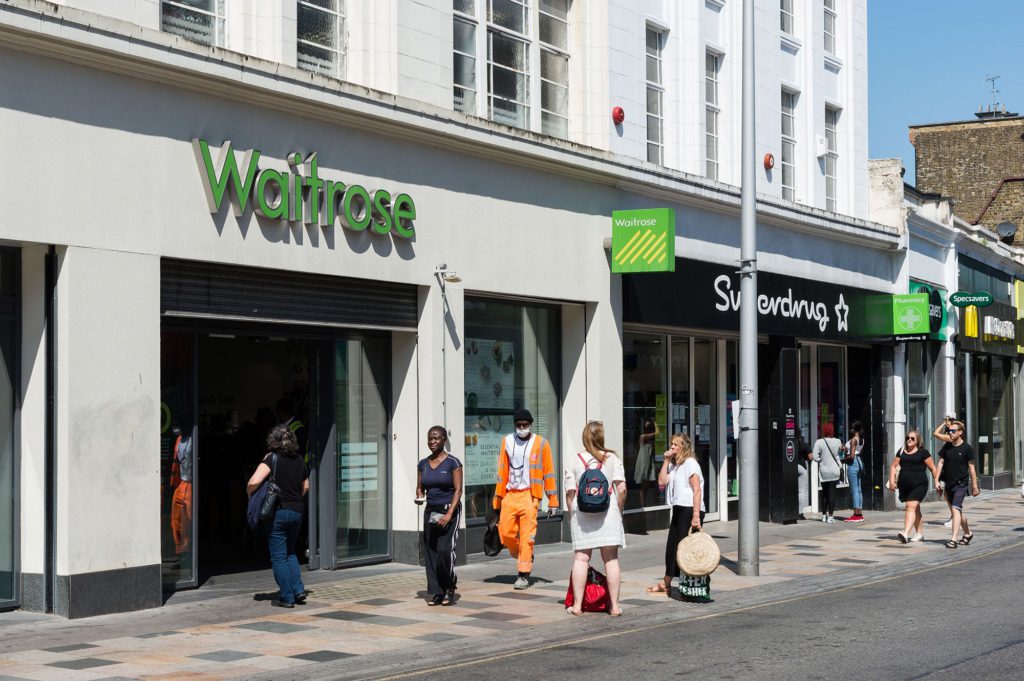
The £500 million ($613 million) joint venture will see new homes built on the sites of Waitrose shops in the London districts of Bromley and West Ealing. A vacant John Lewis warehouse in Reading, a town west of the city, will also make way for new homes if planning permission is obtained.

The proposals are part of John Lewis’s wider plan to deliver 10,000 homes over the next decade. The department store chain is looking to earn 40% of profits from outside retail by 2030, making it a key player in Britain’s build-to-rent property market.

John Lewis Picks London Sites for New Homes Over Waitrose Shops

For John Lewis the property push is part of the turnaround strategy under chair Sharon White, a former telecommunications regulator who started the role in 2020. White is shutting stores and cutting costs to return the company to profit by 2025.

“The move underlines our commitment to build on the strength of our brands to diversify beyond retail,” said Nina Bhatia, executive director for strategy and commercial development at John Lewis.

John Lewis previously said one of the most important factors in picking West Ealing and Reading was their close proximity to the newly opened Elizabeth Line. London boroughs have a track record for seeing house prices grow on strong transport links.

More stories like this are available on bloomberg.com

©2022 Bloomberg L.P.

Make Yourself at Home in Your Local Waitrose: The London Rush

(Bloomberg) — Low-cost flights, residential homes, and electric drying racks: all things today’s news shows are in high demand amid a looming recession. Against that backdrop, the rising cost of renting could be aided by a joint venture between fund manager Abrdn and the John Lewis Partnership, where among other solutions, they plan to redevelop Waitrose stores into rental properties with shops attached. 

Here’s the key business news from London this morning:

In The City

Ryanair Holdings Plc: Europe’s largest discount carrier reported passenger growth of 10% to 11.2 million for November compared to the same month last year when the omicron coronavirus variant emerged. 

  • The update comes as both Ryanair and EasyJet Plc are scaling back in Germany, and as Lufthansa tightens its grip in Berlin, Frankfurt and Munich

Abrdn Plc: The fund manager is entering a £500 million joint venture with John Lewis Partnerships for build-to-rent homes across the south of England.

  • In Bromley and West Ealing, Waitrose shops close to transport links will be redeveloped into rental properties with stores attached, while in Reading, a John Lewis warehouse will be transformed

GSK Plc: The pharmaceutical giant’s cancer drug Jemperli met its key endpoint in a phase III trial, showing “statistically significant and clinically meaningful” improvements in progression-free survival.

  • Based on the trial results, the company said it plans regulatory submissions for the first half of next year 

In Westminster

Banks complained for years about Britain’s bonus cap. But now the government has pledged to scrap it — triggering a political backlash — most are silent.

Labour’s Samantha Dixon defeated Tory candidate Liz Wardlaw in the northwest England city of Chester, a boost for Keir Starmer in his first electoral test against Rishi Sunak. 

Unemployment is at record lows, but at least half a million more Britons are out of the workforce and not looking for work than before Covid-19, according to Bloomberg Opinion’s Therese Raphael. “Ailing health and shoddy care are driving many older people out of the workforce, threatening Britain’s growth prospects,” writes Raphael. 

In Case You Missed It 

More than two million of Britain’s most vulnerable households, facing the prospect of out-of-reach prices for gas and electricity, could shiver in silence this winter by disconnecting from the grid without their suppliers knowing, the chief executive of one utility warned.

Meanwhile, electric drying racks are the unexpected star of the season, flying off the shelves in the UK as temperatures start to dip. 

Finally, here’s a report from Sam Bankman-Fried’s Bahamian penthouse after his cryptocurrency exchange FTX imploded.

Looking Ahead

Sports Direct owner Frasers Group Plc, heating and plumbing product distributor Ferguson Plc, and construction company Balfour Beatty Plc are among the firms scheduled to update the market next week. 

For a news fix when the day is done, sign up to The Readout with Allegra Stratton, to make sense of the day’s events.

–With assistance from Kwaku Gyasi and Ryan Hesketh.

More stories like this are available on bloomberg.com

©2022 Bloomberg L.P.

Woman With Fake Baby Bump Caught Smuggling Computer Chips Into China

(Bloomberg) — Customs officials in China have arrested a woman smuggling semiconductors inside a pregnancy prosthetic, highlighting the bustling underground market for chips that has sprung up in the world’s No. 2 economy.

The woman was stopped while crossing into Zhuhai from Macau on Nov. 25, customs said in a statement on Thursday, adding she was found with 202 processors and nine smartphones.

An officer at the border cross became suspicious when she questioned the woman, who claimed “she was about five or six months pregnant, but had a big belly that looked like she was in the third trimester.”

Read: China’s Underground Market for Chips Draws Desperate Automakers

An underground market for semiconductors has sprung up in China since 2020, when a global shortage of chips started disrupting supplies of everything from smartphones to vehicles. A move by the US to impose sweeping curbs on exports of high-end semiconductors and chip-making equipment to China, partly to stop them being used for military purposes, has further roiled the market.

China’s massive gray market is made up of hundreds of middlemen and is riddled with second-hand or out-of-date chips that can fetch prices 500 times the original cost.

Apple Inc.’s iPhones are typically smuggled into China because they are more expensive there than in Hong Kong and Macau due to import taxes. Smugglers are occasionally caught at the border with dozens of the devices.

More stories like this are available on bloomberg.com

©2022 Bloomberg L.P.

Jokowi Points to Taiwan, South Korea as Models in Rebuke of West

(Bloomberg) — Indonesian President Joko Widodo said his nation won’t follow a purely open economic model that he blamed for undercutting Latin America’s growth prospects for decades, saying Taiwan and South Korea show the advantage of making the world dependent on them. 

Speaking to a business forum in Jakarta on Friday, Widodo said the most industrialized economies in Asia found an alternative way to achieve high-income status that he wants Indonesia to follow. He cited Taiwan’s success in developing its semiconductor chip industry and South Korea’s emphasis on digital hardware.

“They are focused, strategic and competitive, this is the system we need to keep emulating,” the president, popularly known as Jokowi, said. The first lesson he wants Indonesia to apply from that experience: “making other countries reliant on us.” 

The president’s remarks come as Indonesia, the world’s biggest producer of nickel and palm oil, is pushing hard for commodities industries to evolve in order to move up the value chain and reduce the economy’s reliance on exports of raw materials. 

“We also have products that many countries need, such as nickel, copper, bauxite and tin,” he said. 

Jokowi cited Latin America as having chosen the wrong path, saying that “after more than 50, 60, 70 years, their countries were always developing” instead of reaching developed status. In contrast, South Korea and Taiwan rose into the higher-income ranks within a relatively short time. 

Indonesia doesn’t want a closed economic model, the president cautioned. But he said complete openness could mean relying on exports of lower-value products.

As part of his efforts to bolster growth in Indonesia, Jokowi has placed temporary bans on exports of raw materials like nickel ore, saying that will help the country lure new investment and foster development of a domestic industry. That move has drawn complaints from the country’s European metals buyers. The World Trade Organization ruled in November that Indonesia’s efforts violated international trade rules. 

Jokowi has vowed to appeal that decision and, in his remarks Friday, defended his approach. 

“If we follow the footstep of the Western countries, we will always be left behind, we will never catch up,” Jokowi said. “We will keep our economy open, but once again, we need to be able to design it in such a way that other countries are reliant on us.”


More stories like this are available on bloomberg.com

©2022 Bloomberg L.P.

Stocks Decline, Dollar Steadies Ahead of Jobs Data: Markets Wrap

(Bloomberg) — US and European stocks futures fell along with Asian equities as traders awaited a jobs report later Friday for clues on the Federal Reserve’s next policy steps. 

A gauge of Asian shares dropped for the first time in four days, led by Japan, where the yen’s five-day rally increased downward pressure on stocks. A Bank of Japan board member suggesting the need for a policy assessment added to negative sentiment.

The slide in contracts for the S&P 500 came after the index edged lower during the US session. It rallied earlier this week on Fed Chair Jerome Powell’s signals of a downshift in the pace of hikes. 

The dollar’s recent selloff paused, with a gauge of the greenback sitting near multi-month lows. 

Bets on where the central bank rate will peak have now dropped below 4.9%, according to swap markets. The current benchmark sits in a range between 3.75% and 4%.

Fed Bank of New York President John Williams said further hikes are needed to curb inflation. Concern that such tightening raises the odds of a recession became more pronounced after data showing American manufacturing contracted in November for the first time since May 2020. 

Australian and New Zealand government bond yields slid, following the lead from Treasuries on Thursday, when their rally gathered steam amid a pullback in expectations for Fed tightening. The 10-year US benchmark yield rose slightly to 3.54% during Asian trading.

The remarkably resilient US jobs market is beginning to cool, but Friday’s employment report may fall short of the turning point Fed officials are seeking in their battle to beat back inflation. 

Sarah Ponczek, financial adviser at UBS Private Wealth Management, said the jobs figures and other data may start to show a slowing trend in the economy.

“There have been slight hints that the interest-rate hike cycle that we have seen is starting to filter through the economy,” she said on Bloomberg Radio.

In South Africa, the political turmoil risks sending the financial market into deeper rout. The rand clawed back some of Thursday’s drop, when it had its worst one-day loss since May.

Elsewhere, oil was set for a weekly gain with China further easing Covid restrictions and the US considering a pause in sales from its strategic reserves. Gold slid.

Key events this week:

  • US unemployment, nonfarm payrolls, Friday

Stocks

  • S&P 500 futures fell 0.2% as of 6:46 a.m. London time. The S&P fell 0.1%
  • Nasdaq 100 futures fell 0.4%. The Nasdaq 100 rose 0.1%
  • Euro Stoxx 50 futures fell 0.2%
  • Japan’s Topix index fell 1.6%
  • Hong Kong’s Hang Seng Index fell 0.3%
  • China’s Shanghai Composite Index fell 0.2%
  • Australia’s S&P/ASX 200 Index fell 0.7%

Currencies

  • The Bloomberg Dollar Spot Index was little changed
  • The euro was little changed at $1.0530
  • The Japanese yen rose 0.2% to 135.11 per dollar
  • The offshore yuan fell 0.1% to 7.0477 per dollar
  • The British pound was little changed at $1.2237

Cryptocurrencies

  • Bitcoin was little changed at $16,931.46
  • Ether fell 0.2% to $1,273.52

Bonds

  • The yield on 10-year Treasuries advanced four basis points to 3.54%
  • Japan’s 10-year yield was little changed at 0.26%
  • Australia’s 10-year yield declined nine basis points to 3.39%

Commodities

  • West Texas Intermediate crude was little changed
  • Spot gold fell 0.2% to $1,799.57 an ounce

This story was produced with the assistance of Bloomberg Automation.

–With assistance from Rita Nazareth and Rob Verdonck.

More stories like this are available on bloomberg.com

©2022 Bloomberg L.P.

Binance Probes a Crypto Exploit That All But Wiped Out a Token on Ankr Service

(Bloomberg) — This year’s long list of crypto security exploits targeting decentralized finance has another unwelcome entry.

Binance, the largest digital-asset exchange, said Friday it’s helping to probe an attack on a token offered by the Ankr protocol. The token, aBNBc, is now almost worthless after trading at about $300 a day ago. 

The aBNBc token had derived its value in part from a link to Binance Coin and was intended to give holders of the latter ways of earning returns. 

About $123 million of assets are deposited on the Ankr protocol, according to its website. Ankr said it was working with exchanges to stop trading of the affected coin.

Blockchain security specialist PeckShield Inc. said on Twitter the attacker may have exploited a software bug to mint vast amounts of the token before rushing to convert them into other coins to make away with the digital swag.

More than $3 billion has been hacked from the crypto sector so far in 2022, which is on course to be a record year for exploits involving digital assets, according to blockchain specialist Chainalysis.

The attacks add to woes from a yearlong rout in Bitcoin and other tokens alongside high-profile blowups at crypto firms such as the FTX exchange.

More stories like this are available on bloomberg.com

©2022 Bloomberg L.P.

Bleak Friday Compounds UK Retailers’ Excess Inventory Problem

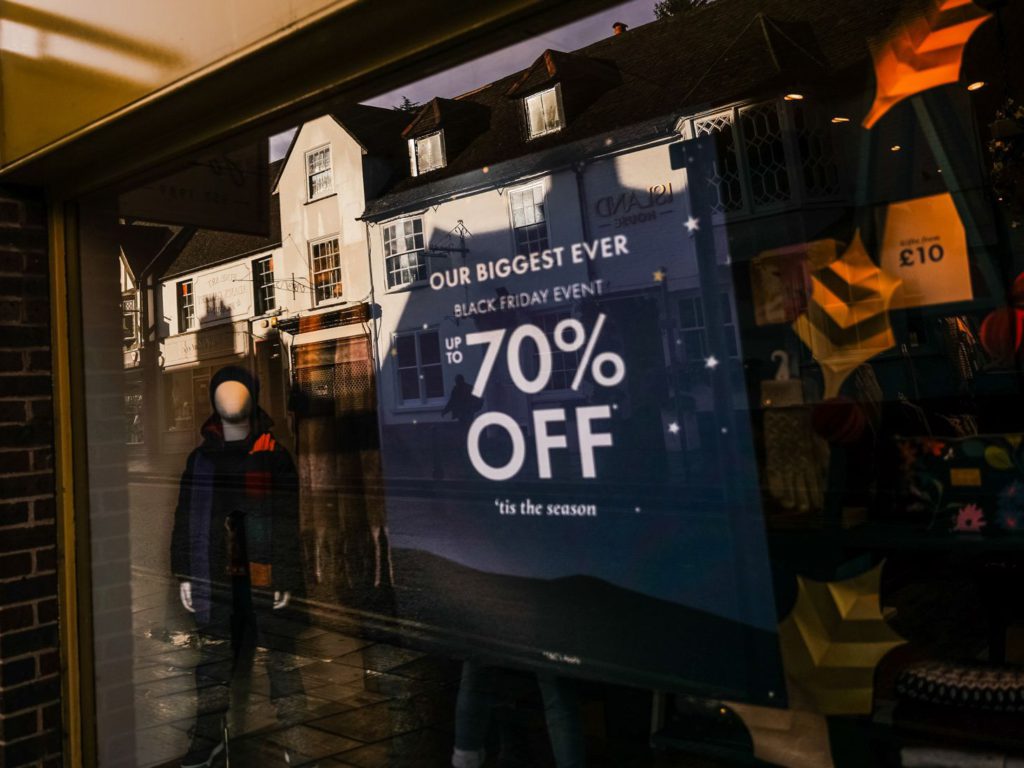
(Bloomberg) — A lackluster Black Friday in the UK added to an already muted Christmas season, leaving retailers with a problem: too much stock. 

Marks & Spencer Group Plc, Next Plc and Hotel Chocolat Group Plc are all trying to tackle high inventories that are forcing some British retailers to take on costly warehouse expenses and contemplate even steeper discounts. According to data firm Springboard, footfall on Black Friday was 17% lower than pre-pandemic levels, indicating “consistent nervousness around spending in the current climate.” 

The problem has been building for months, as many stores ordered their winter stock at the start of the year, when supply-chain problems still meant long waiting times and before spiraling inflation began to hurt spending. At the same time, consumers are sending back significantly more products than November last year, compounding the inventory problem, according to ReBound, a firm that manages returns for retailers.  

“Retailers heading into Black Friday were sitting on more stock than they traditionally would at this time of year,” said Miles Lethbridge, director in deals strategy and operations at PwC. “Combine that with some retailers maybe having a slower Black Friday than they anticipated and that means there is a lot of stuff bunging up certain retailers’ supply chains.”

Marks & Spencer has asked suppliers to postpone deliveries to its warehouses and has delayed finalizing orders for next year, the Sunday Times reported. The food and clothing chain said it’s having to “readjust stock flow,” like other retailers, as lead times normalize after the pandemic. 

British chocolatier Hotel Chocolat is seeking to “materially reduce” its inventory levels with stock taking on average 5.5 months to sell through versus 3.5 months before the pandemic.

Next has denied some requests for warehouse space from smaller commission label brands because the retailer already has enough inventory. It’s a contrast to last year when “no one had any stock” and there was very little discounting, Next Chief Executive Officer Simon Wolfson has said.

A build-up of stock is particularly hard for fast-fashion chains to manage as items can fall out of style quickly and miss their season. Asos Plc had £1.08 billion ($1.3 billion) of unsold stock in August, up 34% from a year earlier. The online retailer is writing off more than £100 million of product.

Steep Discounts

Excess stock means that retailers face a tough path during the key Christmas trading period. The unusual winter timing of the 2022 World Cup is also disrupting commerce, and British brands are having to contend with postal strikes by the Royal Mail, making it harder to send stock out and manage returns.

“The level of discounts and volume of products discounted is higher than usual,” said Nabil Malouli, vice president in global e-commerce for DHL. “This is a strong indication that retailers might be overstocked.”

Christmas sales started earlier than usual and Black Friday discounts have been deeper over a longer time. Department store John Lewis Partnership Plc and drugstore chain Boots expanded the sale period, offering a whole Black November. Online mattress brand Emma is offering as much as 60% off mattresses compared with roughly 45% last year.

Discounts are crucial amid the cost-of-living crisis in the UK as food and heating take up a growing share of consumers’ paychecks. Shoppers are expected to spend £1.8 billion less this festive season than in 2021, cutting back on gifts and celebrations, according to PwC.

Warehouse Costs

Warehouse provider GXO Logistics Inc. is working with retailers to help move inventory and is adding mezzanine levels to cram in more stock. 

“Excess stock does require extra storage space and that’s not necessarily easy,” said Neil Shelton, chief strategy officer at GXO. “Inventory levels were exceptionally high heading into peak season.”

Overstocked retailers may have to pay for extra warehouse space or pay demurrage costs while stock sits waiting in freight containers. When online furniture brand Made.com Group Plc fell into insolvency last month its founder Brent Hoberman said it was caught with “massive inventory at just the wrong time.”

“There are going to be companies turning out a huge amount of cash for storage,” said Danni Hewson, financial analyst at AJ Bell. “They will have to go heavy on the sales and we may start to see sales pre-Christmas that we would expect to see in January, particularly for bigger ticket items.”

More stories like this are available on bloomberg.com

©2022 Bloomberg L.P.

Close Bitnami banner
Bitnami