Bloomberg

Apple Unveils Biggest MacBook Air Redesign in Over a Decade

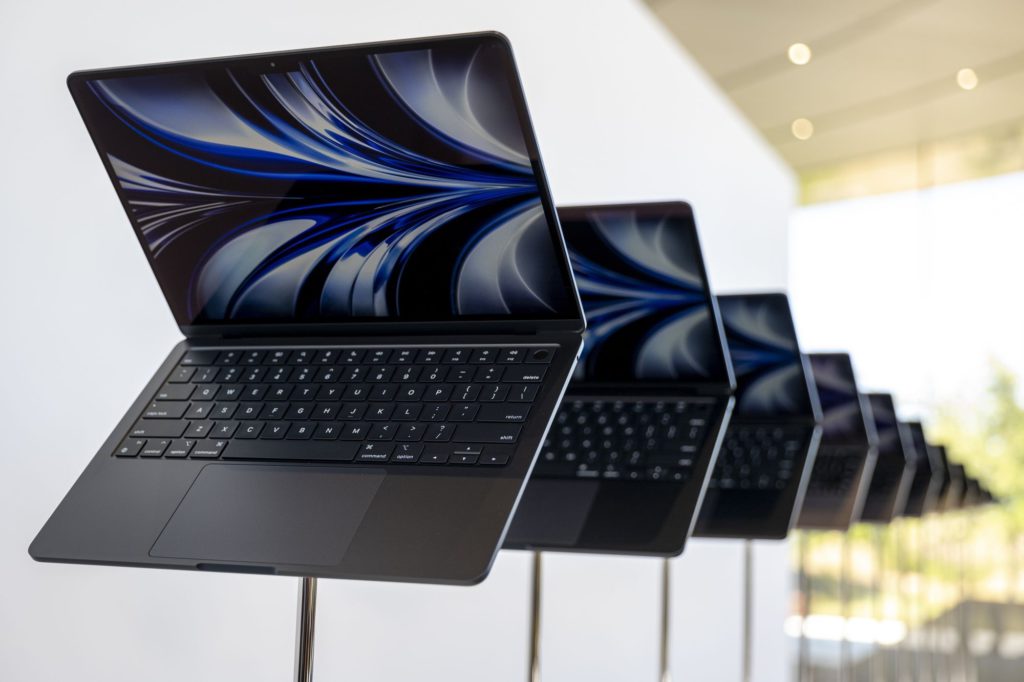
(Bloomberg) — Apple Inc. unveiled the most significant overhaul to its popular MacBook Air laptop in more than a decade, bringing a fresh design, new colors and a speedier M2 processor from its homegrown chip line. 

The company showcased the updated laptop Monday at its Worldwide Developers Conference, an event that’s otherwise focused on software updates for the iPhone and other devices. The new Air adds yet another machine to the company’s lucrative lineup of computers, which has seen revenue jump since a switch away from Intel Corp. chips in 2020.

The move refreshes a product that was groundbreakingly light and thin when Apple’s Steve Jobs first unveiled it in 2008. The new model loses the tapered shape of the previous version and instead uses a design that looks similar to the 14-inch and 16-inch MacBook Pros launched at the end of 2021. The machine has a 13.6-inch screen, up from 13.3 inches on the previous model, and — like the MacBook Pro — a 1080p camera with twice the resolution of the previous model.

The updated computer includes an M2 processor, the first generational leap for Apple’s Mac chips since its in-house components for computers debuted in November 2020. The MacBook Air update is the first since then, when it was one of the earliest Macs to get the M1 chip. The latest version will be 40% faster in handling some pro apps, but around 18% overall, according to Apple.

The new capabilities should be a boon for Apple fans, even if there were few major surprises at the event. The shares were little changed following the announcements, trading at $145.38 as of 3:28 p.m. in New York. Apple is down 18% for the year, part of a broader pullback for tech stocks. 

The M2 chip has eight processing cores — similar to the M1 — but now has as many as 10 graphics cores instead of up to eight. It also has as much as 24 gigabytes of memory, up from 16 in the M1. And there’s an updated video engine to more smoothly play 4K and 8K video. 

The same M2 chip also is coming to a low-end 13-inch MacBook Pro, the company said Monday. The new Air model will start at $1,199, while the Pro price begins at $1,299.

The new MacBook Pro looks identical to the previous version from 2020. The high-end MacBook Pros, meanwhile, were updated in 2021.


In a sign of continuing supply-chain challenges, the new machines won’t go on sale until July. The computers can’t be ordered yet and are listed as “currently unavailable” on Apple’s website. Due to Covid-19-related shutdowns in China, an Apple-contracted factory for building Macs was temporarily shuttered, delaying shipments. 

The Mac lineup generates a fraction of the sales that Apple’s iPhone does, but it’s been a solid performer in recent years. It accounted for nearly 11% of revenue in the last quarter, more than the iPad and Apple’s wearables and home products.

The last major MacBook Air overhaul was in 2018 when the company added a Retina display, but the device looked similar overall to the 2010 model — previously considered the most significant redesign in the laptop’s history. When the the MacBook Air was first unveiled by Jobs, the Apple co-founder famously pulled the ultrathin laptop out of a manila envelope. 

The redesigned laptop comes in space gray, silver, a starlight gold and a new dark blue called midnight. It also relies on MagSafe charging, the magnetic connector used in older versions of the MacBook Air but removed with the 2018 redesign. The updated 13-inch MacBook Pro continues to use a standard USB-C charger. 

Apple intended to launch the revamped MacBook Air in 2021, but it was delayed by supply-chain snags, the chip shortage and internal design challenges. Bloomberg reported earlier this year that it would launch at the Apple developer conference along with the new MacBook Pro.

The latest MacBook Air and MacBook Pro were two of several next-generation Macs in testing with variations of the M2 chip, Bloomberg reported earlier this year. Apple is also working on new Mac Pro desktop, high-end MacBook Pros, Mac minis and an iMac for release over the next year or so.

(Updates with more on the new features starting in third paragraph.)

More stories like this are available on bloomberg.com

©2022 Bloomberg L.P.

Most of Bitcoin Pandemic Gains Came While Stocks Were Closed

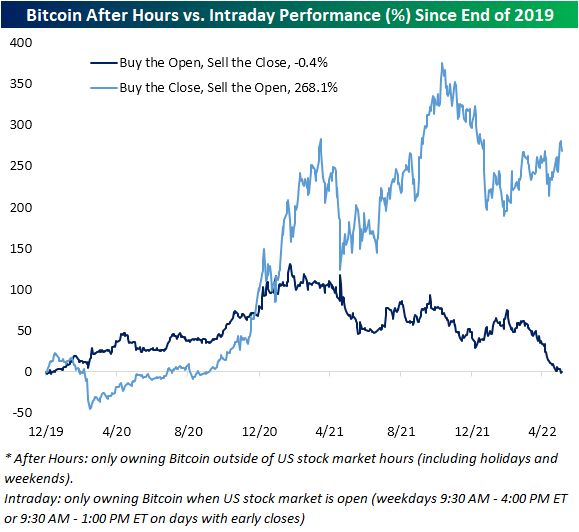
(Bloomberg) — Most everyone knows that Bitcoin had a stellar two years when the pandemic broke out. But just about all of the coin’s gains since then have happened while US markets are closed. 

A strategy that buys the coin at the equity-market close — at 4 p.m. in New York — and sells it at the next day’s open — at 9:30 a.m. — would have yielded gains of roughly 270% going back to the start of 2020, according to Jake Gordon at Bespoke Investment Group. But doing the opposite — buying it at the US market open and selling it at the close — spits out negative returns.

“The bulk of Bitcoin’s gains have come outside of regular trading hours for US equities,” wrote Gordon in a note. 

Cryptocurrencies trade 24/7 and the strategy is hypothetical, an attempt to showcase just how sensitive crypto markets are to moves in US equities. And it’s difficult to say why the trend might work this way, said Gordon, though it appears the correlation to equities is a big factor this year. “It’s a more risk-averse market. In other words, stocks and cryptos are higher up on the risk spectrum, thus have sold off hand in hand,” he said. 

Bespoke recently found that Bitcoin has largely tended to move higher on weekends, when the stock market is closed, but that Monday through Friday, its intraday path looks much different: it trades flat before the market open, but declines as soon as trading commences. Bitcoin has long been a favorite of weekend traders, who can often benefit from lower levels of liquidity to generate bigger price swings.  

Earlier: Bitcoin Falls When the US Market Opens, Pointing to Cash Raising

Analysts have been pointing out that the coin has moved in tandem with US equities this year, meaning that on days when stocks rise, the coin tends to advance as well, and vice versa. Both asset classes have been reacting to changes in Federal Reserve policy. The central bank has been raising interest rates to cool down growth and dampen inflation. The S&P 500 was up 0.2% as of 3:16 p.m. in New York on Monday, with Bitcoin adding 4.5% to trade around $31,280. 

Still, the correlation to stocks may not explain why the trend of after-hours outperformance also existed when the market was rallying over the past two years, says Gordon. One explanation is that the post-close strategy covers a longer span of time, “meaning there is the potential for more news/catalysts to account for,” he said. 

Meanwhile in 2022, a trader buying at the open and selling at the close would have lost 30%, Gordon found, while doing the opposite would have meant notching a loss of 8%. 

(Updates story with additional comments on trading; updates prices.)

More stories like this are available on bloomberg.com

©2022 Bloomberg L.P.

Apple Adds ‘Pro’ Features to iPadOS for Better Multitasking

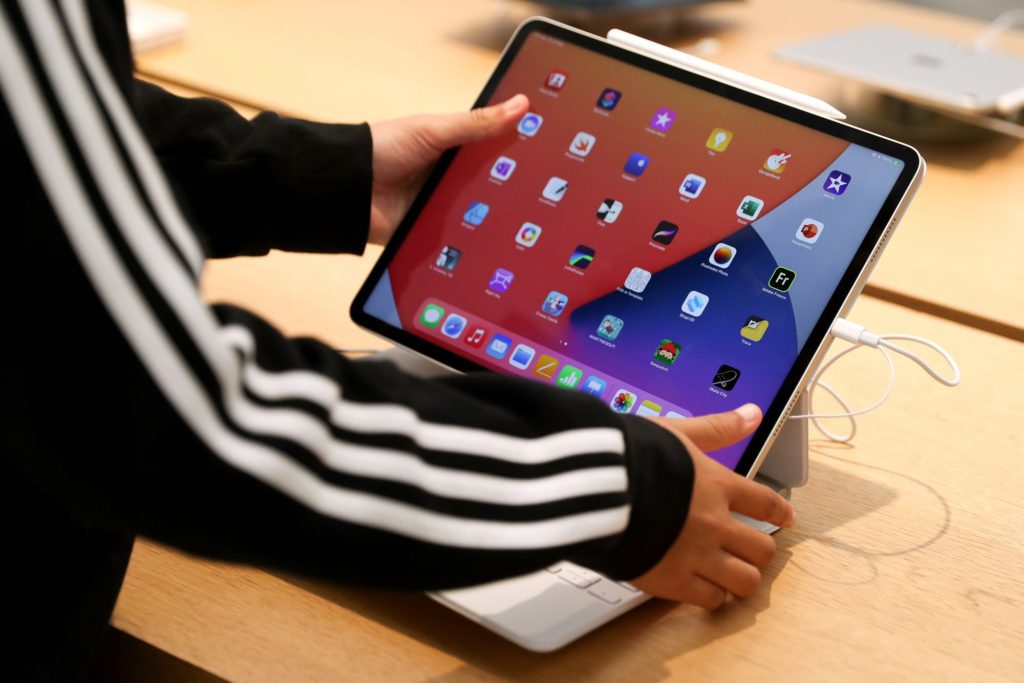
(Bloomberg) — Apple Inc. on Monday announced new iPadOS keyboard shortcuts and pro features for apps including Calendar, Files and Mail. There’s a new Mac-like Find-and-Replace system and duplicate file controls. IPadOS is also getting customized toolbars. Developers will get frameworks to add these more pro-like capabilities to their iPad apps.

The new iPad Pro features will allow users to change the display density to see more content on the screen at once. There’s also Stage Manager with a revamped iPad multitasking interface and true external display support. The new iPad multitasking feature is pretty impressive, taking on laptops directly. For the first time, you can re-size windows and operate several at once.

The new iPadOS will have a Collaborate feature allowing users to communicate with a group of people while working on a document. Apple is also giving a Sneak Peek at Freeform, a new collaboration app with virtual sticky notes and drawing.

Apple will add Metal 3 for gaming to the iPad as well, including a new feature for developers to let games get background updates. Game Center is getting a new Activity screen and better SharePlay support for gaming.

And for the color professionals, there’s a new Reference Mode feature for the 12.9-inch iPad Pro to better match the colors to professional displays. Pro users of the iPad have been asking for this for years, and Apple is finally delivering.

For more on Apple Worldwide Developers Conference Keynote, click here for our TOPLive blog.

More stories like this are available on bloomberg.com

©2022 Bloomberg L.P.

JPMorgan’s Kolanovic Sees Buying Opportunity in Chinese Stocks

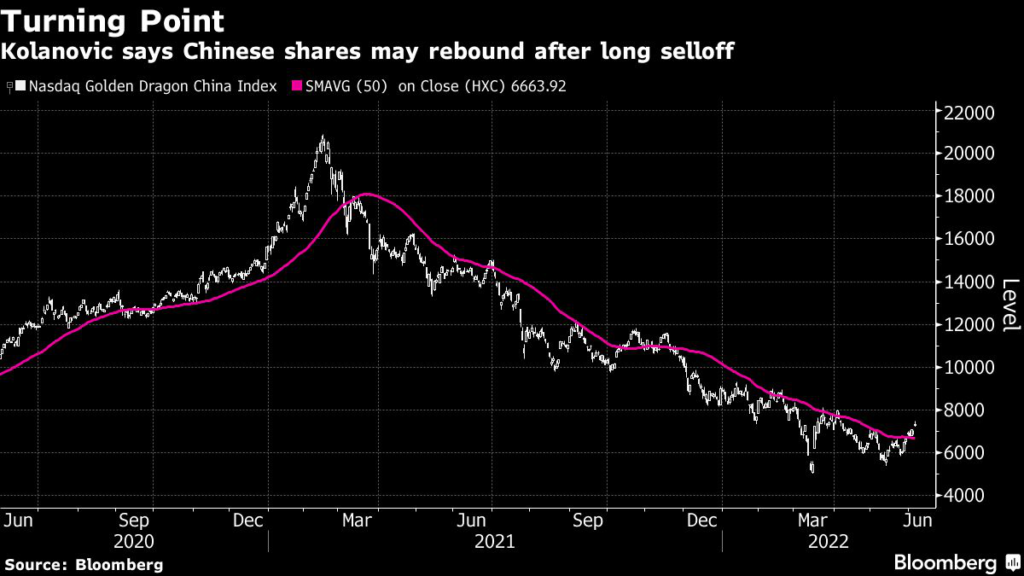
(Bloomberg) — The past year’s deep selloff in Chinese stocks could finally be on the cusp of a turnaround, says JPMorgan Chase & Co. strategist Marko Kolanovic.

“Chinese equities may have reached their turning point as lockdowns begin to ease, growth support measures continue, and news reports that China is about to conclude its probe into Didi suggest regulatory risks are easing,” Kolanovic wrote in a note to clients on Monday.

The bullish outlook echoes his call from last week, when he downplayed fears of a looming recession and said the US stock market was poised to rebound during the second half of the year.

It also comes as the Wall Street Journal reported that regulators in Beijing are finishing up their investigations into ride-hailing giant Didi Global Inc. as well as Full Truck Alliance Co. and online recruitment platform Kanzhun Ltd. The firms are just three of the dozens of companies that have been caught up in China’s crackdown on big tech firms.

China to Wrap Probe Into Didi as Soon as This Week, WSJ Says

The Nasdaq Golden Dragon China Index surged on Monday, paring losses for the past year to about 50%. The shares have suffered from heightened regulatory scrutiny, coupled with the economic pain stemming from China’s refusal to back down from its Covid Zero policy.

For Kolanovic, the declines of the past year have created an opportunity for investors, especially with the prospects of additional government stimulus. He says that while second-quarter economic data have been disappointing, recent figures point to an improving outlook.

“Even as our economists have lowered the growth targets to 3.7%, vs the official target of 5.5%, any incremental improvement from the lifting of lockdowns, relaxing regulations, and further stimulus, should be beneficial for Chinese stocks in the coming quarters,” he said.

Why China Keeps on Targeting Its Technology Giants: QuickTake

More stories like this are available on bloomberg.com

©2022 Bloomberg L.P.

KKR Buys Supply-Chain Software Maker Apexanalytix From Carousel

(Bloomberg) — Private equity firm KKR & Co. has struck an agreement to acquire a majority interest in Apexanalytix, a tech developer for supply chain risk management services, according to a statement reviewed by Bloomberg News.

Carousel Capital, a Charlotte-based investment firm and the largest shareholder in Apexanalytix, will retain a minority stake as part of the deal, the companies said in a statement. Financial terms of the deal weren’t disclosed.

With headquarters in Greensboro, North Carolina, and offices globally, Apexanalytix provides data-backed software and services used for supplier management, fraud prevention and overpayment recovery. The company sells a suite of branded software products, including: firststrike, apexportal and smartvm. It plans to use the investment from KKR to accelerate product development, global expansion and talent recruitment.

Chief Executive Officer Steve Yurko said that, with KKR’s resources and experience, Apexanalytix will have “even greater agility” to address customer needs. “We are grateful to the Carousel Capital team for playing a key role in our growth over the past eight years and we look forward to continuing this great relationship,” he added

For KKR, Apexanalytix fits into the fold of the New York-based buyout firm after its numerous deals in the supply chain technology sector. The investment for the deal is being made through the North America Fund XIII, the firm said.

In December, KKR acquired warehouse-management software developer Koerber AG for roughly $1.7 billion. Other recent investments by the firm include o9 Solutions and Hitachi Transport System.

“Apex sits at the intersection of multiple themes where we have had strong conviction over the past decade, including digitization and data-enabled platforms, the increasing fragmentation of global supply chains, and the rise of sophisticated technology solutions and tech-enabled services that can create operational efficiencies and generate tangible savings,” said Webster Chua, a partner at KKR.

The acquisition is slated to close in the second half of this year. UBS Investment Bank served as financial adviser to KKR, while Kirkland & Ellis acted as legal counsel. William Blair & Co. LLC advised Apexanalytix and Carousel Capital on the deal, with both entities also represented by K&L Gates LLP. 

More stories like this are available on bloomberg.com

©2022 Bloomberg L.P.

Shopify Faces Off Against Calpers, ISS After $125 Billion Slide

(Bloomberg) — Shopify Inc. is asking investors to put their faith in Chief Executive Officer Tobi Lutke with a proposal to preserve his voting power. That couldn’t have come at a more inopportune time. 

Shares of the Canadian company have tumbled 74% this year, costing it more than $125 billion in market value. Investors have lost their enthusiasm for e-commerce stocks now that the Covid-19 pandemic has eased and consumers have returned to physical stores. Amid the downward spiral, Lutke is asking for a special “founder share,” designed to ensure he keeps at least 40% of the votes as long as he’s with the company.

Investors will vote Tuesday on the arrangement, which took a year for Lutke and the board to negotiate and needs a majority of shareholders (other than Lutke and his affiliates) to pass. But the plan faces opposition from two shareholder advisory firms, Institutional Shareholder Services Inc. and Glass Lewis & Co. The California Public Employees’ Retirement System has already said it will vote against it. Spokespeople for Shopify and Calpers declined to comment. 

“There is never a good time for a proposal to provide greater control to a founder,” said Richard Leblanc, professor of governance, law and ethics at York University in Toronto. “For tech companies, shareholders often invest in the founder. The Shopify proposal is simply strengthening this ability.”

These structures aren’t uncommon in tech. Dual-class shares are used at Meta Platforms Inc., Alphabet Inc. and other firms to concentrate voting power among founders. They’re seen as a bulwark against unsolicited bids like the one Elon Musk foisted upon Twitter Inc.’s board.

Read more: Musk Threatens to End Twitter Deal Over Lack of Info on Bots 

Still, some bristle at the undemocratic nature of giving founders or insiders so much power. In advising its clients to vote against Shopify’s proposal, Glass Lewis argued that it carries “inadequate protection” for minority shareholders. Lutke is 41 years old; giving him special voting rights may mean entrenching those rights for decades.

Others are more sanguine. “Obviously when the stock is not doing well, you’re going to get grumpy shareholders,” said Eric Jackson, CEO and founder of Toronto-based hedge fund EMJ Capital Ltd., which most recently bought and sold Shopify shares in February. 

Jackson added that if he currently owned Shopify shares, he would vote for the proposal. “Tobi is a great founder and CEO. He’s done a phenomenal job with the company. If I were in his position, I’d probably want to do the same thing. Some leaders are better than others and I would put Tobi at the top of the list,” he said. 

“It is a bold proposal that says to the market: you are investing in the founder, Mr. Lutke, as much if not more than the company,” York University’s Leblanc said. “The proposal will have the effect of not looking over your shoulder all the time — like Twitter is doing now with Musk — and thinking longer-term with the board.”

More stories like this are available on bloomberg.com

©2022 Bloomberg L.P.

Shopify Faces Key Vote on Lutke’s Power After $125 Billion Slide

(Bloomberg) — Shopify Inc. is asking investors to put their faith in Chief Executive Officer Tobi Lutke with a proposal to preserve his voting power. That couldn’t have come at a more inopportune time. 

Shares of the Canadian company have tumbled 74% this year, costing it more than $125 billion in market value. Investors have lost their enthusiasm for e-commerce stocks now that the Covid-19 pandemic has eased and consumers have returned to physical stores. Amid the downward spiral, Lutke is asking for a special “founder share,” designed to ensure he keeps at least 40% of the votes as long as he’s with the company.

Investors will vote Tuesday on the arrangement, which took a year for Lutke and the board to negotiate and needs a majority of shareholders (other than Lutke and his affiliates) to pass. But the plan faces opposition from two shareholder advisory firms, Institutional Shareholder Services Inc. and Glass Lewis & Co. The California Public Employees’ Retirement System has already said it will vote against it. Spokespeople for Shopify and Calpers declined to comment. 

“There is never a good time for a proposal to provide greater control to a founder,” said Richard Leblanc, professor of governance, law and ethics at York University in Toronto. “For tech companies, shareholders often invest in the founder. The Shopify proposal is simply strengthening this ability.”

These structures aren’t uncommon in tech. Dual-class shares are used at Meta Platforms Inc., Alphabet Inc. and other firms to concentrate voting power among founders. They’re seen as a bulwark against unsolicited bids like the one Elon Musk foisted upon Twitter Inc.’s board.

Read more: Musk Threatens to End Twitter Deal Over Lack of Info on Bots 

Still, some bristle at the undemocratic nature of giving founders or insiders so much power. In advising its clients to vote against Shopify’s proposal, Glass Lewis argued that it carries “inadequate protection” for minority shareholders. Lutke is 41 years old; giving him special voting rights may mean entrenching those rights for decades.

Others are more sanguine. “Obviously when the stock is not doing well, you’re going to get grumpy shareholders,” said Eric Jackson, CEO and founder of Toronto-based hedge fund EMJ Capital Ltd., which most recently bought and sold Shopify shares in February. 

Jackson added that if he currently owned Shopify shares, he would vote for the proposal. “Tobi is a great founder and CEO. He’s done a phenomenal job with the company. If I were in his position, I’d probably want to do the same thing. Some leaders are better than others and I would put Tobi at the top of the list,” he said. 

“It is a bold proposal that says to the market: you are investing in the founder, Mr. Lutke, as much if not more than the company,” York University’s Leblanc said. “The proposal will have the effect of not looking over your shoulder all the time — like Twitter is doing now with Musk — and thinking longer-term with the board.”

More stories like this are available on bloomberg.com

©2022 Bloomberg L.P.

Supreme Court Backs Southwest Baggage Worker on Arbitration in Pay Dispute Case

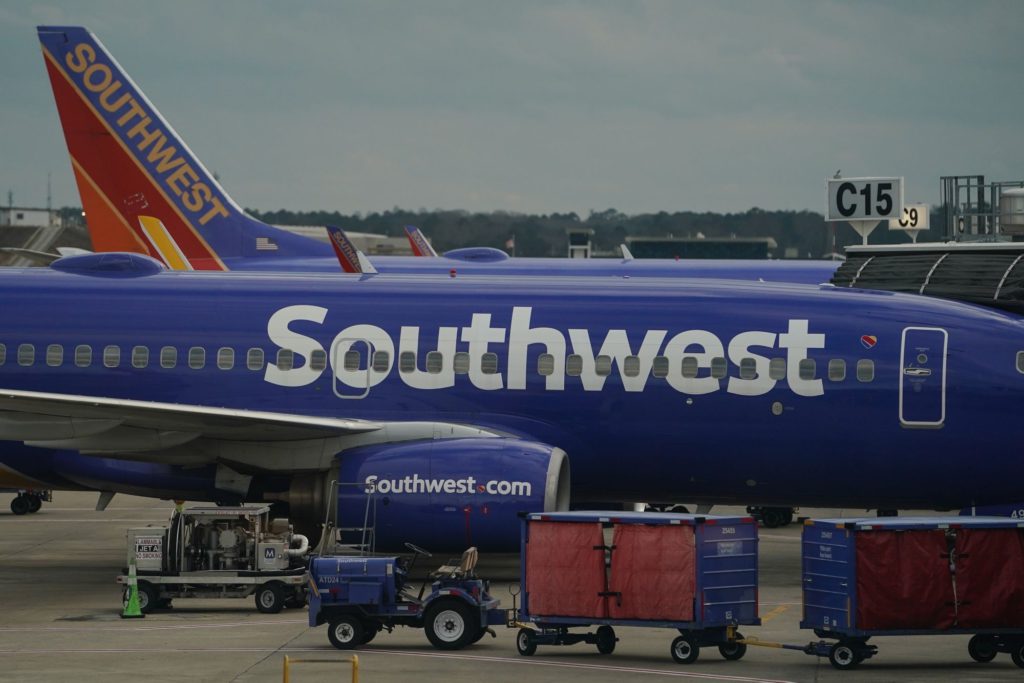
(Bloomberg) — The US Supreme Court sided with a Southwest Airlines Co. baggage-handling supervisor seeking to avoid having to go to arbitration with her bid for overtime pay, ruling in a case with possible implications for Uber drivers and Amazon warehouse workers.

The justices unanimously said Monday the supervisor isn’t covered by a 1925 federal law that requires enforcement of agreements to take claims to arbitration rather than to court. The majority said the employee qualified for an exception in that law for workers engaged in foreign or interstate commerce.

The case was being closely watched because of the potential impact on other jobs in the transportation and shipping industries. Uber Technologies Inc., Lyft Inc. and Amazon.com Inc. all filed briefs backing Southwest, urging the court not to interpret the Federal Arbitration Act’s exception as covering their workers.

The ruling didn’t explicitly say how workers in those industries will be affected. Writing for the court, Justice Clarence Thomas rejected calls to exempt virtually all employees of major transportation providers. But he also said some workers are exempted from the arbitration law even if they don’t physically cross a border.

“Airplane cargo loaders plainly do perform activities within the flow of interstate commerce when they handle goods traveling in interstate and foreign commerce, either to load them for air travel or to unload them when they arrive,” Thomas wrote.

Justice Amy Coney Barrett didn’t take part. Although Barrett gave no explanation, she served on the federal appeals court that ruled in the case.

The ruling kicks the case back to a lower court, where Southwest is still pressing a different argument, based on Illinois state law, for sending the suit to arbitration.

The case involved Latrice Saxon, who works at Chicago’s Midway International Airport as a ramp-agent supervisor, overseeing the loading and unloading of luggage onto and off planes. As a condition of her employment with Southwest, Saxon signed an agreement to take any wage disputes to arbitration, rather than filing a lawsuit. She is seeking to sue on behalf of ramp-agent supervisors nationwide.

Southwest said the impact on the company will be “minimal,” in part because its arbitration program applies only to non-union employees.

“Because non-union employees rarely handle cargo on a regular basis, Southwest will continue to rely on the Federal Arbitration Act to enforce its arbitration program in the future,” Southwest said in an emailed statement.

The Supreme Court has backed arbitration in a series of past cases, pointing to the 1925 law and its requirement that agreements to arbitrate be enforced like any other contract. The court ruled in 2018 that companies generally can enforce arbitration accords with employees even if they bar group claims. 

But the court said Monday that Saxon qualifies for an exemption in that law for “seamen, railroad employees or any other class of workers engaged in foreign or interstate commerce.”

The case is Southwest Airlines v. Saxon, 21-309.

(Updates with reaction from Southwest in ninth and 10th paragraphs.)

More stories like this are available on bloomberg.com

©2022 Bloomberg L.P.

China to Wrap Probe Into Didi as Soon as This Week, WSJ Says

(Bloomberg) — Chinese regulators are preparing to wrap up their investigation into Didi Global Inc. and restore the ride-hailing giant’s main apps to mobile stores as soon as this week, the Wall Street Journal reported.

Regulators are also finishing up their probes into data security at two other firms, Full Truck Alliance Co. and online recruitment platform Kanzhun Ltd., the Journal said, citing unidentified people familiar with the discussion. Agencies including the Cyberspace Administration of China told executives from the three companies of their plan during meetings last week, the Journal added.

The three companies are expected to face financial penalties, including a relatively large fine for Didi, the report cited some of the people as saying. All three will also offer to transfer 1% of their shares to the state, giving officials greater say in running the business, the Journal reported. Didi representatives didn’t immediately respond to requests for comment.

Didi surged 38% at 12:54 p.m. in New York trading, while Full Truck climbed about 7% and Kanzhun jumped almost 20%. The Hang Seng Tech Index gained 2.7% in Hong Kong. Investors have been awaiting the outcome of the probe into Didi, launched in July after the ride-hailing firm proceeded with its $4.4 billion US IPO despite Beijing’s objections.

“It is a sign that regulators are following through on their pledge to end the crackdown on tech platforms, which will likely continue to improve sentiment on the sector,” Bloomberg Intelligence analyst Marvin Chen said.

China Traders See Worst Over for Tech on Didi News: Street Wrap

The ride-hailing giant shed $70 billion of market value at one point after regulators suspended its apps from stores, imposed curbs on overseas listings and tightened up on Didi’s industry in the wake of its June 2021 IPO. The company, once feted as the national champion that drove Uber Technologies Inc. out of China, has since come to symbolize the extent to which Beijing is willing to go to curb the power and influence of its most successful internet corporations.

The Journal’s report coincides with expectations that the government is pumping the brakes on its yearlong crackdown on tech, to avoid further damaging the economy.

It’s unclear how that would affect its delisting or future IPO plans. Didi has secured the blessing of shareholders to delist from the New York Stock Exchange soon — allowing the company to begin preparing for a Hong Kong share float, the best outcome investors have said they can hope for.

(Updates with shares in the fourth paragraph.)

More stories like this are available on bloomberg.com

©2022 Bloomberg L.P.

Ukraine Latest: Kyiv in Talks With UN to Seek Grain Export Route

(Bloomberg) — Ukraine is in talks with the United Nations on potential ways to export grain from ports blocked by Russia’s military, President Volodymyr Zelenskiy said, but Kyiv remains skeptical toward a tentative deal between Turkey and Moscow to restart shipments.

Russian Foreign Minister Sergei Lavrov was prevented from visiting Serbia after that country’s neighbors banned his flight from their airspace. India, meanwhile, is in talks to boost crude imports from Rosneft PJSC as refiners in Asia’s second-biggest oil market have been enjoying a windfall from discounted Russian oil. 

The UK plans to send rocket systems to Ukraine that will let it strike locations as far as 80 kilometers (50 miles) away, less than a week after the US said it would provide similar weapons. Russian President Vladimir Putin threatened to strike new targets in Ukraine if longer-range missiles are delivered. 

(See RSAN on the Bloomberg Terminal for the Russian Sanctions Dashboard.)

Key Developments 

(All times in CET)

  • The Internet Pioneer Brought Low as Kremlin Ally by EU Sanctions
  • Ukraine’s Tactics Show Smaller Countries How to Fight Back
  • Putin Critic Kallas Needs New Allies to Stay in Power in Estonia
  • Oil Tankers Make Rare Mid-Atlantic Switch of Russian Crude Cargo
  • Ukraine Migration Maps ‘What’s Possible’ for Climate Displaced


US Goes After Billionaire Abramovich’s Planes (6:35 p.m.)

The US obtained a warrant to seize two jets owned or controlled by Russian billionaire Roman Abramovich.

US Magistrate Judge Sara Cave signed a warrant of seizure Monday for a Boeing 787-8 Dreamliner and a Gulfstream G650ER, according to documents released by the office of Manhattan US Attorney Damian Williams.

The Boeing has remained in Dubai since March, while the Gulfstream has been in Moscow since then, according to an FBI affidavit.

Zelenskiy Cites Intel Saying Russia Wants to Occupy Zaporizhzhia (5:46 p.m)

Zelenskiy said that “the most dangerous situation” of the war at present is in Zaporizhzhia, a region west of Donetsk that is partly occupied by Russian forces.

“We understand, and we see from intercepted calls, that the enemy wants to occupy Zaporizhzhia,” Zelenskiy told journalists at a press conference in Kyiv. Ukrainian forces are still fighting in Sievierodonetsk, although they are outnumbered by Russian personnel and heavy weapons, he said.

Russia’s Crude Oil Revenues Take a Hit Even as Exports Swell (5:43 p.m.)

Russia is earning less from its oil exports, even as seaborne crude shipments surge to a six-week high. That’s because of the big discounts that Moscow is having to offer Asian buyers to snap up barrels shunned by Europe, which translate into a drop in export duties. Read more here.

Ukraine in Talks With UN to Export Grain, President Says (4:47 p.m.)

Ukraine is in talks with the United Nations on ways to arrange grain exports, Zelenskiy said, adding that he has discussed the situation with Turkish President Recep Tayyip Erdogan.

As much as 25 million tons of grain is blocked from export in Ukraine’s ports, and that may rise to 75 million tons by autumn, Zelenskiy said. Ukraine rejected an offer to use Belarus’s rail links, he said, adding that Kyiv wasn’t invited to talks between Russia and Turkey.

While Ukraine wants guarantees from “countries which we can trust and which will have accords with Russia,” the best guarantee for safe exports will be weapons Ukraine can use to strike Russian ships if they attack Ukrainian ports, Zelenskiy said.

Latvia Bans 80 Russian TV Channels Until War Ends (2:01 p.m.)

Latvia banned the remaining 80 Russian-registered TV channels operating there from broadcasting until Russia ends its war in Ukraine and returns Crimea to Kyiv’s control, the Leta news service reported, citing Ivars Abolins, the chairman of the National Electronic Mass Media Council.

The Baltic country, which neighbors Russia and has a large Russian-speaking minority, is one of Europe’s harshest critics of the war in Ukraine. Abolins said Monday that Latvia had given a broadcasting license to TV Rain, an independent Russian TV channel that was banned by Moscow in March.

Read more: Putin’s Crackdown Pushes Independent Russian Media Into Crypto

Serbian Leader Decries Derailing of Lavrov Visit (1:42 p.m.)

Serbian President Aleksandar Vucic, who was supposed to host Lavrov this week in Belgrade, said he was displeased how neighboring countries prevented the visit by banning Lavrov’s flight from their airspace.

Still, Lavrov will soon meet his Serbian counterpart, Nikola Selakovic, at an undisclosed location and time, Vucic said. In Moscow, Lavrov called the move by Bulgaria, North Macedonia and Montenegro to block him from their airspace “unprecedented.”

Lavrov is a great and proven friend” of Serbia, Defense Minister Aleksandar Vulin said in separate comments in Belgrade. “Serbia is proud of not being part of the anti-Russia hysteria,” Vulin said.

Russian Car Sales at Record Low as Sanctions Sting (12:39 p.m.)

Russian car sales plunged 84% in May, as sanctions and international isolation brought an industry that had once been a showcase for foreign investment to a near standstill.

Fewer than 25,000 vehicles were sold last month, according to the Association of European Businesses, the lowest since at least 2006 and less than a tenth of the monthly levels seen in peak months in the past.

Read more: Russian Car Sales Collapse as Isolation Hits Once-Hot Industry

India in Talks to Increase Oil Imports From Rosneft (12:21 p.m.)

India is looking to boost Russian oil imports, with state-owned refiners eager to take more heavily-discounted supplies from Rosneft after Europe enacted a partial ban.

State processors are collectively working on securing new six-month supply contracts for Russian crude to India, according to people with knowledge of the companies’ procurement plans. They are in talks with Rosneft, Russia’s state-owned oil champion, with the seller set to handle shipping and insurance matters, they said.

China and India have snapped up millions of barrels of Russian crude to take advantage of hefty discounts as sanctions by the US, UK and European Union have caused most western buyers to stop buying oil from the country.

Read more: India in Talks to Increase Russian Oil Imports From Rosneft

Ukraine Skeptical of Turkey-Russia Deal to Ship Grain (11:31 a.m.)

Turkish President Recep Tayyip Erdogan’s government has offered military help to clear mines off the coast of Odesa and escort grain ships but Ukraine has yet to endorse the plan, worried that removing defenses could leave the vital port open to Russian attack, people familiar with the deal said, speaking on condition of anonymity to discuss matters that aren’t yet public.

Russian Foreign Minister Sergei Lavrov is expected to hold talks in Ankara on the plan on Wednesday. It remains unclear whether Ukraine will send a representative. “By commenting in advance on reaching the deal, Russia is seeking to shift responsibility to Ukraine” for disrupting supplies, Ukraine’s Deputy Economy Minister Taras Kachka said. 

The Kremlin’s invasion has cut off shipments of grain and other farm products from Ukraine, threatening millions of people in its traditional markets with food shortages. Moscow has denied responsibility for the disruption but demanded relief from US and European sanctions limiting its exports of fertilizer and agricultural products.

Read more: Ukraine Cautious as Turkey, Russia Push Black Sea Grain Deal

Ukraine Says Russian General Killed (8:31 a.m.)

Russian Major General Roman Kutuzov was killed, Ukraine’s army said on its Facebook page. Earlier, Meduza reported Kutuzov died in fighting in the Luhansk region, citing a journalist for Russian state-run television station. Russia’s Defense Ministry hasn’t commented.

UK to Send Rocket Systems (12:01 a.m.)

The UK is to send multiple-launch rocket systems to Ukraine, Defence Secretary Ben Wallace announced. The move has been coordinated closely with the US decision to send the High Mobility Artillery Rocket System variant of MLRS to Ukraine, where forces have requested longer-range precision weapons.

“As Russia’s tactics change, so must our support to Ukraine,” Wallace said. “These highly capable multiple-launch rocket systems will enable our Ukrainian friends to better protect themselves against the brutal use of long-range artillery, which Putin’s forces have used indiscriminately to flatten cities.”

The M270 weapons system, manufactured by Lockheed Martin, can strike targets up to 80 kilometers (50 miles) away with high accuracy, according to a statement released by the Ministry of Defence. The UK will also supply M31A1 munitions “at scale.”

Russia Seeks Buyers for Plundered Grain, New York Times Says (12:01 a.m.)

The US has told more than a dozen countries that Putin’s government is trying to sell plundered wheat from Ukraine to drought-stricken African nations, the New York Times reported citing a diplomatic cable.

The paper said that in mid-May, the US sent a notification to 14 countries, mostly in Africa, of Russian cargo vessels leaving ports near Ukraine laden with what the cable said was “stolen Ukrainian grain.”

Ukraine has accused Russia of looting grain in occupied areas and selling it abroad, and local traders have said Russian troops have confiscated grain, equipment and fertilizers in occupied areas in the country’s southeast. 

Read more: Egypt Says It Refused Undocumented Ukrainian Grain Shipment

More stories like this are available on bloomberg.com

©2022 Bloomberg L.P.

Close Bitnami banner
Bitnami