
Bloomberg

Amazon’s Stock Split Delivers More Than Bargained For

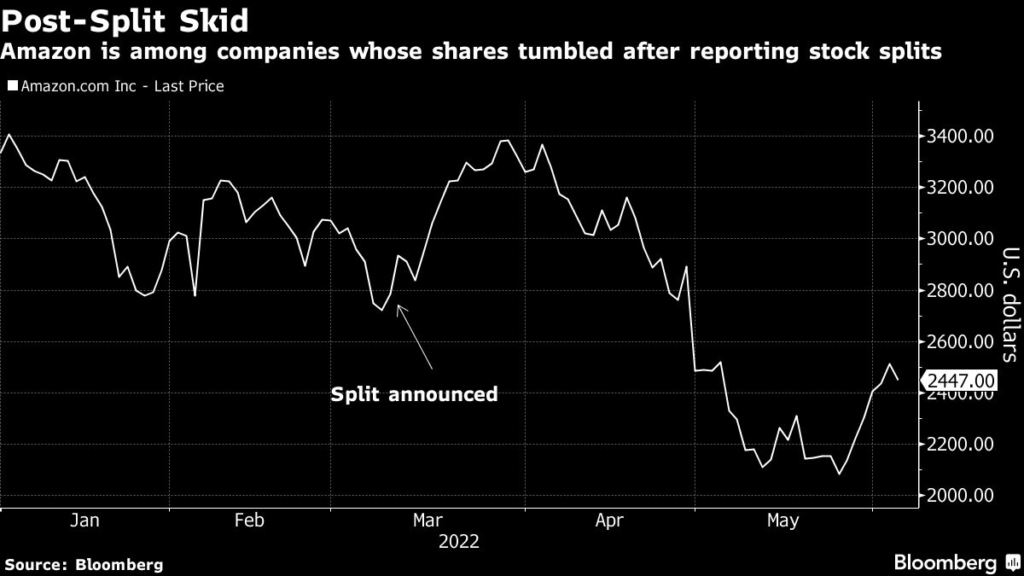
(Bloomberg) — Stock splits were all the rage early this year as indexes hovered near record highs, with companies from Amazon.com Inc. to Alphabet Inc. announcing them to make their share prices more alluring to individual investors. A few months on, the market has taken care of the problem. 

Amazon, whose 20-for-1 split took effect Monday, is among companies whose stocks have tumbled since the moves were announced amid a broad market selloff that’s been especially painful for the technology sector. Shares of the e-commerce giant rose 2% in New York after the split, but shares are still down about 10% since reporting the plan in March. Alphabet, which announced a similar proposal in February, is down 17% since then. 

The selloff means the stocks will be trading at a discount to the sticker price originally envisioned by executives. That will make it easier for the behemoths to gain entry to the Dow Jones Industrial Average, whose weighting is based on share price, but it could have the effect of making them look less princely than their massive market values and history of big gains would imply. 

“Stock splits are usually a sign of optimism,” said Mark Lehmann, chief executive officer of JMP Group. “Very few companies split their stock in anticipation of things going poorly. It’s an example of what’s reflected in the entire market.”

Splits, of course, have no fundamental effect on share value — they’re the stock market equivalent of exchanging a $20 bill for two $10s. But in the buoyant market of early 2022, they were met with bidding wars by giddy traders.

For companies like Shopify Inc. that have fared even worse than Amazon and Alphabet amid an exodus from stocks with the highest valuations, the splits could make them look downright pedestrian. If the 10-for-1 exchange plann by the Canadian e-commerce company was done today, it would result in a US share price of about $35 following a 79% crash from a November high when the stock closed at a record $1,690.60. The median stock price in the S&P 500 Index, by contrast, is around $113, according to data compiled by Bloomberg. Shopify’s split is set to take effect on June 29.

Of course, the sour market sentiment could cause companies like Tesla Inc. to rethink their plans. The electric-car maker said in late March it would ask investors this year to approve the creation of additional shares for the purposes of another split. The stock was trading above $1,000 at the time. Since then, the shares have lost nearly a third of their value, closing Friday at $703.55, amid manufacturing problems in China and concerns about slowing growth.

Tech Chart of the Day

Didi Global Inc. shares surged 65% on Monday after the Wall Street Journal reported that Chinese regulators are preparing to wrap up their investigation into the ride-hailing giant. Shares were trading at around $3, still about 81% below its $16.40 peak close in July last year. Through Friday’s close, Didi shares had sunk nearly 90% from their peak, wiping off more than $70 billion in market value, after its blockbuster US listing drew the wrath of Beijing and made it the face of the nation’s tech crackdown.

Top Tech Stories

  • Chinese regulators are preparing to wrap up their investigation into Didi Global Inc. and restore the ride-hailing giant’s main apps to mobile stores as soon as this week, the Wall Street Journal reported. Didi shares soared in US premarket trading
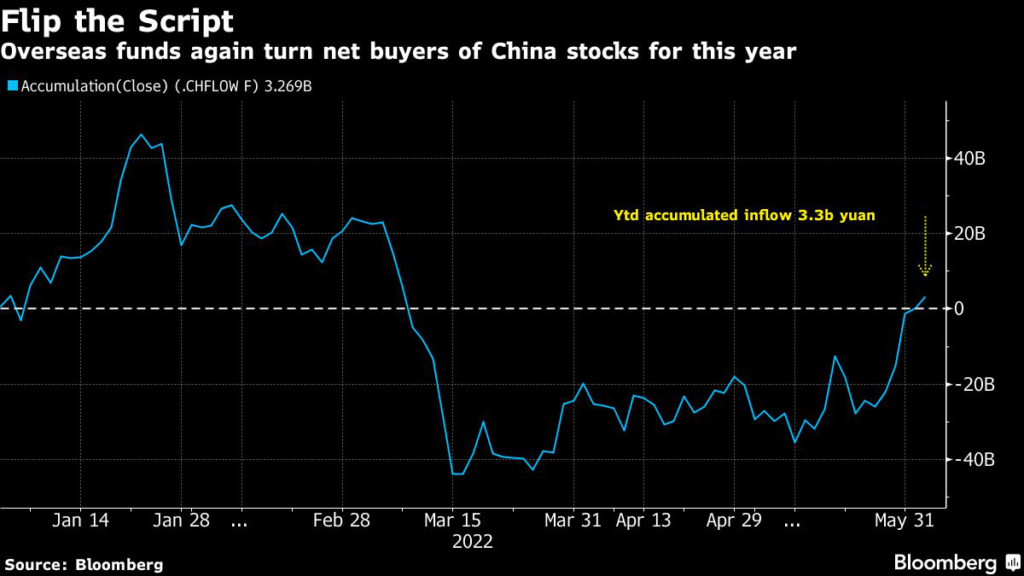
    • The news added to a more upbeat tone around Chinese assets
  • Tesla Chief Executive Officer Elon Musk sent staff, investors and electric-car watchers on a three-day rollercoaster with conflicting messages about potential job cuts, underlining the sometimes erratic nature of his leadership and muddying the automaker’s outlook
  • A Toshiba Corp. external board member said the company’s plan to appoint two directors representing activist investors lacks fairness and balance, opposing their election in a shareholder vote this month
  • Carro, one of Southeast Asia’s biggest online marketplaces for used cars, has agreed to buy a 50% stake in Indonesian automotive financing and rental company MPM Rent for S$75 million ($54.5 million) to expand in the world’s fourth most populous country


Read this next: The Tech Rout Isn’t Just Cyclical—It’s Well-Earned, and Overdue

(Updates share move in last paragraph.)

More stories like this are available on bloomberg.com

©2022 Bloomberg L.P.

Israel Radar Firm Vayyar Becomes Unicorn With $108 Million Round

(Bloomberg) — Vayyar Imaging Ltd. raised $108 million in a funding round led by Koch Disruptive Technologies, propelling the Israeli startup’s valuation to more than $1 billion. 

The maker of four-dimensional imaging radar sensors announced the fundraising in a statement on Monday that confirmed an earlier Bloomberg News report. It plans to use the money to expand into markets such as China, Japan and Australia, Co-Founder and Chief Executive Officer Raviv Melamed said in an interview.

“China is an extremely important and fast-growing market,” Melamed said. “We’re dealing with one of the biggest challenges it faces, that is, elderly care.”

The series E round was joined by new investors GLy Capital Management and Atreides Management. Existing backers including Battery Ventures, Bessemer Ventures, KDT, More VC, Regal Four and Claltech also participated, according to the statement.

Vayyar has now raised a total of more than $300 million since its inception. The company is considering an initial public offering outside Israel in two to three years, Melamed said.

Founded in 2011, Vayyar started in the field of medical imaging, using radio frequency technology to screen for early-stage breast cancer. The startup has expanded into sectors such as automotive, senior care, smart buildings, public safety and retail, according to its website. 

Vayyar last year announced a joint venture with HCH, a unit of China’s Haier Group Corp., focusing on providing touchless fall detection for seniors. The company’s 4D imaging radar sensors can also be used to detect lighting and weather conditions in order to optimize ventilation, power consumption and other applications in smart homes or offices. 

The automotive sector has huge growth potential for Vayyar, according to Melamed. The company is looking for strategic partners in China to help develop vehicle safety solutions for autonomous-driving cars. 

“We’ve been engaging with several tier-one carmakers in China,” Melamed said, adding that Vayyar has partnerships with car manufacturers outside the country such as Toyota Motor Corp. 

GLy Capital, a new investor in Vayyar, counts Zhejiang Geely Holding Group Co. and SK Inc. among its backers. The firm focuses on investments related to mobility and the transportation sector. 

More stories like this are available on bloomberg.com

©2022 Bloomberg L.P.
Companies Urge Consumers to Pay More for Better Products in Era of Inflation

(Bloomberg) — It sounds counterintuitive, but companies are increasingly pushing premium products as the highest inflation in decades squeezes shoppers’ budgets.

The likes of Procter & Gamble Co. and Clorox Co. say it’s worth splurging for high-end personal-care and household goods that perform better, such as laundry detergent formulated for cold water. Their marketing suggests hard-earned dollars shouldn’t be wasted on substandard products, especially when everything already costs more.

Upselling is one strategy that manufacturers are using to protect profits as expenses skyrocket for fuel, labor and raw materials. Premium items not only cost more, but they also typically have better margins for companies. It’s a long-term strategy that has gained prominence as inflation persists.

“When they have a limited wallet, consumers can’t afford to wash their clothes three times,” Clorox Chief Executive Officer Linda Rendle said in a recent interview. “They can’t afford for a wipe to fail and then their family to get sick. They can’t afford for their charcoal not to light. We tend to see our brands be very resilient in these times.”

Other high-end products are touted as being better for the environment or easier to use. Clorox says sales have been strong for its new premium disinfecting mist with a reusable sprayer that the company claims reduces waste. P&G this year launched a version of its Dawn dish soap with an inverted bottle and no flip cap, which helps users squeeze out “every last drop.”

Upselling worked through the early part of the pandemic, but now it faces a new challenge with the rise of inflation and the lack of government subsidies that bolstered spending last year. In 2020 and 2021, sales of premium non-food items gained market share in their categories on a dollar basis, according to data provider IRI. Premium growth slowed in the first quarter of 2022.

US consumers have so far shown they’re willing to pay higher prices, even if it means dipping into savings or loading up on credit cards to support purchases.

‘Mainstream’ or ‘Premium’

IRI defines “mainstream” products as brand-name goods with prices no more than 25% above or below the category average. Anything more expensive is considered “premium.” Premium items accounted for 35.6% on non-food dollar consumer packaged goods sales in the first quarter, compared with 33.8% for mainstream products. Store brands are tracked separately.

In the first three months of the year, shoppers spent more money on premium dish detergents, sleep remedies and paper towels compared with a year earlier, according to IRI. At the same time, they switched to cheaper brands for things like pet treats, trash bags and skin care. The data provider says customers are opting for fancier products in categories where they perceive they’re actually getting a tangible benefit for the higher price.

For example, P&G says its cold-wash Tide laundry detergent takes half the energy of using warm water. At Walmart.com, the cold-water detergent is about 10% more expensive per load than the original version.

“We’re communicating to the consumer, ‘if you switch from hot water to cold water, the energy saving effectively offsets the cost of the detergent,’” P&G Chief Financial Officer Andre Schulten said last month.

Of course, not every shopper can afford to pay more. The Federal Reserve said June 1 that more than half of metro areas are seeing some pushback to higher prices, such as smaller purchases or switching to cheaper brands.

IRI expects spending to diverge further as some consumers demand premium goods while others seek value. Companies were quick to tout on recent earnings calls that they offer a wide range of product tiers and price points. P&G, for example, says it has built a larger presence at US dollar stores to connect with budget-minded shoppers.

Still, manufacturers have been advertising premium goods more lately in part because they need to show their products are worth it as they raise prices, Barclays Plc consumer goods analyst Lauren Lieberman said.

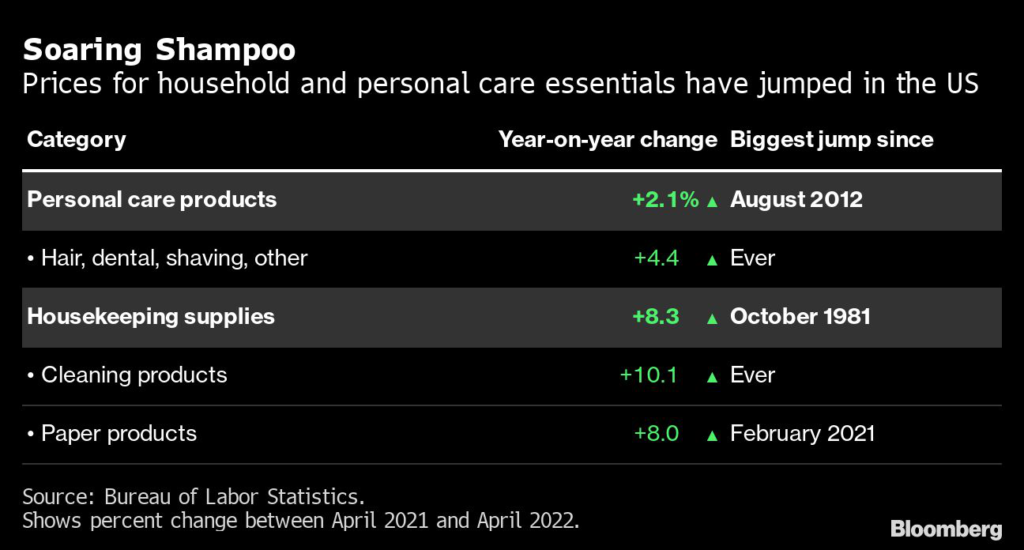
US shoppers paid 8.3% more for housekeeping supplies in April versus a year earlier, the largest increase since October 1981, according to the Bureau of Labor Statistics. Personal-care products cost 2.1% more, the biggest yearly jump in almost 10 years.

At Kimberly-Clark Corp., CEO Michael Hsu says he wants to “elevate” the company’s products, which include Kleenex tissues, Huggies diapers and Cottonelle toilet paper. Premiumization is driving growth, he said.

More stories like this are available on bloomberg.com

©2022 Bloomberg L.P.
Poor Network, Low Speed Plagues 92% of India Mobile Phone Users

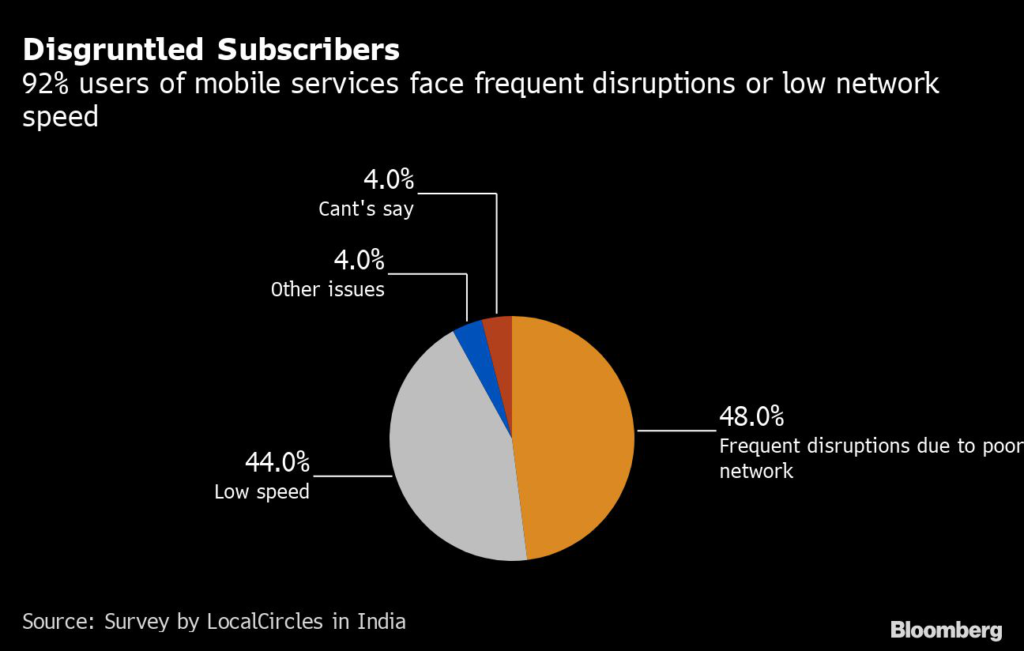
(Bloomberg) — More than nine out of 10 mobile phone users in India complained of poor wireless connectivity, while two-thirds struggle with disrupted digital payments on older 3G and 4G networks, according to a local survey.

About 48% of 8,210 consumers surveyed by LocalCircles mentioned frequent disruptions to their mobile services due to poor network availability and 44% were disgruntled with low data speeds. In another survey question that drew in 11,865 consumer responses, 66% said they experienced snags in at least one online transaction, forcing them to rely on alternate payment mechanisms such as cash, check or credit cards, according to a statement from LocalCircles.

The findings spotlight the yawning gap in services currently delivered by Indian telecom carriers despite tariff hikes in recent months. It also points to the need to step up quickly as companies prepare to bid for airwaves in a government-led auction that will pave the way for launch of ultra-speedy 5G services in India. Disrupted wireless services also threaten to hamper India’s drive to spur its digital economy — a key policy initiative of Prime Minister Narendra Modi’s government that got a major boost amid the  Covid-19 pandemic when data consumption surged.

Competition in India’s telecom sector has whittled down from a dozen players a few years back to just three private sector operators after billionaire Mukesh Ambani-led Reliance Jio Infocomm Ltd. disrupted the market in 2016 with free calls and cheap data, forcing rivals to quit or merge. While Reliance Jio blew other competitors out of the water, Vodafone Idea Ltd. and Bharti Airtel Ltd.  managed to survive but were battered financially, leaving lesser headroom to spend on upgrade of telecom infrastructure.

The survey’s findings also highlight the need to invest more in infrastructure to not just boost telecom services but also digital payments. India did 35 billion digital transactions in 2021, according to LocalCircles, which said that this number could go up significantly if wireless network issues are fixed.

More stories like this are available on bloomberg.com

©2022 Bloomberg L.P.
Cboe Keeps Old-School Pit Alive With New Chicago Trading Floor

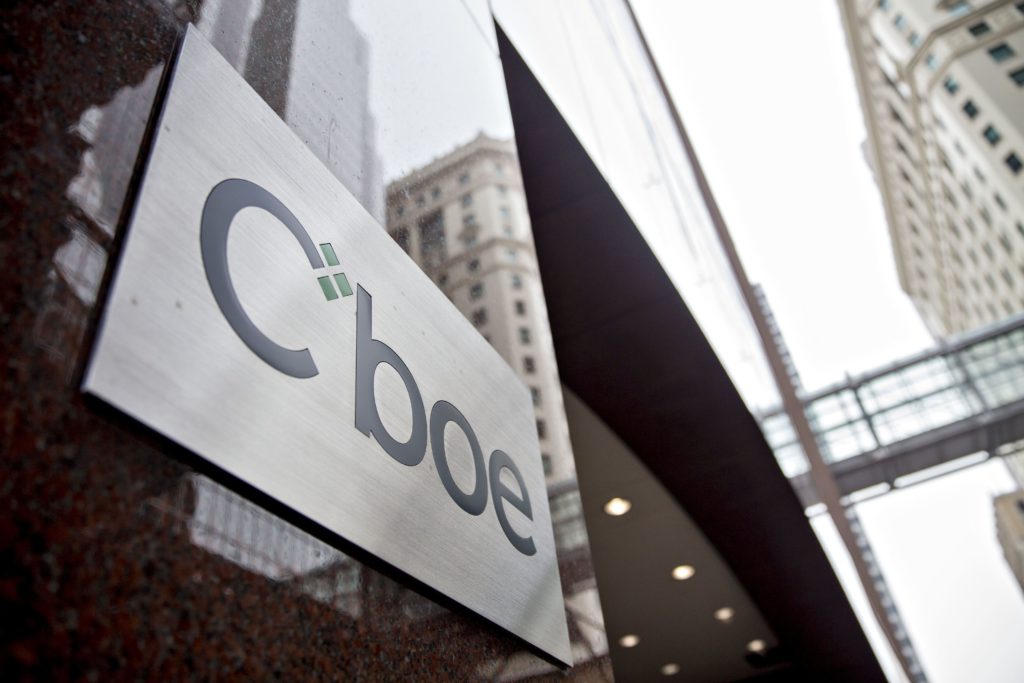
(Bloomberg) — Cboe Global Markets Inc. is returning to its roots in Chicago’s financial district with the opening of a new trading floor.

The company moved its Cboe Options Exchange into a remodeled space in the Chicago Board of Options building. The 40,000-square-foot (3,716-square-meter) space, which opens Monday, gives market participants updated equipment and additional physical space to execute trades in the options market.

“The move is not new so much as it’s a continuation of our efforts to answer customer demand for physical presence, which has grown,” Chief Executive Officer Ed Tilly said in an interview. “We would not be opening a trading floor if a customer had no utility for this.” 

Few exchanges have continued pit trading, as hand signals and verbal communication transition to electronic systems. Still, floor trading creates iconic imagery that can be used as a marketing tool, and the physical practice remains useful for executing larger orders. The New York Stock Exchange still maintains its floor, a historic landmark, in the financial district in New York City, while Nasdaq Inc. and others operate without a physical trading space.

Investors are able to choose how they route their orders, either electronically or through a broker-dealer who stands on the floor of an exchange such as Cboe. For more complex orders, most investors prefer “face-to-face, pit-style trading” for better price and execution in options, Tilly said. 

Cboe, previously known as the Chicago Board Options Exchange, continues to operate its equities and futures exchanges electronically. The three additional options exchanges Cboe maintains are also all-electronic, meaning it doesn’t require a physical space or the so-called “open outcry system” in which orders are shouted and matched by brokers and market makers that occupy physical space in a building.

The company’s new trading floor was built to handle heavy volume in index options trades, while nearly all equity options trades are handled electronically. The firm said it executed roughly 36% of its index options trades on the floor via open outcry, rather than automation, from January through the end of May. 

Ring the Bell

Cboe’s new space is home to around 120 trading booths and more than 330 kiosks where brokers and market makers can plug in their individual systems. Like NYSE, CBOE’s floor also features a bell on a platform overlooking the trading floor that guests can ring at the start and close of the markets each day. 

The four largest pits in the space will cover options trading in the S&P 500, Cboe Volatility Index, Russell 2000 Index and SPDR S&P 500 ETF Trust. Still the vast majority of trades across the options market are done electronically. 

The Chicago-based exchange operator has also been building its presence abroad, expanding in Europe, Asia and North America with the acquisition of Aequitas Innovations Inc., the parent of Toronto-based NEO Exchange. It also added new asset classes with the purchase of cryptocurrency company Eris Digital Holdings earlier this year.

Cboe’s first trading floor dates back to CBOT’s former smoking lounge in the 1970s, a 4,000-square-foot space located on the fourth floor of the same building where the new trading floor is located, overlooking Chicago’s financial district. The exchange later expanded its trading floor to the seventh floor because of growing demand for US listed options trading.

The company has since opened a new global headquarters in Chicago’s historic Old Post Office building, where Cboe’s corporate office remains. 

More stories like this are available on bloomberg.com

©2022 Bloomberg L.P.

Ukraine Latest: Kyiv Hasn’t Endorsed Turkey-Russia Grain Plan

(Bloomberg) — Turkey and Russia have reached a tentative deal to restart Ukrainian agricultural shipments from a key Black Sea port, but Kyiv remains skeptical of the proposed pact, according to people familiar with the discussions.

Russian Foreign Minister Sergei Lavrov was prevented from visiting Serbia after that country’s neighbors banned his flight from their airspace. India, meanwhile, is in talks to boost crude imports from Rosneft PJSC as refiners in Asia’s second-biggest oil market have been enjoying a windfall from discounted Russian oil. 

The UK plans to send rocket systems to Ukraine that will let it strike locations as far as 80 kilometers (50 miles) away, less than a week after the US said it would provide similar weapons. Russian President Vladimir Putin threatened to strike new targets in Ukraine if longer-range missiles are delivered. 

(See RSAN on the Bloomberg Terminal for the Russian Sanctions Dashboard.)

Key Developments 

(All times in CET)

  • Ukraine’s Tactics Show Smaller Countries How to Fight Back
  • Putin Critic Kallas Needs New Allies to Stay in Power in Estonia
  • China’s Yuan-Ruble Trading Volumes Fail to Match Russian Frenzy
  • Oil Tankers Make Rare Mid-Atlantic Switch of Russian Crude Cargo
  • Ukraine Migration Maps ‘What’s Possible’ for Climate Displaced

Latvia Bans 80 Russian TV Channels Until War Ends (2:01 p.m.)

Latvia banned the remaining 80 Russian-registered TV channels operating there from broadcasting until Russia ends its war in Ukraine and returns Crimea to Kyiv’s control, the Leta news service reported, citing Ivars Abolins, the chairman of the National Electronic Mass Media Council.

The Baltic country, which neighbors Russia and has a large Russian-speaking minority, is one of Europe’s harshest critics of the war in Ukraine. Abolins said Monday that Latvia had given a broadcasting license to TV Rain, an independent Russian TV channel that was banned by Moscow in March.

Read more: Putin’s Crackdown Pushes Independent Russian Media Into Crypto

Serbian Leader Decries Derailing of Lavrov Visit (1:42 p.m.)

Serbian President Aleksandar Vucic, who was supposed to host Lavrov this week in Belgrade, said he was displeased how neighboring countries prevented the visit by banning Lavrov’s flight from their airspace.

Still, Lavrov will soon meet his Serbian counterpart, Nikola Selakovic, at an undisclosed location and time, Vucic said. In Moscow, Lavrov called the move by Bulgaria, North Macedonia and Montenegro to block him from their airspace “unprecedented.”

Lavrov is a great and proven friend” of Serbia, Defense Minister Aleksandar Vulin said in separate comments in Belgrade. “Serbia is proud of not being part of the anti-Russia hysteria,” Vulin said.

Russian Car Sales at Record Low as Sanctions Sting (12:39 p.m.)

Russian car sales plunged 84% in May, as sanctions and international isolation brought an industry that had once been a showcase for foreign investment to a near standstill.

Fewer than 25,000 vehicles were sold last month, according to the Association of European Businesses, the lowest since at least 2006 and less than a tenth of the monthly levels seen in peak months in the past.

Read more: Russian Car Sales Collapse as Isolation Hits Once-Hot Industry

India in Talks to Increase Oil Imports From Rosneft (12:21 p.m.)

India is looking to boost Russian oil imports, with state-owned refiners eager to take more heavily-discounted supplies from Rosneft after Europe enacted a partial ban.

State processors are collectively working on securing new six-month supply contracts for Russian crude to India, according to people with knowledge of the companies’ procurement plans. They are in talks with Rosneft, Russia’s state-owned oil champion, with the seller set to handle shipping and insurance matters, they said.

China and India have snapped up millions of barrels of Russian crude to take advantage of hefty discounts as sanctions by the US, UK and European Union have caused most western buyers to stop buying oil from the country.

Read more: India in Talks to Increase Russian Oil Imports From Rosneft

Ukraine Skeptical of Turkey-Russia Deal to Ship Grain (11:31 a.m.)

Turkish President Recep Tayyip Erdogan’s government has offered military help to clear mines off the coast of Odesa and escort grain ships but Ukraine has yet to endorse the plan, worried that removing defenses could leave the vital port open to Russian attack, people familiar with the deal said, speaking on condition of anonymity to discuss matters that aren’t yet public.

Russian Foreign Minister Sergei Lavrov is expected to hold talks in Ankara on the plan on Wednesday. It remains unclear whether Ukraine will send a representative. “By commenting in advance on reaching the deal, Russia is seeking to shift responsibility to Ukraine” for disrupting supplies, Ukraine’s Deputy Economy Minister Taras Kachka said. 

The Kremlin’s invasion has cut off shipments of grain and other farm products from Ukraine, threatening millions of people in its traditional markets with food shortages. Moscow has denied responsibility for the disruption but demanded relief from US and European sanctions limiting its exports of fertilizer and agricultural products.

Read more: Ukraine Cautious as Turkey, Russia Push Black Sea Grain Deal

Ukraine Says Russian General Killed (8:31 a.m.)

Russian Major General Roman Kutuzov was killed, Ukraine’s army said on its Facebook page. Earlier, Meduza reported Kutuzov died in fighting in the Luhansk region, citing a journalist for Russian state-run television station. Russia’s Defense Ministry hasn’t commented.

UK to Send Rocket Systems (12:01 a.m.)

The UK is to send multiple-launch rocket systems to Ukraine, Defence Secretary Ben Wallace announced. The move has been coordinated closely with the US decision to send the High Mobility Artillery Rocket System variant of MLRS to Ukraine, where forces have requested longer-range precision weapons.

“As Russia’s tactics change, so must our support to Ukraine,” Wallace said. “These highly capable multiple-launch rocket systems will enable our Ukrainian friends to better protect themselves against the brutal use of long-range artillery, which Putin’s forces have used indiscriminately to flatten cities.”

The M270 weapons system, manufactured by Lockheed Martin, can strike targets up to 80 kilometers (50 miles) away with high accuracy, according to a statement released by the Ministry of Defence. The UK will also supply M31A1 munitions “at scale.”

Russia Seeks Buyers for Plundered Grain, New York Times Says (12:01 a.m.)

The US has told more than a dozen countries that Putin’s government is trying to sell plundered wheat from Ukraine to drought-stricken African nations, the New York Times reported citing a diplomatic cable.

The paper said that in mid-May, the US sent a notification to 14 countries, mostly in Africa, of Russian cargo vessels leaving ports near Ukraine laden with what the cable said was “stolen Ukrainian grain.”

Ukraine has accused Russia of looting grain in occupied areas and selling it abroad, and local traders have said Russian troops have confiscated grain, equipment and fertilizers in occupied areas in the country’s southeast. 

Read more: Egypt Says It Refused Undocumented Ukrainian Grain Shipment

More stories like this are available on bloomberg.com

©2022 Bloomberg L.P.
Cathie Wood-Backed VC Group Explores Mobility With Walmart Heirs

(Bloomberg) — Billionaires and their sweet dreams of flying machines are converging on northwest Arkansas this week, where a Cathie Wood-backed venture capital group and heirs to the Walmart Inc. fortune are hosting a conference on the future of mobility.

The invitation-only UP.Summit brings together global investors, executives, startups and founders to discuss everything from battery-electric planes to drone technology, EV batteries and developments in autonomy. Organizers say more than $1 trillion of assets under management will be represented at the conference, drawing 250 attendees from 30 countries.

In his pitch for the event, Cyrus Sigari, co-founder of VC firm UP.Partners, lays out a vision of other venues where minds and money meet: “Think Sun Valley meets CES meets the Oshkosh Airshow meets Burning Man meets TED meets Davos.” Co-hosts include Walmart board member Steuart Walton, his brother Tom Walton and Ross Perot Jr. — all scions of families of vast wealth.

For UP.Summit, the 2022 gathering is a reboot following a hiatus during the pandemic. The conference started in 2017 and rotates annually between Bentonville and the Dallas-Fort Worth area. This year’s theme is “Transforming the Moving World,” with executives from Ford Motor Co., Joby Aviation Inc., Boeing Co. and Alaska Air Group Inc. scheduled to attend. 

A Bentonville air show sponsored by the summit on Sunday featured displays of drones, electric air taxis and electric cars, vans and trucks, as well as World War II-era fighter planes. The display included an electric aircraft from Beta Technologies Inc. that traveled some 1,400 miles to the summit. South Burlington, Vermont-based Beta is one of the companies in the UP.Partners portfolio. 

For private-market investors, startups that have something to do with moving people or goods have been hot properties. BloombergNEF calculates that more than $54 billion was invested across transport and mobility startups last year, a figure that includes connected-car businesses, autonomous-vehicle developers, car-and scooter-sharing services, and electric-vehicle makers.

Read More: Cathie Wood backs new mobility-focused VC fund

But the glitzy group is gathering at a time of growing economic uncertainty and upheaval in public markets, where higher-multiple, pre-revenue mobility and transport companies have been among the worst hit in the sell-off. An economic downturn could create a mixed bag of challenges and opportunities for mobility startups, Pitchbook analysts said in a May 25 report.

“The pullback is likely to focus attention on startups with distinct technological advantages; marginal and me-too competitors are likely to find the environment challenging,” the Pitchbook analysts wrote. “Capital for growth at any cost will likely fade over the medium term, and startups will have to start operating with an eye toward margins and profitability.”

For the heirs of Walmart founder Sam Walton, the conference is another way to promote their bucolic corner of Arkansas and Bentonville, the fast-growing headquarters city of the retailer that is the basis of their wealth. Walton’s three surviving children, Alice, Jim and Rob, plus daughter-in-law Christy and Christy’s son Lukas, had a combined net worth of about $206 billion as of June 2, according to the Bloomberg Billionaires Index.

Steuart and Tom Walton — Sam’s grandsons, sons of Jim — have helped make Bentonville a center of mountain biking and are looking to bolster other amenities. Steuart is co-founder of the Runway Group, which invests in real estate, hospitality and other businesses in Northwest Arkansas. Tom is the managing principal of Ropeswing, a hospitality group that backs restaurants and cultural events. Their aunt Alice Walton, the driving force behind the city’s Crystal Bridges Museum of American Art, is among the scheduled speakers.

The goal of holding the summit in Bentonville is to position the area as a leader in environmentally friendly transportation technology that brings jobs and innovation, Steuart Walton told attendees at Sunday’s air show — just before he climbed into the cockpit of his Goodyear F2G Corsair and performed aerial maneuvers with a Spitfire and a P-51 Mustang.

“How long is it until all of us can get up in one of these things? I think it might be a little while,” Walton said of the new technologies on display at UP.Summit. “But this is about a long-term vision.”


More stories like this are available on bloomberg.com

©2022 Bloomberg L.P.
Animoca Grew Crypto Assets to $5 Billion During Bitcoin Upheaval

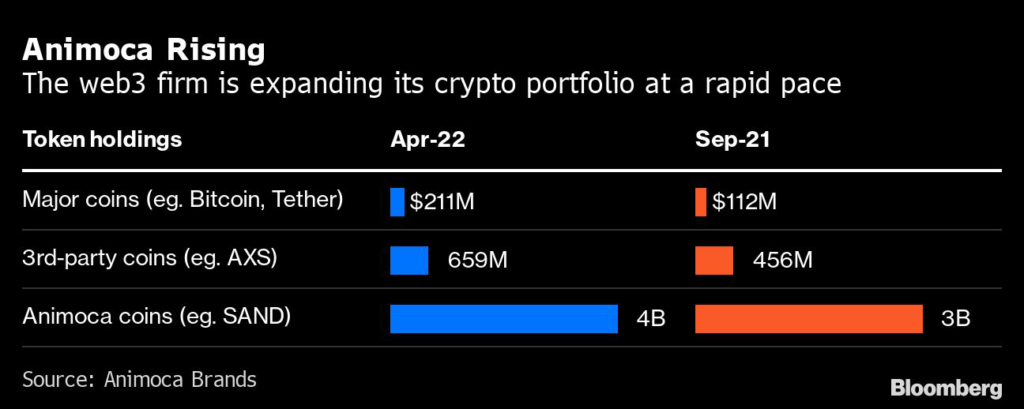
(Bloomberg) — Animoca Brands Corp., backer of some of the most popular nonfungible token and web3 gaming projects, has increased its total digital assets by almost half in seven months, defying a broader cryptocurrency meltdown.

The Sequoia-backed venture held roughly $5 billion in crypto holdings — which include Bitcoin, Tether and its own SAND tokens — at the end of April, it said in a statement Monday, up from $3.5 billion in September last year. During the same period, the Hong Kong startup almost doubled the mainstream coins it held, and its cash balance surged 173% to $98 million.

Animoca has cast a wide net across the worlds of gaming and crypto by capturing slices of promising startups — from NFT malls with OpenSea to metaverse games with The Sandbox and bored-ape avatars with Yuga Labs. In all, Animoca has a portfolio of more than 340 investments, with its stakes valued at $1.5 billion as of April. The firm itself was valued at $5 billion in its latest funding round in January that included George Soros and the Winklevoss twins among the investors.

Soros, Winklevoss Invest in NFT Creator Now Valued at $5 Billion

Bookings — which include token sales and secondary NFT transactions — came in at $148 million for the December quarter, according to the statement, slightly more than the $140 million it generated in the first nine months of 2021.

Crypto prices have plunged in recent weeks following the implosion of the TerraUSD stablecoin. Bitcoin has bounced around the $30,000 mark, roughly half its all-time in November. Some venture capitalists have seen deals collapse and valuations have been slashed during the market downturn. From November to April, Animoca’s off-balance-sheet crypto reserves — including tokens from its games like The Sandbox and Revv Racing — plunged more than 70% to $4.2 billion, reflecting the broader market sentiment.

Founded in 2014 by tech entrepreneur Yat Siu, Animoca started off as a mobile game publisher churning out hyper-casual titles. In 2018, the company ventured into blockchain gaming through a publishing deal with the hit collection CryptoKitties, and by adapting that same strategy to other intellectual property, it has introduced The Walking Dead and The Smurfs characters into its web3 gaming portfolio.

More stories like this are available on bloomberg.com

©2022 Bloomberg L.P.
US Index Futures Rise on Tech Rally; Dollar Dips: Markets Wrap

(Bloomberg) — US equity-index futures gained on Monday as Beijing’s latest move to ease Covid restrictions injected a note of optimism into markets rattled by inflation and rate-hike concerns. Treasuries and the dollar slipped.

Contracts on the tech-heavy Nasdaq 100 and the S&P 500 climbed more than 1%, buoyed by a report that Chinese regulators are set to ease curbs on ride-hailing giant Didi Global Inc. and other US-listed tech firms. Didi’s shares soared as much as 52% in premarket trading. Other tech giants caught the mood: Apple Inc. climbed 1.6%, Tesla rose after tumbling over 9% by the close on Friday, while Amazon.com Inc. edged higher after implementing a 20-for-1 stock split.

Stronger-than-forecast US hiring data for May suggested the Federal Reserve won’t waver from its tightening path to rein in price pressures. But Goldman Sachs Group Inc. economists said the Fed may be able to pull off its aggressive rate-hike plan without tipping the country into recession. The easing of Chinese lockdowns will help abate supply-chain pressures, said Diana Mousina, a senior economist at AMP Capital.

“Positive news around Chinese economic activity and cheaper equity valuations could offer value from a long-term investment perspective, but volatility will remain high in the short-term,” Mousina said in a note. 

Basic resources led an advance in the Stoxx Europe 600 index as copper rose to its highest since April, with sentiment across industrial metals bolstered by China’s gradual reopening. The technology sector outperformed. 

The UK’s equity benchmark climbed more than 1% as traders returned after a four-day break. The pound gained and gilts fell amid speculation Prime Minister Boris Johnson will survive a leadership vote later Monday.

Crude oil held close to $120 a barrel in New York after Saudi Arabia signaled confidence in demand with a larger-than-expected price increase in Asia. Meanwhile, the US was said to be considering allowing more sanctioned Iranian oil onto global markets to counter the decline in Russian supplies.

The US jobs report Friday quelled some concern that the world’s biggest economy is slowing too sharply, but also strengthened the view that the Fed will keep hiking rates to combat inflation. Cleveland Fed President Loretta Mester said she would back a half-point hike in September if inflation isn’t retreating. Market-derived odds for a third 50-basis-point increase in September are about 85%. 

Meanwhile, the European Central Bank is set to announce an end to bond purchases this week and formally begin the countdown to an increase in borrowing costs in July, joining global peers tightening monetary policy in the face of hot inflation. The ECB is planniing to strengthen its support of vulnerable euro-area debt markets if they are hit by a selloff, Financial Times reported. Italian and Spanish bonds gained.

Read: Team Transitory Is Back Warning Big Rate Hikes Are a Big Mistake

Tech stocks and crypto are vulnerable in the era of quantitative tightening, our latest MLIV Pulse survey shows. Read more here.

Key events to watch this week:

  • Reserve Bank of Australia policy decision Tuesday
  • World Bank’s “Global Economic Prospects” report Tuesday
  • Reserve Bank of India rate decision Wednesday
  • OECD Economic Outlook, a twice-yearly analysis of major global economic trends and prospects for the next two years. Wednesday
  • European Central Bank rate decision, Christine Lagarde briefing, Thursday
  • China trade, new yuan loans, money supply, aggregate financing. Thursday
  • US CPI, University of Michigan consumer sentiment Friday
  • China CPI, PPI Friday

Some of the main moves in markets:

Stocks

  • Futures on the S&P 500 rose 1.1% as of 6:58 a.m. New York time
  • Futures on the Nasdaq 100 rose 1.5%
  • Futures on the Dow Jones Industrial Average rose 0.8%
  • The Stoxx Europe 600 rose 0.9%
  • The MSCI World index rose 0.3%

Currencies

  • The Bloomberg Dollar Spot Index fell 0.2%
  • The euro was little changed at $1.0727
  • The British pound rose 0.5% to $1.2554
  • The Japanese yen rose 0.2% to 130.64 per dollar

Bonds

  • The yield on 10-year Treasuries advanced two basis points to 2.95%
  • Germany’s 10-year yield was little changed at 1.27%
  • Britain’s 10-year yield advanced two basis points to 2.18%

Commodities

  • West Texas Intermediate crude rose 0.5% to $119.48 a barrel
  • Gold futures rose 0.3% to $1,855 an ounce

More stories like this are available on bloomberg.com

©2022 Bloomberg L.P.

Tech and Crypto in Peril as Fed Ends Liquidity Binge, Survey Shows

(Bloomberg) — The speculative darlings of the easy-money era — technology stocks and cryptocurrencies — are acutely vulnerable now that the Federal Reserve is shrinking its nearly $9 trillion balance sheet. 

At the same time, central bankers from Canada to Europe are about to test the resilience of global markets as they follow hawkish US policy makers on a liquidity-sapping mission to unwind the pandemic bond-buying spree.

That’s the broad outlook for Wall Street and beyond, according to the most-popular responses from 687 contributors to the latest MLIV Pulse survey, as the Fed this month starts reducing its asset holdings in a process known as quantitative tightening.

The historic shift is seen as a notable threat to tech equities and digital tokens — both risk-sensitive assets that soared in the Covid-era market mania before cratering in this year’s cross-asset crash.

The era of ultra-cheap money looks over for now. The Fed’s balance-sheet drawdown is seen lasting more than a year, while nearly two-thirds of survey respondents say the four-decade bull run in Treasuries has come to an end. 

All this comes against the risky backdrop of the Fed hiking interest rates at the fastest pace in decades to combat red-hot inflation, as officials seek to quash talk of a September pause.

Recent gyrations in stocks, bonds and other markets have done little to deter the US central bank from its hawkish posture, with policy makers widely expected to raise rates by another half point on June 15. The Fed began shrinking its balance sheet this month by allowing assets to mature without reinvestment at a monthly pace of $47.5 billion, increasing to as much as $95 billion per month in September.

“It’s where that quantity of capital and quantity of liquidity has been most beneficial that its withdrawal is going to continue to be felt — and that is in the most speculative parts of the market,” Lisa Shalett, chief investment officer at Morgan Stanley Wealth Management, said on Bloomberg Television.

The MLIV survey of most-at-risk assets in the QT era canvassed a group ranging from retail investors to market strategists. Just 7% picked mortgage-backed bonds — securities that were at the heart of the 2008-09 meltdown — with almost half citing tech and crypto.

Draining money from the system tends to tighten financial conditions, all else equal, which acts as a brake on economic growth. That can reduce valuations for tech stocks given their reliance on optimism about future profits.

Read more: Team Transitory Is Back Warning Big Rate Hikes Are a Big Mistake

The end of Fed bond-buying also forces the Treasury to sell more debt in the open market, potentially putting upward pressure on bond yields, which play a big role in how Wall Street values listed companies — a headwind for so-called growth stocks in particular.

Fueled by pandemic-era policy easing, the tech-heavy Nasdaq 100 Index climbed more than 130% from its March 2020 low before plunging this year. Futures on the gauge climbed 1.3% before the open on Monday.

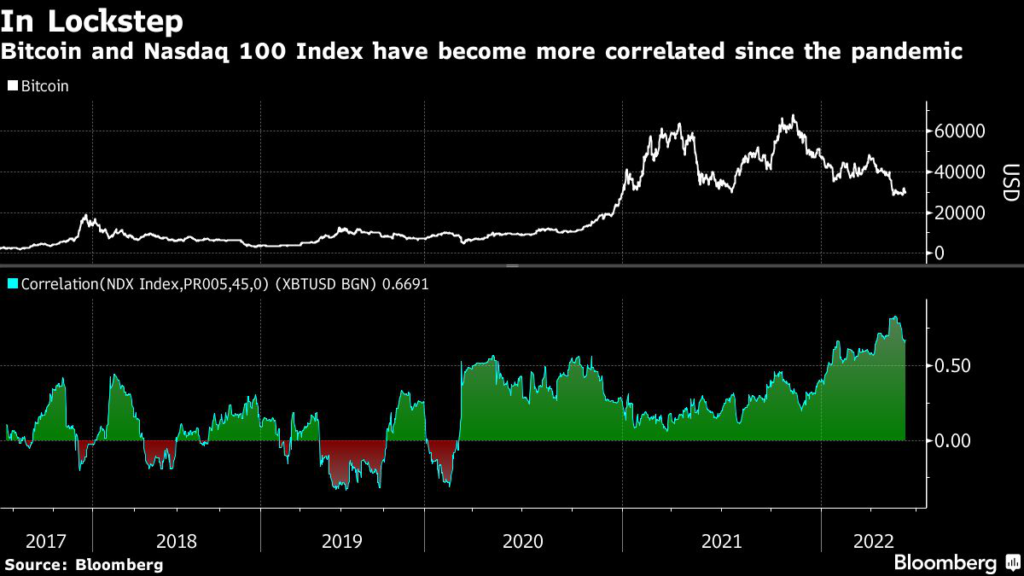
Meanwhile, cryptocurrencies have increasingly been driven by fluctuations in tech stocks. Since March 2020, there has been a strong positive correlation between Bitcoin and the Nasdaq 100, with the relationship intensifying in this year’s selloff.

The thinking goes that when money is cheap, traders can speculate about future digital trends en masse. But when the liquidity party fades, those bets become more costly.

“I don’t think people fully realize how much QE caused investors to add a lot of leverage to their positions,” said Matt Maley, chief market strategist for Miller Tabak + Co. “Now that we’re going through QT, that leverage has to be unwound.”

Respondents who were active in the market during the financial crisis more than a decade ago are particularly concerned that the Fed’s balance-sheet shrinkage will hurt junk bonds. Newer entrants are more inclined to worry about its impact on crypto and tech shares.

Readers more broadly are sounding the alarm about global trading conditions as the likes of the European Central Bank — which meets this week — and the Bank of England look to rein in their expanded balance sheets. Nearly 53% said they’re concerned markets are underestimating the liquidity importance of central banks outside the US.

Only 8% described QT in general as overhyped. Yet the principal concern of MLIV readers remains how far the US central bank will lift benchmark borrowing costs in this cycle. Some 61% said the level at which the terminal fed funds rate peaks is more important than the amount by which the balance sheet shrinks.

As for QT’s end game, around two thirds say the primary catalyst is more likely to emerge from negative developments than victory on the inflation front. Some 38% said economic pain would prompt an end to the balance-sheet rundown, while 20% pointed to market turmoil. 

Just 10% voted for problems related to bank reserves and short-term funding markets. That’s an implicit vote of confidence in the measures the Fed has taken to avert logjams in the financial plumbing that caused it to intervene in 2019 during its previous tightening program.

For many, the era of ultra-low rates and big central bank balance sheets is all they’ve known professionally. Some 46% of MLIV respondents weren’t active in markets before the widespread global adoption of quantitative easing in the aftermath of 2008.

Fewer still rode the early long-dated Treasury bull market in the decades past. A strong majority of readers — 64% — say the four-decade bullish stretch has finally ended, with experienced market players notably more hawkish than younger counterparts.

“Whenever you’re seeing major shifts in liquidity, there’s potential you could see some disruption in the market and that could trigger some violent trading behavior,” said Ed Moya, senior market analyst at Oanda.

  • For more markets analysis, see the MLIV blog. For previous surveys, and to subscribe, see NI MLIVPULSE.

(Updates with price reference in 12th paragraph)

More stories like this are available on bloomberg.com

©2022 Bloomberg L.P.

Close Bitnami banner
Bitnami