
Bloomberg

Crypto Bosses Flex Political Muscle With 5,200% Surge in US Giving

(Bloomberg) — Crypto executives are now pouring more money into US politics than many of America’s industrial stalwarts.

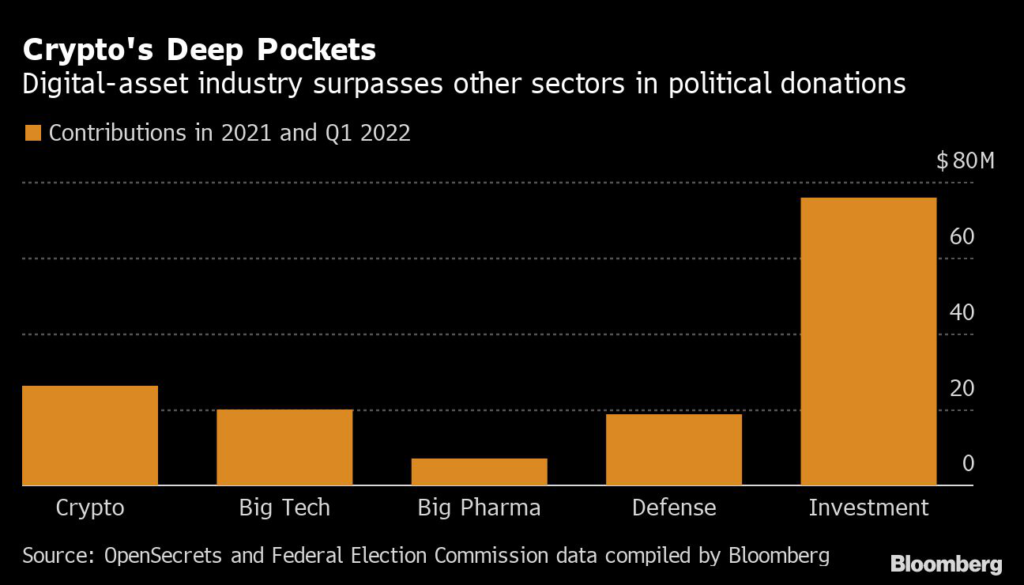
Political donations from the sector surged to more than $26 million during 2021 and the first three months of this year. That influx of cash is outpacing spending by internet giants, drug makers and the defense industry — providing a fresh pool of financing for candidates heading into November’s congressional elections.

The issue of regulating virtual tokens is not nearly as divisive as gun control or abortion rights. But the upcoming election will be highly consequential for crypto: Congress may weigh in with new laws for the asset class next year, and efforts by federal agencies to study consumer protections as well as a possible Federal Reserve-backed token are coming to a head.

“The industry has been under so much scrutiny and early next year stands to be a real inflection point in Washington,” said Eric Soufer, a political consultant with Tusk Strategies who leads the firm’s crypto and fintech practice. “It’s possible you’ll see a historic investment in this election season.”


In the 15 months through March, donations from people working in digital assets reached $26.3 million, according to the Federal Election Commission data compiled by Bloomberg. That’s an enormous leap over the less than $500,000 the industry gave through the same period in the 2020 election cycle.

Crypto’s giving compares with $20 million in contributions from tech firms such as Alphabet Inc.’s Google and Amazon.com Inc., $7 million from drug makers and $18.6 million from defense contractors, according to OpenSecrets. Data compiled by the transparency group show private equity and other investment firms gave nearly $76 million over the period.

While the roster of crypto donors is expected to mushroom as the November elections draw closer, the biggest spender thus far is Sam Bankman-Fried, the billionaire co-founder of the FTX exchange. 

He contributed $16 million in April alone after being responsible for a majority of crypto’s giving through the first quarter of the year. Overall, he’s pumped in about $32 million, 75% of the industry’s total, making him the biggest individual donor other than George Soros since the start of 2021, the FEC data compiled by Bloomberg show.  

The FTX CEO has used a super political action committee known as Protect Our Future for most of his spending. While several Democrats supported by that PAC have won primary contests, its biggest outlay of $11.4 million failed to boost Oregon Democrat Carrick Flynn, a political newcomer who ran on increasing readiness for a pandemic.

Flynn’s futility last month showed that all the spending won’t necessarily be enough to sway voters, particularly in crowded primaries focused on local issues. Soufer, the Tusk Strategies consultant, says crypto donors have a long way to go in terms of developing a cohesive strategy for getting the most out of their contributions.

“I’m not sure yet that all the political dollars are being coordinated in a truly coherent and efficient way to maximize their impact, but they still have a little bit of time to figure that out,” he said. 

In a May 27 interview, Bankman-Fried says he’s undeterred by Flynn’s loss. The 30-year-old billionaire added that while it’s unlikely to reach that level, he could spend as much as $1 billion on the 2024 presidential election. Bankman-Fried said his political agenda extends well-beyond crypto regulation, and his spending is now primarily focused on pandemic preparedness. 

“We weren’t prepared for Covid — it cost us tens of trillions of dollars and millions of lives — and we’re still not prepared for the next pandemic,” he said. 

Bankman-Fried and his trading firm Alameda Research combined to give $10.2 million to a super PAC that backed Joe Biden in the 2020 election. And the Biden Victory Fund, which raised money for his campaign and the Democratic National Committee, got a $50,000 contribution from him.

Meanwhile, donors are also seeking to boost GOP candidates. Ryan Salame, who’s also an executive at FTX, has given $5.7 million — most of it to groups that back Republicans, the FEC data show. He’s given $4 million as the only donor to American Dream Federal Action, a super PAC that’s backing Republican congressional candidates.

The surge in spending comes as calls in Washington for tighter rules on the crypto market grow louder after a popular token melted down last month, fueling a broader selloff in the asset class. Bitcoin, the largest cryptocurrency, is down more than 50% from its all-time high in November. 

“This industry has come out of nowhere to spend a significant amount of money on politics,” Dan Auble, a senior researcher at OpenSecrets, said of crypto. 

More stories like this are available on bloomberg.com

©2022 Bloomberg L.P.
Nikola Founder Trevor Milton Blocks Company Share Sale

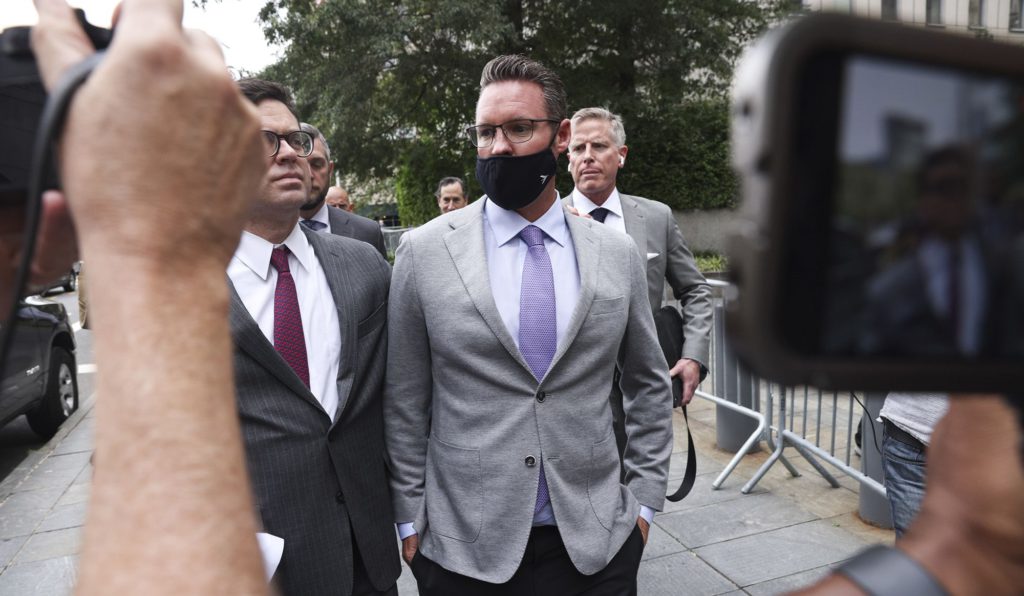
(Bloomberg) — Nikola Corp.’s founder and former chair Trevor Milton voted against a proposal by the clean-energy trucking startup that would have authorized new shares to potentially raise capital, throwing the outcome into doubt, according to people familiar with the matter.

Milton’s vote led to the decision announced late Wednesday to immediately adjourn Nikola’s annual shareholder meeting to June 30 so the company could work on soliciting more proxies in favor of the proposal, the people said, asking not to be identified discussing private information.

An attorney who represents Milton didn’t return calls seeking comment.

Approval requires a majority of outstanding shares. While 64% of votes cast so far were in favor of the share issuance, that represented only 42% of shares outstanding, not enough to pass the measure without Milton’s approval or additional support from retail stock owners.

Milton is Nikola’s single largest shareholder with more than 11% of the stock. He effectively controls about 20%, or almost 90 million shares, through common stock he holds directly and an investment vehicle he co-owns, giving him the power to stop measures if a large chunk of Nikola’s largely retail stockholder base doesn’t vote in favor. About 95 million shares voted against the new-share issue. 

The company’s proposal would increase the number of shares outstanding by 200 million to 800 million, which would give Nikola the green light to sell equity and raise cash at any time going forward. 

It’s not clear what Milton stands to gain by thwarting the company’s efforts to raise money. He would prevent his own stake from being diluted, but he could also impair its growth prospects by limiting the company’s ability to raise capital at a time when debt markets are getting frosty for startups. Nikola has agreed to pay his legal fees as part of his severance.

Facing Charges

Milton will go on trial next month to face charges of misleading investors by overstating the company’s technological capability and business prospects when he was running the company. He resigned from Nikola in 2020 and was subpoenaed as part of an investigation by the Department of Justice. 

Nikola raised $200 million in convertible notes in early May and wanted to maintain options as the company works to get its electric and hydrogen fuel cell trucks into mass production. With $385 million in cash and $409 million in equity lines with Tumim Stone Capital, the company had access to about $1 billion in liquidity at the end of the first quarter.

If Nikola needs more cash, it could sell more equity but needs majority shareholder approval. With Milton opposed, the company will need to go out and find support from retail shareholders and other owners who didn’t vote. The company is planning to do that if Milton won’t get on board with the plan, said one of the people, who asked not to be identified because the plans haven’t been disclosed.

The company said in February that it started a pilot program with Anheuser-Busch InBev SA to start work with hydrogen fuel cell trucks and expected to build as many as 500 electric semi trucks.

More stories like this are available on bloomberg.com

©2022 Bloomberg L.P.
Bitcoin Meets Resistance at $30,000 While Risk Appetite Returns

(Bloomberg) — Bitcoin rebounded after slumping along with stocks on Thursday, meeting resistance at the $30,000 level around which it’s been trading for the past month. 

The largest cryptocurrency rose as much as 2.5% to $30,372 during New York trading, while Ether rose 1.4%. Bitcoin’s advance largely tracked that of US and European equities. It is down about 55% from a record high in November.

Bitcoin has only briefly deviated from the $30,000 level since the collapse of the TerraUSD stablecoin triggered a broad crypto selloff in early May. The token could “form a cyclical low” in the second half of this year, based on previous market cycles, Bloomberg Intelligence analyst Jamie Douglas Coutts said Wednesday.   

“The technical outlook is neutral at best and Bitcoin really needs to trade back above $40k before any kind of bullish outlook can be confirmed,” Nicholas Cawley, a strategist at DailyFX, wrote in a note Wednesday.  

Bitcoin had staged a mini-rally to start the week, rising to a three-week high of $32,359 on Tuesday and giving some in the markets hope that it might gain upward momentum. Cryptocurrencies have have been hit as the Federal Reserve and other central banks hike rates to combat stubbornly high inflation.     

Solana underperformed amid a network outage that was later resolved. The popular DeFi token , dropping as much was little changed at around $40.50, 6.6% after falling 11% on Wednesday. 

More stories like this are available on bloomberg.com

©2022 Bloomberg L.P.

Ford Is Investing $3.7 Billion to Expand Midwestern Auto Plants

(Bloomberg) — Ford Motor Co. is investing $3.7 billion in factories across three Midwestern US states to pump out more electric vehicles and traditional gasoline-fueled autos in a sweeping expansion that will create 6,200 union jobs.

Five Ford plants will be expanded to produce more hot sellers, such as the electric F-150 Lightning pickup, and roll out new models, including a battery-powered commercial vehicle to be built at the automaker’s factory in Avon Lake, Ohio, the company said Thursday in a statement.

The timing of the investments are unusual, coming more than a year before Ford is set to negotiate a new four-year contract with the United Auto Workers. Normally, the automaker would wait and use potential factory enhancements and new jobs as leverage in talks with the union.

But in a tight labor market, Ford is moving quickly to secure the workers it needs. It could also get on the UAW’s good side a year after the union accused the automaker of “corporate greed” for moving some EV production to Mexico from Ohio.

With the economy roiled by inflation, Ford is scoring political points by expanding in the industrial Midwest. President Joe Biden hailed Ford’s announcement as “great news for American workers” and was quick to claim credit for the new jobs.

“This isn’t an accident,” Biden said in a statement. “It’s the result of my economic plan to grow the economy from the bottom up and middle out.”

The investment is part of Ford Chief Executive Officer Jim Farley’s strategy to produce 2 million EVs by 2026, up from 27,140 last year, and to use Ford’s lucrative gas burners as the “profit and cash engine” that drives its electric ambitions. Ford said plants in Michigan will receive a new Mustang coupe and redesigned Ranger pickup, which pump out profits along with greenhouse gases.

Ford also said Thursday that its EV sales rose 222% in May to 6,254 models, as it delivered its first F-150 Lightnings and the battery powered Mustang Mach-E had its best month yet. Farley on Wednesday said he doesn’t believe Ford’s EVs will require advertising to promote them to consumers.

Ford will also convert 3,000 temporary workers at the Midwestern factories to permanent full-time status, with immediate health-care benefits. The automaker said all 6,200 of the new workers will be represented by the UAW. Ford employs about 56,000 hourly workers in the US.

The company said it will spend about $1 billion to improve working conditions at its plants, including giving employees access to healthier foods and adding better lighting in parking lots.

Ford’s shares rose 2.4% to $13.88 at 11:55 a.m. in New York. The stock slumped 35% this year through Wednesday’s close, worse than the 14% slide in the S&P 500.

Southern Expansion

These latest investments are a counterpoint to the $7 billion Ford is spending to build a vast EV complex in Tennessee, dubbed Blue Oval City, and two battery plants in Kentucky, employing a total of 11,000 workers. Those workers, located in right-to-work states, will only be unionized if they vote to be represented, Farley has said. 

“As far as Kentucky and Tennessee goes, the new employees at the new assembly and battery plants will be able to choose whether they organize and we absolutely respect and support the employees’ right to make that choice,” Kumar Galhotra, president of Ford Blue, the company’s unit producing traditional internal combustion engine vehicles, said in a briefing with reporters.

More than half of the newest investment dollars will go to Ford’s home state of Michigan, where the company expects to create 3,200 jobs. Ohio will get 1,800 new positions through a $1.5 billion investment, while $95 million will go toward the Kansas City Assembly Plant in Missouri. Galhotra said Ohio provided $200 million in incentives and Michigan gave $150 million to land the new investments.

Ford’s southern expansion caused heartburn in Michigan, which has higher utility and labor costs than its neighbors. Fears of the American auto industry’s birthplace being left behind arose again last week when Stellantis NV and South Korean battery maker Samsung SDI Co. announced plans to build a $2.5 billion battery plant in Kokomo, Indiana.

“The state’s batting average stinks,” business columnist Daniel Howes wrote in the Detroit News on May 30. “The self-proclaimed heart of the North American auto industry is losing far more tied-to-the-future investments than it’s winning.”

More stories like this are available on bloomberg.com

©2022 Bloomberg L.P.
Winklevoss Twins Have Company in ‘Crypto-Winter’ Job Cuts

(Bloomberg) — The crypto industry — white-hot last year as Bitcoin soared to a record and enthusiasm for everything from Bored Ape NFTs to DeFi and “play-to-earn” games propelled the entire market past $3 trillion — is feeling a chill. 

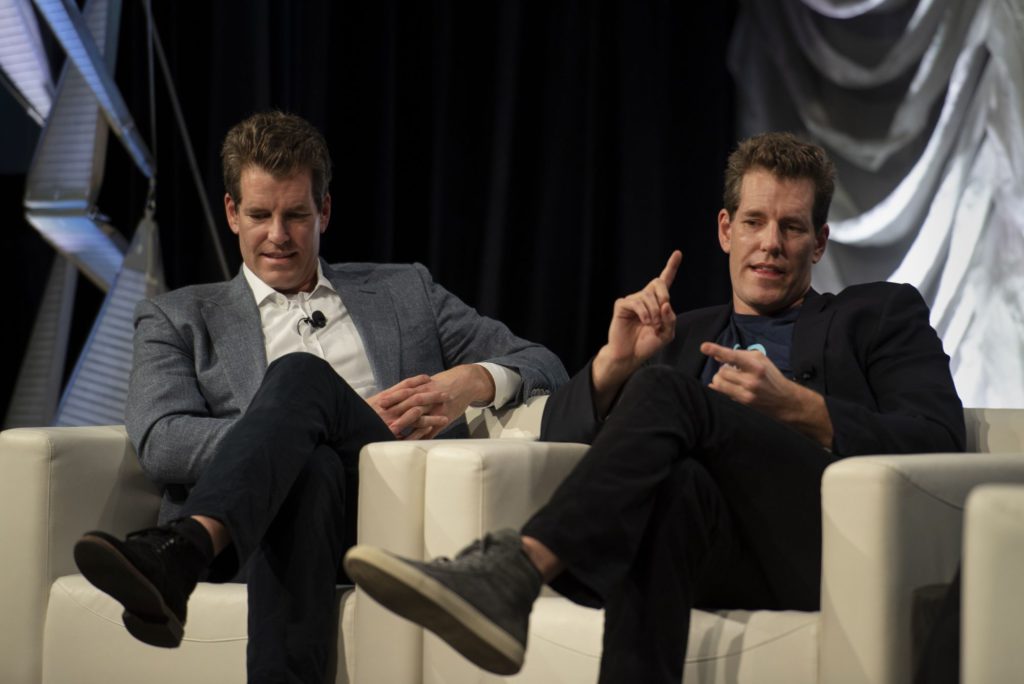
Gemini Trust Co., the crypto business run by billionaire twins Cameron and Tyler Winklevoss, on Thursday told staff of plans to slash the company’s workforce by 10% as trading across the industry slumps. Rain Financial Inc. — one of the Middle East’s largest crypto exchanges, with big backers from Silicon Valley — also made cuts, laying off dozens of employees, according to people with direct knowledge of the matter. Meanwhile, crypto exchange Coinbase Global Inc., its shares in a funk as transaction volumes decline, said last month it will slow its pace of hiring.   

“This is where we are now, in the contraction phase that is settling into a period of stasis — what our industry refers to as ‘crypto winter,’” the Winklevoss brothers wrote in a memo sent to Gemmini employees that was viewed by Bloomberg News. “This has all been further compounded by the current macroeconomic and geopolitical turmoil. We are not alone.”

Cryptocurrency prices have declined this year from the highs reached in early November and have largely remained in the doldrums, with the market now less than half the size it was at its 2021 peak. It’s only recently, though, that digital-asset executives have begun to characterize the situation as a cyclical “crypto winter,” when token prices may stay depressed for months. During the crypto winter of 2018, layoffs permeated the industry.

Venture capitalists are still pumping money into crypto startups, with Andreessen Horowitz breaking records last week by raising a $4.5 billion fund dedicated to crypto, and Binance’s venture-capital arm raising a $500 million crypto fund. But signs of cracks have begun to appear in recent weeks — particularly at exchanges, which typically see trading volume plunge during bear markets, when retail investors retreat. Gemini is refocusing “only on products that are critical to our mission,” according to the memo, with team leaders asked to assess their headcount based on “turbulent market conditions that are likely to persist for some time.” 

The Winklevoss twins were among crypto’s early big-name believers and adopters. They started Gemini in 2014, and over time added a variety of services. As a privately held company, Gemini doesn’t disclose its number of employees. LinkedIn lists about 1,000 people who may work there.


Late last year, Gemini said it raised $400 million in a round of funding that valued the company at $7.1 billion.

Gemini’s offices will stay closed Thursday. Impacted employees will receive a calendar invite for remotely held conversations on the separation packages and health-care benefits Gemini will be providing. On Friday, the company will hold a company-wide “standup” to talk about its future.

“Today is a tough day, but one that will make Gemini better over the long run,” the memo said.

More stories like this are available on bloomberg.com

©2022 Bloomberg L.P.
Apple Plans to Make the iPad More Like a Laptop and Less Like a Phone

(Bloomberg) — Apple Inc. will announce significant changes to the iPad’s software next week at its annual Worldwide Developers Conference, according to people with knowledge of the matter, part of a push to make the device more like a laptop and less like a phone.

The iPad’s next major software update, iPadOS 16, will have a redesigned multitasking interface that makes it easier to see what apps are open and switch between tasks, said the people, who asked not to be identified because the changes aren’t yet public. It also will let users resize app windows and offer new ways for users to handle multiple apps at once.

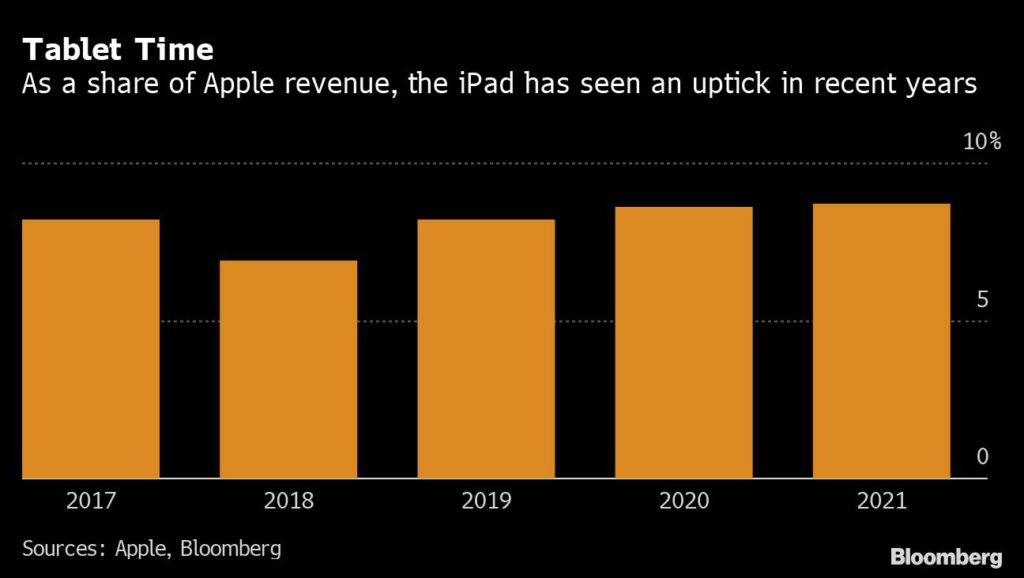
The iPad accounts for nearly 9% of annual Apple’s sales, and that percentage has inched up in recent years. But professional users of the device have clamored for an interface that feels more like a laptop experience. The iPad’s hardware, which now includes the same M1 chip as some of Apple’s laptops, has grown increasingly powerful, and in some ways the software hasn’t kept up.

A spokesperson for the Cupertino, California-based company declined to comment.

The new iPad interface will be one of the biggest upgrades announced at the conference, which will also include software updates for the iPhone, Mac, Apple Watch and Apple TV. The tech giant holds the conference each year to show off new features and device enhancements that developers can harness with their apps.

Currently, iPad users can either run apps in a full-screen view like on an iPhone or run two apps side by side. The company also lets users add a scaled-down version of a third app by sliding it over from the side. The changes will expand upon that interface.  

Apple is estimated to generate more than $20 billion per year from the App Store, and the WWDC event helps keep that juggernaut going. New software features help spur developers to create new apps that in turn increase revenue.

For iOS 16, the next version of the iPhone’s software, Apple is planning several changes, including a new lock screen featuring widgets, Bloomberg has reported. The company also will refresh the Health app and add new audio and social-networking features to Messages. Redesigned apps for macOS are coming as well, including a revamp to System Preferences, its app for managing a Mac’s settings. 

For the Apple Watch, the company is planning changes to watch faces, system navigation and several of the device’s apps, including a notable update to the fitness-tracking features. The company is also planning a new low-power mode that will let users operate the device when battery life is running short. The current low-power mode can only show the time. 

The software updates will help propel Apple’s future hardware. The company is planning four new iPhone 14 models for the fall, an updated iPad Pro, three new Apple Watches and several Macs with next-generation M2 chips. For the iPhone 14 Pro, Apple is planning an always-on display option that will be powered by iOS 16. 

While the new software is being announced on June 6, the company typically doesn’t release the updates to consumers until the fall — around the same time that it ships new devices. However, Apple will release initial beta versions to developers next week. Public beta tests for more users will begin sometime next month.

More stories like this are available on bloomberg.com

©2022 Bloomberg L.P.
Microsoft Warns of Drag on Profit, Sales With Dollar Surge

(Bloomberg) — Microsoft Corp. pared its forecasts for the current quarter, signaling that the surging US dollar will eat into revenue more than it previously expected and underscoring the threat of inflation and tighter economic policy for an industry that’s already been pummeled by a market rout.  

Shares of the company were down about 1.8% Thursday mid-morning after Microsoft said it expects earnings per share of at least $2.24, compared with an earlier forecast of at least $2.28. The company sees a $460 million impact on fourth-quarter revenue from currency fluctuations, knocking revenue to as low as $51.94 billion.

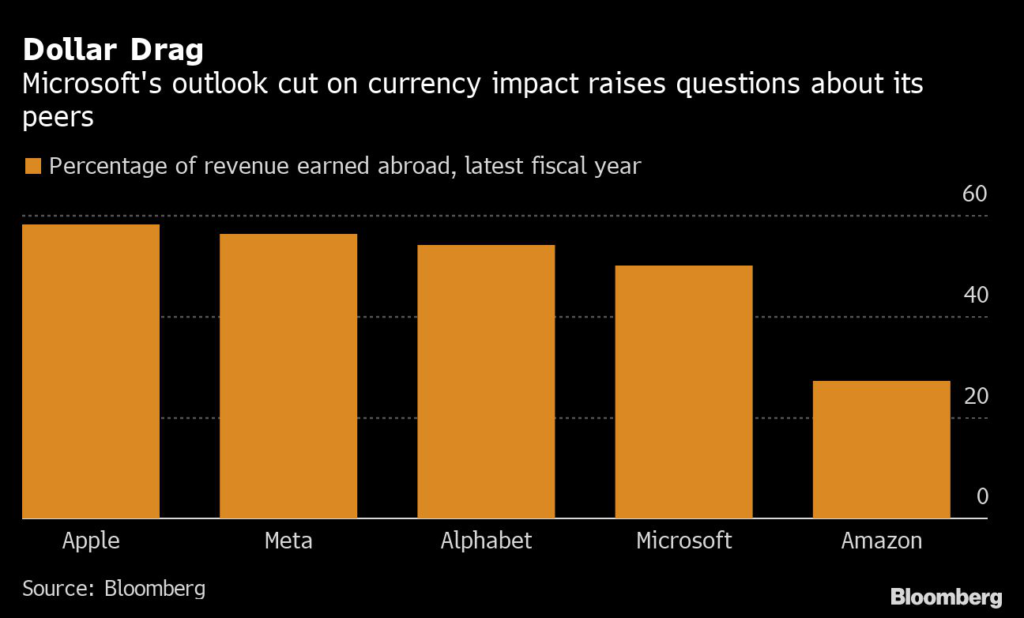
Microsoft’s revised outlook “will be a recurring theme across many large software companies, as most generate over one-third of their sales outside the US,” said Anurag Rana, an analyst at Bloomberg Intelligence. Indeed, earlier this week Salesforce Inc. also pointed to the strong dollar in lowering its sales outlook for the year. The business-software company doubled the impact it expects from the stronger dollar to $600 million.

The speed of US interest rate increases relative to other developed economies and the war in Ukraine have fed a surge in demand for the dollar, which increased more than 7% since the start of the year before paring some of those gains recently. The greenback’s climb has sent the euro, British pound and Japanese yen tumbling. 

The strong dollar is good for American consumers, as it makes goods from other countries cheaper. But it can hurt US manufacturers by making the products they sell abroad more expensive, and it can mean US businesses receive fewer dollars for their exports.

Microsoft issued the new guidance in a securities filing “to help investors understand the impact of unfavorable foreign exchange rate movement in the fourth quarter of fiscal 2022 since the forward-looking guidance provided on April 26.” The Redmond, Washington-based company got about half of the $168 billion in revenue generated in fiscal 2021 from overseas.

In its most recent earnings report, issued in April, Microsoft said the impact of currency fluctuations reduced revenue and earnings, though both still rose from a year earlier. Chief Financial Officer Amy Hood said at the time that the company expects foreign exchange to “decrease total company revenue growth by approximately 2 points.”

Treasury Secretary Janet Yellen said in a recent press briefing that the US administration is committed to a market-determined exchange rate, even as she acknowledged that the dollar’s gains have posed concern for other countries. The greenback’s appreciation is an aid to US policy makers as they try to rein in surging inflation, and Federal Reserve Chair Jerome Powell has separately endorsed a tightening in US financial conditions — of which a strengthening dollar is a part.

Rising inflation and the Fed’s efforts to contain it, combined with global supply chain issues, Covid-19 and slowing economic growth, have weighed on big tech stocks this year. The unprecedented confluence of bad news has injected a dose of reality into the outlook for the industry, which had benefited from two decades of low interest rates, making tech companies alluring investments that drew a flood of capital from public markets. 

The tech-heavy S&P 500 has lost about 14% of its value so far this year. Among the worst-hit have been Amazon.com Inc. and Tesla Inc., both down more than 25%, and Meta Platforms Inc., which has tumbled 42%. 

(Updates with background on tech meltdown. A previous version of the story was corrected to show the reason for the revision was due to exchange rate fluctuations.)

More stories like this are available on bloomberg.com

©2022 Bloomberg L.P.
Coinbase-Backed Rain Cuts Jobs Amid Cryptocurrency Selloff

(Bloomberg) —

Rain Financial Inc., one of the Middle East’s largest crypto exchanges, has laid off dozens of employees amid a recent downturn in digital assets, according to people with direct knowledge of the matter. 

The company communicated the decision to staff this week, the people said. The cuts impact employees across a range of departments, they said, declining to be identified as the matter is private.

“As cryptocurrencies and global markets continue to slow down, this has in turn impacted businesses across the globe,” Co-founder and Chief Executive Officer Joseph Dallago said in a statement. “We have had to make tough decisions to be able to navigate through this period of uncertainty and we can confirm we have downsized our Rain workforce.”

Cryptocurrency prices have declined this year from the highs reached in early November. The job cuts at Rain come as Gemini Trust Co., the crypto business run by billionaire brothers Cameron and Tyler Winklevoss, slashed 10% of staff.

Rain’s backers include Silicon Valley venture capital firm Kleiner Perkins and Coinbase Ventures. It last raised funds at a $500 million valuation, pledging to use the money to expand in the Middle East and Africa and double its workforce to 800 this year. 

The cuts at Rain come days after Dubai-based ride sharing firm Swvl Holdings Corp. said it would slash a third of its workforce. 

(Updates with statement and news of Gemini cuts)

More stories like this are available on bloomberg.com

©2022 Bloomberg L.P.

Russian Hacking Gang Evil Corp Shifts Its Extortion Strategy After Sanctions

(Bloomberg) — A notorious Russian cybercrime group has updated its attack methods in response to sanctions that prohibit US companies from paying it a ransom, according to cybersecurity researchers.  

The security firm Mandiant said Thursday it believes that the Evil Corp gang is now using a well-known ransomware tool named Lockbit. Evil Corp has shifted to using Lockbit, a form of ransomware used by numerous cybercrime groups, rather than its own brand of malicious software to hide evidence of the gang’s involvement so that compromised organizations are more likely to pay an extortion fee, researchers said. 

The US Treasury Department in 2019 sanctioned the alleged leaders of the Evil Corp gang, creating legal liabilities for American companies that knowingly send ransom funds to the hackers. While cybersecurity firms have associated Evil Corp with two kinds of malware strains, known as Dridex and Hades, the group’s use of LockBit could cause hacked organizations to believe that another hacking group, other than Evil Corp, was behind the breach.

Evil Corp is believed to be behind some of the worst banking fraud and computer hacking schemes of the past decade, stealing more than $100 million from companies across 40 countries, according to the US government. 

Alleged members are on the wanted lists of law enforcement across the US, UK and Europe, including accused mastermind Maksim Yakubets, who the Treasury Department said previously worked for Russia’s Federal Security Service. The 35-year-old Russian man is reported to own a tiger and drive a personalized Lamborghini with a license plate that translates to say “thief,” according to the UK’s National Crime Agency. 

The US has increasingly used sanctions to try to curb cybercriminal operations, including prohibiting American organizations from paying ransom fees to known groups like Evil Corp and cryptocurrency exchanges which are often used to funnel ransom payments. 

Evil Corp’s alleged reliance on off-the-shelf software also suggests that sanctions may not be enough to deter the group from extorting money from businesses in the US and around the world, according to Kimberly Goody, director of cybercrime analysis at Mandiant. 

“This shows us that sanctions can be effective in changing actor behavior, such as pushing people to other services, but not always at fully curtailing operations due to the availability of cybercrime tools and services in underground communities,” she said. 

A Treasury spokesperson said it had become aware of such obfuscation attempts, adding that government officials regularly highlight to industry the importance of reporting attacks to so that law enforcement can connect the dots and try to identify the perpetrators. 

Ransomware attacks typically work by infecting a target’s computer by tricking an individual to click on a malicious link while using a corporate device, which in turn infects the organization’s network. Once hackers have access to this network or critical files and systems, they will encrypt the data, rendering it inaccessible. The targets are told they can pay a ransom, typically in cryptocurrency, to receive a decryption key and gain access to their systems.

Alphabet Inc.’s Google announced in March it has agreed to purchase Mandiant for $5.4 billion. 

More stories like this are available on bloomberg.com

©2022 Bloomberg L.P.

Uber’s Troubled Past Haunts Criminal Case of Former Security Chief

(Bloomberg) — When Joe Sullivan was fired from his job as Uber Technologies Inc.’s security chief, the ride-hailing giant declared a clean break from its problematic past.

Now, five years later, as he faces criminal charges stemming from an alleged coverup of a massive data breach, Sullivan wants to put the company, its current chief executive officer and its prior management team on trial with him.

Fighting charges that he concealed a 2016 theft of personal data of 50 million customers and 7 million drivers, Sullivan claims Uber’s legal department and other managers were aware of the incident before it blew up publicly. He also argues that Dara Khosrowshahi, who took over as CEO in 2017, had him fired in an effort to close a $9 billion investment deal with SoftBank Group Corp.

Read More: Uber to Pay $148 Million in Settlement Over 2016 Data Breach

As the case heads toward a September trial in San Francisco, prosecutors and Uber are aligned in arguing that Sullivan was a rogue employee. Uber’s attorney accused Sullivan’s lawyers of manufacturing a “conspiracy theory” about the company serving him up to the US Justice Department.

“It’s their own theory,” Douglas Sprague told US District Judge William Orrick at a February hearing.

Sullivan, a former federal prosecutor and longtime Silicon Valley fixture who previously headed security for Facebook, faces as long as 20 years in prison if convicted of the most serious charges against him — though his sentence would likely be far less.

He spent 2 1/2 years at Uber and gained a reputation as a fixer for then-CEO Travis Kalanick before a series of scandals drove the co-founder out of his job. Khosrowshahi then set out to clean house.

“We are changing the way we do business,” the new CEO wrote in a November 2017 blog post disclosing the data breach, the same week Uber fired Sullivan and another executive.

Uber’s Drive to Clean Up Its Act En Route to an IPO: QuickTake

Prosecutors first charged Sullivan in 2020. They alleged he entered into an agreement with the hackers designed to create a “misleading documentary record” to justify not disclosing the 2016 breach. Sullivan misrepresented the hack in an email to Khosrowshahi, minimizing its scope and how he resolved it, according to the government.

Sullivan says he has since learned from records disclosed in pretrial information sharing that Khosrowshahi apparently learned of the attack on the company’s servers when he joined Uber in August 2017.

Sullivan says that starting that same month, he sat for three interviews as part of the company’s investigation.

Uber was in negotiations with SoftBank at the time and hadn’t yet determined if it was required to disclose the 2016 hack — until the investment company learned some details and demanded it, according to court filings by Sullivan.

“SoftBank, in effect, put a gun to Uber’s head and required this disclosure,” John Cline, a lawyer for Sullivan, said during the February hearing.

The challenge for Sullivan is to back up that version of events at trial. He recently won court approval to subpoena Uber’s internal investigation of the breach and SoftBank’s records of its dealings with the company. Sullivan’s demand to see those documents is hotly contested.

“If Sullivan’s narrative wins out before the jury, and it turns out there were numerous executives who knew about the breach and sat on it, that doesn’t bode well for Uber,” said Michael Weinstein, a former federal prosecutor turned white-collar defense lawyer at Cole Schotz in New Jersey.

A win for Sullivan would erode Uber’s restored reputation and cast a new cloud on how it handles sensitive driver and customer data, such as home addresses, ride destinations, credit card numbers, Weinstein said. It also weakens the company’s position against regulators “overseeing what it does and how it does it,” he said.

On Thursday, lawyers for Sullivan will attempt to knock out three charges prosecutors added late last year, alleging he defrauded Uber drivers by failing to disclose the hack. If successful, that would pare the indictment to the two original counts alleging Sullivan obstructed an investigation and concealed the hack.

The additional charges amount to an attempt by prosecutors to dress-up an otherwise “unappealing” case into a “full-fledged fraud case with sympathetic victims,” Sullivan’s lawyers argued in a court filing.

Uber spokesman Matt Kallman declined to comment. Sullivan’s lawyer, Cline, and Abraham Simmons, a spokesman for the U.S. Attorney’s Office in San Francisco, declined to comment. A SoftBank spokesperson also declined to comment.

The case is U.S. v. Sullivan, 20-cr-00337, U.S. District Court, Northern District of California (San Francisco).

More stories like this are available on bloomberg.com

©2022 Bloomberg L.P.

Close Bitnami banner
Bitnami