

Bloomberg

Microsoft Falls After Paring Forecast on Currency Drag

(Bloomberg) — Microsoft Corp. pared its outlook for fiscal fourth-quarter earnings and revenue, citing the impact from foreign exchange fluctuations, sending the shares tumbling.

The software giant said it now expects earnings per share of $2.24 to $2.32, down from earlier estimates for $2.28 to $2.35 a share. The company sees a $460 million impact on fourth-quarter revenue from currency fluctuations, knocking revenue to $51.94 billion to $52.74 billion. The shares declined about 2.3% Thursday morning in New York.

Microsoft issued the new guidance in a securities filing, “to help investors understand the impact of unfavorable foreign exchange rate movement in the fourth quarter of fiscal 2022 since the forward-looking guidance provided on April 26.” The Redmond, Washington-based company got about half of the $168 billion in revenue generated in fiscal 2021 from abroad.

The speed of US interest rate increases relative to other developed economies and the war in Ukraine have fed a surge in demand for the dollar, which has increased more than 7% since the start of the year before paring some of those gains. Treasury Secretary Janet Yellen said in a recent press briefing that the administration is committed to a market-determined exchange rate. The dollar’s appreciation is an aid to US policy makers as they try to rein in surging inflation, and Federal Reserve Chair Jerome Powell has separately endorsed a tightening in US financial conditions — of which a strengthening dollar is a part.

Microsoft’s revised outlook “will be a recurring theme across many large software companies, as most generate over one-third of their sales outside the US,” said Anurag Rana, an analyst at Bloomberg Intelligence. 

In its most recent earnings report, issued in April, Microsoft reported quarterly sales and earnings that topped analysts’ projections, fueled by robust growth in cloud-services demand. 


(Updates with analyst comment. A previous version of the story was corrected to show the reason for the revision was due to exchange rate fluctuations.)

More stories like this are available on bloomberg.com

©2022 Bloomberg L.P.
US Stocks Fall on Microsoft Warning; Oil Rises: Markets Wrap

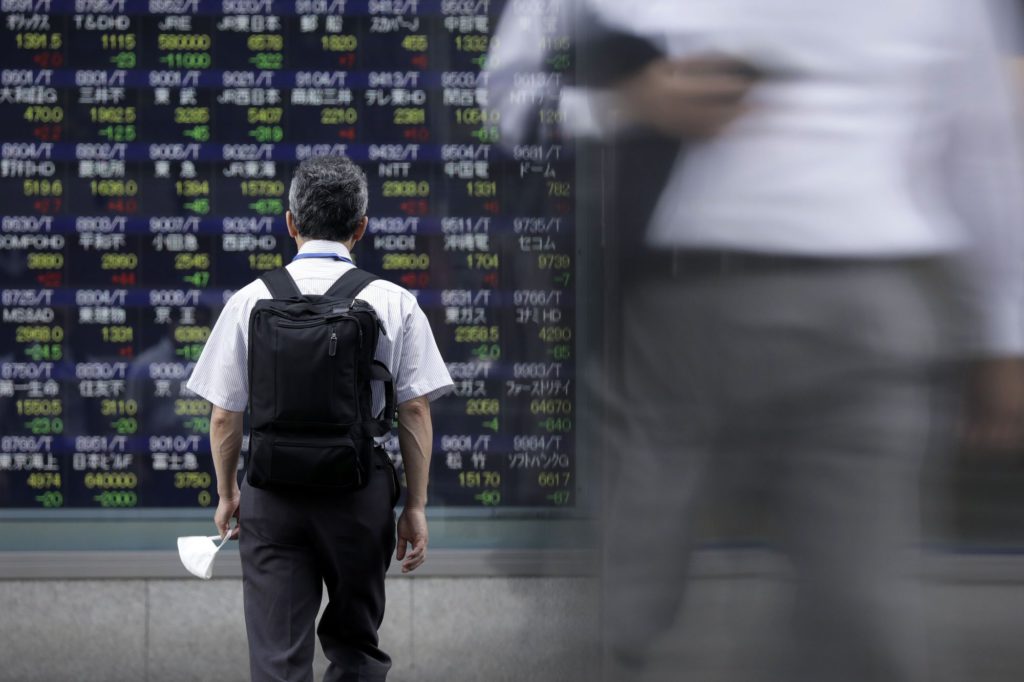
(Bloomberg) — US stocks fell for a third day after Microsoft Corp. cut its revenue target, fueling concerns about the state of Corporate America. Oil reversed losses even after OPEC+ agreed to bigger oil production hikes for the coming months.

The S&P 500 declined 0.2% while the Nasdaq 100 was little changed. Treasuries extended losses with the 10-year yields above 2.90%. And the dollar was weaker against major peers.

OPEC+ will increase the size of its oil-supply hikes by about 50% in July and August, bowing to pressure from major consumers to ease prices with Saudi Arabia now ready to pump more oil if Russian output declines.

A decline in oil prices would help steady sentiment after US manufacturing activity and job openings data Wednesday fueled concern the Federal Reserve will need to get more restrictive to slow runaway price gains. ADP data ahead of the US jobs report also showed US companies added the fewest number of jobs since the pandemic recovery began. 

Shares of Microsoft Corp. fell 2% after paring its quarterly forecast due to unfavorable foreign exchange rates as demand for the dollar has surged with the war in Ukraine and the speed of the Fed’s rate hikes relatives to other developed economies.

“US economic growth slowed in recent weeks amid high inflation and rising rates, and some of the Fed’s business contacts from different parts of the country are even beginning to worry about recession,” Jessica Rabe, co-founder of DataTrek Research, said in a note. “While Chair Powell wants the US economy and labor market to cool to bring down inflation, it’s still unclear how much tightening monetary policy will impact economic growth and, most importantly for equity investors, corporate earnings.”

Investors are on edge over whether the US central bank’s tighter policies will induce a recession. A chorus of Fed officials has fallen behind calls to keep hiking to counter price pressures. Mary Daly of the San Francisco Fed and her more hawkish colleague James Bullard of St. Louis both backed a plan to raise rates by 50 basis points this month, while Richmond’s Thomas Barkin said it made “perfect sense” to tighten policy.

“We do see the rise in probability of a recession in the second half of this year, potentially persisting into 2023 as the Fed continues to battle inflation,” Tracie McMillion, Wells Fargo Investment Institute head of global asset allocation strategy, said on Bloomberg TV.

McMillion also cautioned that markets haven’t fully priced in the impact of the Fed’s balance-sheet reduction. “The impact of quantitative tightening starting to roll off the Fed’s balance sheet this month is really untested and unprecedented. Our guess is that it’s probably not fully priced into markets,” she said.

Among individual stock moves, Chewy Inc. rallied after the online pet products retailer’s results topped analyst expectations. Hewlett Packard Enterprise Co. slid after the company cut its full-year profit forecast.

How will markets be affected by the Fed’s quantitative tightening? QT officially starts Wednesday and is the theme of this week’s MLIV Pulse survey. Click here to participate anonymously.

Here are some key events to watch this week:

  • Cleveland Fed President Loretta Mester discusses the economic outlook Thursday
  • US May employment report Friday
  • The UN’s Food and Agriculture Organization releases its monthly food price index at a time of maximum concern about global supplies on Friday

Some of the main moves in markets:

Stocks

  • The S&P 500 fell 0.5% as of 9:57 a.m. New York time
  • The Nasdaq 100 fell 0.4%
  • The Dow Jones Industrial Average fell 0.6%
  • The Stoxx Europe 600 rose 0.3%
  • The MSCI World index fell 0.3%

Currencies

  • The Bloomberg Dollar Spot Index fell 0.3%
  • The euro rose 0.4% to $1.0694
  • The British pound rose 0.3% to $1.2526
  • The Japanese yen rose 0.1% to 129.95 per dollar

Bonds

  • The yield on 10-year Treasuries advanced three basis points to 2.94%
  • Germany’s 10-year yield advanced four basis points to 1.23%

Commodities

  • West Texas Intermediate crude rose 0.9% to $116.35 a barrel
  • Gold futures rose 1% to $1,867.40 an ounce

More stories like this are available on bloomberg.com

©2022 Bloomberg L.P.
Amazon Accused of Obstructing US House Probe of Deadly Tornado

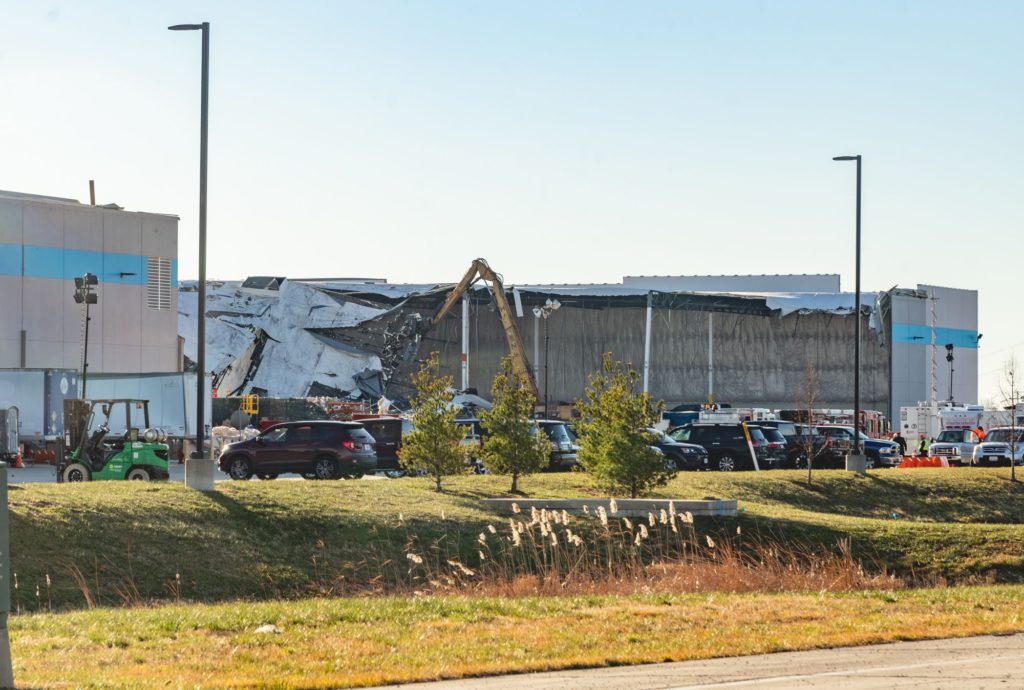
(Bloomberg) — Amazon.com Inc. is obstructing a congressional investigation of a deadly December tornado by failing to provide documents about emergency preparedness and communications with workers during the storm, according to a letter from US lawmakers.

The House Oversight Committee in March asked Amazon to share details about its labor practices by April 14 after the tornado ripped through a warehouse in Edwardsville, Illinois, killing six workers. The panel also requested information regarding conditions at Amazon facilities during extreme weather events in Florida, California, Alabama and New York as far back as 2017, which it said could influence legislation to strengthen worker protections during hazardous weather.

Amazon has failed to provide any key records for the investigation, according to the letter date June 1 and signed by Representative Carolyn Maloney, the committee chair and a New York Democrat, and fellow Democrats Alexandria Ocasio-Cortez of New York and Cori Bush of Missouri. 

“Amazon’s failure to provide key documents has obstructed the Committee’s investigation,” the House members wrote in the letter. “As an additional accommodation, the Committee will grant an extension until June 8, 2022, for Amazon to complete its document production. If Amazon fails to do so, the Committee will have no choice but to consider alternative measures to obtain full compliance.”

Amazon didn’t immediately respond to a request for comment.

The committee’s initial letter to the Seattle-based company cited news reports highlighting worker concerns in the aftermath of the deadly tornado, including a Bloomberg News story that revealed a text exchange between an Amazon package delivery driver and her boss, who told the driver she’d be fired if she didn’t continue making deliveries. The driver responded that she feared her van would become her casket.

“Our investigation into Amazon’s response to the events in Edwardsville and other extreme weather events seeks to determine whether Amazon’s corporate practices put employee safety first, or whether your company, which now employs nearly one million people in the United States, is merely paying lip service to this principle,” the lawmakers wrote.

More stories like this are available on bloomberg.com

©2022 Bloomberg L.P.
BMW’s Long and Winding Road to Cut Gas From Carmaking

(Bloomberg) —

BMW’s move to build a fossil-fuel free car plant in Hungary is looking prescient as Europe’s manufacturing sector scrambles to replace Russian oil and gas with alternatives. 

While those plans would have been discussed long before the war in Ukraine, they show the drastic rethink and commitments companies face to wean themselves from oil and gas. The benefits will take time to roll in, even as the crisis speeds the pivot to renewable energy with Europe’s energy woes adding to the toll on carmakers already straining in the shift to electric cars. 

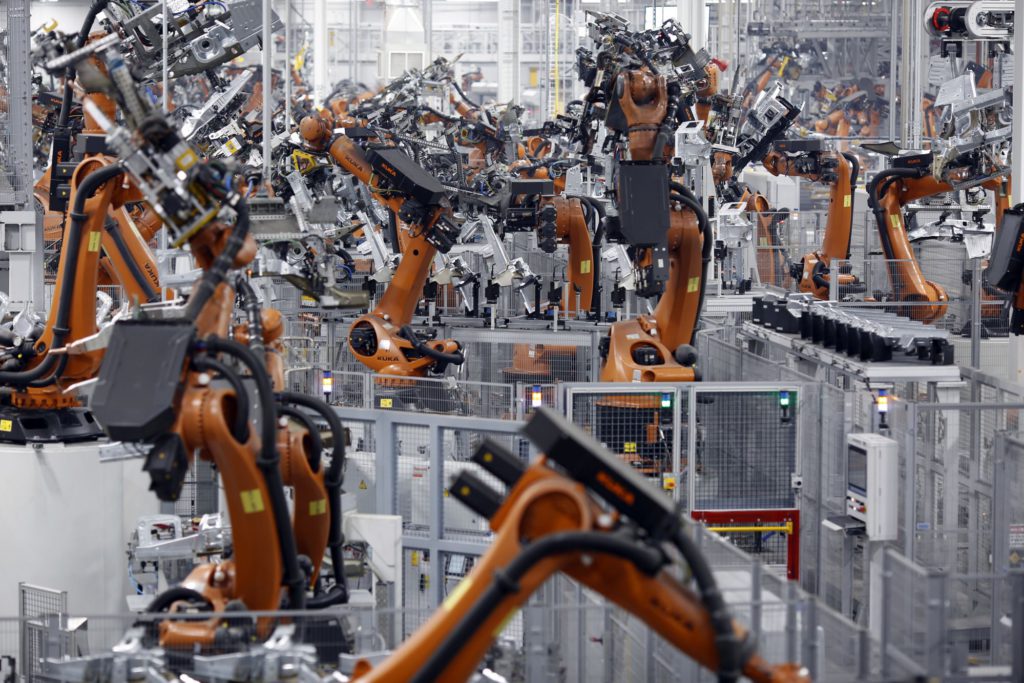
First, the 1 billion-euro Debrecen plant won’t be operational until 2025, so it wouldn’t provide an immediate buffer from the ongoing energy concerns, or if Russia decided to stop supplying gas. Carmakers depend on the fuel for their paint shops to generate heat and steam, some component-making involving melting of metals and for electricity to power their factories.

The whole industry also relies on a multitude of components, particularly plastics, that use natural gas as feedstock as well as in production processes. Overall, gas accounted for over half of BMW’s energy consumption last year. 

While there are alternatives, short-term fixes come at a price for the bottom line or the environment. 

Mercedes-Benz is considering using the more expensive propane or butane gas in its paint shops, while Volkswagen has decided to keep the ability of its Wolfsburg power plants to run on coal. The German car giant had previously planned to convert the power stations at its headquarters to gas-only to cut CO2 emissions by 1.5 million tons.

With Debrecen, BMW is opting for a clean slate, saying the factory will be the world’s first auto plant that can run without fossil fuels, according to production head Milan Nedeljkovic. Solar panels on site will help to create a significant portion of energy consumption with the remainder of electricity needs procured from renewable sources via the grid. 

The paint shop will run on electricity, using new technology and the company is investigating geothermal energy to support heating processes. For BMW’s existing production network across Germany, the US and China, cutting out gas will be difficult to achieve, Nedeljkovic said.

“To convert existing plants is not a short-term option,” Nedeljkovic said. “It’s more than just the heater you have to change, it requires significant structural changes in the plant.” 

But it’s possible and necessary, as the luxury-car maker aims to reduce CO2 emissions by 80% in vehicle production by the end of the decade. The company has defined individual plans for each plant, using locally available sources of renewable energy.

In Leipzig, Germany, BMW has relied on wind power for a while and has set up a buffering system with used electric-vehicle batteries. In future, it also plans to use hydrogen from a nearby supplier. Its plant in South Africa already uses biomethane, while others use hydroelectric power.

“Its not always just about a business case,” Nedeljkovic he said.  “At the end of the day, it is something we see as our commitment to set up CO2-free car production.”

Like getting this newsletter? Subscribe to Bloomberg.com for unlimited access to trusted, data-driven journalism and subscriber-only insights.

More stories like this are available on bloomberg.com

©2022 Bloomberg L.P.

Amazon Fight Over Work-From-Home Expenses Set to Head to Trial

(Bloomberg) — Amazon.com Inc. workers seeking to recoup expenses incurred while working from home during the pandemic moved a step closer to trial when a California judge rejected the e-commerce giant’s request to dismiss the lawsuit.

David Williams, a California-based engineer for Amazon, claims in the proposed class-action lawsuit that the company violated state laws by failing to come up with a policy to compensate employees for remote work-related expenses. The lawsuit could cover several thousand people employed by Amazon in California, who ended up footing $50 to $100 a month for home internet and office expenses. 

The suit is one of several facing companies, including Amazon and Wells Fargo & Co., over expenses incurred while working from home. Amazon had argued it isn’t liable because the expenses stemmed from government orders to shelter-in-place, and not from the company. 

Even if the company’s argument were true, “that does not absolve Amazon of liability,” US District Judge Vince Chhabria said in his order Wednesday. “What matters is whether Williams incurred those expenses ‘in direct consequence of the discharge of his or her duties, or of his or her obedience to the directions of the employer.’”

A spokesperson for Seattle-based Amazon didn’t immediately respond to a request for comment.

The ruling allows Williams’s claims on California labor code violations to move forward. Chhabria granted Amazon’s request to dismiss claims that its conduct violated California’s unfair competition law but gave Williams an opportunity to revise the complaint.  

The case is Williams v. Amazon.com Services LLC et al, 3:22-cv-01892, in the Northern District of California (San Francisco),

More stories like this are available on bloomberg.com

©2022 Bloomberg L.P.

Meituan Sales Beat After New Business Offsets China Slowdown

(Bloomberg) — Meituan’s quarterly revenue grew 25%, after the Chinese food delivery titan withstood the economic fallout from coronavirus-related lockdowns in cities such as Shanghai.

Sales rose to 46.3 billion yuan ($6.9 billion) in the three months ended March, propelled by a 47% surge in revenue from the division that groups new businesses such as ride-hailing and community commerce. Revenues exceeded the average analysts’ estimate of 45.3 billion yuan, but marked the slowest pace of growth for the company in almost two years.

Beijing-based Meituan is one of the few Chinese tech companies that appear to have maintained its momentum in a challenging macro environment. China’s retail sales in April contracted 11.1% from a year ago, underscoring the impact of a Covid Zero policy that’s snarled the country’s supply chains and hammered consumer sentiment. Led by high-profile billionaire Wang Xing, the company is also under scrutiny over the welfare of its delivery riders and the commissions it charges restaurants. 

China has declared victory over Shanghai’s coronavirus outbreak as the nation reported its fewest new cases in more than three months, vindicating Covid Zero in the eyes of Beijing despite the policy’s rising economic toll. Yet uncertainty persists because of the readiness with which the government is expected to clamp down on any future outbreaks, with unknown consequences.

China’s internet firms are also grappling with a wide-ranging government crackdown that’s chilled a once-frenetic pace of industry expansion. Gaming conglomerate Tencent Holdings Ltd. last month reported near-zero revenue growth for the March quarter, while e-commerce titan Alibaba Group Holding Ltd. grew revenue at its slowest pace since its 2014 listing. 

Sentiment concerning China’s internet industry has swung wildly in recent weeks. Investors initially saw economic czar Liu He’s pledge to support the digital economy as a signal of an easing, if not an end, to the country’s crackdown on Big Tech. But Chinese tech executives including Tencent President Martin Lau told analysts during recent earnings calls that it will take time for regulators to enact policies in line with that sweeping endorsement. 

Quarterly sales from Meituan’s core food delivery business matched analyst projections. climbing 17% to 24.2 billion yuan, while its in-store, hotel and travel unit generated revenue of 7.6 billion yuan, up 16%. Its net loss widened to 5.7 billion yuan, versus the market estimate for a 6 billion yuan loss.

Meituan’s shares closed down 1.3% in Hong Kong before the earnings announcement. Its share price has shed about 20% this year. 

(Updates with business segment sales numbers in paragraphs 2 and 7)

More stories like this are available on bloomberg.com

©2022 Bloomberg L.P.
Winklevoss Twins’ Gemini Slashes Staff 10% on Crypto Slump

(Bloomberg) — Gemini Trust Co., the crypto business run by billionaire brothers Cameron and Tyler Winklevoss, is making its first-ever job cuts, slashing 10% of staff as trading across the industry slumps.

“This is where we are now, in the contraction phase that is settling into a period of stasis — what our industry refers to as ‘crypto winter,’” the brothers wrote in a memo sent to employees Thursday that was viewed by Bloomberg News. “This has all been further compounded by the current macroeconomic and geopolitical turmoil. We are not alone.”

Cryptocurrency prices have declined this year from the highs reached in early November and have largely remained in the doldrums. It’s only recently, though, that digital-asset executives have begun to characterize the situation as a cyclical “crypto winter,” when token prices may stay depressed for months. During the crypto winter of 2018, layoffs permeated the industry.

Venture capitalists are still pumping money into crypto startups, with Andreessen Horowitz breaking records last week by raising a $4.5 billion fund dedicated to crypto, and Binance’s venture-capital arm raising a $500 million crypto fund. But signs of cracks have begun to appear in recent weeks — particularly at exchanges, which typically see trading volume plunge during bear markets, when retail investors retreat. Gemini is refocusing “only on products that are critical to our mission,” according to the memo, with team leaders asked to assess their headcount based on “turbulent market conditions that are likely to persist for some time.” 

The Winklevoss twins were among crypto’s early big-name believers and adopters. They started Gemini in 2014, and over time added a variety of services. As a privately held company, Gemini doesn’t disclose its number of employees. LinkedIn lists about 1,000 people who may work there.

Late last year, Gemini said it raised $400 million in a round of funding that valued the company at $7.1 billion.

Gemini’s physical offices will stay closed Thursday. Impacted employees will receive a calendar invite for remotely held conversations on the separation packages and health-care benefits Gemini will be providing. On Friday, the company will hold a company-wide “standup” to talk about its future.

“Today is a tough day, but one that will make Gemini better over the long run,” the memo said.

More stories like this are available on bloomberg.com

©2022 Bloomberg L.P.
Stocks Rise as Oil’s Decline Eases Inflation Fears: Markets Wrap

(Bloomberg) — US futures and European stocks climbed Thursday as a drop in oil prices eased some investor concerns about inflation and stirred interest in attractively valued equities.

S&P 500 contracts climbed 0.5% and those on the Nasdaq 100 were 0.6% higher. Europe’s Stoxx 600 Index rose, with construction and consumer shares leading gains, while energy stocks were laggards. Trading volumes are lighter than usual, with UK markets shut for holidays to mark Queen Elizabeth II’s Platinum Jubilee. Among individual moves, Remy Cointreau SA gained after the spirits maker forecast solid sales growth. 

Crude oil slid on a report that Saudi Arabia is ready to pump more oil if Russian output declines. OPEC+ is scheduled to meet to discuss supply policy. 

Oil’s decline helped to steady sentiment after US manufacturing activity and job openings data Wednesday fueled concern the Federal Reserve will need to get more restrictive to slow runaway price gains. Treasuries held losses, with 10-year yields above 2.90%. The dollar slipped while the yen held near 130 per dollar after its recent decline on the prospect of widening interest rate differentials with the US.

JPMorgan Chase & Co. Chief Executive Officer Jamie Dimon sounded alarm bells on the economy, warning investors to prepare for an economic “hurricane.” In contrast, JPMorgan’s bullish strategist, Marko Kolanovic, expects stocks to rebound by the end of the year, underscoring the increasing debate as markets are buffeted by challenges from tightening monetary policy to the war in Ukraine.

“There’s been a large correction in some stocks; those corrections led to valuations that are way more attractive that can benefit medium-to long-term investors, especially in Europe and the emerging-markets space,” Vanguard Asset Services Ltd. Investment Strategist Giulio Renzi Ricci said on Bloomberg TV.

Investors are on edge over whether the US central bank’s tighter policies will induce a recession. A chorus of Fed officials has fallen behind calls to keep hiking to counter price pressures. Mary Daly of the San Francisco Fed and her more hawkish colleague James Bullard of St. Louis both backed a plan to raise rates by 50 basis points this month, while Richmond’s Thomas Barkin said it made “perfect sense” to tighten policy.

“We do see the rise in probability of a recession in the second half of this year, potentially persisting into 2023 as the Fed continues to battle inflation,” Tracie McMillion, Wells Fargo Investment Institute head of global asset allocation strategy, said on Bloomberg Television.

McMillion also cautioned that markets haven’t fully priced in the impact of the Fed’s balance-sheet reduction. “The impact of quantitative tightening starting to roll off the Fed’s balance sheet this month is really untested and unprecedented. Our guess is that it’s probably not fully priced into markets,” she said.

In US premarket trading, Chewy Inc. rallied after the online pet products retailer’s results topped analyst expectations. Hewlett Packard Enterprise Co. slid after the company cut its full-year profit forecast.

How will markets be affected by the Fed’s quantitative tightening? QT officially starts Wednesday and is the theme of this week’s MLIV Pulse survey. Click here to participate anonymously.

Here are some key events to watch this week:

  • Cleveland Fed President Loretta Mester discusses the economic outlook Thursday
  • US May employment report Friday
  • The UN’s Food and Agriculture Organization releases its monthly food price index at a time of maximum concern about global supplies on Friday

Some of the main moves in markets:

Stocks

  • Futures on the S&P 500 rose 0.5% as of 6:15 a.m. New York time
  • Futures on the Nasdaq 100 rose 0.6%
  • Futures on the Dow Jones Industrial Average rose 0.4%
  • The Stoxx Europe 600 rose 0.5%
  • The MSCI World index was little changed

Currencies

  • The Bloomberg Dollar Spot Index fell 0.3%
  • The euro rose 0.4% to $1.0690
  • The British pound rose 0.5% to $1.2546
  • The Japanese yen rose 0.3% to 129.80 per dollar

Bonds

  • The yield on 10-year Treasuries advanced one basis point to 2.92%
  • Germany’s 10-year yield advanced three basis points to 1.22%

Commodities

  • West Texas Intermediate crude fell 2.4% to $112.45 a barrel
  • Gold futures rose 0.5% to $1,857.60 an ounce

More stories like this are available on bloomberg.com

©2022 Bloomberg L.P.

US and Taiwan to Deepen Trade Ties, Plan June Washington Meeting

(Bloomberg) — The US and Taiwan unveiled a fresh blueprint to deepen their trade relationship focusing on ending forced labor and “harmful non-market policies and practices” as Washington and Beijing vie for sway in the region. 

The plan — known as the US-Taiwan Initiative on 21st Century Trade — aims to “develop an ambitious roadmap for negotiations for reaching agreements with high-standard commitments” on areas such as trade facilitation, regulatory practices, agriculture, anti-corruption and supporting small businesses, the Office of the US Trade Representative said in a statement Wednesday.  

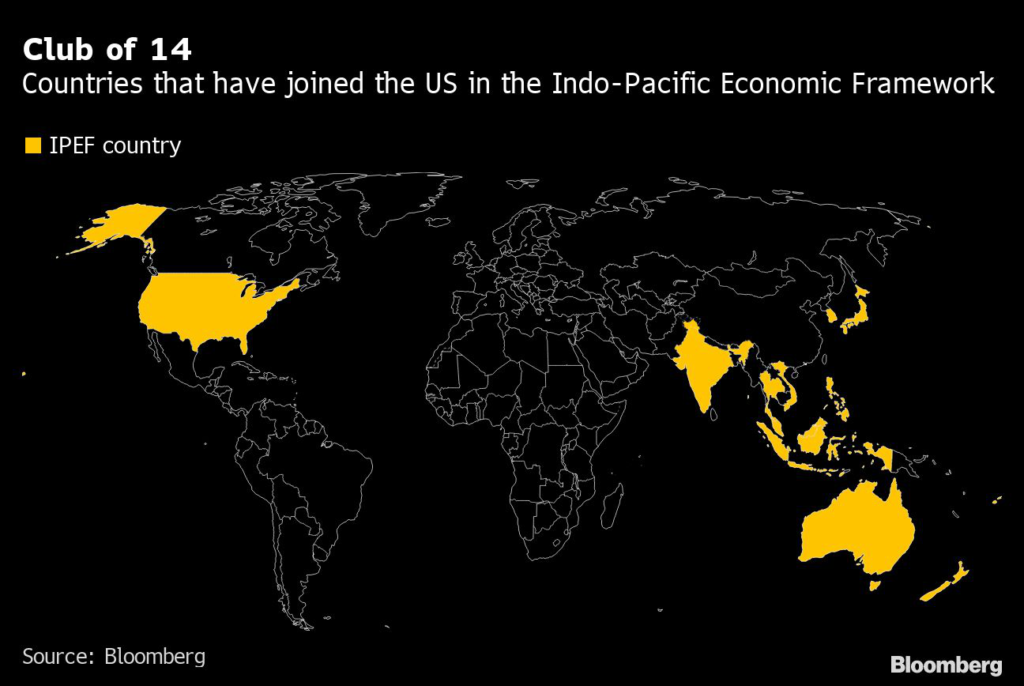
The Biden administration’s latest effort to assert its position in Asia follows the announcement in May of its Indo-Pacific Economic Framework designed to counter China’s influence in the region. Thirteen nations have signed up to join the US in an effort to advance resilience, fairness, and competitiveness, but neither IPEF — nor Wednesday’s initiative with Taiwan — include any tariff reductions.

The initiative doesn’t require approval from Congress because it doesn’t address market-access issues, but the White House isn’t ruling anything out for the future, a senior administration official said on a call with reporters Tuesday. 

The US didn’t invite Taiwan to join the framework, even after more than 50 senators wrote to President Joe Biden last month urging him to include the government in Taipei. The new initiative allows for greater tailoring of the conversation and the unique characteristics of the US-Taiwan trade relationship, the official said, adding that the administration takes an adaptable approach to IPEF participation.


One area of discussion, “harmful” non-market policies and practices, indicates that the US will seek to continue putting pressure on Taiwan’s central bank to halt its interventions in foreign exchange markets aimed at “smoothing” the island’s currency, a long-term point of friction between the two governments. 

President Tsai Ing-wen said in a Facebook post that her government looked forward to deepening economic ties with the US and hoped the talks would eventually lead to a bilateral trade agreement, a long-held goal for Taipei.

The US’s interactions with Taiwan are all unofficial and take place through the American Institute for Taiwan and the Taipei Economic and Cultural Representative Office in the US. China’s Communist government protested Washington’s deepening bilateral engagement, including “discussing or signing agreements with implications of sovereignty” with the island, which it regards as part of its territory despite never controlling it. 

“If the US insists on playing the Taiwan card, it will only lead China-US relations to a precarious state,” China’s Foreign Ministry spokesman Zhao Lijian said at a briefing in Beijing on Thursday. 

The first meeting under the initiative will likely be held later this month in Washington, the USTR said. 

The new plan will run in conjunction with other efforts such as the Trade and Investment Framework Agreement, and the Technology, Trade and Investment Collaboration that Commerce Secretary Gina Raimondo on Tuesday said would be restarted. 

She described Taiwan as “a critical trading partner” of the US, with the island being a key supplier of microchips that are currently in short supply globally. 

The US isn’t the only one seeking closer trading ties with Taiwan. The European Union is set to discuss supply chains, export controls and foreign direct investment in its annual trade and investment talks with Taiwan on Thursday, according to a statement from the Taipei Representative Office in the EU and Belgium. 

(Updated with comments from officials in Taiwan and China in seventh, eighth and ninth paragraphs.)

More stories like this are available on bloomberg.com

©2022 Bloomberg L.P.

Bitcoin Recovers, Meets Resistance at $30,000; Solana Slides

(Bloomberg) — Bitcoin rebounded after tumbling along with stocks on Thursday, meeting resistance at the $30,000 level around which it’s been trading for the past month. 

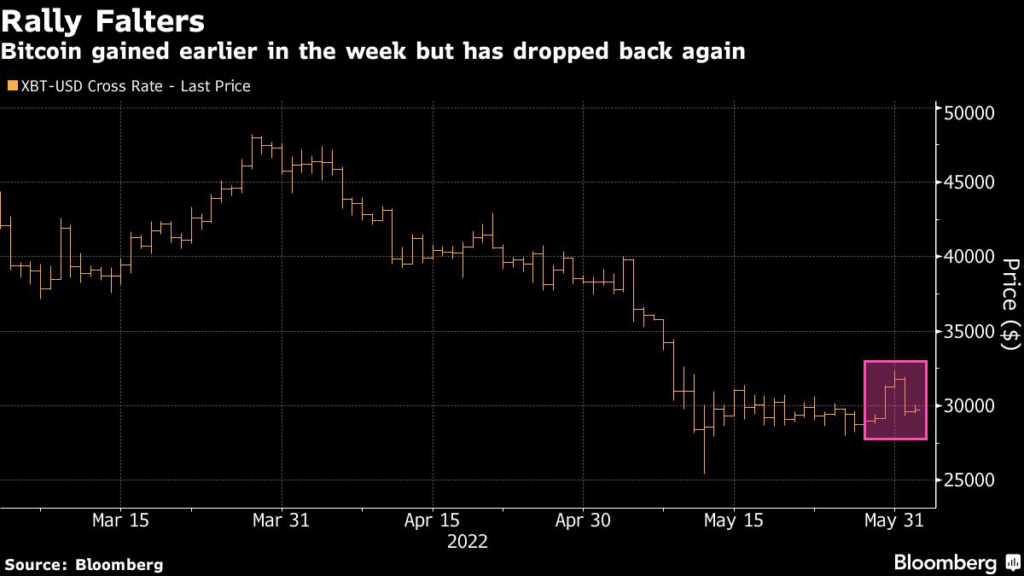
The largest cryptocurrency was up 0.6% at $29,938 at 10:20 a.m. in London, while Ether rose 1.6%. Bitcoin’s advance largely tracked that of European equities. 

Bitcoin has only briefly deviated from the $30,000 level since the collapse of the TerraUSD stablecoin triggered a broad crypto selloff in early May. The token could “form a cyclical low” in the second half of this year, based on previous market cycles, Bloomberg Intelligence analyst Jamie Douglas Coutts said Wednesday.   

“The technical outlook is neutral at best and Bitcoin really needs to trade back above $40k before any kind of bullish outlook can be confirmed,” Nicholas Cawley, a strategist at DailyFX, wrote in a note Wednesday.

Bitcoin had staged a mini-rally to start the week, rising to a three-week high of $32,359 on Tuesday and giving some in the markets hope that it might gain upward momentum. Cryptocurrencies have have been hit as the Federal Reserve and other central banks hike rates to combat stubbornly high inflation.

Solana underperformed amid a network outage that was later resolved, dropping as much as 6.6% after falling 11% on Wednesday. 

More stories like this are available on bloomberg.com

©2022 Bloomberg L.P.

Close Bitnami banner
Bitnami