Bloomberg

‘Bloomberg Crypto’ Podcast Launches With An Eye On TerraUSD Implosion

(Bloomberg) — Welcome to Bloomberg Crypto: a new daily podcast from Bloomberg and iHeart Radio. In today’s inaugural episode, host Stacy-Marie Ishmael introduces herself, shares what you can expect from this new daily offering, and outlines what the show aims to bring you each day.

Stacy-Marie, the managing editor for crypto at Bloomberg News, checks in with Bloomberg reporter Olga Kharif for an update on the full blown meltdown of the Terra stablecoin. Olga will answer the question: can stablecoins actually remain stable?  What made TerraUSD become so unsteady that it imploded? Olga breaks down what happened, why, and what it means for stablecoins and DeFi moving forward.

Whether you’re casually crypto curious, totally coinpilled or a complete skeptic, there’ll be something in this podcast for you.

To start, a bit about this podcast: Have you ever wondered how you make a Bitcoin? Or how a blockchain works? Or why anyone would spend money on digital pictures of monkeys? On this show, Stacy-Marie explores these fundamental questions about this fascinating crypto universe. 

Alongside colleagues from around the world, Stacy-Marie is committed to bringing you the crypto news that matters, to help you understand the who, the what, the how, and the why. Join in each weekday to stay up to date on the most interesting and important crypto news. 

Follow us on Twitter @crypto, and subscribe to the Bloomberg Crypto Newsletter at https://bloom.bg/cryptonewsletter


More stories like this are available on bloomberg.com

©2022 Bloomberg L.P.

Drag Queens Traverse Trademark Law: ‘I Don’t Think We’re Safe’

(Bloomberg Law) — Peaches Christ stepped onto stage as a drag queen for the first time in the 1990s, and walked into a profession that was shunned.

“We weren’t even something people thought about unless it was a freak show on daytime television or something,” said Joshua Grannell, the actor and writer who performs as Peaches Christ and has trademarked the stage name. “Even the gay community,” Grannell said, “didn’t want us in their parades, didn’t want us representing them.”

Today, drag has gone mainstream, the landscape shifting from underground shows to sold-out performances and even brunch, due in large part to the long-running reality TV competition “RuPaul’s Drag Race.”

“Drag now is like the pumpkin latte of gay culture,” said Grannell.

But intellectual property law hasn’t always kept up, leaving some performers embroiled in copyright and trademark battles over their acts and stage names, said University of Essex law professor Eden Sarid, whose work has been published in several US law review journals.

“IP loves to pride itself as something that is very neutral: ‘As long as you fall within the subject matter and the formalities, you’re good to go,’” said Sarid, “That’s not true.”

“The way that these formalities are designed, they’re designed with a certain type of creativity in mind,” he said. “And seeing how much this impacts the everyday lives of people who are not part of mainstream culture was mind blowing to me.”

‘Multiple Rights Holders’

Before “RuPaul’s Drag Race” debuted on TV in 2009, drag performances garnered little attention, and performers rarely worried about legal trouble for the stage names they used or the pop artists’ songs they lip synced to.

“Now, they’re like, ‘Hey, I need to clear copyrights. I need to talk to the collecting societies,’” said Sarid. “So, the more mainstream it becomes, the more they become aware, I think, of IP matters.”

With their growth in popularity, drag queens increasingly must take music copyrights into consideration.

“Anytime you play a song—and to anyone other than, like, your friends in your own living room—that requires a license,” explained Brian Murphy, an attorney with Frankfurt Kurnit Klein & Selz PC in New York.

When performing in a club, most drag queens are covered by the establishment’s music licenses. If they incorporate the music into an act in a different setting, however, they might need additional rights, said Murphy.

“When it comes to music, you know, there’s multiple rights holders,” he said. “There’s the songwriters, and these days just about any song is written by not one person but multiple people. And each of those is a different rights holder.” Rights to the mix held by producers and music labels only compound the issue.

NBA Halftime Show

In March, drag queen Betty O’Hellno performed at halftime of an NBA game at Capital One Arena in Washington, D.C., home court of the Washington Wizards.

While the game was televised, the halftime performances were not.

“I was the first drag queen to ever do a halftime show there. But it wasn’t on TV, and you couldn’t watch it because the rights for the music were too high,” said the performer. “I think that’s a problem, definitely, with visibility.”

Gallina Port De Bras—a drag queen who performs in Israel—teaches courses on drag and tells students that one of the biggest issues is getting permission from artists to use their songs in performances.

For bigger entities such as “RuPaul’s Drag Race,” acquiring the rights to popular music can be easy. But it’s significantly harder for local queens around the world without the backing of a big name.

“The question of getting permission is a complicated question,” said Gallina, also known as Gil Naveh. “Because I mean, I’m a drag queen from Jerusalem. Why the hell would Madonna answer?”

Like many drag queens, Gallina has received copyright infringement notices that remove the audio of popular songs from her videos on YouTube and Facebook.

“How come my bread and butter for 21 years is not okay, but for everyone to be lip-syncing on TikTok is okay?”

Trademark Names

Drag queen Nina West inspired a street name in Columbus, Ohio: The Nina West Way. But Andrew Levitt—who performs as Nina West—doesn’t have a trademark to the drag persona thanks to an ongoing legal dispute brought by Nine West claiming that the moniker infringes on its fashion brand. Levitt declined to comment on the case and Nine West did not respond to a request for comment.

For many queens, parody and imitation are an essential part of their drag performances and identities, which puts them at a disadvantage when it comes to the boundaries created by intellectual property rights. Even “parody” defenses can be challenging to raise in trademark proceedings.

Drag performer Brita Filter said the idea for that stage name was born after a show playing one of Cinderella’s stepsisters.

Jesse Havea, the performer, met someone named Brita at an after-party for the show. “I was like, ‘Oh, my god, it’s like Brita Filter. That’s so funny.’ So I decided on the plane back to New York that my catchphrase was going to be, ‘Anything but pure.’”

“I’m Polynesian so I have such connection with water and the ocean and I call myself the Moana of Manhattan,” said Havea. “I thought it was very clever to use that as my name as well, just because of who I am.”

But the name Brita Filter presented an issue when Havea signed on for “RuPaul’s Drag Race.”

“I was so mad because, like, they wouldn’t even let me say anything that happened to do with water or with being thirsty,” said Havea, who was referred to only as Brita on the show. Also prohibited: the catchphrase “Anything but pure,” because it might be associated with Pur, another water filter brand.

“That’s what drag is,” Havea said. “It’s supposed to be funny, and it’s supposed to make you think about things.”

‘Becoming Peaches Christ’

Though the company behind Brita water filters has not raised any issues with the drag queen—and even gifted Havea a set of products—the performer has steered clear of trying to trademark the stage name or create customized merchandise.

“I don’t think we’re safe,” Havea said. “I think anyone could come for us at any moment.”

And even having IP law on your side has its limits, according to some drag queens.

“Peaches, the pop star, who I adore, came up after me,” said Grannell, the actor who performs as Peaches Christ. “And she did a tour called ‘Peaches Christ Superstar.’ That was very, very confusing for folks because I was on tour with my movie, ‘All About Evil,’ at the same time.”

Some people bought tickets to Peaches Christ (the drag performer) thinking they’d be seeing Peaches (the musician), and vice versa. “She and I actually talked about it and I could not blame her because as Peaches the pop star, she was literally doing ‘Jesus Christ Superstar.’”

“Basically, you can’t really own anything,” says Grannell. “I mean, you can but it doesn’t stop someone from becoming Peaches Christ.”

To contact the reporter on this story: Riddhi Setty in Washington at rsetty@bloombergindustry.com

To contact the editors responsible for this story: Gregory Henderson at ghenderson@bloombergindustry.com; Adam M. Taylor at ataylor@bloombergindustry.com

More stories like this are available on bloomberg.com

©2022 Bloomberg L.P.

Solar Giants’ Fates May Hinge on a Fight Over 28 Millimeters

(Bloomberg) — Two Chinese solar giants are in a tussle over technology standards that hinges on a mere 28 millimeters, with the outcome set to determine which company has an edge going forward in the $200 billion industry.

The combatants are the world’s biggest solar manufacturers, pitting industry leader Longi Green Energy Technology Co. against the world’s second-biggest player Trina Solar Co. And the battle involves bragging rights over the ideal size for wafers, the key component for making solar modules: Which is better, Longi’s 182-millimeter version, or Trina’s 210-millimeter?

The rivalry is similar to that between Airbus and Boeing in determining which airplane is best for the world’s carriers. Yet the stakes are arguably higher when it comes to manufacturing the powerful equipment that transforms sunlight into electricity, as nations set ambitious plans for ramping up renewable energy capacity.

Who gains the advantage in the current battle stands to substantially accelerate an already impressive growth record. Longi’s market cap has soared nearly eight-fold to $63 billion since the end of 2018, while Trina’s almost quadrupled to $20 billion from its trading debut two years ago.

Read more: Solar Power Is Dirt-Cheap and About to Get Even More Powerful

The wafer war has been brewing for more than two years, as Longi sought to press pause on a decade-long race to make solar panels larger. The company has gone to the media and industry forums to campaign for its choice, criticizing its rival’s version as too big to produce reliable panels. 

“We do not see evident value in increasing the size of modules — instead the risk has clearly risen,” said Li Shaotang, senior product manager of Longi Global Sales & Marketing Center. “Unlimited expansion could lead the industry the wrong way.”

Trina, meanwhile, has defended its position to continue expanding panel sizes. 

“Growing from small to large is the long solar wafer development history,” said Zhang Yingbin, head of Trina’s product strategy and marketing. “It is the No. 1 trend of the industry.”

Wafers, the ultra-thin square slice of semiconductor, are the base unit for solar manufacturing. They are wired into solar cells of the same size before being assembled into panels. The larger the wafer size, the easier to make larger modules, which could make electricity generation from solar cheaper. 

In addition to being the world’s biggest solar panel maker, Longi is also the top wafer producer and sells them to other companies as well. Trina mostly relies on other suppliers for its wafers.

Just three years ago, Longi was in the position of defending larger wafers as it tried to push the industry to adopt its 166-millimeter version as the new standard over smaller predecessors. Then Trina leapfrogged it in 2020, announcing solar modules based on 210-millimeter wafers. Longi responded with its 182-millimeter alternative, which has the added benefit of being able to be produced in some of Longi’s existing factories after upgrades.

Read more: The Solar-Powered Future Is Being Assembled in China

The two solar giants have since then introduced more powerful panels based on the two wafer sizes, with Trina’s largest module having 670 watts of capacity while Longi’s largest reaches 550 watts, far exceeding the maximum 400-watt models over much of the past decade.

With both sides actively campaigning for their standard, the 182 and 210 wafers combined have taken over half of the market as of 2021. The share is expected to reach 79% this year, according to PVInfolink.

Longi’s Li said 182 is currently the best size for producing reliable and efficient solar panels. The company said larger panels made from 210 wafers are less resistant to extreme weather such as strong wind and hail given the expanded surface area. The slightly smaller solar modules based on 182 wafers could fit into cargo containers better, cutting transportation costs at a time of expensive global shipping, Li said.

Trina defended the quality of its panels, saying they have been examined by international verifiers and are operating well in markets around the world. Thanks in part to Longi’s criticisms, Trina enhanced the caliber of protective glass for its modules, and employed wider frames to increase their resistance to external forces, Zhang said.

“What they think can’t be done doesn’t mean others cannot either,” he said. “Because of their challenge, we have done thorough work.”

The rivalry has divided the industry into two camps. Longi led six other companies, including JA Solar Technology Co. and Jinko Solar Co., to establish an alliance backing its wafer standard. Trina joined hands with Longi’s biggest competitor in wafer manufacturing, Zhonghuan Semiconductor Co., and dozens of other supply-chain companies to expand production for large-capacity panels based on 210 wafers.

Despite the split, most manufacturers for now are also hedging their bets, building new production capacities that can switch between 182 and 210 wafers.  Even Longi says its facilities can produce wafers as large as 230 millimeters, while Trina recently introduced a smaller rectangular wafer size with 182 and 210 as its edges.

“I don’t think that the future of solar is just wafers getting bigger and bigger, because you do start to hit limits on how big the glass can be to remain stiff enough to withstand high wind,” said Jenny Chase, lead solar analyst at BloombergNEF. “That said, there may be a few wafer sizes to go.”

(Adds details of factory upgrades in 11th paragraph.)

More stories like this are available on bloomberg.com

©2022 Bloomberg L.P.

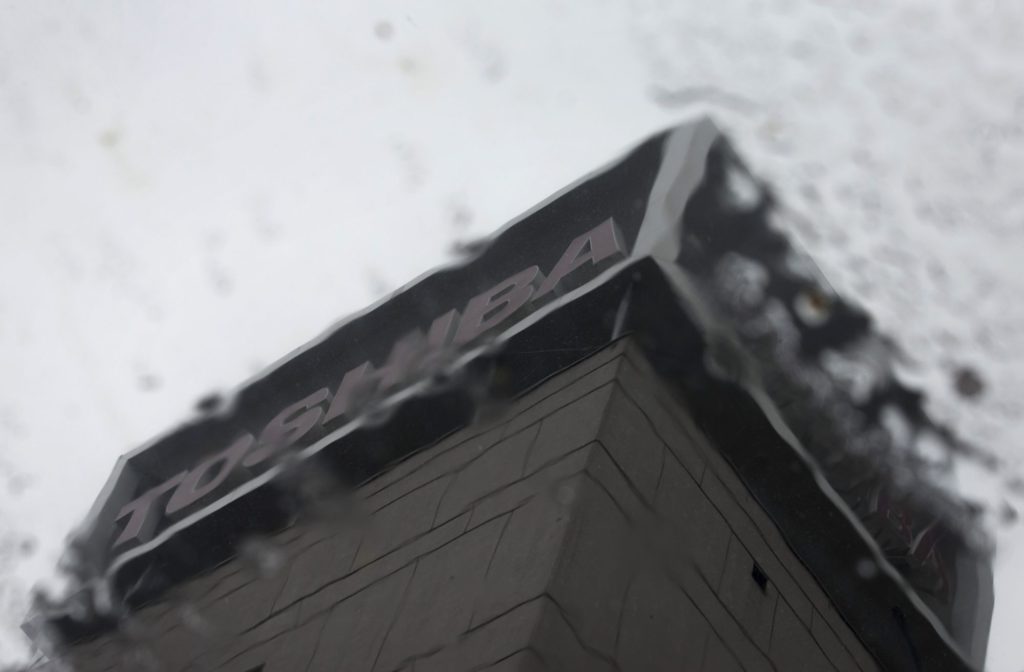
Toshiba Reveals Buyout Bids as Privatization Chances Rise

(Bloomberg) — Toshiba Corp. said it received eight offers to buy out the conglomerate and two proposals for capital and business alliances as the Japanese industrial giant moved a step closer to a possible privatization.

The Tokyo-based company revealed the number of non-binding bids received in a statement Thursday, without disclosing the bidders. It will evaluate them and choose one or more to pursue, as soon as possible after the annual shareholder meeting scheduled for June 28.

“We have received multiple proposals from investors and potential sponsors,” Taro Shimada, Toshiba’s president and chief executive officer, said at a briefing. It “makes us feel confident that they believe in our growth ahead.”

The company’s shares rose 1.8% in Tokyo, while the country’s benchmark Topix index fell.

Toshiba said last month it signed confidentiality agreements with 10 potential investors as part of its process to solicit proposals on privatization and strategic alternatives. The firm has been looking at other options after shareholders voted down a plan put forward by management to split in two.

Last week, Toshiba nominated an M&A veteran to chair its board and picked two executives from its activist shareholders among its slate of director candidates, which will be voted on at the AGM and then decide on the buyout offers. Former Chief Executive Officer Satoshi Tsunakawa, who had opposed going private, will step down from the board.

Private equity investors including CVC Capital Partners, Blackstone Inc. and Bain Capital were considering making bids, Bloomberg News has reported. State-backed investment fund Japan Investment Corp. was also mulling an offer, Bloomberg reported last month.

Read more: Japan State-Backed Fund JIC Is Said to Explore Toshiba Bid

Toshiba will provide selected bidders with the opportunity to do due diligence in July and after, and ask them to submit legally binding proposals, it said in the statement.

Toshiba has been locked in a conflict with its shareholders over the future of the conglomerate, whose businesses range from semiconductors and quantum computing to nuclear power plants. Activist investors have been calling for the company to go private, a path that Toshiba management had been resisting before its proposal to split in two was voted down. Analysts have said the nuclear business, which is deemed important to Japan’s national security, is a major obstacle to any privatization.

A buyout of Toshiba, which has a market value of close to $20 billion, could be private equity’s biggest ever deal in the country.

Separately on Thursday, Toshiba announced its management policy for the group, including a target of net sales of 5 trillion yen ($38.5 billion) and 600 billion yen in operating income in fiscal 2030.

The company reported operating income of 159 billion yen in the fiscal year ended March on revenue of 3.34 trillion yen.

(Updates with CEO comment in third paragraph)

More stories like this are available on bloomberg.com

©2022 Bloomberg L.P.
Amazon to Shut China Kindle Store After Years-Long Struggle

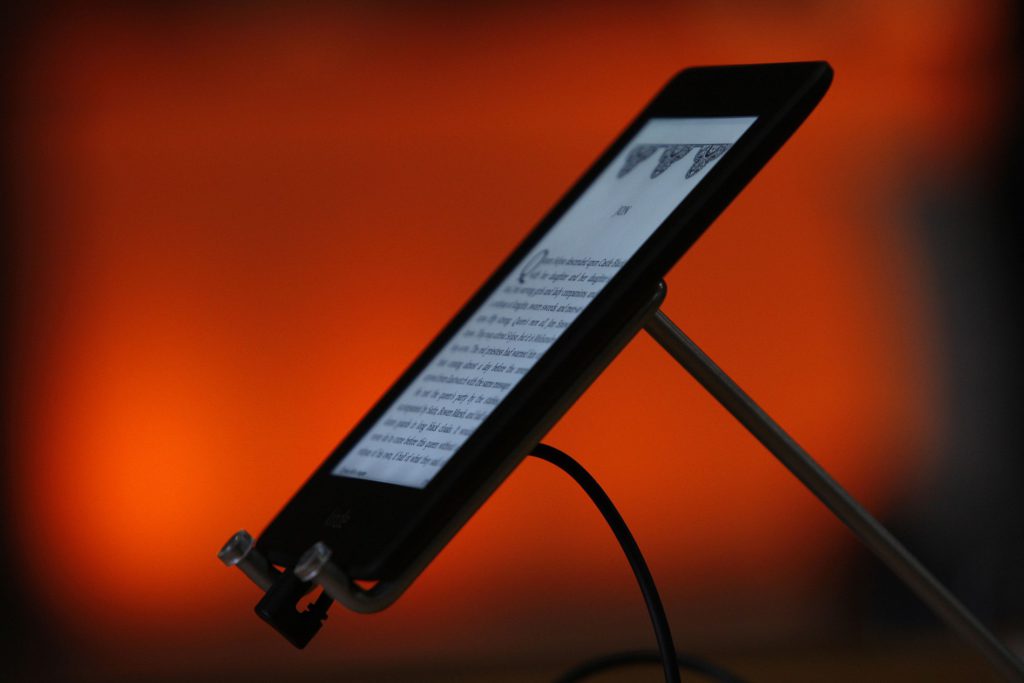
(Bloomberg) — Amazon.com Inc. will shut its Chinese ebook store next year, pulling a small but prominent business from a market where it’s failed to make major inroads against local rivals.

The e-commerce giant will discontinue the Kindle eBook store on June 30, 2023, a spokesperson said in an emailed statement. It promised to continue supporting Kindle readers or refund any device purchases made after January this year.

Amazon’s Kindle pullout coincides with growing regulatory pressures on both local and foreign companies that operate in China, including censorship and content curbs. The company said the withdrawal was not due to government pressure or censorship and was part of a periodic re-evaluation of its offerings around the world. Other US internet firms including Yahoo and Microsoft Corp.’s LinkedIn have announced they’re scaling back their operations in the country, citing a challenging environment.

The Kindle maker’s flagship e-commerce business retreated from China in 2019 after a decades-long struggle to chip away at the dominance of local players Alibaba Group Holding Ltd. and JD.com Inc. Tencent Holdings Ltd. is the distant leader in ebooks in the country.

(Updates with additional Amazon comment in third paragraph)

More stories like this are available on bloomberg.com

©2022 Bloomberg L.P.
Stocks and Futures Edge Higher as Oil Declines: Markets Wrap

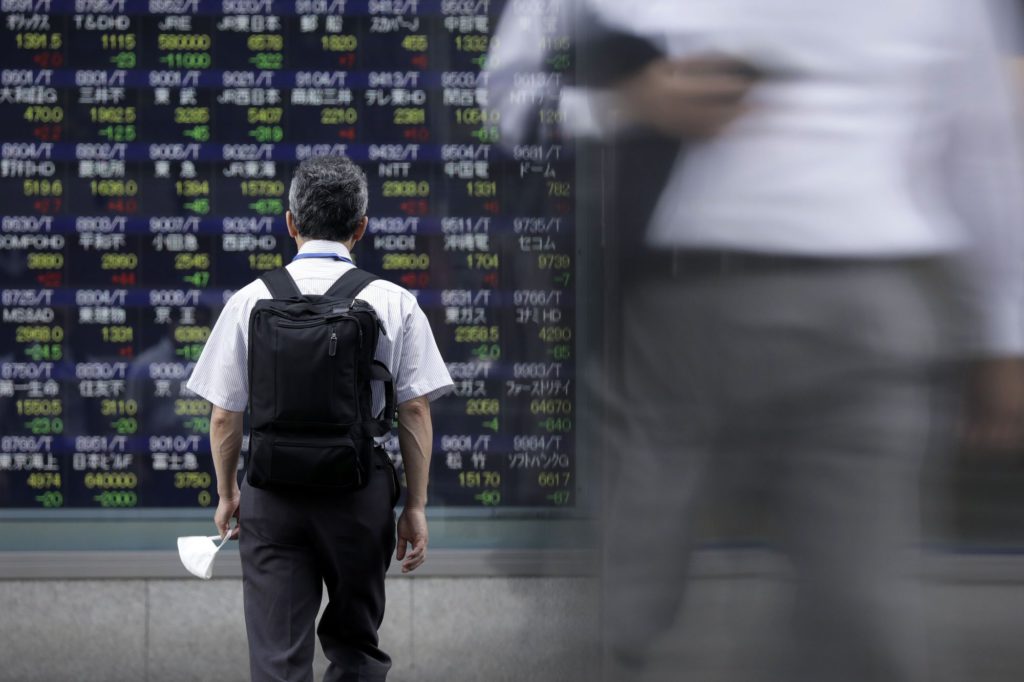
(Bloomberg) — Stocks in Europe and US futures posted modest gains Thursday as investors assessed hawkish messages from central bankers over their quest to rein in inflation and a retreat in oil prices.

Europe’s Stoxx 600 Index rose 0.4%, with construction and consumer shares leading gains, while energy stocks were laggards. UK markets are shut for holidays to mark Queen Elizabeth II’s Platinum Jubilee. S&P 500 contracts and those on the Nasdaq 100 were both about 0.3% higher. An MSCI Inc. gauge of Asia-Pacific shares retreated for a second day, with Hong Kong leading declines amid tough virus curbs. 

US manufacturing activity and job openings data fueled concern the Federal Reserve will need to get more restrictive to slow runaway price gains. Treasuries held losses, with 10-year yields above 2.90%. Traders raised bets on the path for rate hikes and the Fed started its balance-sheet reduction process. The dollar slipped while the yen held near 130 per dollar after its recent decline on the prospect of widening interest rate differentials with the US.

Crude oil slid on a report that Saudi Arabia is ready to pump more oil if Russian output declines. OPEC+ is scheduled to meet to discuss supply policy. 

JPMorgan Chase & Co.’s Jamie Dimon sounded alarm bells on the economy. Dimon warned investors to prepare for an economic “hurricane.” In contrast, JPMorgan’s bullish strategist, Marko Kolanovic, expects stocks to rebound by the end of the year, underscoring the increasing debate as markets are buffeted by challenges from tightening monetary policy to the war in Ukraine.

Investors are on edge over whether the Fed’s tighter policies will induce a recession. A chorus of Fed officials has fallen behind calls to keep hiking to counter price pressures. Mary Daly of the San Francisco Fed and her more hawkish colleague James Bullard of St. Louis both backed a plan to raise rates by 50 basis points this month, while Richmond’s Thomas Barkin said it made “perfect sense” to tighten policy.

“We do see the rise in probability of a recession in the second half of this year, potentially persisting into 2023 as the Fed continues to battle inflation,” Tracie McMillion, Wells Fargo Investment Institute head of global asset allocation strategy, said on Bloomberg Television.

McMillion also cautioned that markets haven’t fully priced in the impact of the Fed’s balance-sheet reduction. “The impact of quantitative tightening starting to roll off the Fed’s balance sheet this month is really untested and unprecedented. Our guess is that it’s probably not fully priced into markets,” she said.

Chinese stocks outperformed. Beijing ordered state-owned policy banks to set up an 800 billion yuan ($120 billion) line of credit for infrastructure projects as it leans on construction to stimulate an economy battered by coronavirus lockdowns.

How will markets be affected by the Fed’s quantitative tightening? QT officially starts Wednesday and is the theme of this week’s MLIV Pulse survey. Click here to participate anonymously.

Here are some key events to watch this week:

  • Cleveland Fed President Loretta Mester discusses the economic outlook Thursday
  • US May employment report Friday
  • The UN’s Food and Agriculture Organization releases its monthly food price index at a time of maximum concern about global supplies on Friday

Some of the main moves in markets:

Stocks

  • The Stoxx Europe 600 rose 0.4% as of 8:18 a.m. London time
  • Futures on the S&P 500 rose 0.2%
  • Futures on the Nasdaq 100 rose 0.3%
  • Futures on the Dow Jones Industrial Average rose 0.2%
  • The MSCI Asia Pacific Index fell 0.8%
  • The MSCI Emerging Markets Index fell 0.8%

Currencies

  • The Bloomberg Dollar Spot Index fell 0.2%
  • The euro rose 0.3% to $1.0678
  • The Japanese yen rose 0.1% to 129.96 per dollar
  • The offshore yuan rose 0.2% to 6.6865 per dollar
  • The British pound rose 0.3% to $1.2529

Bonds

  • The yield on 10-year Treasuries was little changed at 2.91%
  • Germany’s 10-year yield advanced one basis point to 1.20%

Commodities

  • Brent crude fell 1.7% to $114.32 a barrel
  • Spot gold rose 0.3% to $1,851.22 an ounce


More stories like this are available on bloomberg.com

©2022 Bloomberg L.P.
KKR Veteran Hunts for India’s Startup Stars With New Fund

(Bloomberg) — Sanjay Nayar, a KKR Co. adviser in India, is setting up his own venture fund targeting early-stage startups at a time when some of the country’s most-celebrated tech firms are suffering from tanking valuations.

Sorin Investment Management, whose name comes from Romanian word for sun, has raised $125 million from investors including family offices of Nayar and the Banga family of Caravel Group, Nayar said in an interview in Mumbai on Wednesday. The fund plans to back about 10 startups, focusing on sectors including consumer tech, fintech and software-as-a-service.

Nayar’s fund is scouting for opportunities as titans of venture investing from Tiger Global to SoftBank Group Corp. are nursing quarterly losses following the tech rout. Sequoia Capital had warned the founders of its approximately 250 portfolio companies in May that the good times are not only over for startups, there’s no indication when they’ll return.

“Startups who thought VCs were waiting with a lot of dry powder on the sidelines are proven wrong now, and this funding aberration has come as India’s startup ecosystem reached an inflection point,” said Nayar. “We will operate in that gap and will be backing companies with capital along with solid advice and global perspectives.”

Nayar, 62, starts his own fund after spending 39 years in India’s financial circle. He was handpicked from Citigroup Inc. in 2008 by KKR’s co-founder Henry Kravis to lead the alternate asset manager’s India business. Nayar left his role as the private equity fund’s India chief executive officer in December 2020, though he continues in an advisory role at the firm. He’s also a member of the board of US-India Strategic Partnership Forum.

Nayar’s family invests in the country’s tech sector as well. It holds more than a 52% stake in Nykaa, formally known as FSN E-Commerce Ventures Ltd., an e-commerce site for beauty products founded in 2012 by his wife, Falguni Nayar. The Mumbai-listed company has a market value of about $9 billion. The family also has a more than 30% stake in fintech startup Flexiloans.

Sorin Investment has an option to scale up later and raise money from other institutional investors. The Mumbai-based fund, with its six-member team, will soon start its hunt for investment targets.

“There is a gap to be filled in the early-stage investment ecosystem in the country, and our fund will operate in that gap. We will not be rash or brash about it, but will approach it in a steady manner,” Nayar said.

(Updates with more details in sixth paragraph. An earlier version corrected spelling of Banga in second paragraph.)

More stories like this are available on bloomberg.com

©2022 Bloomberg L.P.
World’s Biggest Truck Manufacturer Says Chip Crunch Easing

(Bloomberg) — Daimler Truck Holding AG sees promising signs of moving past the prolonged chip shortage that has beset manufacturers globally, the head of the company’s Mercedes truck brand said.  

After months of factory outages due to the component shortfalls, the order backlog is keeping factories busy even as the global economy shows signs of sputtering, Karin Radstrom, who also leads the truckmaker’s business in Europe and South America, said in an interview. The world’s biggest truckmaker has so far also evaded disruption from coronavirus lockdowns in China, she said.

“It’s better, it’s not perfect, but it’s better than last year,” Radstrom said in an interview. “I try to not celebrate too early, we’re still monitoring the situation closely.”

Manufacturers like Daimler Truck — which also counts the Freightliner, Western Star and Fuso brands — and peer Volvo Group have had to curtail output as plants globally couldn’t source enough of the high-tech components even as demand for transport boomed. Radstrom’s comments echo an assessment from Mercedes-Benz AG production chief Joerg Burzer this week who said the chip crunch was no longer causing serious production stoppages.

A global shortage of trucks contributed to a jump in shipping rates as companies raced to restore depleted inventories. While warnings over the health of the global economy are intensifying, Radstrom said there was no signs yet of a slowdown in truck manufacturing, typically a sector that’s sensitive to downturns. 

“There’s still very, very high demand relative to supply,” Radstrom said. “Despite the changes in the economy, we don’t see any downturn in demand. It can change very quickly, however.”

Daimler Truck, which split from from Mercedes last year, is working to improve margins after historically struggling to turn unrivaled industrial scale into returns matching the likes of Volvo and Paccar Inc. Meanwhile, electric-vehicle specialists including Tesla Inc. and Nikola Corp. are plotting inroads into the trucking market amid the global crackdown on transport emissions.

Daimler Truck’s zero emissions strategy focuses on developing battery-powered trucks for shorter journeys and hydrogen fuel-cell models for longer stretches. The manufacturer last year started production of its electric eActros vehicle in Germany. Orders for battery big rigs rose to 619 in the first quarter of 2022 compared to 169 in the same period of 2021. 

“Infrastructure has to be sped up,” Radstrom said of challenges facing the company’s push to accelerate its electrification strategy. “We also need to know where the electricity and green hydrogen will come from. I’m in favor of carbon pricing to speed it up.”

More stories like this are available on bloomberg.com

©2022 Bloomberg L.P.

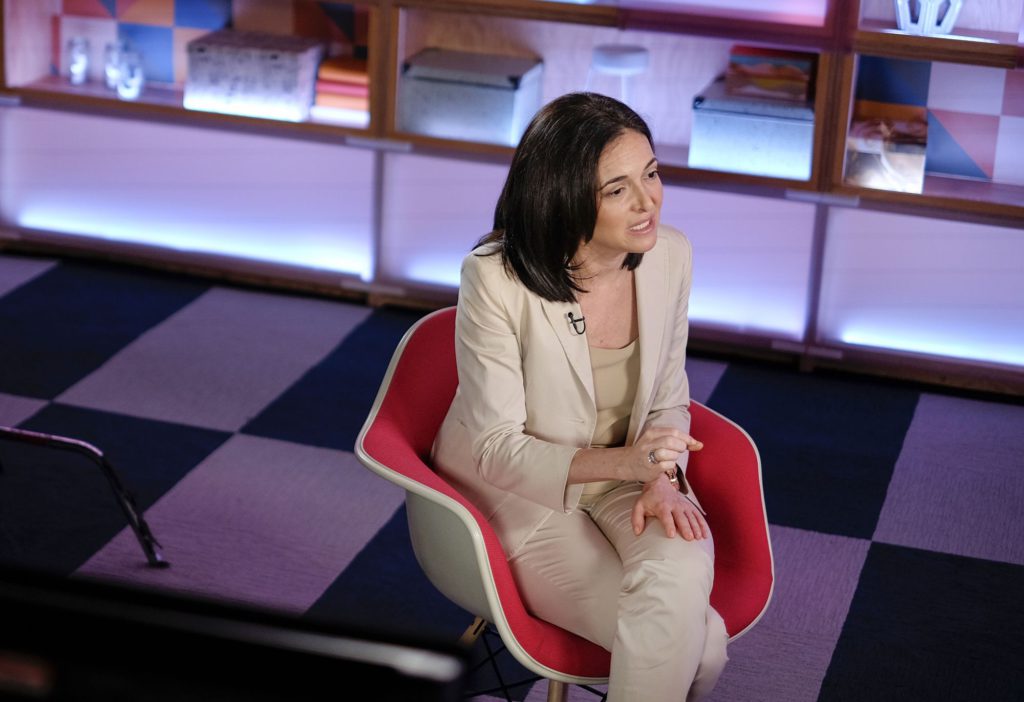
Sandberg’s Advertising Empire Leaves a Complicated Legacy

(Bloomberg) — Sheryl Sandberg once remarked that she felt she was put on earth to scale organizations — and during her career as one of the most powerful executives in Silicon Valley, she plowed straight toward that grandiose vision. As an advertising head at Google in the mid-2000s, and as chief operating officer at Facebook for 14 years until her resignation Wednesday, Sandberg oversaw a period during which the internet services ballooned to colossal sizes, fed by a seemingly endless fountain of advertising revenue.

Though Sandberg may get most of her name recognition from “Lean In” — her 2013 blockbuster book encouraging women to take charge in the workplace — her most significant and complicated legacy may be the tech industry’s reliance on personalized advertising, which created both profits and complex nightmares at immense scale.

Sandberg was one of the people who made Google’s ad business so enormous that it became an essential part of every advertiser’s budget. Then, after she joined Facebook in 2008, four years after it was created, she brought that same self-service model to the social networking company, now called Meta Platforms Inc. Instead of targeting users based on their search queries like Google did, Facebook could target based on what it gleaned of their personal identities, connections and interests. An entire industry of other tech companies followed suit with business models that offered products for free and made money off of users’ personal data instead.

“Sheryl had a front-row seat at the two largest and most successful advertising platforms in history,” said Patrick Keane, the chief executive officer of Action Network, a sports media firm, who worked with Sandberg at Google in the early aughts. Colin Sebastian, an analyst at Robert W. Baird & Co., wrote that Sandberg’s lasting impact is the success of that advertising model: “Her legacy, in our view, is that Meta has one of the strongest business models in the digital economy.”

Read about Sandberg’s resignation and her interview with Bloomberg Television.

In recent years, Sandberg’s public image was tarnished alongside the mounting criticisms against Facebook, where she was widely seen as a powerful No. 2 executive. Her expertise in legal, operations and policy complemented chief executive Mark Zuckerberg’s preference for product, engineering and forward-looking technologies like virtual reality. In its earlier years, the social network was praised for its size and its “move fast and break things” disruptor attitude, but over time, it was increasingly rebuked for its failure to rein in large-scale misinformation, hate speech, privacy breaches, and lies from political dictators on its ever-expanding online platforms. 

Lawmakers frequently hauled Sandberg and Zuckerberg in front of Congress to interrogate them on, among other things, foreign interference in elections and losing track of users’ personal data. The scandals never seemingly stopped: fomenting ethnic violence in Myanmar and Sri Lanka,  allowing violent video and pandemic misinformation to go viral, and abetting the organization of a right-wing insurrection at the US Capitol in 2021.

Sandberg was personally critiqued by Facebook employees for surrounding herself with trusted lieutenants who filtered bad news, and failing to address problems until they developed into public crises — and then treating them as reputational, as opposed to opportunities for substantial change at the company, people familiar with her leadership have told Bloomberg in the past. Most recently, the Wall Street Journal reported that she used her power at Facebook several years ago to suppress news about her then-boyfriend, though Meta says an internal investigation into the incident is not the reason for her departure.

The scale Sandberg sought for so many years is now the most scrutinized part of her legacy, by those who say she pursued growth single-mindedly without pausing to consider its repercussions. “It has been proven that the way Facebook scaled recklessly, intentionally, to dominate the entire global way that we communicate — it’s exactly that reckless ability to scale that ended up causing so much chaos and actual harm in many places,” said Yael Eisenstat, founder of Kilele Global, a tech and democracy advisory firm, who in 2018 headed the elections integrity team for political ads at Facebook. “I’ve never seen an ounce of self-awareness from her that she played any role in that.”

That embattled image stands in contrast to Sandberg’s beatific personal brand as a leading woman in the workplace, someone who balanced raising a family with unyielding career ambitions. News outlets dissected her personal schedule, which had rules like leaving work at 5:30 p.m. to eat dinner with her kids every night and practicing what she called “ruthless prioritization.” Her exhortation to career-driven women to “lean in” and examine where they were holding themselves back in male-dominated companies sold millions of copies. Across the world, women invoked the lessons of Lean In or thought to themselves, “Sheryl told me to,” when negotiating for a raise or strategizing for career growth. The book evolved from a TED talk and turned into a network of “Lean In” in-person groups around the world — then, as the phrase became overused, it deflated into a punchline. Some readers valued her candor and her emphasis on taking charge, while others felt that her advice rang hollow because her wealth and other privileges made it easier for her to proclaim that her tips worked.

She delivered commencement addresses in which she told graduates to “bring your whole self to work” and “be authentic” in your professional life. On Facebook, she posted updates about the importance of mental health. When Hillary Clinton ran for president, it even seemed possible that Sandberg could be nominated to be Treasury Secretary (Larry Summers, who’d held the post in the past, had been a mentor). After Sandberg’s husband, SurveyMonkey CEO Dave Goldberg, died unexpectedly in 2015, she channeled her own maxims about authenticity and wrote a second book, “Option B,” which wove together her grief with stories of how adversity can spur growth and resilience. “Sheryl’s books have made a big impact on people,” said Kim Scott, who reported to Sandberg at Google and included anecdotes from that experience in her management book “Radical Candor.” “When someone like Sheryl is willing to make herself vulnerable and share mistakes she made, it helps everybody.”

Her leadership style has also become the stuff of lore. “One of the great things about working for Sheryl is she never wasted a minute of anyone’s time — her own or anyone else’s,” Scott said. “She was really, really focused on getting things done.” 

Dan Rose, a venture capitalist who worked for Sandberg for over a decade, wrote on Twitter that Sandberg “loved everything about scaling” and was “a demanding boss who held me to a high standard” — someone who pushed him hard but also celebrated him and inspired lifelong loyalty.

Sandberg not only built out the company’s money-printing business model, she also oversaw its public policy team, which increasingly became a lightning rod for controversy around perceived censorship, misinformation, and controversies over training politicians who later used Facebook to manipulate the public. Katie Harbath, a former Facebook public policy director and Republican aide, said that Sandberg was “incredibly instrumental” in building up the company’s roster of employees directly managing those issues. In 2011, both she and Joel Kaplan, who eventually became the company’s top Republican and vice president of global policy, were hired at the company. “Sheryl was very good at looking around corners, thinking a bit longer term,” Harbath said. “Early on, Mark didn’t want to be part of the public policy side very much.”

That dynamic changed in recent years, Harbath acknowledged, as Zuckerberg took a heavier hand at the company. Those who could see the leadership dynamic shift suspected Sandberg might leave eventually. “I don’t think it’s much of a surprise for folks internally, but it is a big change, and it’s a symbolic change,” Harbath said.

Sandberg hasn’t said much about what she’ll do next apart from focusing on her family and philanthropy. As Facebook’s troubles accumulated, it became harder for Sandberg to work on women’s empowerment or other causes without bringing over baggage from her main job, said two people who worked closely with her at Facebook, who asked not to be named because they’re not authorized to speak on the subject publicly. “It was the elephant in the room,” one of the people said. She also would like to distribute her wealth to causes important to her without concern about whether the moves would create a perception of bias at Facebook, the other person said.

Eisenstat, the former head of Facebook’s elections integrity team, said that in her opinion, Sandberg can’t just be responsible for the economic outcomes of her career — her legacy must also be examined for its impact on society. “Leaving Facebook in no way absolves her of any of the decisions that were made under her watch,” Eisenstat said. “People are going to try to rewrite her history now. But it doesn’t change any of that.”

More stories like this are available on bloomberg.com

©2022 Bloomberg L.P.
China to Drag Global Smartphone Market Down This Year, IDC Says

(Bloomberg) — China’s cooling economy is going to be the biggest drag on worldwide smartphone shipments this year, according to the latest IDC forecast, which points to a 3.5% global decline in 2022.

The world’s biggest smartphone market is expected to shrink by 38 million units this year, down 11.5% on 2021 and accounting for about four-fifths of the global reduction in shipment volume. Only the war-stricken Central and Eastern Europe region is projected to shrink faster, as the compounding effects of Covid-19 lockdowns, geopolitical tensions and surging inflation cool consumer sentiment.

“The lockdowns hit global demand and supply simultaneously by reducing demand in the largest market globally and tightening the bottleneck to an already challenged supply chain,” IDC research director Nabila Popal said in the report. “Apple appears to be the least impacted vendor due to greater control over its supply chain and because the majority of its customers in the high-priced segment are less influenced by macroeconomic issues like inflation.”

Apple Inc. is keeping its iPhone production flat this year, having previously been expected to increase output as it worked toward a significantly upgraded iPhone 14 generation, Bloomberg News has reported. The company’s steady performance is in contrast to its Chinese competitors, which recently suffered their worst drop in shipments since the outbreak of the pandemic.

Apple to Keep IPhone Production Flat as Market Grows Tougher

IDC’s global forecast is a reversal from its previous prediction for 1.6% growth. Still, IDC sees headwinds for the smartphone industry dying down in the latter half of the year — barring any additional setbacks — and projects a rebound to 5% growth in 2023. The market researchers also see growth in the wider Asia-Pacific region, excluding China and Japan, which is likely to finish the year 3% up, according to their projections.

More stories like this are available on bloomberg.com

©2022 Bloomberg L.P.

Close Bitnami banner
Bitnami

