
Bloomberg

Russian Yachts and Money Are Going Where US Influence Has Waned

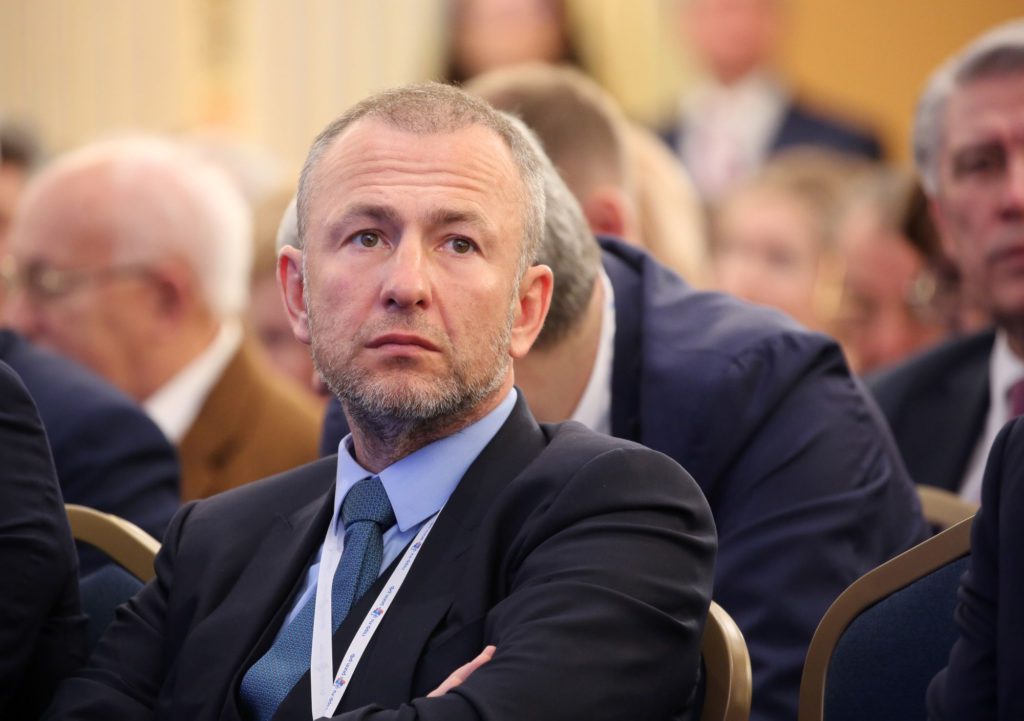
(Bloomberg) — Andrey Melnichenko was in a bind. Squeezed by European sanctions targeting Russian billionaires, one of Russia’s richest men needed a safe jurisdiction to protect the businesses he’d built. He found it in the United Arab Emirates.Moscow-based coal producer SUEK and Zug, Switzerland-based fertilizer firm EuroChem, both founded by Melnichenko, are opening local trading units in the Gulf oil exporter, according to five people with knowledge of the matter. The 50-year-old resigned from the boards of both companies ahead of EU sanctions imposed over his alleged ties to the Kremlin. Swiss authorities said in May they’d unfrozen EuroChem’s accounts after Melnichenko transferred ownership to his wife.  

Already spending more time in Dubai, Melnichenko moved his $300 million Motor Yacht A to the city in December, keeping it there through early March, according to Bloomberg tracking data. It was last spotted off the UAE’s Ras Al Khaimah. His other yacht was seized by Italy in March.  

Spokespeople for Melnichenko and SUEK, Russia’s biggest thermal coal producer, declined to comment. EuroChem didn’t respond to requests for comment.  A Melnichenko spokesman said after the EU sanctions were imposed in March that he had no political affiliations and there was no justification for the measures. A government official told Bloomberg that the UAE takes its role in protecting the integrity of the global financial system seriously and works closely with the private sector to implement targeted financial sanctions and combat evasion in line with its international obligations. 

The UAE is one of three Middle Eastern nations that have emerged as magnets for Russia’s wealthy since the Feb. 24 invasion of Ukraine, frustrating US efforts to muster a unified front against Vladimir Putin. Already popular with Russians seeking warmer climes, Turkey and, to a lesser extent, Israel, have also become go-to destinations.

The newfound willingness of US allies in the Middle East to go their own way follows years of festering resentments compounded by concern over creeping American disengagement. The depth of the fissures was exposed by the invasion of Ukraine, with US allies as far afield as Japan and South Korea joining the campaign against Russia with their own sanctions and asset seizures, but key partners in the Middle East holding back. 

“These three countries have historically been important allies to Washington,” said Norman Bailey, former senior director for international economic affairs at the White House’s National Security Council, who studies Russian money in the Middle East. “It shows the US is steadily declining in influence.” 

The UAE declined to condemn Russia’s invasion at a UN vote.  Along with Israel, it’s been critical of the Biden administration’s effort to restore the 2015 nuclear deal with Iran, which both countries see as a security threat. Turkey, though a NATO power, is itself the target of US sanctions over its purchase of Russian weapons. While it’s supplied Ukraine with drones, it’s also maintained ties with Putin and sought to play mediator. 

The Biden administration has sought to mend ties across the region since the invasion, but, in another sign of waning influence, has failed to persuade Gulf allies to help temper soaring crude prices that are driving inflation higher worldwide. The UAE is part of OPEC, the oil exporters’ cartel that continues to coordinate output with Russia.

While some of Russia’s largest banks were cut off from the SWIFT international payments system following the invasion, sanctioned businessmen were able to move money through smaller banks to the UAE and Turkey, according to bankers, lawyers and officials with knowledge of the movements.

Many high-net worth individuals already had bank accounts in Europe and North America, which they used to route funds in danger of being frozen, they said. Wealthy Russians with top-notch connections were also able to funnel hard cash to the UAE, sometimes aboard private jets, they added, declining to give details.  

Meanwhile cryptocurrencies have emerged as a way to transfer funds internationally with little oversight.

Even before the war, the UAE and Turkey were in the spotlight for lax oversight of foreign money. The Financial Action Task Force, the global financial crimes watchdog, placed them in March and October, respectively, on its gray list of countries not doing enough to counter dirty money flows. UAE officials say that their country remains open to businesses and investors from all over the world, though they constantly strive to strengthen the regulatory framework and combat financial crimes. 

Turkey’s foreign ministry didn’t respond to requests for comment. Foreign Minister Mevlut Cavusoglu said at the Doha Forum in March that Russian billionaires would be allowed to do business in Turkey as long as it was in line with national and international law.

The scale of Russia-related flows has become more difficult to gauge as they’re driven from formal banking networks. Cash or crypto movements are easier to hide and transactions are often conducted through complex networks of shell companies designed to obfuscate, via blind trusts, family members or lawyers hired to help navigate sanctions. 

With Ukraine pleading for more action, US officials say they’ve discussed the possibility of secondary sanctions on Russian oil. Those would expose any country or business flouting US sanctions to penalties from Washington. The idea is divisive, however, because it would hurt and may alienate some allies, especially those that rely on Russian gas and other commodities. 

“There’s this whole geopolitical realignment happening,” said Jodi Vittori, a professor at Georgetown University who studies the nexus of financial flows and US national security. “And I don’t think the US has an answer.”

For now, the Biden administration has sought to close some loopholes by banning US entities from providing accounting, corporate formation and management consulting services to any Russian entity. The UK’s taken similar measures, making it harder for Western professional services companies to assist Russians looking for sanctions havens. 

If the billionaires moving their assets to Dubai or Istanbul are worried about those jurisdictions, they’re not showing it. 

At least four Russia-linked yachts have sailed to Turkey since the war began, according to Bloomberg tracking data. They include Chelsea Football Club owner Roman Abramovich’s Eclipse and My Solaris as well as mining magnate Iskandar Makhmudov’s Predator. Others were already in Turkey when war broke out.  

UK and EU-sanctioned Abramovich also has a backup in Israel. 

Israel’s financial system is tightly regulated. Safeguards in place to stop terror financing and money laundering have made it hard for Russians to transfer funds in through the banks, though they can still purchase property with relative ease, according to bankers, lawyers and real estate brokers. 

The country also offers citizenship to Jews from around the world, making it an obvious choice for Russians of Jewish heritage.  While Israel has taken in both fleeing Ukrainians and disillusioned Russians, a significant number of billionaires also qualify. 

Abramovich, 55, got citizenship in 2018 after struggling to renew his UK visa and bought a $65 million mansion in Herzliya two years later. He also owns other properties there.  

Israel drew a rare US rebuke after images of Abramovich at Tel Aviv’s airport emerged in March, when Under Secretary of State for Political Affairs Victoria Nuland warning it not to “become the last haven for dirty money that’s fueling Putin’s wars.” Abramovich’s jet departed Israel for Turkey.

A spokesman for Israel’s foreign ministry said the country would not allow itself to be a route to bypass sanctions imposed on Russia by the US and other Western countries, and has established a task force to ensure different sectors of the economy understand the sanctions and consequences of non-compliance. 

Political concerns are also front of mind for Turkey.  Russians accounted for a fifth of foreign tourists last year and Turkey buys almost half its gas from Russia. With record inflation prompting public anger a year ahead of key elections, it’s especially tough now for Turkey to turn away. 

Sergiy Volchenkov, a partner at Tolerance Homes in Turkey’s Mediterranean resort of Antalya, said most of his clients were Russian and demand had soared five-fold since the invasion. 

“Some buy up to 15 apartments in one go to get citizenship,” he said. 

Since the invasion, Turkey raised the threshold for foreign property buyers to earn citizenship to $400,000 from $250,000. That’s still attractive especially for wealthier Russians in need of backup as the EU ends its “golden passport” programs. 

Sales of homes to foreigners doubled in the first four months of 2022 from a year earlier, according to official data. In April, Russians topped the ranking of foreign buyers in Turkey for the first time.

Davut Cetin, head of the Antalya Chamber of Commerce and Industry, said the initial wave of middle-class Russians was being followed by bigger fish.

“They weren’t around for the past decade, choosing Western Europe instead,” he said. “After all those sanctions and confiscations, they can come back.”


More stories like this are available on bloomberg.com

©2022 Bloomberg L.P.
Top Thai Banks Weighs Stake Sale in Data Center Operator

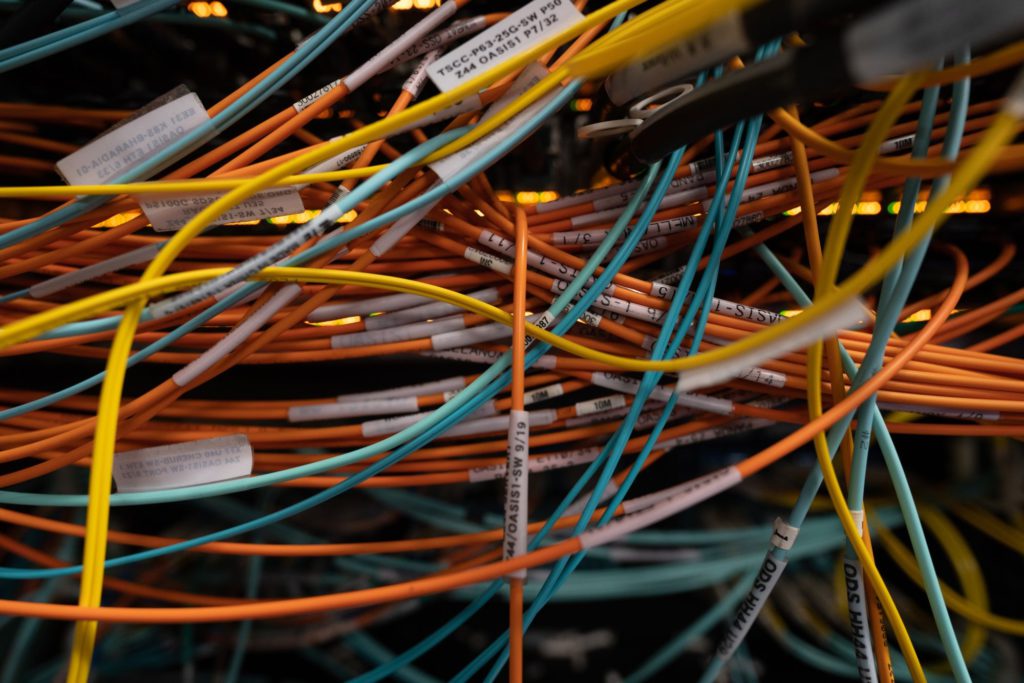
(Bloomberg) — Thailand’s biggest banks are considering a stake sale in data center company Supernap Thailand, according to people familiar with the matter, riding on the increasing investor appetite for the industry.

Shareholders of Supernap Thailand, including Siam Commercial Bank Pcl and Kasikornbank Pcl, are working with a financial adviser to help find a minority investor in the business, the people said. Supernap Thailand, which was a joint venture between some of the country’s biggest firms and US data center giant Switch Inc., could be valued at about $800 million in a transaction, the people said.

The sale has drawn preliminary interest from other industry players and investment funds, said the people, asking not to be identified because the matter is private. Switch isn’t planning to exit, one of the people said.

Considerations are preliminary and no final decision has been made, the people said. Representatives for Kasikornbank, Siam Commercial Bank, Supernap Thailand and Switch didn’t immediately respond to requests for comment.

Supernap Thailand was formed in 2016 as a joint venture between some of the biggest companies in Thailand and Las Vegas-based Switch with a $300 million investment in the country’s eastern province Chonburi. Supernap Thailand’s tier-four data centers, which are located 110 meters above sea level are the first hyperscale data centers in Thailand, according to its official presentation on Youtube. 

Data center companies have been attracting strong takeover interest, in part due to the perception they have stable returns and expectations of ongoing growth as people increasingly rely on technology. In Thailand, True Internet Data Center Co., a unit of Thai conglomerate Charoen Pokphand Group, is seeking to raise about $150 million from a sale of a minority stake, Bloomberg News has reported.

More stories like this are available on bloomberg.com

©2022 Bloomberg L.P.
Singapore Tech Salaries May Soar Up to 30% in Two Years: ST

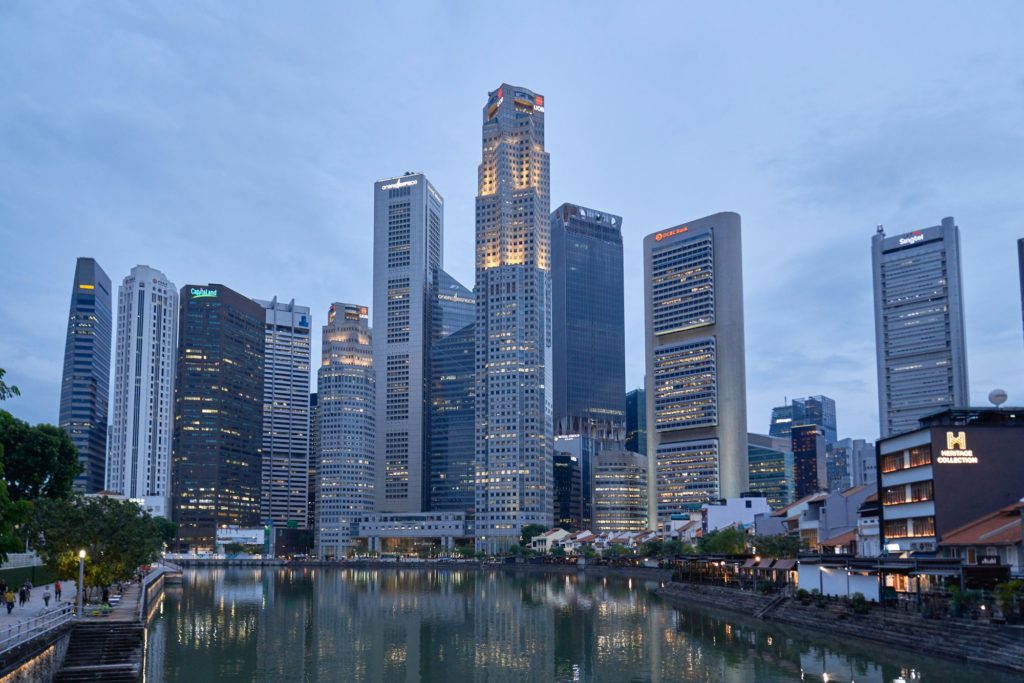
(Bloomberg) — Technology-sector salaries in Singapore are set to soar in the next couple of years amid a hiring boom particularly in finance, according to the Straits Times.

Recruitment agencies see pay rises of 15% to 30% in the next one to two years, up from about 10% to 15%, the ST reported on Tuesday. That’s expected amid a hiring boom as companies work on their digital transformation, Randstad’s Clarence Quek told the ST. Startups and Chinese tech firms expanding in Singapore are also competing for tech talent, the paper said.

Quek sees salaries rising 25% to 30% amid demand for data analysts, data engineers, back-end developers and user interface designers, he told the ST.

In addition, every technology candidate in Singapore and other major economies is getting two or three job offers, Managing Director of Michael Page Singapore Nilay Khandelwal told the ST — though he also said that the macroeconomic situation is getting trickier and employers are more cautious than they were a couple of months ago. 

Last week, Monetary Authority of Singapore Managing Director Ravi Menon said there may be more than 9,400 new hiring opportunities for permanent roles in the financial sector this year, with more than 3,000 in the area of technology.

More stories like this are available on bloomberg.com

©2022 Bloomberg L.P.

Alibaba, JD.com Jump on Easing Covid Curbs, Economic Data

(Bloomberg) — US-listed Chinese stocks wiped out their monthly losses, as an easing of lockdown measures in major cities and better-than-expected economic data helped spur a recovery in the second half of May.  

With a 3.7% climb on Tuesday, the Nasdaq Golden Dragon China Index capped its first monthly gain since October. Shares of e-commerce giant Alibaba Group Holding Ltd. rose 2.8%, while large-cap Chinese internet stocks JD.com Inc. advanced 4.6% and Baidu Inc. inched up 0.9%. Electric carmakers also rose, with Nio Inc. up 5.0% after China announced a 50% cut in the purchase tax for low-emission passenger vehicles. 

With daily coronavirus cases falling below 100 for the first time since March, China is letting up some restriction measures. Shanghai will resume public transportation from Wednesday after being in a lockdown for two months, and Beijing is allowing some shopping centers to reopen.

Shanghai Covid Cases Continue to Fall as Locals Cheer Reopening

The news flow out of China “remains bullish”, according to Adam Crisafulli, the founder of Vial Knowledge. “While ‘zero-tolerance’ will keep China lockdown risks elevated, it seems like the government will be forced to subtly soften its adherence to this policy given the economic destruction of the last few months,” he wrote in a note.

While China’s factory and services sectors are still in a contraction, official manufacturing and non-manufacturing purchasing managers indexes improved in May, suggesting the hit from Shanghai’s lockdown may be nearing an end. Both metrics beat consensus estimates in a Bloomberg survey.

Still, production remains impacted for a number of companies — with Tesla Inc. and Volkswagen AG said to be keeping workers in factory “bubbles” established during the lockdown — and the threat of new restrictions persists as long as China continues to follow its stringent Covid Zero policy.

Why China Is Sticking With Its Covid Zero Strategy: QuickTake

“The improvement of China PMIs echoed the bottoming out of high-frequency macro data since mid-May, suggesting that the worst of the Covid disruption on China’s growth could have passed,” said Jeffrey Zhang, a Hong Kong-based emerging market strategist at Credit Agricole SA. “Better sentiment in the manufacturing sector should partially ease concerns of China’s logistics and production disruption, and bode well for the recovery of its value-chain partners.”

While the Nasdaq Golden Dragon Index is still down 23% year to date, its recent rebound led the gauge to climb above its 50-day moving average on Tuesday. The group is now facing a key test whether the rally could sustain and meaningfully top that key resistance level.

What may help is the optimism returning to beaten-down Chinese stocks, with asset manager Amundi among the latest to turn more bullish on the group. Better-than-expected earnings from heavyweights including Alibaba and Pinduoduo Inc. are also propping up the sector, as companies trim losses and become more disciplined, according to Jian Shi Cortesi, a portfolio manager at GAM Investment Management.

“There were too many factors lumped together, resulting in extreme bearishness toward China equities, in particular, these ADRs,” she said. “If the bad news just stops, the market can rally.”

(Updates with background in paragraphs 5, 6)

More stories like this are available on bloomberg.com

©2022 Bloomberg L.P.

Malaysia Readies $3.7 Billion 5G Network as Telcos Mull Stakes

(Bloomberg) — Trailing regional rivals in the race to offer 5G mobile services, Malaysia is finally pressing ahead with a plan to roll out the high-speed network across the country even as local carriers wrangle over equity participation in the project.

State-owned Digital Nasional Bhd., which is building the infrastructure at a cost of 16 billion ringgit ($3.7 billion) spread over 10 years, has offered all nine telecommunication companies in the Southeast Asian country equal stakes totaling as much as 70% by June 30. But the top four carriers have been pushing for a combined 51% majority stake to themselves instead.

The government intends to deploy the network regardless of the operators’ decision, Digital Nasional’s Chief Executive Officer Ralph Marshall said in an interview. If the carriers don’t reach an agreement, the government will look at other options for equity financing, he said.

“Basically if you don’t come in, we just have to open up the market,” Marshall said last week at his office in Kuala Lumpur. “The principle is accelerating the deployment and adoption of 5G in the national interest.”

Malaysia has been one of the 5G laggards in Southeast Asia. In terms of average mobile download speeds, it trails Singapore, Vietnam, Thailand, the Philippines and Indonesia, which have rapidly rolled out the network, according to a report by Opensignal. 5G coverage in Malaysia is still spotty with limited access in Kuala Lumpur, Cyberjaya and Putrajaya.

Digital Nasional aims to have a 5G network with 40% reach in densely populated areas by the end of this year, compared to about 15% as of March, according to Marshall. It targets to extend it nationwide to 80% in populated areas by 2024, he added.

Cheaper Than 4G

At the same time, the infrastructure provider is also seeking to keep tariffs affordable. It is charging carriers less than 20 sen per gigabyte for 5G service, Finance Minister Zafrul Abdul Aziz said in Parliament in November. That compares to a rate of between 45 and 55 sen per gigabyte for 4G services, he added.

But the debate on the network has mostly centered around the purchase of equity in Digital Nasional by the nation’s carriers. Celcom Axiata Bhd., DiGi.com Bhd. Maxis Bhd. and U Mobile Sdn., want a 51% majority stake, Communications Minister Annuar Musa said, according to a Bernama report on May 26. Celcom is trying its best to meet the deadline process, Axiata Group CEO Izzadin Idris said May 26. Izzadin stepped down on May 31.

“DiGi continues discussions with the government, MCMC and DNB with regards to various aspects of 5G, and according to processes in place. We will comment on vital milestones as they occur,” DiGi spokesperson said by email on Tuesday.

Celcom, Maxis and U Mobile didn’t immediately respond to requests for comment.

YTL Communications Sdn., a unit of YTL Power International Bhd. controlled by tycoon Francis Yeoh, is one of two telecommunication firms that have signed up to use Digital Nasional’s 5G infrastructure so far, a May 1 Bernama report cited Musa as saying. The other one is fixed-line operator Telekom Malaysia Bhd.  

Last week, YTL launched a 5G-ready mobile network plan, which offers average data charges of 30 sen per gigabyte, according to a statement. 

Digital Nasional needs as much as 6 billion ringgit in terms of working capital facilities to roll out the planned 5G network, Marshall said. The company has secured 500 million ringgit in short-term financing from Deutsche Bank AG and 800 million ringgit from United Overseas Bank Ltd., according to him. 

Digital Nasional is also planning a 5 billion ringgit sukuk or Islamic bond to take over these short-term financing, Marshall added.

The 16 billion-ringgit cost, outlined by Marshall, covers mainly 5G network equipment and infrastructure, of which Ericsson is a provider, according to Digital Nasional’s official website.

More stories like this are available on bloomberg.com

©2022 Bloomberg L.P.

‘Top Gun: Maverick’ Sets Memorial Day Weekend Sales Record

(Bloomberg) — “Top Gun: Maverick” had the biggest-ever theatrical debut for a Memorial Day weekend, lifting the spirits of cinema operators clawing their way back from the pandemic.

From its opening through Monday, the Paramount Pictures film brought in ticket sales of $160.5 million in the US and Canada, researcher Comscore Inc. said, beating the old record held by the 2007 film “Pirates of the Caribbean: At World’s End.” Imax Corp., the pioneer in large theater screens, had its best Memorial Day Weekend ever, with $32.5 million in ticket sales.

The figure raises the prospects for the first real summer moviegoing season since 2019, before the Covid-19 pandemic. It also suggests the industry could recover to 85% or 90% of its previous high annual tickets sales of more than $11 billion, Bloomberg Intelligence said Tuesday.

The movie, a sequel to the 1986 film that cemented Tom Cruise’s star status, was also the biggest-ever opening weekend for the actor. In its first three days, it made $126.7 million in domestic theaters, double the performance of his second-best opening in 2005 with “War of the Worlds,” according to data from Comscore.

Paramount said older men drove ticket sales to the movie, about fighter pilot Pete “Maverick” Mitchell. Almost 60% of the audience was male and 55% of fans were over age 35, likely meaning they recalled the first “Top Gun.” 

Having a film about the US Navy’s flight school open over Memorial Day weekend probably helped draw moviegoers into theaters, according to Paul Dergarabedian, senior media analyst with Comscore. Box office estimates grew over the weekend, suggesting word-of-mouth recommendations for the picture were strong.

(Updates with final weekend totals, adds charts.)

More stories like this are available on bloomberg.com

©2022 Bloomberg L.P.
Ex-Clinton Campaign Lawyer Found Not Guilty of Lying to FBI

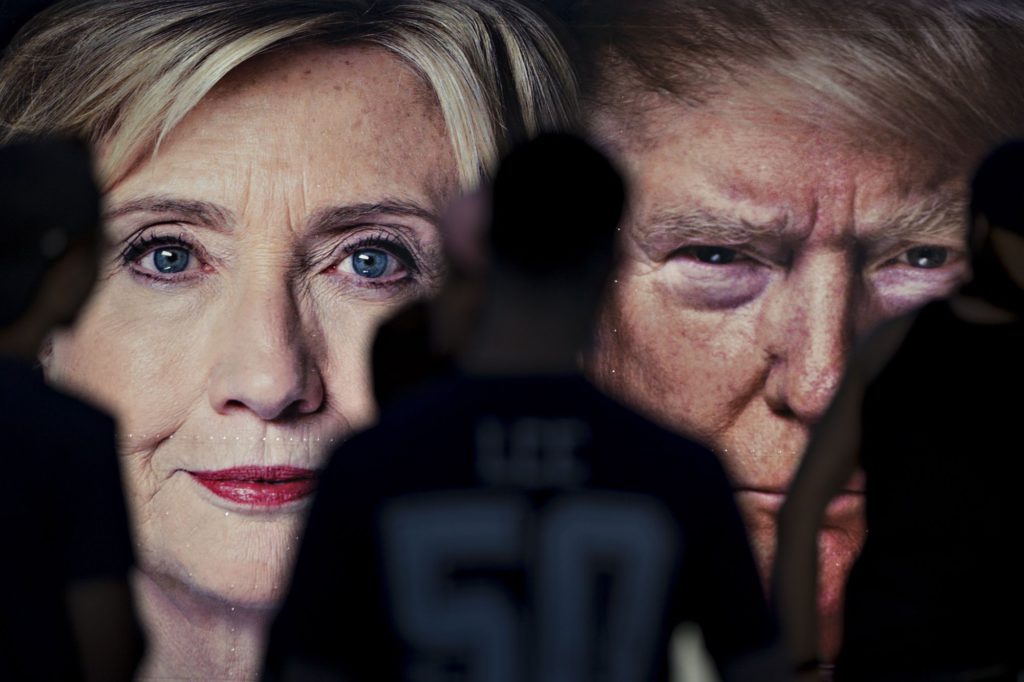
(Bloomberg) — A lawyer for Hillary Clinton’s 2016 presidential campaign was found not guilty of lying to the FBI about the identity of his client when he provided a faulty tip on then-candidate Donald Trump two months before the election.

The jury verdict in favor of Michael Sussmann, a prominent cybersecurity lawyer with deep ties to the Democratic party, was handed down Tuesday in Washington. His two-week trial rehashed bitter divisions between the rival presidential campaigns and shined a light on the dark side of opposition research. 

FBI officials said Sussmann falsely claimed he wasn’t representing a client when he handed over what he described as evidence of a suspicious communications link between computer servers at Trump Tower and a Russia-based bank tied to the Kremlin. The agency debunked the theory, but not before the media held it out as possible evidence of collusion. Sussmann’s lawyers said he’d offered the tip as a concerned citizen, not at the behest of the Clinton campaign.

“I told the truth to the FBI, and the jury clearly recognized that with their unanimous verdict today,” Sussmann told reporters outside the courthouse. “Despite being falsely accused, I am relieved that justice ultimately prevailed in this case.”

Sussmann’s trial was the first stemming from Special Counsel John Durham’s Trump-era probe into the conduct of the FBI’s broader Russia investigation, which the former president and his supporters have long called a “witch hunt.” Durham began looking into the origins of the FBI probe in May 2019, and before Tuesday, he’d gotten a guilty plea by a former FBI lawyer for falsifying a document.

After the verdict was read, Sussmann nodded his head, and then walked over to hug his children and his wife. 

Durham didn’t respond to questions as he left the courtroom, but issued an emailed statement: “While we are disappointed in the outcome, we respect the jury’s decision and thank them for their service. I also want to recognize and thank the investigators and the prosecution team for their dedicated efforts in seeking truth and justice in this case.”

Read More: Prosecutors Struggle to Link Trump-Russia FBI Tip to Clinton

Former federal prosecutor Jennifer Rodgers said the verdict wasn’t a surprise to her.

“False statement cases are notoriously difficult to win for the government,” especially since the evidence presented by prosecutors in this case was weak, Rodgers said. “Which, of course, raises the excellent question of why this case was brought in the first place?”

Durham and Trump’s Justice Department appear to have been politically motivated to pursue the case, while Attorney General Merrick Garland likely felt compelled to let it proceed, rather than being accused of shutting the probe down for political reasons, she said.

“Obviously, not all of what Durham has been doing is public, so it’s possible there are real cases there,” Rodgers said. But if not, Garland should pull the plug, she added. “It’s a waste of time and taxpayer money to allow Trump’s vendetta to continue to play out in our Justice system.”

The server theory stemmed from a prominent cybersecurity expert, Rodney Joffe, who presented it to Sussmann. Joffe purportedly discovered the server link after mining publicly available communications data. Sussmann, who knew Joffe, brought the data to the attention of Clinton campaign general counsel and fellow Perkins Coie partner Marc Elias, who then got a small Washington-based research firm called Fusion GPS involved. Together they crafted a summary of the theory and a batch of data to support it, which would be quietly pitched to members of the media.

Clinton campaign manager Robby Mook testified that he believed the theory might be true but had low confidence in it and didn’t have the expertise to verify it. He said Clinton personally signed off on handing the data to the press.

More than a dozen witnesses offered conflicting accounts of why the tip was handed to the FBI. The government claimed Sussmann aimed to use the FBI as a “pawn” for political reasons, and the agency’s former general counsel testified that he felt he’d been misled by the lawyer. But Mook and the campaign’s top lawyer testified that the server tip was crafted for the media and that Sussmann had gone rogue by going to the FBI.

Sussmann’s defense hinged on his claim that he wasn’t technically representing the Clinton campaign or any other client when he brought the tip to the FBI, even though he allegedly billed the campaign for his time at the meeting. He also argued that the alleged lie didn’t matter, because the FBI was well aware of his ties to the Democratic National Committee and Clinton.

No one from the Clinton campaign or Fusion GPS were accused of wrongdoing. 

Defense lawyers argued that the tip about the server was important even if they weren’t sure about its accuracy. The theory was developed at a time when Trump’s unusual ties to Russia had become a matter of public concern. While the server theory was discredited, other connections between Trump and Russia turned out to be true, as outlined in Special Counsel Robert Mueller’s report. 

“Michael Sussmann should never have been charged in the first place,” his attorneys, Sean Berkowitz and Michael Bosworth, said in an emailed statement. “This is a case of extraordinary prosecutorial overreach. And we believe that today’s verdict sends an unmistakable message to anyone who cares to listen: politics is no substitute for evidence, and politics has no place in our system of justice.” 

(Updates with comment from Rodgers)

More stories like this are available on bloomberg.com

©2022 Bloomberg L.P.

Singapore Sees Upside From ‘Flight to Safety’ and Supply Chains

(Bloomberg) — Singapore is benefiting from a “flight to safety” in uncertain times and a “regionalization” of supply chains, according to the city-state’s Economic Development Board.

Companies that have been battered by the pandemic and are now facing regulatory uncertainty elsewhere as well as surging inflation are attracted to Singapore’s pro-business environment and predictable policies, EDB Chairman Beh Swan Gin told Bloomberg Television’s Haslinda Amin.

“Generally, in times of uncertainty and volatility, there will be a flight to safety,” Beh said in an interview airing Wednesday. “And this time around, we are seeing that as well.”

EDB spearheads Singapore’s efforts in attracting investment and talent, serving as a lead negotiator with wealthy investors and multinational companies eyeing the city-state. Singapore hauled in S$11.8 billion ($8.6 billion) in investment commitments last year, led by semiconductor manufacturers and biotechnology firms, after an “exceptional” S$17.2 billion in 2020.

Beh highlighted how Chinese tech companies are now among firms relocating to Singapore as Beijing reins in the sector’s influence.

“We have some of these companies then deciding that they have to pursue growth elsewhere and Southeast Asia today is very attractive market for Chinese tech companies,” Beh said. 

Read more: Why China Keeps on Targeting Its Technology Giants: QuickTake

The pandemic also helped reveal the “concentration risk” of supply chains that many companies face. That’s triggering a “regionalization” of supply chains that is “absolutely” benefiting Singapore and Southeast Asia, which have “a very sizable and very competitive manufacturing industry.”

Read more: Why Supply Chains Are Entering Third Year of Chaos: QuickTake

Other highlights from the interview include:

  • On cryptocurrency firms: “If they are not prepared to be on the right side of our regulations, it would be very difficult for them to find Singapore hospitable for their own ambitions.”
  • On Singapore’s competition for talent with Dubai: “If we actually strengthen our linkages and collaborate, we will actually be able to create ‘one plus one equals three.’”
  • On tensions between the US and China: “We would much rather have a benign global economy where there’s growth in China and the US and both the superpowers, both the big economies, continue to cooperate with each other, because that would then expand the size of the pie which would be to the benefit of everybody.”

More stories like this are available on bloomberg.com

©2022 Bloomberg L.P.
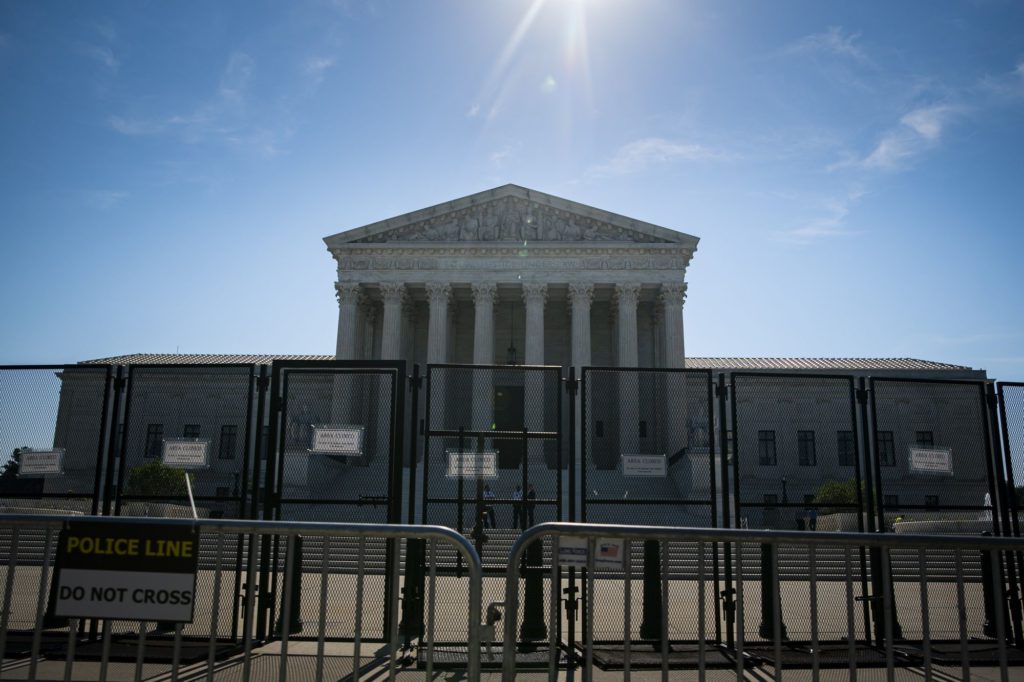
US Supreme Court Halts Texas Law Targeting Social Media Platforms

(Bloomberg) — A divided US Supreme Court blocked a Texas law that critics say would fundamentally transform Twitter Inc. and Meta Platforms Inc.’s Facebook by requiring them to allow hate speech and extremism.

Over four dissents, the justices on Tuesday put the measure on hold while a constitutional challenge goes forward in a lower court, granting a request from tech groups that represent the platforms. A federal appeals court let the law, known as HB20, go into effect earlier this month.

The tech groups, which also represent Alphabet Inc.’s Google, said the measure would unconstitutionally bar platforms from removing neo-Nazi and Ku Klux Klan screeds or Russian propaganda about its invasion of Ukraine.

The Supreme Court order “means that private American companies will have an opportunity to be heard in court before they are forced to disseminate vile, abusive or extremist content under this Texas law,” said Matt Schruers, president of the Computer & Communications Industry Association, one of the groups pressing the case.

The court, as is its custom with emergency requests, gave no explanation. An unusual collection of justices dissented: liberal Elena Kagan and conservatives Samuel Alito, Clarence Thomas and Neil Gorsuch. 

The Texas law bars social media platforms with more than 50 million users from discriminating on the basis of viewpoint. Texas Governor Greg Abbott and other Republicans say the law is needed to protect conservative voices from being silenced.

“This law provides accountability for social media companies and protections for social media users,” said Texas Senator Bryan Hughes, a Republican who co-sponsored HB20. “The court’s ruling today merely pauses the law’s effect until the case is resolved, but in doing so it hampers the state’s ability to protect free speech.”

Alito Dissent

A representative for Texas Attorney General Ken Paxton’s office did not immediately respond to requests for comment. Paxton told the Supreme Court the law gives Texas residents “equal access to the modern public square and the many benefits resulting from free and open dialogue in that square.” 

A spokesman for Facebook said the company would defer to the trade groups for any reaction. A spokesperson for Twitter didn’t immediately respond to a request for comment.

A federal district judge blocked a key part of the law in December, saying social media companies have a free speech right to exercise editorial discretion over their platforms. 

Alito said in a dissenting opinion the district court order was “a significant intrusion on state sovereignty, and Texas should not be required to seek preclearance from the federal courts before its laws go into effect.”  

Thomas and Gorsuch joined Alito’s opinion. Thomas suggested last year that the government might constitutionally be able to limit Twitter’s ability to ban users.

Kagan gave no explanation, saying only that she would have denied the request by the tech groups. Kagan has been a frequent dissenter from orders in recent years granting requests on the court’s so-called shadow docket.

Critics of the law said it would have wreaked havoc on social media platforms and violated the speech rights of the companies that run those sites.

“We are relieved that the First Amendment, open internet, and the users who rely on it remain protected from Texas’s unconstitutional overreach,” said Chris Marchese, a lawyer at NetChoice, the other group challenging the law.

Eric Goldman, a professor at Santa Clara University School of Law who specializes in technology law, said he expects the Texas law will eventually be struck down as unconstitutional.

“I don’t know if Texans, or the rest of the world, fully appreciate just how radical Texas HB 20 is,” Goldman said in an email. “It would fundamentally reshape the internet in ways that no one — not even the bill proponents — wants.”

The New Orleans-based 5th US Circuit Court of Appeals blocked the district court ruling on May 11. The 2-1 decision, which came without explanation, let the law take effect and prompted the industry groups to turn to the Supreme Court.

A different federal appeals court, the Atlanta-based 11th US Circuit Court of Appeals, last week blocked the core of a similar Florida law.

The case is NetChoice v. Paxton, 21A720.

(Updates with reaction starting in fourth paragraph.)

More stories like this are available on bloomberg.com

©2022 Bloomberg L.P.
IBM Has to Pay BMC $1.6 Billion for Poaching AT&T Account

(Bloomberg) — International Business Machines Corp. must pay $1.6 billion to BMC Software Inc. for swapping in its own software while servicing their mutual client, a federal judge ruled.

US District Judge Gray Miller in Houston on Monday rejected IBM’s claim that it acquired the mainframe software account of one of BMC’s core customers, AT&T Corp., fair and square. Miller awarded damages based on his earlier determination that IBM’s role in AT&T’s decision to dump BMC “smacked of intentional wrongdoing.” His ruling came after a seven-day non-jury trial in March.

The judgment is one of the largest ever to arise from a commercial dispute, Sean Gorman, a partner with Bracewell LLP who represented BMC in the case, said in a statement.

While IBM has moved toward cloud and artificial intelligence services in recent years, mainframes are still an important part of its information technology portfolio. The Armonk, New York, company unveiled a new mainframe model in April, reflecting the continued relevance of the decades-old computing systems even amid growing cloud adoption.

‘Pennies on the Dollar’

IBM and BMC had long operated under a carefully negotiated agreement that forbade IBM to encourage mutual clients to switch to its own competing software product line. BMC sued IBM in 2017 claiming its rival planned to breach their agreement and poach AT&T’s software business when the two companies renewed their power-sharing deal in 2015. 

IBM countered that AT&T declined BMC’s products and jumped to IBM for its own reasons, which it claimed was fair game under its pact with BMC.

In his ruling, Miller said IBM “believed — especially in light of BMC’s reluctance to engage in litigation — that it could ‘always settle for a small percentage of the claim’ or for ‘pennies on the dollar,’” citing trial evidence. The judge said “IBM’s conduct vis-à-vis BMC offends the sense of justice and propriety the public expects from American business.”

IBM said it had “acted in good faith in every respect in this engagement” and vowed to appeal. 

‘Unsupported’ Verdict

“This verdict is entirely unsupported by fact and law, and IBM intends to pursue complete reversal on appeal,” the company said in a statement. “The decision to remove BMC Software technology from its mainframes rested solely with AT&T, as was recognized by the court and confirmed in testimony from AT&T representatives admitted at trial.”

BMC said it was “pleased” with the ruling. 

“The integrity of our business and contracts is critical to being a strategic vendor and partner to our customers,” Senior Vice President and General Counsel Patrick Tagtow said in a statement. 

The Houston-based software company had asked the court to award $791 million for IBM’s breach of their agreement and $104 million for lost profits on the AT&T contract. It also asked Miller to consider tripling the damages if he found that IBM intentionally interfered with BMC’s client relationship.

Fraudulent Inducement

Miller agreed that IBM fraudulently induced BMC to sign the 2015 power-sharing agreement barring IBM from poaching mutual clients. He awarded $717.7 million in actual contractual damages, $168.2 million in prejudgment interest and an additional $717.7 million in punitive damages “based on fraud by clear and convincing evidence.” He tacked on post-judgment interest of roughly 2%, compounding annually.

“IBM’s business practices — including the routine eschewal of rules — merit a proportional punitive damages award,” he explained. 

He rejected BMC’s bid for findings of lost profits, additional breaches of contract and unfair competition but said that if a reviewing court finds that BMC isn’t entitled to the judgment he issued, the company could come back and seek recovery under one of its alternative legal theories.

The judge said he calculated damages using BMC’s fraudulent-inducement theory because it “affords BMC the greatest recovery” of several plausible damages arguments it presented.

The case is BMC Software Inc. v. International Business Machines Corp., 17-cv-02254, US District Court, Southern District of Texas (Houston). 

(Adds context in first section and BMC reaction in third. Earlier versions of this story incorrectly stated judge’s finding in second paragraph and his fraudulent-inducement finding in fourth section.)

More stories like this are available on bloomberg.com

©2022 Bloomberg L.P.

Close Bitnami banner
Bitnami
