

Bloomberg

Top EU Official Pulls Out of US Summit Over Climate Law Dispute

(Bloomberg) — A top European Union commissioner pulled out of a key meeting with US officials, saying the summit dedicates too little time to addressing EU leaders’ concerns about a new US climate and tax law.

Thierry Breton, the EU’s internal commissioner, won’t attend next week’s US-EU Trade and Technology Council summit at the University of Maryland because it “no longer gives sufficient space to issues of concern to many European industry ministers and businesses,” a Breton aide said in a statement seen Thursday by Bloomberg.


Major issues are “now limited to two hours of ministerial meetings” and the Inflation Reduction Act has been downgraded from an agenda item to something discussed over a 45 minute lunch, the aide said. The US legislation has become a major point of contention in European capitals, where complaints about that Washington is luring business investment from the bloc with massive subsidies.

Breton will instead travel to the US in early 2023 to discuss industry and competitiveness, digital and technology, space and cyber issues.

“Today, the real issue is the urgent need to preserve the competitiveness of Europe’s industrial base,” the statement read. “Only Europe can and must find a rapid and appropriate response to this challenge. And the commissioner is currently devoting all his energy to this.”

The EU has been trying to respond to the Inflation Reduction Act, which offers subsidies to companies that invest in green technology. EU officials have considered filing complaints with the World Trade Organization. 

The climate law has also been a point of contention in talks between President Joe Biden and French President Emmanuel Macron during Macron’s state visit to the US. Biden held an elaborate state dinner for the French head of state on Thursday night, but refused to apologize for the law earlier Thursday.

“There are occasions when you write a massive piece of legislation — and that has almost $360 billion for the largest investment in climate change on all of all of history — and so there’s obviously going to be glitches in it, and need to reconcile changes in it,” Biden told reporters at a press conference with Macron.

European officials are trying to get concessions from the US to be treated similarly to Canada and Mexico. The EU and US also also formed a task force to help find a solution.

Breton has taken a more aggressive approach, promoting the idea that Europe should also invest in and subsidize green technology on the continent. The push — while gaining traction among more European countries — has already raised concerns in Brussels about a subsidy race.

Commission Executive Vice President Margrethe Vestager on Thursday warned against a trade war over the Inflation Reduction Act.

“One war at a time is what we can master,” she said in Paris, adding that the EU was working constructively with the US to find solutions as soon as possible.

Breton countered at a press conference later on Thursday that “the world we live in now, we need to be able to fight on several fronts at the same time. That is our duty as politicians.”

The final text of the TTC also hit minor snags on Thursday night, as France and Germany demanded changes over an array of issues including health data transfers, quantum computing and aligning references to China with previous G7 statements, according to people familiar with the matter. While the issues are minor, they are technically complicated and could require concessions from US officials.

(Updates throughout.)

More stories like this are available on bloomberg.com

©2022 Bloomberg L.P.
US-China Tension Is Worse Under Biden, Stephen Roach Says

(Bloomberg) — The US-China relationship is no better under US President Joe Biden than it was for his predecessor Donald Trump — and it may even have gotten worse, according to economist Stephen Roach.

“If anything, he’s been tougher,” Roach said of Biden. The Yale University faculty member and former chairman of Morgan Stanley Asia spoke to Bloomberg TV in an interview this week.

His views go against the tide of optimism that followed last month’s Group of 20 meeting, where Biden had his first in-person talks with Chinese President Xi Jinping since the pandemic hit. Many China watchers saw the event as a sign the relationship between the world’s foremost economic superpowers was on the mend. 

Roach said recent actions by the US to counter China, including sweeping chips sanctions that target Beijing’s highest technological ambitions, suggest otherwise.

Biden has pushed American allies from Europe to Australia and Japan “to join the US in putting a stranglehold on Chinese access to these advanced semiconductor chips,” said Roach, who has published a new book about the US-China relationship, called “Accidental Conflict: America, China, and the Clash of False Narratives.”

“The pressure is unrelenting,” he added.

Roach also highlighted the need for investors to be mindful of their exposure to China by diversifying elsewhere in Asia. He cited the example of Apple Inc., which is hedging its bets by shifting some iPhone assembly away from China, having added production in India.

“You don’t want to put all your eggs in one Chinese basket,” he added.

As the US squeezes China on technology, Beijing will have to look for other ways to innovate and build its own capacity, Roach said. But that’s going to be tough. 

“China has failed to really construct a state-of-the-art semiconductor industry domestically,” he said. The country is restricted by the availability of advanced semiconductor chips, and concerns are growing about its ability to “truly deliver on indigenous innovation,” he added. 

China’s approach to Covid Zero continues to be a concern — though Roach said the economy can recover in the short term. What’s more worrying is its ability to combat longer term issues, including a shrinking working-age population and weakening productivity.

Those problems raise concerns “about long-term economic growth that I, as a congenital China optimist, have not seen in 25 years,” Roach said. The country’s lower-growth trajectory over the medium and long term create “significant valuation risks” for Chinese equity investors to think about, he said.

Even so, Roach cited two things that could make him bullish about China again. 

The US and China could take resolving their conflicts “very seriously and adopt a new approach rather than clinging to the old approach,” he said.

China could also re-examine its stance to addressing structural issues within its economy. 

“The need to shift from the structure from exports and investment to internal private consumption is vital,” he said, adding that the government needs to invest in social safety nets and pensions to give workers more confidence.

–With assistance from Stephen Engle.

More stories like this are available on bloomberg.com

©2022 Bloomberg L.P.

SpaceX Wins FCC Approval to Launch 7,500 Starlink Satellites

(Bloomberg) — US regulators partially approved plans by Elon Musk’s SpaceX to operate another massive fleet of Starlink satellites, giving the company the go-ahead to launch 7,500 of a proposed constellation of nearly 30,000 satellites. 

The Federal Communications Commission announced the step in an order and authorization notice published Thursday. SpaceX has approval to operate these next generation Starlink satellites, known as Gen 2, at three altitudes between 326 miles (525 kilometers) and 332 miles, according to the notice. The FCC said it’s deferring “action on the remainder of SpaceX’s application at this time.”

“Our action will allow SpaceX to begin deployment of Gen2 Starlink, which will bring next generation satellite broadband to Americans nationwide,” the notice added.

Space Exploration Technologies Corp., the formal name of Musk’s closely held company, told the FCC in May it had launched about 2,500 first-generation satellites of its earlier-authorized fleet of about 4,400 Starlinks. The company said it was serving more than 400,000 subscribers worldwide.

SpaceX is part of a global race to blanket the Earth with satellites that operate in low orbits. The short distance to Earth allows signals to pass quickly for fast broadband. Communications satellites have traditionally operated in high orbits that let them appear to loiter above one spot on the globe. Signals traveling to and from the high satellites take longer to complete their trip.

SpaceX competitors including OneWeb Ltd. and Amazon.com Inc. are working on thier own constellations. Networks from operators in Canada, China and the European Union are in various stages of development.

Customers get Starlink signals from space through small dishes that can be mounted on their homes or businesses. It’s designed to serve remote and rural areas. SpaceX won permission in June to offer the service for aircraft.

SpaceX earlier told the FCC the huge fleet addition “will substantially increase capacity and drive up the number of consumers even in rural and remote areas with truly robust broadband.”

Rival satellite company Viasat Inc. had asked the FCC to deny SpaceX’s request, citing what it called a heightened risk of in-orbit collisions among satellites. SpaceX said its satellites can maneuver and its fleet poses an acceptably low collision risk.

Amazon’s Kuiper Systems, which plans its own constellation, told regulators the SpaceX expansion “would pose serious risks to space safety and competition” and asked for restrictions.

More stories like this are available on bloomberg.com

©2022 Bloomberg L.P.
Fintechs’ Lax Oversight Enabled PPP Fraud, Report Says

(Bloomberg) — Financial-technology companies that distributed Paycheck Protection Program loans often employed lax oversight that allowed fraudsters or ineligible individuals to receive relief funded by taxpayers, a congressional report found.

In its report, the House of Representatives’ Select Subcommittee on the Coronavirus Crisis recommended that Congress and the Small Business Administration should consider carefully whether “unregulated businesses” such as fintechs should be allowed to participate in future federal lending programs. The SBA was responsible for administering PPP funds. 

“While the PPP delivered vital relief to millions of eligible small businesses, at least tens of billions of dollars in PPP funds were likely disbursed to ineligible or fraudulent applicants, often with the involvement of fintechs, causing tremendous harm to taxpayers,” lawmakers wrote in the report issued Thursday.

The subcommittee looked into the roles of the online financial firms in helping to distribute the $5 trillion in pandemic-related stimulus funds. The report highlighted issues at four companies in particular: Kabbage, Womply, Blueacorn and Bluevine.

Combined, Womply and Blueacorn worked on nearly one in every three PPP loans funded in 2021, the committee found. Both companies “failed to implement systems capable of consistently detecting and preventing fraudulent and otherwise ineligible PPP applications,” according to the report. Representatives for both firms didn’t immediately respond to requests for comment.

Kabbage, a small-business lender, failed to identify “clear signs of fraud,” including PPP loans given to fake farms, the lawmakers wrote. Its employees expressed reservations regarding the fraud-detection system the company had in place.

Much of Kabbage was acquired by American Express Co. in 2020, with PPP and small-business loans left in the company’s portfolio handled by a related entity known as KServicing that filed for bankruptcy in October.

“Unfortunately, the report does the American people a disservice by parsing bits of information out of context to reach a predetermined conclusion,” KServicing said in a statement. “Looking back on the tumultuous time of the height of the Covid-19 pandemic, the fintech community played a vital role in helping bolster the US small-business community and we are proud to have been part of that endeavor.”

Traditional lenders

While Bluevine initially struggled with high levels of fraud, lending partner Celtic Bank prompted the company to implement changes that ultimately led to improvements. Cross River Bank, another Bluevine partner involved in the PPP dispersals, also reviewed Bluevine’s fraud controls periodically. “Bluevine acknowledged that Celtic was ‘more hands-on’ than Cross River with regard to fraud concerns,” the report shows.

“We are proud to have participated in the PPP program during a time that was truly extraordinary,” Bluevine said in a statement. “As the subcommittee noted, all fintech companies are not the same, and Bluevine adapted to the ongoing threats better than some of the other fintech companies examined in the inquiry.”

“The report clearly exemplifies the importance of responsible bank-fintech partnerships in upholding the strongest protections for businesses and consumers, and demonstrates that innovative banks like Cross River partnering with responsible fintech companies during PPP provided fraud protections and controls,” a spokesperson for Cross River said in a statement.

The bank also emphasized that the partnerships helped ensure aid went to small businesses unable to borrow from larger lenders that were focused on serving existing customers.

Celtic said it is continuing to cooperate with prosecutions and investigations of PPP fraud.

“Celtic made extensive and effective efforts to combat fraud, while at the same time adhering to Congress’s and SBA’s direction to get money out to companies quickly, in a time of national emergency,” the company said in a statement.

(Updates with Cross River comment starting in 11th paragraph.)

More stories like this are available on bloomberg.com

©2022 Bloomberg L.P.

GM CEO Mary Barra Throws Support Behind Union Drive at EV Battery Plant

(Bloomberg) — General Motors Co. Chief Executive Officer Mary Barra said she backs efforts to unionize a joint venture vehicle battery plant in Lordstown, Ohio, where hourly employees will decide whether to join the United Auto Workers next week.

“We’re very supportive of the plant being unionized,” Barra said Thursday in an interview on Bloomberg TV. “We have a very productive relationship with the union. The employees are going to be voting, but we’re very supportive.”

Barra’s comments come a week before a two-day vote on Dec. 7 and Dec. 8 and just a month after the UAW filed for an election to represent the 900 production workers at the Ultium Cells LLC plant, which is jointly owned with Korea’s LG Energy Solution. At the time, UAW President Ray Curry said Ultium was making it difficult for workers to organize.

The union wanted to expedite recognition of collective bargaining after it said more than half of the employees signed authorization cards in favor of UAW representation. Curry said in a statement that Ultium first indicated a willingness to speed up organizing but then backed away, forcing a formal election process.

“Ultium has decided to ignore democracy and delay the recognition process,” Curry said in the Oct. 31 statement. “Make no mistake: Whether it is by card check or union election, these workers will be members of the UAW.”

–With assistance from Carol Massar and Tim Stenovec.

More stories like this are available on bloomberg.com

©2022 Bloomberg L.P.
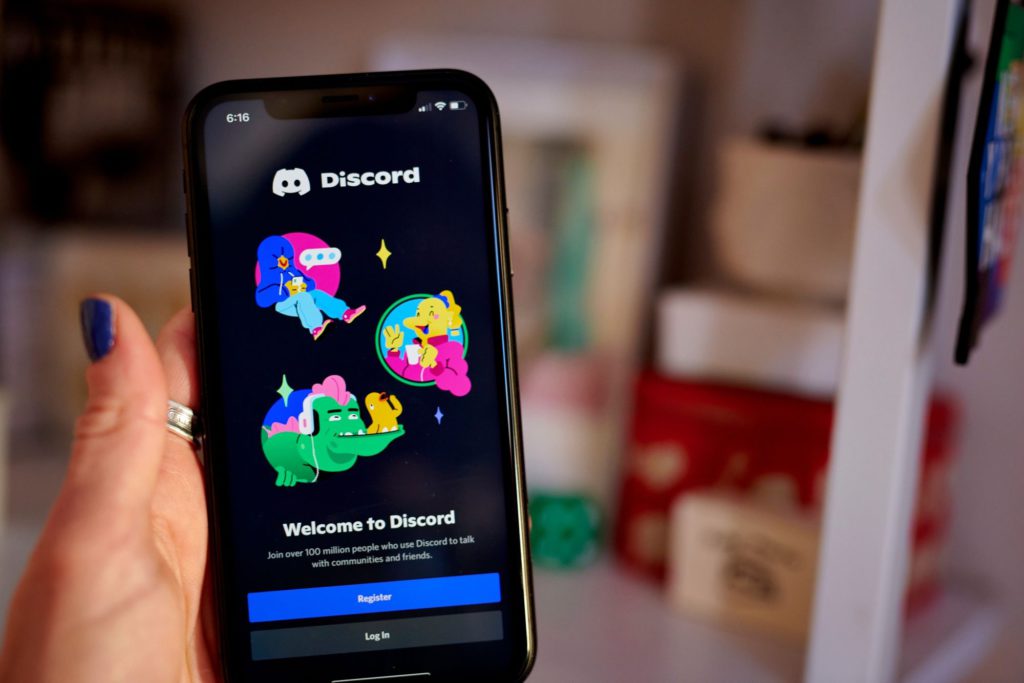
Discord Is Offering Creators Ways to Make Money Through Subscriptions

(Bloomberg) — Popular gaming chat app Discord announced Thursday it will help creators earn money on the platform through tiered subscription plans. 

US-based creators or Discord server operators, who sometimes have hundreds of thousands of members, can now charge users $3 to $200 a month, keeping 90% of money they earn, for premium features and benefits, the company said in a blog post. 

“Whether it’s a Discord server dedicated to the work of a certain content creator or a community that gathers around a particular topic, these server owners take their time to facilitate conversation, connection, and creativity in their environments,” said Derek Yang, Discord’s group product manager. “Now, it’s time to support them back.”

Discord Inc.’s 150 million monthly active users flock to millions of servers for topics and interests from Ariana Grande to Fortnite. Once considered a niche gaming voice-chat app, Discord has grown to become a hub for all sorts of conversations via text, audio and video. The company generates revenue through its Nitro premium subscription offering, which gives users perks like custom emojis and HD video streaming. The new Server Subscription will provide another avenue to monetize its large and active user base.

Popular TikTok creator Denarie Taylor, known as Bella Poarch, debuted her Server Subscriptions page on Thursday. Discord used Poarch as an example of subscription offerings, saying she has three tiers of pricing ranging from $2.99, which includes an exclusive monthly video and access to other features, to $9.99 a month, which grants access to behind-the-scenes content and more. 

In 2021, Bloomberg reported that Microsoft Corp. was considering acquiring Discord for more than $10 billion, though the talks fizzled shortly thereafter. Analysts have questioned Discord’s potential to become profitable. The San Francisco-based company generated $130 million in revenue in 2020, according to the New York Times.


(Updates with failed takeover talks with Microsoft in final paragraph. An earlier version of this story corrected the price range of subscriptions in the second paragraph after the company updated its blog post.)

More stories like this are available on bloomberg.com

©2022 Bloomberg L.P.
FTX Implosion Prompts Call by DOJ Arm for Independent Probe

(Bloomberg) — The US Justice Department’s bankruptcy watchdog is calling for an independent probe into the collapse of FTX Group, saying a neutral party should investigate the cryptocurrency empire’s downfall. 

The US Trustee, part of the Justice Department that oversees bankruptcy court, has asked FTX’s bankruptcy judge to appoint an examiner in the company’s insolvency proceedings. The examiner would publish a public report on FTX’s implosion and look into allegations of wrongdoing. 

“An examiner could — and should — investigate the substantial and serious allegations of fraud, dishonesty, incompetence, misconduct, and mismanagement” by FTX, attorneys for the US Trustee said in court papers Thursday. The examiner should also probe “the circumstances surrounding the debtors’ collapse, the apparent conversion of exchange customers’ property, and whether colorable claims and causes of action exist to remedy losses.”

Examiners are sometimes appointed in large, contentious US bankruptcies when a judge deems them necessary. After Lehman Brothers went bust, for example, an examiner eventually published a dense report explaining what went wrong. An examiner is also looking into the downfall of crypto lender Celsius Network LLC. 

While the company’s new management has done “valuable preliminary work” untangling FTX’s myriad problems, “the questions at stake here are simply too large and too important to be left to an internal investigation,” lawyers for the US Trustee said in court papers. 

Representatives for FTX didn’t immediately respond to an email seeking comment. 

The case is FTX Trading Ltd., 22-11068, U.S. Bankruptcy Court for the District of Delaware. 

More stories like this are available on bloomberg.com

©2022 Bloomberg L.P.
EV Maker Fisker Denies Short Seller Claims Over Cash Restriction

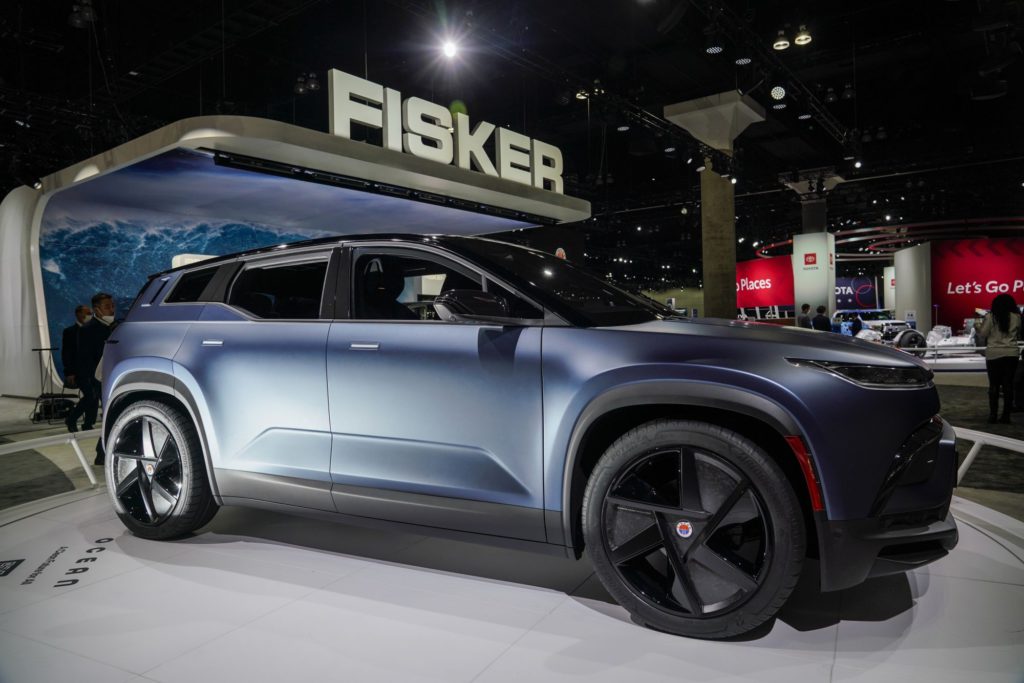
(Bloomberg) — Fisker Inc. pushed back against a new report from short seller Fuzzy Panda Research that claimed the electric-vehicle maker hasn’t disclosed limitations on its cash balance.

The vast majority of the $825 million in cash that Fisker reported at the end of the third quarter is tied up in undisclosed bank guarantees to protect Magna Steyr, the contractor who is actually building the vehicles, Fuzzy Panda said, citing unidentified former employees from both companies. The short seller estimated that at least $790 million is pledged to ensure Magna Steyr is paid for tooling, manufacturing costs and margins.

Fisker called the claims untrue, saying in a statement that it “does not have a bank guarantee with Magna.” Fisker, which said it had issued a cease-and-desist letter to the short seller, also rejected another allegation in the report that it doesn’t own the intellectual property for its Ocean SUV.

Founder and Chief Executive Officer Henrik Fisker told employees earlier that the report was “largely misleading.” In an internal email, he asked staffers not to engage with social media posts about the matter.

A spokesperson for Magna International Inc., the parent of Magna Steyr, declined to comment. 

The claims are part of a longer report published Thursday morning about Fisker, making the startup the latest target of short sellers who say young EV makers have overpromised on their way to becoming public companies. Fisker completed a reverse merger in 2020, and just last month Magna began making the first few electric SUVs for the startup.

Shares Down

Fisker’s shares fell 5.4% Thursday in New York. The stock is down about 53% this year, giving it a market valuation of $2.28 billion.

Fuzzy Panda has previously published reports about Electric Last Mile Solutions Inc., which filed for bankruptcy in June, and Workhorse Group Inc., which has struggled since losing its bid in February 2021 to make electric trucks for the US Postal Service.

Fuzzy Panda said it is short Fisker shares. In such transactions, investors borrow stock from shareholders and sell it, hoping to profit by repurchasing the securities later at a lower price and returning them to the holder.

In total, about 52.3 million shares of Fisker have been sold short, for a short-interest ratio of 9.7%, according to data compiled by Bloomberg.

More stories like this are available on bloomberg.com

©2022 Bloomberg L.P.
Crypto Scammer in ‘Geniuses’ Hack Gets 18 Months in Prison

(Bloomberg) — By day Nicholas Truglia led a lonely life from his luxury Manhattan apartment, playing video games and working out. By night he went clubbing and boasted of having more money than anyone else in the room, according to court filings. 

Now Truglia, 25, is to serve 18 months in prison after a federal judge on Thursday sentenced him for his role in a scheme to hack a blockchain consultant’s phone and stealing $22 million in cryptocurrency. Truglia has already served 12 months of the term. He was facing 51 to 63 months under sentencing guidelines. 

During the sentencing hearing it emerged that he has $53 million in assets, including crypto, art and jewelry, and has agreed to pay more than $20 million in restitution.

Truglia, who pleaded guilty last year to conspiracy to commit wire fraud, has been described in court filings as part of a posse of “evil computer geniuses” who tricked telecom employees into transferring customers’ cell numbers to SIM cards controlled by the hackers.

But he is the only one to face criminal charges. He has already been hit with civil judgments totaling almost $80 million for the audacious attacks, which targeted wealthy crypto figures on opposite ends of the US. 

In court, Truglia apologize to the one victim named in the case and spoke of his determination to turn his life around. “I would never steal from someone face to face, so the fact I did that on the Internet is shameful,” he said in a lengthy statement before sentencing.

Rain Man

His sentence is for a 2018 hack attack on Michael Terpin, the founder and chief executive officer of Transform Group, which advises blockchain businesses on public relations. The hackers recruited Truglia to convert the stolen Triggers, a digital token, into Bitcoin after they accessed Terpin’s cryptocurrency accounts, defense attorney Jeffrey Udell said in court Wednesday.

Udell revealed that his client had since been diagnosed with autism, which he said made it harder for Truglia to separate the virtual world from reality. He described Truglia as a highly intelligent man with no family support or friend network other than the connections he made online. 

Read More: Teen Hacker and ‘Evil Geniuses’ Accused of $24 Million Theft 

“He couldn’t apprehend what he was doing online with these people was having real-world effects on people like Mr. Terpin,” Udell told US District Judge Alvin Hellerstein in Manhattan. 

Autism is often marked by difficulty in understanding relationships and sometimes in sensing the impact of one’s behavior on others.

The judge showed some sympathy for the defense, likening Truglia to Dustin Hoffman’s autistic character in Rain Man. 

“Perhaps that can explain the huge success Truglia had on the Internet,” Hellerstein said. “But it doesn’t explain taking someone else’s money.” 

At the same time, the judge questioned the government’s decision to charge only Truglia, even though it knew four others were involved in the scheme. 

Hunting Down Thieves

After realizing his balances had been drained, Terpin embarked on an ambitious effort to track down the thieves. Enlisting the services of a high-profile Los Angeles lawyer, Pierce O’Donnell, he eventually narrowed his search to a New York state teenager, who was 15 at the time of the hack. Terpin accused him of leading the group that cracked his phone and took his money, according to a civil complaint he filed against the teen in New York. 

More on Crypto: Sam Bankman-Fried’s Red Flags Were Seen in All Corners of Empire

Terpin’s lawyers contacted the young man’s mother in January 2019 and were referred to his attorney, and the teen later surrendered cash, cryptocurrency and an expensive watch — together worth about $2 million — to Terpin, according to the complaint. 

Asked where the rest of the money had gone, the teen said two people he referred to only as Harry and Josh plus a third, “Nick Truglia,” had taken a cut, according to emails filed in the civil suit. Terpin was awarded $22 million in a settlement. 

Around the time he was charged by federal prosecutors in New York, Truglia was facing charges in California, accused of stealing more than $1 million in crypto by hacking into a man’s phone several months after targeting Terpin. The man, who eventually received a $3.14 million civil judgment against Truglia, said the hack had cost him his daughter’s college fund.

The case is US v. Nicholas Truglia, 19-cr-00921, US District Court, Southern District of New York (Manhattan).

–With assistance from Immanual John Milton.

(Adds sentencing guideline, comment from Truglia and the Judge)

More stories like this are available on bloomberg.com

©2022 Bloomberg L.P.
Stocks Churn After Big Rally With VIX Now Below 20: Markets Wrap

(Bloomberg) — Stocks saw a lot of instability near a key technical level, with traders awaiting the all-important jobs report for clues on the Federal Reserve’s next policy steps. The dollar fell with bond yields.

A fight took place around the S&P 500’s 200-day moving average — an indicator seen by some analysts as portending the continuation of a move when breached. The equity gauge struggled for direction after crossing that mark in a rally driven by Jerome Powell’s signals of a downshift in the pace of hikes. Amid all the choppiness, the Cboe Volatility Index fell below 20, the lowest since August.

“The shallower the pullback, the better the odds of the market moving further higher,” said Fawad Razaqzada, market analyst at City Index and Forex.com. “The bears, meanwhile, will need to defend this bearish trend line and push the market back below the 200 day, if they want to keep this year’s bearish trend intact now that we are heading into the final month of the year.”

Equities closed almost flat after slumping on data showing American manufacturing contracted in November for the first time since May 2020. The report added to concern that Fed hikes will raise the odds of a recession and tempered optimism with news that a gauge of consumer prices had the second-smallest increase this year.

The Bloomberg Dollar Spot Index sank to its lowest since June. The Treasury rally gathered steam amid a pullback in expectations for Fed tightening. Bets on where the central bank rate will peak have now dropped below 4.9%, according to swap markets. The current benchmark sits in a range between 3.75% and 4%.

Fed Bank of New York President John Williams said further hikes are needed to curb inflation. The central bank’s Vice Chair for Supervision Michael Barr said officials have more work to do in tightening monetary policy, though they could slow the pace of rate increases later this month. 

The Fed Bank of Chicago appointed Austan Goolsbee, an economist and former adviser to President Barack Obama, as its new chief to replace Charles Evans, who retires in January. In an Oct. 31 Bloomberg Radio interview, Goolsbee said a peak for the benchmark federal funds rate around 5% “kind of makes sense to me.”

The remarkably resilient US jobs market is beginning to cool, but Friday’s employment report will fall far short of the turning point Fed officials are seeking in their battle to beat back inflation. There are signs labor demand is ebbing, but a bigger slowdown is needed to bring that demand more in line with labor supply in order to contain wage growth.

The median projection in a Bloomberg survey of economists calls for payrolls to rise 200,000 in November and hourly earnings to climb 4.6% from a year ago.

Worries about how far central bankers will go to rein in inflation have kept investors on edge, and equities volatile. JPMorgan Chase & Co.’s Dubravko Lakos-Bujas said sharp declines await US stocks in the first half of 2023 against the backdrop of a mild recession and Fed hikes.

The prediction adds to calls from strategists at Goldman Sachs Group Inc. and Deutsche Bank AG that American equities are in for a wild ride next year.

“The next mountain needing to be conquered, and will be the 2023 focus I believe, is the economic consequences to such a sharp rise in interest rates, the higher cost of capital that both businesses and households have to deal with and the recession it creates,” said Peter Boockvar, chief investment officer at Bleakley Financial Group.

Read: JPMorgan Warns S&P 500 Rebound Is Likely to Stall Into January

“We do not think the macroeconomic conditions for a sustained market rally are yet in place,” said Mark Haefele, chief investment officer at UBS Global Wealth Management, who sees the cumulative impact of hikes weighing on economic growth and corporate profits.

From a technical standpoint, however, history offers encouraging signs for US stocks once they break above a longer-term trend line after spending months below it. 

In the previous 13 times the S&P 500 was beneath the 200-day moving average for more than six months and then closed above it, the index posted an average return of 12% over the next six months and 19% a year later, according to Ryan Detrick, chief market strategist at Carson Group.

Jonathan Krinsky at BTIG notes that while a big rally got the US equity gauge through its 200-day moving average, it also took it right to the downtrend line from the January highs.

“The slope of the 200-DMA is often more important than whether price is above or below it,” he added. “Consider in 2002, there were several rally attempts that did get above the declining 200-DMA, only to fail and roll over to new lows.”

Key events this week:

  • US unemployment, nonfarm payrolls, Friday
  • ECB’s Christine Lagarde speaks, Friday

Some of the main moves in markets:

Stocks

  • The S&P 500 was little changed as of 4 p.m. New York time
  • The Nasdaq 100 was little changed
  • The Dow Jones Industrial Average fell 0.6%
  • The MSCI World index rose 0.8%

Currencies

  • The Bloomberg Dollar Spot Index fell 1%
  • The euro rose 1.1% to $1.0523
  • The British pound rose 1.5% to $1.2243
  • The Japanese yen rose 2% to 135.35 per dollar

Cryptocurrencies

  • Bitcoin fell 1.1% to $16,914.09
  • Ether fell 1.9% to $1,271.94

Bonds

  • The yield on 10-year Treasuries declined 10 basis points to 3.51%
  • Germany’s 10-year yield declined 12 basis points to 1.81%
  • Britain’s 10-year yield declined six basis points to 3.10%

Commodities

  • West Texas Intermediate crude rose 0.9% to $81.26 a barrel
  • Gold futures rose 3.3% to $1,817.20 an ounce

This story was produced with the assistance of Bloomberg Automation.

–With assistance from Vildana Hajric, Peyton Forte and Michael Msika.

More stories like this are available on bloomberg.com

©2022 Bloomberg L.P.

Close Bitnami banner
Bitnami
