Bloomberg

Tech Giants Accuse India Agency of Ignorance in Xiaomi Spat

(Bloomberg) — A lobby group including Apple Inc. and other technology giants operating in India called out the country’s authorities for misunderstanding how patent fees work, following local officials’ dispute with Xiaomi Corp.

In a letter to ministries, the India Cellular and Electronics Association urged the federal government to intervene and accused the country’s enforcement agencies of a “lack of understanding” of royalty payments in the technology industry.

India’s anti-money-laundering agency is accusing Xiaomi of moving money out of the country by falsely claiming it was for patent-fee payments. The agency seized more than $700 million from a local unit of the Chinese smartphone maker in April, a move that has since been put on hold pending a final court decision.

While the lobby group’s letter didn’t name the Xiaomi case specifically, it warned that accusing companies of illegal royalty payments could have a “chilling effect” on business in the country. The risk for the other companies is that Indian authorities apply similar interpretation of royalty payments to other tech firms, too. Xiaomi is a member of the ICEA, as are rivals including China’s Oppo and homegrown firm Lava as well as Apple and its suppliers Foxconn Technology Group and Wistron Corp.

Xiaomi has disputed India’s asset seizure, arguing that its patent-fee payments are justified and its statements to financial institutions have been accurate. Indian authorities said Xiaomi’s local unit remitted money to three foreign-based entities with ties to Xiaomi, masking them as royalty payments.

Enforcement authorities have taken “a stance that royalty is a simple way to take money out of India,” the lobby group said in its May 30 letter, addressed to the federal finance, trade and tech ministers, and seen by Bloomberg News. “We appreciate that it is the duty of agencies to identify malpractice in India, but in this case, they are not well-briefed. Patent implementers are doubly embattled, paying onerous royalty on one side, and facing and fearing enforcement actions on the other.”

India’s finance, trade and tech ministries and the anti-money-laundering agency didn’t immediately respond to requests for comment.

Xiaomi has argued that it is being targeted because it is Chinese, insisting that the payments abroad were royalty remittances for using patented technology. Companies worldwide pay billions of dollars in such fees annually for using each others’ intellectual property.

Tax raids on Xiaomi and allegations of money laundering have dented the company’s brand image in the country where it is the top seller of smartphones. But the dispute over what counts as royalties could have implications on other smartphone and electronics companies with operations in India.

India’s crackdown on Xiaomi is part of a broader scrutiny of Chinese companies after a Himalayan border clash between the two nuclear-armed neighbors in 2020. New Delhi has since banned more than 200 mobile apps from Chinese providers, including shopping services from Alibaba Group Holding Ltd. and ByteDance Ltd.’s popular TikTok video app.

India is also probing the local units of China’s ZTE Corp. and Vivo Mobile Communications Co. for alleged financial improprieties, Bloomberg News reported this week.

“The Chinese government is following the matter closely,” Chinese Foreign Ministry spokesman Zhao Lijian told reporters at a regular press briefing in Beijing on Tuesday. “The Chinese government always requires Chinese companies to operate in accordance with law. At the same time, we firmly support Chinese companies to uphold their own legitimate rights and interests. The Indian side should act in accordance with laws and regulations and provide a fair, just and nondiscriminatory business environment for Chinese companies.”

More stories like this are available on bloomberg.com

©2022 Bloomberg L.P.

AirAsia Pushes Into Ride-Hailing Race in Thailand, Rivaling Grab

(Bloomberg) — AirAsia has launched a ride-hailing service in Bangkok, eyeing a slice of the region’s growing market as tourism reopens.

AirAsia Ride officially started operations from Tuesday, with 3,000 drivers currently registered in the capital and plans to recruit more, the company said in a statement. The firm also aims to expand into holiday destinations in Thailand such as Phuket and Chiang Mai to capture demand from international tourists, it said. 

Thailand Begins to Reopen Bars, Pubs to Woo Back Tourists

AirAsia, the budget airline that experimented with online commerce during the depths of the pandemic, is counting on a rebound in travel this summer to fuel a so-called “super app” that offers a suite of on-demand services from car-hailing to flight bookings. Competitors in the country include Grab Holdings Ltd. and Estonia’s Bolt Technology OU. 

“It won’t be an easy task for AirAsia to penetrate the ride-hailing market as it will need to burn a lot of cash to recruit drivers,” said Bloomberg Intelligence analyst Nathan Naidu. “Having said that, my experience with other markets in the region tells me that Southeast Asians are not yet loyal to their platforms, meaning they can be persuaded to switch with incentives such as coupons and promotions.”

Tourism-reliant Thailand will allow bars, pubs and karaoke clubs to reopen in some regions from Wednesday, ending a more than a year-long shutdown.

The value of online ride-hailing and food delivery market in Southeast Asia is expected to more than triple to $42 billion by 2025 from $13 billion last year, according to Statista.

More stories like this are available on bloomberg.com

©2022 Bloomberg L.P.

Yields Jump, Stocks Waver as Inflation Fears Mount: Markets Wrap

(Bloomberg) — Stocks slipped and Treasuries sold off across the curve Tuesday as oil jumped, adding to worries about how aggressive central banks will need to be to rein in inflation without derailing growth.

Europe’s Stoxx 600 Index was set to snap four days of gains, retreating from a one-month high, with technology stocks among the heaviest decliners. US futures erased their earlier advance. 

Treasury yields jumped, joining a selloff in German bunds and European bonds Monday. German inflation hit an all-time high, adding to pressure on central-bank policy makers to tame rising prices. The dollar advanced.

Brent crude oil rose to above $120 a barrel after the European Union agreed to pursue a partial ban on Russian oil in response to the invasion of Ukraine. Higher energy and food costs are keeping upward pressure on prices globally and squeezing consumers. 


Global stocks are on track to end the month with modest gains amid skepticism about whether the market is near a trough and as volatility stays elevated. Fears that central bank rate hikes will induce a recession, stubbornly high inflation and uncertainty around how China will boost its flailing economy are keeping investors watchful. 

Among individual stock moves in Europe Tuesday, Credit Suisse Group AG dropped after a report that the bank is weighing options to strengthen its capital. Unilever Plc jumped as activist investor Nelson Peltz joined its board. Royal DSM NV soared after agreeing to form a fragrances giant by combining with Firmenich.

In Asian trading, technology stocks underpinned gains in Hong Kong, while China rose as data showed factory activity shrinking at a slower pace and Shanghai eased its Covid lockdown. Equities fell in Japan. 


French inflation accelerated to another all-time high, data showed Tuesday, heaping pressure on the European Central Bank to lift interest rates more aggressively after strong readings in Germany and Spain. ECB officials are set to announce the conclusion of large-scale asset purchases and confirm plans to raise interest rates in July for the first time in more than a decade.

In the US, Federal Reserve Governor Christopher Waller said he wants to keep raising interest rates in half-percentage point steps until inflation is easing back toward the central bank’s goal. 

Meanwhile, President Joe Biden will hold a rare Oval office meeting on Tuesday with Fed Chair Jerome Powell amid the highest inflation in decades and ahead of US payroll numbers later this week.

“This time, the Fed’s tightening cycle will be longer, and policy rates and bond yields will have to go higher than markets currently expect,” Franklin Templeton Fixed Income Chief Investment Officer Sonal Desai said in a note. “The corresponding risk to asset prices and economic growth is greater than many like to admit.”

Elsewhere, Bitcoin was back above $31,000 as investors and strategists said the digital currency is showing signs of bottoming out.

How will markets be affected by the Fed’s quantitative tightening? QT officially starts Wednesday and is the theme of this week’s MLIV Pulse survey. Click here to participate anonymously.

Here are some key events to watch this week:

  • Euro zone CPI Tuesday
  • The Federal Reserve is set to start shrinking its $8.9 trillion balance sheet Wednesday
  • The Fed releases its Beige Book report on regional economic conditions Wednesday
  • New York Fed President John Williams, St. Louis Fed President James Bullard speak at separate events Wednesday
  • OPEC+ virtual meeting Wednesday
  • Cleveland Fed President Loretta Mester discusses the economic outlook Thursday
  • US May employment report Friday
  • The UN’s Food and Agriculture Organization releases its monthly food price index at a time of maximum concern about global supplies on Friday

Some of the main moves in markets:

Stocks

  • The Stoxx Europe 600 fell 0.5% as of 8:24 a.m. London time
  • Futures on the S&P 500 fell 0.4%
  • Futures on the Nasdaq 100 fell 0.1%
  • Futures on the Dow Jones Industrial Average fell 0.4%
  • The MSCI Asia Pacific Index rose 0.2%
  • The MSCI Emerging Markets Index rose 0.8%

Currencies

  • The Bloomberg Dollar Spot Index rose 0.3%
  • The euro fell 0.3% to $1.0744
  • The Japanese yen fell 0.2% to 127.82 per dollar
  • The offshore yuan was little changed at 6.6732 per dollar
  • The British pound fell 0.3% to $1.2618

Bonds

  • The yield on 10-year Treasuries advanced eight basis points to 2.81%
  • Germany’s 10-year yield declined one basis point to 1.04%
  • Britain’s 10-year yield was little changed at 1.98%

Commodities

  • Brent crude rose 1.3% to $123.30 a barrel
  • Spot gold was little changed

More stories like this are available on bloomberg.com

©2022 Bloomberg L.P.

India’s Attero to Spend $1 Billion on Battery Recycling Plants

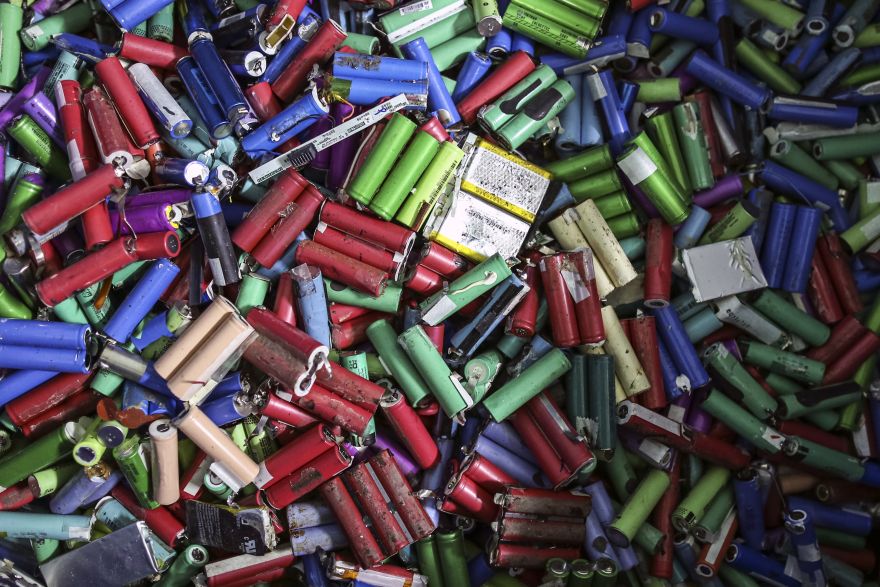
(Bloomberg) — Indian battery recycling company Attero Recycling Pvt is planning to invest $1 billion over five years to build lithium-ion battery recycling plants in Europe, the US and Indonesia as demand for the metal surges amid the global shift to electric cars.

“There’s a tremendous amount of lithium-ion battery waste available for us to recycle,” Attero Chief Executive Officer and Co-Founder Nitin Gupta said in an interview. By 2030, 2.5 million tons of lithium-ion batteries will reach the end of their life, while currently there’s only the capacity for 0.7 million tons of battery waste to be recycled. “Lithium-ion batteries are becoming ubiquitous because they’re used in consumer electronics and electric vehicles,” he said.

Recycling spent batteries will be crucial for the supply of lithium, whose shortage is threatening the global switch to clean energy through electric vehicles. As lithium supply fails to keep up with demand, the prices of batteries — which make up about 50% of an EV’s cost — are rising sharply. Higher battery costs may make electric cars unaffordable for the masses and for value-conscious markets such as India, which is already lagging major nations like China in making the switch.

Read more: Korean Battery Recycler Plans Share Sale as EV Demand Surges

With the $1 billion investment, Attero is seeking to recycle over 300,000 metric tons of lithium-ion battery waste annually by 2027, Gupta said. One facility in Poland will begin operating by the fourth quarter of 2022, while a plant in Ohio is expected to be up and running by the third quarter of 2023. A plant in Indonesia should be functional by the first quarter of 2024.

The expansion will help Attero, India’s largest lithium-ion battery recycling company, meet over 15% of the world’s demand for cobalt, lithium, graphite and nickel, Gupta said. Attero recycles all types of old lithium-ion batteries and then exports the output to gigafactories manufacturing battery cells outside of India. Attero mainly extracts critical metals such as cobalt, nickel, lithium, graphite and manganese, and its clients in India include Hyundai Motor Co., Tata Motors Ltd. and Maruti Suzuki India Ltd., among others, Gupta said.

Mining those metals, rather than getting them out of second-hand batteries, can cause environmental and social damage, he said, noting that extracting one ton of lithium requires 500,000 gallons of water.

More stories like this are available on bloomberg.com

©2022 Bloomberg L.P.

Asos Share Volatility Likely to Calm After FTSE 250 Index Entry

(Bloomberg) — Asos Plc is set to be elevated to the UK FTSE 250 Index for the first time when changes to the midcap gauge are announced this week, potentially bringing some stability to the online fast-fashion retailer’s often volatile shares.

The stock will be eligible for inclusion in the index’s latest quarterly review, having begun trading on the London stock exchange’s main market in February after spending 20 years on the city’s junior AIM market.

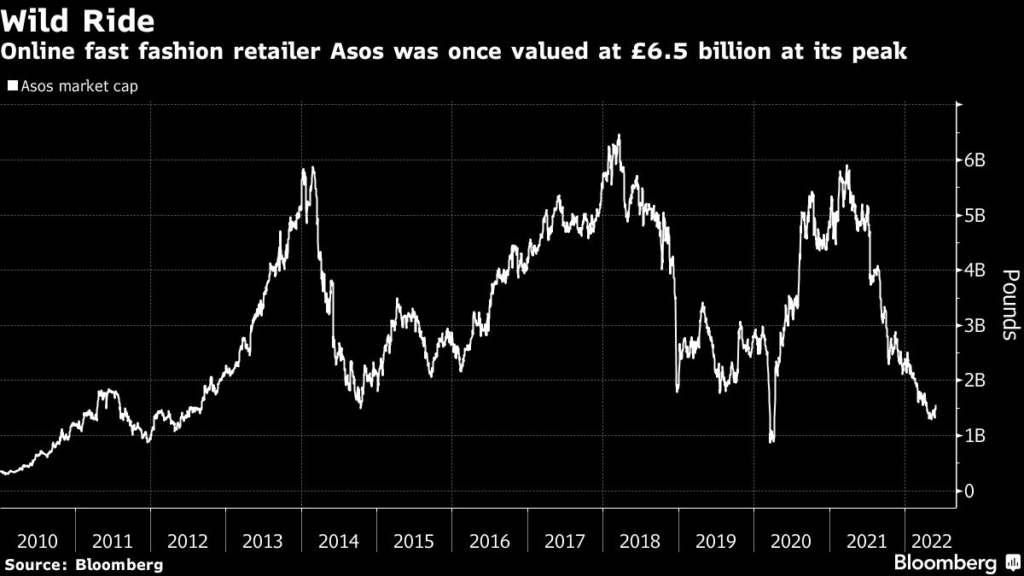
Even after a 34% drop in the shares this year reduced its market capitalization to £1.6 billion ($2 billion), Asos still looks set to qualify for the midcap gauge, according to Susannah Streeter, senior investment and markets analyst at Hargreaves Lansdown. Inclusion would help reduce volatility in the stock, given that it would necessitate purchases by tracker funds which aim to mirror the performance of the index, Streeter said.

Asos shares have surged more than 7,000% since the retailer first went public in October 2001, with its market value reaching a peak of £6.5 billion in March 2018. Yet it has plunged this year, weighed down as investors have rotated out of growth into cheaper, so-called value stocks.

“It is a weird year for the company,” said Shore Capital analyst Eleonora Dani, noting that consensus pretax profit expectations for the 2022 fiscal year are 35% below the management team’s guidance. That’s “not common to see,” she wrote. Dani sees scope for FTSE 250 inclusion to support Asos’s share price because of funds passively tracking indexes needing to buy the stock.

Still, according to AJ Bell investment director Russ Mould, it’s not clear whether index inclusion will create a wave of share buying, despite the “substantial amounts of passively-run, index-tracking cash.”

“For every buyer there has to be a seller and the shares have been very weak going into their main market move,” Mould said. In the near term, worries over inflation as well as the spending power of Asos’s customers “seem to be outweighing any excitement caused by the shift in listing and any optimism stemming from analysts’ forecasts of a return to rapid profits growth in 2023 and 2024,” he wrote.

The index review will be based on Tuesday’s closing prices, with changes due to be announced after markets close the following day. A full list of expected changes to the FTSE 100 and 250 indexes can be found here.

More stories like this are available on bloomberg.com

©2022 Bloomberg L.P.

Marcos-Linked Stocks Post Windfall Gains in Election Month

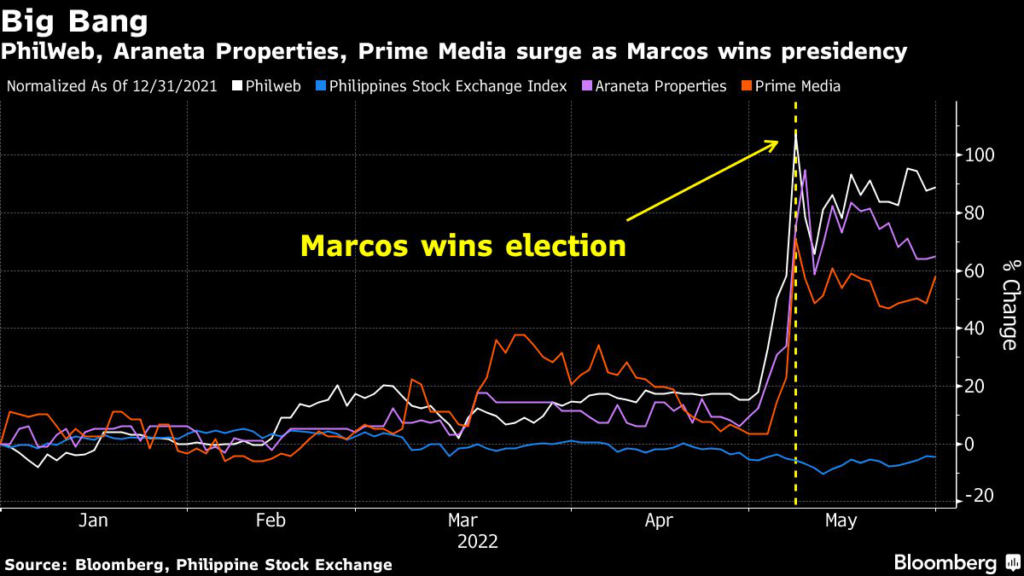
(Bloomberg) — Investors who bought stocks tied to Ferdinand Marcos Jr. and his family ahead of the Philippines’ presidential election this month have enjoyed windfall gains as he coasted to victory.

Three of the nation’s five best performing equities in May were linked to Marcos. PhilWeb Corp., a gaming company owned by his brother-in-law Gregorio Araneta III, soared more than 60% in its best monthly gain in more than seven years. The businessman’s Araneta Properties Inc. returned about 50%, as did Prime Media Holdings Inc., owned by the family of Marcos’ cousin Deputy House Speaker Martin Romualdez.

Nickel miner Marcventures Holdings Inc. and its shareholder Bright Kindle Resources & Investments Inc., two other firms linked to Romualdez, also outperformed the country’s stock benchmark. Shares of both companies rose at least 8%, while the Philippine Stock Exchange Index climbed 1%.

Expectations the stocks would fare better under a Marcos presidency lured investors, like Kevin Khoe, 48, who started buying PhilWeb in January as surveys showed Marcos consistently leading by a wide lead over his rivals.

Khoe, a former stock analyst and who has been trading equities since 1994, named PhilWeb the best play among so-called “Marcos stocks” because he saw catalysts beyond politics. PhiWeb has strong earnings, liquidity and is poised to benefit from the economy’s reopening, he said.

Read: Investor’s Guide to the 2022 Philippine Presidential Election

Every election, investors focus on companies that might gain “accommodation” under a new president, according to Alex Timbol, a former stock broker who’s been an equities investor since 1987. Such firms are favorably valued by the market during a president’s six-year term, but are punished toward the end if they fail to show “they can thrive on their own ability,” he said. 

“Speculators like empty companies because they can believe anything, it’s like pointing at the sky and imagining whatever they want,” said Timbol, who prefers Marcventures among the Marcos-linked stocks, citing its earnings recovery and rising nickel prices. “Traders should be astute to identify those opportunities and see where it’s going.”

More stories like this are available on bloomberg.com

©2022 Bloomberg L.P.

Chinese Banks Overflow With Cash That Nobody Wants to Borrow

(Bloomberg) — Chinese authorities are facing an uphill battle convincing companies and households to boost borrowing as long as Covid outbreaks and lockdowns continue to crush confidence. 

After loan growth weakened in April to the worst level in almost five years, several indicators suggest the data for May won’t be much better. Housing sales have continued to slump, indicating a lack of appetite for mortgages and subdued credit demand among developers and sectors linked to the property industry. Struggling to find enough clients, banks have been swapping bills with each other just so they can meet regulatory requirements for corporate lending.

The reluctance to borrow stems in large part from uncertainty over China’s Covid curbs, and whether future outbreaks could lead to repeated lockdowns like the one that crippled activity in Shanghai for weeks. Businesses have had to halt production and cut jobs, revenue has slumped and profits have plunged. Many companies are putting expansion plans on hold. 

“The sluggish credit demand points to worsening expectations among market entities and slowing business expansion,” said Xing Zhaopeng, senior China strategist at Australia & New Zealand Banking Group Ltd. That suggests China’s economic rebound might be weak even in the third quarter, as many investment activities can only start after loans are secured. 

The scenario is a challenging one for policy makers, who are pushing banks to lend more. The People’s Bank of China told lenders last week to “go all out” in increasing loans. It’s also pushed banks to lower mortgage rates and called on them to stabilize lending in the property sector.

The upshot is that the financial system is awash with cash, and any monetary easing from the central bank — such as interest rate cuts and liquidity injections — will likely prove less effective in spurring growth in the economy.

Here are four charts that show credit demand in China likely remained weak in May, even as Covid outbreaks began to wane and cities started to reopen. 

Bank Rates

Falling rates on a type of short-term interbank loan is one sign that banks aren’t lending much to corporates. 

The interest rate on transferring bankers’ acceptances maturing in one month fell to 0.01% early last week. That’s the fourth time since December that the rate approached zero toward the end of the month, according to data from the Shanghai Commercial Paper Exchange. 

Purchases of the bills are counted as loans to companies. A rate near-zero means buying banks are asking for almost no discounts on those purchases, as they try to meet regulators’ requirements to lend more even as firms won’t borrow.

“The near-zero interest rate shows the imbalance between credit supply and demand remains outstanding,” said Wang Yifeng, chief banking analyst at Everbright Securities Co. 

Since last week’s fall, those rates have started to improve, with the cost on the one-month tenor reaching 1.35% on Monday. The recovery came after last week’s central bank meeting, and after Premier Li Keqiang held an emergency meeting with thousands of representatives from local governments, state-owned companies and financial firms and called on them to do more to stabilize growth. 

Corporate Debt

Companies aren’t interested in selling debt, either. The amount of onshore corporate bonds issued is set to fall behind the value of maturity for the first time in seven months in May, by 102 billion yuan ($15.3 billion), according to Bloomberg-compiled data. That means more debt was repaid than borrowed.

The contraction came even as costs fell. Earlier this month, the spread on three-year, AA rated onshore corporate bonds to government bonds hit the narrowest since 2007, Bloomberg-compiled figures show.

Property Slump

Authorities have taken more concerted steps to spur borrowing in the property market. The PBOC cut mortgage rates by a record this month and banks reduced their five-year lending rate, resulting in a reduction in home loan rates of as much as 35 basis points. Authorities have also said they would support reasonable housing needs, and more cities are easing curbs on home purchases by lowering mortgage rates, allowing people from other cities to buy homes or taking other approaches.

What Bloomberg’s Analysts Say…

“A slump in real estate’s share of China’s new bank lending to 9% in 1Q, vs. 2016’s peak of 45%, might drag out into 2Q despite regulators’ repeated pledges to support financing for the sector. The sector’s 53 trillion yuan ($8 trillion) of outstanding bank loans could contract after rising 2% in 1Q, the slowest growth in a decade.”

— Kristy Hung, banking and real estate analyst 

Read the full report here.

Yet consumers are cautious about adding leverage. Sales of residential properties in 50 key cities tracked by China Real Estate Information Corp. totaled 205.9 billion yuan in the first three weeks of May, down 63% from a year ago. The slump indicates mortgage figures likely remained weak in May after falling in April, dragging down medium- and long-term household loans.

“Housing demand is hard to boost immediately,” CRIC analysts including Yang Kewei wrote in a May report. 

“Buyers are unsure whether developers can deliver the projects on schedule, whether home prices will drop, and if they’ll be able to continue repaying mortgages,” the analysts wrote. “The resurgence of the outbreak has dampened residents’ expectations of stable income.”

In May, a gauge of China’s construction activity fell to 52.2, the worst since February 2020, suggesting weaker expansion of the sector, according to government figures published Tuesday. Meanwhile, activity at China’s factories continued to contract, albeit at a slower pace — a sign that the worst of the current economic fallout may be coming to an end.

Flush Liquidity

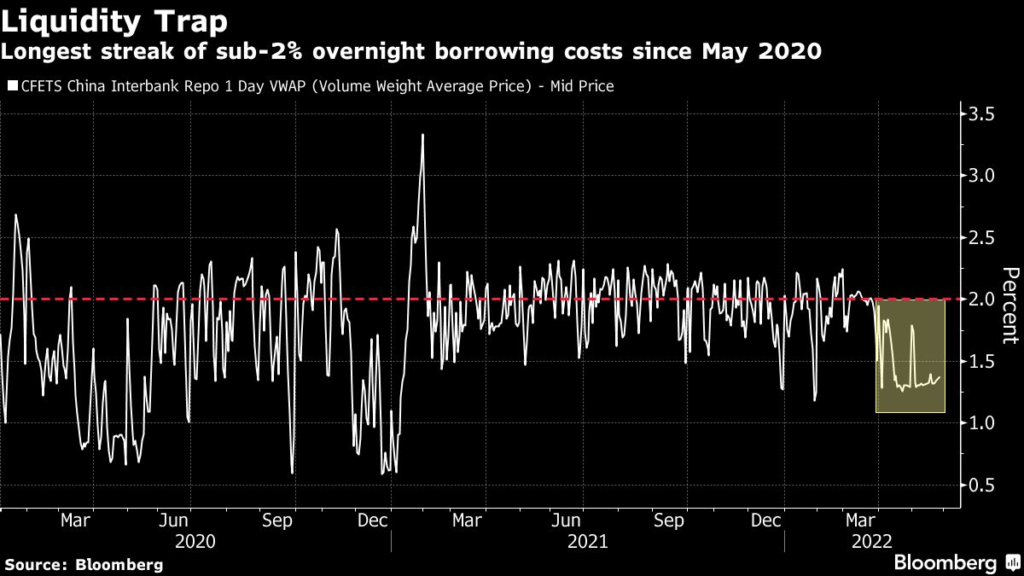
The banking system is brimming with cash. The overnight repurchase rate — a main gauge of interbank borrowing costs — has stayed under 2% for more than two months, the longest stretch in two years.

At last week’s meeting, the central bank and banking regulator ratcheted up their calls for lenders to boost loans, telling big financial institutions to “shoulder their responsibilities, make use of all resources to effectively connect with credit demand and strengthen policy transmission.”

Wang of Everbright Securities said that may have pushed those institutions — particularly big state-owned banks and policy lenders — to accelerate lending in the final week of May. 

“Let’s wait and see how the loan figures will play out for the whole month,” he said.

(Updates with May PMI figures, rebound in bank rates.)

More stories like this are available on bloomberg.com

©2022 Bloomberg L.P.

Top Gun’s Maverick Risks China’s Anger With Taiwan Flag on Jacket

(Bloomberg) — Tom Cruise isn’t simply taking on what appears to be Russian-made fighter jets in his update to the 1986 classic “Top Gun”: He’s also angering China.    

The sequel “Top Gun: Maverick” features Cruise’s character wearing a bomber jacket with the Taiwanese flag, something considered an independence symbol by authorities in Beijing, who view the island as part of its territory. The government of President Tsai Ing-wen asserts Taiwan is already a de facto independent nation in need of wider international recognition.

The flag was either missing or couldn’t be seen properly in a trailer for the film in 2019, prompting some people to wonder whether it had been removed to satisfy demands from China’s censors. But when the full movie recently hit theaters, keen observers noted that the flags had made a comeback. Similarly, the Japanese flag was reinstated. 

During an advanced screening in Taiwan, audiences cheered upon seeing Taiwan’s flag appear on Cruise’s jacket and applauded several times throughout the film, according to a report by local online media outlet SETN.

The film isn’t expected to be released in China. Commentary regarding the film on a some movie-focused Chinese social-media accounts focused on the film’s box office success. Maverick topped the Memorial Day weekend charts in North America, taking in an estimated $124 million in ticket sales.

Hollywood has a long tradition of bowing to pressure from Chinese censors, removing images and dialog from scenes that might be considered offensive in President Xi Jinping’s increasingly conservative society. 

But the decision to keep the image of the flag on the back of the jacket worn by protagonist Captain Pete “Maverick” Mitchell suggests that at least some Hollywood executives might be turning a new page when it comes to Chinese censorship. 

“Hollywood is now pushing back,” Chris Fenton, a former movie executive who wrote “Feeding the Dragon: Inside the Trillion Dollar Dilemma Facing Hollywood, the NBA, & American Business.” “The market is simply not worth the aggravation anymore in attempting to please Chinese censors.”

Chinese tech giant Tencent Holdings Ltd. withdrew from the $170 million Paramount Pictures production on concerns the company’s affiliation with a movie celebrating the US military might anger Beijing, the Wall Street Journal reported earlier, citing people familiar. Tencent didn’t immediately respond to a request for comment on Tuesday. 

Authorities in Beijing are particularly sensitive to anything that could imply that Taiwan is an independent country. In 2018, companies including Air France-KLM and Deutsche Lufthansa AG were among more than 40 airlines that made changes to their websites to modify references to Taiwan. 

(Updates with more details in second paragraph.)

More stories like this are available on bloomberg.com

©2022 Bloomberg L.P.

Top Gun’s Maverick Risks China’s Anger With Taiwan Flag on Jacket

(Bloomberg) — Tom Cruise isn’t simply taking on what appears to be Russian-made fighter jets in his update to the 1986 classic “Top Gun”: He’s also angering China.    

The sequel “Top Gun: Maverick” features Cruise’s character wearing a bomber jacket with the Taiwanese flag, something considered an independence symbol by authorities in Beijing, who view the island as part of its territory. The government of President Tsai Ing-wen asserts Taiwan is already a de facto independent nation in need of wider international recognition.

The flag was either missing or couldn’t be seen properly in a trailer for the film in 2019, prompting some people to wonder whether it had been removed to satisfy demands from China’s censors. But when the full movie recently hit theaters, keen observers noted that the flags had made a comeback. Similarly, the Japanese flag was reinstated. 

During an advanced screening in Taiwan, audiences cheered upon seeing Taiwan’s flag appear on Cruise’s jacket and applauded several times throughout the film, according to a report by local online media outlet SETN.

The film isn’t expected to be released in China. Commentary regarding the film on a some movie-focused Chinese social-media accounts focused on the film’s box office success. Maverick topped the Memorial Day weekend charts in North America, taking in an estimated $124 million in ticket sales.

Hollywood has a long tradition of bowing to pressure from Chinese censors, removing images and dialog from scenes that might be considered offensive in President Xi Jinping’s increasingly conservative society. 

But the decision to keep the image of the flag on the back of the jacket worn by protagonist Captain Pete “Maverick” Mitchell suggests that at least some Hollywood executives might be turning a new page when it comes to Chinese censorship. 

“Hollywood is now pushing back,” Chris Fenton, a former movie executive who wrote “Feeding the Dragon: Inside the Trillion Dollar Dilemma Facing Hollywood, the NBA, & American Business.” “The market is simply not worth the aggravation anymore in attempting to please Chinese censors.”

Chinese tech giant Tencent Holdings Ltd. withdrew from the $170 million Paramount Pictures production on concerns the company’s affiliation with a movie celebrating the US military might anger Beijing, the Wall Street Journal reported earlier, citing people familiar. Tencent didn’t immediately respond to a request for comment on Tuesday. 

Authorities in Beijing are particularly sensitive to anything that could imply that Taiwan is an independent country. In 2018, companies including Air France-KLM and Deutsche Lufthansa AG were among more than 40 airlines that made changes to their websites to modify references to Taiwan. 

(Updates with more details in second paragraph.)

More stories like this are available on bloomberg.com

©2022 Bloomberg L.P.

Ukraine Latest: EU Backs Partial Russian Oil Ban, Crude Advances

(Bloomberg) — European Union leaders agreed to pursue a ban that would halt the imports of most Russian oil, in a move designed to hit the country’s coffers and pave the way for a sixth package of sanctions to punish it and President Vladimir Putin for the invasion of Ukraine.

Oil headed for the longest run of monthly gains in more than a decade on the EU’s move that was reached during a leaders’ summit in Brussels. Members overcame objections from Hungary, which had been blocking an embargo as it sought assurances its energy supplies wouldn’t be disrupted. 

President Joe Biden said the US would not send Ukraine “rocket systems that can strike into Russia,” seemingly quashing reports the administration would consider long-range weapons in a new assistance package. Ukraine has repeatedly called for more offensive weapons as it battles Russian troops in the east. 


(See RSAN on the Bloomberg Terminal for the Russian Sanctions Dashboard.)

Key Developments

  • EU Leaders Back Push to Ban Some Russian Oil Over Putin’s War
  • Oil Extends Sixth Monthly Gain as EU Set to Curb Russian Supply
  • Todd Boehly Completes Takeover of UK’s Chelsea Football Club
  • Russia Comes Up With a New Bond-Payment Plan to Avoid Default
  • Pimco Fund Added to Russia Swap Exposure in Weeks Before War
  • Rosneft Plans to Pay Record-High Annual Dividend on Oil’s Rally

All times CET:

Oil, Energy-Related Shares Rise on EU Move (2:30 a.m.)

Brent crude neared $123 a barrel, hitting a two-month high. The EU’s latest push follows bans by the US and UK on Russian exports, although buyers in Asia — particularly China and India — have stepped in to take more of the shunned cargoes.

Shares that gained in early trading in Asia included Australia’s Santos, which was up as much as 1.7%, and South Korea’s S-Oil, which advanced as much as 2.2%.

Crude has soared this year as the conflict in Europe tightened global supplies at a time of rising demand, depleting stockpiles and boosting product prices to all-time highs. 

EU Leaders Back Push to Ban Some Russian Oil Over Putin’s War (11:55 p.m.)

The EU sanctions would forbid the purchase of crude oil and petroleum products from Russia delivered to member states by sea but include a temporary exemption for pipeline crude, European Council President Charles Michel said during a summit in Brussels. Officials and diplomats still have to agree on the technical details and the sanctions must be formally adopted by all 27 nations.

“This immediately covers more than 2/3 of oil imports from Russia, cutting a huge source of financing for its war machine,” Michel said in a tweet. “Maximum pressure on Russia to end the war.”

Sweden and Finland’s NATO Bid ‘Uncompromising,’ Erdogan Says (9:40 p.m.)

Recep Tayyip Erdogan, the president of Turkey, said Sweden and Finland’s “uncompromising insistence” to join NATO has added an “unnecessary item” to the alliance’s agenda, according to an op-ed published in the Economist. 

Turkey is threatening to block the Nordic nations from joining NATO because it would increase security risks for the country and NATO’s future, Erdogan said in the article. Ankara has insisted that any new candidates for NATO membership recognize its concerns about Kurdish militias, a stance that has been a major source of tension. 

Zelenskiy Says Russia Bets on Instability in Europe (8:00 p.m.) 

Russia “bets on chaos” by making energy prices skyrocket and nudging Europeans to protest their governments, Volodymyr Zelenskiy said in a video address to the European Council where he urged officials to adopt the sixth sanctions package, which would include restrictions on Russian oil.

Russia uses citizens of Africa and Asia as hostages, pushing them toward famine by blocking food supplies from Ukraine as a means of triggering a new wave of mass migration to Europe, Zelenskiy said. “Food safety can’t be secured without halting Russia’s war against Ukraine,” he said. 

Chelsea Football Club Sold to Dodgers Owner, Ending Abramovich Era (6:50 p.m.)

US investor Todd Boehly has completed his $4.25 billion ($5.4 billion) takeover of Chelsea Football Club from the sanctioned Russian oligarch Roman Abramovich, who was forced to put the team up for sale before being sanctioned in the UK’s response to Russia’s invasion of Ukraine. 

The deal ends almost 20 years of ownership under billionaire Abramovich, during which the club rose to become one of the dominant forces in the English Premier League. It also represents another instance of wealthy Russians being forced from high-profile positions in western countries as a result of President Vladimir Putin’s war.

Chelsea won 21 trophies under Abramovich. Boehly owns the Los Angeles Dodgers baseball team.

Biden Says No to Long-Range Rocket Systems for Ukraine (5:31 p.m.)

Ukraine has been calling for weeks for longer range multiple launch rocket, or MLRS, systems it says are needed to halt Russian advances in the east. The US president told reporters that America would not send “rocket systems that can strike into Russia.” 

The comment seemed to contradict previous reports the US would consider offering Ukraine the systems — some of which have a range of 300 kilometers — as part of a new military aid package expected to be announced within days.

Dutch Energy Firm Says Russia to Cut Gas Flows (5:10 p.m.)

After cutting gas supplies to Poland, Bulgaria and Finland, Russia has now warned it will halt pipeline shipments to a Dutch energy firm. GasTerra will stop receiving supplies from Gazprom on Tuesday after refusing to accept new payment terms imposed by Russia including opening a rubles account with Gazprombank.

The move will remove about 2 billion cubic meters of gas from the market from now until Oct. 1, when GasTerra’s contract with the Russian gas giant was set to expire.

Russia’s Seaborne Crude Flows Rise as EU Tussles Over Ban (5:05 p.m.)

Europe’s avoidance of the country’s supplies is forcing barrels on longer routes to willing buyers in Asia, with India the biggest market for crude from western Russia. 

Overall crude shipments edged higher in the seven days to May 27, largely shrugging off mid-month EU restrictions that trading houses see as prohibiting them from dealing with Russian state energy companies.

Estonian Premier Says Future of Government at Risk (4:46 p.m.)

Prime Minister Kaja Kallas, who has seen her popularity soar at home and abroad as she urges EU nations to do more to confront Putin, signaled she’d seek to end her coalition if the Centre Party under former Premier Juri Ratas wins a parliamentary vote on a family benefits package with help from the opposition.

“Politics is so that one day you’re in power and the next day, you’re not — so I can’t be sure of that,” Kallas told Bloomberg Television. A government collapse would leave the Baltic nation potentially rudderless at a time of heightened security risks and record inflation.

Orban Sets Out Two Conditions for EU Oil Embargo (4:05 p.m.)

“There is no compromise at this moment at all,” the Hungarian prime minister said on arrival at the EU summit in Brussels. “There is no agreement at all.” 

While he said a European Commission proposal to impose an embargo on Russian crude purchases was no longer an “atom bomb” hurled at the Hungarian economy, he echoed the sentiments of other EU leaders that a deal wouldn’t be clinched at the meeting.

Russia Suffers Heavy Ground Force Losses Since War Started (4:01 p.m)

Russia has likely lost around one third of the ground combat forces it committed on Feb. 24, according to a senior NATO official. Still, its troops are slowly and incrementally gaining territory in the east and the limited terrain captured is militarily important to press a sustained offensive, the official told reporters.

Russian commanders are trying to redistribute forces swiftly, often without adequate preparation, deploying more green soldiers and combat-fatigued soldiers from other battles to form reconstituted units, the official said.

Moscow also appears to be mobilizing Soviet-era T-62 battle tanks from storage, which are likely to be vulnerable to anti-tank weapons. That shows its shortage of modern combat equipment, the official said. 

Russian LNG Plant Halts Loading Ex-Gazprom Tankers (3:55 p.m.)

The operator of Russia’s Sakhalin-2 liquefied natural gas plant stopped supplying the fuel to a former Gazprom PJSC trading unit seized by Germany, according to people with knowledge of the matter.

Sakhalin Energy isn’t loading LNG vessels for Gazprom Marketing & Trading Ltd. due to sanctions imposed by Moscow, said the people, who asked not to be identified discussing sensitive matters.

The Sakhalin-2 plant on the Pacific coast mainly supplies customers in Japan, South Korea and China. 


German Heavy Weapons for Kyiv Still Pending (3 p.m.)

The ruling coalition and the main opposition conservatives sealed a deal on enshrining a 100 billion-euro ($107 billion) fund to boost military spending in the constitution amid continued criticism over delays in supplying Ukraine with promised heavy weapons.

Germany announced plans to supply heavy weaponry a month ago. But so far, none of the seven armored howitzers and an initial 15 Gepard armored vehicles have been delivered. Defense Minister Christine Lambrecht said that Ukrainian soldiers need to undergo a 40-day training program to use the howitzers, while the vehicles aren’t yet in condition to be sent.

Pimco Fund Added to Russia Swap Exposure Before War (2:56 p.m.)

Pacific Investment Management Co.’s largest fund increased its exposure to Russian default swaps by selling more than $100 million of protection to banks including Barclays Plc and JPMorgan & Chase Co.

Pimco’s Income Fund already had almost $1 billion of bets on Russia via credit-default swaps coming into the year, and added a net $106 million in the first quarter, according to documents filed this month with the Securities and Exchange Commission. The bulk of the new swaps were sold in January, with some added in February before the war began, according to a person with direct knowledge of the matter.

Brussels Seeks Political Deal on Russian Oil Ban (2:22 p.m.)

The embargo would cover seaborne oil, which makes up two thirds of the bloc’s oil imports from Russia, according to an official who spoke on condition of anonymity to discuss the negotiations.

Some temporary exceptions would be granted to several members that will take more time to resolve. It’s unclear whether Hungary — which has resisted supporting the ban citing its dependence on supplies from Moscow — is on board. All 27 members must agree on sanctions.

Ukraine Starts First Rape Trial for Russian Soldier (2:04 p.m.)

The Prosecutor General of Ukraine says it has sent for a court trial the first case of an alleged wartime rape. The trial will be held in-absentia, as the accused Russian soldier is not in Ukraine’s custody. 

Denmark’s Orsted Warns Russia May Cut Gas (1 p.m.)

Denmark could be the next country cut off from Russian natural gas as its biggest utility is refusing to cave in and make payments in rubles. Orsted A/S is preparing for Gazprom PJSC to cut off one of Denmark’s biggest sources of the fuel, the firm said in a statement, adding it expects it will be able to secure alternate sources of supply in the European wholesale market. The payment deadline is Tuesday and the company said it will continue to pay in euros.

Daily power prices in Finland surged after Russia suspended energy exports to its western neighbor earlier this month. European nations are split over how to handle Moscow’s demand that all payments for the fuel should be made in the local currency, and utilities have responded to the challenge differently.

Rosneft Plans Record Dividend (11:45 a.m.)

Russian oil giant Rosneft PJSC promised record dividends on the back of soaring prices, but some foreign investors may struggle to access the payout.

The board recommended 23.63 rubles a share for the second half of 2021, bringing full-year dividends to an all-time high of 41.66 rubles. That follows an announcement last week by Gazprom, which proposed its highest ever payout after benefiting from a supply crunch in Europe. 

Kherson Farmers ‘Start Grain Sales to Russia’ (11 a.m.)

Part of last year’s grain harvest is being shipped from the southern Kherson region to Russia, Tass reported, citing Kirill Stremousov, a representative of the occupation administration there. Ukrainian farmers and officials have accused Russia of confiscating and stealing grain from areas it has seized. Russia almost completely occupies Kherson and Stremousov is deputy head of the administration.

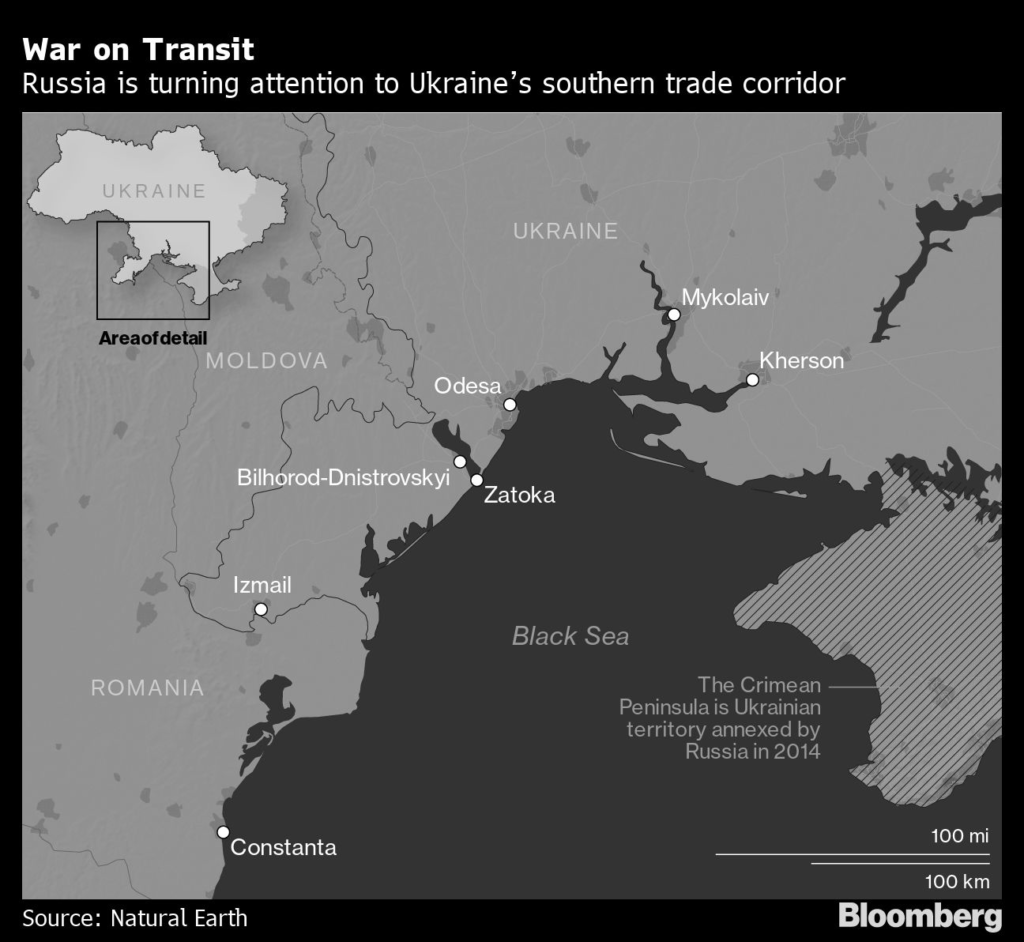
Separately, Taras Kachka, a deputy Ukrainian economy minister, called for warships to patrol the Black Sea to protect vessels carrying food exports from Russian attacks. His comments on Facebook followed reports of multiple Russian air strikes on a bridge in Zatoka between the Black Sea and the Bilhorod-Dnistrovskyi estuary, which is key for Ukrainian export shipments.

Russian Advance in Sievierodonetsk Continues (9:30 a.m.)

Russian troops continue to advance toward the city center in Sievierodonetsk in the eastern Luhansk region, according to Serhiy Haiday, the local governor. “Battles are continuing, the situation is very difficult,” he said on his Telegram channel.

The city’s infrastructure has been ravaged, with 60% of residential buildings so severely damaged that they can no longer be repaired, Haiday said, adding that about 1 million of people in the occupied areas of Luhansk remain without a functioning water supply.

More stories like this are available on bloomberg.com

©2022 Bloomberg L.P.

Close Bitnami banner
Bitnami