World

Iceland to end whaling as demand dwindles

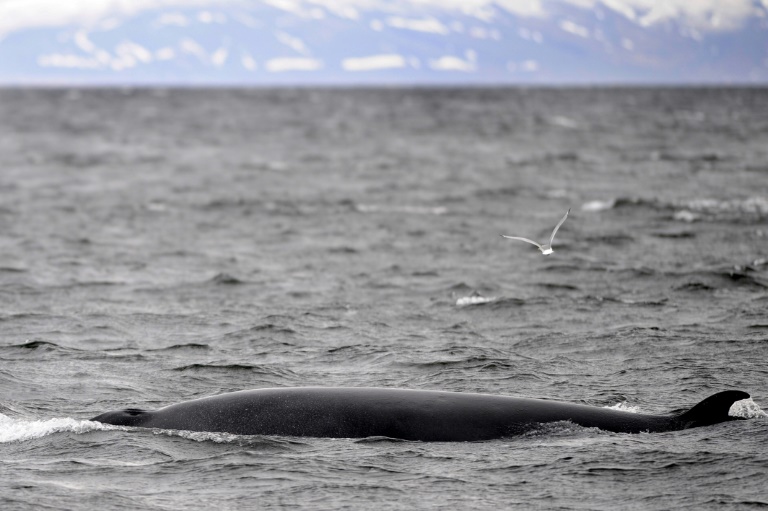
Iceland, one of the only countries that still hunts whales commercially, said Friday it plans to end the practice from 2024 as demand for whale meat dwindles.

For the past three years, Iceland’s whalers have barely taken their boats out into the North Atlantic despite the country’s large quotas.

Demand for Icelandic whale meat has decreased dramatically since Japan — Iceland’s main market, especially for fin whale meat — returned to commercial whaling in 2019 after a three-decade hiatus.

The extension of a no-fishing coastal zone, requiring whalers to go even further offshore, also made Iceland’s hunt more costly.

“There are few justifications to authorise the whale hunt beyond 2024”, Fisheries Minister Svandis Svavarsdottir, a member of the Left Green party, wrote in Morgunbladid newspaper.

“There is little proof that there is any economic advantage to this activity,” she said.

Iceland, Norway and Japan are the only countries that authorise the commercial whale hunt, despite criticism from animal rights activists and environmentalists, concerns about toxins in the meat and a shrinking market.

Iceland’s annual quotas for 2019 to 2023 allow for the hunting of 209 fin whales — the planet’s second-largest species after the blue whale and considered endangered — and 217 minke whales, one of the smallest species. 

– Pandemic slowdown –

But for the past three years, Iceland’s two main licence holders have suspended their whale hunts, and one of them, IP-Utgerd, hung up its harpoons for good in 2020.

Only one whale has been killed in the past three years — a Minke whale in 2021.

Other issues have also made whaling more challenging.

Safety requirements for imported meat are more stringent than for local products, rendering Icelandic exports more difficult. 

Social distancing restrictions imposed to combat the coronavirus pandemic also meant Icelandic whale meat processing plants were unable to carry out their tasks.

In Iceland’s last full season in 2018, 146 fin whales and six Minke whales were killed. 

Iceland resumed commercial whaling in 2003 despite a 1986 IWC moratorium, which both it and Norway opposed.

In neighbouring Norway, whalers have had similar experiences to Iceland in recent years, struggling to fill their quotas. 

The number of boats taking part in the hunt continues to shrink as well.

In 2021, 575 whales were harpooned in Norway, less than half the authorised quota, by the 14 boats still operating.

In Iceland, rather than ending up as steaks on a plate, whales have in recent years become the stars of a flourishing ecotourism scene.

More than 360,000 whale watchers flocked to the waters of the North Atlantic off Iceland to admire the majestic creatures in 2019, before the Covid-19 pandemic paralysed the tourism sector.

News Corp says hacked in potentially China-tied attack

Media giant News Corp said Friday it was hit by hackers who stole company data in an attack that the firm’s cybersecurity consultant said could likely be traced back to China.

The “persistent cyberattack activity” was discovered last month, and News Corp-owned Wall Street Journal reported that emails and documents of employees including journalists were targeted.

It is the latest major entity to report a digital breach, with targets ranging from hospitals to farming collectives and government agencies hit by hacks and cyberextortion.

News Corp told US market regulator Securities Exchange Commission in a filing that the “company’s preliminary analysis indicates that foreign government involvement may be associated with this activity, and that data was taken.”

Cybersecurity firm Mandiant, hired to help investigate, said in a statement that “those behind this activity have a China nexus, and we believe they are likely involved in espionage activities to collect intelligence to benefit China’s interests.”

Washington has suspected for years that China is conducting cyberattacks against US companies, organizations or government agencies, accusations that Beijing vigorously denies. 

Over 2,000 FBI investigations “are focused on the Chinese government trying to steal our information or technology,” the agency’s director, Christopher Wray, said this week.

In particular, the United States has accused China of being responsible for the massive hack that targeted Microsoft’s Exchange email services in March 2021.

Beijing has denounced the allegations as baseless.

Death toll from laced cocaine in Argentina climbs to 23

The death toll among dozens of people who consumed cocaine likely laced with opioids in Buenos Aires rose to 23 on Friday, with 37 still in hospital, health officials said.

Two of the hospitalized are in a serious condition and on mechanical ventilation.

Officials said 20 men and three women aged 21 to 58 have died since Tuesday night from adulterated cocaine bought from dealers in the poor neighborhood of Loma Hermosa, some 40 kilometers (25 miles) from the Buenos Aires city center.

Most died far from the point of sale, 12 of them at home and two on the road, unable to make it to a hospital on time because of the sudden effects of the tainted drug. Many suffered heart attacks. 

Thirty-seven remained hospitalized Friday in seven different hospitals, according to a provincial government update.

Three of them had been discharged but had to be re-hospitalized after taking more of the cocaine, provincial health minister Nicolas Kreplak said.

More than 200 other people sought medical intervention after consuming the substance, presenting symptoms of varying degrees of gravity.

– Arrests and seizures –

Thirteen people rounded up in a police operation to establish the origins of the tainted drug were due to appear before magistrates as part of the ongoing investigation, according to the Telam news agency.

They include the well-known leader of a drug trafficking network in greater Buenos Aires, a 33-year-old nicknamed “El Paisa.”

The substance with which the cocaine was laced has not yet been confirmed, but authorities say it is likely an opioid.

Police have seized more than 20,000 doses of cocaine in a crackdown, but have not revealed how many of these were from the laced batch.

The incident has brought to light the dangers of illegal drug use, especially of cheap, low-quality cocaine sold and consumed in Buenos Aires’s poorest communities.

According to security chief Sergio Berni, at least 250,000 doses of cocaine are sold daily in Buenos Aires province, home to some 40 percent of the Argentine population of 45 million and with high poverty rates.

Officials said Thursday that things were under control, but urged recent buyers of cocaine in and around the capital city to throw it away.

“Every dealer that buys cocaine cuts it. Some do it with non-toxic substances such as starch. Others put hallucinogens in it, and if there is no form of control, this kind of thing happens,” Berni said.

– ‘Absolutely exceptional’ –

San Martin public prosecutor Marcelo Lapargo has said what happened was “absolutely exceptional” and there was “no precedent” in Argentina.

Illegal drug use has been on the rise in the South American country.

In the mid-1980s, half a ton of cocaine was seized every year — a decade later, it was four times that, official data shows.

In 2017, a record 12.1 tons of cocaine were seized in the country, but in 2020, the number fell to about 2.7 tons as consumption dropped during the pandemic.

Russia wins Chinese backing in showdown over Ukraine

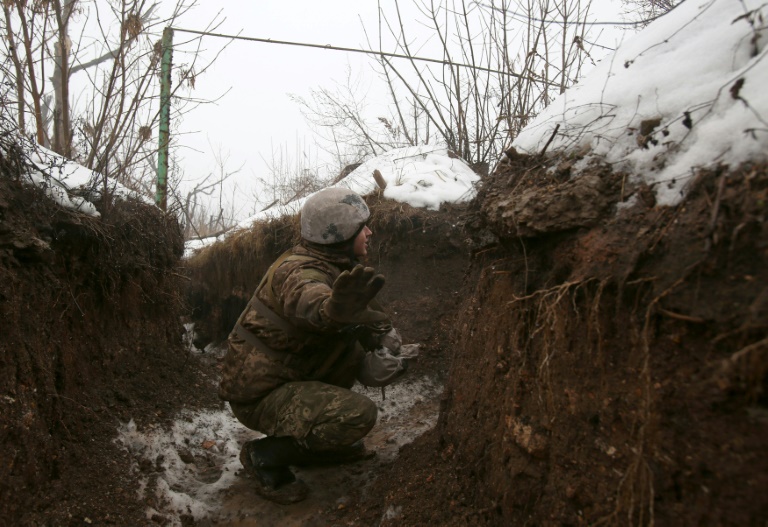
Russia won China’s backing in its showdown with the West over Ukraine on Friday, as Beijing agreed with Moscow that the US-led NATO military alliance should not admit new members.

The demand for NATO to stop expanding came after a meeting between Russian President Vladimir Putin and Chinese counterpart Xi Jinping in Beijing that saw Putin hail the two countries’ “dignified relationship”.

In a long strategy document, Moscow and Beijing hit out at what they said was Washington’s destabilising role in global security.

“The parties oppose the further expansion of NATO and call on the North Atlantic Alliance to abandon the ideological approaches of the Cold War era,” the document read, urging respect for the “sovereignty, security and interests of other countries.” 

The call echoes demands from Russia that have been at the centre of weeks of intensive negotiations between Moscow and the West, under the shadow of a potential conflict.

Western capitals have accused Russia of amassing some 100,000 troops on the borders of pro-Western Ukraine in preparation for an invasion and have vowed to impose devastating sanctions on Moscow if it attacks.

The document released by Beijing and Moscow Friday also set out criticisms of Washington’s “negative impact on peace and stability” in the Asia-Pacific region.

Russia and China also said they were “seriously concerned” by the AUKUS defence alliance including Australia, the UK and the United States.

German Chancellor Olaf Scholz was the latest European leader to announce a visit to the region on Friday, saying he would go to Ukraine on February 14 and Russia the next day.

– ‘Delusional’ false flag claims –

French President Emmanuel Macron will visit Moscow on Monday and Kyiv on Tuesday for talks with his Russian and Ukrainian counterparts.

Putin’s meeting with Xi — hours ahead of the opening ceremony of the Winter Olympic Games — came after the United States said it had evidence of a plan by Moscow to film a fake Ukrainian attack on Russians to justify an attack on its neighbour.

Pentagon spokesperson John Kirby said the US had “information that the Russians are likely to want to fabricate a pretext for an invasion”, but did not provide evidence.

Russia, which has repeatedly denied any invasion plans, said the US claims were absurd.

“The delusional nature of such fabrications — and there are more and more of them every day — is obvious,” Foreign Minister Sergei Lavrov said.  

Washington’s claim came on the back of visits from European leaders to shore up their backing for Kyiv, including from British Prime Minister Boris Johnson and Turkish President Recep Tayyip Erdogan. 

Ukraine’s Foreign Minister Dmytro Kuleba on Friday welcomed the displays of support, saying they had prevented Russia from “further aggravating the security situation”.

– ‘Intimidation strategy’ –

“Our partners believe in Ukraine and that means Moscow’s intimidation strategy is not working. Russia has lost this round,” Kuleba said.

During Erdogan’s visit Thursday he and Ukrainian President Volodymyr Zelensky signed an agreement expanding the production of parts in Ukraine for a Turkish combat drone whose sale to Kyiv has angered Moscow.

Erdogan has tried to position Turkey, which is a member of NATO, as a neutral mediator close to both Moscow and Kyiv.

Following his trip, Erdogan accused the West of making the crisis “worse”.

“Unfortunately, the West until now has not made any contribution to resolving this issue,” he said in comments published by local media Friday.

“They are only making things worse,” Erdogan said, adding that Joe Biden “has not yet been able to demonstrate a positive approach”.

Russia’s relationship with the West was severely damaged in 2014 when it annexed the Crimean peninsula from Ukraine and threw its political weight behind armed separatists in the east the country.

Nearly eight years of fighting between Kyiv and the pro-Moscow fighters has cost more than 13,000 lives and seen the West and Russia exchange waves of tit-for-tat sanctions.

In the most recent diplomatic flare-up, Putin has demanded guarantees that Ukraine will not join NATO and has implicitly threatened the former Soviet state with the massive military build-up.

Russia also wants NATO and the United States to foreswear the deployment of missile systems near Russia’s borders and to pull back NATO forces in eastern Europe.

These tensions have been aggravated by plans for joint military exercises between Russia and neighbouring Belarus, where Washington claims Moscow is preparing to send 30,000 troops.

Russia said Friday that units of its S-400 missile systems — which it recently sold to Turkey despite protests from NATO — had been delivered to Belarus ahead of the drills beginning next week.

Toxic ash from DR Congo volcano falling on Goma

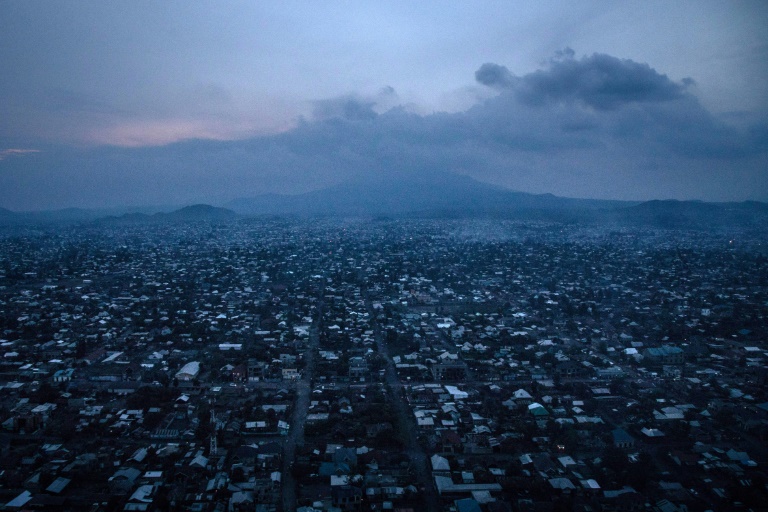
More than eight months after the Nyiragongo volcano erupted in the eastern Democratic Republic of Congo, toxic ash has started falling on nearby Goma, the city’s Volcano Observatory said on Friday. 

Thirty-two people died from burns or asphyxiation when Nyiragongo roared back into life on May 22-23, 2021, sending torrents of lava into the outskirts of Goma, capital of North Kivu province. Two more people died in accidents as residents fled en masse and hundreds of homes were destroyed. 

The OVG observatory said the volcano was spewing out ash and dust because what was left of its central crater after the eruption was now collapsing. 

There had been a magnitude two earthquake in the crater just beforehand, it added.

Given how toxic the ash was, the OVG urged locals to observe strict hygiene precautions — to wear masks, avoid drinking rainwater, wash vegetables in tap water, eat in covered areas and keep food plates indoors.

The observatory said the main volcanic activity was concentrated in Mount Nyiragongo’s central crater and “not all” its flanks were erupting.

Four months after the devastating May 2021 explosion, which forced an estimated 400,000 of Goma’s 600,000 residents to flee, a lava lake appeared in the central crater. 

Scientists said this would enable the 3,500-metre (11,500-foot) strato-volcano — which straddles the East African Rift tectonic divide — to “breathe”.

Blinken to Australia next week for Quad group meeting

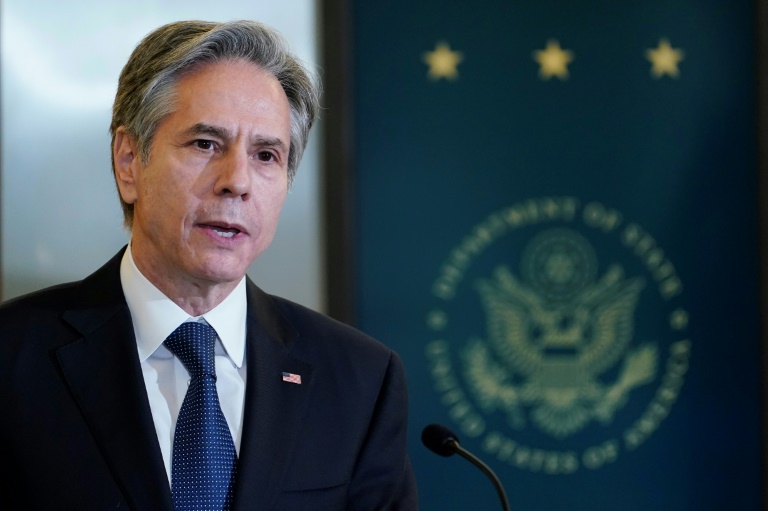
US Secretary of State Antony Blinken travels to Australia next week for a Quad group ministerial meeting also involving his counterparts from India and Japan to discuss maritime security and cooperation against Covid, the State Department said Friday.

President Joe Biden’s top diplomat also heads to Fiji, in the first visit by a US secretary of state to the island nation since 1985, to discuss what the department called “ways to advance a free and open Indo-Pacific,” using the administration’s term for the Asia-Pacific region.

After Fiji, Blinken heads to Honolulu, Hawaii on February 12 to host a trilateral meeting with his counterparts from Japan and South Korea to “deepen our cooperation in addressing threats from the DPRK’s (North Korea’s) nuclear and missile programs” and other current global “challenges.”

China was not mentioned in the statement announcing Blinken’s trip, but the Quad grouping is focused on countering a rising Beijing.

And while the phrase “free and open” was mentioned in the context of the Fiji visit, the wording has become code for expressing the big regional powers’ worry about swelling Chinese economic, diplomatic and military presence — including threats to vital international sea lanes.

Biden held an in-person summit at the White House last September with the leaders of Australia, India and Japan as they highlighted the Quad’s role in safeguarding a stable, democratic Asia-Pacific.

Beginning Wednesday, Blinken will meet his counterparts to discuss multiple bilateral and global priorities.

“With our Quad partners, we are delivering results for our populations and the region, including by advancing cooperation on Covid-19 vaccination delivery, humanitarian assistance/disaster relief, maritime security, counter-terrorism, cybersecurity, countering disinformation, climate change, and critical and emerging technologies,” according to the State Department.

Close Bitnami banner
Bitnami