
Bloomberg

Musk’s Tweets Irk Biden But Offer Scant Room for Security Review

(Bloomberg) — Alarm over Elon Musk’s recent Russia-friendly tweets is driving Biden administration officials to explore using a secretive review panel to assess the national-security risks of his business interests.

Yet experts say that deploying the Committee on Foreign Investment in the US to investigate Musk’s dealings — including his pending $44 billion purchase of Twitter — is unlikely to work and would face legal challenges. 

There may be an argument for some sort of CFIUS review, but it’s thin, according to Emily Kilcrease, a senior fellow at the Center for a New American Security. The panel would only get involved if foreign investors were taking a controlling stake in the new company, she said, something Musk doesn’t appear ready to allow.

CFIUS has the right to look at foreign investors, not Musk, Kilcrease said. “So if there’s concerns around Musk, CFIUS is a really messy, imperfect tool to try to deal with that — and I suspect would be subject to legal challenge,” she said.

US officials have grown uncomfortable over Musk’s recent threat to stop supplying the Starlink satellite service to Ukraine and what they see as his increasingly Russia-friendly stance. The rationale for CFIUS involvement is that Musk has lined up investors in Qatar and Saudi Arabia to help fund the bid, and CFIUS’s job is to review foreign acquisitions of US companies. Binance Holdings Ltd., a digital-asset exchange founded and run by a Chinese native, has offered $500 million.

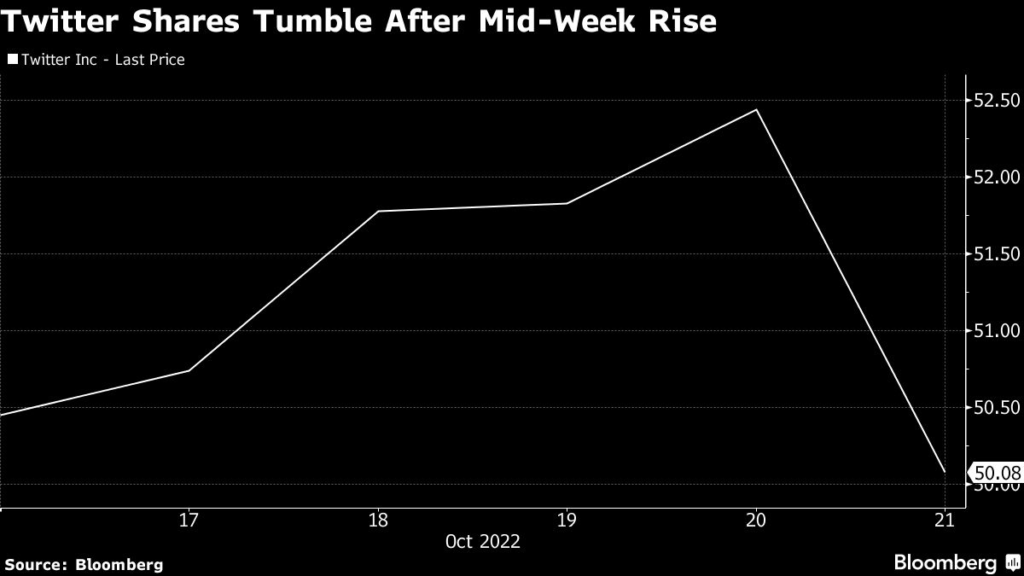
Twitter was down 4.6% Friday after Bloomberg News reported the administration’s proposal. Musk didn’t respond to emailed requests for comment, though he did respond with a series of emojis to a fellow reader’s tweet that it “would be hysterical if the government stopped Elon from over paying for Twitter.”

Administration officials say discussions around Musk are in an early stage and bringing in CFIUS is just one idea to respond to what people familiar with the matter say is alarm over Tesla’s dependence on China and Musk’s recent tweets seen as friendly toward Russian President Vladimir Putin.

The panel, chaired by the Treasury Department, would likely shy away from a review given the political overtones. 

“CFIUS wants to be seen as legitimate, it doesn’t want to be used as a poison pill,” said Sarah Danzman, a senior fellow at the Atlantic Council. “It would not want to be manipulated into action for fear of the type of precedent that it could create. It really is supposed to be about national security and not about these other kind of sideshows.”

Asked about the report on Friday, Treasury Secretary Janet Yellen said she can’t speak about CFIUS cases. But she praised Musk for providing Starlink services in Ukraine. Musk recently threatened to pull down that support, saying it has cost him $80 million, but then backtracked.

“I think almost all Americans are supportive of helping Ukraine ward off brutal attacks from Russia and supporting courageous people who are addressing great brutality and I’m glad he decided to continue providing that service,” Yellen said.

CFIUS is an opaque, secretive government body that has broad authority to review transactions involving foreign purchases of US assets. In recent years, it’s forced the sale of dating app Grindr and blocked the sale of a chemical company to a Chinese buyer. It has also been reviewing the video-sharing platform TikTok for national security issues.

Investigating Musk’s Twitter deal would be a misuse of the panel, Senator Pat Toomey, a Pennsylvania Republican, said on the platform Friday. He said that if CFIUS ends up conducting a review, an inspector general should investigate what he called a “potential leak.”

“The CFIUS process is meant to protect national security—not to punish U.S. citizens who may disagree with the administration, however misguided that disagreement might be,” Toomey wrote.

In addition to Musk’s recent tweets advancing proposals to end the war in Ukraine and musings about whether to cut financial support for Starlink in the country, other officials have highlighted his close ties to China. 

Senate Intelligence Committee Chair Mark Warner took aim at Musk’s ties to China in a recent interview, saying he is “dependent on the largess of the Communist Party.”

Elon Musk’s Reliance on China a Concern, Democrat Warner Says

But those ties center around Tesla, which gets about 25% of its revenue from China.

Experts said if there were a CFIUS review of the Twitter purchase, a possible outcome would be changes to the terms of the deal to address national security-concerns rather than a full-scale block or forced sale.

“Depending on the rights that various foreign investors may have they can certainly review and mitigate,” said Ivan Schlager, a partner at the law firm Kirkland & Ellis.

(Updates with Yellen, Toomey comment starting in 10th paragraph.)

More stories like this are available on bloomberg.com

©2022 Bloomberg L.P.

Billionaire Ambani to Spin Off, List Financial Services Unit

(Bloomberg) — Reliance Industries Ltd., will create a financial services unit to feed its consumer businesses that are contributing an increasing share of profits to the retail-to-refining conglomerate.

Jio Financial Services will be spun off and listed in India, Reliance said in an exchange filing Friday. It will lend to consumers and merchants based on proprietary data analytics and will eventually branch out to insurance, payments, digital broking and asset management.

Every Reliance shareholder will get one share of the new firm for every share held in the parent.

The spinoff will complement Reliance Chairman Mukesh Ambani’s consumer businesses, which include India’s largest wireless operator with almost 428 million users, top retail chain with over 16,000 stores. Owning the levers of credit in a nation with more than a billion consumers could also help the billionaire tycoon bolster his ambitions to take on Amazon.com Inc. in e-commerce.

‘Uniquely Positioned’

Jio Financial “will be a technology-led business, delivering financial products digitally by leveraging the nationwide omni-channel presence of Reliance’s consumer businesses,” Ambani said in the statement. It is “uniquely positioned” to capture opportunities and bring “millions of Indians into formal financial institutions.”

No time line was announced by the company for Jio Financial’s listing. Regulatory licenses for the key businesses are in place, according to the filing which followed the flagship’s quarterly earnings.

Reliance Profit Beats as Jio, Retail Offset Refining Blues

Reliance, India’s largest company by market value, posted a larger-than-expected quarterly profit as a robust performance by its consumer units offset the weakness in its traditional energy business. Its refining business was hit by a new local windfall tax on fuel exports.


(Updates with details throughout.)

More stories like this are available on bloomberg.com

©2022 Bloomberg L.P.
Yellen Rejects Concern About Inflation Becoming Entrenched

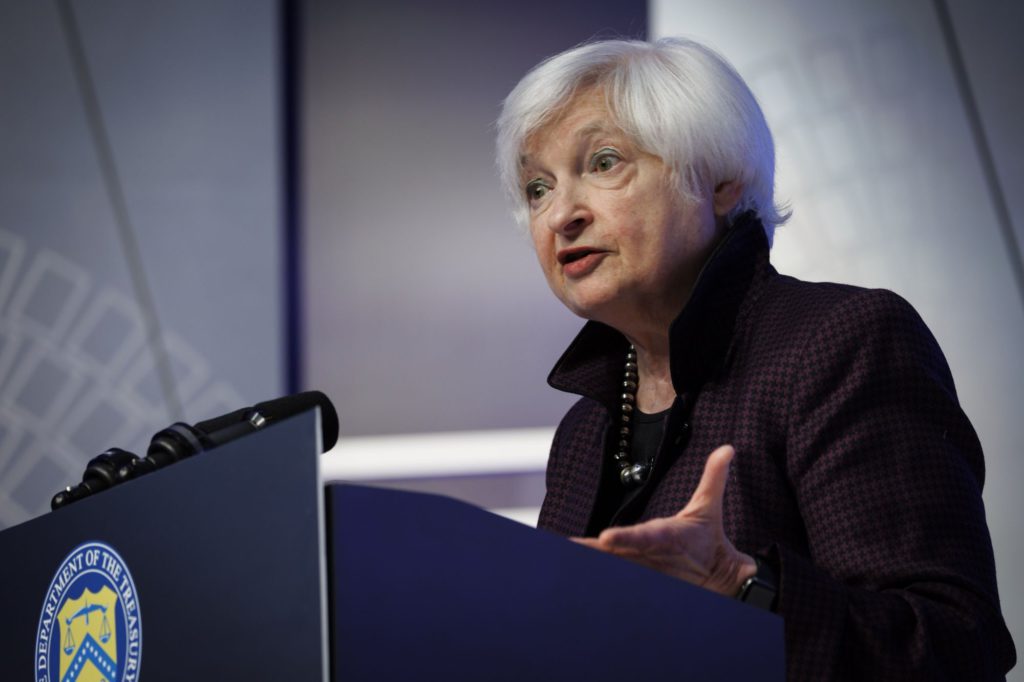
(Bloomberg) — Treasury Secretary Janet Yellen dismissed the idea that high inflation is becoming embedded in the US economy, pointing to moderate expectations for price gains over the longer haul.

“The way inflation would become embedded is if you saw expectations for inflation over the medium term rising to levels inconsistent with 2% inflation — and then those higher inflation expectations being built into wages and prices, Yellen said Friday in answering reporters’ questions after an event in Herndon, Virginia. “And I see no sign of that.”

The latest consumer price index report fueled worries about sustained inflation pressures, with a measure that excludes food and energy jumping 6.6% in September from a year before. That was the biggest surge since 1982.

“We’ve got a ways to go to get inflation down,” based on that report, Yellen said. But “we’re seeing some early signs — for example faster supplier delivery, shipping costs coming down — that will feed into” prices over time, she said.

The Federal Reserve Bank of New York’s measure of one-year-ahead inflation expectations, which jumped to as high as 6.8% in June 2022, has since declined to 5.4%

‘See a Path’

Yellen also reiterated her assessment that there’s still a possible path to bringing down inflation without a surge in unemployment. 

“One of the reasons I continue to see a path to lowering inflation while maintaining a strong labor market in the process is because I do not believe we’re in an entrenched inflation situation,” she said.

Read More: US Budget Gap Plunges to $1.38 Trillion as Pandemic Aid Unwinds

The Treasury chief also hailed Friday’s report showing the biggest reduction in the US budget deficit on record. President Joe Biden’s economic policies have shored up fiscal credibility, she said.

“I do see our debt as being on a responsible path,” she said. Yellen highlighted that the rate of interest paid on government debt, after adjusting for inflation, was negative for the past couple of years. Administration projections show it rising to 1%, “which is a low level that’s historically average,” she said.

Meantime, Yellen declined to comment on a report that Biden administration officials are discussing whether the US should subject some of Elon Musk’s ventures to national security reviews. 

The Treasury heads the Committee on Foreign Investment in the US, which vets overseas purchases of American assets. Yellen said, “I cannot speak about individual cases at CFIUS, that’s confidential.”

She also said she was “glad” that Musk had decided to continue providing internet access to Ukraine.

(Adds direct quotes starting in second paragraph.)

More stories like this are available on bloomberg.com

©2022 Bloomberg L.P.

Amazon Is Offered Hawaiian Air Stake in Cargo-Hauling Deal 

(Bloomberg) — Amazon.com Inc. is poised to take a stake in the parent of Hawaiian Airlines as part of a deal to expand the e-commerce giant’s cargo-hauling operations using a fleet of Airbus SE freighters.

Hawaiian Holdings Inc. issued warrants allowing Amazon to acquire as much as 15% of the carrier’s outstanding shares, according to a statement Friday. The warrants are exercisable over the next nine years.

The agreement may signal a revival of Amazon plans, reported in 2021, to use long-range Boeing Co. and Airbus freighters to move goods using its own planes, stepping up its rivalry with United Parcel Service Inc. and FedEx Corp. It also offers a new source of income to Hawaiian amid a slow rebound in Asia-Pacific travel, with some countries only recently lifting coronavirus-related travel restrictions.

“Amazon business will not only improve Hawaiian’s revenue diversification, but help alleviate the earnings volatility that is characteristic of Hawaiian’s passenger business,” Deutsche Bank analyst Michael Linenberg wrote in a research note on Friday. 

Hawaiian’s shares jumped as much as 15% to $16.15, the most intraday in almost two years. The stock was up 12% at 12:30 p.m. in New York. Amazon shares climbed 1.5% to $117.01. 

Cargo Operations

The plan was disclosed as Amazon’s cargo airline grows at the slowest pace since the start of the pandemic — a sign that the e-commerce giant is adjusting to slackening demand. Amazon Air was founded in 2016 to speed shipments of products from the company’s warehouses to shoppers. 

Eager to expand the reach of its delivery network and reduce its dependence on third-party carriers, Amazon put together a fleet of leased and purchased aircraft acquired from other companies, typically at a discount to new models rolling off the assembly line. The service, which relies on pilots from a handful of partner carriers, has grown rapidly in recent years, tacking on new airport hubs while leasing and purchasing more aircraft. 

Hawaiian will operate an initial 10 Airbus A330-300 freighters starting in 2023, and the fleet could be expanded based on Amazon’s needs. The airline will establish a pilot base on the continental US, expand existing maintenance bases and increase hiring of pilots, mechanics and other workers to support the operation. Hawaiian now carries freight on passenger aircraft within Hawaii and between the state and North America, Asia and Oceania.

‘Catalyst to Grow’

“This relationship provides a catalyst to grow our business and the unique opportunity to diversify our revenue sources while capitalizing on our established strengths,” Hawaiian Chief Executive Officer Peter Ingram said in the statement. 

Amazon will lease the aircraft for Hawaiian to operate from Altavair, according to a statement from Airbus. The planes are being converted from passenger aircraft to freighters.

The planes will be “the newest, largest aircraft for Amazon Air, allowing us to deliver more customer packages with each flight,” Philippe Karam, director at Amazon Global Air Fleet & Sourcing, said in the statement.

–With assistance from Janet Freund and Matt Day.

(Updates share trading. An earlier version of this story corrected the headline.)

More stories like this are available on bloomberg.com

©2022 Bloomberg L.P.

Crypto’s Polkadot Co-Founder Wood Leaves Parity CEO Role

(Bloomberg) — Polkadot co-founder Gavin Wood is relinquishing his chief executive role at Parity Technologies, an infrastructure provider that supports the crypto project. He will remain the company’s majority shareholder and chief architect.

Wood, also a co-founder of Ethereum, helped give a high profile to the Polkadot platform, which allows multiple blockchains to talk to each other. Polkadot’s DOT token has a market value of $6.8 billion, making it the 11th biggest cryptocurrency according to data from CoinGecko. 

“The role of CEO has never been one which I have coveted (and this dates back long before Parity),” Wood said in a statement provided to Bloomberg. “I can act at being a CEO well enough for a short while, but it’s not where I’m going to find eternal happiness.” Björn Wagner, Parity co-founder, will be the new CEO.

Wood, a British programmer who has a Ph.D. in music visualization, joined in on Ethereum’s development a month after co-founder Vitalik Buterin issued his white paper. As Ethereum’s first chief technology officer, Wood was instrumental in creating features that made it appealing for developers. 

But he felt that Ethereum’s design was ultimately limiting, and in 2016 wrote the Polkadot white paper — printed on polka-dot-colored sheets — proposing a new approach. He settled on the name Polkadot because it’s a pattern with no beginning, end or center, feeding into the idea of decentralized applications.

Instead of operating apps through smart contracts — relatively small pieces of code running on the Ethereum blockchain — Polkadot allows each app developer to create their own blockchain that can talk to other ledgers. Developers can decide what kind of transaction fees to charge and how fast to confirm blocks of transactions across the digital ledgers.

While development activity around Polkadot has been robust, other projects like Solana have gotten more attention recently. And Ethereum — the crypto world’s biggest commercial highway — recently completed a major upgrade that could make its ecosystem cheaper and faster within months, rendering it more of a competitive threat.

Polkadot itself has overcome some adversity through the years. While the project raised $140 million in an initial coin offering in 2017, a huge chunk of that money later became unaccessible due to a security vulnerability that a user exploited in a so-called Parity wallet that Wood helped create. Polkadot ended up raising a private round of funding in 2019, and another $43 million in a private sale in 2020.

–With assistance from Muyao Shen and Suvashree Ghosh.

More stories like this are available on bloomberg.com

©2022 Bloomberg L.P.

Stocks Climb Amid ‘Tug of War’ as Bond Rout Wanes: Markets Wrap

(Bloomberg) — Stocks climbed as the global bond rout faded, with volatility showing no signs of abating amid Friday’s $2 trillion options expiration and another raft of corporate earnings.

The S&P 500 pushed higher amid several twists and turns. Two-year yields fell, while 10-year rates traded off session highs. The Japanese yen rebounded in an apparent wave of dollar sales.

Equity funds are still seeing inflows despite deeply pessimistic sentiment, with “final capitulation” not yet here, said Bank of America Corp. Global stock funds had inflows of $9.2 billion in the week through Oct. 19, according to a note from the bank citing EPFR Global data.

“The equity market is trying to form a bottom to get to the last leg of the bear market,” said David Donabedian, chief investment officer of CIBC Private Wealth US. “It feels like a two-way market right now. We have a tug of war going on between the skeptics and those who think it is time to own equities.”

He noted that the Fed is not done raising rates and valuations are still not as low as he would expect to see at the bottom of a bear market. “We are just not there yet.”

Some of the main moves in markets:

Stocks

  • The S&P 500 rose 1% as of 11:47 a.m. New York time
  • The Nasdaq 100 rose 0.8%
  • The Dow Jones Industrial Average rose 1.1%
  • The Stoxx Europe 600 fell 0.6%
  • The MSCI World index rose 0.5%

Currencies

  • The Bloomberg Dollar Spot Index fell 0.5%
  • The euro rose 0.4% to $0.9823
  • The British pound was little changed at $1.1228
  • The Japanese yen rose 1.9% to 147.32 per dollar

Cryptocurrencies

  • Bitcoin rose 0.2% to $19,065.25
  • Ether rose 0.3% to $1,285.96

Bonds

  • The yield on 10-year Treasuries advanced one basis point to 4.24%
  • Germany’s 10-year yield advanced three basis points to 2.43%
  • Britain’s 10-year yield advanced 18 basis points to 4.09%

Commodities

  • West Texas Intermediate crude rose 0.5% to $84.95 a barrel
  • Gold futures rose 0.9% to $1,651.60 an ounce

More stories like this are available on bloomberg.com

©2022 Bloomberg L.P.
Twitch CEO Aligns With Uber in Seeking ‘Third Way’ for Classifying Creators

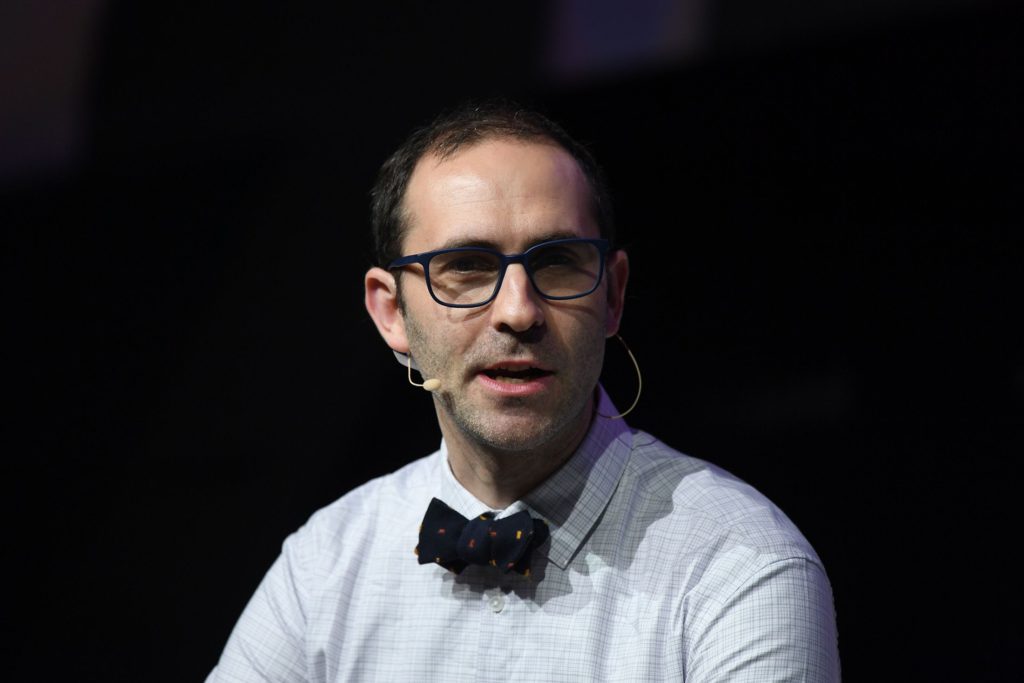
(Bloomberg) — Twitch Chief Executive Officer Emmett Shear thinks US employment laws could be improved to better support content creators who generate millions of dollars for the video live streaming site.

“It’s not quite a W-2 job and it’s not quite a contracting job,” Shear said in a recent interview. “I think we could really use legislation that created a third option that was appropriate for the gig economy and the creator economy.”

The debate over how to classify people who make a living through an app or a digital service, such as drivers at Uber Technologies Inc. or  DoorDash Inc., or the Ikea furniture assemblers of TaskRabbit, has simmered for years. Some 16% of US adults have earned money through such apps, according to a Pew Research report last year.

Gig economy giants such as Uber Technologies Inc. and Lyft Inc. have spent years and millions of dollars in a push to keep drivers classified as contractors rather than employees, with mixed success. Shear’s comments echo those of Uber CEO Dara Khosrowshahi, who has lobbied for a “ third way,” proposing guidelines for laws that would grant gig workers both flexibility and benefits. The Biden administration recently issued a proposal that could make it harder for gig companies to classify workers as contractors, and it could force them to categorize the people as employees entitled to certain protections and benefits.

Twitch, which is owned by Amazon.com Inc., was a pioneer of the creator economy when it launched in 2011 as a way for gamers to broadcast their play and interact with fans. Its success over the years has turned the site into the primary source of income for thousands of people who are able to monetize their fan bases with monthly subscriptions, ad revenue and donations. Top streamers on the site can generate more than a million dollars a year in subscription revenue alone, of which Twitch receives a 30% to 50% cut. 

But to be successful in the increasingly competitive $104 billion creator economy, top streamers must devote their full attention to it. Some have been known to livestream themselves for up to twelve hours a day or forego taking vacation lest they lose followers or relevance. Twitch recently outlined upcoming changes to how creators will be able to make money on the platform, reducing the percentage of revenue top streamers can keep after they hit $100,000 and increasing an emphasis on advertising. The shift was controversial among creators and led many to question their own economic stability and potential growth on the site. 

“One of the fundamental dynamics of the creator economy is that tech companies aren’t used to the level at which creators rely on them for their business,” Shear said. “A rapid change to how a product works isn’t just a matter of ‘This person didn’t get as many views on their video,’ but rather, ‘This person can’t make rent this month.’”

Shear didn’t offer specifics on what this third type of employment would look like and sidestepped a question about whether Twitch streamers would have access to such a system. “It depends on how you form it,” he said.

Ultimately, the success of gig workers and people who make videos on YouTube or Twitch is governed in large part by an algorithm—whether it’s one that rewards the quantity of rides in a given timeframe or determines how easy it is for viewers to discover creators’ content. For US legislators, “algorithmic management is going to be a major area of scrutiny,” said Miriam Cherry, who directs the Center for Labor & Employment Law at St. Johns University.

Shear said a third type of employment status, in between a contractor and an employee, could benefit creators and gig workers. But under the current system, he thinks “contractor” is a better fit for streamers because it allows them to “make it big and build a business.”

He also compared Twitch to a publishing house and said the payment structure is more similar to a royalty payment than a wage. On the other hand, wages are a good fit for gig economy apps like Uber, he said, as they have become almost universal basic jobs, where the price of labor gets pushed down over time.

Currently, Twitch streamers don’t receive benefits such as paid overtime or contributions to unemployment insurance through the platform or have recourse if they’re booted off the site. They also can’t legally organize under a union. If Twitch were ever to shut down, like Microsoft Corp.’s streaming site Mixer did in 2020, streamers would lose their most valuable asset—their followers—whom potential sponsors evaluate before offering the gamers paid partnerships.

Brooke Erin Duffy, a Cornell University professor of communication who has written several books about the creator economy, said diversifying one’s work across apps is a function of precarity, not bounty of opportunities. “They do this because the level of instability is so profound,” she said.

Right now, Twitch is focused on helping streamers earn more stable and predictable income without burning out. According to Mary Kish, Twitch’s head of community, the company is increasingly asking, “How do we get more money in the pockets of creators throughout their careers?” 

More stories like this are available on bloomberg.com

©2022 Bloomberg L.P.

Ambani’s Reliance Plans to Spin Off, List Jio Financial Services

(Bloomberg) — Reliance Industries Ltd., helmed by billionaire Mukesh Ambani, will hive off and list its financial services, as the retail-to-refining conglomerate looks to unlock value for its investors.

The flagship will list Jio Financial Services and all Reliance shareholders will get one share of the new firm for every share held in Reliance Industries, according to an exchange filing late Friday after the parent reported its quarterly earnings.

Reliance Profit Beats as Jio, Retail Offset Refining Blues

Jio Financial plans to launch consumer and merchant lending business based on proprietary data analytics and will also incubate other verticals such as insurance, payments, digital broking and asset management, the filing said.


More stories like this are available on bloomberg.com

©2022 Bloomberg L.P.

Reliance Profit Beats as Jio, Retail Offset Refining Blues

(Bloomberg) — Reliance Industries Ltd., India’s largest company by market value, posted a quarterly profit that was higher than expected as a robust performance by its retail and telecom units offset the weakness in its traditional energy business.

Net income at the billionaire Mukesh Ambani-led conglomerate fell 0.1% to 136.6 billion rupees ($1.7 billion) for the three months ended Sept. 30, according to an exchange filing Friday. But it beat the average profit of 134.27 billion rupees estimated by a Bloomberg survey of analysts. 

Revenue also topped expectations and rose 34% to 2.33 trillion rupees in the latest quarter. Total costs surged 36% compared to the same period last year, the filing said. The impact of India’s new windfall tax on fuel exports in the quarter was 40.39 billion rupees.

“Performance of our oil-to-chemicals business reflect subdued demand and weak margin environment across downstream chemical products,” Chairman Ambani said in a statement Friday. “Segment performance was also impacted by the introduction of special additional excise duties during the quarter.”

KEY INSIGHTS

  • The earnings for Reliance, often seen as a bellwether for the Indian economy, come on the back of mounting fears of a global recession and sustained inflation, which can hurt consumer demand for everything from fuels to food products.
    • International Monetary Fund flagged headwinds for India and lowered its growth forecast by 0.6 percentage points to 6.8% for the year to March 2023 — the biggest downgrade among major economies after the US.
  • Reliance’s traditional oil-to-chemicals business, which was seeing windfall gains earlier this year, has been hit by government’s tax on fuel exports, weaker refining margins and inventory losses due to the fall in crude oil prices.
    • This will also be the first full quarter for Reliance since India slapped a windfall gains tax on fuel exports and crude oil production on July 1
    • The taxes, which is revised periodically, was raised last week
  • Ambani’s conglomerate is gearing to spend $25 billion as its telecom unit, Reliance Jio Infocomm Ltd., rolls out 5G services across India in coming weeks to woo high-paying wireless users and boost its e-commerce offerings. 5G tariff details are still awaited.
  • Consumer retail turned out to be “the bright spot” in earnings, as flagged earlier by Bloomberg Intelligence analysts Henik Fung and Horace Chan in an Oct. 17 note that spotlighted “new store openings and increased online sales.”
  • The conglomerate is in transition both in its leadership and business mix. Ambani announced a $76 billion investment plan in January toward renewable energy pivoting beyond its crude oil-led businesses. In June, his elder son, Akash Ambani, took over as Reliance Jio’s chairman, kickstarting succession in one of the Asia’s wealthiest families.

Market Reaction

  • Shares of Reliance fell 1.2% on Friday, paring this year’s rise to 4.4%. Earnings were announced after the close of market hours.
  • Reliance shares slipped 8.4% in the September quarter while the benchmark S&P BSE Sensex rose 8.3%.

Get More

  • Reliance Jio reported a 28% jump in profit to 45.2 billion rupees. It had 427.6 million users as of end-Sept. with an average revenue per user of 177.20 rupees
  • Reliance retail posted a EBITDA of 44.1 billion rupees, a 51% jump from last year
  • EBITDA of Reliance’s oil and gas production business, which has been lagging for years, reported a three-fold increase to 31.71 billion rupees during the quarter
  • Raw material costs during the quarter rose 42% on year to 1.17 trillion rupees
  • Total debt, as of Sept. 30, stood at 2.95 trillion rupees while cash and cash equivalents were at 2.02 trillion rupees

(Updates with Ambani’s comments in fourth paragraph.)

More stories like this are available on bloomberg.com

©2022 Bloomberg L.P.

EU Takes Harder Look at ‘Systemic Rival’ China as Tensions Grow

(Bloomberg) — The European Union is taking a harder look at relations with China as tensions deepen, with one member state calling Beijing more of a “systemic rival” than a trade partner. 

EU leaders spent three hours on Friday discussing how to recalibrate 27-member bloc’s increasingly fraught relationship with the world’s second-largest economy. With President Xi Jinping poised to extend his decade-long tenure and grip on power, they said the EU needs to reassess its way of dealing with China.   

“What we are seeing is that the assertiveness of China in the world domain is increasing,” Dutch Prime Minister Mark Rutte told reporters after the two-day meeting in Brussels. Still, he said the bloc will continue to maintain dialog with China. 

Lithuania President Gitanas Nauseda went further, saying China’s backing of Russian President Vladimir Putin since the Kremlin’s invasion of Ukraine shows that Beijing is a “systemic rival.” Lithuania has been on the receiving end of China’s punitive measures after the Baltic nation allowed Taiwan to set up an office in Vilnius last year. 

“We see how our decision regarding the Taiwanese office, which is no diplomatic representation, has provoked pressures from China,” Nauseda said. “But we’ve compensated the trade losses from China and have managed to withstand pressures.” 

The comments challenge the EU’s long-running balancing act regarding China as both a trade partner and an economic competitor. A key refrain among leaders was the EU’s need to secure its independence by protecting key infrastructure and promote advanced industries, such as semiconductor production. 

French President Emmanuel Macron said Europe had erred in focusing too exclusively on public finance, forcing member states in the past to sell crucial infrastructure to Chinese investors, exposing the region’s vulnerability. 

“We’ve been naive because we considered that there was a public-finance issue to fix — and that Europe was an open supermarket,” Macron told reporters. The bloc needs to establish rules on infrastructure and define “sensitive points.” 

Latvian Prime Minister Krisjanis Karins compared a dependent relationship with China on technology and raw materials with EU’s tumultuous shift away from Russian energy after the Ukraine invasion. 

“Yes, we are actually quite dependent,” Karins said in an interview. “So it is now the right time to reevaluate this dependence and to take measures to reduce that.” 

EU leaders discussed China as well as the war in Ukraine and economic policy on its second day of the summit. The meeting comes after the bloc’s foreign policy arm recommended strengthening the EU’s approach to China. 

Earlier this week, EU foreign policy chief Josep Borrell said China was increasingly becoming a “tough competitor,” while reaffirming the bloc’s approach to treating the nation as a partner, competitor and systemic rival. 

“We as Europeans need to get over our somewhat naive stance,” Belgian Prime Minister Alexander de Croo said. “That doesn’t mean that we don’t want a relationship with China, but we must avoid any kind of dependence.” 

–With assistance from Katharina Rosskopf, John Follain, Andra Timu, Natalia Drozdiak, Stephanie Bodoni and April Roach.

More stories like this are available on bloomberg.com

©2022 Bloomberg L.P.

Close Bitnami banner
Bitnami