

Bloomberg

‘Quaking in Our Boots’: Kraft, Kellogg Join Pullback in Corporate Investment

(Bloomberg) — In boom times many big companies turn themselves into venture capitalists, backing young enterprises in a bid to stay competitive or discover the next big thing. But when the economy slumps — as it is now — some corporations rethink their ties to startup funding, as the investment divisions of food giants Kellogg’s and Kraft Heinz show.

Though tech companies like Alphabet Inc. have well-entrenched corporate investment divisions, other firms may lack the same level of commitment to their venture arms, and as US recession signals mount, some are hesitant to keep funding money-draining bets while their sales and profits are shrinking. Any pullback in the current cycle would worsen an already subdued environment for financing new companies. 

The value of US deals financed by company investment units in the second quarter dropped 21% from the first three months of the year, while the number of transactions fell 22%, PitchBook data show. Though that’s slightly better than the declines in US venture capital overall, it’s still corporate venture capital’s worst quarter since the final three months of 2020. 

One of those changing its strategy is Kraft Heinz Co.’s Evolv Ventures. The division is shifting primarily to financing other venture capital funds instead of direct involvement in growing businesses, though it would make “strategic co-investments and direct investments as it makes sense,”  a spokeswoman said. Amid these changes, Steve Sanger stepped down from his role as general partner, according to a post on his LinkedIn profile last month. Sanger didn’t respond to multiple messages seeking comment.  

Similarly, Simon Burton departed as managing partner of Kellogg Co.’s Eighteen94 Capital earlier this year. Its last investment was in Sept. 2021, according to PitchBook. Jon Kucinski, senior director of corporate strategy at Kellogg, is now also managing director of the venture division, a Kellogg’s spokeswoman said in an email. “We are continuing to operate 1894 and evaluating potential investments,” the spokeswoman said, saying it didn’t list all investments for proprietary reasons. Burton acknowledged his move but didn’t respond to further questions. He’s now at Nourish Ventures, the investment division of  Griffith Foods Worldwide Inc. The cereal maker announced in June it would split into three businesses.

The reckoning follows a boom in 2021, with more than 2,000 venture arms making at least one investment compared to about 1,500 in each of the three previous years, according to PitchBook. The current mood is reminiscent of 2009, the nadir of the Great Recession, when the number of corporate startup divisions dropped 25% from the previous year to 402, according to PitchBook. It took until 2012 for the sector to fully recover, contributing to a lackluster few years for funding activity.

“Historically, CVCs have been known to pull back when there is economic turmoil,” says Lee Sessions, who retired from Intel Capital in 2020 after 31 years there. “The economy offers a credible excuse to cut a program that is not offering substantial strategic and financial value.”

The stalwarts of corporate VC are mostly from the tech industry. For example, Alphabet’s GV has more than $8 billion under management and is fed by a steady pace of activity. However, the mood at a June gathering of corporate investors signaled some wariness about the future. While conducting an onstage interview at the Global Corporate Venturing and Innovation Summit in Monterey, California, attorney Sandi Knox confessed out loud what some conference-goers had been whispering.

“We’re all sort of quaking in our boots a little bit,” said Knox, a Silicon Valley veteran and founding lawyer of Sidley Austin’s emerging companies and venture capital practice in Palo Alto, California.

That explains the emphasis at the conference on the importance of getting buy-in from the highest corporate levels. When Patrick Hogan, managing director of Honeywell Ventures, discussed the involvement of Honeywell International Inc.’s board in its venture group, moderator and venture capitalist Farzin Shadpour sounded impressed. 

“A lot of people are willing to buy you lunch to learn how to ask for more support from the board, and get it,” he told Hogan. 

Companies often see VC as crucial to stay competitive, and that can help entrench their commitment during hard times. Chile’s Empresas Copec SA, which owns gas stations across Latin America, is coming to terms with pressure on its revenue from government goals for electric vehicles. It set up WIND Ventures in 2020, and this year has targeted some electric transportation businesses for investment, among others. 

And the allure of involvement in potentially fast-growing startups may persist even as rising interest rates boost returns elsewhere, said Bill Taranto, president of the Global Health Innovation Fund at New Jersey-based drugmaker Merck & Co. Sessions said corporate venture capitalists are more committed in part because some missed out on buying at lower valuations and capturing strong returns after the downturn a decade ago.

New venture divisions are still popping up — consulting giant Booz Allen Hamilton announced one last month. But it can be difficult for new units to gain traction, particularly in a tough economic environment. Given that so many companies have launched investment units over the years, the number that’s actually active now looks low,  said James Mawson, founder of Mawsonia, the media company that ran the Monterey VC conference.

“The fact that so many have stopped investing shows how tough it is for corporate venture arms to get beyond the first few years,” he said. That challenge will likely increase in the coming months as valuations slide at many private companies.

More stories like this are available on bloomberg.com

©2022 Bloomberg L.P.
China Graft Probes Stem From Anger Over Failed Chip Plans

(Bloomberg) — China’s top leadership has grown increasingly frustrated with a years-long failure to develop semiconductors that can replace US circuitry, an embarrassment capped by a flurry of anti-graft probes into top industry officials and the $9 billion rescue of Tsinghua Unigroup.

Senior officials are angry at how tens of billions of dollars funneled into the industry over the past decade haven’t produced the sorts of breakthroughs that emerged from previous national-level scientific endeavors, according to people familiar with top government officials’ thinking. Washington, which has steadily ratcheted up restraints on China, has been able to strong-arm Beijing and successfully contain its technological ambitions, they said, asking not to be identified revealing sensitive deliberations.

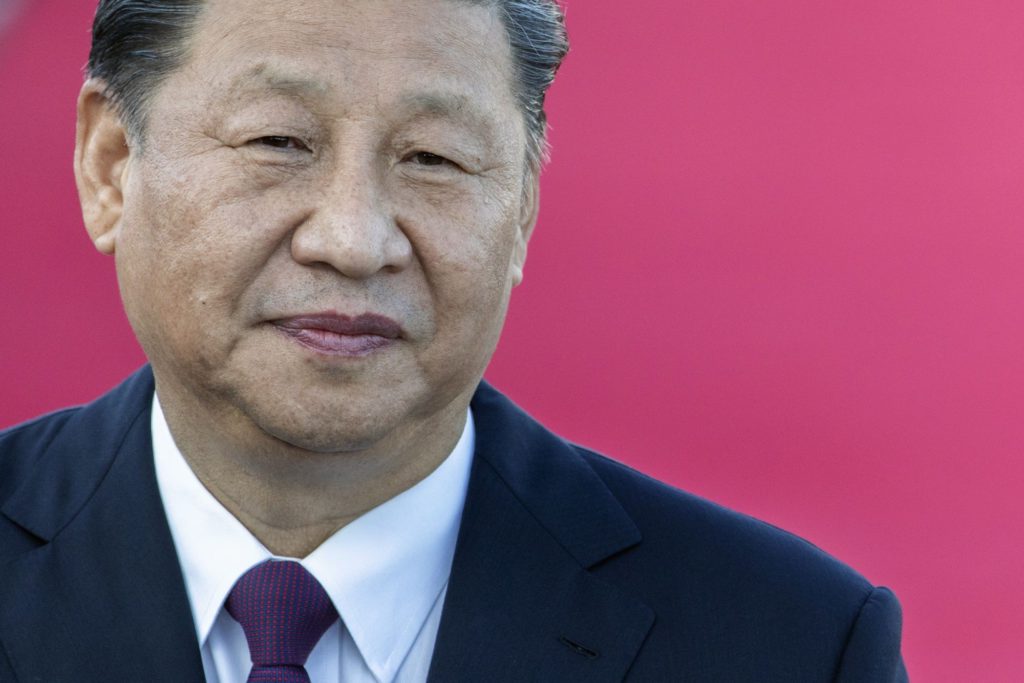
The investigations have sent shockwaves through a semiconductor industry long accustomed to top-level support. Xi Jinping’s government had allocated more than $100 billion to build up a domestic semiconductor sector so the country could break its dependence on the West. A key area of scrutiny is the National Integrated Circuit Industry Investment Fund — known within the industry as Big Fund — which had become Beijing’s primary vehicle for doling out capital to the country’s chipmakers.

The nation’s top anti-graft agency announced investigations into three more executives who helped manage the Big Fund’s assets on Tuesday, adding it was dispatching a team to the Ministry of Industry and Information Technology. The same regulator was already investigating the minister, Xiao Yaqing — making him the most senior sitting cabinet member to face a disciplinary probe in almost four years. 

“If you’re going to be putting tens of billions of dollars in an industry, regardless of whether it’s a high technology one or just like building trains and airports, you’re going to have illicit dealings going on,” said Jordan Schneider, a senior analyst at Rhodium Group and host of the China Talk podcast.

The government is investigating the head of the Big Fund, Ding Wenwu, who had once warned it was “unrealistic” to cut corners in developing chip technologies. Founded in 2014, the fund drew about $45 billion in capital and backed scores of companies, including Semiconductor Manufacturing International Corp. and Yangtze Memory Technologies Co. The fund operated mostly behind the scenes and kept investment standards away from public view, which some analysts said undercut accountability.

Beijing’s frustration comes as Washington is slapping ever-tighter restrictions on China, adding to potential vulnerability for the Communist Party. The US is increasingly limiting the kind of chip-making equipment that American companies can export to Chinese customers, while enlisting allied countries so that key suppliers like the Netherlands’ ASML Holding NV and Japan’s Nikon Corp. join its technology blockade.  

This year, various government agencies began reviewing contingency plans for strategically important industries, in the event of stricter US sanctions, the people said. When senior officials examined the report on the chip sector last month, it became clear advances in the field may have been overstated and that many investments had failed to bear fruit, the people said.

That ran contrary to a long-held belief that Beijing need only throw enough money at the problem. Xi has repeatedly urged breakthroughs in key technologies as the world faces “great changes not seen in a century.” The effort took on urgency during the Trump administration, which launched sanctions that proved effective at crippling Chinese giants including Huawei Technologies Co. Mastering advanced chipmaking was regarded as the pinnacle of that initiative in China, which in 2020 accorded the same priority to that goal as developing the atomic bomb decades ago.

The State Council Information Office didn’t respond to faxed inquiries. Unigroup representatives didn’t respond to requests for comment.

Despite years of effort, China hasn’t made much progress in narrowing — let alone closing — the gap with the West. Chip-making machinery is still dominated by Dutch firm ASML, despite the efforts of state science institutions and firms like Naura Technology Group Co. to design rival lithography machines. Japanese firms still control the supply of photoresists, a key chemical. Though tech giants such as Huawei drove intense research of local alternatives to US hardware, the country still relies on imports to meet the majority of its $155 billion in annual chip needs.

Critics of Beijing’s top-down policies have pointed out the enormous inefficiency that can result from freely doling out subsidies. Local media have reported about companies with scant experience winning incentives or grants for pursuing research. Powerful local interests have chased government money by championing projects in hopes of securing subsidies and, at times, political prestige. About 15,700 new semiconductor companies registered from January to May 2021, three times the number from the same period the previous year, according to an analysis by the South China Morning Post.

China can point to some success. SMIC has made headway against foreign competitors — though industry experts say its advances may be overstated. The country also vastly increased memory chip capacity through Yangtze Memory and Changxin Memory Technologies Inc.

Local chipmakers have also been able to go public. The most recent is Shenzhen Longsys Electronics Co., a Big Fund-backed memory chipmaker, that fetched $365 million from IPO in Shenzhen last week. 

Still, Beijing’s frustration began to boil over in late 2021, when the Biden administration showed few signs of letting up on his predecessor’s campaign against China, and it became evident Unigroup — the standard-bearer for state-backed semiconductor innovation — was beginning to fail. 

The roster of investigations into chip industry figures now reads like a who’s-who of China’s semiconductor pantheon. And the dragnet is expected to widen as investigations proceed, the people said.

In November, authorities announced probes into two executives linked to an investment firm that managed capital for the Big Fund. Last month, Ding, the fund’s chief, was also revealed to be under scrutiny. Several more people have been implicated, including former Unigroup Chairman Zhao Weiguo and his co-president Diao Shijing.

In addition, graftbusters last month announced an investigation into Xiao, the minister. It wasn’t clear that his probe was directly related to the investigation into the Big Fund.

Many of the chip-related investigations involve Tsinghua Unigroup, the Beijing-based giant Zhao led that was forced into a 60 billion yuan ($8.9 billion) takeover to get out from under a mountain of debt. It began unraveling in 2021 after Beijing tightened lending nationwide, forcing the company into court receivership. When bidders for the company emerged, Zhao called their proposed takeover a “crime.”

It’s not known whether Ding’s investigation is related to Unigroup. The Big Fund was involved in several projects Zhao spearheaded, including Yangtze Memory and Shanghai-based mobile communication chip giant Unisoc, according to company registration information. Unigroup also became a minority shareholder of the Big Fund under Ding’s watch.

Read more: Chinese Chip Mogul Says $9 Billion Rescue Turning Into ‘a Crime’

Probes of Zhao and Diao — a former MIIT official — were directly linked to alleged misconduct during their time at the chip giant, said another person, asking not to be named discussing a sensitive matter. Zhao and Ding didn’t pick up calls seeking comment. The Big Fund wasn’t immediately available for comment.

Zhao was among the more highly regarded executives in China’s vast semiconductor arena. He made his name via several high-profile investments using state-backed capital, which expanded Unigroup’s reach into areas from mobile processors and memory to servers. His $23 billion bid for Micron Technology Inc. in 2015 was blocked by the US government at the eleventh hour.

He went on to build the $30 billion Yangtze Memory in Wuhan, which now competes directly with Micron. But the 55-year-old was ousted after a consortium led by JAC Capital took over his company this year.

Schneider of Rhodium Group said this series of chip probes have been unusually aggressive, perhaps because the industry is so critical to Xi’s strategic ambitions. In the past, China would cut off funding if there were signs of serious troubles, but semiconductors are the foundation of a robust tech sector. 

“Xi talks about the industry as needing to provide the Chinese people with full self-reliance,” he said.

(Updates with announcement of the latest probes in the fourth paragraph)

More stories like this are available on bloomberg.com

©2022 Bloomberg L.P.
Russia Launches Iranian Imaging Satellite as Strategic Ties Grow

(Bloomberg) — Russia successfully launched an Iranian imaging satellite on Tuesday, as the countries deepen strategic ties amid the war in Ukraine and uncertainty over the fate of the Iranian nuclear deal. 

The “Khayyam” satellite, named after an 11th-century Persian poet and mathematician, was fired into space using a Russian Soyuz rocket from the Baikonur Cosmodrome, a spaceport in Kazakhstan that’s operated by Moscow.

Iranian state TV said the satellite will be used to monitor Iran’s borders and collect data on agriculture, the environment, natural resources and natural disasters. It began sending data within half an hour of reaching its orbit, an Iranian official told the network.

In an Aug. 4 report, however, the Washington Post cited two unnamed Western security officials as saying the satellite was likely to be used by Russia for several months to assist its forces in Ukraine. Control would then be handed to Iran, whose own ability to spy on military targets in the Middle East would be “greatly enhanced,” the paper said. 

The Iran Space Agency denied the report and said the Islamic Republic has “exclusive use” of its capabilities, according to a statement cited by state TV. 

Diplomats on Monday concluded talks on rescuing the beleaguered 2015 nuclear accord. European mediators presented signatories with a final draft accord and were expected to ask the US and Iran to decide within weeks whether they back the blueprint or not.

US, Iran Face Deadline as Nuclear Talks End Without a Deal


More stories like this are available on bloomberg.com

©2022 Bloomberg L.P.

Meyers Manx Dune Buggies Are Reborn Yet Again—This Time Electric

(Bloomberg) — Meyers Manx, the groovy little dune buggy that became famous when Steve McQueen drove one in 1968’s The Thomas Crown Affair, is going electric.

The Meyers Manx 2.0 Electric will run on lithium-ion batteries and two electric motors, one positioned over each rear wheel. Top speed has yet to be determined, but it will have a zero-to-60 mph sprint time of 4.5 seconds, according to the California-based company. It will get up to 202 horsepower with as many as 300 miles of range, depending on the variant ordered. As with other EVs, off-road driving in sand or dirt will deplete the battery faster than when the buggy is on pavement.

Meyers Manx isn’t the first company to make an electric buggy-like vehicle; Moke sells open-air EV cruisers seen often in island locales like St. Barts, though performance-wise they’re more like golf carts.

This will be the first entirely new vehicle from Manx since 1964, when founder Bruce Meyers created the iconic fiberglass dune buggy. In 1967 the half-ton buggy gained notoriety in Southern California when Meyers drove it to win the first 1,000-mile desert race known as the Baja 1000.

By 1971 he had shut down the company after losing legal copyright battles with dozens of imitators, only to revive it in the early 2000s with refreshed models he called Manxsters. Meyers died in 2021, the year after LA-based investor Phillip Sarofim and his firm Trousdale Ventures LLC acquired the business for an undisclosed sum.

While customer deliveries of the Manx 2.0 Electric buggy won’t start until 2024, 50 early buggies in a “Meyers Manx Beta” program will be delivered to select customers in 2023. Unlike their predecessors, which arrived to buyers unassembled in kit form, they will arrive completely built. No assembly required.

Pricing on the Betas and the 2.0s has yet to be announced. Previous Manxes started around $2,400; the electric version is expected to cost considerably more.

More stories like this are available on bloomberg.com

©2022 Bloomberg L.P.
Micron to Invest $40 Billion by 2030 to Build US Memory Plants

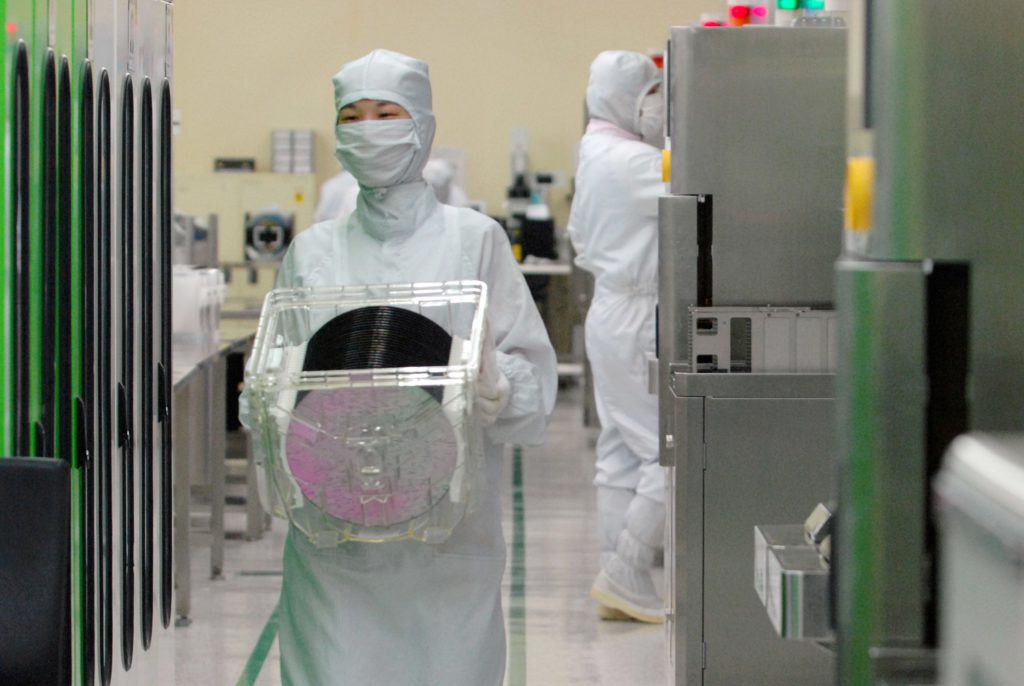
(Bloomberg) — Micron Technology Inc. said it will use “anticipated” government grants and credits to help it invest $40 billion by the end of the decade to build out US semiconductor manufacturing capacity. 

The company expects to begin to produce chips after 2025 and said it will create as many as 40,000 jobs, the Boise, Idaho-based memory manufacturer said in a statement on Tuesday. The investment is being funded with subsidies it believes it will be awarded from the Chips and Science Act, Micron said. 

The spending plan is part of the company’s previously announced $150 billion global investment goal, which it detailed last year. President Joe Biden is expected to sign the chips act into law on Tuesday as part of a package of spending and tax reforms. Most of Micron’s production is done in Japan, Singapore and Taiwan. 

Read More: Biden Gets Big Economic Win as Inflation Threatens Legacy 

“Micron’s domestic leading-edge manufacturing capabilities will ensure U.S. national security and supply chain resilience as demand for memory grows in critical market segments like automotive and data center, fueled by accelerating adoption of artificial intelligence and 5G,” the company said in the statement. 

Read More: Micron’s Dim Outlook Suggests Tech Spending Is on the Wane

The company, which competes with South Korea’s Samsung Electronics Co. and SK Hynix Inc., as well as Japan’s Kioxia Holdings Corp., said last month that it’s cutting spending on plants and equipment to slow increases in factory output amid concerns about a glut in the market. Electronic device makers that buy Micron’s chips have been scaling back orders to reduce their own inventory. 


More stories like this are available on bloomberg.com

©2022 Bloomberg L.P.

How Digital Assets Might Fit Into the Business of Entertainment

  • Listen to Bloomberg Crypto on the iHeartRadio App
  • Listen to Bloomberg Crypto on Apple Podcasts
  • Listen to Bloomberg Crypto on Spotify  

(Bloomberg) — Venture capitalists and certain people in the music industry are enthusiastic about the potential for artists to benefit from technology like the blockchain and NFTs. But there isn’t universal agreement, especially among musicians themselves, that any of this is necessarily a good idea. What are the big trends, and the big areas of disagreement? Bloomberg reporter Lucas Shaw joins this episode from Los Angeles to continue our coverage of crypto and the music industry. 

Follow us on Twitter @crypto, and subscribe to the Bloomberg Crypto Newsletter at https://bloom.bg/cryptonewsletter  

More stories like this are available on bloomberg.com

©2022 Bloomberg L.P.
Biden Set to Sign Chips Bill as US Makers Unveil New Investments

(Bloomberg) — US semiconductor firms are announcing billions in investments as President Joe Biden is set to sign a broad competition bill Tuesday that includes $52 billion in domestic semiconductor research and development.

Micron Technology Inc. will invest $40 billion in memory chip manufacturing and create 8,000 new jobs, according to a White House fact sheet, and Qualcomm Inc. is partnering with GlobalFoundries, which has a facility in New York state, in a $4.2 billion agreement to manufacture chips.

Micron Chief Executive Officer Sanjay Mehrotra is among the expected attendees at the bill signing ceremony at the White House Rose Garden, along with Intel Corp. CEO Pat Gelsinger, Lockheed Martin Corp. CEO Jim Taiclet, HP Inc. CEO Enrique Lores and the CEO of Advanced Micro Devices Inc., Dr. Lisa Su.

The bill is the latest in a slew of legislative wins for the White House in recent weeks. Senate Democrats on Sunday passed a sweeping climate and spending bill — a slimmed down version of Biden’s Build Back Better agenda, after lawmakers also approved veterans health and gun-safety bills with bipartisan support.

The legislation, now called the CHIPS and Science Act, first passed the Senate in June 2021 but lingered in the House for months, and it took more than one year to reconcile the two chambers’ versions. Some Senate Democrats had criticized the White House for not pushing the House and Speaker Nancy Pelosi to get the legislation over the finish line sooner.

The chips bill is at the center of the Biden administration’s effort to reduce dependence on Asian nations like Taiwan and South Korea, whose homegrown companies are leading the market, and to address supply chain disruptions and resulting price hikes for certain goods containing semiconductors.

Biden’s team and lawmakers have stressed the national security implications of the bill, saying it was vital to competing with and countering China.

A large chunk of the federal grant is expected to go to Intel Corp., Taiwan Semiconductor Manufacturing Co. and South Korea’s Samsung Electronics Co., all of which are now building new chip fabrication facilities worth tens of billions in the US.

US to Stop TSMC, Intel From Adding Advanced Chip Fabs in China

The bill also includes important caveats sought by Republicans and China hawks: Companies that receive the funding have to promise not to increase their production of advanced chips in China. 

It was a condition made by lawmakers and the White House and was included in the measure over the objection of some chipmakers. Intel, in particular, was lobbying hard against the prohibitions. In late 2021, the American chipmaker wanted to increase production in China but the plan was rejected by the Biden administration.

While China’s chipmaking champion Semiconductor Manufacturing International Corp. can make chips that are more advanced than 28 nanometers, its technology is still at least six years behind industry leader TSMC. 

More stories like this are available on bloomberg.com

©2022 Bloomberg L.P.

Wave of Analyst Optimism Is a Red Flag to Citigroup Strategists

(Bloomberg) — Highly optimistic analyst stock recommendations are flashing a warning signal for the equity market rally, according to Citigroup Inc. strategists.

An index of global sell-side ratings “is back to peak bullishness levels reached in 2000 and 2007, after which global equities halved,” strategists led by Robert Buckland wrote in a note.

While analysts always have more buys than sells, “they seem especially keen right now,” the strategists said. That has triggered a red flag in Citi’s “bear market checklist,” which otherwise has seen warning signs ease this year as markets have declined.

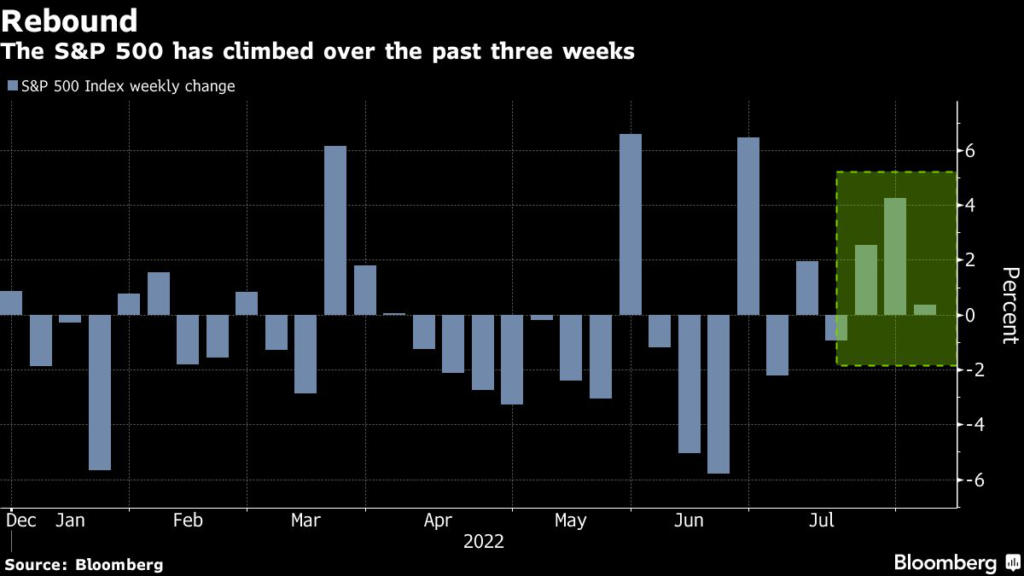
The peak in analyst optimism comes amid a rebound that has seen the S&P 500 climb more than 10% from its June low, even as economic data emboldens the Federal Reserve to tighten policy even further to tame inflation. According to Citi, there are “few fears” of an oncoming recession.

By region, analysts in emerging markets and the US are more bullish than those in Europe and Japan, the strategists said. By sector, net buy recommendations have risen most for consumer discretionary and materials stocks over the past 18 months, while those for information technology, utilities and communication services have increased the least.

The strategists noted that recommendations have historically been more successful by region than by sector. “Overweighting markets where analysts are most bullish has added value” in recent years, Buckland wrote. “Favoring sectors where analysts are most bullish has not helped performance.”

They also highlighted that their recommendation index gave a false sell signal in 2012, when global stocks were little changed in the following year.

Strategists from Morgan Stanley and Goldman Sachs Group Inc. already warned analysts’ expectations are unrealistic, posing a threat to the stock rally. Meanwhile, JPMorgan Chase & Co.’s Marko Kolanovic, one of Wall Street’s staunchest bulls, said investors should modestly trim stock holdings. 

More stories like this are available on bloomberg.com

©2022 Bloomberg L.P.

China Electric Car Sales Forecast to Hit Record 6 Million

(Bloomberg) — Electric vehicles sales in China are forecast to hit a record 6 million this year as demand for cleaner cars surges.   

The China Passenger Car Association raised its estimate from 5.5 million, after releasing data showing deliveries of new-energy vehicles more than doubled in July to around 486,000 units — accounting for 26.7% of the new auto market. Overall passenger vehicle sales rose 20% from a year earlier to 1.84 million units, the PCA said Tuesday.  

The increased forecast represents a doubling from last year’s 2.99 million NEV sales, underscoring the dramatic growth in demand for cleaner cars in China, and the challenge for legacy automakers to adapt in a market that is rapidly going green. 

The increased forecast of 6 million is still “relatively cautious,” the PCA in a statement, adding it could be further increased at the start of the fourth quarter. 

Tesla Inc. delivered 28,217 cars, with 8,461 going to the local market and 19,756 exported, mostly to Europe and Asia. The sharp drop of 64% from June was mainly caused by production shutdowns to upgrade its Shanghai factory as part of a plan to double annual capacity to 1 million vehicles.  

BYD Co., which earlier this year ended production of cars powered only by fossil fuels, earlier reported monthly sales of 162,530 units — both pure electric vehicles and plug-in hybrids. 

While Tesla and BYD dominate EV sales, smaller startups are also making inroads as demand for clean cars surges. Eight-year-old Hozon New Energy Automobile Co., which started by targeting customers outside big cities with budget cars, delivered 14,037 vehicles last month, including 1,382 to overseas markets. Leapmotor Technologies Ltd., which competes in the same price range as Hozon, shipped a record 12,044 cars. 

Overall, domestic automakers are grabbing a bigger slice of the NEV market. The main Chinese brands commanded 73% of NEV passenger car sales last month, up 9 percentage points from a year earlier. Local upstarts including the likes of Xpeng Inc., Li Auto Inc. and Nio Inc. accounted for 16.5%, while the main international joint ventures (which excludes Tesla) took just a 6.5% share.    

The central and local governments have also taken steps to help the auto industry recover from Covid lockdowns and restrictions that crushed sales earlier this year. In May, the central government cut purchase taxes on some low-emission passenger vehicles by 50%, while municipal governments have pitched in with subsidies and incentives to entice buyers. 

Read more: Not a Single Car Was Sold in Shanghai in April

Despite sporadic outbreaks of Covid-19 in parts of the country, overall auto production and supply chains have largely recovered. Passenger-vehicle sales may resume double-digit growth this half, after falling for four consecutive quarters because of supply chain constraints, Bloomberg Intelligence analyst Steve Man said in a recent note. 

(Adds chart, market share figures in eighth paragraph.)

More stories like this are available on bloomberg.com

©2022 Bloomberg L.P.

Tornado’s Crypto Token TORN Nosedives After US Sanctions

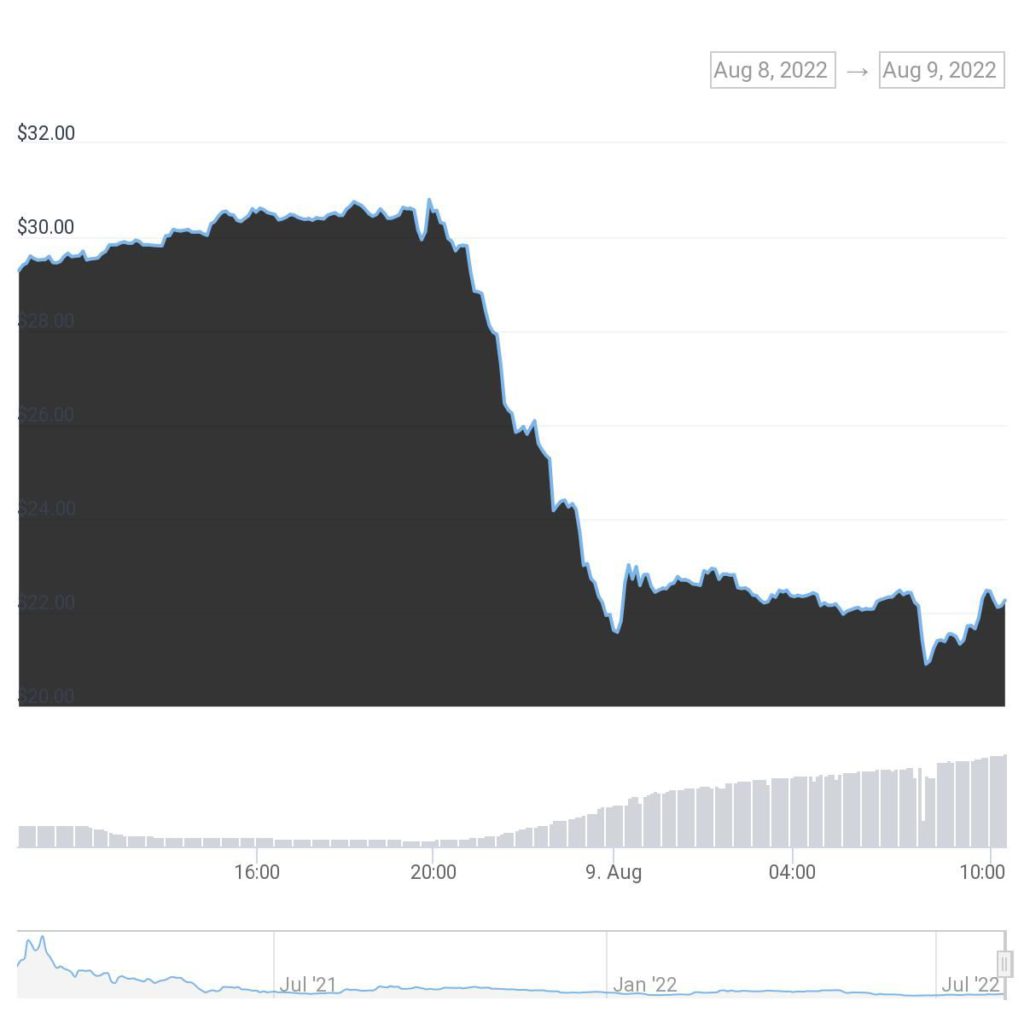
(Bloomberg) — Tornado Cash’s token TORN fell sharply on Tuesday after the US Treasury Department imposed sanctions on the cryptocurrency mixer.

TORN was down 24% during Asian hours to $22, according to CoinGecko data. The token has lost 95% of its value since its all-time high in February 2021. 

By contrast, larger cryptocurrencies Bitcoin and Ether posted smaller declines on Tuesday, falling roughly 1%. 

TORN is the native token of Tornado Cash, a popular cryptocurrency service which allows users to mask their transactions by mixing funds from different sources before transmitting them to the ultimate beneficiary. This feature has made it a preferred tool for hackers and criminals to launder stolen or illicitly acquired funds.

North Korea’s Lazarus Group used Tornado to launder money stolen in large crypto hacks, according to US authorities. 

Tornado Cash was also used to launder funds stolen in the $600 million Ronin Bridge hack in March, as well as the $100 million loot from the Harmony Bridge exploit in June, according to security firms. 

Data from Dune Analytics shows that around $7.6 billion have been sent through Tornado Cash since the service started in 2019. Around $1.54 billion of those funds are proceeds from criminal activity, according to forensics firm Elliptic.

In an earlier interview Roman Semenov, one of the founders of Tornado Cash, had said that it is “technically impossible” for sanctions to be enforced against decentralized protocols because of how they are designed.

Read more: Tornado Says Sanctions Can’t Affect Smart Contracts

In May, the US Treasury imposed sanctions on another cryptoasset mixer called Blender.

More stories like this are available on bloomberg.com

©2022 Bloomberg L.P.

Close Bitnami banner
Bitnami