
Bloomberg

Fed Hike Piles Pressure on Taiwan for Back-to-Back Rate Rises

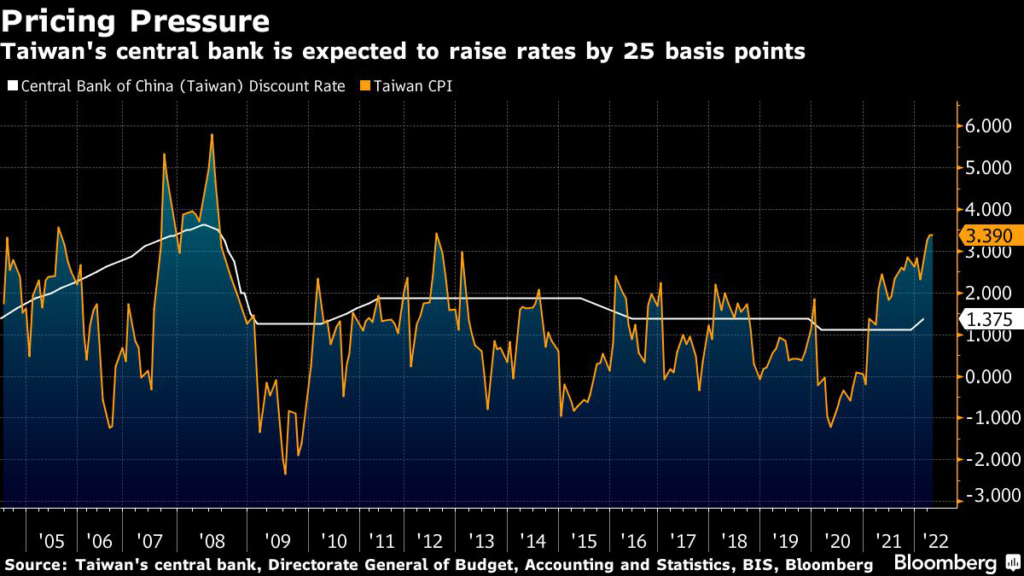
(Bloomberg) — Taiwan is poised to implement back-to-back interest-rate increases for the first time since 2011 as the central bank seeks to keep pace with the Federal Reserve and tame consumer prices expected to rise to their highest in more than a decade. 

After springing a surprise rate hike of 25 basis points last quarter, policy makers in Taiwan are likely to increase the policy rate by the same margin to 1.625% on Thursday, according to 20 of the 25 economists surveyed by Bloomberg. The rest see a hike of 12.5 basis points. 

The central bank will likely reach 2% in the first quarter next year, with a move of 12.5 basis points in each of its subsequent meetings, according to economists. 

Taiwan’s policy makers are joining their global peers in the rush to tighten policy faster than previously signaled amid mounting criticism central bankers were too slow to identify the risk of persistent high inflation. The Federal Reserve raised interest rates by 75 basis points Wednesday, its biggest increase since 1994, in an effort to contain rampant inflation. Chair Jerome Powell signaled another big move is likely to come next month.

A widening gap between borrowing costs in Taiwan and the US could exacerbate downward pressure on the Taiwan dollar. Taiwan’s central bank Governor Yang Chin-long has repeatedly said rates in the world’s major economies play a factor in the monetary authority’s decision-making process.

Taiwan’s benchmark Taiex stock index rose 0.49% as of 10:25 Thursday, its first gain in five days as the Fed’s move buoyed Asian shares. The Taiwan dollar was largely unchanged.  

If the Taipei-based monetary authority raise rates by 75 basis points this calendar year as economists expect, it would be the biggest annual jump in borrowing costs since the 2004-2008 cycle. 

“While global semiconductor demand remains supportive, it is increasingly obvious that Taiwan will face a dilemma of decelerating economic growth and higher inflation,” said Gary Ng, senior economist at Natixis Asia in Hong Kong. China’s lockdowns and the domestic Covid outbreaks have posed challenges for Taiwan to extend its growth trajectory in the short run, he said.

Economists see high prices as an increasingly severe problem Taiwan will have to contend with through the third quarter of 2023. Inflation, which reached 3.39% in May, is forecast to average 3% this year, according to Bloomberg’s survey, well above the central bank’s traditional 2% comfort zone, before easing to 1.75% in 2023. 

Growth Risks

In addition to inflation, Taiwan’s export-driven economy is facing multiple challenges to maintain last year’s strong growth. Russia’s invasion of Ukraine and repeated Chinese Covid lockdowns has caused chaos to global supply chains at a time of sustained overseas demand for Taiwanese-made semiconductors. The first serious Covid outbreak at home has also dented sectors reliant on consumer spending. 

Economists surveyed by Bloomberg cut their forecasts for Taiwan growth slightly for 2022 to 3.45% from 3.5%. 

Citigroup Inc. economist Adrienne Lui expects policy makers to limit Thursday’s rate hike to 0.125% as it tries to reduce the impact on smaller businesses.

“We believe the central bank is likely to factor into its policy rate calculus the impacts on SMEs who are less able to mitigate both operating cost pressures and Covid stresses, on the back of the scheduled June expiration of the NT$400 billion SME loan guarantee program and no other fiscal stimulus measures announced for this Covid round thus far,” Lui wrote in a note last week. 

Fixed income and real estate are other sectors that will also be playing close attention to the central bank’s actions this week. Traders will be looking to see if the authority raises its open-market rates by the same margin as the benchmark rate, given the direct impact it has on financial markets. Property developers and buyers meanwhile will be paying close attention to any central bank moves to further tighten its selective credit controls aimed at reining in housing prices.

(Updates with Federal Reserve’s rate hike starting in first paragraph.)

More stories like this are available on bloomberg.com

©2022 Bloomberg L.P.
Indonesia’s Protelindo Owner Weighing $1 Billion Stake Sale

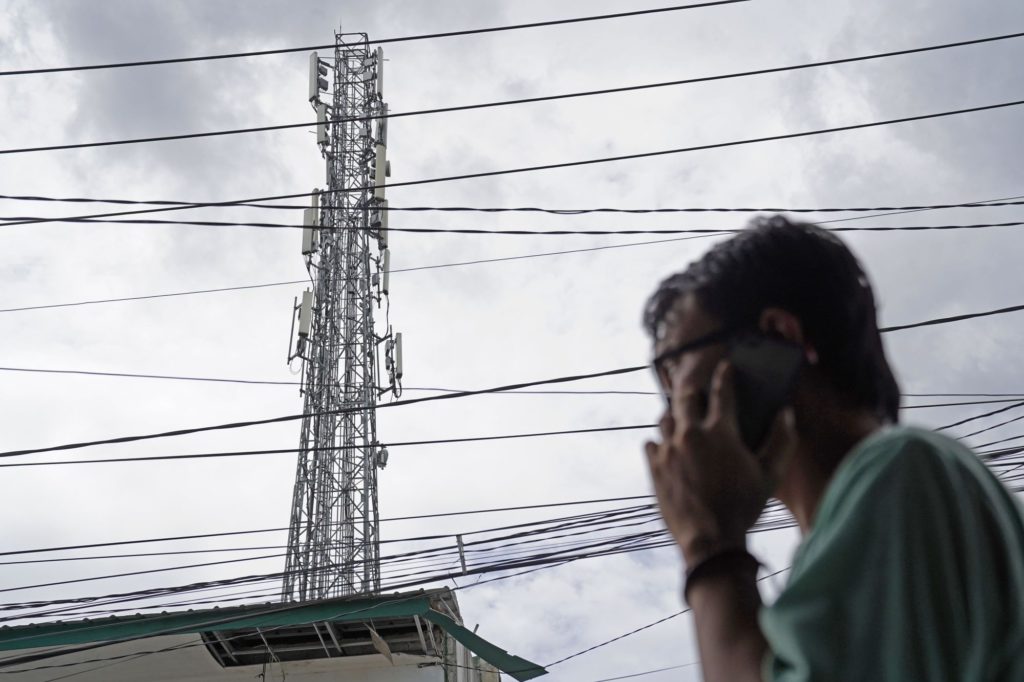
(Bloomberg) — PT Sarana Menara Nusantara is considering selling a minority stake in its telecommunication tower unit PT Profesional Telekomunikasi Indonesia and is seeking as much as $1 billion, according to people with knowledge of the matter.

Profesional Telekomunikasi, or Protelindo, as it is known, is working with a financial adviser on the sale of a 15% to 20% stake, the people said, asking not to be identified as the information is private. The potential sale is targeting pension and infrastructure funds, they said.

Shares of Sarana Menara Nusantara jumped 4.6% on Thursday in Jakarta, their biggest advance in more than a month, snapping a seven-day losing streak and giving the company a market value of about 47 trillion rupiah ($3.2 billion).

Deliberations are ongoing and Sarana Menara Nusantara could decide not to proceed with a deal, the people said. The company is always looking for alternative funding through debt and equity, and both types of financing are under discussion, Sarana Menara Nusantara and Protelindo President Director Ferdinandus Aming Santoso said in response to a query from Bloomberg News.

There has been a surge in telecommunications infrastructure deals in recent years as the coronavirus pandemic accelerated digitization trends. Protelindo’s owners would join Globe Telecom Inc. in the Philippines, which is weighing selling around half of its tower portfolio in a deal that could be worth as much as $1.5 billion, while shareholders of Supernap Thailand are working with a financial adviser to help find a minority investor in the business, Bloomberg News reported this month.

Founded in 2003, Protelindo is the largest independent owner and operator of towers for wireless communications companies in Indonesia. The company owns and operates about 29,011 telecommunication tower sites with more than 54,580 tenants in Indonesia, primarily in Sumatra, Java, Bali, Kalimantan and Sulawesi, according to its website. Protelindo bought a 94% stake in rival firm PT Solusi Tunas Pratama in October for about $1.2 billion.

Sarana Menara Nusantara owns 99.99% of Protelindo, while Santoso has a single share, according to the tower company’s latest annual report. A unit of Djarum Group, the Indonesian cigarette and banking conglomerate, owns 54.4% of Sarana Menara Nusantara.

(Updates with share movement in third paragraph.)

More stories like this are available on bloomberg.com

©2022 Bloomberg L.P.
China Home Prices Drop for Ninth Month as Demand Stays Weak

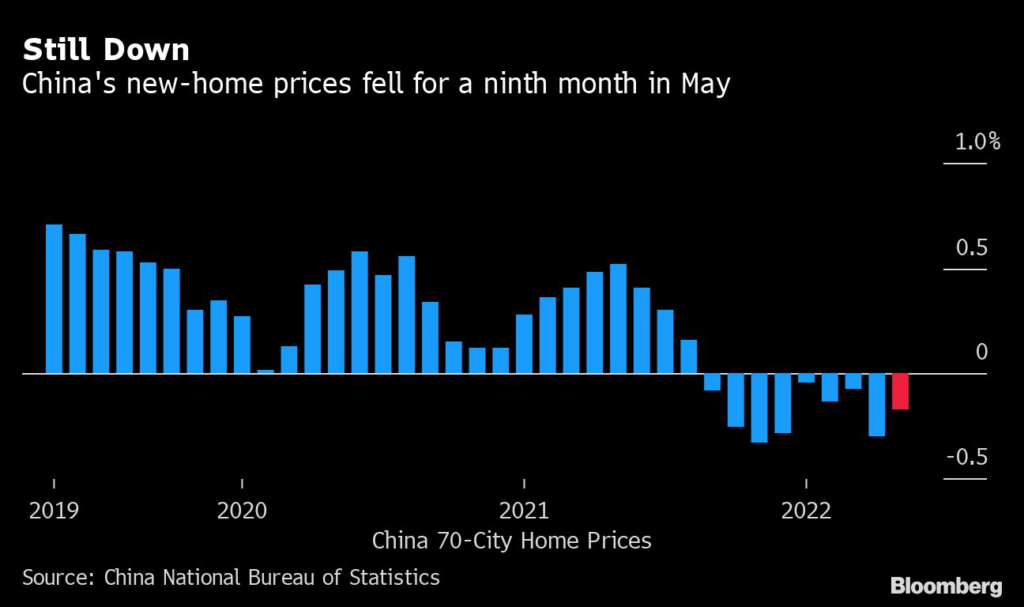
(Bloomberg) — China’s home prices fell for a ninth month in May, signaling demand remains weak despite increased government support for the slumping property market. 

New home prices in 70 cities, excluding state-subsidized housing, dropped 0.17% last month from April, when they slid 0.3%, National Bureau of Statistics figures showed Thursday. 

The figures suggest that China’s real estate sector is far from a rebound amid a worsening job crisis and weak economic recovery. Chinese households have turned to hoarding cash this year, a sign that people are bracing for tougher times even as some cities emerge from crippling Covid lockdowns. 

Chinese officials have been stepping up efforts to arrest a property slowdown that has weighed on the world’s second-largest economy for almost a year. These include urging banks to lend more, easing mortgage costs and partially relaxing ownership rules.

“Whether the easing measures can take effect remains to be seen,” China Real Estate Information Corp. researchers led by Yang Kewei wrote in a note earlier this week. “The majority of developers haven’t seen a full sales recovery.”  

Wenzhou, an eastern Chinese city with a population of nearly 10 million where home values declined for four months, has started to allow first-time homebuyers to only repay mortgage interest for the first three years, according to its official WeChat account.

There have been some early signs that the market may be bottoming. New-home sales rose 26% from April, the first month-on-month gain since December, bureau data showed Wednesday. However, the stop-start reopening from Covid lockdowns may be too late to save some cash-strapped property developers. 

Existing-home prices declined 0.39% from a month earlier, the largest drop since February 2015.

(Updates with Wenzhou’s relief for first-time homebuyers in sixth paragraph)

More stories like this are available on bloomberg.com

©2022 Bloomberg L.P.

End of Internet Explorer Spells Trouble for Japan Businesses

(Bloomberg) — Microsoft Corp. retired its Internet Explorer on Wednesday, putting an end to a quarter-century-old app while also sparking a small panic among businesses and government agencies that built internal systems around the unpopular browser.

Japan may be the country most affected by the move, as a survey in March found that 49% of companies in the Asian nation still use IE. Among them, the most common use was for in-house management, data exchange and accounting systems. All of those should have been updated or transitioned to different software in the time since Microsoft announced its IE retirement plans a year ago, but the Nikkei reports that many procrastinated.

Businesses across the country are now having to move swiftly to ensure they’re still able to run operations that previously relied on apps built atop Microsoft’s long-tenured browser.

“Japanese love safety. The larger the organization or government, the more hesitant they are to move,” said Tetsutaro Uehara, professor at Ritsumeikan University. “The biggest issue is that, when it comes to government websites, there are only a limited number of vendors who can implement such large systems.”

Internet Explorer, once the globe’s dominant browser and the de-facto setter of web standards, fell out of favor with its IE6 version, which was marred by feature bloat and frustrating performance. Faster and better browsers like Google’s Chrome and Mozilla’s Firefox took over and IE’s share of the worldwide market was a negligible 0.64% last month, according to Statcounter.

Microsoft’s successor to IE, called Edge, is a browser built on the same basic platform as Chrome, called Chromium, and is thus compatible with Chrome extensions and supports much of the same functionality. Microsoft has integrated an IE mode inside Edge, which it will support for an additional period of time beyond today.

(Updates with comment in fourth paragraph)

More stories like this are available on bloomberg.com

©2022 Bloomberg L.P.
Amazon Pulled Plug on Cricket but Remains Bullish on India

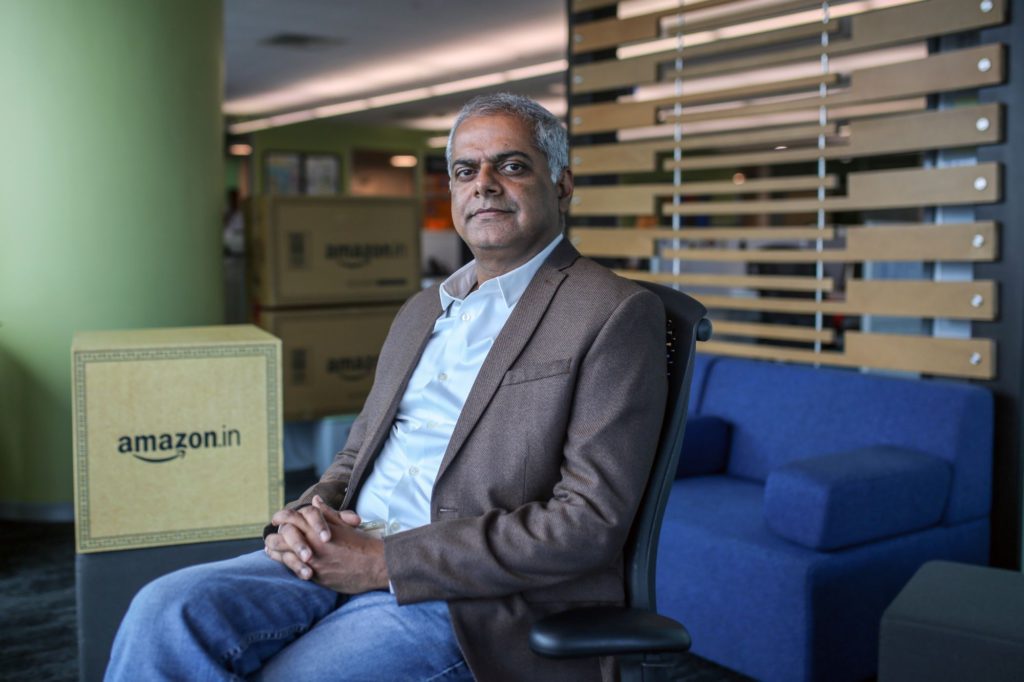
(Bloomberg) — Manish Tiwary had only been in his new job as head of Amazon.com Inc.’s India business a couple of months when he faced a weighty decision: How aggressively should the US e-commerce giant bid for media rights to the Indian Premier League?

Securing digital streaming rights to the cricket tournament would be a huge coup, potentially luring hundreds of millions of viewers to Amazon. But Tiwary and his colleagues would have to bid against deep-pocketed giants like Reliance Industries Ltd. In a stunning move, Amazon pulled the plug before the auction started. Tiwary and senior management in Seattle decided those billions would be better spent on Amazon’s e-commerce business.

“The final call was based on cost numbers,” said Tiwary, in one of his first interviews since taking over as country head, on the 27th floor of Amazon’s India headquarters in the northwestern neighborhood of Yeshwanthpur in Bangalore.

It’s a sign of the tough calls ahead for the 52-year-old former Unilever Plc executive, who took on his current role in February. The country of nearly 1.4 billion people may be Amazon’s most promising long-term opportunity, but it’s also extremely challenging, with tough local rivals, a cantankerous government and unusually price-sensitive consumers.

Amazon first began to target India under founder Jeff Bezos, who visited the country regularly and hob-nobbed with Prime Minister Narendra Modi. The company has invested more than $6.5 billion in India, hired 110,000 employees and built 60 warehouses to expand its reach in the country.

Tiwary anticipates the next stage of growth will come from pushing beyond India’s big cities to what’s known as Bharat, the less affluent, non-English speaking people in rural areas. He expects to add the next 100 million shoppers from this effort.

“I want Amazon to grow with India,” Tiwary said. “India is forecast to be the fastest-growing major economy in the world.”

India’s e-commerce market is projected to swell to $350 billion by 2030, growing at a clip of about 23% as hundreds of millions of first-time smartphone users access the internet. That’s drawn competition from giants like Reliance to Walmart Inc.’s Flipkart, as well as a flock of startups. Tiwary maintains there is room for several rivals to succeed given that only a few percent of the country’s $1 trillion retail market has moved online.

“At less than 3% online retail penetration, the last thing I’d worry about is competition,” he said. “Sellers and shoppers have both begun seeing value in online retail.”

His strategy for pushing beyond India’s big cities is a combination of technology and marketing. Central to it will be what Tiwary calls “Smart Commerce,” an initiative announced last month to help small merchants get online. The company has succeeded in getting about a million sellers on board so far, but that’s a fraction of the total.

“If the 13 million or more small businesses are digitized, online shopping can reach every corner of India,” said Tiwary, who during his two decades at Unilever worked in places from Thailand and Vietnam to India and Dubai.

He also thinks it’s critical to let more shoppers tap Amazon by voice, including with local languages. So the company’s engineers are enhancing app features to enable such purchases. It’s also expanding into buy-now-pay-later, an increasingly popular way to offer customers credit with no need for a credit or debit card.

His marketing strategy couldn’t be more different from that of Reliance, the sprawling conglomerate led by billionaire Mukesh Ambani. A joint venture backed by Reliance won the rights to show the Indian Premier League cricket matches online for 238 billion rupees ($3.05 billion).

Tiwary is going to focus Amazon’s attention on developing local influencers to help market to Bharat customers. These aren’t stars like Kim Kardashian or Addison Rae. Instead, they’re homemakers like Kajal Srivastava from Deoghar in the state of Jharkhand or students like Ahmad Zahid from Kashmir who unbox and showcase products like affordable sports shoes, memory foam pillows or the latest instant curry concoction.

“It’s very different from the TikTok influencers you see elsewhere in the world,” said Tiwary. “It’s small now but looks extremely promising. It’s a new playbook for social commerce.”

(Updates with a further comment from Tiwary in ninth paragraph)

More stories like this are available on bloomberg.com

©2022 Bloomberg L.P.

Celsius Is Running Out of Options to Stay Solvent, Kaiko Says

(Bloomberg) — Crypto lending platform Celsius Network may have limited options in its efforts to stay solvent after its decision to freeze withdrawals helped set off one of the biggest digital token meltdowns in years.

So says crypto research firm Kaiko, which pointed to a combination of “poor risk management, bearish market conditions, and a derivative of Ethereum” known as stETH as the reasons Celsius now finds itself in a “Lehman-esque” position. 

As for what comes next, the firm’s only choice may be to use its significant stETH holdings as collateral in an over-the-counter agreement to generate liquidity, according to Kaiko’s Conor Ryder. But even then, it’s prospects don’t look good.

“Even if they do survive this onslaught, I don’t see how anyone can trust the likes of Celsius to keep their assets safe going forward,” Ryder wrote in a June 15 report. Given such a high profile failure of a centralized lender, “perhaps in a few years’ time we will look back on this as a watershed moment for decentralized finance adoption, but that’s probably just the optimist in me.”

Celsius didn’t respond to requests seeking comment.

Celsius’s fall from grace was swift, even by the breakneck standards of the cryptocurrency world.

Since its debut in 2018, it had billed itself as a way for retail investors to gain access to the kind of returns once reserved for hedge funds and other big-time investors. People could lend their coins and earn an annualized rate of more than 18%, paid out weekly. There were bonuses for those who took their earnings in Celsius’s own token, known as CEL.

Generous refer-a-friend incentives helped the platform explode to more than 1.7 million users, according to the company’s website. It managed more than $20 billion in assets at one point.

Celsius had to make risky bets to pay out sky-high yields, including in TerraUSD, the stablecoin that collapsed just a few weeks prior. Before that, Celsius lost money in the BadgerDAO hack.

“The DeFi world got ahead of its skis,” billionaire Tim Draper said in an emailed response to questions on Celsius, in which he said he was not an investor. “It will certainly recover.”

stETH Mess

But the primary culprit for its solvency issues may be tied to its involvement in stETH, a token created by Lido designed to eventually be redeemable on a 1-for-1 basis with Ethereum once planned upgrades of the blockchain are finished.

StETH’s price deviated from Ethereum in recent days, and Celsius was forced to freeze withdrawals “partially due to stETH losses and the lack of liquidity, which turned them into forced sellers of other assets to meet redemptions,” crypto investment firm Arca wrote in a blog post.

Celsius’s recovery options are limited, according to Kaiko’s Ryder. It may have about $500 million trapped in stETH, and selling large amounts in the open market to pay off redemptions would be impossible “without nuking the price.”

A more feasible option: Celsius could use stETH or other reserves as collateral or payment for an over-the-counter agreement with an exchange or a market maker, Kaiko said. It could try to use or swap its stETH and enter into short Ether positions on the perpetual futures market, hoping to profit if Ether fell lower. Or an exchange or market maker could take stETH from Celsius at a discount, Kaiko said.

Celsius appointed Citigroup to advise on potential financial options, the Block reported Wednesday. It also hired law firm Akin Gump Strauss Hauer & Feld to advise on possible solutions to its financial problems, Dow Jones reported. 

Akin Gump didn’t respond to a request seeking comment, while Citigroup declined to comment.

“Celsius was ambitious, but not sure to collapse,” said Aaron Brown, a crypto investor who writes for Bloomberg Opinion. “The test was a major drawdown in crypto, and it seems to have failed.”

More stories like this are available on bloomberg.com

©2022 Bloomberg L.P.
Korea Pledges to Stay Focused on Inflation Fight After Fed Hike

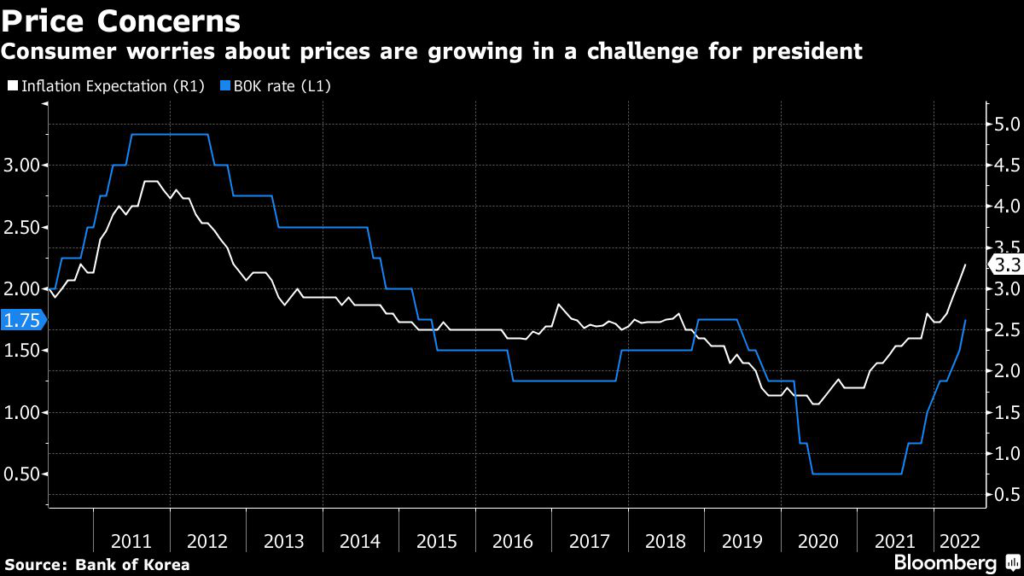
(Bloomberg) — South Korea’s economic chiefs stressed the need to remain focused on reining in inflation that’s threatening the nation’s outlook, after the Federal Reserve took aggressive policy action to tackle surging US prices.

Bank of Korea Governor Rhee Chang-yong, Finance Minister Choo Kyung-ho and several other senior policy makers met Thursday, just hours after the Fed raised its interest rate by 75 basis points in response to US inflation accelerating to a 40-year high.

The government and BOK have agreed to team up to combat inflationary pressures, Choo and Rhee told reporters following the meeting. The BOK isn’t considering an emergency meeting and it’s too early to determine whether it should follow with a 50 basis-point hike next month, Rhee said. 

Inflation is running hot across much of the developed world, with prices fueled by pandemic-era stimulus, Russia’s war on Ukraine and supply chain snarls.

Rising energy and commodity prices are eroding the bottom line of South Korean exporters, which serve as the engine-room of the nation’s economy. The country has posted monthly trade deficits for much of the year to date.

Consumers are increasingly burdened by rising prices of staples as well, prompting the government to slash fuel taxes and suspend tariffs on food imports.

The BOK sees South Korea’s consumer prices rising 4.5% this year, compared with an earlier estimate of 3.1%. The economy, under pressure from inflation, is likely to grow 2.7%, down from an earlier forecast of 3%.

The central bank has raised its benchmark rate five times since last summer, leading counterparts on the path toward policy normalization. Rhee said last week though that the BOK’s moves may no longer qualify as pre-emptive given the pace of inflation and rate hikes by other central banks.

Thursday’s emergency gathering underscores the sense of urgency President Yoon Suk Yeol feels after taking office last month. While he sees inflation as the biggest threat to the economy, he also vowed to boost growth as one of his key pledges.

South Korea’s won has been among the worst performing currencies, along with the Japanese yen, as the Fed tightens. Exports have helped shore up confidence in the won, with semiconductors and other technology shipments continuing to hold up.

More stories like this are available on bloomberg.com

©2022 Bloomberg L.P.

UK Uses New National Security Powers to Probe 17 Business Deals

(Bloomberg) — The UK scrutinized 17 corporate deals involving purchases of British assets in the first three months of the year, exercising new security powers that include allowing the government to pull apart acquisitions retrospectively.

Businesses and investors notified the government of 222 deals between Jan. 4 and March 31, the Department for Business, Energy and Industrial Strategy said on Thursday in an emailed statement. Seventeen of those were called in for further assessment, including transactions involving artificial intelligence and space technology firms, it said. Of those, three have been cleared and the remaining 14 were still being examined at the end of March.

The scrutiny was carried out using sweeping new powers introduced in January under the National Security and Investment Act that expanded the range of transactions open to government intervention for security reasons. The government made public its first probes under the law last month — investigating both a Chinese-led takeover of a British semiconductor plant and a French tycoon’s increased stake in BT Group Plc. 

UK Flexes Its New National Security Powers to Intervene on Deals

Thursday’s report from BEIS comes in the same week that the UK announced plans to take stakes in new nuclear projects, giving it special powers relating to national security. On Tuesday, the government said it had purchased an option to take a 20% stake in Electricite de France SA’s Sizewell C nuclear power plant. The move potentially eases the way to removing China General Nuclear Power Corp. from the project amid mounting concerns about increased Chinese involvement in critical aspects of UK infrastructure.

More stories like this are available on bloomberg.com

©2022 Bloomberg L.P.

UK Lawmakers Warn Treasury Off Watering Down Finance Regulations

(Bloomberg) — The UK’s Treasury Committee has warned the government against unduly weakening financial regulations, with a panel of lawmakers saying the Treasury shouldn’t forget the lessons of the financial crisis.

The lawmakers said that pursuing international competitiveness in the short term is unlikely to lead to economic growth or international competitiveness in the long term if it was achieved by weakening regulatory standards in a report on the future of financial services regulation.

Mel Stride, chair of the Treasury Committee, said it was vital regulators were not pressured to “inappropriately water down” regulations. Still, there were opportunities to simplify some regulatory burdens following the UK’s exit from the European Union.

And the committee recommended bolstering the roles of the Financial Conduct Authority and the Prudential Regulation Authority by adding a secondary objective to promote long-term economic growth and financial inclusion.

“It is also important that the regulators have an objective to promote growth, not just for the financial services sector, but for the wider economy,” Stride said in a statement.

More stories like this are available on bloomberg.com

©2022 Bloomberg L.P.

Apple Accused of Misleading iPhone Customers in New UK Lawsuit

(Bloomberg) — Apple Inc. faces a UK lawsuit that could seek hundreds of millions of pounds in compensation for iPhone users after it was accused of misleading customers on a controversial power management tool. 

Justin Gutmann, a market researcher, has applied to the Competition Appeal Tribunal for approval to bring a collective action on behalf of UK iPhone users, according to a statement Thursday. The suit could sweep up as many as 25 million people who bought the iPhone models from 6 through to the X if successful. 

The suit alleges that Apple abused its dominant market position by informing customers that software updates from late 2016 improved the battery life of the devices when in fact, it quietly “throttled” it. Gutmann says Apple concealed a power management tool in the updates to hide that the phone’s batteries couldn’t handle the new software’s processing demands, which caused shutdowns and glitches.

“We have never — and would never — do anything to intentionally shorten the life of any Apple product, or degrade the user experience to drive customer upgrades,” a spokesperson from Apple said. 

In order to progress the collective action will need to be approved by the CAT and the amount of compensation is yet to be determined. Gutmann and his lawyers estimate the total compensation could be as much as £768 million ($927 million). 

More stories like this are available on bloomberg.com

©2022 Bloomberg L.P.

Close Bitnami banner
Bitnami
